


Search
Search
1863 Search Results:
… is a work in progress; a joint endeavour of Postgraduate Medical Education and Medical Affairs. Comments / Suggestions postgraduate.medicine@schulich.uwo.ca medical.affairs@londonhospitals.ca Acknowledgements This … is a work in progress; a joint endeavour of Postgraduate Medical Education and Medical Affairs. Comments / …
The Resident & Fellow Handbook This handbook is the property of: Dr. _____________________________ Resident / Clinical Fellow in the Department of: ________________________________ If found, please return to the Security office or notify me by email at: ________________________________ Preface Th...
… the following late enrolment penalties will be enforced: 1. Medical evidence will be required for Extended Health … a form and in some cases may involve the completion of a medical exam to determine if you qualify for coverage. … the following late enrolment penalties will be enforced: 1. Medical evidence will be required for Extended Health …
Human Resources 339 Windermere Road PO Box 5339 London, ON N6A 5A5 (519) 685-8500, Ext. 46247 (519) 663-3889 Fax Late Enrolment Penalties for Benefits If you choose to waive benefit coverage or enrol with single coverage because you or your dependents are covered under a spousal plan, you and/or you...
… (ie. On Call amounts, hours paid for) please contact Medical Affairs at extension 75128. If you need to change … (ie. On Call amounts, hours paid for) please contact Medical Affairs at extension 75128. If you need to change …
RESIDENT PAYROLL AND BENEFIT FORM INSTRUCTIONS PLEASE RETURN ALL FORMS BY JUNE 8, 2018 (These forms must be completed in order for you to be paid through London Health Sciences Centre) Please complete the following information on each of the individual forms: 1. Employee Personal Data Form: Persona...
… (ie. On Call amounts, hours paid for) please contact Medical Affairs at extension 75128. If you need to change … (ie. On Call amounts, hours paid for) please contact Medical Affairs at extension 75128. If you need to change …
RESIDENT PAYROLL AND BENEFIT FORM INSTRUCTIONS (These forms must be completed in order for you to be paid through London Health Sciences Centre) PLEASE RETURN ALL FORMS BY JUNE 3, 2016 Please complete the following information on each of the individual forms: 1. Employee Personal Data Form: Persona...
… (YYY/MM/DD) Technician: PRINT NAME SIGNATURE White Copy-Medical Records Yellow Copy-Diagnostic Services Rev. 03/2016 … (YYY/MM/DD) Technician: PRINT NAME SIGNATURE White Copy-Medical Records Yellow Copy-Diagnostic Services Rev. 03/2016 …
PATIENT NAME SURNAME GIVEN INITIAL ADDRESS Ivey Eye Institute Ophthalmic Diagnostic Services TELEPHONE: ( ) St. Josephs Hospital 268 Grosvenor Street, Room B1-409 HEALTH CARD# London, Ontario N6A 4V2 10 DIGITS VERSION CODE TEL: 519 646-6018 FAX: 519 646-6052 DATE OF BIRTH: AGE RETINA REQUISITION APP...
… Centre and St. Joseph’s Health Care London Developed by: Medical Affairs London, ON Page 2 PREAMBLE This document … and access to documents to assist you, please refer to the Medical Affairs website https://intra.lhsc.on.ca/medical-affairs . Retirement dates should be determined as …
RREETTIIRREEMMEENNTT PPLLAANNNNIINNGG RREESSOOUURRCCEE GGUUIIDDEE FFOORR CCRREEDDEENNTTIIAALLEEDD PPRROOFFEESSSSIIOONNAALL SSTTAAFFFF at London Health Sciences Centre and St. Josephs Health Care London Developed by: Medical Affairs London, ON Page 2 PREAMBLE This document will summarize the retireme...
… Centre and St. Joseph’s Health Care London Developed by: Medical Affairs London, ON Page 2 PREAMBLE This document … and access to documents to assist you, please refer to the Medical Affairs website https://intra.lhsc.on.ca/medical-affairs . Retirement dates should be determined as …
RREETTIIRREEMMEENNTT PPLLAANNNNIINNGG RREESSOOUURRCCEE GGUUIIDDEE FFOORR CCRREEDDEENNTTIIAALLEEDD PPRROOFFEESSSSIIOONNAALL SSTTAAFFFF at London Health Sciences Centre and St. Josephs Health Care London Developed by: Medical Affairs London, ON Page 2 PREAMBLE This document will summarize the retireme...
… CLIENTS AND THEIR THERAPISTS Developed May 2020 WHY? •Some medical conditions such as a stroke may impact skills you … CLIENTS AND THEIR THERAPISTS Developed May 2020 WHY? •Some medical conditions such as a stroke may impact skills you …
SIJOSEPHs HEALTH CARE LONDON Returning to Driving TOOLKIT FOR CLIENTS AND THEIR THERAPISTS Developed May 2020 WHY? Some medical conditions such as a stroke may impact skills you need to return to driving As you may not be able to drive right now, you can work on these exercises while you rec...
Revealing the secrets of dementia
The immune system is one of our greatest defenses against disease and injury. But what happens when it betrays us?
With conditions like rheumatoid arthritis the immune system is manipulated to attack the human body. Inflammation, normally a protective immune response, can be employed to cause symptoms like pain.
Surprisingly, research suggests our immune system may be similarly affected in patients with neurodegenerative dementias.
“We know there are increased numbers of inflammatory cells in the brains of patients with dementia but we don’t know what role they’re playing,” says Dr. Elizabeth Finger, a scientist at Lawson Health Research Institute and neurologist at St. Joseph’s Health Care London’s Parkwood Institute. “Are they doing their proper job of cleaning up damaged cells or is their presence more sinister?”
Dr. Finger’s research group aims to identify and understand changes in the brain that lead to symptoms of dementia, find novel treatments to improve patient quality of life and hopefully prevent the disease altogether. Critical to this work is Dr. Finger’s collaboration with Lawson Imaging scientists Drs. Keith St. Lawrence, Udunna Anazodo, and Justin Hicks.
The researchers utilize Canada’s first hybrid positron emission tomography and magnetic resonance imaging (PET/MRI) machine located at St. Joseph’s Hospital. This high-powered imaging allows them to assess changes to both structure and function in the brains of patients with neurodegenerative dementias like Alzheimer’s disease, frontotemporal dementia and Lewy body dementia.
In one of their many studies they are examining whether there is inflammation in the brains of patients with frontotemporal dementia and, if so, whether this inflammation is present in areas of the brain not yet damaged by the disease.
Image
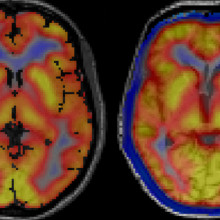
Images captured using a hybrid PET/MRI machine show activated immune cells in the frontal brain regions in a patient with frontotemporal dementia (right) compared to a healthy volunteer (left).
“A presence in those parts of the brain would suggest that inflammation is not playing its normal role of cleaning up damaged cells,” explains Dr. Finger. “It would suggest the brain’s immune response is overactive and that we should consider clinical trials for medications that modulate this response.”
Dr. Finger is an active investigator for novel therapies. In 2019, her group will participate in at least two clinical trials for medications that target genetic mutations that can cause frontotemporal dementia. The studies are phase I trials, which means they are the first time the medications are being tested in humans.
Dr. Finger is also leading a North American multi-centre trial called FOXY. The study will examine the therapeutic potential of a hormone called oxytocin to improve the loss of emotion and empathy that frequently occurs in patients with frontotemporal dementia.
“In the past there were very few treatments for frontotemporal dementia,” explains Dr. Finger. “We are glad to say that Lawson and St. Joseph’s will offer the opportunity to take part in these advances. Words cannot adequately express the appreciation we have for our patients, caregivers and healthy volunteers who participate in research. The time and effort they selflessly donate with the goal of helping future patients is truly inspiring and motivating.”
Image
This story originally appeared in an annual publication from the Alzheimer Society London and Middlesex.
Scientist
Revolutionizing rehab
St. Joseph’s Health Care London is taking giant strides in the science of rehabilitation and movement, with direct benefit to patients.
St. Joseph’s is setting a long-time vision into motion.
“Five years ago, we had a vision of leveraging our long history and expertise in providing innovative rehabilitation treatments to improve the lives of people with mobility needs on a larger scale,” says Roy Butler, President and CEO of St. Joseph’s Health Care London (St. Joseph’s). “That dream has come to life.”
While experts at St. Joseph’s had the knowledge, innovative spirit and passion to achieve the vision, they needed a partner who shared the same enthusiasm.
William and Lynn Gray answered that call. With their generosity and ground-breaking investment, The Gray Centre for Mobility and Activity was created.
“Lynne and I are very pleased with the steady forward advancement of the centre’s mission since its establishment just a few short years ago,” says Bill Gray. “The innovative thinking and idea generation that seeks new solutions to the issue of mobility have really taken root. We hoped that The Gray Centre would have an impact on care ... and it has.”
“We’ve watched the development of The Gray Centre with enormous pride and are pleased to have our name associated with it, and the excellence it stands for,” adds Lynne Gray.

A unique concept
Established in 2020, The Gray Centre at St. Joseph’s Parkwood Institute is a regional hub focused on researching leading-edge treatments and interventions in mobility and activity. The centre’s unique model of linking research and care allows researchers to work side-by-side with clinicians, patients, and caregivers to uncover optimal methods for maintaining mobility throughout a person’s life.
“Scientists at The Gray Centre are leading the way in integrating technology and solutions in care to better understand how we can enhance each patient’s treatment plan to improve their functionality and ability to move,” says Butler.
Pioneering Research
More than 50 ongoing rehabilitation research projects at Parkwood Institute are exploring areas such as spinal cord and traumatic brain injury rehabilitation, pain, outcomes for amputees, virtual exercise and cognitive behavioral therapy, gait analysis as a measure of dementia progression, and stroke rehabilitation and recovery.
The Gray Centre is a catalyst and connector for these projects by investing in cutting-edge technology, providing seed grants, embedding researchers from Western University, leveraging clinical expertise, attracting world-class researchers and translating new knowledge into clinical practice by training students and clinicians, and fostering sustainable practice change.
More than $1.3 million granted through St. Joseph’s Health Care Foundation has advanced work at The Gray Centre over the past year. From researcher support to new equipment such as two transcranial magnetic stimulators, a portable handheld ultrasound and several sensored mats for gait assessment donors have stepped up to advance this work.
Leadership with Purpose
At the helm of The Gray Centre is Siobhan Schabrun, PhD, a world-renowned neuroscientist and the inaugural William and Lynne Gray Research Chair in Mobility and Activity. Thanks to a partnership with Western University’s Faculty of Health Sciences and Schulich School of Medicine & Dentistry, donor funding for the chair made through St. Joseph’s Health Care Foundation was matched, creating a $5-million endowed position.
Schabrun’s innovative research benefits people suffering from chronic pain. With a focus on non-invasive brain stimulation techniques to enhance neuroplasticity and improve mobility and activity outcomes, she and her team are, in essence, retraining the brain’s pain response. This innovative work bridges the gap between neuroscience and rehabilitation, offering new hope for individuals with musculoskeletal and neurological conditions.
Originally trained as a physiotherapist with a PhD in neuroscience from the University of Adelaide in Australia, Schabrun has attracted more than $15 million in competitive research funding and written or contributed to more than 140 scholarly publications.
FLOATing Forwards

The newest advancement is a first-in-Canada and a marvel of medical engineering that is transforming options in rehabilitation research and practice.
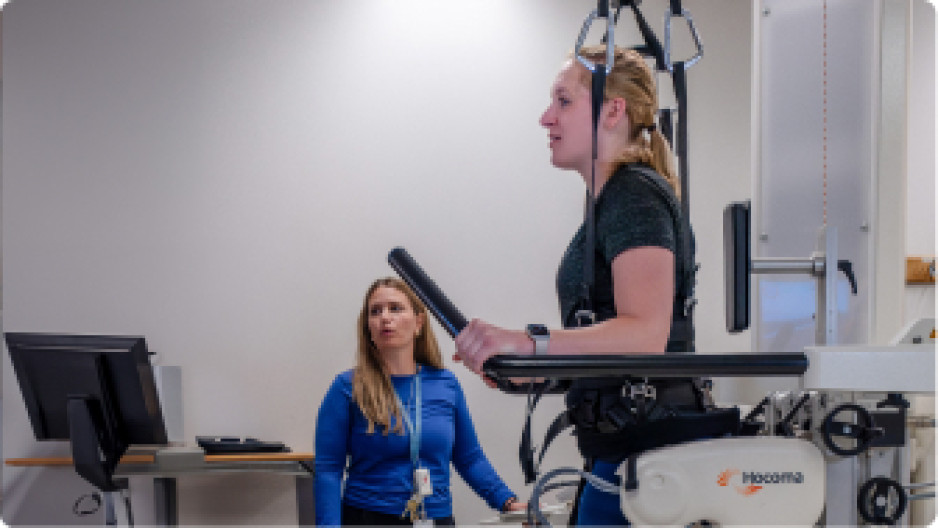
The Reha-Stim Medtec FLOAT system at St. Joseph’s Parkwood Institute enables patients with mobility limitations to walk, supported, without fear of falling. They "float" in a controlled environment using a combination of robotics, body-weight support and real-time feedback. The device has a harness attached to a robotic arm, which adjusts the level of support based on the patient's movements. Sensors provide continuous feedback for maximum learning and greatest benefit to physical therapists and patients alike. The FLOAT system has shown significant improvements in patients' mobility, balance and overall functional independence.
“Innovative equipment like the new FLOAT System is an example of the type of innovation that does not exist anywhere else in Canada,” says Bill Gray. “The real-life application of technologies like this are what The Gray Centre is intended to be about.”
Through the combined efforts of dedicated professionals, cutting-edge technology and philanthropist partners, St. Joseph’s Gray Centre has combined vision with passion and is transforming lives, one step at a time.
Date: 1. Do you have any ALLERGIES to Medications? YES NO a. If YES, please list the medication and describe what happens? 2. Please list any prescription AND non-prescription medications you are taking now: Name Dose/Amount How Often a. b. c. d. e. f. g. h. i. j. k. 3. Do you take Calcium/Vitamin...
Rheumatology Infusion Room LOCATION AND HOURS The Rheumatology Infusion Room is located within the Rheumatology Clinic at St. Josephs Hospital: in Zone D, on Level 2. You will check in at the same reception area as when you see your rheumatologist. Hours of Operation: Monday to Friday (excluding sta...
… The American Rhinologic Society cannot provide specific medical advice to patients via the Internet. All patients … that patients can understand and participate in their own medical care Accessibility Report Filename: … The American Rhinologic Society cannot provide specific medical advice to patients via the Internet. All patients …
RHINOPLASTY INTRODUCTION The term rhinoplasty refers to surgery performed to alter the structure of the external nose. It is commonly referred to as a nose job. When combined with surgery on the nasal septum it is referred to as a septorhinoplasty. This may be performed for purely cosmetic reasons ...
Ricardo Viana
Ricardo Viana, MD, OT
Associate Professor, Schulich School of Medicine and Dentistry
Key Areas of Focus:
Amputation; Stroke
Phone:
519-685-4292 ext. 45027
Email:
Accepting Grad Students:
No
About:
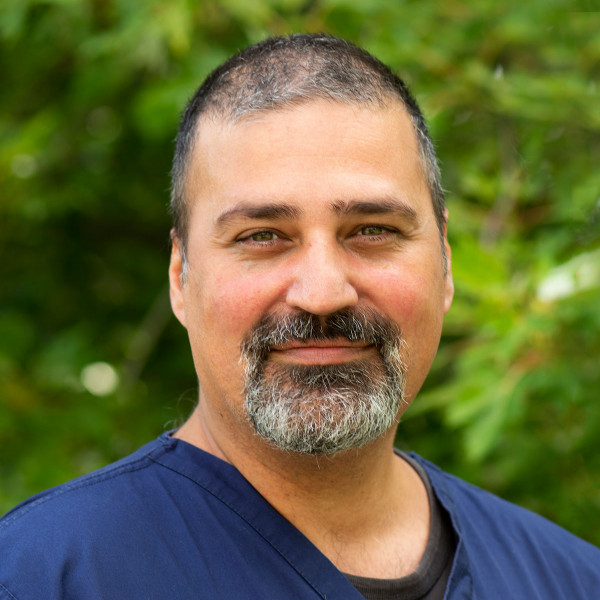
Dr. Ricardo Viana is a physiatrist at Parkwood Institute and an Associate Professor in the Schulich School of Medicine and Dentistry at Western University. Prior to studying medicine, Dr. Viana was an cccupational therapist. Dr. Viana completed his medical training in 2008 and his Physical Medicine and Rehabilitation residency training in 2013. Dr. Viana’s clinical focus is on Stroke and Amputee rehabilitation as well as neuromuscular and pain medicine.
Dr. Viana has two primary research interests. First, is understanding the impact of dual-task performance on mobility, balance and falls for those with amputation. And second, is systematic reviews in support of the Evidence Based Review Stroke Rehabilitation. Dr. Viana also has a growing interest in education, both medical education and knowledge translation in the clinical setting.
… he.Ion don. on .ca Robin Walker Integrated Vice President Medical Affairs and Medical Education Personal and Confidential Dear Robin: The … he.Ion don. on .ca Robin Walker Integrated Vice President Medical Affairs and Medical Education Personal and Confidential Dear Robin: The …
Office of the President 268 Grosvenor Street, PO Box 5777 London, ON N6A 4V2 June 5, 2017 T: 519 646-6100 ext. 64200 F: 519 646-6054 www. sj he.Ion don. on .ca Robin Walker Integrated Vice President Medical Affairs and Medical Education Personal and Confidential Dear Robin: The purpose of this lette...
… June 4, 2018 Robin Walker Integrated Vice President Medical Affairs and Medical Education Personal and Confidential Dear Robin: … June 4, 2018 Robin Walker Integrated Vice President Medical Affairs and Medical Education Personal and Confidential Dear Robin: …
June 4, 2018 Robin Walker Integrated Vice President Medical Affairs and Medical Education Personal and Confidential Dear Robin: Office of the President 268 Grosvenor Street, PO Box 5777 London, ON N6A 4V2 T: 519 646-6100 ext. 64200 F: 519 646-6054 www.sjhc.london.on.ca The purpose of this letter is ...
… Contacts & info hosted on OWL from: • PARO, Hospitals/Medical Affairs, Postgraduate Medical Education, Learner Experience, & Windsor Site … at 8:30 am, Zoom Link Located in OWL OWL Competency Based Medical Education (CBME) ORIENTATION TAB: • includes … Contacts & info hosted on OWL from: • PARO, Hospitals/Medical Affairs, Postgraduate Medical Education, Learner …
Orientation 2021 Welcomes you! As your new academic year is quickly approaching, we are sharing with you the agenda & outline for your Virtual Orientation 2021. Your orientation will be in virtual format due to the uncertainties of COVID-19. Attached is the Orientation Agenda + OWL Instructions + T2...
… quality. Available Resources 1. Use of Western University Medical Library and its facilities. 2. Use of medical library at St. Joseph’s. 3. Access to media services … CLINICAL INTERESTS RESEARCH INTERESTS KING, G. (Orthopedic) Medical Director Elbow, Wrist, Hand Elbow & Wrist …
CARING FOR THE BODY, MIND & SPIRIT SINCE 1869 Renowned for compassionate care, St. Josephs is one of the best academic health care organizations in Canada dedicated to helping people live to their fullest by minimizing the effects of injury, disease and disability through excellence in care, teachin...
Running Against Ruptures
1:00pm
This event is raising funds for brain aneurysms research.
Did you know, ruptured brain aneurysms account for 3–5% of all new strokes?
How about that women, more than men, suffer from brain aneurysms at a ratio of 3:2?
It is a devastating medical issue many Canadians face.
You are invited to Running Against Ruptures on June 23, 2019 at Greenway Park in London, ON
Running Against Ruptures is committed to raising funds for patients and families affected by brain aneurysms so people can get the help they need earlier and with better results. By conducting research, we can help alleviate the pain many families encounter due to brain aneurysms.
However, each of these projects requires funding. That’s why Running Against Ruptures looks to raise money to support these life-saving research projects.
For more information, please visit the London Health Sciences Foundation.
Partners
… the following after your injection, you must seek immediate medical attention by contacting the pain clinic … the following after your injection, you must seek immediate medical attention by contacting the pain clinic …
June 16, 2020; Page 1 of 2 Sacroiliac Joint Injection What is a sacroiliac (SI) joint injection and why is it performed? The SI joints connect the spine to the pelvis and allow for motion. There are two SI joints: one on the left and one on the right. The SI joint is surrounded by a lubricant fille...