


Search
Search
625 Search Results:
2021 Media Releases
New study will assess fecal transplants in treatment of pancreatic cancer
December 15th, 2021
Global study on heart valve repair surgery will improve patient outcomes around the world
November 16th, 2021
Scientists studying carbon monoxide as possible treatment for sepsis
November 9th, 2021
Study examining moral injury in health care workers is focusing on functional brain changes
October 20, 2021
Biotech Support Group & Lawson Health Research Institute Enter Collaborative Research Agreement to Monitor Protease Inhibitor Function During COVID-19 Infections
September 24, 2021
New form of expanded dialysis improves quality of life, study finds
September 23, 2021
New tool to help multiple sclerosis patients with mental health challenges
July 20, 2021
Research encourages re-evaluation of special nerve treatment for chronic pain
July 8, 2021
A “safety net of relationships” to bridge the gap between hospital and community at discharge
June 23, 2021
Study to examine health impacts of the COVID-19 pandemic for mothers and their new babies
June 16, 2021
Reducing social isolation with new community resource
June 2, 2021
New potential treatment for critically ill COVID-19 patients one step closer to saving lives
May 26, 2021
London researchers team up with Diagnostics Biochem Canada to study COVID-19
May 25, 2021
Getting the data on homelessness
May 19, 2021
Researchers receive over $40,000 to study role of personality and resiliency in Veteran mental heath
May 13, 2021
Children born in Sarnia at higher risk of developing asthma, compared to London and Windsor
May 4, 2021
Simple device improves care after kidney transplantation
April 29, 2021
New research on reducing harm for people who use methamphetamine in hospital
April 23, 2021
Monitoring the effects of COVID-19 quarantine measures on young adults with mood and anxiety disorders
April 15, 2021
COVID-19 shown to leave unique lung fingerprint
March19, 2021
New transportation resource for youth in crisis
March 18, 2021
London scientists clinch $2 million in federal funding to develop better imaging tools for brain disease
March 3, 2021
Pinpointing the role of language disruptions in psychosis
February 18, 2021
Clinical use of EpiSign proven for diagnosing rare heritable disorders
February 17, 2021
Differences in walking patterns could predict type of cognitive decline in older adults
February 16, 2021
Dialysis patients four times more likely to die from COVID-19 infection
February 11, 2021
Smart technology in the home effective for supporting mental health care, study finds
February 10, 2021
Most instructions for inserting COVID-19 nasopharyngeal swabs don't go deep enough, research finds
February 3, 2021
‘Brain training’ may be an effective treatment for post-traumatic stress disorder, clinical trial finds
January 26, 2021
London expands approach to prevent discharge from hospital to homelessness
January 20, 2021
… residents every day. ADVANCING UROLOGY SURGERY FOR REDUCED PAIN AND RECOVERY TIME The right tools in the right hands … tumours, this game-changing equipment is leading to less pain and shorter recovery times for patients. BREAKING DOWN … can help patients recover from an injury, surgery or manage pain. In the past, custom splints were molded from plastic – …
St. Josephs Health Care Foundation 268 Grosvenor Street PO Box 5777 STN B London, ON N6A 4V2 519-646-6085 sjhc.london.on.ca/foundation CHARITABLE REGISTRATION NUMBER: BN 11918 3390 RR0001 facebook.com/stjosephslondon youtube.com/stjosephslondon twitter.com/stjosephslondon Connect with us YOUR SUPPOR...
2022 Media Releases
Researchers are combining new technologies to examine blood proteins in COVID-19 patients
Study aims to empower patients with Type 2 diabetes to take control of their health
Largest trial ever done in hemodialysis care examines optimal dialysis temperature
Virtual care associated with significant environmental and patient cost savings
London researchers discover novel method to diagnose long COVID
New study testing whether virtual groups can improve well-being in older adults
Leveraging virtual reality to manage pain in paediatric patients
London researchers adapt MRI technology to image salt within the kidneys
London researchers collaborating on national dementia prevention program
New tool shows promise in helping people manage traumatic brain injuries one pace at a time
Local researchers using artificial intelligence to lead the way in bedside lung imaging
New study aims to improve mental health treatments for stroke patients
Local scientists creates novel test that could easily diagnose repetitive blast injury
April 11, 2022
Study finds high percentage of patients with a severe COVID-19 infection will end up with kidney injury, often fatal
March 15, 2022
Study shows a decline in Veterans’ mental health throughout the pandemic
February 16, 2022
Shocking number of heart attack patients suffer dangerous hemorrhage following lifesaving treatment, study shows
February 10, 2022
Study examines new forms of treatment for those suffering from post-traumatic stress disorder
January 25, 2022
London ranks in top ten of Canada’s research hospitals
January 18, 2022
New study looking at advanced imaging to optimize treatments for prostate cancer patients
January 12, 2022
… 2025 Pain Management Rheumatology Workshop February - June …
… you are working with has called to talk to you about pain relief for a patient. You ask him to go ahead and order … has presented with fever, shakes/chills, fatigue, abdominal pain, and severe diarrhea. The patient is on contact … July 11th 1pm – 4pm MSB 146 • Topics include: Chest Pain, Neuro Emergencies, Acute Dyspnea, GI Bleeding, etc. * …
My First Week of Residency: Survival Pearls & Call Resident Orientation: June 29 2018 Are you ready for a brand new chapter in your medical career? Here are some tips and tricks to survive your first few days, and CALL Welcome to Residency! You arrived in London yesterday for Orientation and you are...
… 4 post hospital admission. He was admitted with abdominal pain and is being investigated for ischemic bowel. • You … 4 post hospital admission. He was admitted with abdominal pain and is being investigated for ischemic bowel. • You …
Critical Care Outreach Team (CCOT) What should I do? 68 year old man is day 4 post hospital admission. He was admitted with abdominal pain and is being investigated for ischemic bowel. You receive a call at 0345 that his BP is 85/48. His baseline BP is 160/90. Case What should I do? A) Assess the...
… A guide to managing your pain during COVID-19 Our services Hospitals across Ontario … for the time being. What does this mean for the Pain Management Program? For now, our groups, workshops and … and email added to our list. We know that managing chronic pain is difficult at the best of times. The stressors and …
A guide to managing your pain during COVID-19 Our services Hospitals across Ontario are doing everything they can to limit the spread of COVID-19, including rescheduling non- urgent outpatient clinic appointments for the time being. What does this mean for the Pain Management Program? For now, our g...
A new study is examining if probiotics can improve outcomes in knee replacement surgeries
LONDON, ON - Researchers at Lawson Health Research Institute are examining whether the use of a daily probiotic can improve outcomes in patients who undergo a total knee replacement surgery.
There are more than 70,000 knee replacement surgeries in Canada each year, and up to 10 per cent of patients experience complications following the procedure.
“One in five patients are dissatisfied after surgery due to pain and discomfort, and some patients need a repeat surgery because there is complication, infection or loosening of the joint,” says Dr. Matthew Teeter, Lawson Scientist at London Health Sciences Centre (LHSC).
Dr. Teeter and the research team are focused on improving patient outcomes. Recognizing that knee replacement patients who are considered healthy tend to have better outcomes, they are interested in how they can better support patients’ overall health as one way to optimize their outcomes.
“The knee replacement patients I see in clinic are very diverse - from young healthy active patients to medically complex to socioeconomically disadvantaged,” says Dr. Brent Lanting, Lawson Scientist and Orthopaedic Surgeon at LHSC. “We know those with poor health do not do as well as those with good health, good diet, and good supports. This study is profound in that it investigates a core aspect of our health – the gut microbiome.”
The research team will recruit 30 participants who are scheduled for a knee replacement surgery. Half of the participants will receive a daily probiotic for six-weeks ahead of the surgery, and the other half will act as a control group.
“Our microbiome is a large part of why we are healthy. A healthy person has a microbiome that produces vitamins and other things which cross over to our system and helps promote healing,” says Dr. Jeremy Burton, Lawson Scientist and Research Chair of Human Microbiome and Probiotics at St. Joseph’s Health Care London. “We are hoping it will improve more deep healing and prevention of the rejection of the joint by improving the microbiota by giving probiotics.”
The team will assess outcomes using CT imaging, looking at the bone and implant and how it is fixing into place. They will also use PET/MRI to look at the cellular activity around the joint and inflammation.
“This should give us a sharp focus of what is going on with the joint and help us determine if there was a positive effect by using probiotics,” explains Dr. Teeter.
If the pilot study proves to be promising, the team will then work towards a larger clinical trial, combining probiotics into pre-surgical care.
“Ultimately, we want better patient outcomes with a simple treatment,” adds Dr. Burton. “If we can help improve outcomes with the use of a daily probiotic, that is a great win.”
The research team received a New Frontiers in Research Fund (NFRF) of $250,000 over three years to conduct this study.
About Lawson Health Research Institute
Lawson Health Research Institute is one of Canada’s top hospital-based research institutes, tackling the most pressing challenges in health care. As the research institute of London Health Sciences Centre and St. Joseph’s Health Care London, our innovation happens where care is delivered. Lawson research teams are at the leading-edge of science with the goal of improving health and the delivery of care for patients. Working in partnership with Western University, our researchers are encouraged to pursue their curiosity, collaborate often and share their discoveries widely. Research conducted through Lawson makes a difference in the lives of patients, families and communities around the world. To learn more, visit www.lawsonresearch.ca.
Media Contacts
Celine Zadorsky
Senior Media Relations Consultant
Communications & Public Engagement
T: 519-685-8500 ext. 73502
Celine.zadorsky@lhsc.on.ca
A year in review: Lawson research highlights from 2018
New clinical protocol after general surgery cuts opioid prescribing in half
Recognizing the role that opioid prescribing plays in the national opioid crisis, a team of researchers at Lawson and Western University have developed a new clinical protocol called STOP Narcotics. The protocol includes a combination of patient and health care provider education and an emphasis on non-opioid pain control. The study found that they were able to reduce the overall amount of opioids being prescribed after general surgery by 50 per cent while still adequately treating a patient’s post-operative pain. Read more.
Image

Probiotics for respiratory tract infections could save Canada nearly $100 million a year
A recent study suggests the use of probiotics to prevent respiratory tract infections in Canada could result in nearly $100 million per year in savings. There is growing evidence that probiotics can reduce the risk of respiratory tract infections and lower their frequency, as well as reduce the duration of an infection, antibiotic use and absences from work. Replicating a research model used in France, researchers examined the potential clinical and economic impacts in Canada. Read more.
Image

Blood test can predict optimal treatment for advanced prostate cancer, study finds
An international collaborative study between Lawson, Memorial Sloan Kettering Cancer Center, the Royal Marsden and Epic Sciences is one of the first to demonstrate that a blood test can predict how patients with advanced prostate cancer will respond to specific treatments, leading to improved survival. The study used a liquid biopsy test that examines circulating tumour cells (CTCs) in blood samples from patients with advanced prostate cancer who are deciding whether to switch from hormone-targeting therapy to chemotherapy. Read more.
Image
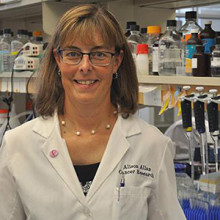
Machine learning could predict medication response in patients with complex mood disorders
Mood disorders like major depressive disorder (MDD) and bipolar disorder are often complex and hard to diagnose, especially among youth when the illness is just evolving. This can make decisions about medication difficult. In a collaborative study by Lawson, The Mind Research Network and Brainnetome Center, researchers have developed an artificial intelligence (AI) algorithm that analyzes brain scans to better classify illness in patients with a complex mood disorder and help predict their response to medication. Read more.
Image
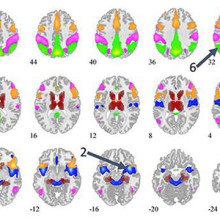
Lawson researchers receive $4.4 million to study personalized medicine at LHSC
Personalized medicine is the analysis of a patient’s DNA to predict how they will respond to medications. Led by Dr. Richard Kim, scientist at Lawson and clinical pharmacologist at London Health Sciences Centre (LHSC), researchers at Lawson have received $4.4 million to study an expanded personalized medicine program at LHSC that involves full integration of research into patient care. Read more.
Image
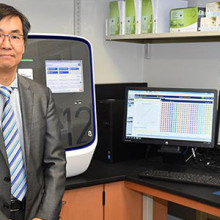
Drinking more water does not slow decline of kidney function for patients with kidney disease clinical trial shows
A study published in JAMA (Journal of the American Medical Association) by researchers at Lawson and Western University found that coaching patients with Chronic Kidney Disease to drink more water does not slow down the decline of their kidney function. Read more.
Image

Funding for unique strategy to prevent homelessness after hospital discharge
On September 10, the Ministry of Families, Children and Social Development, announced that Lawson will receive $223,572 from the Homelessness Partnering Strategy’s Innovative Solutions to Homelessness funding stream to support the project “No Fixed Address Version 2 Expansion” research project. This research will further refine the No Fixed Address strategy for reaching and supporting patients during the crucial transitional period when they are being discharged from the hospital and re-integrated into the community. Read more.
Image
Synthetic surfactant could ease breathing for patients with lung disease and injury
Human lungs are coated with a substance called surfactant which allows us to breathe easily. When lung surfactant is missing or depleted, which can happen with premature birth or lung injury, breathing becomes difficult. In a collaborative study between Lawson and Stanford University, scientists have developed and tested a new synthetic surfactant that could lead to improved treatments for lung disease and injury. Read more.
Image
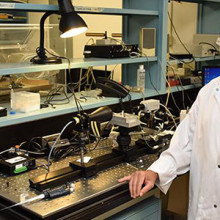
Research team develops clinically-validated 3D printed stethoscope
A team of researchers have developed an open-source, clinically validated template for a 3D printed stethoscope for use in areas of the world with limited access to medical supplies – places where a stethoscope could mean the difference between life and death. Read more.
Image
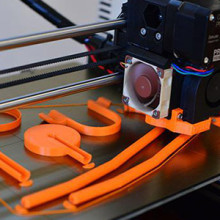
Family environment influences emotional well-being of children with epilepsy
Children with epilepsy have a higher risk of developing emotional and behavioural disorders, including depression, anxiety and poor self-esteem, yet it has been difficult for researchers to pinpoint why this occurs. Researchers at Children’s Health Research Institute, a Lawson program, have found that family environment influences the relationship between clinical characteristics of epilepsy at diagnosis and children’s emotional well-being two years later. Read more.
Image
How the brain is folded provides researchers with an accurate marker to predict psychosis in high-risk patients
By using images of the brain to look at how its outer surface is folded on itself, researchers can predict which high-risk patients will develop psychosis with more than 80 per cent accuracy. Before now, there has been no way to examine young people before they become ill to reliably identify who will develop acute psychosis and who will not. Read more.
Image

High-dose radiation can improve survival in cancer patients once thought incurable
Cancer that spreads from an original tumour to other parts of the body is generally considered incurable. In an international study led by Lawson, researchers challenged this idea by showing that high-dose radiation can improve survival in patients with cancer that has spread to five or less sites. The study called SABR-COMET was the first randomized phase II clinical trial of its kind. Read more.
Image
… Sleep Issues Following ABI April 5, 2011 15142663 Chronic Pain April 26, 2011 15142910 Survivor Stories 2011 May 3, … April 12, 2016 54026579 Dealing with Headaches and Pain Following Brain Injury April 19, 2016 54027516 Brain … Sleep Issues Following ABI April 5, 2011 15142663 Chronic Pain April 26, 2011 15142910 Survivor Stories 2011 May 3, …
Revised March 16, 2016 How to Access Archived Webcasts of the Survivor & Family Education Series 1. Go to http://webcast.otn.ca 2. In the middle of the screen, under Archived Events, select Public. 3. In the Search Box in the top right hand corner, type: Parkwood ABI Survivor Series and press enter....
… • balance issues • vision issues • hearing changes • pain • weakness • seizures • feel tired all the time • … • balance issues • vision issues • hearing changes • pain • weakness • seizures • feel tired all the time • …
CARING FOR THE BODY, MIND & SPIRIT SINCE 1869 Renowned for compassionate care, St. Josephs is one of the best academic health care organizations in Canada dedicated to helping people live to their fullest by minimizing the effects of injury, disease and disability through excellence in care, teachin...
… lasts a long time, or is not relieved by over-the-counter pain relievers • vomiting three times or more • problems … lasts a long time, or is not relieved by over-the-counter pain relievers • vomiting three times or more • problems …
Concussion care The first 48 hours after a concussion - REST Remember a concussion is a brain injury. R E S T A concussion is a brain injury caused by a hit to the head or other part of the body. When the head or body is hit, the force causes the brain to move back and forth inside the skull causing...
… lasts a long time, or is not relieved by over-the-counter pain relievers Vomiting three or more times Problems … lasts a long time, or is not relieved by over-the-counter pain relievers Vomiting three or more times Problems …
Developed by the Acquired Brain Injury Outpatient Program, Parkwood lnstitute. The first 48 hours after concussionREST! Experiencing effects of a concussion? What is a concussion? A concussion is a mild brain injury caused typically, but not always, by an impact to the head, with or without loss of ...
… approach. April 16 Dealing with Headaches and Pain Following ABI Speaker: Dr. Keith Sequeira Pain is often a common issue for people post brain injury … be experienced as headaches, pressure in your head, neck pain and in other areas of the body. Dr. Sequeira, a …
Parkwood Institute Acquired Brain Injury Survivor and Family Education Series Spring 2019 Schedule The survivor and family education series is a forum open to individuals with acquired brain injury, their family and friends. Sessions will be Tuesday evenings from 6:30 to 8:00 pm. In London, the sess...
… may still develop osteoporosis Symptoms Osteoporosis is not painful unless you have fractures. Bone loss occurs without … the spine to collapse. This can result in height loss, pain and a deformed back. Diagnosis Several tests can detect low bone mass. These tests are quick, painless and non-invasive. However, measurement of bone …
Facts about Osteoporosis What is osteoporosis? Osteoporosis means porous or brittle bones. Weak bones can break easily; fractures of the hip, wrist and spine are commonly associated with osteoporosis. Bone is surprisingly dynamic. It is constantly remodelled; bits of bone are eaten away or resorbed,...
… Drains/Tubes: Yes □ Type and Protocol: Location: Pain: Yes □ Acute □ Chronic □ Location: Dialysis: Yes □ … Drains/Tubes: Yes □ Type and Protocol: Location: Pain: Yes □ Acute □ Chronic □ Location: Dialysis: Yes □ …
Language of Preference / Cultural Preferences: Smoke free policy has been reviewed with patient Most recent/updated progress notes available in Cerner (if no, please send) History & Physical notes updated in Cerner (if no, please send ower or Attorney for Personal Care (if not in place identify SDM ...
… drainage Decreased smell or taste Facial pressure, pain, or fullness LESS COMMON SINUSITIS SYMPTOMS Headache … Fatigue or sleep changes Bad breath Fever Upper tooth pain Cough Ear pressure Since many of these symptoms may … headache” is a common term, but can be misleading. Facial pain/pressure or headache that occurs without nasal …
ADULT SINUSITIS INTRODUCTION Sinusitis, rhinosinusitis and sinus infection are terms that are commonly used by patients, healthcare providers, and the media. However, accurately diagnosing sinusitis is often more complicated than people realize. A number of factors are considered when making a diagn...
Advancing research on haemochromatosis
Thanks to decades of work by dedicated researchers like London, Ont.-based Dr. Paul Adams, haemochromatosis has become much easier to diagnose, though many people are still unaware of the genetic condition. And while treatment options are effective, they are limited, according to a new review published in The Lancet.
In Canada and the United States, one in 227 people have haemochromatosis, making it more common than cystic fibrosis. However, the U.K. Biobank Project, a large-scale biomedical database and research resource, found that only 12 per cent of people who have the condition actually know they have it.
Dr. Adams, a Scientist at Lawson Health Research Institute and Professor at Western University’s Schulich School of Medicine & Dentistry, explains, “The most common genetic test done in Canada and the U.S. is the best way to make the diagnosis, but you have to think of the condition and the doctor has to know that there is a genetic test available. So those two steps are some of our stumbling blocks.”
In Ontario, testing and diagnosis often comes only after some other issue arises, “One day someone stumbles on the fact that there's a liver abnormality, or the patient is complaining of fatigue and the doctor orders blood tests, thinking blood iron is going to be low,” Dr. Adams explains. “And then it turns out to be very high.”
Most common in people of Northern European ancestry, haemochromatosis results in excess iron in the body and includes symptoms such as fatigue and arthritis pain, and can lead to serious complications like cirrhosis of the liver, liver cancer and death.

Starting in January 2000, Dr. Adams conducted a multi-year study involving 20,000 London, Ont. residents that helped change how haemochromatosis is diagnosed – moving from testing iron levels to genetic testing. With iron levels affected by alcohol consumption, obesity, inflammation and some types of cancer, the previous measure led to many false positive tests.
But knowing when genetic testing should be done remains a challenge. The underdiagnosis and lack of awareness also remain an issue when it comes to more serious complications.
“If this is diagnosed early, like as a young adult, then this can be treated and those complications won’t develop,” Dr. Adams says. “If you donate blood, treatment is very similar to that procedure and it's tolerated extremely well in most. People who have a lot of excess iron will have this blood taken once a week until their iron levels come down.”
He hopes this new publication will lead to better diagnosis and treatment, and sees a future in emerging biological therapies.
Dr. Adams continues to be involved in global research, including work with the U.K. Biobank Project on genomic testing, and is investigating partnerships to develop future gene editing treatment.
People looking for more information about haemochromatosis can reach learn more on the Canadian Haemochromatosis Society’s website.
Research Area
Media Contact
Amanda Taccone
Communications Consultant & External Relations
Lawson Health Research Institute
T: 519-685-8500 ext. ext. 64059
C: 226-919-4748
@email
… Neuropathic Pain Seminar Saturday, February 8, 2020 0800-1600 St. … 1) Be able to diagnose various forms of neuropathic pain 2) Understand the diverse pathophysiology of neuropathic pain 3) Identify the optimal evidence based strategies for … Neuropathic Pain Seminar Saturday, February 8, 2020 0800-1600 St. …
Neuropathic Pain Seminar Saturday, February 8, 2020 0800-1600 St. Josephs Hospital Shuttleworth Auditorium, Zone D, Level 0, Room D0-104 List Overall Learning Objectives: 1) Be able to diagnose various forms of neuropathic pain 2) Understand the diverse pathophysiology of neuropathic pain 3) Identi...
… Up-to-Date Review of Lower Back Pain Date: Friday, November 2, 2018 Time: 8:30 am-4:00 pm … and psychology in the management of lower back pain • Appreciate the variety of pharmacologic options • … Management and Expected Outcomes in Mechanical Low Back Pain Dr. Fawaz Siddiqi 9:40–10:20 am Non-Surgical …
Up-to-Date Review of Lower Back Pain Date: Friday, November 2, 2018 Time: 8:30 am-4:00 pm Location: St. Josephs Hospital, Shuttleworth Auditorium, 268 Grosvenor St., London, ON Zone D, Level 0, Room D0-104 LEARNING OBJECTIVES: Understand the role of occupational therapy, physiotherapy, and psycholo...