


Search
Search
625 Search Results:
… Cardiac Conditions Arrhythmia Angina Pectoris Chest Pain Other GI Diagnoses Cirrhosis and Alcoholic Hepatitis … Cardiac Conditions Arrhythmia Angina Pectoris Chest Pain Other GI Diagnoses Cirrhosis and Alcoholic Hepatitis …
SOUTH WEST LOCAL HEALTH INTEGRATION NETWORK (the LHIN) and St. Josephs Health Care, London (the H os p i ta I) Hospital Service Accountability Agreement for 2008-1 0 HospitaI Service Accountability Agreement for 2008-1 0 TABLE OF CONTENTS l a O BACKGROUND ..............................................
… insurance, first aid kit, sunscreen, insect repellent, pain medication, anti-nausea and anti-diarrhea pills, … insurance, first aid kit, sunscreen, insect repellent, pain medication, anti-nausea and anti-diarrhea pills, …
Travel with an insulin pump Carry everything that you need on board the airplane. See list below. Additional items may also be packed in checked luggage, but all insulin should be carried with you because it may be exposed to extreme temperatures in transit. Write down your current basal rates and c...
… to sinusitis”: 1. Frontal headache (forehead) with pain or pressure in one or more regions of the face, teeth, … Endoscopy), or by laboratory data 3. Headache and facial pain develop at the same time as the sinusitis symptoms 4. … is often used to describe a facial pressure or facial pain headache. However, in many large studies migraine …
HEADACHES AND SINUS DISEASE INTRODUCTION Headache is very common and affects millions of adults in the US. Headaches have many causes and can present in a variety of ways. Most headaches are not related to sinus disease. Among patients who have sinus disease, some patients have headaches related to,...
History
Each hospital’s research mission has a rich history. At both hospital organizations, leaders recognized opportunities to leverage in-house experts to conduct research and improve care. However, they also recognized the challenge in supporting these activities without dedicated space and resources.
Through great foresight, our hospitals founded the official research institutes that serve as Lawson's foundation:
- 1983: Supported by Sister Mary Doyle, former Executive Director of St. Joseph's, the Sisters of St. Joseph's establish the hospital's official research institute. LHSC and Upjohn jointly open the Victoria Upjohn Clinical Research Unit at South Street Hospital (formerly Victoria Hospital), focusing on Phase I-III clinical trials.
- 1987: The St. Joseph's research institute is named the Lawson Research Institute (LRI) in honour of London businessman and philanthropist Colonel Tom Lawson and his wife, Miggsie Lawson - close friends of Sister Mary Doyle and major supporters of the research mission.
- 1990: Victoria Hospital takes over the operation of the clinical research unit at South Street, renaming it the Victoria Clinical Trials Centre.
- 1997: The Victoria Clinical Trials Centre is renamed London Health Sciences Centre Research Inc. and becomes a fully incorporated research institute overseeing all hospital-based research within London Health Sciences Centre sites: Victoria Hospital, University Hospital and South Street Hospital.
- 2000: LRI and LHSCRI merge to form a joint venture: Lawson Health Research Institute.
- 2014: Lawson Research Institute (re-)launches as the hospital-based research arm of St. Joseph's with the goal of transforming imagination to innovation to impact; and as LHSCRI is also embedded into LHSC.
Today, partnerships remain strong, allowing researchers to move seamlessly between hospital locations and Western University.
Milestones
Since forming in 2000, Lawson has pioneered breakthroughs across various disciplines of health research and reached several institutional milestones.
- 2019: Lawson led research team is the first in the world to develop a new imaging tool, showed that MRI can be used to measure how the heart uses oxygen.
- 2019: New studies from Lawson and Western University found for the first time that HIV can be transmitted through the sharing of equipment used to prepare drugs before injection and that a simple intervention can destroy the HIV virus, preventing that transmission.
- 2019: In the first genomic analysis of head and neck cancer by smoking status, researchers at Lawson, in collaboration with researchers at the Ontario Institute for Cancer Research and UCLA Cancer Centre, carried out a comprehensive genetic analysis of HPV-negative tumours to better understand the link between smoking and cancer recovery.
- 2019: Lawson scientists develop molecular diagnostic tool to analyze epigenetic patterns, facilitating diagnosis of rare, unknown hereditary disorders. London Health Sciences Centre is the first site in the world to offer this type of testing.
- 2018: Research shows high-dose radiation can improve survival in patients with cancer that has spread to give or less sites. The SABR-COMET study was the first randomized phase II clinical trial of its kind.
- 2018: An international collaborative study between Lawson Health Research Institute, Memorial Sloan Kettering Cancer Center, the Royal Marsden and Epic Sciences is one of the first to demonstrate that a blood test can predict how patients with advanced prostate cancer will respond to specific treatments, leading to improved survival.
- 2018: In collaborative study between Lawson and Stanford University, scientists develop and test a new synthetic surfactant that could lead to improved treatments for lung disease and injury.
- 2018: Scientists use brain MRI to develop first ever method examining young people before they become ill to reliably identify who will develop acute psychosis and who will not.
- 2018: Research team develops clinically-validated, open-source 3D printed stethoscope for areas with limited access to medical supplies.
- 2018: Lawson opens Clinical Research and Chronic Disease Centre (CRCDC) at St. Joseph’s Hospital to tackle chronic disease and improve patient care.
- 2018: Lawson researchers receive $4.4 million to study personalized medicine at LHSC, examining the value of prescribing treatments based on a patient’s genetics.
- 2017: In one of the largest microbiota studies conducted in humans, researchers at Western University, Lawson Health Research Institute and Tianyi Health Science Institute in Zhenjiang, Jiangsu, China have shown a potential link between healthy aging and a healthy gut.
- 2017: Lawson researchers develop transition program to help young adults with type 1 diabetes move from paediatric to adult care.
- 2017: Innovative study brings next-generation genome sequencing to London cancer patients, contributing to province-wide database of genomic and clinical data.
- 2017: Technology developed at Western University and Lawson Health Research Institute can provide a new window into whether or not patients are responding to treatment for advanced ovarian cancer.
- 2017: Dr. Alan Getgood and his team at Western University and Lawson Health Research Institute are the first in Canada to participate in an investigative trial to determine the safety and efficacy of using a patient’s own cartilage cells to repair knee cartilage injuries.
- 2016: Lawson Researchers at Parkwood Institute are the first in Canada to develop clinical practice guidelines for managing neuropathic pain with patients who have experienced a spinal cord injury.
- 2016: Researchers at Lawson are the first in Canada to use a Prostate Specific Membrane Antigen (PSMA) probe in Positron Emissions Tomography (PET) scans to provide improved and highly specific images used for better diagnosis and management of prostate cancer.
- 2015: Lawson scientists, in collaboration with Ceresensa Inc., produce novel PET-transparent MRI head coil, a world first in imaging technology
- 2015: Lawson announces partnership with STEMCELL Technologies for commercialization of tools for Parkinson’s disease research
- 2015: Novare Pharmaceuticals and Lawson announce issuance of a U.S. patent for the composition-of-matter and use of RHAMM-binding peptides with a wide range of potential therapeutic uses. The patent also has claims for the diagnosis and prognosis of cancer, and for prescribing a course of treatment for the diagnosed cancer.
- 2014: Lawson announces licensing agreement with Yabao Pharmaceutical Group in China to develop and test a new life-saving drug to treat sepsis
- 2014: Lawson researchers are part of a Canadian team who have developed a way to produce a key medical isotope, technetium-99m (Tc-99m), using hospital based cyclotrons
- 2013: The Institute for Clinical Evaluative Sciences (ICES) Western opens at Lawson
- 2012: Lawson installs Canada's first PET/MRI at St. Joseph's Hospital
- 2011: Lindros Legacy Research Building officially opens at University Hospital
- 2010: Lawson opens the Cyclotron and PET Radiochemistry facility at St. Joseph's Hospital
- 2009: Lawson receives a record $7 million donation to support the Canadian Research & Development Centre for Probiotics
- 2008: Lawson establishes an experimental anti-thrombolitic clinic to calculate personalized dosage of drugs based on a patient's genetics
- 2007: The first totally endoscopic closed-chest robotic coronary artery bypass surgery on a patient's beating heart is performed at University Hospital
- 2006: Lawson opens the Aging, Rehabilitation & Geriatric Care Research Centre, the first centre of its kind in Canada, at Parkwood Institute
- 2005: Lawson creates the first Ontario Cardiac Rehabilitation Registry
- 2004: Lawson scientists release a three-year study on the effects of the Walkerton water disaster
- 2003: Lawson opens the Victoria Research Laboratories at Victoria Hospital, the first collaboration of its kind in Canada bringing together research from cancer, children's health and vascular biology
- 2002: Lawson installs the first Positron Emission Tomography and Computer Tomography (PET/CT) scanner in Canada at St. Joseph's Hospital
- 2001: St. Joseph's is one of five sites in the world piloting the Diabetes Electronic Management Systems
… & Survivor-Run Programs April 12, 2011 15142663 Chronic Pain April 26, 2011 15142910 Survivor Stories 2011 May 3, … & Survivor-Run Programs April 12, 2011 15142663 Chronic Pain April 26, 2011 15142910 Survivor Stories 2011 May 3, …
Revised April 18, 2013 How to Access Archived Webcasts of the Survivor & Family Education Series 1. Go to http://webcast.otn.ca 2. In the middle of the screen, under Archived Events, select Public. 3. In the Search Box in the top right hand corner, type: Parkwood ABI Survivor Series and press enter....
… refer a patient to Palliative Care Palliative Care provides pain management and relief of symptoms to those experiencing … are part of this caring process. Reasons for admission pain and symptom management with the expectation that the … home Admission Guidelines: Patients are admitted for pain and symptom management, or end-of-life care Adults …
How to refer a patient to Palliative Care Palliative Care provides pain management and relief of symptoms to those experiencing life-threatening, progressive or terminal illness. Palliative Care focuses on physical, psychological, social and spiritual needs while remaining sensitive to the uniquenes...
… Prevention Rehab in the Community Neck and Lower Back Pain 0 $0 $0 Pediatric Surgery Hip & Knee Replacement - … Prevention Rehab in the Community Neck and Lower Back Pain 0 $0 $0 Pediatric Surgery Hip & Knee Replacement - …
H-SAA Amending Agreement Extension to March 31, 2017 Page 1 H-SAA AMENDING AGREEMENT THIS AMENDING AGREEMENT (the Agreement) is made as of the 1st day of October, 2016 B E T W E E N: SOUTH WEST LOCAL HEALTH INTEGRATION NETWORK (the LHIN) AND St. Joseph's Health Care, London (the Hospital) WHEREAS t...
… • Thirst • Excessive urination • Fatigue • Abdominal pain, nausea, vomiting • Blurred vision • Change in appetite … • if a fruity odor is detected in the breath • if abdominal pain is present • if nausea or vomiting occurs • if you are … • Thirst • Excessive urination • Fatigue • Abdominal pain, nausea, vomiting • Blurred vision • Change in appetite …
Guidelines for Managing Hyperglycemia (High Blood Glucose) Signs and Symptoms of Hyperglycemia ( High Blood Glucose ) ONSET Gradual (hours to days) USUAL CAUSES Illness, infection, surgery, injury Stress: emotional or physical Too little insulin Increased food Exercise (in type 1) with blood g...
… • Thirst • Excessive urination • Fatigue • Abdominal pain, nausea, vomiting • Blurred vision • Change in appetite … • if a fruity odor is detected in the breath • if abdominal pain is present • if nausea or vomiting occurs • if you are … • Thirst • Excessive urination • Fatigue • Abdominal pain, nausea, vomiting • Blurred vision • Change in appetite …
Guidelines for Managing Hyperglycemia (High Glucose Level) Signs and Symptoms of Hyperglycemia ( High Glucose Level ) ONSET Gradual (hours to days) USUAL CAUSES Illness, infection, surgery, injury Stress: emotional or physical Too little insulin Increased food Exercise (in type 1) with glucose...
… Thirst Excessive urination Fatigue Abdominal pain, nausea, vomiting Blurred vision Change in appetite … glucose is > 20mmol/L and you are experiencing abdominal pain, nausea, vomiting, or diarrhea. * Your pump cannot … Thirst Excessive urination Fatigue Abdominal pain, nausea, vomiting Blurred vision Change in appetite …
Guidelines for Managing Hyperglycemia Signs and Symptoms of Hyperglycemia (High Blood Glucose) Onset Gradual (hours to days) Usual Causes Illness, infection, surgery, injury Stress: emotional or physical Too little insulin Increased food Exercise (in type 1) with blood glucose over 14 mmol/L S...
… • Thirst • Excessive urination • Fatigue • Abdominal pain, nausea, vomiting • Blurred vision • Change in appetite … • if a fruity odor is detected in the breath • if abdominal pain is present • if nausea or vomiting occurs • if you are … • Thirst • Excessive urination • Fatigue • Abdominal pain, nausea, vomiting • Blurred vision • Change in appetite …
Guidelines for Managing Hyperglycemia (High Glucose Level) Signs and Symptoms of Hyperglycemia ( High Glucose Level ) ONSET Gradual (hours to days) USUAL CAUSES Illness, infection, surgery, injury Stress: emotional or physical Too little insulin Increased food Exercise (in type 1) with glucose...
… • Thirst • Excessive urination • Fatigue • Abdominal pain, nausea, vomiting • Blurred vision • Change in appetite … level is > 20mmol/L and you are experiencing abdominal pain, nausea, vomiting, or diarrhea. Your pump cannot track … • Thirst • Excessive urination • Fatigue • Abdominal pain, nausea, vomiting • Blurred vision • Change in appetite …
Guidelines for Managing Hyperglycemia (High Glucose Level) Signs and Symptoms of Hyperglycemia (High Glucose Level) Onset Gradual (hours to days) Usual Causes Illness, infection, surgery, injury Stress: emotional or physical Too little insulin Increased food Exercise (in type 1) with blood glu...
… • Thirst • Excessive urination • Fatigue • Abdominal pain, nausea, vomiting • Blurred vision • Change in appetite … level is > 20mmol/L and you are experiencing abdominal pain, nausea, vomiting, or diarrhea. For technical problems … • Thirst • Excessive urination • Fatigue • Abdominal pain, nausea, vomiting • Blurred vision • Change in appetite …
Guidelines for Managing Hyperglycemia (High Glucose Level) Signs and Symptoms of Hyperglycemia (High Glucose Level) Onset Gradual (hours to days) Usual Causes Illness, infection, surgery, injury Stress: emotional or physical Too little insulin Increased food Exercise (in type 1) with blood glu...
Improving palliative cancer treatment with existing diagnostic scans: Study reveals promising results
A recent study from London Health Sciences Centre and Lawson Health Research Institute suggests that using existing diagnostic CT scans in planning simple palliative radiation treatments can significantly cut down the waiting time for urgent treatment, resulting in a better experience for cancer patients.
“Reducing the time patients spend in a cancer centre has far-reaching benefits,” said lead study author Melissa O’Neil an Advanced Practice Radiation Therapist at London Health Sciences Centre’s (LHSC) London Regional Cancer Program (LRCP). “Faster treatment initiation means quicker relief from symptoms for patients. Utilizing existing scans is also cost-effective and frees up appointment slots or staff, allowing us to accommodate and assist more patients in need.”

Palliative radiation therapy is used to relieve symptoms in patients whose cancers cannot be cured. It’s often used when tumours cause pain, neurological issues or breathing problems such as blocked airways.
In the current standard practice, patients referred for palliative radiation typically require a CT simulation scan before starting their treatment. This scan creates 3D images that the patient's health care team uses to develop a customized radiation treatment plan. Unfortunately, this process often takes several hours, even with efforts to speed it up.
However, many of these patients have undergone previous diagnostic CT scans as part of their routine medical care. Previous research has shown that radiation oncology teams can create suitable palliative treatment plans for patients with bone and soft tissue metastases using these existing scans. This approach is less time-consuming than the more intensive simulation scans.
In the current study, O’Neil and her colleagues explored whether using existing CT scans to plan treatment before a patient arrives at the cancer centre could reduce their wait time while still ensuring appropriate care. They randomly assigned 33 patients who needed palliative radiation for tumours in their chest, abdomen or pelvis to either the standard treatment planning with on-site CT simulation scans or to treatment planning using diagnostic CT scans taken within the previous 28 days.
The study found that patients who didn't need the extra CT simulation scan spent much less time at the cancer centre on the day of their treatment – just under 30 minutes compared to nearly five hours for the others. Treatments were delivered successfully, and patient perception on time spent at the cancer centre was improved for those whose treatment planning used diagnostic CT scans taken without the previous 28 days.
"For patients who need radiation to help treat symptoms of cancer, it's important for us to get them treated quickly and to minimize the time they spend waiting for medical appointments,” said Dr. David Palma, Radiation Oncologist at LHSC and Associate Scientist at Lawson. “This trial shows that this new approach not only saves resources by reducing the number of scans we do, but also substantially reduces the time patients spend waiting for urgent radiation.”
"These findings are incredibly promising, especially in light of the nationwide shortage of radiation therapists," said Dr. Michael Ott, Physician Department Executive for Oncology at LHSC. “Work like this has benefits that can reach far beyond London, offering more relief for patients across the country."
The findings were presented at the American Society for Radiation Oncology’s Annual Meeting on Oct. 3, 2023. This meeting is recognized globally as the leading radiation oncology scientific event, drawing more than 8,500 attendees each year.
While the study shows promise, the research team said it's important to note that using prior diagnostic scans may not be suitable for every type of cancer or patient. It depends on the specific area being treated and the technique used.
For more information, please contact:
Jessica Rabaey
Communications Consultant
London Health Sciences Centre
T: 519-685-8500 ext. 77728
Jessica.rabaey@lhsc.on.ca
About Lawson Health Research Institute
Lawson Health Research Institute is one of Canada’s top hospital-based research institutes, tackling the most pressing challenges in health care. As the research institute of London Health Sciences Centre and St. Joseph’s Health Care London, our innovation happens where care is delivered. Lawson research teams are at the leading-edge of science with the goal of improving health and the delivery of care for patients. Working in partnership with Western University, our researchers are encouraged to pursue their curiosity, collaborate often and share their discoveries widely. Research conducted through Lawson makes a difference in the lives of patients, families and communities around the world. To learn more, visit www.lawsonresearch.ca.
Improving surgery for wrist arthritis
Wrist arthritis can cause debilitating pain, weakness and decreased range of motion. When patients are first diagnosed, the condition can often be managed with activity modification and pain medication. However, as symptoms progress, patients eventually require surgery.
Surgeons typically perform a procedure called four-corner fusion to preserve wrist motion and provide pain relief. This surgery involves removing one of the carpal bones and fusing four of the remaining carpal bones. Although this procedure is one of the most common treatments for wrist arthritis, it is not known how the position of the fusion of the wrist bones affects range of motion and joint contact.
Lawson associate scientist Dr. Nina Suh is leading a study with the goal of improving the surgical technique for four-corner fusion to maximize wrist function and symptom relief, and delay wrist arthritis progression.
Dr. Suh and her team will use a customized active-motion wrist simulator to create different carpal bone fusion positions. They will then assess how these positions affect wrist motion and joint contact area.
“We hope this research will lead to new surgical techniques that will help us to more effectively manage wrist arthritis with four-corner fusion,” says Dr. Suh, who is also an orthopaedic surgeon at the Roth McFarlane Hand and Upper Limb Centre (HULC) at St. Joseph’s Health Care London and an assistant professor at Western University’s Schulich School of Medicine & Dentistry. “The project will also advance our understanding of wrist biomechanics, providing a foundation for the development of enhanced patient-specific surgical tools, such as custom wrist fusion devices and implants.”
Image
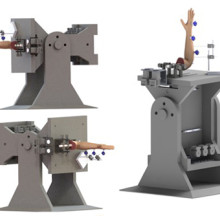
Image of the customized active-motion wrist simulator Dr. Nina Suh and her team are using to create different carpal bone fusion positions. They will then assess how these positions affect wrist motion and joint contact area.
The study is being funded through the Lawson Internal Research Fund (IRF), designed to allow scientists the opportunity to obtain start-up funds for new projects with exciting potential.
“The IRF program is valuable for scientists as external funding sources routinely require preliminary data to strengthen applications,” says Dr. Suh. “Particularly for new scientists such as myself, these grants provide seed funding that allows us to demonstrate the validity of our methodology and the clinical usefulness of our results.”
The IRF is designed to provide Lawson scientists the opportunity to obtain start-up funds for new projects with the potential to obtain larger funding, be published in a high-impact journal, or provide a clinical benefit to patients. Funding is provided by the clinical departments of London Health Sciences Centre and St. Joseph’s Health Care London, as well as the hospital foundations (London Health Sciences Foundation and St. Joseph’s Health Care Foundation).
… or powders on the incision. • To help reduce swelling and pain: o Keep your arm elevated above heart level (supported … go to your local emergency room or urgent care centre. Pain pill prescriptions cannot be renewed after 4:00pm. If you think you will run out of pain medications, please contact your surgeon’s office …
Discharge Instructions St. Josephs Hospital 200722 (ortho) June 2017 Carpal Tunnel, Trigger Finger Release or Removal of Arthritic Nodules - Orthopaedics Day of Surgery remember to bring 2-3 pillows, leave in the car so they are available to elevate your arm on the way home. Care of the Surgical Si...
Introducing The Gray Centre for Mobility and Activity at Parkwood Institute
4:00pm - 5:00pm
Image

Image
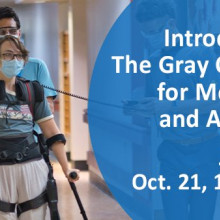
Join us Thursday October 21 from 12 pm – 1 pm for a virtual introduction to some of the exciting research and clinical innovations from mobility experts at The Gray Centre for Mobility and Activity. Hear presentations from:
- Siobhan Schabrun, PhD – Harnessing the Brain to Reduce Pain and Improve Mobility and Activity.
- Sue Peters, PhD – Wireless Neuroimaging During Mobility to Predict Recovery Trajectories after Stroke.
- Swati Mehta, PhD – Virtual Physical Activity Programming During the Pandemic.
- Dr. Manuel Montero-Odasso – Mobility and Cognition. The Collision of 2 Giants.
- Stephanie Cornell, MPT – Who, What, When? Using Technology in Rehab.
About The Gray Centre for Mobility and Activity:
Established in 2020, The Gray Centre for Mobility and Activity at St. Joseph’s Health Care London is expanding and advancing mobility and rehabilitation treatment and prevention solutions through research, collaborations and the latest technology to improve the lives of those living with disease, disability or injury. The Gray Centre is located at St. Joseph’s Parkwood Institute, Southwestern Ontario’s regional provider of rehabilitation and recovery health care and a national hub for treatment, research and education in mobility and activity. The Gray Centre is made possible through a $7.5 million gift to St. Joseph’s Health Care Foundation from William and Lynne Gray.
Introducing The Gray Centre for Mobility and Activity at Parkwood Institute
12:00 PM - 01:00 PM
Join us Thursday October 21 from 12 pm – 1 pm for a virtual introduction to some of the exciting research and clinical innovations from mobility experts at The Gray Centre for Mobility and Activity. Hear presentations from:
- Siobhan Schabrun, PhD – Harnessing the Brain to Reduce Pain and Improve Mobility and Activity.
- Sue Peters, PhD – Wireless Neuroimaging During Mobility to Predict Recovery Trajectories after Stroke.
- Swati Mehta, PhD – Virtual Physical Activity Programming During the Pandemic.
- Dr. Manuel Montero-Odasso – Mobility and Cognition. The Collision of 2 Giants.
- Stephanie Cornell, MPT – Who, What, When? Using Technology in Rehab.
About The Gray Centre for Mobility and Activity:
Established in 2020, The Gray Centre for Mobility and Activity at St. Joseph’s Health Care London is expanding and advancing mobility and rehabilitation treatment and prevention solutions through research, collaborations and the latest technology to improve the lives of those living with disease, disability or injury. The Gray Centre is located at St. Joseph’s Parkwood Institute, Southwestern Ontario’s regional provider of rehabilitation and recovery health care and a national hub for treatment, research and education in mobility and activity. The Gray Centre is made possible through a $7.5 million gift to St. Joseph’s Health Care Foundation from William and Lynne Gray.
Partners
… doses, ketamine is used to treat certain types of nerve pain that have not responded to other pain management approaches. The most common condition for … which IV (intravenous) ketamine infusions are used in the pain clinic is complex regional pain syndrome (CRPS). When …
June 16, 2020; Page 1 of 2 IV Ketamine Infusion Why is this medication prescribed? Ketamine is a medication most commonly used as an anesthetic during surgical procedures. At lower doses, ketamine is used to treat certain types of nerve pain that have not responded to other pain management approache...
… Lidocaine is a local anesthetic used to treat certain nerve pain conditions when the usual nerve pain medications or interventions were unsuccessful. This … long will it work for? • If lidocaine is going to provide pain relief, you should notice a difference within 2 days. …
June 16, 2020; Page 1 of 2 IV Lidocaine Infusion Why is this medication prescribed? Lidocaine is a local anesthetic used to treat certain nerve pain conditions when the usual nerve pain medications or interventions were unsuccessful. This could be due to a lack of effectiveness or side effects. When...