


Search
Search
54 Search Results:
New Alzheimer’s research aims to improve treatment and support for patients with agitation
Two new interventional studies have been brought to London, focused on improving quality of life for patients with Alzheimer’s disease and their caregivers. Both hope to improve upon standard approaches to treating agitation, a core symptom of Alzheimer’s.
Agitation is a significant source of stress for patients and caregivers. It is complex and difficult to treat. Often, families do not know about this particular symptom of Alzheimer’s and are not properly trained on how to manage care while dealing with agitation.
“These studies are designed to have a direct impact on patients, families and care providers, to improve quality of life and function in those suffering from agitation due to Alzheimer’s,” says Dr. Amer Burhan, Associate Scientist at Lawson Health Research Institute (Lawson) and Geriatric Neuropsychiatrist, St. Joseph’s Health Care London (St. Joseph’s).
Parkwood Institute, a part of St. Joseph’s, is one of multiple sites participating in these studies across Canada and the United States.
One study aims to identify patients early in their diagnosis, while they are living at home or in the community, and apply a comprehensive psychosocial approach, with or without medication, to help with the management of agitation. “We hope to identify participants and have them participating in our program before they experience a crisis due to agitation,” explains Dr. Burhan.
Psychosocial intervention is a way of helping patients and caregivers understand the reasons for agitation. Agitation can develop due to a wide range of causes. For example, patients may just be bored and need help to find something meaningful to occupy their time, they could be upset about something in their current environment, or may be suffering from physical discomfort or pain.
Interventions can include communicating with patients in a manner that creates calm, scheduling meaningful activities, and maintaining routine and rhythm in life. The research team will connect with families early after diagnosis to give them the tools and support they need.
Initially, participants will be treated using structured psychosocial intervention to help reduce and manage their agitation. After three weeks, they will be reassessed and if significant agitation continues to persist, the patient will be randomly selected to receive either a placebo, or medication known as S-Citalopram to treat agitation while they continue to receive psychosocial care.
Sylvia Wilson is the wife of one of the study participants. By enrolling in this trial, she feels she has gained a much better understanding of her husband’s disease, and is grateful for the support that study participants receive.
“My husband typically does not like going to visit doctors, but Dr. Burhan and his team are great,” says Wilson. “They understand agitation, and other symptoms of the disease very well, and I notice a difference in his mood with the treatment he receives through the study.”
Participants are still able to receive care from their primary physician and care teams, with the study providing an added layer of support.
Another study is focused on Alzheimer’s patients who are admitted to hospital or living in long-term care. The aim is to standardize the approach to care for agitation related to Alzheimer’s. After baseline assessment, participants will be randomized to receive the current treatment as per usual, or an integrated care pathway derived from evidence-informed treatment guidelines. These include washing out medications that have not helped, adding individualized behavioral and environmental support, and if medications are needed, use a specific set of medications and dosages based on best evidence.
“Better understanding agitation is a growing area of interest in geriatric research. The work being done locally is part of an international effort to create a paradigm shift in treating patients with Alzheimer’s disease and agitation,” explains Dr. Burhan.
Researchers are ready to offer these studies to patients and their families, hoping to make these treatment protocols an integral part of care for patients with agitation due to Alzheimer’s disease. Those interested in learning more about these studies can contact Dr. Burhan at @email or call 519-646-6100 x. 48170.
In the media: Study on 'agitation' in Alzheimer's patients seeks participants
… Our approach to treating chronic pain Dr. Geoff Bellingham, Clinical Director of the Pain Management Program and Dr. Marilyn Hill, psychologist, share … challenging and complex and I learned that psychological treatments and coping strategies could increase the …
Our approach to treating chronic pain Dr. Geoff Bellingham, Clinical Director of the Pain Management Program and Dr. Marilyn Hill, psychologist, share their thoughts on treating chronic pain through the Q&A below. Dr. Hill: Dr. Bellingham, if we met on an elevator, and I asked you to describe your w...
… Page 1 of 2; December 7, 2020 Pain Management Program - Allied Health Services What is Allied … you to understand chronic pain and the large ‘tool box’ of treatments and coping skills you will need to manage your … Page 1 of 2; December 7, 2020 Pain Management Program - Allied Health Services What is …
Page 1 of 2; December 7, 2020 Pain Management Program - Allied Health Services What is Allied Health? At the Pain Management Program, your allied health team includes occupational therapists, pharmacists, physiotherapists, psychologists, social workers and nurses. All specialize in pain management. ...
… through excellence in care, teaching and research. Pain Management Program Patient Attendance Policy for … to attend without appropriate notification. You will not be offered a spot in any future groups. This policy is … through excellence in care, teaching and research. Pain Management Program Patient Attendance Policy for …
CARING FOR THE BODY, MIND & SPIRIT SINCE 1869 Renowned for compassionate care, St. Joseph's is one of the best academic health care organizations in Canada dedicated to helping people live to their fullest by minimizing the effects of injury, disease and disability through excellence in care, teachi...
… of strong interpersonal and communication skills, time management strategies, and an overall positive sense of … Others Geropsychology Paediatric Psychology and Chronic Pain Job Search in Psychology Couples Therapy Clinical … training in specific skills (e.g., empirically- supported treatments) while other supervisors emphasize the …
CPA Accredited Member of APPIC & CCPPP Clinical Psychology Residency CONSORTIUM Predoctoral Residency in Clinical Psychology 20222023 Your guide to predoctoral training in clinical psychology within one of Canadas leading CPA accredited residency programs Clinical Psychology Residency CONSORTIUM Lon...
… too little) • Feelings of guilt or worthlessness • Chronic pain, headaches or stomachaches • Anger, irritability, … you? Not necessarily. As a psychologist working in the Pain Management Clinic, I ask every new patient if they have been … health? "The Science of Well-being" is a virtual course offered by Professor Laurie Santos, at Yale University, that …
Preventing and Treating Depression What is depression? Depression is very different from normal, healthy feelings of sadness. When you become depressed, your emotional distress changes, becoming more frequent, intense and intrusive. These emotions start to have a detrimental effect on your day to da...
… there is less trauma to the body, which also means less pain and discomfort after surgery. With smaller incisions we … of five sites in the world piloting the Diabetes Electronic Management Systems (DEMS) 2002 > one of the busiest … centres in North America shedding light on AD and potential treatments. Studies assessing new drugs, quality of life of …
Illuminating a vision of care 2005-2006 AnnuAl RepoRt Strategic Plan Creation of our new four-year strategic plan began in the summer of 2004 with the formation of a Board-appointed Strategic Planning Steering Committee. In the months that followed, a highly consultative process was used to gain inp...
… Pulmonary Rehabilitation Program Lifestyle Change and Self-Management Workbook Page | 1 Pulmonary Rehabilitation … of breath. * | am confused and/or drowsy. * | have chest pain. +1 dial 911 for an ambulance to take me to the … balance exercise Frequency: Can be done daily Intensity: Pain-free range of motion Time: Try to hold each position …
Pulmonary Rehabilitation Program Lifestyle Change and Self-Management Workbook Page | 1 Pulmonary Rehabilitation Program Dr. Michael Nicholson, Medical Director Tajana Jokic, Program Coordinator Authors Megan Graat, R. Kin, MPH Karen Unsworth, MSc Lia Kutzscher, RN (EC) MScN CRE Andraena Tilgner, RR...
… Resuscitation – Guidelines 10 Admission Guidelines 12 Bed Management – LHSC 14 Bed Management – St. Joseph’s 16 Call Rooms, Lockers, Lounges … of these guidelines. 13 To the Table of Contents Bed Management – LHSC Residents play an important role in … Resuscitation – Guidelines 10 Admission Guidelines 12 Bed Management – LHSC 14 Bed Management – St. Joseph’s 16 Call …
The Resident & Fellow Handbook This handbook is the property of: Dr. _____________________________ Resident / Clinical Fellow in the Department of: ________________________________ If found, please return to the Security office or notify me by email at: ________________________________ Preface Th...
Simple device improves care after kidney transplantation
LONDON, ON – In a published study, a team from Lawson Health Research Institute has found that a simple device can reduce swelling after kidney transplantation. The geko™ device, manufactured by Sky Medical Technology Ltd and distributed in Canada by Trudell Healthcare Solutions Inc., is a muscle pump activator which significantly improves blood flow by stimulating the body’s ‘muscle pumps.’ Patients using the device following kidney transplantation experienced shorter hospital stays and reduced surgical site infections by nearly 60 per cent.
Kidney and simultaneous pancreas-kidney transplantations can significantly reduce mortality and improve the quality of life for patients with end stage renal disease. “After surgery, many of these organ recipients require a longer hospital stay due to delayed kidney function, infection, lack of mobility or edema,” says Dr. Alp Sener, Lawson Scientist and Transplant Surgeon in the Multi-Organ Transplant Program at London Health Sciences Centre (LHSC).
Edema is swelling caused by excess fluid trapped in the body’s tissues which can impact wound healing. The current standard of care for managing lower-limb edema and improving blood flow is thrombo-embolic-deterrent (“TED”) stockings used with compression devices. Sleeves pumped with air squeeze the lower legs to boost circulation. They can be uncomfortable to wear, and the large pump can inhibit early mobility and disrupt sleep after surgery.
In a randomized controlled clinical trial spanning two years, 221 transplant recipients at LHSC either wore the standard TED stocking and pump or the geko™ device for six days after surgery. Dr. Sener’s research team found that wearing the device increased urine output by 27 per cent and lowered weight gain by over a kilogram. With more urine produced and less fluid retention, patients experienced 31 per cent less swelling. The duration of costly hospitalization was shortened by over one day after kidney transplantation compared to the standard of care.
A 60 per cent reduction in wound infection rates was a striking observation. “Transplant patients are at a higher risk of infection due to the immunosuppressant medications needed after surgery,” explains Dr. Sener, who is also the President of the Urologic Society for Transplantation and Renal Surgery, a global organization affiliated with the American Urological Association. “Reducing infection means a much better outcome for the patient and considering that recent data shows wound infections can cost the health care system thousands of dollars per person, it’s a win-win situation.”
Some of the study participants wore pedometers to track their steps, and those using the geko™ device had improved mobility after surgery. The team suspects this may be due to reduced swelling which could improve ease and comfort when moving.
“The study results have been both surprising and exciting. Not only have we cut down wound infection rates but we have also seen a considerable improvement in the new organ’s function following transplantation. Patients report feeling more satisfied with the transplant process and are more mobile,” says Dr. Sener. The geko™ device is now being offered to patients at LHSC in recovery after receiving a new kidney.
Ruben Garcia, 68 years old, recently received a new kidney from his daughter, Ruby, who was a match as a living kidney donor. Following his surgery, Garcia found it difficult to get out of bed due to the pain and swelling, and the function of his new kidney was very low. “My surgeon explained in very simple terms that it was as if my new kidney wasn’t awake yet,” describes Garcia.
Dr. Sener recommended that Garcia use the geko™ device to help stimulate blood flow in a way that is similar to walking. Garcia was soon able to sit up on a chair and by the next day he was walking. “My kidney woke up and starting working again! I could feel the device working and it was comfortable to wear, almost like a massage for my legs. I’m very grateful for the care that I received.”
Dr. Sener adds that “using a muscle pump activator could be a game changer for other procedures like orthopedic implants where wound infection can have disastrous consequences or in surgeries where wound infections are more common such as in cancer and intestinal surgery.”
The geko™ device is non-invasive, self-adhering, battery-powered and recyclable. It generates neuromuscular electro-stimulation and unparalleled systemic blood flow that equates to 60 per cent of that achieved by walking. Pain-free muscle contraction compresses deep veins in the lower legs to create better blood flow in these vessels and return blood to the heart. It is particularly well suited to hospital settings as it portable and requires minimal training. For the indications for the use of the geko™ device, go to www.gekodevices.com.
“The results of the study provide further evidence that the geko™ device is an effective treatment option that can improve outcomes for patients and help them return home sooner, while reducing costs for the health-care system,” says George Baran, Executive Chairman of the Trudell Medical Group and a Director of Sky Medical.
-30-
DOWNLOADABLE MEDIA
Image
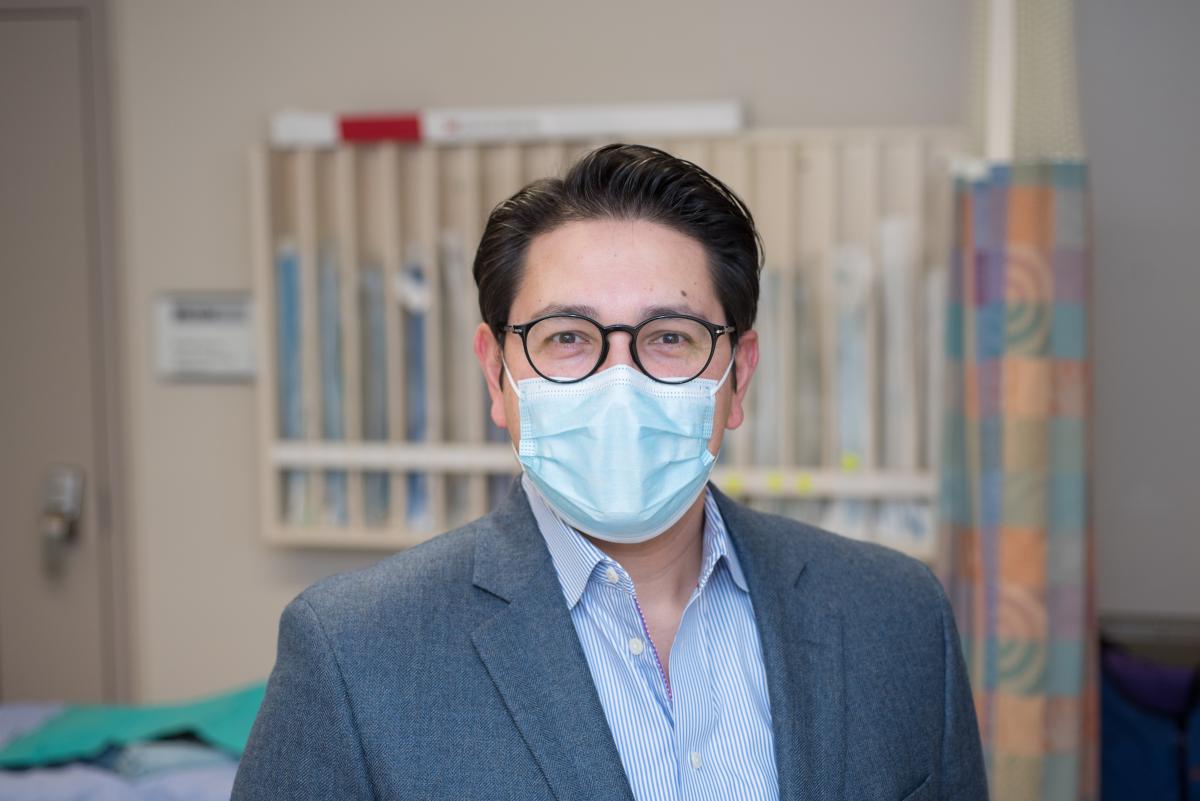
Dr. Alp Sener, Lawson Scientist and Transplant Surgeon in the Multi-Organ Transplant Program at London Health Sciences Centre
Image
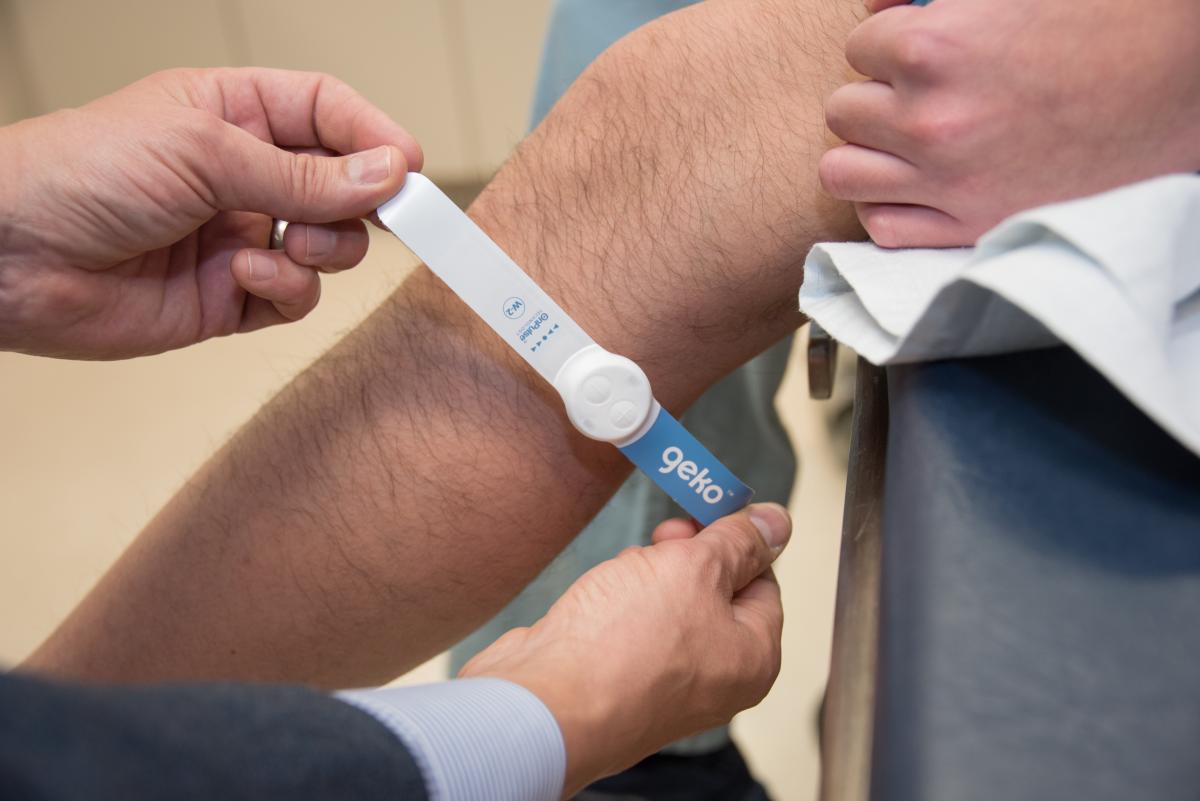
The geko™ device being applied on the leg
Image
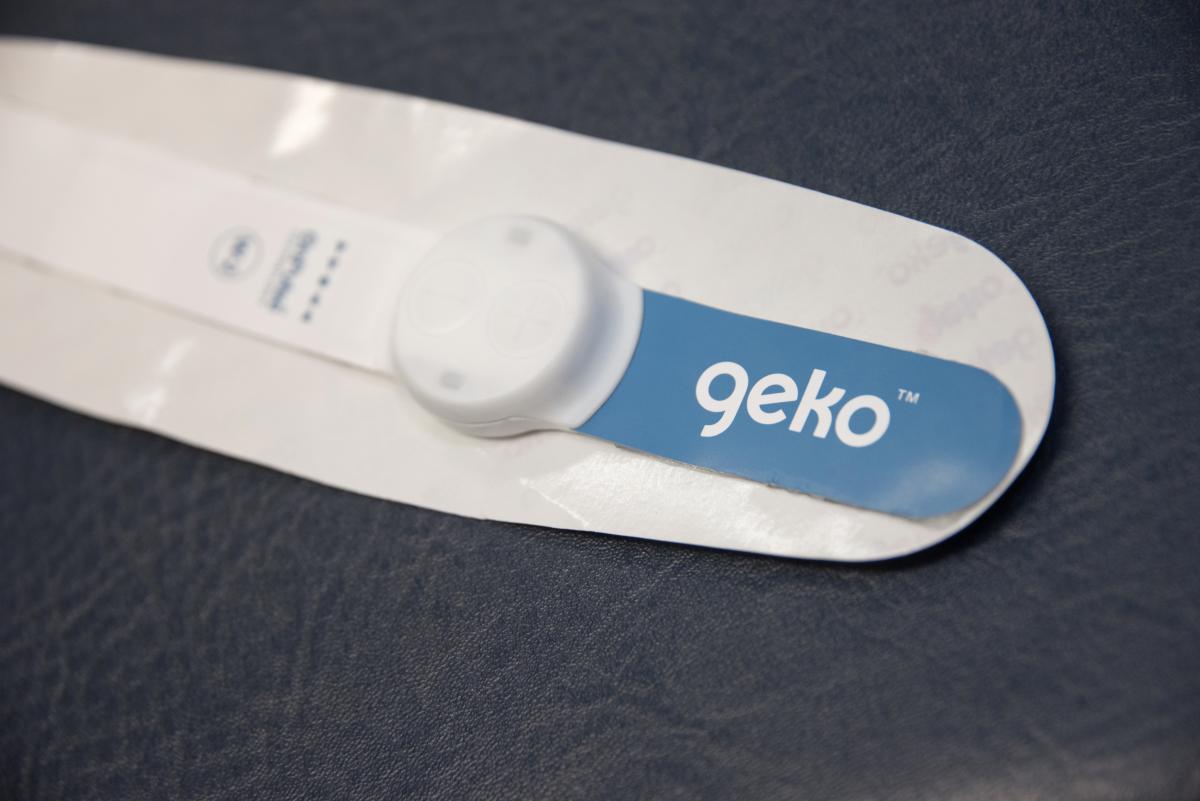
The geko™ device
About Lawson Health Research Institute
Lawson Health Research Institute is one of Canada’s top hospital-based research institutes, tackling the most pressing challenges in health care. As the research institute of London Health Sciences Centre and St. Joseph’s Health Care London, our innovation happens where care is delivered. Lawson research teams are at the leading-edge of science with the goal of improving health and the delivery of care for patients. Working in partnership with Western University, our researchers are encouraged to pursue their curiosity, collaborate often and share their discoveries widely. Research conducted through Lawson makes a difference in the lives of patients, families and communities around the world. To learn more, visit www.lawsonresearch.ca.
Media Contacts
Celine Zadorsky
Senior Media Relations Consultant
Communications & Public Engagement
T: 519-685-8500 ext. 73502
Celine.zadorsky@lhsc.on.ca
… and 19�9, the Sisters established a presence in Kinkora, Paincourt, Windsor, Leamington, Maidstone, Delhi, … and Sarnia. With the Sisters deciding to leave direct management of hospitals, the St. Joseph’s Health Care … who came from near and far for transplants and other treatments. This guest wing closed in �005 when Mount St. …
S i S t e r the hiStory of the SiSterS of St. JoSeph of London Special thanks to Lori Perrie and Sister Mary Zimmer of the Sisters of St. Joseph of the Diocese of London for their knowledge, expertise and keen attention to detail. cover: The caring hands of Sister Norita Keenan, who worked at St. J...
… and 1939, the Sisters established a presence in Kinkora, Paincourt, Windsor, Leamington, Maidstone, Delhi, … and Sarnia. With the Sisters deciding to leave direct management of hospitals, the St. Joseph’s Health Care … who came from near and far for organ transplants and other treatments. This guest wing closed in 2005 when Mount St. …
s i s t e r tHe History of tHe sisters of st. JosepH of london 2 Special thanks to Lori Perrie and Sister Mary Zimmer of the Sisters of St. Joseph of the Diocese of London for their knowledge, expertise and keen attention to detail. cover: The caring hands of Sister Norita Keenan, who worked at St. ...
… Joint Trauma System Clinical Practice Guidelines on the management of wartime ophthalmic trauma into Ukrainian for … skills such as teamwork, following instructions and time management.” “ ISSUE 07 | www.sjhc.london.on.ca 12 … tear up when receiving them.” Palliative care provides pain management and relief of symptoms to those experiencing …
SPRING 2023 A publication of St. Josephs Health Care London A Space to Call Home All faiths and spiritual practices are welcome in a new multi-faith room at Mount Hope Centre for Long Term Care. 2 A publication of St. Josephs Health Care London Spring 2023 | Issue 07 CONTRIBUTORS Dahlia Reich Alliso...
… • If your breasts are tender you may want to discuss pain relief options with your doctor beforehand. SPECIAL … more comfortable for you. • You should not experience any pain during the procedure but will feel slight pressure. • … you will hear some loud mechanical noises. You will be offered ear protection and the technologist will speak to …
YOur guide to Breast assessment Breast Care Program St. Josephs Hospital 268 Grosvenor St. London, ON N6A 4V2 THE BEST IN BREAST CARE The Breast Care Program at St. Josephs Health Care London provides a confidential, coordinated, specialized breast assessment service. The goal of the program is to m...