


Search
Search
582 Search Results:
2019 Innovation Award: Dr. Don Richardson
Dr. Don Richardson was recognized at the 2019 Lawson Impact Awards for his research and innovation in working with veterans with military-related post-traumatic stress disorder (PTSD). His study titled, “Predicators of Long-Term Treatment Outcome in Combat and Peacekeeping Veterans with Military-Related PTSD,” was recently published in the Journal of Clinical Psychiatry.
Throughout Dr. Richardson’s career, he has worked diligently to develop and implement best practice assessment and treatment guidelines for Canadian Armed Forces (CAF) members and veterans. He has developed and maintained two clinical research databases ̶ a database of self-reported health status, by working with patients at the Operational Stress Injuries (OSI) clinic, and a treatment outcomes database. Through this data, he has demonstrated that military trauma populations are complex and are at greater risk of becoming resistant to treatment than most civilian trauma populations.
“Don is extremely deserving of this award,” says Dr. Cheryl Forchuk, Dr. Richardson’s nominator. “When I think of someone who does a great job of linking together research and clinical practice, Don is always someone who comes to mind.”
The treatment outcomes database gives researchers unparalleled insight into the pharmacologic interventions best suited for CAF members and veterans. With the ability to identify when individual patients are experiencing less-than-optimal outcomes, the research team can adjust their treatment plan accordingly.
Over the past 20 years, Dr. Richardson has published over 40 peer-reviewed manuscripts and book chapters on the assessment and treatment of operational stress injuries, PTSD, major depressive disorder, substance use disorders, and suicidal behaviour. He has elevated awareness for the unique mental health challenges faced by CAF members and veterans who present with operational stress injuries.
In light of Dr. Richardson’s findings, he works to assess the current treatment modalities for PTSD, their utility for treating military populations, as well as complementary therapies that may prove beneficial.
Dr. Richardson’s dedication to military mental health research is evident through his unwavering effort and has attracted the attention of many prominent figures in the field of military and veteran health. In 2017, he was granted the opportunity to build a research and innovation center for advancing military and veteran health research and clinical practice. Through a generous donation from two community peers, Dr. Richardson established and leads the Macdonald/Franklin OSI Research Centre, located at Parkwood Institute.
“It is certainly an honour to receive this award,” says Dr. Richardson. “I wish to thank all of my clients for taking the time to fill out the repeated questionnaires, as well as the research staff who support this program, and who work tirelessly to help our CAF members and veterans.”
Scientist
… FEEL YOUNG AT HEART On Valentine’s Day, Veterans at Parkwood Institute shined up their dancing shoes for a … patients receiving care in breast, orthopedic and prostate programs at St. Joseph’s Hospital. Your donation will help … Ivey at the 2001 launch of their named research chair at Parkwood Institute. Brad Duncan, seen here with his wife …
Back row left: Holly Bridge, Diane Davis-Miller, Barb Simmonds Front row left: Dr. Jennifer Bjazevic, Roger Blum, Leanne Summers, Dr. Hassan Razvi, Surgical Services You make health care innovation possible. Just one of the reasons why YOU HELPED ENHANCE OUR OPERATING ROOMS 20192020 Community Impact...
… Weighted Blankets, $9,937 - Mental Health Care Building at Parkwood Institute Therapeutic blankets for care and comfort … Health Care Building. 2018-19 Auxiliary Wish List, $9,161 - Parkwood Institute Frontline care and comfort items for … in Rehabilitation, Complex Care and Specialized Geriatrics Programs at Parkwood Institute in 2018-19. 2019-20 Auxiliary …
Page 1 of 13 2019-20 SJHCF Grants St. Josephs Health Care Foundation 2019-20 Grants PATIENT CARE (In Alphabetical Order) 3 Complex Cataract Surgery Instruments Trays, $23,122 - St. Joseph's Hospital Equipment used in cataract surgery for the Ivey Eye Institute. 10 Blanket Warmers, $43,180 - Mount Ho...
… Hospital Southwest Centre for Forensic Mental Health Care Parkwood Institute Teams, clinics and programs in our community and beyond ST. JOSEPH’S IS 1,300 … the lives of Canada’s war veterans who make their home at Parkwood Institute MORE THAN 100 ORGANIZATIONS ACROSS …
St. Josephs Health Care Foundation 268 Grosvenor Street PO Box 5777 STN B London, ON N6A 4V2 519-646-6085 sjhc.london.on.ca/foundation CHARITABLE REGISTRATION NUMBER: BN 11918 3390 RR0001 facebook.com/stjosephslondon youtube.com/stjosephslondon twitter.com/stjosephslondon Connect with us YOUR SUPPOR...
… in their submission to create an Indigenous Hub behind Parkwood Institute. Atlohsa’s proposal is being recommended … invited to a half day launch for the clinical planning. • Parkwood had 32 surge beds funded annually for the past few … who present in Emergency who can be moved immediately to Parkwood Institute Mental Health Building. • Ontario …
P a g e | 1 Meeting of the Board of Directors Monday, September 25, 2023 3:30 pm start time St. Josephs Hospital Adams Boardroom A2-041 Via MS Teams video-conference MINUTES Minutes to be ratified next meeting Call to Order Nawaz Tahir Welcome and roundtable introductions occurred. The Board then ...
… will not have access programmed except for cards issued at Parkwood Mental Health Building and Southwest Forensic … will also be issued to the CIs with group placements at the Parkwood Mental Health Care Building or the Southwest Centre … alarm. Nursing Clinical Instructors from Academic Nursing Programs Acquisition and Use of Personal Panic Alarms at St. …
PROCEDURES FOR CLINICAL INSTRUCTORS (CIs) TO OBTAIN IDENTIFICATION, ACCESS AND PERSONAL PANIC ALARMS FOR STUDENT GROUP PLACEMENTS CIs will receive a St. Josephs photo identification card. CIs will also receive an access card with the same access rights as staff in the area where they will be teachi...
… an equal opportunity to obtain, use, and benefit from our programs and services. St. Joseph’s is committed to … varied roles as well as community members and a resident of Parkwood Hospital. Some members of the working group have … at the Accessibility Advisory Committee Physical – Parkwood Hospital Doors leading to activity rooms, dining …
St. Josephs Accessibility Plan Status Report: 2014 Page 1 Accessibility Plan January 2013 December 2015 Status Report February 2014 Submitted to St. Josephs Accessibility Advisory Committee February 21, 2014 Submitted to St. Josephs Senior Leadership Team on March 11, 2014 St. Josephs Accessibility...
… an equal opportunity to obtain, use, and benefit from our programs and services. St. Joseph’s is committed to … 1,100 volunteers Is comprised of: St. Joseph's Hospital, Parkwood Institute, Southwest Centre for Forensic Mental … roles as well as community members and a resident of the Parkwood St. Joseph’s Accessibility Plan 2016-2019 Page 4 …
St. Josephs Accessibility Plan 2016-2019 Page 1 Accessibility Plan January 2016 December 2019 Submitted to St. Josephs Accessibility Advisory Committee December 24, 2015 Submitted to St. Josephs Senior Leadership Team January 26, 2016 St. Josephs Accessibility Plan 2016-2019 Page 2 Introduction In ...
… an equal opportunity to obtain, use, and benefit from our programs and services. St. Joseph’s is committed to … 1,100 volunteers • Is comprised of: St. Joseph's Hospital, Parkwood Institute, Southwest Centre for Forensic Mental … varied roles as well as community members and a resident of Parkwood Institute. One member of the working group has …
St. Josephs Accessibility Plan 2019-2022 Page 1 Multi-year Accessibility Plan January 2019 December 2022 Submitted to St. Josephs Accessibility Advisory Committee December 12, 2019 Submitted to St. Josephs Senior Leadership Team December 17, 2019 St. Josephs Accessibility Plan 2019-2022 Page 2 In...
… an equal opportunity to obtain, use, and benefit from our programs and services. St. Joseph’s is committed to … 1,100 volunteers • Is comprised of: St. Joseph's Hospital, Parkwood Institute, Southwest Centre for Forensic Mental … varied roles as well as community members and a resident of Parkwood Institute. One member of the working group has …
Multi-year Accessibility Plan January 2019 December 2022 Submitted to St. Josephs Accessibility Advisory Committee December 12, 2019 Submitted t o St. Josephs Senior Leadership Team December 17, 2019 St. Josephs Accessibility Plan 2019-2022 Page 1 Introduction In fulfilling our mission and in ali...
… an equal opportunity to obtain, use, and benefit from our programs and services. St. Joseph’s is committed to … varied roles as well as community members and a resident of Parkwood Institute. Some members of the working group have … lights and installed lights with audible tones. Physical – Parkwood Hospital Doors leading to activity rooms, dining …
St. Josephs Accessibility Plan Status Report: 2014 Page 1 Accessibility Plan January 2013 December 2015 Status Report February 2014 Submitted to St. Josephs Accessibility Advisory Committee January 27, 2015 Submitted to St. Josephs Senior Leadership Team on February 12, 2015 St. Josephs Accessibili...
… & Outreach Services Please note, eligibility for ALL programs requires a diagnosed brain injury. All services … PHONE: 1-866-484-0445 FAX: 519-685-4824 MAILING ADDRESS: Parkwood Institute, Main Building, P.O. Box 5777, STN B, … client receives the optimal level of care/service, other programs may be determined more suitable. You will be …
Acquired Brain Injury (ABI) Outpatient (Physiatry & Allied Health) & Outreach Services Please note, eligibility for ALL programs requires a diagnosed brain injury. All services have variable wait-lists. Physiatry Medical consultative services that provide recommendations and/or interventions related...
Addressing the impacts of the COVID-19 pandemic
As the COVID-19 pandemic has continued for a year and a half, many people from all walks of life are feeling the impacts especially when it comes to their mental health and wellbeing.
Hospital researchers through Lawson Health Research Institute, along with its hospital partners, have been studying the impacts for some key groups.
Health care workers have been at the forefront of the pandemic. These heroes have worked tirelessly through every wave and continue to provide excellent care to their patients and community. Dr. Kamia Honarmand, Critical Care Physician at London Health Sciences Centre (LHSC), remembers the stress that she and her colleagues were feeling, and know that something needed to be done.
“Our team wanted to better understand the impact of the pandemic on the lives of health care workers, both personally and professionally, and understand how they were coping when it came to their mental health,” says Dr. Honarmand who is also an Associate Scientist at Lawson. “There was a lot of reasons to be stressed even before the height of the first wave in our region. There was a lot of anxiety. The hospital wanted to find ways to support health care workers and identify resources that would assist them.”
Image
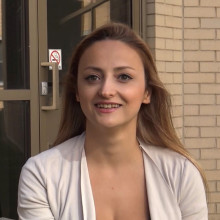
Dr. Kamia Honarmand, Critical Care Physcian at LHSC and Lawson Associate Scientist
Frontline health care workers across the region were invited to take part in an online survey about their experiences during the pandemic. “We looked at both the impacts and the preferred coping strategies, and what supportive strategies they would like to have in the hospital in the future.”
The Veterans Care Program located at Parkwood Institute, a part of St. Joseph’s Health Care London, provides complex continuing and long-term care for Canadian war Veterans. Dr. Don Richardson, Director of the MacDonald Franklin OSI Research Centre at Parkwood Institute, has been treating and studying mental health among Veterans for many years. He believed this was a group was likely to be affected by the pandemic in unique ways.
“We know that Veterans in general are at a higher risk for depression, anxiety and PTSD,” explains Dr. Richardson, who is also a Scientist at Lawson. “We also knew the pandemic and forced restrictions would have significant impact on Veterans and their families who would be more isolated than they already are.”
More than 1,100 Veterans and around 250 spouses were recruited for the study, completing an online survey every three months for 18 months.
The study is still ongoing, but Dr. Richardson says the initial data has been telling. “We have been able to analyze some of the preliminary data and what we have found is that almost 50 per cent did not indicate their mental health had worsened during the pandemic but 40 to 50 per cent have had difficulty accessing care.”
Image
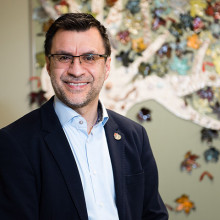
Dr. Don Richardson, Director, Macdonald Franklin OSI Research Centre
The hope is that this study will lead to better preparedness in the future to safeguard the mental health of Veterans and ensure their access to care during a pandemic.
Many people have felt isolation during the pandemic, but that feeling may have even more of an impact for youth suffering from mood and anxiety disorders.
Dr. Elizabeth Osuch, Director of the First Episode Mood and Anxiety Program (FEMAP) at LHSC says the pandemic-led lockdown forced more than a hundred mental health clients out of in-person services.
Image
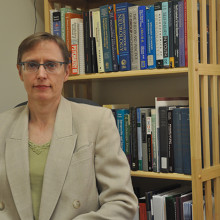
Dr. Elizabeth Osuch, Director of FEMAP and Lawson Scientist
“They lost their resources for mental health services and support as soon as the quarantine was announced,” shares Dr. Osuch, who is also a Scientist at Lawson. “We were concerned that it would be devastating to people – and to some people it was. We wanted to make sure they had an avenue to connect with the program.”
Dr. Osuch and the FEMAP team created an online research platform to find out how patients were doing by having them fill out a symptoms and function questionnaire.
“We have analyzed the first wave so far and it shows that male patients were doing better and female patients were doing worse, which was a surprise. One of the risk factors for not doing well was the loss of their job.”
The pandemic added an extra layer of stress and worry for women who were having a baby.
“This has been an enormous and pivotal time for everyone in the world,” says Dr. Genevieve Eastabrook, Obstetrician-Gynecologist at LHSC. “The experiences during pregnancy and post-partum for both the birthing person and their baby can have effects later in life for children. For example, their overall cardiovascular and metabolic health, bonding experiences and the risk of mood disorders.”
Dr. Eastabrook, who is also an Associate Scientist at Lawson and Assistant Professor at Western University’s Schulich School of Medicine & Dentistry, is working with a team to examine the effects the pandemic may be having for mothers and their babies. As part of the study, the London research team is using an approach called ‘One Health’ which offers a holistic perspective to explore how various risk factors and social determinants of health interact.
Image
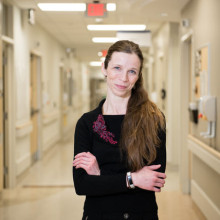
Dr. Genevieve Eastabrook, OBGYN at LHSC and Lawson Associate Scientist
“The unique aspect is that we have a comparative group to see if there are differences in markers such as risk of depression, perceived stress and social supports,” adds Dr. Eastabrook.
Study participants are asked to complete a 30-minute questionnaire at around 6-12 weeks after their delivery. The research team is still recruiting patients for this study.
Scientist
Advancing Hospital Based Clinical Research Conference
9am-4pm
When: Thursday October 19th, 2023 9am – 4pm (check in starts at 8am)
Where: Parkwood Institute Auditorium B2 - 109
Agenda: Dr. David Hill – Opening Remarks
Speakers include:
- Dr. Naveen Poonai (Chair HSREB)
- Dr. Steve Smith (Ontario Hospital Association, Research and Innovation Committee)
- Mr. Jonathan Mitchell, HealthCareCan, Vice President, Research and Policy
- Mr. Reza Salehzadeh-Asl and Ms. Shila Rastegar (Health Canada, Clinical Trial Inspectorate Program)
Earn 5.0 CEUs * Conference fee is $50 for LHSC, St. Joseph’s Health Care London, Lawson and Western affiliates (Non-Affiliates $150). *Breakfast and lunch included.
Spaces are Limited *You must register before October 15th*
Click to REGISTER TODAY (use your institutional email - LHSC, SJHC, Lawson, UWO, Schulich, etc.).
For more information or questions contact Lawson at @email or @email.
Ali Bateman
Ali Bateman, MD
Assistant Professor, Schulich School of Medicine and Dentistry
Key Areas of Focus:
Acquired and Traumatic Brain Injury; Spinal Cord Injury
Phone:
519-685-4080
Accepting Grad Students:
No
About:
Dr. Ali Bateman is a physiatrist at Parkwood Institute and an Assistant Professor in the Department of Physical Medicine and Rehabilitation Schulich School of Medicine & Dentistry at Western University. She is also an Associate Scientist at Lawson Health Research Institute, and the Quality Improvement Lead in the Department of Physical Medicine & Rehabilitation.
Dr. Bateman completed her medical degree and residency training at Western University, and is currently completing a master’s degree in Quality Improvement and Patient Safety through the Institute of Health Policy, Management, and Evaluation at the University of Toronto. She is also certified by the Canadian Society of Clinical Neurophysiologists and holds the designation of CSCN Diplomate (EMG). As a consultant physiatrist, Dr. Bateman provides care in acquired brain injury and spinal cord injury rehabilitation programs and the electrodiagnostic laboratory at Parkwood Institute.
Her research interests centre on quality improvement, patient safety, and knowledge translation with the aim of achieving best practices so that all persons with spinal cord and/or brain injury receive the best quality care.
An online approach to care
With an aging population, neurological conditions like stroke, brain injury and multiple sclerosis (MS) are on the rise in Canada. Those living with neurological conditions face many long-term challenges that can affect both their physical and cognitive functioning. They are also at an increased risk for mental health challenges such as depression and anxiety.
“While mental health challenges are common for those with neurological conditions, they often go untreated for a number of reasons,” says Dr. Swati Mehta, Scientist at Lawson Health Research Institute. “For example, those living in remote areas often do not have access to specialized services and many patients are concerned about stigma.”
Yet seeking mental health care is critically important for patients with neurological conditions. “Research suggests that depression among these patients can impair recovery, leading to decreased quality of life and increased health care costs.”
To improve patient outcomes, Dr. Mehta and a collaborative research team are developing an internet-delivered cognitive behavioural therapy (ICBT) program.
Image
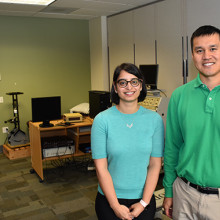
Dr. Swati Mehta (left), Lawson Scientist, and Dr. Eldon Loh (right), Lawson Associate Scientist, are working with a collaborative team to develop the specialized program.
Cognitive behavioural therapy (CBT) is a specialized type of therapy that involves patients learning strategies and skills to self-manage mental health symptoms. It’s one of the most widely used therapies for the treatment of depression and anxiety.
A panel of researchers, persons with lived experience of neurological conditions and community organizations are working collaboratively to develop an accessible ICBT program that meets the needs of persons with neurological conditions and mild cognitive impairment who are also experiencing symptoms of depression or anxiety. The program, called The Neuro Course, will be a modified version of an existing course developed in Australia by the eCentreClinic.
“Through co-development with patients and experts in the field, the ICBT program will meet the specific needs of persons with neurological conditions who are also experiencing mental health challenges,” explains Dr. Mehta. “With online delivery, it can provide personalized treatment while being flexible and easily accessible.”
The Neuro Course will be piloted with a small group of research participants, including patients from Parkwood Institute, a part of St. Joseph’s Health Care London. Eligible participants can sign up to be notified of the course’s availability at https://www.onlinetherapyuser.ca/neuro.
The free online course consists of six easy-to-understand CBT lessons and will take approximately 10 weeks to complete. In addition to the six lessons, participants will be encouraged to work through various activities during the week.
Image
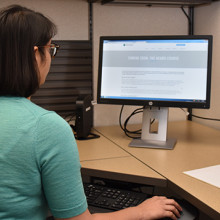
Participants will also receive regular support from a designated online guide. Guides will be health educators who are certified providers or graduate students working under the supervision of certified providers. All guides will have training in psychology or social work. The participant’s guide will review the participant’s progress and answer any questions or comments through a secure messaging system.
Participants in the study will be asked to complete brief questionnaires before they begin the course, on a weekly basis throughout the course and then again three months after treatment ends. The research team will use the questionnaires to assess patient outcomes and improve future versions of the course.
The goal of the program is to overcome barriers to face-to-face therapy, such as limited access to specialized care and concerns about stigma related to seeking care, by providing an effective online alternative. By reaching those in need, the research team hopes to improve patient outcomes and overall wellbeing.
“The long term goal would be to implement the ICBT program into clinical practice to provide increased access to mental health services among this population,” says Dr. Mehta. “The program could be used to provide care to those with mild to moderate mental health concerns or those waiting to access face-to-face programs.”
The team is being funded for this project through Lawson’s Internal Research Fund (IRF) competition. “As an early career researcher, receiving funding from Lawson’s IRF is a great honour. It’s a great opportunity to help researchers obtain funding for small feasibility studies to develop evidence for larger grants that can be used to translate knowledge across the community,” states Dr. Mehta.
Lawson’s IRF is designed to provide Lawson scientists the opportunity to obtain start-up funds for new projects with the potential to obtain larger funding, be published in a high-impact journal, or provide a clinical benefit to patients. Funding is provided by the clinical departments of London Health Sciences Centre and St. Joseph’s Health Care London, as well as the hospital foundations (London Health Sciences Foundation and St. Joseph’s Health Care Foundation).
Scientist
… in cardiology, renal dialysis and related services whose programs transferred to London Health Sciences Centre. Our … to build a new specialized mental health facility beside Parkwood Hospital and a new forensic psychiatry facility in … conditions including arthritis and fibromyalgia. At Parkwood, an approximately $7 million internal renovation …
Annual Report to the Community 2000-2001 June 2001 Dr. Lauren McCurdy Director of Breast Imaging, St. Josephs Health Care, London Associate Professor, UWO Visit our web site: www.sjhc.london.on.ca For additional copies of the report, complete financial statements, salary disclosure information or ot...
… St. Joseph’s internationally recognized ambulatory medicine programs, including chronic disease care. On the outside, at … by Dr. Elizabeth Finger, a neurologist at St. Joseph's Parkwood Hospital and a researcher with Lawson Health … a nurse clinician in the MCI clinic at St. Joseph’s Parkwood Hospital. "We all forget things from time to time. …
Annual Report 2012-2013 Welcome to the 2012-2013 Annual Report Contents Annual Report 2012-2013 ......................................................................................................................... 1 Welcome to the 2012-2013 Annual Report ............................................
… Board of Directors Our Stories ON THE COVER St. Joseph’s Parkwood Hospital is one of few hospitals in North America … The LT program is just one innovation in rehabilitation at Parkwood that is improving health and instilling hope for … ensure clients and their families have access to the right programs, services and supports. Psychologists Maya Roth and …
Annual Report 2013-2014 Welcome to our 2013-2014 Annual Report Contents Annual Report 2013-2014 ............................................................................................................................. 1 Welcome to our 2013-2014 Annual Report ........................................
… ............................................ 20 Next stop – Parkwood Institute … entrance at St. Joseph’s Hospital, the creation of Parkwood Institute, new heights reached in many of our care programs that are transforming the patient journey, the … ............................................ 20 Next stop – Parkwood Institute …
Annual Report 2014-2015 Welcome to the 2014-2015 Annual Report Contents Annual Report 2014-2015 ............................................................................................................................. 1 Welcome to the 2014-2015 Annual Report ........................................