


Search
Search
2194 Search Results:
Artificial intelligence making strides into rehab
Gray Centre hears of AI’s potential to aid patients, practitioners
Imagine trying to determine and share best practice for physical rehabilitation when each therapist conducts and describes their work with different patients in slightly different ways.
Bringing artificial intelligence (AI) and machine learning to health research and practice is a “transformative shift” that can help close any gaps and ultimately improve patient recovery, participants at a Coffee Lunch hosted by The Gray Centre for Mobility and Activity heard recently during a noon-hour learning session.
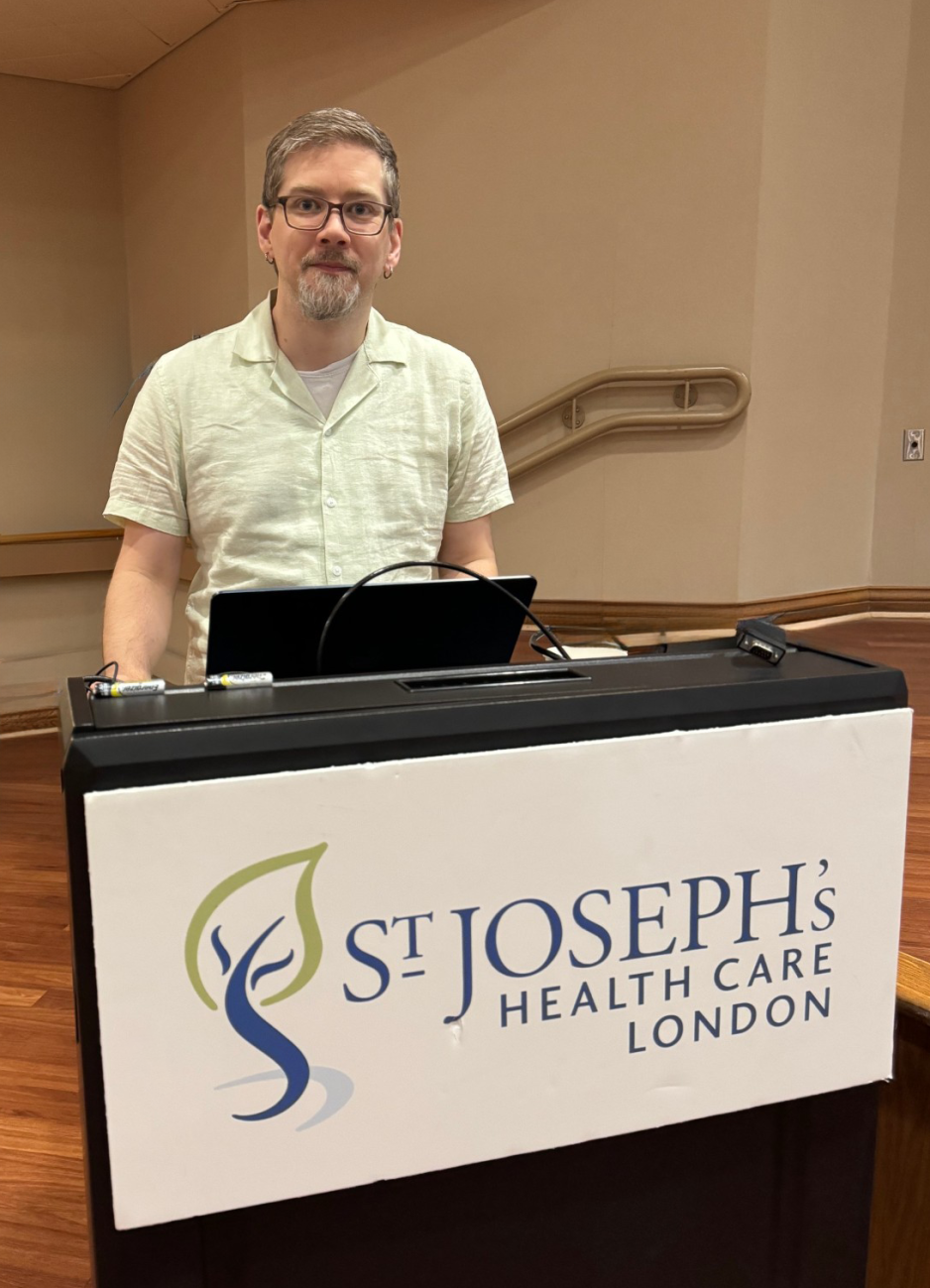
AI in general can help explore and describe data, predict outcomes and support better decision-making, says Dan Lizotte, associate professor of computer science and epidemiology and biostatistics at Western University.
“For patient rehabilitation, AI models can interpret past data to find patterns we didn’t know existed, and then build new models for treatment,” Dan told a group of about 45 researchers, scientific staff, clinicians and clinical leaders. health professionals.
The Gray Centre at St. Joseph’s Parkwood Institute is a national leader in developing rehabilitation interventions and treatments through research, teaching and partnership. The group’s weekly Coffee Lunch events are intended to help “unsilo” Parkwood’s research and clinical groups so that they all can benefit from each other’s expertise.
“AI is arguably one of the biggest technological shifts since the internet,” adds Dalton Wolfe, a scientist at Lawson Health Research Institute and leader of the Research 2 Practice (R2P) team based at Parkwood. “We’ve been talking for years about how advanced data collection and analytics can enhance our practice.”
“In health care, it can change our processes and practices, and help develop decision-support and training systems, as well as new ways to generate evidence - all that will enable better research and clinical care. It’s a transformative shift.”
- Dalton Wolfe, a scientist at Lawson Health Research Institute and leader of the Research 2 Practice (R2P) team
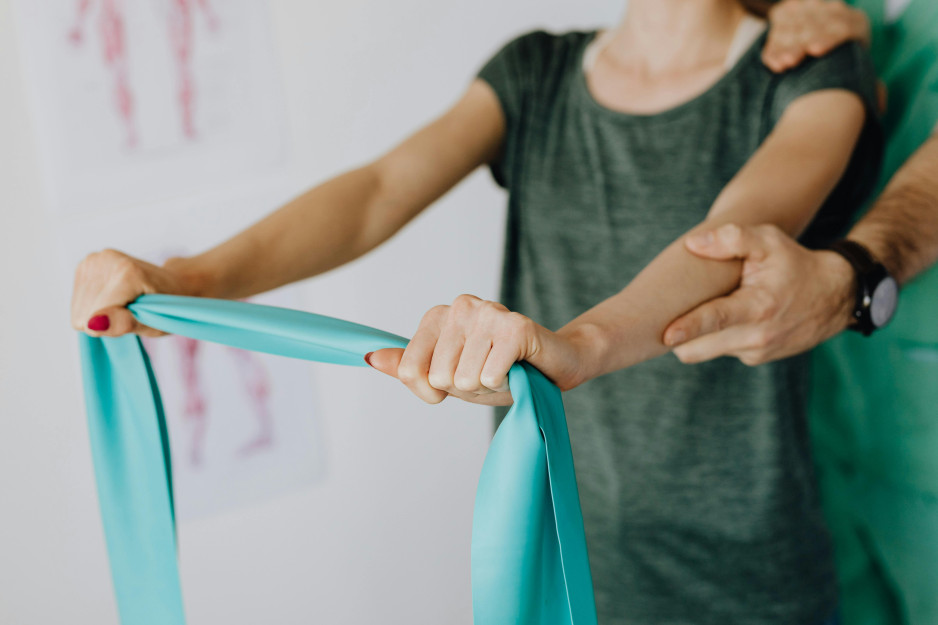
For example, Dan is leading the data science team as part of an ongoing R2P study to collect data on physical therapists’ complex descriptions of rehabilitation activities with patients with spinal cord injuries. To start with they have created videos in which 14 therapists describe 16 different activities to capture standard rehab activities and language. The aim is to generate an AI model that can categorize those descriptions and assess which activities are linked with the best outcomes, and then to improve best practices and lead to better patient recovery, he says.
Dan acknowledges the AI technology is growing quickly, and so are the potential applications for rehabilitation research. “Every week, there are new tools we might use, everything from data collection to final analysis.”
All in the family
… later confined his practice to ophthalmology and would see patients at St. Joseph’s until he retired at age 90. For … later confined his practice to ophthalmology and would see patients at St. Joseph’s until he retired at age 90. For … later confined his practice to ophthalmology and would see patients at St. Joseph’s until he retired at age 90. For …
Women Leading with Purpose
… feeling like you are making a difference in the lives of patients and families. Cheryl McDonald – Occupational … feeling like you are making a difference in the lives of patients and families. Cheryl McDonald – Occupational … feeling like you are making a difference in the lives of patients and families. Why did you choose a career in health …
Harnessing the power of paper towels
… our planet to ensure a better and healthier environment for patients, residents, staff and our community. Did you know? … our planet to ensure a better and healthier environment for patients, residents, staff and our community. Did you know? … our planet to ensure a better and healthier environment for patients, residents, staff and our community. Did you know? …
Media Release: ‘Standing on the shoulders of giants’
… times when one-third of the hospital beds were occupied by patients with typhoid fever – a significant epidemic at the … times when one-third of the hospital beds were occupied by patients with typhoid fever – a significant epidemic at the … times when one-third of the hospital beds were occupied by patients with typhoid fever – a significant epidemic at the …
Run for Retina Research finishes final leg of the race
… Hospital to create a highly specialized unit to fast-track patients who need urgent eye care. “Kim and Paul Spriet have … Hospital to create a highly specialized unit to fast-track patients who need urgent eye care. “Kim and Paul Spriet have … Hospital to create a highly specialized unit to fast-track patients who need urgent eye care. “Kim and Paul Spriet have …
Joan Hubert
Joan Hubert
Patient Partner
As a patient partner, Joan Hubert is integral to the success of The Gray Centre. Following a traumatic car accident in 2016, Joan spent more than five months as an inpatient at Parkwood Institute completing her rehabilitation. Since that time Joan has been a patient advisor on various projects and committees and is a current member of the Quality Committee of St. Joseph’s Health Care London’s Board of Directors.

Anchored in Trust
… Institute, she is inspired by the resiliency of her older patients as they regain strength and return home. That same … Institute, she is inspired by the resiliency of her older patients as they regain strength and return home. That same … Institute, she is inspired by the resiliency of her older patients as they regain strength and return home. That same …
Transitional and Lifelong Care
… Program, the Rehabilitation Therapist works one-on-one with patients to assess and determine their needs, collect … and create treatment plans in collaboration with patients, families and the multidisciplinary team. The Rehabilitation Therapist helps patients become more independent, achieve vocational and/or …
A lasting impact
… dynamic CT scans to study blood flow in stroke and cancer patients and to address challenges related to imaging the … dynamic CT scans to study blood flow in stroke and cancer patients and to address challenges related to imaging the … dynamic CT scans to study blood flow in stroke and cancer patients and to address challenges related to imaging the …
Feeling Connected
… in waiting rooms, pianos and personal care products for inpatients. These are important items that focus on the total … in waiting rooms, pianos and personal care products for inpatients. These are important items that focus on the total … in waiting rooms, pianos and personal care products for inpatients. These are important items that focus on the total …
Healing through growing
… from the garden make their way into the menus and meals of patients and residents. New this year is a partnership with … from the garden make their way into the menus and meals of patients and residents. New this year is a partnership with … from the garden make their way into the menus and meals of patients and residents. New this year is a partnership with …
From India with Love
… deliver supplies, and perform surgery on low-income patients. Here in London, he and his wife Kanta are leaders … deliver supplies, and perform surgery on low-income patients. Here in London, he and his wife Kanta are leaders … deliver supplies, and perform surgery on low-income patients. Here in London, he and his wife Kanta are leaders …
Seeing the future of research
… Here Your gift will help keep our facilities up-to-date for patients and their families. donate today 1 … Here Your gift will help keep our facilities up-to-date for patients and their families. donate today 1 … Here Your gift will help keep our facilities up-to-date for patients and their families. donate today …
Reaching out to rise to the challenge
… facilities and the incredible challenges many staff and patients face throughout this pandemic. It’s been an amazing … facilities and the incredible challenges many staff and patients face throughout this pandemic. It’s been an amazing … facilities and the incredible challenges many staff and patients face throughout this pandemic. It’s been an amazing …