


Search
Search
2194 Search Results:
… funds: The Hospital holds funds in trust for certain patients and custodial fund accounts for various programs … funds: The Hospital holds funds in trust for certain patients and custodial fund accounts for various programs …
St. Josephs Health Care, London Financial Statements Financial Statements of ST. JOSEPHS HEALTH CARE, LONDON Year ended March 31, 2011 St. Josephs Health Care, London Financial Statements original signed original signed MANAGEMENTS REPORT The accompanying financial statements of St. Josephs Health C...
… funds: The Hospital holds funds in trust for certain patients and custodial fund accounts for various programs … funds: The Hospital holds funds in trust for certain patients and custodial fund accounts for various programs …
St. Josephs Health Care, London Financial Statements Financial Statements of ST. JOSEPHS HEALTH CARE, LONDON Year ended March 31, 2012 St. Josephs Health Care, London Financial Statements original signed original signed MANAGEMENTS REPORT The accompanying financial statements of St. Josephs Health C...
… funds: The Hospital holds funds in trust for certain patients and custodial fund accounts for various programs … funds: The Hospital holds funds in trust for certain patients and custodial fund accounts for various programs …
St. Josephs Health Care London Financial Statements Financial Statements of ST. JOSEPHS HEALTH CARE LONDON Years ended March 31, 2013 and 2012 St. Josephs Health Care London Financial Statements 1 | P a g e original signed original signed MANAGEMENTS REPORT The accompanying financial statements of S...
… funds: The Hospital holds funds in trust for certain patients and custodial fund accounts for various programs … funds: The Hospital holds funds in trust for certain patients and custodial fund accounts for various programs …
St. Josephs Health Care London Financial Statements Financial Statements of ST. JOSEPHS HEALTH CARE LONDON Year ended March 31, 2014 St. Josephs Health Care London Financial Statements 1 | P a g e original signed original signed MANAGEMENTS REPORT The accompanying financial statements of St. Josephs...
… funds: The Hospital holds funds in trust for certain patients and custodial fund accounts for various programs … funds: The Hospital holds funds in trust for certain patients and custodial fund accounts for various programs …
St. Joseph s Health Care London Financial Statements Financial Statements of ST. JOSEPHS HEALTH CARE LONDON Year ended March 31, 2022 St. Joseph s Health Care London Financial Statements MANAGEMENTS REPORT The accompanying financial statements of St. Josephs Health Care London have been prepared b...
… care centre, from the surgical robot to blanket warmers, patients experience firsthand the impact of our donors.” New … care centre, from the surgical robot to blanket warmers, patients experience firsthand the impact of our donors.” New …
1 News Release St. Josephs Health Care, London reports success on overall budget for last fiscal year and signals continued financial challenges for next two years - New board of directors appointed: Dr. Gerald Killan takes the reigns as board chair St. Josephs Health Care Foundation has most succes...
… technology will advance research in London and ensure our patients receive the latest in clinical care. In order to … in our cost per weighted case for acute and complex care patients. The costs have increased to the point where they … musculoskeletal, geriatric, and acquired brain injury patients. Total cases discharged were down 7.4 percent in …
FINANCIAL STATEMENTS OF ST. JOSEPHS HEALTH CARE, LONDON Year ended March 31, 2002 Cover photo (left to right) Fay Beaton, Chair, Family Advisory Council and Member, Patient and Family Services Planning Team; Tobi Flanagan, Occupational Therapist, Geriatric Psychiatry and Member, Geriatric Psychiatry...
… in our cost per weighted case for acute and complex care patients, to the point where they exceed the level expected … musculoskeletal, geriatric, and acquired brain injury patients. Total cases discharged were up 17.6 percent in the … are of a higher acuity. Our average length of stay for inpatients has increased to 5.4 days, up from 5.2 in 2002. II. …
FINANCIAL STATEMENTS OF ST. JOSEPHS HEALTH CARE, LONDON | Year ended March 31, 2003 Visit our web site: www.sjhc.london.on.ca Financial Statements of St. Josephs Health Care, London Year ended March 31, 2003 St. Josephs Health Care, London (SJHC) is a very complex organization. Reflective of the sig...
… Term Care in respect of treatment and services provided to patients under the Ontario Health Insurance Plan. Legal … payment for insurable treatment and services provided to patients. Users: Physicians, finance. Individuals in Bank: Patients Retention Period: tbd /media/1457 …
Personal Information Bank (PIB) Details Title: OHIP Billing Information Record Type: GCR - PIB Description: Records relating to claims submitted to the Ministry of Health & Long Term Care in respect of treatment and services provided to patients under the Ontario Health Insurance Plan. Legal Authori...
… and medical devices such as crutches and splints. For patients who are not eligible for OHIP coverage, records … Receive payment for treatment and services provided to patients that are not covered by OHIP. Users: Finance Individuals in Bank: Patients Retention Period: tbd /media/1060 …
Personal Information Bank (PIB) Details Title: Patient Accounts Record Type: PIB Description: Records relating to charges for services not covered under the Ontario Health Insurance Plan (OHIP) such as in-room telephone, television, preferred accommodation, ambulance co-payment and medical devices s...
… and to improve the quality of care and services provided to patients. Users: Quality Measurement and Clinical Decision … clinical leaders, clinical educators. Individuals in Bank: Patients Retention Period: 15 Years /media/638 … and to improve the quality of care and services provided to patients. Users: Quality Measurement and Clinical Decision …
Personal Information Bank (PIB) Details Title: Quality & Patient Safety Reviews Location of Records: Quality Measurement and Clinical Decision Support Office Description: Records relating to the assessment and evaluation of the quality of health care provided and related programs and services. Legal...
… Description: Records relating to providing security for patients, visitors, staff, physicians and volunteers at all … Description: Records relating to providing security for patients, visitors, staff, physicians and volunteers at all …
Personal Information Bank (PIB) Details Title: Security Programs & Services Location of Records: Fire and Security Services Office Description: Records relating to providing security for patients, visitors, staff, physicians and volunteers at all St. Joseph's sites. This includes records relating to...
… Spiritual Care Team, care providers Individuals in Bank: Patients Retention Period: TBD /media/915 … Spiritual Care Team, care providers Individuals in Bank: Patients Retention Period: TBD …
Personal Information Bank (PIB) Details Title: Ethics and Spiritual Care Consultations Record Type: PIB Description: Records relating to ethical and spiritual care issues involved in patient care. Consultations regarding ethical and spiritual care matters. Legal Authority for PIB: TBD Types of Perso...
First clinical guidelines in Canada for pain following spinal cord injury
Researchers at Lawson Health Research Institute are the first in Canada to develop clinical practice guidelines for managing neuropathic pain with patients who have experienced a spinal cord injury (SCI).
Neuropathic pain is complex and chronic, and is the most common complication reported by people following SCI. The research team worked with care providers at Parkwood Institute, part of the St. Joseph’s Health Care London family, and an international panel to address the complex and unique challenges for managing pain during recovery and rehabilitation.
In 2003, Dan Harvey sustained a spinal injury after falling off a trampoline. Using his personal experience, as well as his experiences meeting with newly injured people, Harvey contributed to the development of the new guidelines.
“Neuropathic pain – and pain in general – affects every person with a spinal cord injury very differently. Some people have it, some people don’t. But for those who do have it, it can make rehabilitation and recovery much more difficult,” explains Harvey.
“On top of just learning how to use your body again, you also have to deal with various forms of physical pains, which can make it challenging to mentally adapt to an injury.”
For those with chronic pain, it may be hard to just get out of bed in the morning, feel well enough to leave the house, or even fall asleep. “I have fairly extensive neuropathic pain, so I’m well aware of how difficult it can be to get a full night’s sleep, or show attentiveness at work or at school when it literally feels like your legs are on fire,” says Harvey.
Image
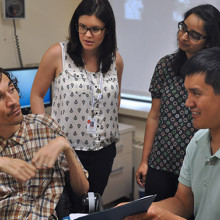
Dan Harvey with Lawson researchers Stacey Guy, Swati Mehta and Dr. Eldon Loh.
Dr. Eldon Loh, Lawson Researcher and Physical Medicine and Rehabilitation Specialist at St. Joseph’s, and his team recognized that pain can be an overlooked part of a spinal cord injury and plays a major factor in the success of rehabilitation. It’s difficult for someone in pain to participate fully in their own recovery, and so long-term disability becomes more likely. Pain is difficult to manage and it often takes multiple approaches to find something that works for each person.
“This is a starting point for us to standardize how we approach pain in the clinic. We have identified gaps and offered recommendations to not only manage the pain, but also ensure that our patients can fully benefit from rehabilitation,” says Dr. Loh.
The results of the three-year process led to recommendations for screening and diagnosis, treatment and models of care. Important clinical considerations accompany each recommendation.
“For those in hospital following an injury, it’s about making sure they can be as independent as possible before discharge. Over time, we want to keep pain levels under control so that they are able to live life to the fullest,” adds Dr. Loh.
The research will inform new tools and resources for care providers and patients.
Harvey believes the guidelines will have a tremendous impact for patients whose pain may have been overlooked. “Pain can be created through many different avenues and the effects can snowball after a person is discharged and sent home. If you don’t check all of the boxes, you might be missing a very important item.”
The new guidelines have been published in the international journal Spinal Cord. The Ontario Neurotrauma Foundation and Rick Hansen Institute provided funding for the research study.
A special thanks to individuals from St. Joseph's who were involved in the project: Steve Orenczuk, Patrick Potter, Keith Sequiera, Lindsey Guilbault, Robert Teasell, Anna Kras-Dupuis, Dalton Wolfe, Alba Casalino and Dwight Moulin.
Image
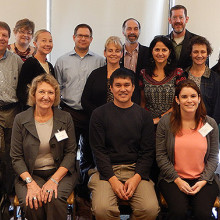
Additional members of the panel that developed the new clinical practice guidelines.
First Contrast Enhanced Spectral Mammography (CESM) guided biopsy in North America
LONDON, ON – Researchers at Lawson Health Research Institute (Lawson) are the first in North America to perform a breast biopsy guided by Contrast Enhanced Spectral Mammography (CESM).
CESM is a novel diagnostic imaging tool that is able to detect cancerous lesions at a greater rate than standard mammography, and at close rate to MRI. Patients who undergo CESM receive an intravenous iodinated contrast liquid. This liquid acts as a dye that enhances the visibility of certain tissues during a radiographic imaging procedure, such as mammography or x-ray.
Currently, when a suspicious lesion is detected by CESM and not detected by standard mammography or ultrasound, the patient must return later for an MRI biopsy. Wait times for MRI can be lengthy, and the procedure itself is often long and uncomfortable.
CESM guided biopsy offers the ability to perform biopsy of the lesion of concern using mammography, after iodinated contrast injection. The procedure is faster and more accurate, comfortable and cost effective than an MRI biopsy.
The first CESM guided biopsy in North America was performed on June 12, 2020, at St. Joseph’s Health Care London (St. Joseph’s). Dr. Anat Kornecki, Lawson Associate Scientist and Radiologist at St. Joseph’s explains, “this new approach has the potential to provide rapid and accurate access for patients and reduce costs. With CESM biopsy technology we are also able to perform biopsy of lesions that are located in areas that MRI guided biopsy cannot reach.”
“Our initial experience has been very successful, and we hope to see an impact on patient care as well as breast cancer outcomes,” says Dr. Kornecki.
The study will recruit 50 patients who have a suspect finding detected using CESM.
-30-
About Lawson Health Research Institute
Lawson Health Research Institute is one of Canada’s top hospital-based research institutes, tackling the most pressing challenges in health care. As the research institute of London Health Sciences Centre and St. Joseph’s Health Care London, our innovation happens where care is delivered. Lawson research teams are at the leading-edge of science with the goal of improving health and the delivery of care for patients. Working in partnership with Western University, our researchers are encouraged to pursue their curiosity, collaborate often and share their discoveries widely. Research conducted through Lawson makes a difference in the lives of patients, families and communities around the world. To learn more, visit www.lawsonresearch.ca.
Media Contacts
Celine Zadorsky
Senior Media Relations Consultant
Communications & Public Engagement
T: 519-685-8500 ext. 73502
Celine.zadorsky@lhsc.on.ca
First Contrast Enhanced Spectral Mammography guided biopsy in North America
Researchers at Lawson Health Research Institute (Lawson) performed the first breast biopsy guided by Contrast Enhanced Spectral Mammography (CESM) in North America on June 12, 2020.
CESM is a novel diagnostic imaging tool that is able to detect cancerous lesions at a greater rate than standard mammography, and at close rate to MRI. Patients who undergo CESM receive an intravenous iodinated contrast liquid. This liquid acts as a dye that enhances the visibility of certain tissues during a radiographic imaging procedure, such as mammography or x-ray.
Currently, when a suspicious lesion is detected by CESM and not detected by standard mammography or ultrasound, the patient must return later for an MRI biopsy. Wait times for MRI can be lengthy, and the procedure itself is often long and uncomfortable.
CESM guided biopsy offers the ability to perform biopsy of the lesion of concern using mammography, after iodinated contrast injection. The procedure is faster and more accurate, comfortable and cost effective than an MRI biopsy.
The study will recruit 50 patients who have a suspect finding detected using CESM.
Dr. Anat Kornecki, Lawson Associate Scientist and Radiologist at St. Joseph’s Health Care London explains, “this new approach has the potential to provide rapid and accurate access for patients and reduce costs. With CESM biopsy technology we are also able to perform biopsy of lesions that are located in areas that MRI guided biopsy cannot reach.”
“Our initial experience has been very successful, and we hope to see an impact on patient care as well as breast cancer outcomes,” says Dr. Kornecki.
Scientist
… all non-vaccinated staff, physicians, visitors and patients entering our building must wear a mask if they have … daily activities that place them within two meters of other patients and/or residents. When an influenza outbreak is … be infectious. Wearing a mask may protect any unvaccinated patients or residents you come into contact with. This …
CARING FOR THE BODY, MIND & SPIRIT SINCE 1869 Renowned for compassionate care, St. Josephs is one of the best academic health care organizations in Canada dedicated to helping people live to their fullest by minimizing the effects of injury, disease and disability through excellence in care, teachin...
… your procedure as most procedures require this. o For patients who take warfarin and have held it for the … your procedure as most procedures require this. o For patients who take warfarin and have held it for the …
June 16, 2020; Page 1 of 1 Fluoroscopy Pre-Procedure Instructions Your appointment is scheduled in the Outpatient Pain Management Clinic at St. Josephs Hospital. Please use Grosvenor Street Entrance 2. Take the main elevators to Zone B, Level 3 and register at the Central Registration Desk (B3-030)...
For Patients
Research participants are crucial partners in clinical research at HULC. Patients work with our graduate students, surgeons, therapists, engineers and other scientists to conduct clinical research studies that will improve outcomes for people with health problems or injuries affecting their upper limb.
Are you interested in clinical research? There are many opportunities to become involved in clinical research at HULC with studies looking at shoulder, elbow, wrist/hand, nerve and work-related injuries.
Are you already a research participant at HULC? Access information as a current participant, including directions to HULC and contact information.