


Search
Search
719 Search Results:
Community cycling event hits higher gear for mental health
… says Kerrie Dewachter, coordinator of the Treatment and Rehabilitation Program at Parkwood Institute’s Mental Health … Kerrie Dewachter (right), Coordinator of the Treatment and Rehabilitation Program at Parkwood Institute’s Mental Health … says Kerrie Dewachter, coordinator of the Treatment and Rehabilitation Program at Parkwood Institute’s Mental Health …
Media Release: COVID-19 containment contributing to domestic violence
… medical imaging; specialized mental health care; rehabilitation and specialized geriatrics; and surgery. St. … medical imaging; specialized mental health care; rehabilitation and specialized geriatrics; and surgery. St. … medical imaging; specialized mental health care; rehabilitation and specialized geriatrics; and surgery. St. …
The Drive to Give Back
… more than a month in hospital. His journey included rehabilitation at Parkwood Hospital (now called Parkwood … more than a month in hospital. His journey included rehabilitation at Parkwood Hospital (now called Parkwood … more than a month in hospital. His journey included rehabilitation at Parkwood Hospital (now called Parkwood …
It’s a four-peat! St. Joseph’s once again earns Exemplary Standing from Accreditation Canada
… medical imaging; specialized mental health care; rehabilitation and specialized geriatrics; and surgery. St. … medical imaging; specialized mental health care; rehabilitation and specialized geriatrics; and surgery. St. … medical imaging; specialized mental health care; rehabilitation and specialized geriatrics; and surgery. St. …
Nature's healing power
… at Southwest Centre includes assessment, treatment and rehabilitation programs, and an outpatient Forensic Outreach … at Southwest Centre includes assessment, treatment and rehabilitation programs, and an outpatient Forensic Outreach … at Southwest Centre includes assessment, treatment and rehabilitation programs, and an outpatient Forensic Outreach …
Our People: Meet Michelle Fredette-Carragher
… forensic programs assist patients toward recovery and rehabilitation. Through intensive work, many patients are … forensic programs assist patients toward recovery and rehabilitation. Through intensive work, many patients are … forensic programs assist patients toward recovery and rehabilitation. Through intensive work, many patients are …
Jennifer’s Choice
… medical imaging; specialized mental health care; rehabilitation and specialized geriatrics; and surgery. St. … medical imaging; specialized mental health care; rehabilitation and specialized geriatrics; and surgery. St. … medical imaging; specialized mental health care; rehabilitation and specialized geriatrics; and surgery. St. …
Our People: Meet Erin Macias, dietary aide, Parkwood Institute
… to remove the tumour. With the help of St. Joseph’s Stroke Rehabilitation Program, Erin is now in good health and ready … to remove the tumour. With the help of St. Joseph’s Stroke Rehabilitation Program, Erin is now in good health and ready … to remove the tumour. With the help of St. Joseph’s Stroke Rehabilitation Program, Erin is now in good health and ready …
Investing in Life-Changing Research
… and Richard Ivey Research Chair in Aging, Mental Health, Rehabilitation & Recovery, another endowed position. As … and Richard Ivey Research Chair in Aging, Mental Health, Rehabilitation & Recovery, another endowed position. As … and Richard Ivey Research Chair in Aging, Mental Health, Rehabilitation & Recovery, another endowed position. As …
Look who’s talking
… kidney stones May 2019: Dr. Bob Teasell will talk about rehabilitation and recovery after stroke July 2019: Dr. … kidney stones May 2019: Dr. Bob Teasell will talk about rehabilitation and recovery after stroke July 2019: Dr. … kidney stones May 2019: Dr. Bob Teasell will talk about rehabilitation and recovery after stroke July 2019: Dr. …
The lasting touch of kindness
… Martha, an occupational therapist with the Community Stroke Rehabilitation Team at Parkwood Institute. “I still carry … Martha, an occupational therapist with the Community Stroke Rehabilitation Team at Parkwood Institute. “I still carry … Martha, an occupational therapist with the Community Stroke Rehabilitation Team at Parkwood Institute. “I still carry …
Sniffing out better care
… medical imaging; specialized mental health care; rehabilitation and specialized geriatrics; and surgery. St. … medical imaging; specialized mental health care; rehabilitation and specialized geriatrics; and surgery. St. … medical imaging; specialized mental health care; rehabilitation and specialized geriatrics; and surgery. St. …
Terms of Reference: The Gray Centre for Mobility & Activity Catalyst Grant 2025-2026 Program
… advances evidence-based discoveries and develops bold rehabilitation solutions to improve outcomes for people with … advances evidence-based discoveries and develops bold rehabilitation solutions to improve outcomes for people with … advances evidence-based discoveries and develops bold rehabilitation solutions to improve outcomes for people with …
Artificial intelligence making strides into rehab
Gray Centre hears of AI’s potential to aid patients, practitioners
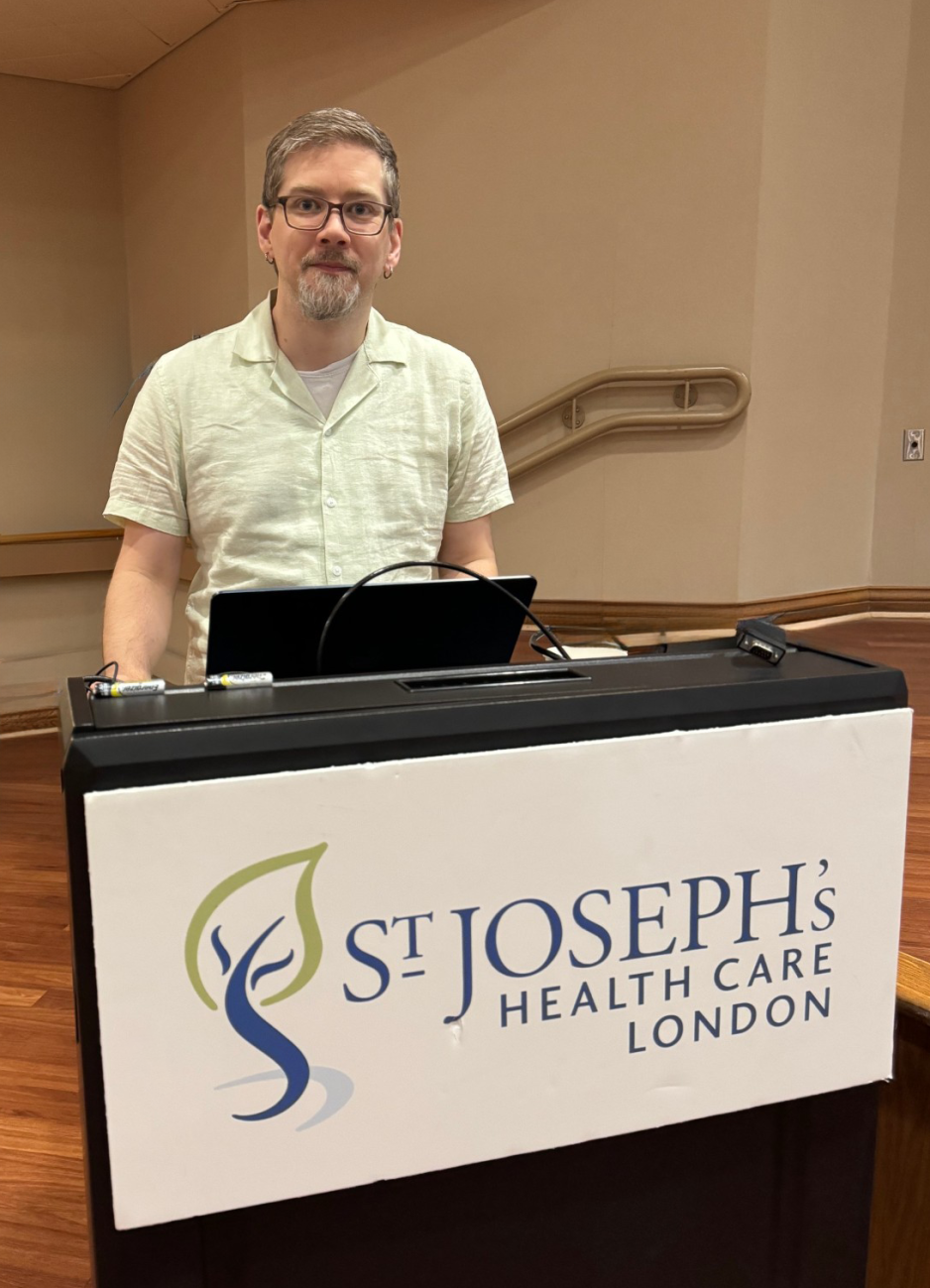
Imagine trying to determine and share best practice for physical rehabilitation when each therapist conducts and describes their work with different patients in slightly different ways.
Bringing artificial intelligence (AI) and machine learning to health research and practice is a “transformative shift” that can help close any gaps and ultimately improve patient recovery, participants at a Coffee Lunch hosted by The Gray Centre for Mobility and Activity heard recently during a noon-hour learning session.
AI in general can help explore and describe data, predict outcomes and support better decision-making, says Dan Lizotte, associate professor of computer science and epidemiology and biostatistics at Western University.
“For patient rehabilitation, AI models can interpret past data to find patterns we didn’t know existed, and then build new models for treatment,” Dan told a group of about 45 researchers, scientific staff, clinicians and clinical leaders. health professionals.
The Gray Centre at St. Joseph’s Parkwood Institute is a national leader in developing rehabilitation interventions and treatments through research, teaching and partnership. The group’s weekly Coffee Lunch events are intended to help “unsilo” Parkwood’s research and clinical groups so that they all can benefit from each other’s expertise.
“AI is arguably one of the biggest technological shifts since the internet,” adds Dalton Wolfe, a scientist at Lawson Health Research Institute and leader of the Research 2 Practice (R2P) team based at Parkwood. “We’ve been talking for years about how advanced data collection and analytics can enhance our practice.”
“In health care, it can change our processes and practices, and help develop decision-support and training systems, as well as new ways to generate evidence - all that will enable better research and clinical care. It’s a transformative shift.”
- Dalton Wolfe, a scientist at Lawson Health Research Institute and leader of the Research 2 Practice (R2P) team
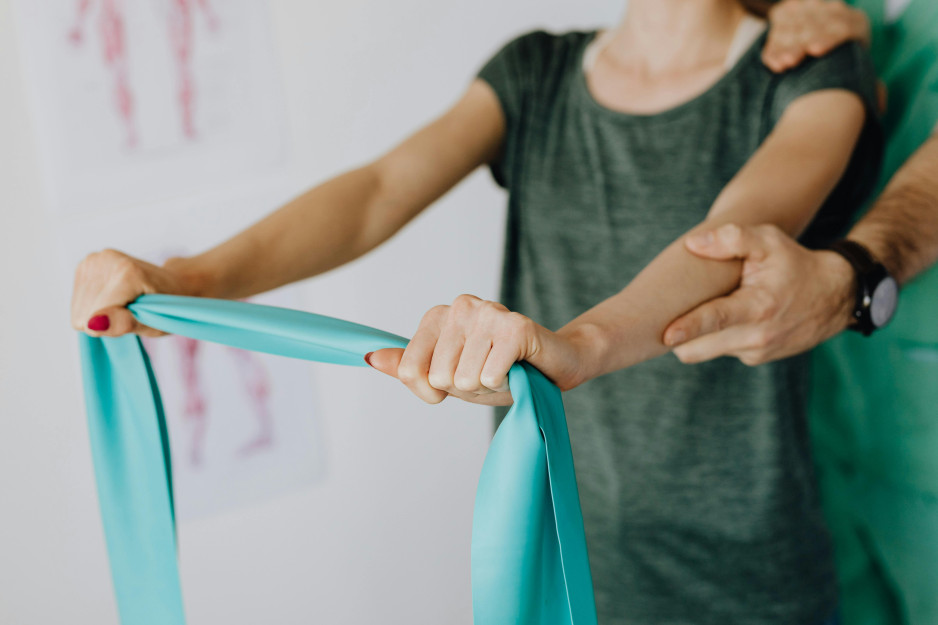
For example, Dan is leading the data science team as part of an ongoing R2P study to collect data on physical therapists’ complex descriptions of rehabilitation activities with patients with spinal cord injuries. To start with they have created videos in which 14 therapists describe 16 different activities to capture standard rehab activities and language. The aim is to generate an AI model that can categorize those descriptions and assess which activities are linked with the best outcomes, and then to improve best practices and lead to better patient recovery, he says.
Dan acknowledges the AI technology is growing quickly, and so are the potential applications for rehabilitation research. “Every week, there are new tools we might use, everything from data collection to final analysis.”
Our history
… Parkwood Hospital opened at present-day site. 1986 Regional Rehabilitation Program begins. 1989 Official opening of the … opens. 1996 Stroke and Musculoskeletal (hip fracture rehabilitation) Programs established. 1997 Transfer of … for drunkenness out of jails," by admitting them to rehabilitation centres. 1977 - Nursing school closed St. …
Serving hope
… through the endowed Jean Bebensee & Roy Cottier Award for Rehabilitation Staff Development, 15 SLPs from across the … through the endowed Jean Bebensee & Roy Cottier Award for Rehabilitation Staff Development, 15 SLPs from across the … through the endowed Jean Bebensee & Roy Cottier Award for Rehabilitation Staff Development, 15 SLPs from across the …
Shoulder Trauma: From fixation to functional recovery - Friday May 29, 2026
… complete the form below to register for the Rotator Cuff Rehabilitation to Replacement Conference. Contact … complete the form below to register for the Rotator Cuff Rehabilitation to Replacement Conference. Contact …