


Search
Search
719 Search Results:
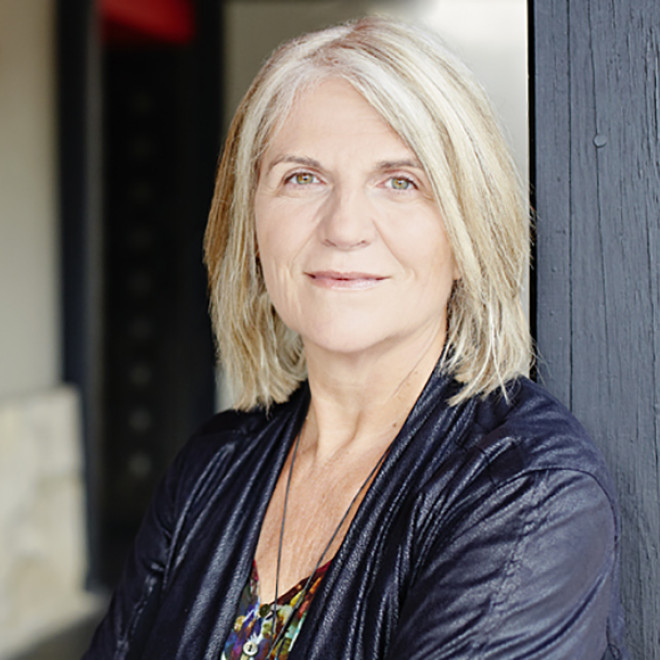
Dr. Cheryl Forchuk
Contact Information
Phone
519-685-8500
Extension
77034
Email
Administrative Support
sheryl.rooth@sjhc.london.on.ca
Website
Biography
Dr. Cheryl Forchuk is the Beryl and Richard Ivey Research Chair in Aging, Mental Health, Rehabilitation and Recovery; a Distinguished University Professor at Arthur Labatt Family School of Nursing (Western University); and Scientist and Assistant Director at Lawson Health Research Institute. She has published on many topics including transitional discharge, technology in mental health care, and poverty, housing and homelessness. She has been honoured with numerous awards including the Order of Ontario, an honorary life membership in the Registered Nurses Association of Ontario and the Canadian Association of Advanced Practice Nursing, and a Research Pioneer Award from Psychosocial Rehabilitation Canada.
Dr. Dalton L. Wolfe
Research Overview
- Spinal Cord and Acquired Brain Injury Rehabilitation
- Implementation Science
- Activity-based therapies to promote neurorecovery
Biography
Dr. Dalton Wolfe is a Scientist at Parkwood Institute (SJHC London) and the leader of the R2P (Research 2 Practice) team that integrates clinical and research efforts to improve care and clinical outcomes. His primary research interest is in the area of knowledge mobilization and best practice implementation with a focus on physical activity and activity-based therapies in spinal cord injury and brain injury rehabilitation. He co-leads the Ontario SCI Implementation, Evaluation and Quality Care Consortium which focuses on implementation of quality indicators towards the enhancement of care across the 5-academic health centres involved in SCI rehabilitation in the province of Ontario. As part of the Parkwood Rehabilitation Innovations in Mobility Enhancement (PRIME) initiative he is focused on enhancing clinical decision-making to improve locomotor and other movement-related outcomes with activity-based therapies such as robotic, manual and FES-assisted therapies. As with many of the R2P initiatives this involves implementation science and participatory research methods to put in place practice-based research infrastructure that enables iterative knowledge generation as well as implementation. Dr. Wolfe Is currently accepting students at the Masters, Doctoral, and post-doctoral levels.
Latest News: https://www.lawsonresearch.ca/lawsonlink/prime-team
Dr. Laura Graham

Full Name
Dr. Laura Graham
Role
Location
Degrees and Qualifications
PT
Website
Research Overview
Mobility and Activity
Biography
As a physiotherapist, Laura has primarily worked in adult brain injury since 2011. Her teaching focus is physiotherapy foundational clinical skills and applied neurological injury/illness rehabilitation; and her research focus is interventions for adults with persistent symptoms post concussion/mild traumatic brain injury. She has consulted with WSIB Ontario on mTBI Program of Care revision, presented at See The Line concussion symposium, and taught physiotherapist instructors across Canada about concussion/mTBI rehabilitation for the National Orthopaedic Division of the Canadian Physiotherapy Association.
Partners
Dr. Dalton Wolfe (Lawson); Dr. Jim Dickey (Western)
Dr. Robert Teasell

Full Name
Dr. Robert Teasell
Role
Location
Degrees and Qualifications
PhD
Contact Information
Phone
519-685-4559
Extension
44559
Email
Administrative Support
Pat Holmes - Pat.Holmes@sjhc.london.on.ca
Research Overview
- Stroke rehabilitation
- Chronic pain
- Whiplash injuries
- Conversion disorders

Biography
Robert Teasell MD FRCPC
Dr. Robert Teasell is Professor, Schulich School of Medicine and Dentistry, Western University, former Chair-Chief and current Research Director of the Department of Physical Medicine and Rehabilitation, Medical Director of the Stroke Rehabilitation Program, Parkwood Institute, St. Joseph’s Health Care London and Clinical Researcher with Lawson Health Research Institute, Parkwood Institute Research.
Dr. Teasell is editor of the internationally acclaimed Stroke Rehabilitation Evidence-Based Review (17 editions), Acquired Brain Injury Evidence-Based Review (12 editions) and co-editor of Spinal Cord Injury Evidence-Based Review (6 editions). He is Co-Chair of the Canadian Best Practice Guidelines Committee in Stroke Rehabilitation. Dr. Teasell has authored 335 peer-reviewed articles, 335 published abstracts, 22 book chapters, over 1,500 (including 700 international or national) posters/presentations and over 10,000 citations on SCOPUS. He has been involved in over $19 million in research funding and has won many awards, most recently the 2018 Lawson Health Research Institute Impact Scientist of the Year Award and the 2018 Post-Acute Stroke Award of Excellence from the American Congress of Rehabilitation Medicine and the National Stroke Association (U.S.).
Research interests include:
- Clinical Application of Best Evidence in Neurorehabilitation utilizing the Evidence-Based Reviews and associated Guidelines
- Stroke Rehabilitation in the Community in association with a model system of stroke outpatients out of Parkwood Institute in conjunction with the Southwestern Ontario Local Integrated Health Network
- The role of Obsessive Personality Traits as in coping with Chronic Pain, Rheumatoid Arthritis, Post Concussion Syndrome and Spinal Cord and Traumatic Brain Injuries and how that influences, anxiety, stress, depression, disability and use of opioid medications.
Partners
Partners include:
Southwestern Ontario Local Integrated Health Network
Dalton Wolfe
Eldon Loh
Laura Allen
Dr. Vladimir Hachinski receives Canadian Medical Association’s highest honour
World-renowned brain researcher, Dr. Vladimir Hachinski, is named as this year’s recipient of the Canadian Medical Association’s (CMA) F.N.G. Starr Award for his contributions in stroke research and patient care. This prestigious award is the highest available to CMA members and is intended to recognize outstanding and inspiring lifetime achievement.
Dr. Hachinski, Lawson Scientist and Neurologist at London Health Sciences Centre is the co-founder of the world’s first successful stroke unit. Two earlier centres in the United States were deemed unsuccessful and eventually closed. Dr. Hachinski and his colleague, Dr. John W. Norris, applied their knowledge and fresh perspectives, and opened a stroke centre at Sunnybrook Hospital, Toronto, in 1975.
“We had a tremendous team of volunteer nurses, physiotherapists and other professionals who were very keen to have an impact,” explains Dr. Hachinski. “We implemented the A, B, C, protocol which focused on Accurate diagnosis, Balance and homeostasis in the patient’s physiology, and avoiding Complication. Dr. Josephine Somerville pioneered early rehabilitation in the stroke unit.”
At the time, stroke was still commonly misunderstood in medicine, until Dr. Hachinski coined the term “brain attack” in 1993, describing the similarities in urgency of strokes and heart attacks.
Realizing the success of their protocols on stroke patients, Dr. Hachinski and his colleagues also noticed improved outcomes for dementia rates in the stroke patients they saw. There is still no treatment for dementia, however they were confident they could delay onset through similar stroke prevention and treatment protocols.
After several studies on both animal models and humans, Dr. David Cechetto from Western University and Dr. Hachinski discovered that the region of the brain, known as the insula, is involved in regulating the parasympathetic and sympathetic nervous systems - evidence that there is an important connection in how the brain impacts the heart.
Today there are several stroke centres operating in Ontario. “We were able to prove that our model was successful at improving the lives of stroke patients, so the government facilitated the opening of these centres across the province. We can now say that we have improved outcomes not just for individuals, but at a population level, where public health policy has its true impact,” says Dr. Hachinski.
Currently Dr. Hachinski and his team are seeking funding for a nation-wide study to examine stroke and dementia outcomes across the country, including how several environmental factors play a role in the development of stroke and dementia with the aim of preventing both. “Since this research is multi-disciplinary, it is challenging to find a funding agency as most of them tend to invest in very specific fields of research,” he explains. “We are hopeful that someone will recognize the importance of this research, and we will be able to move forward with our study.”
“I am extremely appreciative and proud to be recognized with the F.N.G. Starr Award, however I am just the face of this honour. Behind me stands an amazing team. I feel that my greatest strength is to recognize and work with talent.”
… Parkwood Hospital Driver Assessment and Rehabilitation Program 801 Commissioners Road East London, … or wide turns �� Accidents or near misses A driver rehabilitation specialist can provide a comprehensive … difficulty, a driver evaluation may be indicated. A driver rehabilitation specialist can provide a comprehensive …
Parkwood Hospital Driver Assessment and Rehabilitation Program 801 Commissioners Road East London, Ontario N6C 5J1 Phone: (519) 685-4070 Fax: (519) 685-4576 Aging and Driving As we all age, changes occur in physical functioning, vision, perception, and processing abilities that could make driving un...
… Updated September 2010 Driver Assessment and Rehabilitation Program Fee Schedule Please see the fee … Accessibility Assessment ($300-$1000) Driver Rehabilitation Services - Lessons In-Vehicle Lessons from … In-Vehicle Lesson with OT in vehicle ($100-$600) Driver Rehabilitation Services - Programs New Driver Certificate …
Updated September 2010 Driver Assessment and Rehabilitation Program Fee Schedule Please see the fee schedules below. If you have any questions about these guidelines, please contact us directly. Assessments Clinical Assessment Only ($200-$1000) On Road Assessment ($300-$1000) Standard Driving Assess...
… Parkwood Hospital Driver Assessment and Rehabilitation Program 801 Commissioners Road East London, … warning signs, you may need a driving evaluation. A driver rehabilitation specialist, with knowledge about the medical … Parkwood Hospital Driver Assessment and Rehabilitation Program 801 Commissioners Road East London, …
Parkwood Hospital Driver Assessment and Rehabilitation Program 801 Commissioners Road East London, Ontario N6C 5J1 Phone: (519) 685-4070 Fax: (519) 685-4576 DRIVING AFTER A TRAUMATIC BRAIN INJURY Traumatic Brain Injury and Closed Head Injury commonly occur due to motor vehicle collisions. Injuries c...
… Parkwood Institute Driver Assessment and Rehabilitation Centre Driver Assessment and Rehabilitation Program/DriveABLE Mailing address Location PO … Parkwood Institute Driver Assessment and Rehabilitation Centre Driver Assessment and Rehabilitation Program/DriveABLE Mailing address Location PO …
Parkwood Institute Driver Assessment and Rehabilitation Centre Driver Assessment and Rehabilitation Program/DriveABLE Mailing address Location PO BOX 5777, STN B 550 Wellington Road London, ON N6A 4V2 London ON N6C 0A7 Tel: (519) 685-4070 Fax: (519) 685-4066 Referral (Please forward any relevant med...
Easing the pressure for patients with chronic wounds
Chronic wounds represent a significant burden in Canada. Between four and 30 per cent of patients develop a chronic wound, depending on the health care setting. Over 85 per cent of all Spinal Cord Injury (SCI) survivors will experience health complications related to pressure ulcers, injuries to the skin and underlying tissue resulting from prolonged pressure. These types of wounds can significantly reduce participation in meaningful activities and overall quality of life.
Research from around the world shows that electrical stimulation can help speed the healing of pressure ulcers. This therapy is currently done by a trained health care provider and is not readily available for people across Canada.Electrical stimulation therapy (E-Stim) is a wound treatment that involves applying low levels of electrical current to the wound bed and surrounding tissues. It stimulates several healing processes, promotes local circulation and prevents infections.
The E-Stim Collaboration: A Best Practice Implementation Project for Better Pressure Ulcer Care aims to improve the coordination of pressure ulcer care and promote the use of evidence-informed wound treatments for people living with SCI. In particular, the research project is studying how to best provide E-Stim to people with pressure ulcers, in their own communities.
“Over the years I’ve seen the serious impact pressure ulcers have on the lives of people with spinal cord injury and other health challenges. This is what drives my commitment to not only develop best practice guidelines, but also to ensure they are put into action,” says Dr. Pamela Houghton, Associate Scientist, Lawson and Professor, School of Physical Therapy at Western University. “Advances in technology make it possible for more people with care needs to live at home.”
The pilot project in the South West LHIN has a unique model that builds capacity in the community and taps into the lived experience of people with pressure ulcers and SCI. It brings together the expertise of researchers, clinicians and managers from academia, hospital centres and community care.
Partners include the Parkwood Institute Research program at Lawson Health Research Institute, Western University, Saint Elizabeth’s Health Care Research Centre, Sunnybrook Health Sciences Centre and the South West Community Care Access Centre. An interdisciplinary specialized team, called SCIPUT, has been established within the Spinal Cord Injury Rehabilitation program provided at Parkwood Institute, St. Joseph’s Health Care London.
“Our collaborative team is using the PLAN-DO-STUDY-ACT quality improvement model. This allows us to learn from each cycle and make adjustments as we go,” says Dr. Houghton. “We have just completed the first cycle and are reporting on lessons learned.” Funded by the Rick Hansen Foundation, the team hopes this will set the stage for a larger cross-country initiative.
Those interested in participating can contact phoughto@uwo.ca. The study is open to:
- Individuals with an open pressure ulcer and with a condition that causes limited mobility and/or requires a wheelchair;
- Those who are able and willing to participate in treatment plan, and communicate feedback; and,
- People who are eligible to receive services from South West CCAC.
|
Image
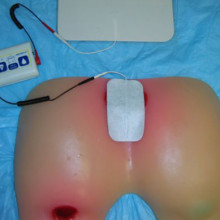
Electrical stimulation (E-Stim) directly stimulates several wound healing processes, promotes local circulation and prevents wound infections. It produces faster healing and wound closure. A trained health care provider applies low levels of electrical current to the pressure ulcer using specialized equipment. |
Eldon Loh
Eldon Loh , MD
Associate Professor, Schulich School of Medicine and Dentistry
Key Areas of Focus:
Chronic Pain
Phone:
519-685-4292 ext. 44080
Email:
Publications:
Accepting Grad Students:
No
About:
Dr. Eldon Loh is a Physiatrist at Parkwood Institute and an Associate Professor in the Department of Physical Medicine and Rehabilitation at the Schulich School of Medicine and Dentistry at Western University. He completed residency training in Physical Medicine and Rehabilitation at the University of Alberta in 2010 and a clinical fellowship in interventional pain management in 2011. His research interests include improving the management of chronic neuropathic pain after spinal cord injury, and the development of novel and improved techniques for interventional pain management of axial spine pain.
He is Chair of the panel that developed and updates the Canadian Best Practice Guidelines for Neuropathic Pain after spinal cord injury and works with international partners to improve point-of-care tools for implementing the guidelines. His interventional pain research focuses heavily on a bench to bedside approach, utilizing anatomical findings to inform clinical practice. He has also examined the impact of Ontario’s healthcare utilization of different interventional procedures such as radiofrequency ablation and paravertebral nerve blocks.
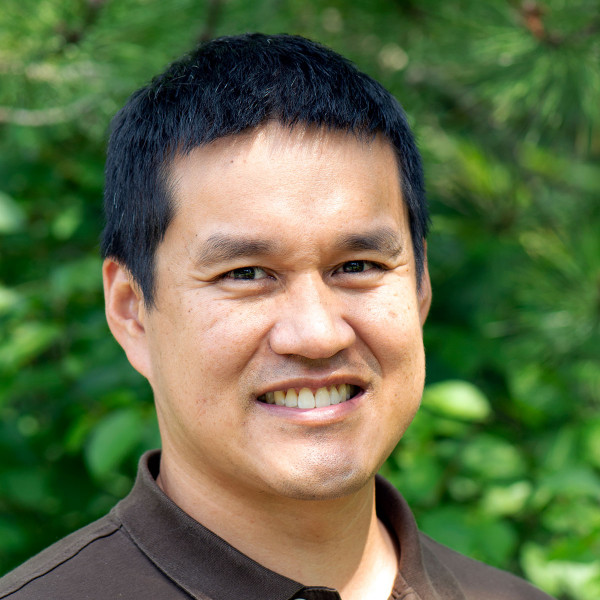
Embracing health research this holiday season
Community members, patients and families, and those working in the health field attended a special open house on November 28 by research groups at Lawson Health Research Institute. Together, they celebrated the holiday spirit and the gift of hope that is made possible through hospital-based research.
A part of St. Joseph’s Health Care London, Parkwood Institute represents the next era in care, recovery and rehabilitation. Across the site, clinical and research teams in different disciplines and specialties collaborate not only with each other but also with patients and families.
“Many people in the community know the high-quality and compassionate care that is supported by the various clinical teams at Parkwood Institute, but aren’t aware of the research happening at this site,” says Dr. Cheryl Forchuk, Beryl and Richard Ivey Research Chair in Aging, Mental Health, Rehabilitation and Recovery, and Assistant Scientific Director at Lawson.
“Lawson researchers at Parkwood are tackling important challenges with highly innovative and meaningful solutions that help improve care and quality of life.”
For the past three years, the open house gives guests a more in-depth understanding of hospital-based research and its impact. Dr. Forchuk notes that it is a great chance to talk to the researchers and their teams, and to learn about research in a really fun and interactive way. Guests may also learn about opportunities to participate in studies, as the research teams rely on people in the community getting involved.
Image
There were 12 interactive program displays from Parkwood Institute Research, a Lawson program, in the areas of cognitive vitality and brain health, mobility and activity and mental health:
- Cognitive Clinical Trials Group (CCTG)
- Collaboration of Rehabilitation Research Evidence (CORRE)
- Gait and Brain Lab
- Geriatric Mood Disorders Lab
- MacDonald Franklin OSI Research Centre (Occupational Stress Injury)
- Mental Health Nursing Research Alliance (MHNRA)
- Mental Health INcubator for Disruptive Solutions (MINDS) of London
- Neuropsychiatry and Therapeutic Brain Stimulation Research Group
- Occupational Therapy and Spiritual Care Research Lab
- R2P (Research to Practice)
- Rehabilitation Mental Health
- Wound Care
The open house had a festive theme and many of the exhibits involved a problem solving or interactive elements to encourage learning and foster teamwork.
Karen Vecchio, federal Member of Parliament for Elgin-Middlesex-London, was among the over 200 people in attendance.
Image
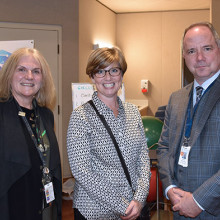
At the open house, from left: Dr. Cheryl Forchuk, MP Karen Vecchio and Roy Butler, St. Joseph's Vice President.
“London is a great community to conduct research,” explains Dr. Forchuk. “We are a mid-size city surrounded by rural areas, in many ways reflecting Canada as a whole. A lot of our projects cover the country with multiple sites and results found here by our leading experts are being implemented in health centres and national strategies in this country and around the world.”
Scientist
… Care Type of operation: Health Care Facilities (Ambulatory, Rehabilitation, Long Term Care, Veterans, Mental Health) … Parkwood Hospital: Parkwood Hospital offers complex care, rehabilitation, palliative care, specialized geriatric … outpatients. Parkwood Hospital is also home to the Aging, Rehabilitation and Geriatric Care Research Centre. Mount …
Energy Conservation and Demand Management Plan Made for Ontario Regulation 397/11 Green Energy Act, 2009 Authored by: Mark Read June 18, 2014 2 The Green Energy Act - Regulation 397 The Energy Conservation and Demand Management Plan outlined in the following report is the second component of a two p...
… care centre. Parkwood Hospital plays a leading role in rehabilitation, complex care, palliative care, Veteran’s … Units at this site. At Parkwood, within the Geriatric Rehabilitation Unit (inpatient), Geriatric Day Hospital … who do standing transfers or slide board 34 transfers. The Rehabilitation Engineer has been consulted by the Working …
Annual Accessibility Plan for St. Josephs Health Care, London September 2008 - August 2009 Submitted to Cliff Nordal Chief Executive Officer 30 September 2008 Prepared by SJHC Accessibility Working Group Chair, Derek Lall This publication is available on the St. Josephs Heath Care, Londons website a...
… care centre. Parkwood Hospital plays a leading role in rehabilitation, complex care, palliative care, Veteran’s … who do standing transfers or slide board transfers. The Rehabilitation Engineer has been consulted by the Working … laptop) is a pilot project currently in progress in the Rehabilitation Program.) Project Status: Ongoing h) Updated …
Annual Accessibility Plan for St. Josephs Health Care, London September 2007 - August 2008 Submitted to Cliff Nordal Chief Executive Officer 30 September 2007 Prepared by SJHC Accessibility Working Group Co-ordinator, Derek Lall This publication is available on the St. Josephs Heath Care, Londons we...
… care centre. Parkwood Hospital plays a leading role in rehabilitation, complex care, palliative care, Veteran’s … care centre. Parkwood Hospital plays a leading role in rehabilitation, complex care, palliative care, Veteran’s …
Annual Accessibility Plan for the St. Joseph Health Care, London September 2005 - August 2006 Submitted to Cliff Nordal Chief Executive Officer 30 September 2005 Prepared by SJHC Accessibility Working Group Co-ordinator, Derek Lall This publication is available on the hospitals website and in altern...
… care, complex care and veterans care, long-term care, rehabilitation and specialized geriatrics and specialized … care, complex care and veterans care, long-term care, rehabilitation and specialized geriatrics and specialized …
MEDIA RELEASE For Immediate Release: June 20, 2008 LHSC and St. Josephs win national award for energy and environmental stewardship (LONDON, Ontario) London Health Sciences Centre (LHSC) and St. Josephs Health Care, London (St. Josephs) are the recipients of the 2008 Energy and Environmental Stewar...
… Therapeutic Management will be discussed with pearls. III Rehabilitation of Extensor Tendon Injuries - Jean-François … surgical management following injury, post-operative rehabilitation following repair, case examples as well as … to Hand Therapy Dr. Doug Ross, MD, FRCSC 14:00-15:00 Rehabilitation of Flexor Tendon Injuries to Zones I-IV …
2017 Hand and Upper Limb Symposium Specialized Topics of the Upper Extremity November 3-4, 2017 Roth McFarlane Hand and Upper Limb Centre St. Josephs Health Care London, Ontario, Canada Friday November 3, 2017 7:15-8:00 Registration & Refreshments 8:00-8:15 Welcome Address Roth-McFarlane Hand & Up...
… of Canada, approved by Department of Physical Medicine and Rehabilitation. Sponsorship provided by Pfizer Canada Inc. … of Canada, approved by Department of Physical Medicine and Rehabilitation. Sponsorship provided by Pfizer Canada Inc. …
HULC / Rehab Rounds Please e-mail laura.groom@sjhc.london.on.ca if you require information in a different format or if other arrangements can make this event accessible to you. Campus Accessibility Map at www.accessibility.uwo.ca/maps.htm Spinal Accessory Nerve Palsy Whiplash. Not a laughing matter,...
… SAVE THE DATE! Hand and Upper Limb Symposium Surgery and rehabilitation of the upper limb 2015 Symposium highlights … SAVE THE DATE! Hand and Upper Limb Symposium Surgery and rehabilitation of the upper limb 2015 Symposium highlights …
CARING FOR THE BODY, MIND & SPIRIT SINCE 1869 Renowned for compassionate care, St. Josephs is one of the best academic health care organizations in Canada dedicated to helping people live to their fullest by minimizing the effects of injury, disease and disability through excellence in care, teachin...