


Search
Search
719 Search Results:
… long-term care home; Those who are future candidates for rehabilitation but who need low intensity, long duration therapy to meet the rehabilitation admission criteria; and, Patients with … long-term care home; Those who are future candidates for rehabilitation but who need low intensity, long duration …
Complex Continuing Care: Information for Patients, Families, and Visitors Complex Continuing Care is a 62 bed inpatient service intended for adults whose ongoing complex care needs cannot currently be met in the community or in a long-term care facility. It is a part of the health care continuum des...
International Women's Day 2020
International Women’s Day, taking place on March 8, 2020, is a day to celebrate the various achievements of women around the world and is a call to action for gender parity. This year’s theme is “Each for Equal” to emphasize that each individual has a significant part in working towards a gender equal world.
This year, Lawson is highlighting the different paths for women who are working towards a career in the health sciences. Below are the perspectives from students, physicians and researchers on their contributions to science and medicine.
Image

High school student, Nimrit Aulakh, is completing her co-op placement with Lawson Scientist, Dr. Cheryl Forchuk. Her research focuses on improving mental health care for youth.
“Science has always been of interest to me and has now become significant within my academic endeavours. Part of my desire to become involved in the sciences stemmed from my older sister, who exposed me initially to the research side of science. It is with the help of rationale and logic in science that I can enrich my academic experience. Specifically, I have been working as a co-op student alongside the Mental Health Nursing Research Alliance and learning what it means to be a researcher. During my time, I conducted preliminary analyses on one of their studies, which focuses on improving mental health care for youth through virtual models of care. I will be presenting my findings at the Thames Valley Science and Engineering Fair later this month and if successful, will advance to the Canada Wide Science Fair. This experience has shown me a new side of science, one that I hope that I can continue to be a part of. I realized that through science and research, I can contribute to advancing society. To continue my journey through post-secondary education, I have applied to get my Bachelor’s in Health Sciences. Both within and beyond my four years of undergraduate studies, I hope to continue my contributions in serving the public through scientific research, as well as create an image for girls with the same interests as me, everywhere.”
Image

Romaisa Pervez is a Research Assistant working with Lawson Scientist, Dr. Arlene MacDougall. She recently completed her Master of Science in Epidemiology and Biostatistics at Western University.
“I’m the student lead on a project that’s titled “Building a Sustainable Model and Evaluation for Psychological Rehabilitation in Kenya: An Implementation Study.” I’m working with the CREATE (Community Recovery Achieved Through Entrepreneurism) Kenya team to conduct a study to improve how we deliver, evaluate, and train persons with lived experience or community members to facilitate the Psychosocial Rehabilitation (PSR) Toolkit so it can be locally sustained in Kenya. I’ve travelled to Kenya twice during my Master’s to build relationships with stakeholders and conduct focus groups/interviews. My passion lies in understanding how we can implement upstream initiatives for mental health that are both sustainable and effective. Furthermore, I want to explore how we can find leverage points within the current mental health system in low to middle income countries and create innovative solutions. In the near future, I want to pursue medicine and further my knowledge and build stronger skills in this field.”
Image

Dr. Kelly Anderson is an Associate Scientist at Children’s Health Research Institute, a program of Lawson. She is also Assistant Professor in the Department of Epidemiology & Biostatistics at the Schulich School of Medicine & Dentistry, Western University.
“I lead a research program in public mental health research, with a primary focus on young people experiencing a first onset of psychotic disorder. Together with my team, we are investigating the distribution and risk factors for psychotic disorders, prevention in early psychosis, and access to care and utilization of services in first-episode psychosis. My research program is centered around mentorship and training of students from all levels, and I work with trainees to foster high-level skills in the design and analysis of epidemiologic studies using large complex datasets. I am committed to fostering a culture of equity, diversity, and inclusion within my research team, and I advocate strongly for gender and early career representation for awards, scientific symposia, and other career opportunities. As a female scientist, I regularly mentor young women, both formally and informally, and due to the focus of my research, I also regularly work with trainees with lived experience of mental disorders. The diverse experiences and perspectives of these students both inspire and inform our work together.”
Image

Dr. Michelle Barton-Forbes is an Associate Scientist at Lawson and a Physician at London Health Sciences Centre (LHSC) specializing in paediatric infectious diseases. She is also an Assistant Professor at the Schulich School of Medicine & Dentistry, Western University.
“My research program is focused on the clinical epidemiology of infectious diseases in children, particularly in vulnerable paediatric populations such as neonates and young infants. A secondary area of interest is in bacterial resistance and antimicrobial stewardship. Through engagement in multicentre research and contribution to national guideline development, I am able to make a difference in the management and prevention of common childhood infections nationally. The combination of intense passion for my subspecialty, inquisitive curiosity and a drive to better understand common childhood illnesses is infectious to my students. I motivate my students to excellence by inspiring them to believe in themselves and their ability to make a difference. My students are encouraged and challenged to find answers to unanswered questions and unexplained trends through research. As a proud Canadian and an immigrant from a nation that prides itself in its diversity, I believe that diversity is our strength. The Jamaican national motto “out of many one people” has framed my worldview and has influenced my practice.”
Image

Dr. Eileen Crowley is a Scientist at Lawson and a Pediatric Gastroenterologist at LHSC. She is also an Assistant Professor at the Schulich School of Medicine & Dentistry, Western University.
“My research interests include pediatric inflammatory bowel disease (IBD), the genetics of IBD, big datasets, therapeutic drug monitoring clinical trial endpoints and precision medicine. My work has served to be better delineate the genetic phenotype of children with IBD as well as optimizing response to therapy in this age group. I engage students and motivate them to work with enthusiasm! My aim is to create learning opportunities that are active, collaborative and promote learning relationships. Once I have identified a student’s goal, it is easier to share and attain that goal. Within the research setting, I aim to maintain an environment where every student feels accepted, valued and safe. Sharing of ideas creates opportunities whilst also fostering a sense of personal belonging and achievement.”
To learn more about International Women’s Day, visit https://www.internationalwomensday.com/.
Introducing The Gray Centre for Mobility and Activity at Parkwood Institute
12:00 PM - 01:00 PM
Join us Thursday October 21 from 12 pm – 1 pm for a virtual introduction to some of the exciting research and clinical innovations from mobility experts at The Gray Centre for Mobility and Activity. Hear presentations from:
- Siobhan Schabrun, PhD – Harnessing the Brain to Reduce Pain and Improve Mobility and Activity.
- Sue Peters, PhD – Wireless Neuroimaging During Mobility to Predict Recovery Trajectories after Stroke.
- Swati Mehta, PhD – Virtual Physical Activity Programming During the Pandemic.
- Dr. Manuel Montero-Odasso – Mobility and Cognition. The Collision of 2 Giants.
- Stephanie Cornell, MPT – Who, What, When? Using Technology in Rehab.
About The Gray Centre for Mobility and Activity:
Established in 2020, The Gray Centre for Mobility and Activity at St. Joseph’s Health Care London is expanding and advancing mobility and rehabilitation treatment and prevention solutions through research, collaborations and the latest technology to improve the lives of those living with disease, disability or injury. The Gray Centre is located at St. Joseph’s Parkwood Institute, Southwestern Ontario’s regional provider of rehabilitation and recovery health care and a national hub for treatment, research and education in mobility and activity. The Gray Centre is made possible through a $7.5 million gift to St. Joseph’s Health Care Foundation from William and Lynne Gray.
Partners
Introducing The Gray Centre for Mobility and Activity at Parkwood Institute
4:00pm - 5:00pm
Image

Image
Join us Thursday October 21 from 12 pm – 1 pm for a virtual introduction to some of the exciting research and clinical innovations from mobility experts at The Gray Centre for Mobility and Activity. Hear presentations from:
- Siobhan Schabrun, PhD – Harnessing the Brain to Reduce Pain and Improve Mobility and Activity.
- Sue Peters, PhD – Wireless Neuroimaging During Mobility to Predict Recovery Trajectories after Stroke.
- Swati Mehta, PhD – Virtual Physical Activity Programming During the Pandemic.
- Dr. Manuel Montero-Odasso – Mobility and Cognition. The Collision of 2 Giants.
- Stephanie Cornell, MPT – Who, What, When? Using Technology in Rehab.
About The Gray Centre for Mobility and Activity:
Established in 2020, The Gray Centre for Mobility and Activity at St. Joseph’s Health Care London is expanding and advancing mobility and rehabilitation treatment and prevention solutions through research, collaborations and the latest technology to improve the lives of those living with disease, disability or injury. The Gray Centre is located at St. Joseph’s Parkwood Institute, Southwestern Ontario’s regional provider of rehabilitation and recovery health care and a national hub for treatment, research and education in mobility and activity. The Gray Centre is made possible through a $7.5 million gift to St. Joseph’s Health Care Foundation from William and Lynne Gray.
Investing in life-changing research
Through donor support, endowed research chairs are exploring and answering some of the most profound and complex research questions of our time.
Among cherished family photos and special mementos in the office of Jeremy Burton, PhD, is a slightly faded photo of a young woman. Burton points out the framed photo as he enthusiastically talks about his work. It’s a young Miriam Burnett, after whom the Miriam Burnett Chair in Urological Sciences is named. It’s also the first endowed research chair position Burton held at St. Joseph’s Health Care London (St. Joseph’s).
As the research chair for seven years, Burton speaks fondly about the relationship he has with the Burnett family and the crucial role their support has played in advancing his research.
“Thanks to their funding, we became one of the world leaders in urological microbiome research,” he says.
Endowed research chairs at St. Joseph’s receive consistent and sustainable funding so that research leaders and their teams can answer the most profound and complex health questions of our time.
For decades, donors have been inspired by the clinical research taking place at St. Joseph’s and have heavily invested in endowed research chairs. Today, St. Joseph’s Health Care Foundation manages seven endowed chairs focused on several areas, including molecular imaging, fetal and newborn growth and diabetes. Working in partnership with Western University, and with donor support, the foundation recently established four new endowed chairs in mobility, medical biophysics, medical imaging and ophthalmology.
“Medical research in Canada is chronically underfunded, and there is almost no sustainable funding for hospital-based research positions,” says Michelle Campbell, President & CEO, St. Joseph’s Health Care Foundation. “Private philanthropy has filled that gap for years. When a donor gives to an endowed research chair, they are building capacity in the present day and creating future value and opportunity. An endowed gift has a multiplier effect.”
Burton, now the endowed Research Chair in Human Microbiome and Probiotics, has many reasons to be grateful for this support. Not only does the endowed fund pay for Burton’s research salary, it also partially supports the salaries of a lab manager and technical team – all vital for a sophisticated lab to be successful.
The funding also provides the gift of time – a diminishing commodity for any busy research team.
“Scientists need more time to think,” says Burton, a Lawson Research Institute (Lawson) scientist. “We are incrementally being stretched in multiple directions, and the funding gives us the time to do what we are meant to do – find answers to important clinical questions and find solutions to medical problems.”
Distinguished Lawson scientist and university professor Cheryl Forchuk, PhD, wholeheartedly agrees. She recently completed her final term as The Beryl and Richard Ivey Research Chair in Aging, Mental Health, Rehabilitation & Recovery, another endowed position. As Chair, Forchuk provided scientific and administrative leadership to a large group of researchers based at St. Joseph’s Parkwood Institute focused on mental health, activity and mobility, and cognitive vitality and brain health.
Many research leaders, she explains, can afford to spend only two days a week on their own research projects. Endowed chair positions change that.
“Imagine travelling across the country to create a national study focused on homelessness, two days a week at a time,” she suggests candidly. “You couldn’t.”
Forchuk is referring to her landmark project to better understand how many people in Canada are homeless and who they are. The goal was to develop more accurate sources of data and recommend appropriate support and services. Her work is already resulting in important changes.
Today, Forchuk is embarking on another cross-country research project to find solutions related to homelessness for Canadian veterans who are women.
Like Forchuk, Burton’s Chair position requires him to provide operational and research leadership, including developing research networks and partnerships nationally and internationally to advance studies that will revolutionize care.
“As the Chair, I think it is important that I have wide-ranging projects that benefit people in our own community and beyond,” says Burton, who is optimistic about the outcomes of several of his team’s studies.
He recently partnered with London’s First Episode Mood and Anxiety Program to study the impact of fermented foods on the microbiome of young people taking medications for mental health conditions.
One of the side effects of these medications is weight gain, which deters some patients from taking it. By providing patients with slow-release apple cider capsules, which have similar properties to fermented foods and positively affect the microbiome, they have seen an overall improvement in participants’ mental health and cholesterol after just a few months.
Reflecting on his team’s research achievements to date and the potential of what’s to come, Burton emphasizes how vital endowed chairs are to the sustainability of research and the hope to translate newly discovered knowledge into medical practice.
“Research funding from other sources comes and goes,” he says, “but endowed chair positions that are focused on improving human health provide continuity, build research and create change benefiting all of us.”
Jamie Fleet
Jamie Fleet, MD
Assistant Professor, Schulich School of Medicine and Dentistry
Key Areas of Focus:
Stroke
Phone:
519-685-4559
Social:
Accepting Grad Students:
No
About:
Dr. Jamie Fleet is a physiatrist at Parkwood Institute and an Assistant Professor in the Department of Physical Medicine and Rehabilitation at the Schulich School of Medicine and Dentistry at Western University. Dr. Fleet completed medical school as well as residency training in Physical Medicine and Rehabilitation at McMaster University. She is currently enrolled in a Master’s program in Clinical Epidemiology through the Health Research Methodology program at McMaster University with a focus on fracture treatment and prevention in older patients after stroke. Her primary clinical area of focus is in stroke rehabilitation.
Though still early in her career, Dr. Fleet has developed a strong research background, primarily focusing on drug safety studies in older adults using large data through ICES. Her other research interests include exercise and health promotion/prevention strategies in patients after stroke, as well as fall prevention strategies and pain management. "

Keith Sequeira
Keith Sequeira, MD
Associate Professor, Schulich School of Medicine and Dentistry
Key Areas of Focus:
Implementation Science and Education
Phone:
519-685-4292 ext. 44029
Email:
Publications:
Accepting Grad Students:
No
About:
Dr. Keith Sequeira is a physiatrist at St. Joseph's Health Care London and London Health Sciences Centre and an associate professor in the Department of Physical Medicine and Rehabilitation in the Schulich School of Medicine and Dentistry at Western University. Dr. Sequeira completed his medical degree at the University of Toronto in 1994, residency training in Physical Medicine and Rehabilitation at Albany Medical Center in 1998, followed by a fellowship in Electrodiagnostic and Sports Medicine at Michigan State University.
Dr. Sequeira is the Medical Director of the Acquired Brain Injury Rehabilitation Program at Parkwood Institute and runs spasticity, EMG, brain and spinal cord injury clinics. Dr. Sequeira is the past Residency Program Director of Physical Medicine & Rehabilitation at Western, a program that he designed and initiated in 2005 and functions. He is the WSIB Champion, working on the integration of WSIB education into the medical school curriculum at Western, past director of the undergraduate the musculoskeletal curriculum within the medical school at Western, the recipient of the Dean’s Award of Excellence for Undergraduate Medical Education, and has authored numerous publications, including a 2020 article in the New England Journal of Medicine on lumbar radiculopathy.
Laura Graham
Laura Graham, PT, PhD
Assistant Professor, School of Physical Therapy
Key Areas of Focus:
Neurological injury, mild traumatic brain injury
Phone:
519-661-2111, ext. 88935
Email:
Social:
Accepting Grad Students:
No
About:
Laura Graham is an Assistant Professor and Graduate Chair of Western University’s Master of Physical Therapy Program, and an Associate Scientist with Lawson Health Research Institute. Professor Graham’s teaching focus is neurological injury/illness rehabilitation and her research interests revolve around the development of interventions for adults with persistent symptoms following concussion or other mild traumatic brain injuries (mTBI).
Professor Graham has worked as a physiotherapist at Parkwood Institute since 2011, primarily in adult brain injury rehabilitation. She has consulted with Ontario Brain Institute and WSIB Ontario on mTBI Program of Care revision, presented education of the treatment of mTBI both locally and internationally, and has taught physiotherapist instructors across Canada about concussion/mTBI rehabilitation for the National Orthopaedic Division of the Canadian Physiotherapy Association.
Professor Graham is currently helping to develop and evaluate two interventions for adults with mTBI. The first is BrainEx90, which is a circuit training-style therapy that covers self-management exercises, vision rehabilitation, vestibular rehabilitation, balance and core stability, cardiovascular training, and cognitive rehabilitation. nd the second is MyBrainPacer™ App, which is a symptom self-management tool to support people with mTBI through planning and pacing activities.

Lawson homelessness researcher Cheryl Forchuk to receive Coronation Medal
Prestigious award will honour the national impact of Forchuk and her research into health and homelessness
Lawson Research Institute scientist Cheryl Forchuk, PhD, will be awarded the prestigious King Charles III Coronation Medal in honour of her groundbreaking health care research in the region and across the country.
Forchuk, who is also a Distinguished University Professor of Nursing in the Faculty of Health Sciences and in the Department of Psychiatry at Western University, will receive the medal in a special presentation ceremony in London on April 23.
In nominating Forchuk, London North Centre MPP Terence Kernaghan said the medal “recognizes outstanding individuals for their profound and lasting contribution to Ontario and to Canada.”
He said Forchuk has shown “exemplary leadership and ground-breaking work in mental health, homelessness, and the systems and models of care you’ve developed.”
Her important work has helped shape national perspectives and treatments for people experiencing homelessness – in particular, people with experiencing homelessness and mental health and/or homelessness and addiction.
Forchuk’s research studies have also influenced national policy in understanding and redressing veterans’ homelessness, in London and across Canada. She is currently conducting nation-wide research into specific issues experienced by women veterans who are homeless.
Forchuk said she was honoured to be nominated and selected for the medal, and that her work related to improving homelessness and mental health challenges including addiction could not have been possible without the assistance of many others. This assistance includes people with lived experience, multiple community and hospital partners, and her team of research coordinators, research assistants and students. Forchuk recently completed her term as The Beryl and Richard Ivey Research Chair in Aging, Mental Health, Rehabilitation & Recovery, an endowed position supported by the St. Joseph’s Health Care Foundation.
The Coronation Medal program was created to mark the Coronation of His Majesty King Charles III. It recognizes individuals who have made a significant contribution to a particular province, territory, region or community in Canada, or attained an outstanding achievement abroad that brings credit to our country.
The award will be presented by London-area MPPs on behalf of the Right Honourable Mary Simon, Governor General of Canada and Premier Doug Ford.
Lawson homelessness researcher Cheryl Forchuk to receive Coronation Medal
Prestigious award will honour the national impact of Forchuk and her research into health and homelessness

Lawson Research Institute scientist Cheryl Forchuk, PhD, will be awarded the prestigious King Charles III Coronation Medal in honour of her groundbreaking health care research in the region and across the country.
Forchuk, who is also a Distinguished University Professor of Nursing in the Faculty of Health Sciences and in the Department of Psychiatry at Western University, will receive the medal in a special presentation ceremony in London on April 23.
In nominating Forchuk, London North Centre MPP Terence Kernaghan said the medal “recognizes outstanding individuals for their profound and lasting contribution to Ontario and to Canada.”
He said Forchuk has shown “exemplary leadership and ground-breaking work in mental health, homelessness, and the systems and models of care you’ve developed.”
Her important work has helped shape national perspectives and treatments for people experiencing homelessness – in particular, people with experiencing homelessness and mental health and/or homelessness and addiction.
Forchuk’s research studies have also influenced national policy in understanding and redressing veterans’ homelessness, in London and across Canada. She is currently conducting nation-wide research into specific issues experienced by women veterans who are homeless.
Forchuk said she was honoured to be nominated and selected for the medal, and that her work related to improving homelessness and mental health challenges including addiction could not have been possible without the assistance of many others. This assistance includes people with lived experience, multiple community and hospital partners, and her team of research coordinators, research assistants and students. Forchuk recently completed her term as The Beryl and Richard Ivey Research Chair in Aging, Mental Health, Rehabilitation & Recovery, an endowed position supported by the St. Joseph’s Health Care Foundation.
The Coronation Medal program was created to mark the Coronation of His Majesty King Charles III. It recognizes individuals who have made a significant contribution to a particular province, territory, region or community in Canada, or attained an outstanding achievement abroad that brings credit to our country.
The award will be presented by London-area MPPs on behalf of the Right Honourable Mary Simon, Governor General of Canada and Premier Doug Ford.
Lawson Impact Awards Staff Award of Excellence: Dr. Jeff Weiler
Dr. Jeff Weiler is being recognized for his role in helping launch the Gray Centre for Mobility and Activity.
Dedicated to helping enhance research to improve patient care, Dr. Jeff Weiler has won the 2022 Lawson Staff Award of Excellence.
Dr. Weiler began his career with Lawson in 2020 and has been instrumental in helping launch the Gray Centre for Mobility and Activity as the coordinator of the program.
Established in 2020, The Gray Centre at St. Joseph’s Health Care London is expanding and advancing mobility and rehabilitation treatment and prevention solutions through research and collaborations. The Centre uses the latest technology to improve the lives of those living with disease, disability or injury.
Media Contact
Celine Zadorsky
Senior Media Relations Consultant
Communications & Public Engagement
T: 519-685-8500 ext. 73502
Celine.zadorsky@lhsc.on.ca
Lawson researchers elected to Royal Society of Canada
Drs. Cheryl Forchuk and Ruth Lanius have been elected as Fellows with the Royal Society of Canada (RSC) in recognition of their significant contributions to mental health research.
Dr. Forchuk, Assistant Scientific Director at Lawson and the Beryl and Richard Ivey Research Chair in Aging, Mental Health, Rehabilitation and Recovery at St. Joseph Health Care London’s Parkwood Institute, has worked tirelessly to advance research that has resulted in improved hospital discharge models, harm reduction strategies and support for those living without housing, among other concerns. Most recently she has hosted forums across Canada in an effort to better understand homelessness and the number of people experiencing it.
“It’s an honour to be included among such a talented group and alongside my mental health colleague,” says Dr. Forchuk, who is also a Distinguished University Professor at Western University. “A lot of important work remains to be done to better support those living with mental health challenges.”
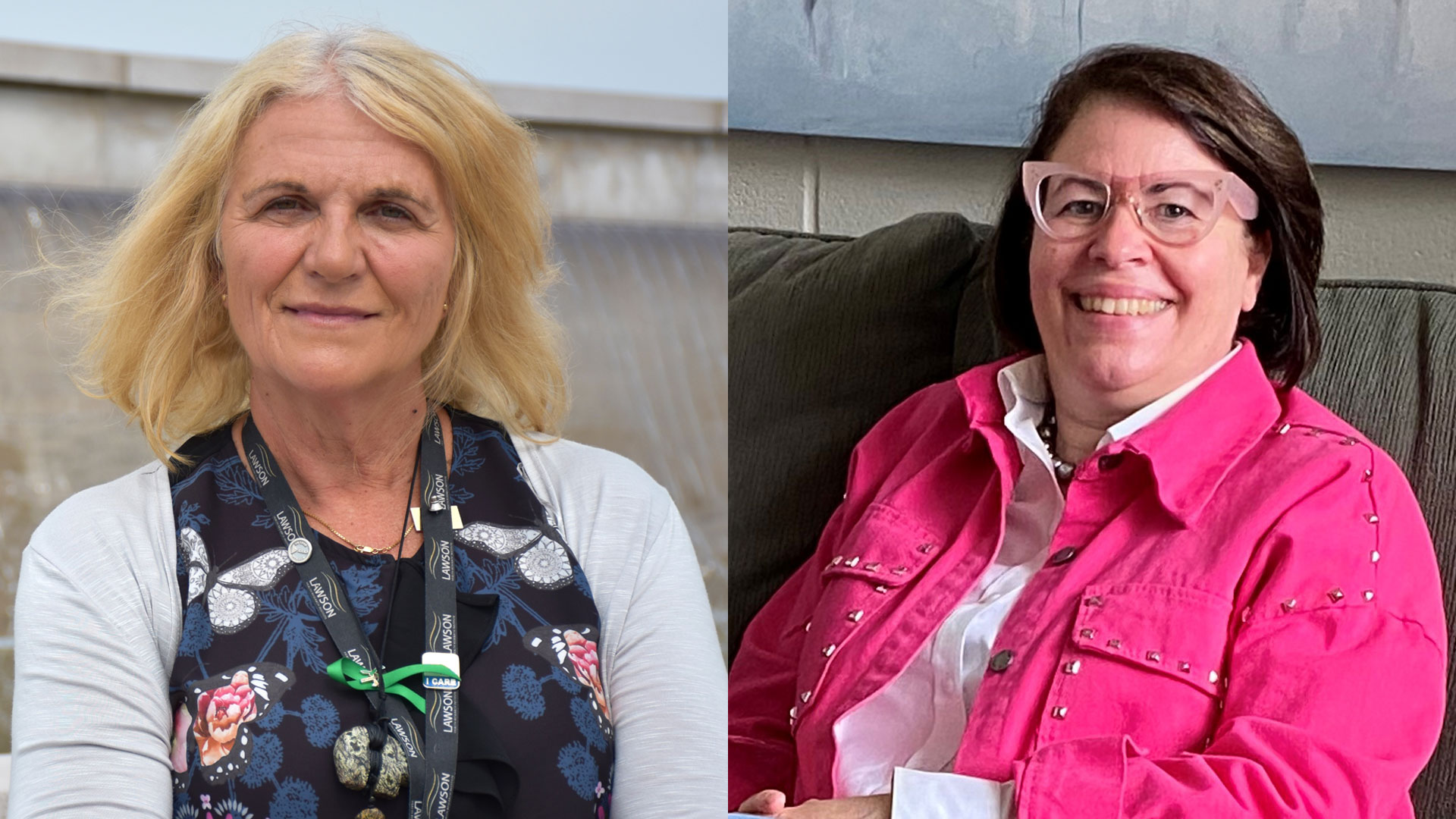
Dr. Lanius, Associate Scientist at Lawson and Psychiatrist at London Health Sciences Centre, is world-renowned for advancing the understanding and treatment of post-traumatic stress disorder (PTSD) through her research. She has been instrumental in defining different types of PTSD and combining imaging and psychiatry to develop new therapies that use neurofeedback or sensory processing to ‘train the brain.’
“Advancing knowledge is crucial to improving quality of life,” notes Dr. Lanius, who is also the Harris Woodman Chair in Mind-Body Medicine and a Professor at Western’s Schulich School of Medicine & Dentistry. “I’m very excited to be recognized with such a distinguished group of contributors to research and academics.”
RSC fellows are elected by peers for their outstanding scholarly, scientific and artistic achievement. This year’s 101 new fellows will be inducted into the RSC on November 17.
… Parkwood Hospital Driver Assessment and Rehabilitation Program 801 Commissioners Road East London, … all vehicles are not suitable for modifications. A driver rehabilitation specialist can assist in making the correct … Parkwood Hospital Driver Assessment and Rehabilitation Program 801 Commissioners Road East London, …
Parkwood Hospital Driver Assessment and Rehabilitation Program 801 Commissioners Road East London, Ontario N6C 5J1 Phone: (519) 685-4070 Fax: (519) 685-4576 DRIVING AFTER A LIMB AMPUTATION After a limb amputation, a person is sometimes unable to drive an automobile in the normal manner. There are, h...
… care, complex care and veterans care, long-term care, rehabilitation and specialized geriatrics and specialized … care, complex care and veterans care, long-term care, rehabilitation and specialized geriatrics and specialized …
Media Release August 27, 2008 For immediate release St. Josephs responds to meat products recall London, Ontario St. Josephs Health Care, London is one of many organizations throughout Canada that used Maple Leaf Foods products from the facility known as establishment 97B before these items were re...
… and exercises at home • show motivation to achieve rehabilitation goals At first, dreams seem impossible, then … and exercises at home • show motivation to achieve rehabilitation goals At first, dreams seem impossible, then …
CARING FOR THE BODY, MIND & SPIRIT SINCE 1869 Renowned for compassionate care, St. Josephs is one of the best academic health care organizations in Canada dedicated to helping people live to their fullest by minimizing the effects of injury, disease and disability through excellence in care, teachin...
… and exercises at home • show motivation to achieve rehabilitation goals /media/10317 … and exercises at home • show motivation to achieve rehabilitation goals …
Parkwood Institute Locomotor Training Program CARING FOR THE BODY, MIND & SPIRIT SINCE 1869 There is nothing you cant do, if you set your mind to it. Anything is possible - Rick Hansen Has a spinal cord injury, brain injury or other neurological injury left you unable to stand or walk? Do you fatigu...
London expands approach to prevent discharge from hospital to homelessness
LONDON, ON - During a virtual event for Londoners hosted by Lawson Health Research Institute and the City of London, a multi-sectoral research team announced two projects representing a collaborative approach to preventing homelessness from within hospital walls.
Built on the unique and successful No Fixed Address (NFA) strategy, these projects are being tested as a potential best practice for preventing hospital discharge to homelessness. NFA seeks to stop the cycle between hospital admissions and homelessness by providing timely and accessible supports to patients who would otherwise be discharged into homelessness. It brings housing and financial supports into the health-care system, starting as soon as upon admission, to assist in finding appropriate housing and supports or avoiding a potential eviction.
“Canada lacks a validated and coordinated service model to address the issue of hospital stay to no fixed address, which can often be the beginning of an individual’s experience with homelessness,” explains Dr. Cheryl Forchuk, Beryl and Richard Ivey Research Chair in Aging, Mental Health, Rehabilitation and Recovery, and Assistant Scientific Director at Lawson. “There are multiple factors that cause people to be discharged into homelessness - systemic, organizational and personal. We need a collaborative and coordinated approach that honours housing as a basic human right.”
Several departments at London Health Sciences Centre (LHSC) and St. Joseph’s Health Care London collaborate with staff from the City of London, Canadian Mental Health Association (CMHA) Elgin-Middlesex, Youth Opportunities Unlimited (YOU), Salvation Army’s Housing Stability Bank and Ontario Works in the City of London to provide direct, on-site (or virtual) support for patients at risk of homelessness.
“Implementing a coordinated approach to addressing homelessness allows our staff to actively work alongside our partners in health care to prevent and divert individuals and families from an experience of homelessness by assessing their needs and connecting them to the housing supports.,” says John D’Oria, Coordinated Access Manager, City of London. “Whether it’s financial, social service or mental health support, this partnership and approach allows for a holistic approach to client care at the right time.”
Patients discharged from hospital to homelessness in Canada face many challenges that make recovery more difficult. They often experience higher readmission rates and emergency department visits. This is particularly concerning for youth, who have been found to be the fastest growing segment of the homeless population.
NFA was initially tested with strong success for mental health patients across the city and the second version of the project was extended to medical units at LHSC’s University and Victoria Hospitals.
PROJECT 1: Collaboration to Address Homelessness - Health, Housing and Income (H2I)
This research study will evaluate the City of London’s Coordinated Access Outreach program at hospital sites. A Coordinated Access Outreach worker will support individuals at risk of homelessness to maintain or obtain housing. Ontario Works will assist with the provision of income and employment supports and the Salvation Army Housing Stability Bank may be accessed for needed financial resources to secure or maintain housing.
Over two years, 106 participants will be interviewed in hospital and again six months post-discharge. Focus groups with participants, health care providers and community partners will provide further insight into the effectiveness of NFA. This project is funded by the Canada Mortgage and Housing Corporation (CMHC)’s National Housing Strategy.
PROJECT 2: Preventing discharge to No Fixed Address – Youth (NFA-Y)
This research study will customize, implement and evaluate the NFA strategy for vulnerable youth ages 16-24. The unique health and housing needs of youth at-risk will be explored by streamlining housing and financial support into a coordinated system of care, with additional support provided by Youth Opportunities Unlimited and Children’s Aid Society London and Middlesex.
Over 3-4 years, data to be collected from 93 youth at three time points. Focus groups with youth participants, health care providers, and community agency partners will help enhance the NFA strategy to meet the unique needs of youth. This project is funded by the National Centres of Excellence (NCE) Making the Shift (MtS) Youth Social Innovation Lab.
-30-
About Lawson Health Research Institute
Lawson Health Research Institute is one of Canada’s top hospital-based research institutes, tackling the most pressing challenges in health care. As the research institute of London Health Sciences Centre and St. Joseph’s Health Care London, our innovation happens where care is delivered. Lawson research teams are at the leading-edge of science with the goal of improving health and the delivery of care for patients. Working in partnership with Western University, our researchers are encouraged to pursue their curiosity, collaborate often and share their discoveries widely. Research conducted through Lawson makes a difference in the lives of patients, families and communities around the world. To learn more, visit www.lawsonresearch.ca.
Media Contacts
Celine Zadorsky
Senior Media Relations Consultant
Communications & Public Engagement
T: 519-685-8500 ext. 73502
Celine.zadorsky@lhsc.on.ca
London expands approach to prevent discharge from hospital to homelessness
During a virtual event for Londoners hosted by Lawson Health Research Institute and the City of London, a multi-sectoral research team announced two projects representing a collaborative approach to preventing homelessness from within hospital walls.
Built on the unique and successful No Fixed Address (NFA) strategy, these projects are being tested as a potential best practice for preventing hospital discharge to homelessness.
Led by Dr. Cheryl Forchuk, Beryl and Richard Ivey Research Chair in Aging, Mental Health, Rehabilitation and Recovery, and Assistant Scientific Director at Lawson, NFA seeks to stop the cycle between hospital admissions and homelessness by providing timely and accessible supports to patients who would otherwise be discharged into homelessness. It brings housing and financial supports into the health-care system, starting as soon as upon admission, to assist in finding appropriate housing and supports or avoiding a potential eviction.
Several departments at London Health Sciences Centre (LHSC) and St. Joseph’s Health Care London collaborate with staff from the City of London, Canadian Mental Health Association (CMHA) Elgin-Middlesex, Youth Opportunities Unlimited (YOU), Salvation Army’s Housing Stability Bank and Ontario Works in the City of London to provide direct, on-site (or virtual) support for patients at risk of homelessness.
Patients discharged from hospital to homelessness in Canada face many challenges that make recovery more difficult. They often experience higher readmission rates and emergency department visits. This is particularly concerning for youth, who have been found to be the fastest growing segment of the homeless population.
NFA was initially tested with strong success for mental health patients across the city and the second version of the project was extended to medical units at LHSC’s University and Victoria Hospitals.
PROJECT 1: Collaboration to Address Homelessness - Health, Housing and Income (H2I)
This research study will evaluate the City of London’s Coordinated Access Outreach program at hospital sites. A Coordinated Access Outreach worker will support individuals at risk of homelessness to maintain or obtain housing. Ontario Works will assist with the provision of income and employment supports and the Salvation Army Housing Stability Bank may be accessed for needed financial resources to secure or maintain housing.
Over two years, 106 participants will be interviewed in hospital and again six months post-discharge. Focus groups with participants, health care providers and community partners will provide further insight into the effectiveness of NFA. This project is funded by the Canada Mortgage and Housing Corporation (CMHC)’s National Housing Strategy.
PROJECT 2: Preventing discharge to No Fixed Address – Youth (NFA-Y)
This research study will customize, implement and evaluate the NFA strategy for vulnerable youth agSwitch to plain text editores 16-24. The unique health and housing needs of youth at-risk will be explored by streamlining housing and financial support into a coordinated system of care, with additional support provided by Youth Opportunities Unlimited and Children’s Aid Society London and Middlesex.
Over 3-4 years, data to be collected from 93 youth at three time points. Focus groups with youth participants, health care providers, and community agency partners will help enhance the NFA strategy to meet the unique needs of youth. This project is funded by the National Centres of Excellence (NCE) Making the Shift (MtS) Youth Social Innovation Lab.
Media Coverage
- Could this project keep discharged hospital patients from homelessness? - London Free Press
- London, Ont., expands work to prevent homelessness after hospital stays - Global News
- London expands strategy to curb homelessness after hospital stays - Blackburn News
- What happens to people who are discharged from hospital if they have nowhere to go? - CBC London
Learn more about No Fixed Address
Scientist
London researchers part of a federal funding boost to enhance transition in care research
How can we improve health care for Canadians experiencing “transitions in care” to ensure they don’t fall through the cracks as they move through the health care system?
That’s the question two London researchers are aiming to answer, with the support of nearly $1.5 million in federal funding announced today at Western University's Schulich School of Medicine & Dentistry.
Peter Fragiskatos, MP for London North Centre, announced the funding boost on behalf of Federal Health Minister Jean-Yves Duclos, alongside Dr. Jane Rylett, Scientific Director of the Institute of Aging with the Canadian Institutes of Health Research (CIHR).

“When a person experiences a transition in care, whether moving from surgery to rehabilitation or aging out of pediatric care, the quality of their care and their health can be at risk,” said Bryan Neff, Western’s acting vice president of research, who hosted the funding announcement. “With federal investments like this, Western will continue to lead the way in identifying how to provide the best possible care for Canadians while improving efficiency in the health-care system.”
Transitions in care happen when responsibility for a person’s care shifts between providers, institutions or sectors. Some groups, such as patients with complex medical conditions, Indigenous peoples, and new immigrants, are particularly vulnerable to poor outcomes during transitions.
People with diabetes – a complex, typically life-long condition – fall into this category, which is why London’s Primary Care Diabetes Support Program (PCDSP) was developed. The clinic, which is part of the Centre for Diabetes, Endocrinology and Metabolism at St. Joseph’s Health Care London, is based at St. Joseph’s Family Medical and Dental Centre. The program provides diabetes support and management for individuals with type 2 diabetes who don’t have a family doctor or who may have additional medical and social issues that make diabetes management particularly challenging.
Maria Mathews, PhD, and her team at Schulich Medicine will evaluate the program to determine its impact on patient health, and on health-care providers, diabetes-related complications, and health system costs.
“While this program has already been shown to deliver high-quality care, my team is examining its overall impact to determine whether this model could be expanded to other sites and to support other chronic conditions,” said Mathews, a professor in the department of family medicine. With the $895,000 investment in her research, Mathews will determine “how we can best provide high- quality care for people with chronic conditions in a way that supports their health, eases strain on family doctors, and creates efficiencies in the health care system.”
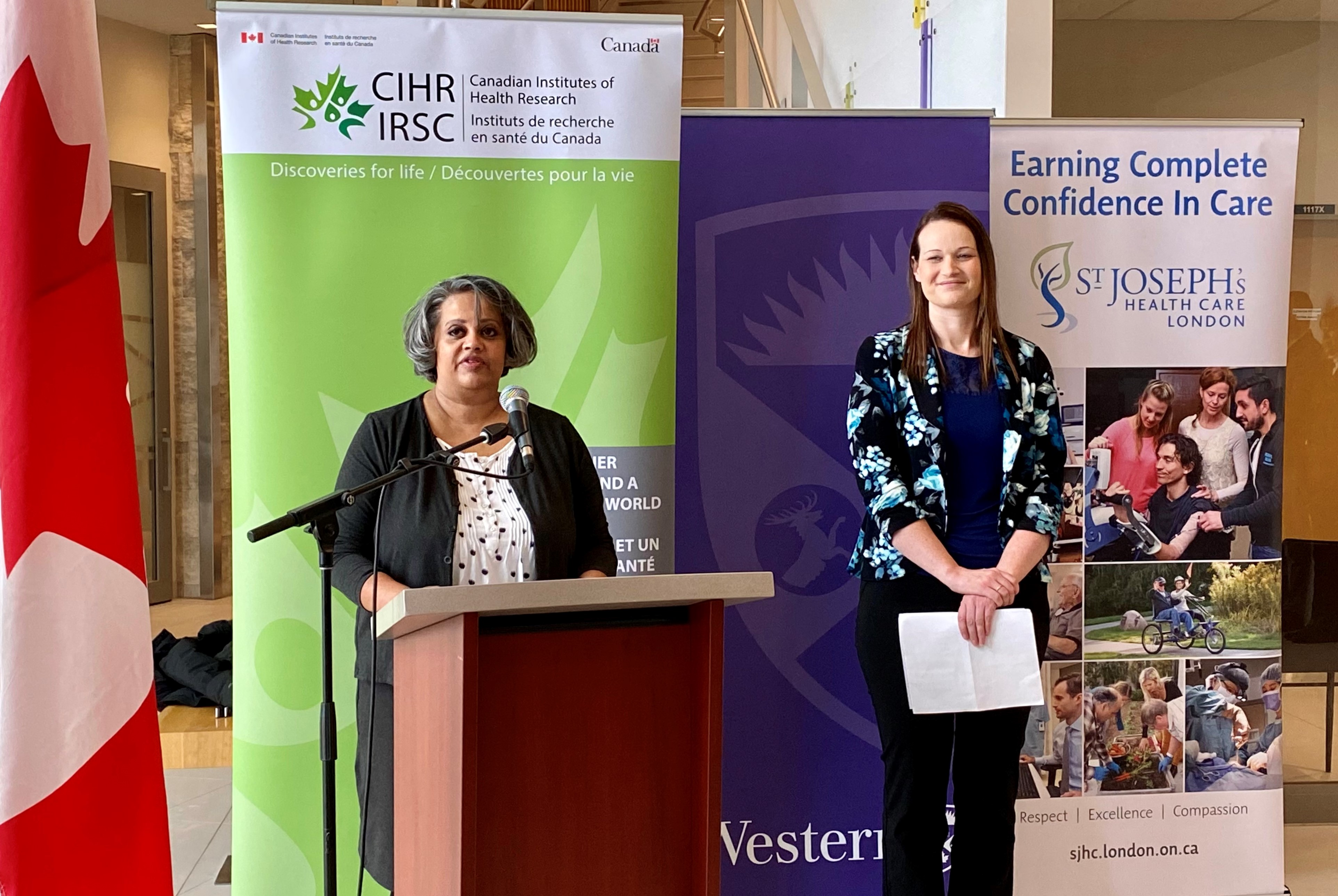
Laura Brunton, PhD, an assistant professor at the School of Physical Therapy in Western’s Faculty of Health Sciences, received more than half a million dollars in CIHR funding.
Her team will examine a local program based at St. Joseph’s Parkwood Institute – called the Transitional and Lifelong Care Program (TLC) – that supports people with childhood-onset disabilities as they transition to adult care. This includes many patients with brain-based, neurodevelopmental conditions, such as cerebral palsy, spina bifida and developmental disabilities, as they move into adult care.
“Many of these patients have experienced severe health inequities because of the gaps in care when transitioning from pediatric care to the adult sector,” said Brunton, also a physiotherapist at St. Joseph’s Health Care London and affiliate scientist at Lawson Health Research Institute. “We’re going to evaluate the TLC model as an intervention that provides transitional, lifelong care and reduces the barriers experienced.”
Roy Butler, president of St. Joseph’s Health Care London, said today’s announcement highlights the synergy and collaboration among these organizations.
“We are happy to hear that work being done by both Laura Brunton and Maria Mathews to improve patient care is being recognized through this funding announcement. The two areas these talented researchers will be studying are innovative and ground-breaking with compassionate, forward-thinking teams who provide highly acclaimed care to vulnerable patients.”

Fragiskatos emphasized the vital importance of funding this field of research, given that most Canadians will experience a ‘transition in care’ at some point.
“People living in Canada routinely experience transitions in care as they navigate the health system. The important research that will be done here in London and at institutions across the country will help develop meaningful approaches to make these transitions easier for patients and caregivers,” he said.
Local researchers were among 14 groups across Canada that received approximately $12 million in federal funding to improve continuity of care for Canadians through the “Transitions in Care” initiative, which is provided in partnership with the Azrieli Foundation, Mitacs, and the Rossy Family Foundation.
… achievement of their defined goals for recovery and rehabilitation 5. Select Topics in Infectious Diseases in … achievement of their defined goals for recovery and rehabilitation 5. Select Topics in Infectious Diseases in …
LEGEND - WORKSHOP SUITED FOR: (A) - Allied Health, (N) - Nurses, PSWs, (P) - Physicians, Pharmacists 32nd Annual Geriatric Medicine Refresher Day Current and Practical Knowledge to Inspire and Advance Care Wednesday, May 2, 2018 7:30 a.m. - 4:00 p.m. London Convention Centre, London, Ontario 7:30 - ...