


Search
Search
1081 Search Results:
August 2, 2022; Page 1 of 2 Capsaicin What is capsaicin and why is this medication prescribed? Capsaicin is the ingredient in chili peppers that makes them hot. Capsaicin is also used topically to help relieve pain, particularly nerve pain. Capsaicin helps reduce the amount of a pain-related chemi...
t~ STJOSEPHs HEALTH CARE LONDON Cardiac Rehabilitation and Secondary Prevention Program Patient Education Guide CARING FOR THE BODY, MIND & SPIRIT SINCE 1869 Renowned for compassionate care, St. Josephs is one of the best academic health care organizations in Canada ...
Cardiac Rehabilitation and Secondary Prevention Program Lifestyle Change and Self-Management Workbook CARING FOR THE BODY, MIND & SPIRIT SINCE 1869 Renowned for compassionate care, St. Josephs is one of the best academic health care organizations in Canada dedicated to he lping people live to their ...
Guide for Referring Physicians The Cardiac Rehabilitation and Secondary Prevention Program (CRSP) is an out-patient, multidisciplinary program for cardiac surgical and medical patients. Physician referral is required with no fee for service. During the six-month program, patients receive medical man...
Caring for our health care system
8:30pm - 11:00pm
LAWSON PRESENTS CAFÉ SCIENTIFIQUE
Caring for our health care system:
Why we should give a darn about medical research
What does health care mean to Canadians? What about those of us who have experienced a care journey first-hand, either as a patient or family member? Health care is a point of pride in this country, but many Canadians worry that our system is falling behind.
Every day, health researchers are working with patients, industry and other partners to find real and sustainable solutions. Despite recent investments in medical research on a national level after years of underfunding, there is still much work to do.
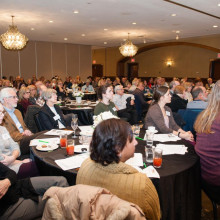
Join Lawson Health Research Institute for our next Café Scientifique event to hear a panel of researchers talk about what they do and why medical research matters for all of us.
- Dr. Amer Burhan, Geriatric Neuropsychiatrist and Clinician Scientist
- Dr. Kelly Vogt, Trauma and General Surgeon and Clinician Scientist
- MODERATOR – Dr. Cheryl Forchuk, Beryl and Richard Ivey Research Chair in Aging, Mental Health, Rehabilitation and Recovery
Event Details
- Date: Monday, October 7, 2019
- Time: 5-7 pm (doors open at 4:30 pm).
This is NEW timing so that guests are free to watch the English-language leaders’ debate! - Location: Best Western Plus Lamplighter Inn & Conference Centre, 591 Wellington Rd, London, ON N6C 4R3
Map and directions - Parking: Free on-site parking
This is a free event and online registration is REQUIRED.
Click here to register.
Image
Parkwood Institute Acquired Brain Injury Outpatient Program Tip sheet Mindfulness What is mindfulness? The practice of mindfulness involves directing your attention to and maintaining an awareness of the present moment. In simple terms, mindfulness is paying attention to how you feel, what you are t...
August 2023 Page 1 of 3 EYE MEASUREMENT APPOINTMENT: Date and time: _____________________________________________ Location: Ivey Eye Institute, St. Josephs Hospital, Zone B, Level 1, Room B1-050 SURGERY APPOINTMENT: Date and arrival time: _______________________________________ Location: Cataract S...
Catecholamine Testing What is a catecholamine testing? Catecholamines are a group of similar substances released into the blood in response to physical or emotional stress. The primary catecholamines are dopamine, epinephrine (adrenaline), and norepinephrine (noradrenaline). They make you breathe fa...
Celebrating Clinical Trials Day
Clinical trials are the gold standard in medical research, used to test new treatments and medical devices to ensure they are safe and improve patient outcomes.
Each year on May 20, Clinical Trials Day aims to raise awareness about the importance of clinical trials. At Lawson Health Research Institute, our researchers, research staff and learners across London Health Sciences Centre (LHSC) and St. Joseph’s Health Care London (St. Joseph’s) are working daily to advance clinical trials for some of the most pressing health challenges.
“If you look at many areas of medicine, like cancer and cardiovascular disease, part of why those conditions have had dramatic improvements in outcomes over the last several decades is because of clinical trials,” says Dr. Amit Garg, Scientist at Lawson, Lead for the Kidney, Dialysis & Transplantation Research Program at ICES Western, and a Nephrologist at LHSC.
Clinical trials can also provide patient participants with new treatment options and can demonstrate when existing treatments have applications for other diseases.
“We could not conduct clinical trials without patients participating in them,” adds Dr. David Palma, Associate Scientist at Lawson and Radiation Oncologist at LHSC. “A clinical trial is a very rigorous process where we carefully define a treatment and follow patients very closely with extra interventions and tests to see not only how the disease is responding to treatment, but also any effects on a patient’s quality of life.”
It also takes a team to make clinical trials a success, including the critical work of research coordinators, associates and assistants, adds Dr. Swati Mehta, Lawson Scientist based at St. Joseph’s Parkwood Institute.
Dr. Palma also notes that while clinical trials require investment to conduct them, they can ultimately lead to savings in the health system.
“While the primary goal of a clinical trial is to improve or save lives, they often lead to cost savings down the road. Improving cure rates means people don’t need as much treatment and that can save the initial investment many, many times over,” Palma says.
Looking ahead, work is ongoing to make clinical trials more efficient and equitable.
“Eliminating specialized infrastructure would help make trials more equitable, so they are available in smaller communities and at distant sites that otherwise would not have access. Making study materials available in multiple languages and to anyone with accessibility issues can also help,” Garg adds.
“Future clinical trials will need to follow more pragmatic, adaptive study designs that allow us to evaluate therapies or interventions in a more realistic setting,” Dr. Mehta says. “These would also allow us to follow-up with patients that were potentially underrepresented in past research.”
According to researchers at Lawson, the future of clinical trials is bright with hundreds of trials currently underway at LHSC and St. Joseph’s with the goal of improving patient outcomes.
… and diagnostic centres that will have the same strong requirements as public hospitals. Over the coming weeks, the … and diagnostic centres that will have the same strong requirements as public hospitals. Over the coming weeks, the …
Page 1 of 10 CEO Report to the Board January 24, 2024 1.0 Strategy in Action Reaching Out to Our Community: Lower limb preservation program; A changemaker in reducing stigma; Warm jackets for cold winter months Advancing Excellence in Care Together: Improving access to geriatric care; Nourish Proj...
… rigorous independent review following all legislative requirements. Any costs associated with having two CEO’s in … rigorous independent review following all legislative requirements. Any costs associated with having two CEO’s in …
Backgrounder CEO Compensation These positions are two of Ontarios most critical hospital leadership positions. They are unique roles and yet, they will be defined by how the hospitals in London continue to work in close collaboration to advance what has become the most integrated system of hospital ...
1 Gifts of Securities St. Josephs Health Care Foundation accepts donations of shares through the following four brokerage firms: RBC Dominion Securities Denise Chalmers, Associate Bryan Vickers 1900 - 148 Fullarton Street London, Ontario N6A 5P3 Phone: 519-675-6857 FAX: 519-675-2020 Email: denise.ch...
… on the product to provide a label that meets the legibility requirements of the Hazardous Products Regulations. Note … on the product to provide a label that meets the legibility requirements of the Hazardous Products Regulations. Note …
Chemical Safety Module 2 LOGO VERSION UNDER LAYOUTS SELECT: LAYOUT TITLE SLIDE 2 LOGOS 1 Working Safely With Chemicals Lawson Health Research Institutes Chemical Safety Education Module Layout Title and Content 2 Program Components Safe Chemical Concepts Safe Use and Storage of Chemicals Hazardous...
Chemical Management Safety Quiz Name: Click or tap here to enter text. Date: Click or tap to enter a date. Study the Lawson Chemical Safety Presentation before completing this quiz. Carefully read each question and then click the box located beside the correct answer(s). Please submit the completed ...