


Search
Search
1081 Search Results:
CT Colonography Alternate Bowel Prep This preparation is for patients with impaired kidney function (eGFR value of less than 30). Preparation Instructions Please follow the instructions in this handout very carefully. The instructions have been tested to ensure they minimize discomfort while produci...
CT Colonography Bowel Prep This preparation is for patients with normal or mildly impaired kidney function (eGFR value of 30 or greater). If you have serious kidney disease (eGFR value of less than 30), have your doctor call St. Josephs Medical Imaging department for alternate preparation instructio...
… for people who do not meet the peripheral vision requirements to drive in Ontario. Today Mark proudly … for people who do not meet the peripheral vision requirements to drive in Ontario. Today Mark proudly …
Media Release July 22 2009 For Immediate Release Driver program helps grounded pilot regain independence London, Ontario - The driver assessment rehabilitation program (DARP) at Parkwood Hospital is helping people get back behind the wheel who have lost their drivers license because of changes in th...
… Conclusion: Ontario’s community treatment order (CTO) requirements are more stringent than the requirements for inpatient committal even though inpatient … it is ironic that Arenburg would not have met the statutory requirements for a CTO before he killed Smith for two …
DECEMBER 2012 | VOL. 9 NO. 3 REFORMS TO ONTARIOS MENTAL HEALTH ACT: Lessons from the story of the man who killed Brian Smith Richard OReilly, Robert Solomon, John E. Gray Research Insights of the Regional Mental Health Care London and St. Thomas is a peer-reviewed journal designed to publish reviews...
… of Dentistry Category Privileges Educational/Experience Requirements A All activities and procedures generally … of Dentistry Category Privileges Educational/Experience Requirements A All activities and procedures generally …
Delineation of Privileges Draft - September 2001 DRAFT November 2, 2001 London Health Sciences Centre And St. Josephs Health Care London Delineation of Procedural Privileges Department of Dentistry Category Privileges Educational/Experience Requirements A All activities and procedures generally per...
… of Dentistry Category Privileges Educational/Experience Requirements A All activities and procedures generally … of Dentistry Category Privileges Educational/Experience Requirements A All activities and procedures generally …
London Health Sciences Centre And St. Josephs Health Care London Delineation of Procedural Privileges Department of Dentistry Category Privileges Educational/Experience Requirements A All activities and procedures generally performed by members of the dental staff certified in Dentistry. Specialty C...
… of Dentistry Category Privileges Educational/Experience Requirements A All activities and procedures generally … of Dentistry Category Privileges Educational/Experience Requirements A All activities and procedures generally …
London Health Sciences Centre And St. Josephs Health Care London Delineation of Procedural Privileges Department of Dentistry Category Privileges Educational/Experience Requirements A All activities and procedures generally performed by members of the dental staff certified in Dentistry. Specialty C...
… Delineation Privileges Educational and Experience Requirements A‐DEN … Surgery Delineation Privileges Educational and Experience Requirements A‐OMF … Delineation Privileges Educational and Experience Requirements A‐DEN … Surgery Delineation Privileges Educational and Experience Requirements A‐OMF …
ApprovedbyDepartmentChief,CWCCandMACDecember2018 Delineation of Procedural Privileges Department of Dentistry Adult and Paediatrics Delineation Privileges Educational and Experience Requirements ADEN Allactivitiesandproceduresgenerallyperformed byindividualscertifiedinDentistry. GeneralorAcade...
… Ther 1993;73:117-22. 22. Donner A, Eliasziw M. Sample size requirements for reliability studies. Stat Med 1987; … Ther 1993;73:117-22. 22. Donner A, Eliasziw M. Sample size requirements for reliability studies. Stat Med 1987; …
WWW.WOUNDCAREJOURNAL.COM 187 ADVANCES IN SKIN & WOUND CARE MAY 2004 Development,Validity, Reliability, and Responsiveness of a New Leg Ulcer Measurement Tool M. Gail Woodbury, PhD; Pamela E. Houghton, PhD; Karen E. Campbell, MScN; and David H. Keast, MD Epidemiologic studies performed in the United...
Diabetes and Exercise Type I Diabetes TYPE I Diabetes occurs when your body makes too little or no insulin. Individuals take insulin to control blood sugar levels. Type II Diabetes TYPE II Diabetes occurs when your body either cannot produce enough insulin or does not use the insulin it makes pro...
Patient Consent Form Diabetes Management Systems As part of your care at the Diabetes Education Centre, the Endocrinology Clinic or the Primary Care Diabetes Support Program, you may choose to use various software programs to aid in the management of your blood glucose levels. There are many differe...
Patient Consent Form Diabetes Management Systems As part of your care at the Diabetes Education Centre, the Endocrinology Clinic or the Primary Care Diabetes Support Program, you may choose to use various software programs to aid in the management of your blood glucose levels. There are many differe...
DIABETES UPDATE 2023 WEDNESDAY, NOVEMBER 8, 2023 8:00 a.m. - 1:00 p.m. Virtual Platform: Chime Live Login Time: 8:00 a.m. Venue: Four Points by Sheraton - 1150 Wellington Road S. London, ON, N6E 1M3 To REGISTER please visit Diabetes Update 2023 | St. Josephs Health Care London https://www.sjhc.londo...
Diagnosing COVID-19 using artificial intelligence
LONDON, ON – A team of researchers at Lawson Health Research Institute is investigating whether an artificial neural network could be used to diagnose COVID-19. The AI system is being trained to learn and recognize patterns in ultrasound lung scans of patients with confirmed COVID-19 at London Health Sciences Centre (LHSC) by comparing them to ultrasound scans of patients with other types of lung infections.
“Machines are able to find patterns that humans cannot see or even imagine. Lung ultrasound scans of patients with COVID-19 pneumonia produce a highly abnormal imaging pattern. This pattern isn’t unique to COVID-19, and can be seen in other causes of pneumonia. It is plausible, however, that there are details that distinguish COVID-19 at the pixel level that cannot be perceived by the human eye,” explains Dr. Robert Arntfield, Lawson Researcher and Medical Director of the Critical Care Trauma Centre at LHSC. “If we can train a neural network to learn and identify these unique characteristics among different scans, we can apply this AI to enhance the diagnostic power of portable ultrasound.”
Point-of-care ultrasound has become increasingly important for the care of critically ill patients and LHSC is a global leader in the use of this technology at the bedside. Lung ultrasound has proven to be effective in diagnosing different types of lung infections and illnesses, such as pneumonia, with a high degree of accuracy. The convenience, portability and low cost of using these machines has helped them become a standard bedside tool in emergency departments and intensive care units worldwide.
This research project is part of a grassroots effort by a small group of local clinicians to innovate and create technology to solve sophisticated problems with AI. With many of Dr. Arntfield’s team having a background in computer programming, they were able to code the neural network being tested. Minimal funding was required, with the project being driven largely by the urgency of COVID-19 coinciding with the recent creation of this clinical AI working group.
“Our research team has used AI to help improve diagnostics related to other parts of the body. This project is a great example of the unique ability we have here in London to be agile: that is, to identify a gap and move quickly towards finding a solution,” says Dr. Arntfield. “I am thrilled that we were able to move through the approval process quickly, and get our ideas working in such a short amount of time.”
-30-
Downloadable Media
Image
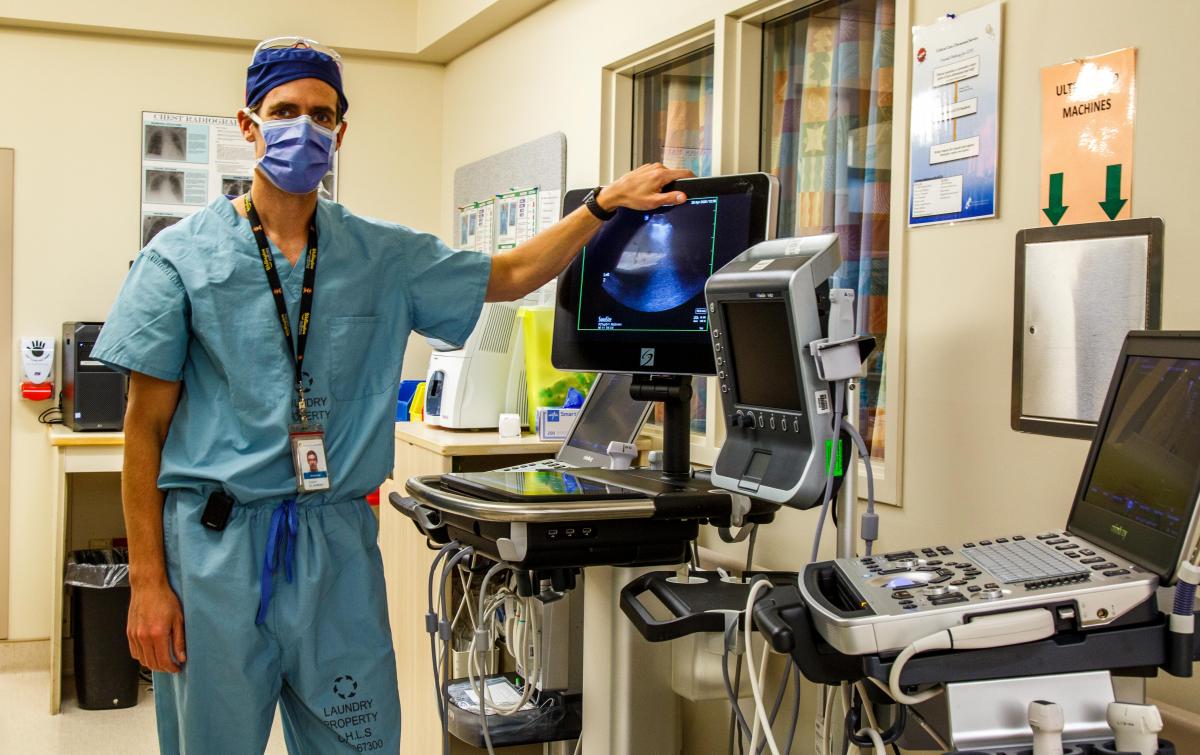
Dr. Robert Arntfield
Image
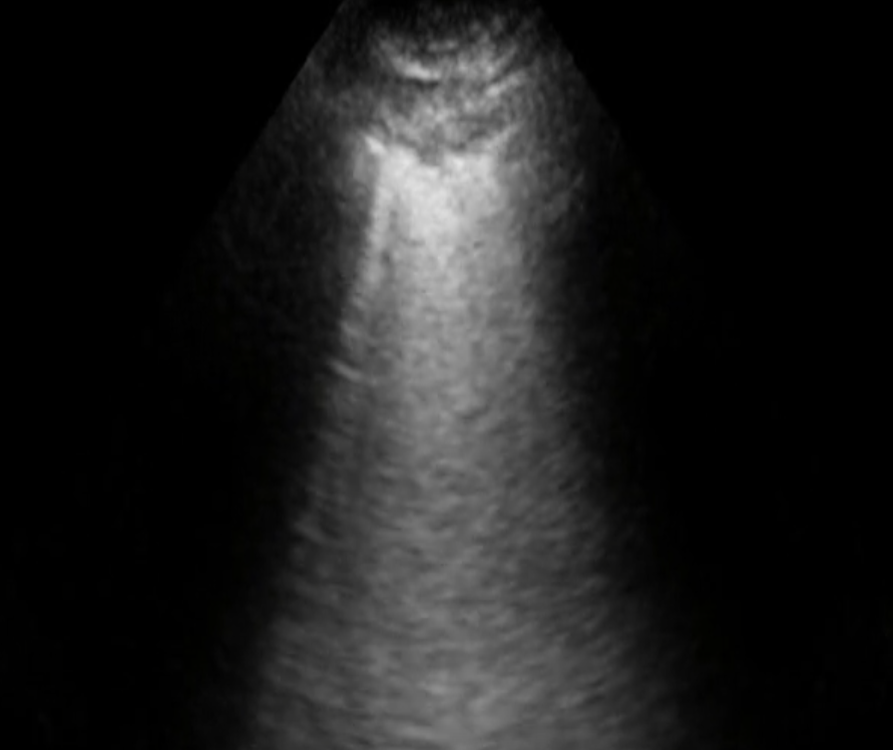
COVID-19 pneumonia ultrasound
Image
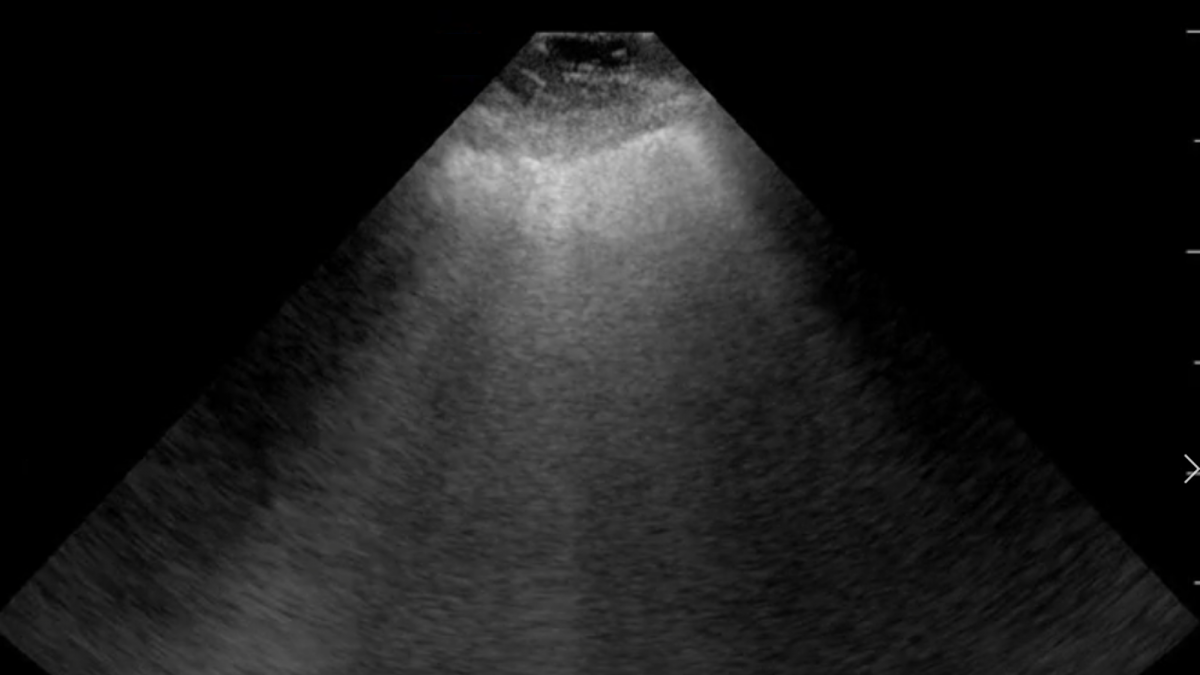
NON COVID-19 pneumonia ultrasound
About Lawson Health Research Institute
Lawson Health Research Institute is one of Canada’s top hospital-based research institutes, tackling the most pressing challenges in health care. As the research institute of London Health Sciences Centre and St. Joseph’s Health Care London, our innovation happens where care is delivered. Lawson research teams are at the leading-edge of science with the goal of improving health and the delivery of care for patients. Working in partnership with Western University, our researchers are encouraged to pursue their curiosity, collaborate often and share their discoveries widely. Research conducted through Lawson makes a difference in the lives of patients, families and communities around the world. To learn more, visit www.lawsonresearch.ca.
Media Contacts
Celine Zadorsky
Senior Media Relations Consultant
Communications & Public Engagement
T: 519-685-8500 ext. 73502
Celine.zadorsky@lhsc.on.ca
Dialysis patients four times more likely to die from COVID-19 infection
LONDON, ON - Patients in Ontario with chronic kidney conditions who require dialysis have a significantly increased likelihood of contracting and dying from COVID-19, new research from Western University and Lawson Health Research Institute has shown. Study author Dr. Peter Blake says the research emphasizes the need to prioritize dialysis patients for vaccination.
Published in CMAJ, the study shows that of the more than 12,000 patients undergoing long-term dialysis in Ontario, 187 patients became infected with SARS-CoV-2 between March and August 2020. Of the patients who were infected, 60 per cent needed to be hospitalized and nearly 30 per cent died. That’s almost four times the mortality rate from COVID-19 than the general population.
The researchers continued to collect data into the second wave of the pandemic, and report that as of the end of January 2021, a further 424 dialysis patients were diagnosed with COVID-19, equivalent to 4.5 per cent of all dialysis patients in the province, and that 130 have now died.
“Early reports from Wuhan and Milan showed chronic dialysis patients were vulnerable to COVID-19, and that’s why we decided to undertake this study,” said Dr. Blake, Professor at Western’s Schulich School of Medicine & Dentistry and Associate Scientist at Lawson. “We were surprised to see that both the mortality rate and hospitalization rate were so high here in Ontario.”
The researchers also found that patients who regularly underwent dialysis at the hospital, rather than at home, were at far greater risk of COVID-19 infection; and point out that only a quarter of dialysis patients in Ontario currently have at-home dialysis.
“As the pandemic proceeds, focused efforts should be made to protect this vulnerable group of individuals from infection,” said Dr. Blake. “We also encourage patients to take at-home dialysis whenever possible to reduce the risk of exposure to COVID-19.”
The data for the study was collected by the Ontario Renal Network, which developed a weekly surveillance data collection tool to gather key information about chronic dialysis patients during the pandemic.
-30-
About Lawson Health Research Institute
Lawson Health Research Institute is one of Canada’s top hospital-based research institutes, tackling the most pressing challenges in health care. As the research institute of London Health Sciences Centre and St. Joseph’s Health Care London, our innovation happens where care is delivered. Lawson research teams are at the leading-edge of science with the goal of improving health and the delivery of care for patients. Working in partnership with Western University, our researchers are encouraged to pursue their curiosity, collaborate often and share their discoveries widely. Research conducted through Lawson makes a difference in the lives of patients, families and communities around the world. To learn more, visit www.lawsonresearch.ca.
About Western
Western delivers an academic experience second to none. Since 1878, The Western Experience has combined academic excellence with life-long opportunities for intellectual, social and cultural growth in order to better serve our communities. Our research excellence expands knowledge and drives discovery with real-world application. Western attracts individuals with a broad worldview, seeking to study, influence and lead in the international community.
About The Schulich School of Medicine & Dentistry
The Schulich School of Medicine & Dentistry at Western University is one of Canada’s preeminent medical and dental schools. Established in 1881, it was one of the founding schools of Western University and is known for being the birthplace of family medicine in Canada. For more than 130 years, the School has demonstrated a commitment to academic excellence and a passion for scientific discovery.
Media Contacts
Celine Zadorsky
Senior Media Relations Consultant
Communications & Public Engagement
T: 519-685-8500 ext. 73502
Celine.zadorsky@lhsc.on.ca
Dictation System - LHSC and St. Joseph's You must have your own personal and confidential dictating User ID number. To have your personal dictating user ID number arranged, please contact Transcription Services at: London Health Sciences Centre - 519-685-8500 extension 35131 St. Joseph's Health Ca...