


Search
Search
2823 Search Results:
… improvement. Accreditation enables an organization to demonstrate its commitment to excellence while meeting high standards for quality, safety and patient care. … provides information on how the organization is meeting the standards, or where there may be areas needing improvement. …
Accreditation 2019 Information for Volunteers WHAT IS ACCREDITATION? Through a peer review process every four years, accreditation allows an organization to see what is going well and which areas within the organization need improvement. Accreditation enables an organization to demonstrate its comm...
… PROCEDURES FOR CLINICAL INSTRUCTORS (CIs) TO OBTAIN IDENTIFICATION, ACCESS AND PERSONAL PANIC ALARMS FOR STUDENT GROUP PLACEMENTS • CIs will receive a St. Joseph’s photo identification card. CIs will also … PROCEDURES FOR CLINICAL INSTRUCTORS (CIs) TO OBTAIN IDENTIFICATION, ACCESS AND …
PROCEDURES FOR CLINICAL INSTRUCTORS (CIs) TO OBTAIN IDENTIFICATION, ACCESS AND PERSONAL PANIC ALARMS FOR STUDENT GROUP PLACEMENTS CIs will receive a St. Josephs photo identification card. CIs will also receive an access card with the same access rights as staff in the area where they will be teachi...
… Ministry for Seniors and Accessibility 2021 Accessibility … Completing your accessibility compliance report You must complete the mandatory fields on each page before you can … move to the next page. Mandatory fields are marked with an asterisk (*). To start, save the form on your computer. Be …
Ministry for Seniors and Accessibility 2021 Accessibility Compliance Report Completing your accessibility compliance report You must complete the mandatory fields on each page before you can move to the next page. Mandatory fields are marked with an asterisk (*). To start, save the form on your comp...
… Ministry for Seniors and Accessibility 2023 Accessibility … of employees range 50+ Filing organization legal name St. Joseph's Health Care London Filing organization business number (BN9) 119183671 Fields marked with an asterisk (*) are mandatory. E. Accessibility compliance …
Ministry for Seniors and Accessibility 2023 Accessibility Compliance Report Organization category Designated Public Sector Number of employees range 50+ Filing organization legal name St. Joseph's Health Care London Filing organization business number (BN9) 119183671 Fields marked with an asterisk (...
… for Persons with Disabilities Policy, 2013 Policy St. Joseph’s Health Care, London’s (St. Joseph’s) Accessibility for Persons with Disabilities … the Accessibility for Ontarians with Disabilities Act, Customer Service Standards and Integrated Accessibility … for Persons with Disabilities Policy, 2013 Policy St. Joseph’s Health Care, London’s (St. Joseph’s) …
2014_01_07 accessibility policy for internet SG Accessibility for Persons with Disabilities Policy, 2013 Policy St. Josephs Health Care, Londons (St. Josephs) Accessibility for Persons with Disabilities Policy was initially approved in 2009 and has since under gone several revisions. This policy ref...
… St. Joseph’s Accessibility Plan Status Report: 2014 Page 1 Accessibility Plan January 2013 – December 2015 Status Report February 2014 Submitted to St. Joseph’s … St. Joseph’s Accessibility Plan Status Report: 2014 Page 1 Accessibility Plan January 2013 – …
St. Josephs Accessibility Plan Status Report: 2014 Page 1 Accessibility Plan January 2013 December 2015 Status Report February 2014 Submitted to St. Josephs Accessibility Advisory Committee February 21, 2014 Submitted to St. Josephs Senior Leadership Team on March 11, 2014 St. Josephs Accessibility...
… St. Joseph’s Accessibility Plan 2016-2019 Page 1 … Plan January 2016 – December 2019 Submitted to St. Joseph’s Accessibility Advisory Committee December 24, 2015 Submitted to St. Joseph’s Senior Leadership Team January 26, 2016 St. … St. Joseph’s Accessibility Plan 2016-2019 Page 1 …
St. Josephs Accessibility Plan 2016-2019 Page 1 Accessibility Plan January 2016 December 2019 Submitted to St. Josephs Accessibility Advisory Committee December 24, 2015 Submitted to St. Josephs Senior Leadership Team January 26, 2016 St. Josephs Accessibility Plan 2016-2019 Page 2 Introduction In ...
… St. Joseph’s Accessibility Plan 2019-2022 Page 1 Multi-year … Plan January 2019 – December 2022 Submitted to St. Joseph’s Accessibility Advisory Committee – December 12, 2019 Submitted to St. Joseph’s Senior Leadership Team – December 17, 2019 St. … St. Joseph’s Accessibility Plan 2019-2022 Page 1 Multi-year …
St. Josephs Accessibility Plan 2019-2022 Page 1 Multi-year Accessibility Plan January 2019 December 2022 Submitted to St. Josephs Accessibility Advisory Committee December 12, 2019 Submitted to St. Josephs Senior Leadership Team December 17, 2019 St. Josephs Accessibility Plan 2019-2022 Page 2 In...
… Plan January 2019 – December 2022 Submitted to St. Joseph’s Accessibility Advisory Committee – December 12, 2019 Submitted t o St. Joseph’s Senior Leadership Team – December 17, 2019 St. Joseph’s Accessibility Plan 2019-2022 Page 1 … Plan January 2019 – December 2022 Submitted to St. Joseph’s Accessibility Advisory Committee – December 12, …
Multi-year Accessibility Plan January 2019 December 2022 Submitted to St. Josephs Accessibility Advisory Committee December 12, 2019 Submitted t o St. Josephs Senior Leadership Team December 17, 2019 St. Josephs Accessibility Plan 2019-2022 Page 1 Introduction In fulfilling our mission and in ali...
… St. Joseph’s Accessibility Plan Status Report: 2014 Page 1 Accessibility Plan January 2013 – December 2015 Status Report February 2014 Submitted to St. Joseph’s … St. Joseph’s Accessibility Plan Status Report: 2014 Page 1 Accessibility Plan January 2013 – … Accessibility plan status report Feb 2015 …
St. Josephs Accessibility Plan Status Report: 2014 Page 1 Accessibility Plan January 2013 December 2015 Status Report February 2014 Submitted to St. Josephs Accessibility Advisory Committee January 27, 2015 Submitted to St. Josephs Senior Leadership Team on February 12, 2015 St. Josephs Accessibili...
… MIND & SPIRIT SINCE 1869 Renowned for compassionate care, St. Joseph’s is one of the best academic health care organizations in Canada dedicated to helping people live to their fullest by minimizing the effects of injury, disease and … MIND & SPIRIT SINCE 1869 Renowned for compassionate care, St. Joseph’s is one of the best academic health care …
CARING FOR THE BODY, MIND & SPIRIT SINCE 1869 Renowned for compassionate care, St. Josephs is one of the best academic health care organizations in Canada dedicated to helping people live to their fullest by minimizing the effects of injury, disease and disability through excellence in care, teachin...
… MIND & SPIRIT SINCE 1869 Renowned for compassionate care, St. Joseph’s is one of the best academic health care organizations in Canada dedicated to helping people live to their fullest by minimizing the effects of injury, disease and … MIND & SPIRIT SINCE 1869 Renowned for compassionate care, St. Joseph’s is one of the best academic health care …
CARING FOR THE BODY, MIND & SPIRIT SINCE 1869 Renowned for compassionate care, St. Josephs is one of the best academic health care organizations in Canada dedicated to helping people live to their fullest by minimizing the effects of injury, disease and disability through excellence in care, teachin...
… MIND & SPIRIT SINCE 1869 Renowned for compassionate care, St. Joseph’s is one of the best academic health care organizations in Canada dedicated to helping people live to their fullest by minimizing the effects of injury, disease and … MIND & SPIRIT SINCE 1869 Renowned for compassionate care, St. Joseph’s is one of the best academic health care …
CARING FOR THE BODY, MIND & SPIRIT SINCE 1869 Renowned for compassionate care, St. Josephs is one of the best academic health care organizations in Canada dedicated to helping people live to their fullest by minimizing the effects of injury, disease and disability through excellence in care, teachin...
Addressing the impacts of the COVID-19 pandemic
As the COVID-19 pandemic has continued for a year and a half, many people from all walks of life are feeling the impacts especially when it comes to their mental health and wellbeing.
Hospital researchers through Lawson Health Research Institute, along with its hospital partners, have been studying the impacts for some key groups.
Health care workers have been at the forefront of the pandemic. These heroes have worked tirelessly through every wave and continue to provide excellent care to their patients and community. Dr. Kamia Honarmand, Critical Care Physician at London Health Sciences Centre (LHSC), remembers the stress that she and her colleagues were feeling, and know that something needed to be done.
“Our team wanted to better understand the impact of the pandemic on the lives of health care workers, both personally and professionally, and understand how they were coping when it came to their mental health,” says Dr. Honarmand who is also an Associate Scientist at Lawson. “There was a lot of reasons to be stressed even before the height of the first wave in our region. There was a lot of anxiety. The hospital wanted to find ways to support health care workers and identify resources that would assist them.”
Image

Dr. Kamia Honarmand, Critical Care Physcian at LHSC and Lawson Associate Scientist
Frontline health care workers across the region were invited to take part in an online survey about their experiences during the pandemic. “We looked at both the impacts and the preferred coping strategies, and what supportive strategies they would like to have in the hospital in the future.”
The Veterans Care Program located at Parkwood Institute, a part of St. Joseph’s Health Care London, provides complex continuing and long-term care for Canadian war Veterans. Dr. Don Richardson, Director of the MacDonald Franklin OSI Research Centre at Parkwood Institute, has been treating and studying mental health among Veterans for many years. He believed this was a group was likely to be affected by the pandemic in unique ways.
“We know that Veterans in general are at a higher risk for depression, anxiety and PTSD,” explains Dr. Richardson, who is also a Scientist at Lawson. “We also knew the pandemic and forced restrictions would have significant impact on Veterans and their families who would be more isolated than they already are.”
More than 1,100 Veterans and around 250 spouses were recruited for the study, completing an online survey every three months for 18 months.
The study is still ongoing, but Dr. Richardson says the initial data has been telling. “We have been able to analyze some of the preliminary data and what we have found is that almost 50 per cent did not indicate their mental health had worsened during the pandemic but 40 to 50 per cent have had difficulty accessing care.”
Image

Dr. Don Richardson, Director, Macdonald Franklin OSI Research Centre
The hope is that this study will lead to better preparedness in the future to safeguard the mental health of Veterans and ensure their access to care during a pandemic.
Many people have felt isolation during the pandemic, but that feeling may have even more of an impact for youth suffering from mood and anxiety disorders.
Dr. Elizabeth Osuch, Director of the First Episode Mood and Anxiety Program (FEMAP) at LHSC says the pandemic-led lockdown forced more than a hundred mental health clients out of in-person services.
Image
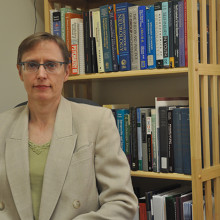
Dr. Elizabeth Osuch, Director of FEMAP and Lawson Scientist
“They lost their resources for mental health services and support as soon as the quarantine was announced,” shares Dr. Osuch, who is also a Scientist at Lawson. “We were concerned that it would be devastating to people – and to some people it was. We wanted to make sure they had an avenue to connect with the program.”
Dr. Osuch and the FEMAP team created an online research platform to find out how patients were doing by having them fill out a symptoms and function questionnaire.
“We have analyzed the first wave so far and it shows that male patients were doing better and female patients were doing worse, which was a surprise. One of the risk factors for not doing well was the loss of their job.”
The pandemic added an extra layer of stress and worry for women who were having a baby.
“This has been an enormous and pivotal time for everyone in the world,” says Dr. Genevieve Eastabrook, Obstetrician-Gynecologist at LHSC. “The experiences during pregnancy and post-partum for both the birthing person and their baby can have effects later in life for children. For example, their overall cardiovascular and metabolic health, bonding experiences and the risk of mood disorders.”
Dr. Eastabrook, who is also an Associate Scientist at Lawson and Assistant Professor at Western University’s Schulich School of Medicine & Dentistry, is working with a team to examine the effects the pandemic may be having for mothers and their babies. As part of the study, the London research team is using an approach called ‘One Health’ which offers a holistic perspective to explore how various risk factors and social determinants of health interact.
Image
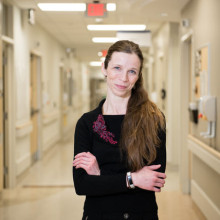
Dr. Genevieve Eastabrook, OBGYN at LHSC and Lawson Associate Scientist
“The unique aspect is that we have a comparative group to see if there are differences in markers such as risk of depression, perceived stress and social supports,” adds Dr. Eastabrook.
Study participants are asked to complete a 30-minute questionnaire at around 6-12 weeks after their delivery. The research team is still recruiting patients for this study.
Scientist
… SIJOSEPHs HEALTH CARE LON ST. JOSEPH’S HEALTH CARE, LONDON (the “Corporation”) ADMINISTRATIVE BY-LAW A By-law for the administration of the affairs of the Corporation, duly enacted as … SIJOSEPHs HEALTH CARE LON ST. JOSEPH’S HEALTH CARE, LONDON (the “Corporation”) …
SIJOSEPHs HEALTH CARE LON ST. JOSEPHS HEALTH CARE, LONDON (the Corporation) ADMINISTRATIVE BY-LAW A By-law for the administration of the affairs of the Corporation, duly enacted as authorized by special resolution of the Directors of the Corporation and approved, ratified and confirmed by the Member...
… and Forensic Examination Regional Sexual Assault and Domestic Violence Treatment Centre St. Joseph’s Health Care, London Patient’s name: … Service: The Regional Sexual Assault and Domestic Violence Treatment Centre can provide the following … and Forensic Examination Regional Sexual Assault and Domestic Violence Treatment Centre St. Joseph’s Health Care, …
Referral for Adult Medical and Forensic Examination Regional Sexual Assault and Domestic Violence Treatment Centre St. Josephs Health Care, London Patients name: ________________________ Patients contact #: ________________ Referring Physician (Print): ___________________Signature: _________________...
… AMBULATORY CENTRALIZED ACCESS POINT REFERRAL – LHSC AND ST JOSEPH’S PHONE: 519 667-6777 FAX: 519 667-6685 The … the Privacy Office at London Health Sciences Centre or St. Joseph’s Health Care London. Rev 2019/01/09 Client Information Last Name:______________________________________ First …
ADULT MENTAL HEALTH AMBULATORY CENTRALIZED ACCESS POINT REFERRAL LHSC AND ST JOSEPHS PHONE: 519 667-6777 FAX: 519 667-6685 The personal health information entered on this form is collected, used, disclosed and retained according to Ontarios Personal Health Information Protection Act and the Public ...
Advancing Hospital Based Clinical Research Conference
9am-4pm
When: Thursday October 19th, 2023 9am – 4pm (check in starts at 8am)
Where: Parkwood Institute Auditorium B2 - 109
Agenda: Dr. David Hill – Opening Remarks
Speakers include:
- Dr. Naveen Poonai (Chair HSREB)
- Dr. Steve Smith (Ontario Hospital Association, Research and Innovation Committee)
- Mr. Jonathan Mitchell, HealthCareCan, Vice President, Research and Policy
- Mr. Reza Salehzadeh-Asl and Ms. Shila Rastegar (Health Canada, Clinical Trial Inspectorate Program)
Earn 5.0 CEUs * Conference fee is $50 for LHSC, St. Joseph’s Health Care London, Lawson and Western affiliates (Non-Affiliates $150). *Breakfast and lunch included.
Spaces are Limited *You must register before October 15th*
Click to REGISTER TODAY (use your institutional email - LHSC, SJHC, Lawson, UWO, Schulich, etc.).
For more information or questions contact Lawson at @email or @email.
Advancing research during the COVID-19 pandemic
From the moment the COVID-19 pandemic was declared in March 2020, our teams at Lawson Health Research Institute have been at the forefront. Researchers at London Health Sciences Centre (LHSC) and St. Joseph’s Health Care London immediately began to work towards understanding the new virus in an effort to discover lifesaving health-care solutions.
To date, dozens of research projects have been advanced through Lawson with some receiving international attention as ‘world firsts’. As we mark the three-year anniversary of COVID-19 being declared a global pandemic by the World Health Organization (WHO), we share with you COVID-19 research highlighted over the past year.
Study finds acute kidney injury associated with severe COVID-19 leads to high mortality rates

Severe cases of a COVID-19 infection can cause a host of serious complications, including acute kidney injury. In a published study, scientists at Lawson found that acute kidney injury in patients with a severe COVID-19 infection leads to a high mortality rate.
By accessing data collected through the Ontario Renal Network (ORN), Dr. Peter Blake, Lawson Researcher and Provincial Medical Director at the Ontario Renal Network, and his colleagues examined 271 people at 27 renal programs across the province, including patients at LHSC, who received dialysis for acute kidney injury due to a COVID-19 infection. Read more.
Study shows a decline in Veterans’ mental health throughout the pandemic

In published findings from Lawson, more than half of Canadian Veterans reported a decline in their mental health over the course of the COVID-19 pandemic.
When it comes to mental health conditions, Veterans are an at-risk population, often having higher rates of depression and post-traumatic stress disorder (PTSD). When the COVID-19 pandemic hit, scientists at Lawson wanted to understand its effects on this already at-risk population.
To examine the potential impacts the research team launched a longitudinal study recruiting Canadian Veterans and spouses of Canadian Veterans. Participants complete online questionnaires every three months, with questions focused on mental health and virtual health care services. Read more.
Virtual care associated with significant environmental and patient cost savings

A study published in JAMA Network Open by researchers at ICES, Lawson and Western University found that virtual care during the COVID-19 pandemic led to a significant reduction in carbon dioxide emissions and patient travel-related expenses, such as gasoline, parking or public transit costs.
Findings show that for more than 10 million patients with at least one appointment during the study period (63 million visits in total), virtual care was associated with estimated savings of:
• 3.2 billion kilometers of patient travel;
• 545 to 658 million kilograms of carbon dioxide (CO2) emissions; and
• $569 to $733 million (Canadian [US $465-$599 million]) in expenses for gasoline, parking, or public transit. Read more.
London researchers discover novel method to diagnose long COVID
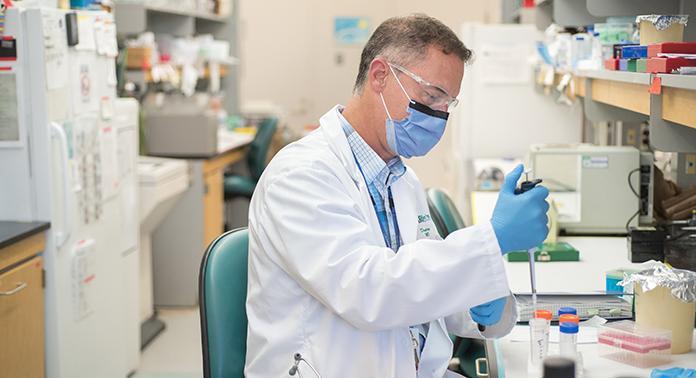
Published in Molecular Medicine, researchers at Lawson found that patients with post-COVID-19 condition (long COVID) have unique biomarkers in their blood. The team is now working on developing a first of its kind blood test that could be used to diagnose long COVID. The discovery could also lead to new therapeutics for this condition.
The researchers studied 140 blood samples from participants at LHSC and St. Joseph’s Health Care London, including St. Joseph’s Post-Acute COVID-19 Program. Participants were those with presumed long COVID, hospital inpatients with acute COVID-19 infection and healthy control subjects. Read more.
Researchers are combining new technologies to examine blood proteins in COVID-19 patients

Published in the Journal of Cellular and Molecular Medicine, a team at Lawson discovered unique patterns of blood plasma proteins in critically ill patients that may help develop a more personalized approach to treating severe COVID-19.
Called the plasma proteome, the proteins studied are released by cells that often play an important role in the body’s immune response to viruses. The research team studied how they adapt and change to a COVID-19 infection. Read more.
Media Contact
Celine Zadorsky
Senior Media Relations Consultant
Communications & Public Engagement
T: 519-685-8500 ext. 73502
Celine.zadorsky@lhsc.on.ca
Advocating for health research during “H on the Hill”
HealthCareCAN held its third annual Lobby Day “H on the Hill” event on Parliament Hill in Ottawa, on Tuesday, October 30, 2018.
Canada’s hospital CEOs and vice presidents of health research joined HealthCareCAN - the national voice of Canada’s healthcare organizations, community and research hospitals - to meet with MPs, Senators and senior government staff.
Collectively, they issued a call for federal action to unlock the tremendous economic potential of the health and life sciences sector to support better health for Canadians.
Dr. David Hill, Scientific Director for Lawson and Integrated Vice President of Research for London Health Sciences Centre and St. Joseph’s Health Care London, participated in the lobby day. Dr. Hill currently sits on the Board of Directors for HealthCareCAN.
Image

Image

“Minister of Crown Indigenous Relations @Carolyn_Bennett, Parliamentary Secretary for Science, Sport, and Accessibility @KateYoungMP, and Dr. David Hill, catching up over lunch at #HontheHill #CDNpoli #CDNhealth”
Image

Meeting participants stressed the need for action on HealthCareCAN’s recommendations for the 2019 federal budget, specifically:
- Setting a minimum 25% funding floor for the indirect costs of research under the Research Support Fund;
- Granting eligibility to federal infrastructure funding competitions to healthcare organizations, and;
- Investing in digital health platforms to support care, training, and research in healthcare organizations.
Diverse areas of the health and life sciences sector and key health issues were discussed, including:
- Health and science research, granting councils;
- Hospital infrastructure;
- Health innovation;
- Electronic health technology;
- Opioid crisis response;
- Mental health;
- Aboriginal health; and,
- Home care.
Read Dr. Hill’s recent column in Hospital News on bridging the gap from discovery to patient care.
Image

HealthCareCAN provides high-quality policy research advocacy and leadership development services to our members while championing healthcare system transformation in Canada. Visit www.healthcarecan.ca to learn about our solutions to health and healthcare challenges. Follow us on Twitter: @HealthCareCAN
Scientist