


Search
Search
2373 Search Results:
… Cardiac Rehabilitation & Secondary Prevention Program, St. Joseph’s Health Care London Associate Professor, Cardiology, Epidemiology & Biostatistics, Western University Monday, March 27 th, 2017 8:00 am … Cardiac Rehabilitation & Secondary Prevention Program, St. Joseph’s Health Care London Associate Professor, …
Department of Physical Medicine & Rehabilitation Grand Rounds Please e-mail laura.groom@sjhc.london.on.ca if you require information in a different format or if other arrangements can make this event accessible to you. Campus Accessibility Map at www.accessibility.uwo.ca/maps.htm A 2001 (and beyond)...
… Cardiac Rehabilitation & Secondary Prevention Program, St. Joseph’s Health Care London Associate Professor, Cardiology, Epidemiology & Biostatistics, Western University Monday, March 27 th, 2017 8:00 am … Cardiac Rehabilitation & Secondary Prevention Program, St. Joseph’s Health Care London Associate Professor, …
Department of Physical Medicine & Rehabilitation Grand Rounds Please e-mail laura.groom@sjhc.london.on.ca if you require information in a different format or if other arrangements can make this event accessible to you. Campus Accessibility Map at www.accessibility.uwo.ca/maps.htm A 2001 (and beyond)...
Poop in a pill helping advance cancer care
Lawson Research Institute scientists have perfected the delivery of fecal transplants via patient-friendly capsules now central in ground-breaking cancer treatment studies.
It’s one of the most exciting areas of research in cancer care.
Description
Making waves in scientific and health care circles worldwide, it holds the potent potential to “jazz up” cells that attack cancer and boost the body’s response to treatment.
So what is this powerful ally? It’s poop in a pill – home-grown right here at St. Joseph’s Health Care London and Lawson Research Institute.
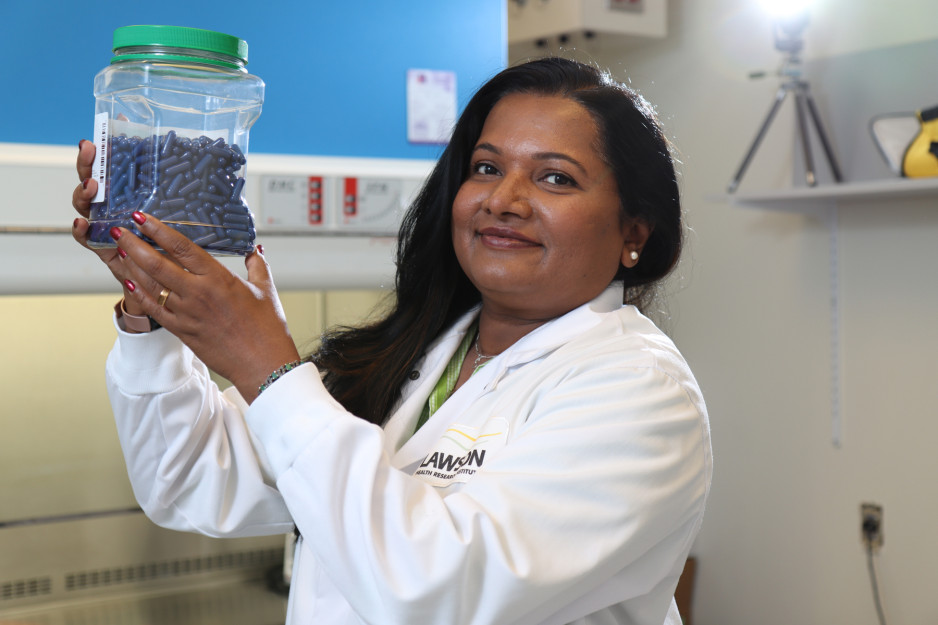
In fact, Lawson scientists Dr. Michael Silverman, Seema Nair Parvathy, PhD and their team are considered poop pill pioneers, having perfected the delivery of fecal transplantation by way of patient-friendly capsules that can be easily swallowed. These capsules contain healthy gut microbes that have become pivotal in many landmark cancer treatment studies.
Triggering an immune response
Understanding the role of poop in cancer treatment requires grasping the wonders of the human microbiome and its key role in influencing health and well-being.
The human microbiome consists of trillions of microorganisms that live inside and outside of the body, including bacteria, viruses and yeasts. While some bacteria are associated with disease, others are vital to the human immune system – the body’s main protective and disease-fighting tool – and many other aspects of health. Over the past decade, microbiome research has led to a revolution in medicine as scientists unravel just how an imbalance of these microorganisms interferes with many aspects of good health.
"(Fecal microbial transplants) allows us to harness the immune system to mount a stronger defence." Dr. Michael Silverman
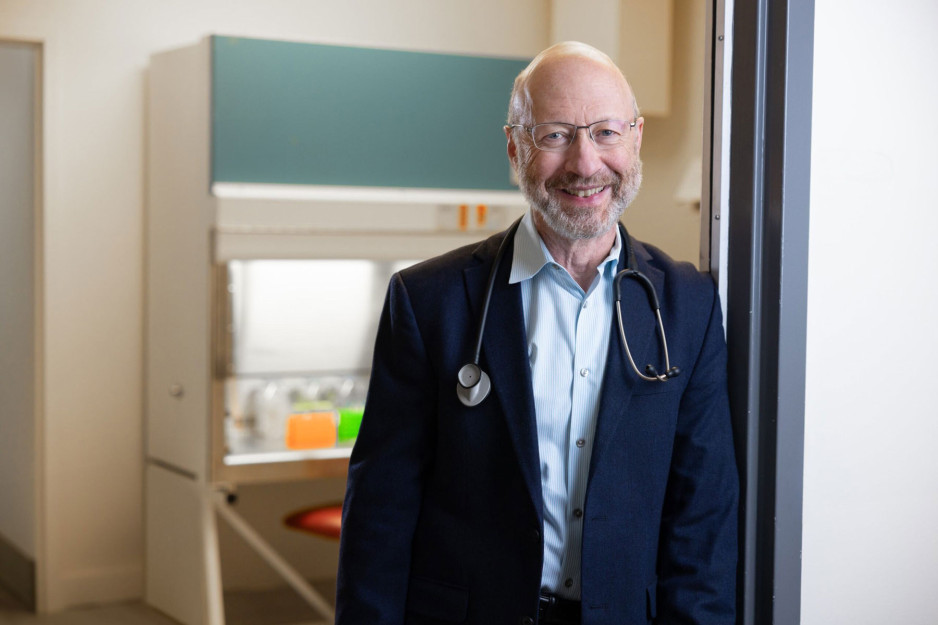
The goal of fecal microbiota transplants (FMT) is to transfer healthy gut microbes from donors into patients with cancer and other diseases so that healthy bacteria will colonize in the patient’s gut and improve the microbiome, explains Silverman, Medical Director of St. Joseph’s Infectious Diseases Care Program and citywide Chief of Infectious Diseases for London’s hospitals.
To do so, stools are collected from carefully screened healthy donors, prepared in a lab into capsule format, and introduced into a patient’s gastrointestinal tract.
“What is so exciting when it comes to cancer treatment is the evidence we now have showing how a healthy microbiome activates the immune response to tumours to make the treatment more effective,” Silverman adds. “It allows us to harness the immune system to mount a stronger defense.”
St. Joseph’s capsules are central to several significant studies currently underway aimed at improving treatment for lung, kidney, breast, renal, pancreatic and other cancers.
Among the most notable is the London team’s lead role in a ground-breaking national study – one of the world’s largest randomized controlled clinical trials using FMT to improve the effectiveness of the standard of care for advanced melanoma, a type of skin cancer.
Improving melanoma survival rates
About 11,300 Canadians will be diagnosed with melanoma in 2024 and, even with standard treatment, about half that number will experience disease progression and die.
The 16-site Canadian trial builds off the work of Silverman, Parvathy and their team, in partnership with Saman Maleki, PhD, and Dr. John Lenehan at London Health Sciences Centre. Together, they were the first to demonstrate the safety and therapeutic potential of using the capsules produced at St Joseph’s to influence a patient’s gut microbiota to enhance immunotherapy and increase the odds of surviving advanced melanoma.
“London is seen as having the most expertise in use of FMT in cancer care in the world and is a driving force in moving this forward,” says Silverman. “Immunotherapy is rapidly expanding the number of treatable cancers and our FMT therapy is helping to accelerate this progress.”
… MIND & SPIRIT SINCE 1869 Renowned for compassionate care, St. Joseph’s is one of the best academic health care organizations in Canada dedicated to helping people live to their fullest by minimizing the effects of injury, disease and … MIND & SPIRIT SINCE 1869 Renowned for compassionate care, St. Joseph’s is one of the best academic health care …
CARING FOR THE BODY, MIND & SPIRIT SINCE 1869 Renowned for compassionate care, St. Josephs is one of the best academic health care organizations in Canada dedicated to helping people live to their fullest by minimizing the effects of injury, disease and disability through excellence in care, teachin...
… MIND & SPIRIT SINCE 1869 Renowned for compassionate care, St. Joseph’s is one of the best academic health care organizations in Canada dedicated to helping people live to their fullest by minimizing the effects of injury, disease and … MIND & SPIRIT SINCE 1869 Renowned for compassionate care, St. Joseph’s is one of the best academic health care …
CARING FOR THE BODY, MIND & SPIRIT SINCE 1869 Renowned for compassionate care, St. Josephs is one of the best academic health care organizations in Canada dedicated to helping people live to their fullest by minimizing the effects of injury, disease and disability through excellence in care, teachin...
… MIND & SPIRIT SINCE 1869 Renowned for compassionate care, St. Joseph’s is one of the best academic health care organizations in Canada dedicated to helping people live to their fullest by minimizing the effects of injury, disease and … MIND & SPIRIT SINCE 1869 Renowned for compassionate care, St. Joseph’s is one of the best academic health care …
CARING FOR THE BODY, MIND & SPIRIT SINCE 1869 Renowned for compassionate care, St. Josephs is one of the best academic health care organizations in Canada dedicated to helping people live to their fullest by minimizing the effects of injury, disease and disability through excellence in care, teachin...
… St. Joseph’s Health Care London Parkwood Seating Program PO Box 5777, STN B, London ON N6A 4V2 (519) 685-4292, ext. 42199 FAX … Pre-Assessment Form Page 1 of 2 THIS DEMOGRAPHIC SECTION MUST BE COMPLETED IN FULL Name Street Address City Postal Code … St. Joseph’s Health Care London Parkwood Seating Program PO …
St. Josephs Health Care London Parkwood Seating Program PO Box 5777, STN B, London ON N6A 4V2 (519) 685-4292, ext. 42199 FAX (519) 685-4560 Office Use Only Appointment Date Hospital Chart No. Referral Source Service Avenue Parkwood Seating Program Pre-Assessment Form Page 1 of 2 THIS DEMOGRAPHIC SEC...
… MIND & SPIRIT SINCE 1869 Renowned for compassionate care, St. Joseph’s is one of the best academic health care organizations in Canada dedicated to helping people live to their fullest by minimizing the effects of injury, disease and … MIND & SPIRIT SINCE 1869 Renowned for compassionate care, St. Joseph’s is one of the best academic health care …
CARING FOR THE BODY, MIND & SPIRIT SINCE 1869 Renowned for compassionate care, St. Josephs is one of the best academic health care organizations in Canada dedicated to helping people live to their fullest by minimizing the effects of injury, disease and disability through excellence in care, teachin...
… MIND & SPIRIT SINCE 1869 Renowned for compassionate care, St. Joseph’s is one of the best academic health care organizations in Canada dedicated to helping people live to their fullest by minimizing the effects of injury, disease and … MIND & SPIRIT SINCE 1869 Renowned for compassionate care, St. Joseph’s is one of the best academic health care …
CARING FOR THE BODY, MIND & SPIRIT SINCE 1869 Renowned for compassionate care, St. Josephs is one of the best academic health care organizations in Canada dedicated to helping people live to their fullest by minimizing the effects of injury, disease and disability through excellence in care, teachin...
… Residency Consortium 2022-2023 ACKNOWLEDGEMENTS Just as our Consortium is the result of a large collaboration … who helped complete this year’s brochure including our past and current Consortium Committee members – Dr. Sabrina … Sciences Centre): 31 #;.1 London Health Sciences Centre ~ S!JOSEPHs HE.UTHCAR( lO NDON …
CPA Accredited Member of APPIC & CCPPP Clinical Psychology Residency CONSORTIUM Predoctoral Residency in Clinical Psychology 20222023 Your guide to predoctoral training in clinical psychology within one of Canadas leading CPA accredited residency programs Clinical Psychology Residency CONSORTIUM Lon...
… Individuals in Bank: Certain patients having surgery at St. Joseph’s Hospital Retention Period: two years /media/1346 … Individuals in Bank: Certain patients having surgery at St. Joseph’s Hospital Retention Period: two years …
Personal Information Bank (PIB) Details Title: Preferred Accommodation Location of Files: Finance Description: Form that indicates details around preferred accommodation. Legal Authority for PIB: Public Hospitals Act R.S.0 1990, c. P.40. Types of Personal Information: Contact information and insuran...
Preparing for your appointment - Bone Mineral Density
Your appointment is for Bone Mineral Density (BMD) Exam
Please arrive at St. Joseph’s medical imaging registration desk 15 minutes before your scheduled appointment time.
Arrival time:
Please arrive at St. Joseph’s medical imaging registration desk 15 minutes before your scheduled appointment time.
Appointment Location:
St. Joseph’s Hospital
268 Grosvenor Street, London, ON N6A 4V2
Medical Imaging - B5
Zone B, Level 5, Room B5-204
What you must do before your appointment:
Please wear pants with no zippers or metal buttons to your appointment, if possible.
Please contact your doctor about:
Any questions you may have about the reason for this appointment.
If your referring doctor has retired or if you do not have a family doctor:
If the doctor who referred you for this appointment has retired or if you do not have a family doctor, please call us at the phone number below as soon as possible, as we may not be able to proceed with your appointment.
If you need an interpreter, mechanical lift, or to reschedule or cancel your appointment:
Please phone St. Joseph’s BMD scheduling office as soon as you can. Leave a message with your name, phone number, health card number and reason for your call. We will call you back as soon as possible.
Phone number: 519 646-6100 ext. 64137
Other important information for your appointment:
Parking
Please arrive early so you have extra time to find parking. Click on this link for information about parking at St. Joseph's Health Care London.
Entrances to St. Joseph's Hospital
- For all appointments please check the location on the first page of this document and determine which Entrance to Use
- Weekend or evening appointments
- Your appointment(s) may be scheduled on weekdays, weekends and evenings.
- If your appointment is in the evening or on the weekend, please use Entrance 2 on Grosvenor Street. This is the only door that will be open. · If there is a line for Urgent Care, do not wait in line. Walk past the line and go straight to your appointment. · If your appointment is in the evening, press the buzzer next to Entrance 2. Security will open the door for you.
- Portering services are not available on weekends or after 5:00 pm on weekdays. If you need help getting to your appointment, please bring someone with you who can assist you, or call the scheduling office to change your appointment time.
Directions to clinics and services
For step-by-step directions to clinics and services at St. Joseph’s Hospital, please visit: St. Joseph's Hospital: Directions to All Program and Services.
If you have diabetes and use a diabetes sensor or pump
- Before your medical imaging exam, it is recommended to take off any diabetes device, like a sensor, transmitter, receiver, or insulin pump. For some types of imaging, you must remove your sensor device (like Libre, Dexcom or Veo) for your safety and staff safety. After the exam, you can put on a new sensor.
- If you have questions or want to change your appointment to match when you are planning to change your sensor, please call the scheduling office at phone number listed above.
Accompanying care partners
- Please do not bring small children with you unless another adult comes too. The adult must be able to watch your children while you are at your appointment.
- If you cannot give consent for care or provide a detailed medical history, your substitute decision maker (SDM) must come with you or be available by phone at the time of your appointment.
Fragrance and scent-free environment
- Some people can have allergies or trouble breathing from smells and scents. On the day of your appointment, please do not wear things like perfume, cologne, aftershave, scented sprays, lotions, or powders. For more information see Latex and Fragrance.
Smoke-free environment
Smoking is not allowed for patients, staff, families, or visitors. You cannot smoke inside the building, on the hospital grounds, or in parking garages. If you want to smoke, please do it off the hospital property. To see where the property lines are, look at the site maps: Smoke free.
Clothing and personal items
- Please try to wear clothes that do not have metal on or in them. For some imaging appointments you will be asked to change into a hospital gown or pants if your clothes material or pattern will interfere with the picture or your safety.
- Leave jewelry and valuable things that you can take off at home.
E-mail communications:
To add or change your e-mail address, to get appointment notices by e-mail, please call scheduling office at phone number listed above.
For more information about your visit to St. Joseph’s, please visit: Patients & Visitors.
Preparing for your appointment - Bone Scan
Your appointment is for Bone Scan in Molecular Imaging and Theranostics
Please arrive at St. Joseph’s medical imaging registration desk before your scheduled appointment time.
Arrival time:
Please arrive at St. Joseph’s medical imaging registration desk 15 minutes before your scheduled appointment time.
Appointment Location:
St. Joseph’s Hospital
268 Grosvenor Street, London, ON N6A 4V2
Francis and Madeleine Saul Medical Imaging Centre (Medical Imaging C0)
Zone C, Level 0, Room C0-200
What you must do before your appointment:
Please wear pants with no zippers or metal buttons to your appointment, if possible.
Please contact your doctor about:
Any questions you may have about the reason for this appointment.
If your referring doctor has retired or if you do not have a family doctor:
If the doctor who referred you for this appointment has retired or if you do not have a family doctor, please call us at the phone number below as soon as possible, as we may not be able to proceed with your appointment.
If you need an interpreter, mechanical lift, or to reschedule or cancel your appointment:
Please phone St. Joseph’s BMD scheduling office as soon as you can. Leave a message with your name, phone number, health card number and reason for your call. We will call you back as soon as possible.
Phone number: 519 646-6100 ext. 64137
Other appointment information:
Please read important information about your appointment in St. Joseph’s Medical Imaging and Breast Care Programs on the next page. This includes things like parking, directions, what to do if you use a diabetes device, substitute decision makers, what to wear, and how to add or update your e-mail.
Parking
Please arrive early so you have extra time to find parking. Click on this link for information about parking at St. Joseph's Health Care London.
Entrances to St. Joseph’s Hospital
- For all appointments please check the location on the first page of this document and determine which Entrance to Use
- Weekend or evening appointments
- Your appointment(s) may be scheduled on weekdays, weekends and evenings.
- If your appointment is in the evening or on the weekend, please use Entrance 2 on Grosvenor Street. This is the only door that will be open. · If there is a line for Urgent Care, do not wait in line. Walk past the line and go straight to your appointment. · If your appointment is in the evening, press the buzzer next to Entrance 2. Security will open the door for you.
- Portering services are not available on weekends or after 5:00 pm on weekdays. If you need help getting to your appointment, please bring someone with you who can assist you, or call the scheduling office to change your appointment time.
Directions to clinics and services
For step-by-step directions to clinics and services at St. Joseph’s Hospital, please visit: St. Joseph's Hospital: Directions to All Program and Services.
If you have diabetes and use a diabetes sensor or pump
- Before your medical imaging exam, it is recommended to take off any diabetes device, like a sensor, transmitter, receiver, or insulin pump. For some types of imaging, you must remove your sensor device (like Libre, Dexcom or Veo) for your safety and staff safety. After the exam, you can put on a new sensor.
- If you have questions or want to change your appointment to match when you are planning to change your sensor, please call the scheduling office at phone number listed above.
Accompanying care partners
- Please do not bring small children with you unless another adult comes too. The adult must be able to watch your children while you are at your appointment.
- If you cannot give consent for care or provide a detailed medical history, your substitute decision maker (SDM) must come with you or be available by phone at the time of your appointment.
… in terms of such damage - International Association for the Study of Pain CARING FOR THE BODY, MIND & SPIRIT SINCE 1869 … Long-term • Cause often unknown • No ongoing damage • Persists beyond normal healing time • Treatment may not help much … Pain Syndromes • Chronic Myofascial (muscle) pain • Osteoarthritis (of a particular joint(s)) • Diabetic …
CARING FOR THE BODY, MIND & SPIRIT SINCE 1869 Pain Management Program Patient Orientation CARING FOR THE BODY, MIND & SPIRIT SINCE 1869 Orientation Goals Educate about what chronic pain is Inform about different components of chronic pain management Inform about the chronic pain multidisciplinary...
… STJOSEPH_~ HEALTH CARE LONDON Office of the Chair, Board of Directors 268 Grosvenor St, PO Box 5777 London, ON N6A 4V2 T: 519 646-6100 ext 64202 … through excellence in care, teaching and research. 1 ~ S!JOSEPHs HEALTH CAR£ LONDON sjhc.london.on.ca /media/7440 …
STJOSEPH_~ HEALTH CARE LONDON Office of the Chair, Board of Directors 268 Grosvenor St, PO Box 5777 London, ON N6A 4V2 T: 519 646-6100 ext 64202 June 5, 2015 Dr. Gillian Kernaghan President and Chief Executive Officer St. Joseph's Health Care London Dear Dr. Kernaghan: In accordance with the terms a...
… between the President & Chief Executive Officer (CEO) and St. Joseph’s Health Care, London, the CEO is eligible to … are focused on the following areas: 1. Achievement of strategic initiatives 35% 2. Achievement of the Quality … to the achieved level of performance, assessed as follows: Strategic Initiatives: annual measures of success as …
President & CEO Performance Evaluation 2014/15 According to the terms of the compensation plan prescribed in the contract of employment between the President & Chief Executive Officer (CEO) and St. Josephs Health Care, London, the CEO is eligible to earn variable compensation up to 20% of her/his a...
… f\s··,:;~ STJOSEPHs HEALTH CARE . LONDON May 30, 2017 Dr. Gillian Kernaghan President and Chief Executive Officer St. Joseph's Health Care London Dear Dr. Kernaghan: Office of the Chair, Board of Directors PO Box sm, Stn B London, ON N6A4V2 T: 519 646-6100 ext 64202 In …
f\s,:;~ STJOSEPHs HEALTH CARE . LONDON May 30, 2017 Dr. Gillian Kernaghan President and Chief Executive Officer St. Joseph's Health Care London Dear Dr. Kernaghan: Office of the Chair, Board of Directors PO Box sm, Stn B London, ON N6A4V2 T: 519 646-6100 ext 64202 In accordance with the terms and co...
Preventing infertility in men who undergo lymph node removal surgery for testicular cancer
When patients with testicular cancer undergo lymph node removal surgery there is a risk that their fertility will be affected if proper nerve sparing techniques are not used. Up to 75 per cent of men will not be able to father children if they receive the surgery without these techniques.
Lawson’s Internal Research Fund (IRF) has awarded a grant to Dr. Nicholas Power, a researcher at Lawson and urologic oncologist at London Health Sciences Centre (LHSC), who is leading a study to identify the nerves involved in fertility that are affected in lymph node removal surgery for testicular cancer.
“Sometimes patients go through a lot to be cured of testicular cancer only to be left dealing with long-term survivorship issues such as fertility. We hope to gain new insights into how fertility can be preserved after these men receive lymph node removal surgery,” says Dr. Power, who is also an assistant professor at Western University’s Schulich School of Medicine & Dentistry.
In collaboration with Schulich assistant professors Dr. Marjorie Johnson and Dr. Brian Allman, and PhD candidate Tyler Beveridge, Dr. Power published initial results in The Journal of Urology announcing their discovery of a brand new anatomic structure, the pre-hypogastric ganglion, which needs to be spared in surgery to maintain fertility. They were also able to describe the first roadmap of retroperitoneal neuroanatomy – the anatomy of nerves in the space where surgeons locate lymph nodes most commonly affected by testicular cancer that has spread.
“There has never been a definitive anatomic study of the nerves of the retroperitoneum so it was our goal to provide the first comprehensive study of the nerves as they relate directly to patients who have testicular cancer,” explains Dr. Power. “After we published the initial results we were approached by textbook authors to use our data in upcoming editions of anatomy and surgical atlases. This will help to provide insight into nerve sparing techniques for surgeons who have not been trained at high-volume centers and ultimately improve the quality of care in testicular cancer patients overall.”
Already Dr. Power has found that using this knowledge when he performs lymph node removal surgery for testicular cancer has led to a 95 per cent success rate of preserving fertility.
The IRF will go towards their research to further investigate the actual function and physiology of the retroperitoneal neuroanatomy using a pig model.
“Lawson’s IRF provides incredible support for a field of study such as ours that is not yet at the stage of applying for a large grant. Receiving the funding gives us the independence to test out novel yet important hypotheses that will then lead us to further grants,” says Dr. Power.
Image
Above: Dr. Nicholas Power
The IRF is designed to provide Lawson scientists and students the opportunity to obtain start-up funds for new projects with the potential to obtain larger funding, be published in a high-impact journal, or provide a clinical benefit to patients. Funding is provided by the clinical departments of London Health Sciences Centre and St. Joseph’s Health Care London, as well as the hospital foundations (London Health Sciences Foundation and St. Joseph's Health Care Foundation).
Prevention and Awareness: Delirium
8:00pm - 9:00pm
You are invited to the first in a series of Research Bites,. These informative and interactive talks will focus on specific illnesses, their prevention and related research being conducted by researchers in London, Ontario.
Topic: Prevention and Awareness: Delirium
Image

Dr. O'Regan will share about delirium and what it means, and provide highlights of her ongoing research happening locally. She will also be speaking about how to recognize delirium in a loved one and what to do in this scenario, as well as the steps you can take to help prevent it.
Date: Thursday, January 24, 2019
Time: 4 - 5 pm
Location: Parkwood Institute, Mental Health Building, Auditorium (F2-235)
550 Wellington Road South
London, Ontario N6C 0A7
Maps and Directions for Parkwood Institute.
Parking: The lot rate is $4.00 when you enter. $1 and $2 coins and credit card accepted (press the start button then insert payment)
Registration is required and spots will fill up quickly.
Click here to register.
These talks are hosted by Parkwood Institute Research, a program of Lawson Health Research Institute.
… London Pride Parade – July 23th Meet at the Western Fair District parking lot by 11:00 am on July 23 (parade leaves at … is available to the south side of the parking lot with staging to the north. Look for the St. Joseph’s shuttle bus. … London Pride Parade – July 23th Meet at the Western Fair District parking lot by 11:00 am on July 23 …
London Pride Parade July 23th Meet at the Western Fair District parking lot by 11:00 am on July 23 (parade leaves at 12:00). Come dressed in a bright coloured shirt, and prepared for plenty of walking and sun! Parking is available to the south side of the parking lot with staging to the north. Look...