


Search
Search
2372 Search Results:
… Parking Garage Parking Only Visitor Parking Only Visitor St. Joseph’s Hospital - Cheapside Entrance Parking Only Sta� Parking Legend Entrance Zone Bicycle Parking /media/7570 … Parking Garage Parking Only Visitor Parking Only Visitor St. Joseph’s Hospital - Cheapside Entrance Parking Only Sta� …
Px Enter Parking Garage Parking Only Visitor Parking Only Visitor St. Josephs Hospital - Cheapside Entrance Parking Only Sta Parking Legend Entrance Zone Bicycle Parking
… Px PARKING GARAGE Exit Parking Garage Visitor Parking Sta� and Parking Only Sta� Accessible parking in this area on all �oors Parking Legend Entrance Zone Bicycle Parking St. Joseph’s Hospital - Grosvenor Entrance Accessibility … Px PARKING GARAGE Exit Parking Garage Visitor Parking Sta� and Parking Only Sta� Accessible parking in this area …
Tunnel Enter Parking Garage Px PARKING GARAGE Exit Parking Garage Visitor Parking Sta and Parking Only Sta Accessible parking in this area on all oors Parking Legend Entrance Zone Bicycle Parking St. Josephs Hospital - Grosvenor Entrance Accessibility Report Filename: fm_parking_plan_sjh_grosvenor.p...
… 4 2 1 Tim Hortons N $ N Ri ch m on d St re et W el lin gt on S tr ee t Grosvenor Street Cheapside Street Level 1 Entrance Level 1 Entrance Level 0 Entrance … 4 2 1 Tim Hortons N $ N Ri ch m on d St re et W el lin gt on S tr ee t Grosvenor Street Cheapside Street Level 1 Entrance Level 1 Entrance …
4 2 1 Tim Hortons N $ N Ri ch m on d St re et W el lin gt on S tr ee t Grosvenor Street Cheapside Street Level 1 Entrance Level 1 Entrance Level 0 Entrance Level 0 PARKING ELEVATORS TUNNEL ACCESS B A C D E F Grosvenor Parking Garage Tunnel Access A Elevators Cheapside Parking St. Josephs Hospital Zo...
… Form that council members complete when they join the St. Joseph’s Hospital Patient Advisory Council Legal … To communicate with council members Individuals in Bank: St. Joseph’s Hospital Patient Advisory Council Members … Form that council members complete when they join the St. Joseph’s Hospital Patient Advisory Council Legal …
Personal Information Bank (PIB) Details Title: Patient Advisory Council Form Location of Files: Acute/Ambulatory Development Office Description: Form that council members complete when they join the St. Josephs Hospital Patient Advisory Council Legal Authority for PIB: Public Hospitals Act R.S.0 199...
… Identification/Access Card and Key Request Form Fire and Security Services Authorizing Signature: … Click here to enter text. Identification/Access Card Request Date Requested: Click here to enter text. Card Requested By: First … Identification/Access Card and Key Request Form Fire and Security Services Authorizing Signature: …
Identification/Access Card and Key Request Form Fire and Security Services Authorizing Signature: Name of Authorizing Person: Click here to enter text. Title: Click here to enter text. Extension: Click here to enter text. Identification/Access Card Request Date Requested: Click here to enter text. C...
St. Joseph’s in partnership with Lawson to become Canada’s first centre of excellence in molecular imaging and theranostics
In a Canadian first, Lawson Health Research Institute (Lawson) and St. Joseph’s Health Care London (St. Joseph’s), in partnership with GE HealthCare, will become a centre of excellence in personalized treatment of cancer and other diseases by advancing the powerful blend of precision diagnostic imaging and targeted therapy.
This rapidly emerging field of medicine is called molecular imaging and theranostics (MIT). Molecular imaging provides detailed imaging at the molecular level and theranostics is a term that combines the words therapeutics and diagnostics. Together, MIT is a two-pronged approach to diagnosing and treating cancers and other diseases that merges imaging with the use of radiotracers that can not only identify the location and extent of diseased tissues but also selectively destroy the abnormal cells while leaving surrounding healthy cells undamaged.
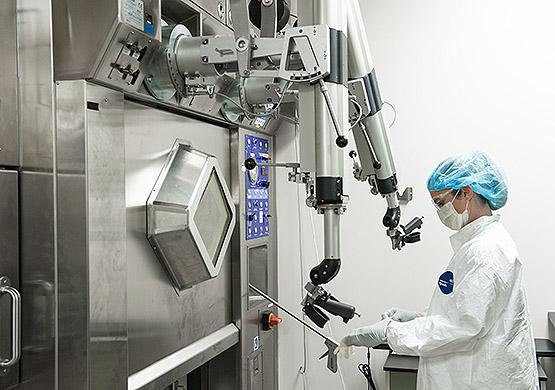
“The centre will confirm St. Joseph’s and the wider London medical and scientific community as national and international leaders in advancing MIT in the diagnosis of disease, for instance in the identification of cancer and its sub-types, to allow more treatment options for patients,” says Dr. Narinder Paul, Lawson Scientist, Chief, Medical Imaging at St. Joseph’s and Physician Executive, Medical Imaging at London Health Sciences Centre (LHSC). “It will also allow for an expansion of scientific collaborations, increased numbers of scientific and medical learners, and access to the latest software to acquire and integrate imaging science with other patient information.”
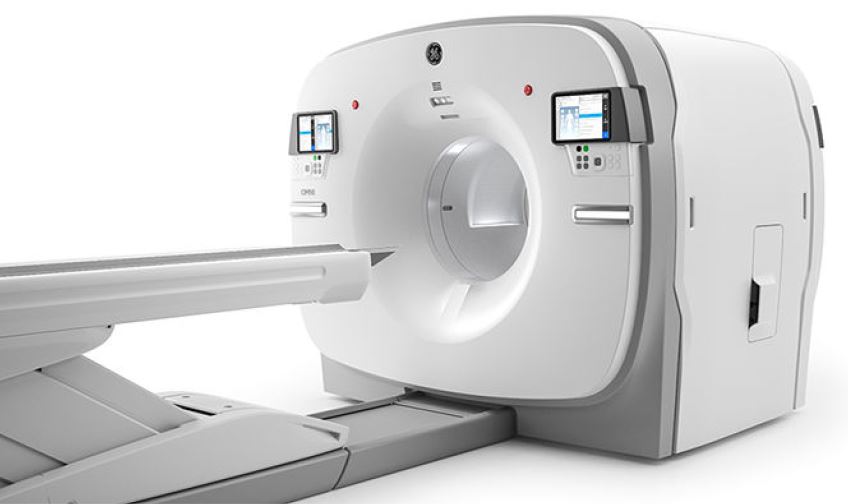
The partnership with GE HealthCare will see St. Joseph’s become the first hospital in Canada to install the latest generation, state-of-the-art PET-CT from GE, which will be delivered to St. Joseph’s Hospital by September 2023. The new PET-CT will mean faster exams, better patient experience, more detailed images and increased accuracy in diagnosing disease at a lower dose of radiation for patients. It will also expand clinical care at St. Joseph’s by significantly enhancing research through the Imaging Research Group at Lawson, working together with researchers at LHSC, the London Regional Cancer Program, and Western University.

“We will leverage the combined scientific expertise and innovation of scientists from GE HealthCare and Lawson to maximize the future opportunities of molecular imaging theranostics made possible through PET- CT imaging and be leaders in Canada in this area of medical science,” says Dr. David Hill (D.Phil), Lawson’s Scientific Director.
As a dedicated MIT centre of excellence, St. Joseph’s will…
• Advance innovation and expand the science in precision imaging of disease through Lawson, and broaden the potential of PET-CT imaging
• Develop new treatment options for patients with cancer and other diseases
• Examine how to maximize the opportunities of digital health technologies to improve access for patients across Canada and optimize their treatment journeys
• Create a knowledge dissemination hub for Canada to educate and train others in the use of advanced imaging technologies, including how to organize hospital services to maximize access to patients and improve the health care system for all Canadians.
“St. Joseph’s is proud to be in partnership with GE HealthCare on this exciting opportunity to transform the care journey and outcomes for patients with cancer and other diseases, not only locally and regionally, but also nationally,” says Roy Butler (PhD), President and CEO of St. Joseph’s.
For patients seen in London, the benefits will include expanded use of PET-CT, the ability to extract more information from their diagnostic images more rapidly and with less radiation exposure compared to current procedures, greater diagnostic and treatment accuracy, and new options for treatment, particularly for cancers that are more difficult to treat.
“A personalized approach to medical care requires a very detailed understanding of the localization of disease and potential response to different treatment options,” says Dr. Paul who is also the Chair of Medical Imaging at Schulich School of Medicine & Dentistry at Western University. “We will be able to offer patients across our region access to the latest therapeutic options based on a deeper understanding of the nature of their individual disease conditions gained through next generation medical imaging.”
At its core, theranostics is about treating each patient as an individual, “recognizing that the same treatment plan doesn’t work for everyone – with the goal of providing more efficient and effective medical care,” adds says Mike Hamilton, President, GE HealthCare Canada. “This collaboration aims to advance this practice for the benefit of clinicians and patients around the world.”
St. Joseph’s and Lawson have invested in critical MIT infrastructure for more than two decades with an on-site cyclotron at St. Joseph’s Hospital, a radiochemistry laboratory, scientists to make the clinical grade reagents, Canada’s first PET-CT (2002), Canada’s first whole body PET-MRI (2012), and now Canada’s first next-generation PET-CT from GE HealthCare, says Dr. Ting-Yim Lee (PhD), Lawson’s Director of PET/CT Research and medical physicist at St. Joseph’s Hospital. There are also clinical trials research teams and state-of-the-art PET-CT cameras across London’s hospitals and Western, dedicated facilities at Western to develop new probes used to detect and diagnose disease, and the London Regional Cancer Program at LHSC.
In addition, there has been investment in research leadership roles through St. Joseph’s Health Care Foundation. Three donor-funded research chairs will be contributing to this important work.
“This makes the city the obvious location to maximize the development of this exciting new science for the benefit of patients,” says Dr. Lee. “London has an established record of working in partnership with global companies in the field of medical imaging and have together generated many discoveries that are now made available as best patient care.”
The new PET-CT at St. Joseph’s will replace an aging machine and has been made possible in part through the generosity of donors to St. Joseph’s Health Care Foundation, which is contributing $1 million to state-of-the-art machine.
St. Joseph’s in partnership with Lawson will become Canada’s first centre of excellence in molecular imaging and theranostics
London, Ontario – In a Canadian first, St. Joseph’s Health Care London (St. Joseph’s) and Lawson Health Research Institute (Lawson), in partnership with GE HealthCare, will become a centre of excellence in personalized treatment of cancer and other diseases by advancing the powerful blend of precision diagnostic imaging and targeted therapy.
This rapidly emerging field of medicine is called molecular imaging and theranostics (MIT). Molecular imaging provides detailed imaging at the molecular level and theranostics is a term that combines the words therapeutics and diagnostics. Together, MIT is a two-pronged approach to diagnosing and treating cancers and other diseases that merges imaging with the use of radiotracers that can not only identify the location and extent of diseased tissues but also selectively destroy the abnormal cells while leaving surrounding healthy cells undamaged.
“The centre will confirm St. Joseph’s and the wider London medical and scientific community as national and international leaders in advancing MIT in the diagnosis of disease, for instance in the identification of cancer and its sub-types, to allow more treatment options for patients,” says Dr. Narinder Paul, Lawson Scientist, Chief, Medical Imaging at St. Joseph’s and Physician Executive, Medical Imaging at London Health Sciences Centre (LHSC). “It will also allow for an expansion of scientific collaborations, increased numbers of scientific and medical learners, and access to the latest software to acquire and integrate imaging science with other patient information.”
The partnership with GE HealthCare will see St. Joseph’s become the first hospital in Canada to install the latest generation, state-of-the-art PET-CT from GE, which will be delivered to St. Joseph’s Hospital by September 2023. The new PET-CT will mean faster exams, better patient experience, more detailed images and increased accuracy in diagnosing disease at a lower dose of radiation for patients. It will also expand clinical care at St. Joseph’s by significantly enhancing research through the Imaging Research Group at Lawson, working together with researchers at LHSC, the London Regional Cancer Program, and Western University.
“We will leverage the combined scientific expertise and innovation of scientists from GE HealthCare and Lawson to maximize the future opportunities of molecular imaging theranostics made possible through PET- CT imaging and be leaders in Canada in this area of medical science,” says Dr. David Hill (D.Phil), Lawson’s Scientific Director.
As a dedicated MIT centre of excellence, St. Joseph’s will…
• Advance innovation and expand the science in precision imaging of disease through Lawson, and broaden the potential of PET-CT imaging
• Develop new treatment options for patients with cancer and other diseases
• Examine how to maximize the opportunities of digital health technologies to improve access for patients across Canada and optimize their treatment journeys
• Create a knowledge dissemination hub for Canada to educate and train others in the use of advanced imaging technologies, including how to organize hospital services to maximize access to patients and improve the health care system for all Canadians.
“St. Joseph’s is proud to be in partnership with GE HealthCare on this exciting opportunity to transform the care journey and outcomes for patients with cancer and other diseases, not only locally and regionally, but also nationally,” says Roy Butler (PhD), President and CEO of St. Joseph’s.
For patients seen in London, the benefits will include expanded use of PET-CT, the ability to extract more information from their diagnostic images more rapidly and with less radiation exposure compared to current procedures, greater diagnostic and treatment accuracy, and new options for treatment, particularly for cancers that are more difficult to treat.
“A personalized approach to medical care requires a very detailed understanding of the localization of disease and potential response to different treatment options,” says Dr. Paul who is also the Chair of Medical Imaging at Schulich School of Medicine & Dentistry at Western University. “We will be able to offer patients across our region access to the latest therapeutic options based on a deeper understanding of the nature of their individual disease conditions gained through next generation medical imaging.”
At its core, theranostics is about treating each patient as an individual, “recognizing that the same treatment plan doesn’t work for everyone – with the goal of providing more efficient and effective medical care,” adds says Mike Hamilton, President, GE HealthCare Canada. “This collaboration aims to advance this practice for the benefit of clinicians and patients around the world.”
The new PET-CT at St. Joseph’s will replace an aging machine and has been made possible in part through the generosity of donors to St. Joseph’s Health Care Foundation, which is contributing $1 million to state-of-the-art machine.
Additional details on this exciting partnership are available on St. Joseph’s website
About Lawson Health Research Institute
Lawson Health Research Institute is one of Canada’s top hospital-based research institutes, tackling the most pressing challenges in health care. As the research institute of London Health Sciences Centre and St. Joseph’s Health Care London, our innovation happens where care is delivered. Lawson research teams are at the leading-edge of science with the goal of improving health and the delivery of care for patients. Working in partnership with Western University, our researchers are encouraged to pursue their curiosity, collaborate often and share their discoveries widely. Research conducted through Lawson makes a difference in the lives of patients, families and communities around the world. To learn more, visit www.lawsonresearch.ca.
About St. Joseph’s Health Care London
Renowned for compassionate care, St. Joseph’s Health Care London is a leading academic health care centre in Canada dedicated to helping people live to their fullest by minimizing the effects of injury, disease and disability through excellence in care, teaching and research. Through partnership with Lawson Health Research Institute and our collaborative engagement with other health care and academic partners, St. Joseph’s has become an international leader in the areas of: chronic disease management; medical imaging; specialized mental health care; rehabilitation and specialized geriatrics; and surgery. St. Joseph’s operates through a wide range of hospital, clinic and long-term and community-based settings, including: St. Joseph’s Hospital; Parkwood Institute; Mount Hope Centre for Long Term Care; and the Southwest Centre for Forensic Mental Health Care. www.sjhc.london.on.ca
Media Contacts
Celine Zadorsky
Senior Media Relations Consultant
Communications & Public Engagement
T: 519-685-8500 ext. 73502
Celine.zadorsky@lhsc.on.ca
St. Joseph’s launches Health Crisis Fund to support local COVID-19 research
LONDON, ON – St. Joseph’s Health Care London and Lawson Health Research Institute have announced plans to move forward with clinical trials testing a drug that could potentially be used to prevent and treat COVID-19. St. Joseph’s Health Care Foundation will accelerate the creation of the studies by providing seed funding to get the research started through donor support. Based on the immediate need, The St. Joseph’s Health Crisis Fund has been created by St. Joseph’s Health Care Foundation to enable these and other research studies currently in development through Lawson, the research arm of St. Joseph’s.
While supporting urgent COVID-19 clinical trials will be an immediate focus, The St. Joseph’s Health Crisis Fund will also support critical patient care equipment and care and comfort items for healthcare staff and volunteers working on the frontlines of the pandemic across St. Joseph’s.
The initial clinical trials aim to study the use of hydroxychloroquine as a preventative medication and treatment for COVID-19. Led locally by Dr. Michael Silverman, Medical Director of St. Joseph’s Infectious Diseases Care Program, one trial will assess the safety and efficacy of using the drug to prevent COVID-19 in health care workers recently exposed to the virus. This trial will also assess the drug as a treatment for non-hospitalized patients with mild cases of the illness. St. Joseph’s will be one of many participating sites in the trial, which is being led by the Research Institute of the McGill University Health Centre.
“There is much debate surrounding the drug hydroxychloroquine. We do not yet know whether it’s safe or effective, and it should not be routinely recommended until we do,” says Dr. Silverman, also a Lawson Associate Scientist and city-wide Chair/Chief of Infectious Diseases. “We plan to carefully study the drug through a randomized controlled trial and assess whether it can help combat COVID-19.”
Dr. Silverman is also partnering with Dr. Michael Borrie, Geriatrician at St. Joseph’s and Lawson Scientist, on a prevention trial to test the safety and efficacy of the drug for patients and residents at Parkwood Institute who have been exposed to COVID-19. They are at a higher risk of infection, as well as serious complications and potential admission to acute care.
“Lawson researchers like Drs. Silverman and Borrie excel in rapid response research,” says Dr. David Hill, Lawson Scientific Director. “Hospital-based research is uniquely positioned to handle these types of studies, as close proximity to patients and sample collection is essential.”
St. Joseph’s Infectious Diseases Program is the only program of its kind in the region. Dr. Silverman, head of St. Joseph’s Infectious Disease program, has worked with communities in crisis in Zambia, Zimbabwe, Uganda and the rainforests of Guyana. He is working closely with other health care partners in the London and surrounding area to coordinate the region’s response to the COVID-19 pandemic.
“The Sisters of St. Joseph, who founded our organization, faced contagious diseases and other pandemics at different times in our 150+ year history,” says Michelle Campbell. “Today, it’s a different time, and a new disease. Now, more than ever, we ask our community to help us address the crisis facing us all.”
Those interested in donating to St. Joseph’s Health Crisis Fund are asked to visit St. Joseph’s Health Care Foundation’s website to learn more at sjhcfoundation.org. Donations can be made online, through direct mail submissions or by calling the Foundation directly at 519-646-6085.
-30-
About St. Joseph’s Health Care London
Renowned for compassionate care, St. Joseph’s Health Care London is a leading academic health care centre in Canada dedicated to helping people live to their fullest by minimizing the effects of injury, disease and disability through excellence in care, teaching and research. Through partnership with Lawson Health Research Institute and our collaborative engagement with other health care and academic partners, St. Joseph’s has become an international leader in the areas of: chronic disease management; medical imaging; specialized mental health care; rehabilitation and specialized geriatrics; and surgery. St. Joseph’s operates through a wide range of hospital, clinic and long-term and community-based settings, including: St. Joseph’s Hospital; Parkwood Institute; Mount Hope Centre for Long Term Care; and the Southwest Centre for Forensic Mental Health Care. www.sjhc.london.on.ca
About Lawson Health Research Institute
Lawson Health Research Institute is one of Canada’s top hospital-based research institutes, tackling the most pressing challenges in health care. As the research institute of London Health Sciences Centre and St. Joseph’s Health Care London, our innovation happens where care is delivered. Lawson research teams are at the leading-edge of science with the goal of improving health and the delivery of care for patients. Working in partnership with Western University, our researchers are encouraged to pursue their curiosity, collaborate often and share their discoveries widely. Research conducted through Lawson makes a difference in the lives of patients, families and communities around the world. To learn more, visit www.lawsonresearch.ca.
About St. Joseph’s Health Care Foundation
St. Joseph’s Health Care Foundation gathers, grows and grants philanthropic funds to enable St. Joseph’s Health Care London to pursue excellence in care, teaching and research. Through donor support, the foundation contributes to advances in the delivery of patient care, specialized equipment, research initiatives and capital funds at St. Joseph’s Hospital, Parkwood Hospital, Mount Hope Centre for Long Term Care, Regional Mental Health Care London and Southwest Centre for Forensic Mental Health Care and Lawson Health Research Institute. As one of the largest charitable organizations in Southwestern Ontario, St. Joseph’s Health Care Foundation is an accredited member of Imagine Canada’s Ethical Trustmark Program, which recognizes the foundation’s commitment to ethical fundraising and donor accountability. www.sjhcfoundation.org
Media Contacts
Celine Zadorsky
Senior Media Relations Consultant
Communications & Public Engagement
T: 519-685-8500 ext. 73502
Celine.zadorsky@lhsc.on.ca
… St. Joseph's Observer Policy and Appendices Package …
… St. Joseph's Privacy Policy …
… MIND & SPIRIT SINCE 1869 Renowned for compassionate care, St. Joseph’s is one of the best academic health care organizations in Canada dedicated to helping people live to their fullest by minimizing the effects of injury, disease and … MIND & SPIRIT SINCE 1869 Renowned for compassionate care, St. Joseph’s is one of the best academic health care …
CARING FOR THE BODY, MIND & SPIRIT SINCE 1869 Renowned for compassionate care, St. Josephs is one of the best academic health care organizations in Canada dedicated to helping people live to their fullest by minimizing the effects of injury, disease and disability through excellence in care, teachin...
… Total Shoulder Arthroplasty Protocol Precautions Precautions should be implemented for the first 12 weeks postoperatively unless surgeon specifically advises patient or … Total Shoulder Arthroplasty Protocol Precautions Precautions should be implemented for the first 12 weeks postoperatively unless surgeon specifically …
Total Shoulder Arthroplasty Protocol Precautions Precautions should be implemented for the first 12 weeks postoperatively unless surgeon specifically advises patient or therapist differently: Avoid strengthening activities of the rotator cuff to protect the subscapularis tendon detachment and subse...
St. Joseph's Tribute Dinner
9:30pm
Join St. Joseph's Health Care Foundation on October 3 for St. Joseph's Tribute Dinner in support of patient and resident care at St. Joseph's. Fresh off his 15th and final season of the award-winning The Rick Mercer Report, we are bringing Canadian comedian and political satirist Rick Mercer to perform his acclaimed show Canada: Coast to Coast to Coast.
For more information, please visit the St. Joseph's Health Care Foundation website.
… for Appointment To the Credentialed Professional Staff of St. Joseph’s Health Care London (St. Joseph’s) DEMOGRAPHIC INFORMATION Last Name First Name … for Appointment To the Credentialed Professional Staff of St. Joseph’s Health Care London (St. Joseph’s) DEMOGRAPHIC …
Page 1 Application for Appointment To the Credentialed Professional Staff of St. Josephs Health Care London (St. Josephs) DEMOGRAPHIC INFORMATION Last Name First Name and Init. Birth date (mm/dd/yyyy) Birthplace Citizenship Business Name/Address Postal Code Phone (Ext.) Facsimile Current Home Addres...
… St. Joseph’s Health Care London Corporate Organizational Chart Effective July 2022 Board of Directors St. Joseph’s Health Care London President & Chief Executive … Research & Scientific Director Lawson Health Research Institute Dr. David Hill Vice President Patient Care and Chief …
St. Josephs Health Care London Corporate Organizational Chart Effective July 2022 Board of Directors St. Josephs Health Care London President & Chief Executive Officer Roy Butler Vice President Clinical Support and Chief Financial Officer Lori Higgs Integrated Vice President Research & Scientific Di...
… REFERENCE FORM For The Schulich School of Medicine & Dentistry, and St. Joseph’s Health Care London Instructions to the Applicant: You are required to obtain … REFERENCE FORM For The Schulich School of Medicine & Dentistry, and St. Joseph’s Health Care London Instructions to …
June 2019 REFERENCE FORM For The Schulich School of Medicine & Dentistry, and St. Josephs Health Care London Instructions to the Applicant: You are required to obtain three confidential references with your application for your academic appointment with Schulich School of Medicine & Dentistry and/o...
… st._josephs_vp_patient_care.pdf …
… Corporate Account, and System Access Please review this entire document and then follow all the steps below to set up your: · Corporate ID (network account) … · Outlook (email account) · Remote Access · Beep! (instant messaging) Purpose: How To: Corporate ID: Your …
Corporate Account, and System Access Please review this entire document and then follow all the steps below to set up your: Corporate ID (network account) Outlook (email account) Remote Access Beep! (instant messaging) Purpose: How To: Corporate ID: Your Corporate ID will allow access to the fol...
Standing up to falls
By merging world class care with research and artificial intelligence, St. Joseph’s Health Care London is catching falls before they happen.
They wreak havoc on independence and well-being, making them one Canada’s most pressing health challenges: falls.
A leading cause of injury-related hospitalizations, even death, among older adults, a fall can happen anytime, anywhere – with 50 per cent occurring at home. But what if we could predict and prevent falls before they happen?
A pioneering initiative at St. Joseph’s Health Care London (St. Joseph’s) is doing just that. The 3FM Clinic, short for Falls, Fractures, Frailty and Mobility, at St. Joseph’s Parkwood Insitute is at the leading edge of falls prevention in Canada, integrating research with clinical practice to offer hope and practical solutions to older adults.
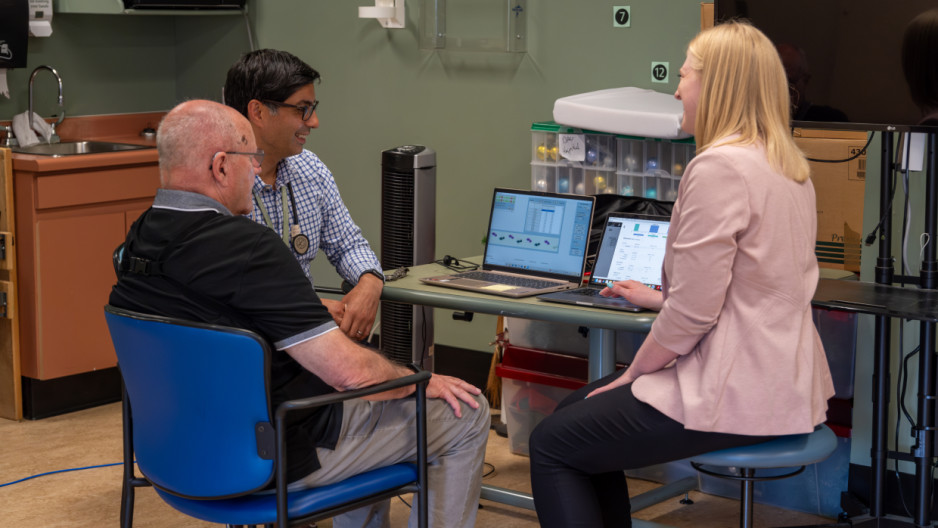
Led by St. Joseph’s geriatrician Dr. Jaspreet Bhangu and Western University rehabilitation scientist and physiotherapist Janelle Unger, PhD, the visionary 3FM Clinic is working to prevent falls before they happen.
“We know there are a number of factors that can cause an older adult to fall such as illness, medication side effects, balance and gait issues, cognitive impairment, visual changes and environmental hazards,” says Bhangu. “What we’re working to understand is how those factors together impact individual patients and their risk of falling.”
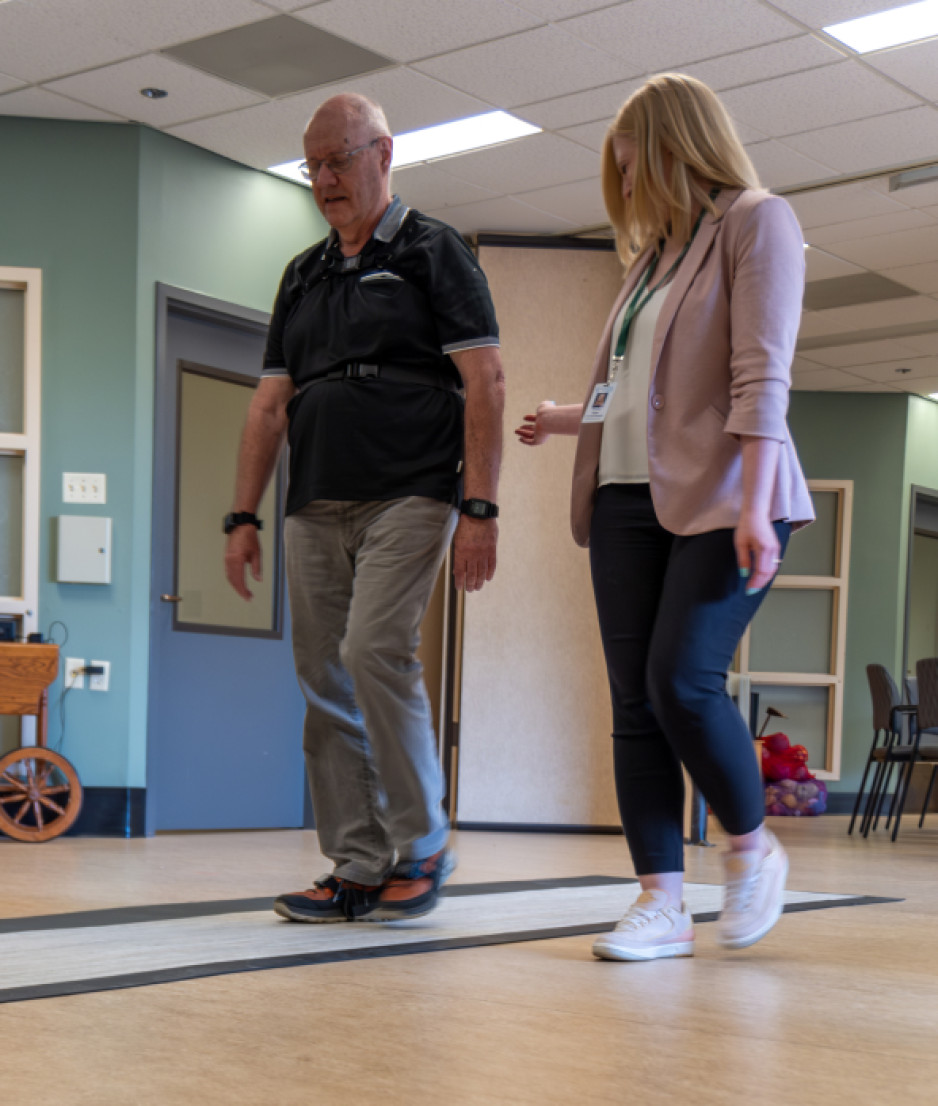
To do so, the 3FM Clinic team – one of the largest, most diverse teams of its kind in the country – completes a multi-step evaluation of patients:
- Nurses gather their medical history, current medications, functional abilities and personal goals.
- Physical therapists measure the patient’s gait (how they walk) and balance to understand their physical capabilities.
- Occupational therapists test their vision, cognitive function and identify issues that might hinder the individual’s ability to perform routine tasks safely.
- A geriatrician focuses on medical risk factors such as bone health, medications and cardiovascular health to help manage risks associated with aging. The team then creates a customized care plan that incorporates exercises, therapeutic interventions and educational strategies.
On the research side, Unger and her team in the RED Neuro Lab at St. Joseph’s Gray Centre for Mobility and Activity are leveraging artificial intelligence (AI) to predict falls more accurately.
“Traditional fall prediction models often rely on limited data and lack real-world input from clinicians and patients,” explains Unger. “By partnering with Bhangu and the clinical team, as well as the patients in the 3FM Clinic, we’re able to integrate clinical information with biomechanical data collected from wearable sensors known as inertial measurement units (IMUs).”
An IMU is a device that tracks and measures a person’s movement and orientation and provides valuable data on how that person moves and stays stable.
“We plan to use AI to analyze the data collected through the IMU’s and are working to create accurate fall prediction models,” says Unger. “This research, funded by Western’s Bone and Joint Institute, has the potential to improve care decisions, enhance preventive strategies and ultimately reduce the incidence of fall-related injuries and hospitalizations for our patients and people across the globe.”
By embracing innovative research and compassionate care, the 3FM Clinic is a model for future efforts in fall prevention and geriatric care, offering a safer, more independent future for older adults.
You can prevent falls too:
- Use assistive devices: Properly fitted walkers or canes provide essential support and stability.
- Fitted footwear: Shoes (not slippers or flip-flops) with appropriate tread and low heels help prevent slips and falls. They should also fit your feet.
- Home improvements: Improved lighting, clear walkways and assistive bathroom fixtures.
- Exercise: Participate in strength and balance exercises to enhance physical fitness.
- Medication reviews: Regularly have your medications reviewed to identify if you are at risk of falling.
Stephanie Marrocco recognized for exceptional student leadership
Stephanie Marrocco is the 2020 recipient of the Leadership Award for Fellows and Students. She is a PhD candidate working with Dr. Dalton Wolfe, at Parkwood Institute, a part of St. Joseph’s Health Care London. Her doctoral research focuses on practice patterns of physiotherapists to determine which practices are associated with the best possible outcomes in persons with spinal cord (SCI) and acquired brain injury (ABI). Her work involves mobilizing physiotherapists, hospital leadership, and researchers towards greater collaboration.
Marrocco is an invaluable part of her lab, helping to develop and implement experiential learning opportunities for Health Studies and Kinesiology students as well as mentoring students one on one. “She is an exceptional leader in all that she does, and is very deserving of this award,” says Dr. Cheryl Forchuk, Lawson Scientist and Marrocco’s nominator.
The Research 2 Practice (R2P) team at Parkwood Institute is endeavoring to establish a new model for the way research teams operate within a clinical environment. This involves embedding the team within the hospital and integrating research with clinical and teaching activities using implementation science and practice-based research methods. “Marrocco has been a true innovator in working alongside myself in developing this approach and has been integral in implementing this model. I was honoured to support her nomination,” says Dr. Wolfe, Lawson Scientist.
Marrocco is an exceptional leader and strong advocate of the “exercise as medicine” perspective. She co-led two program retreats for the Parkwood SCI Rehabilitation Program and has helped develop a national strategy for physical activity programming for persons with SCI. She is formerly a representative for the Lawson Association of Students and Fellows, the first representative of this committee placed at Parkwood Institute Research. Marrocco offers a student perspective and advocates for trainees at Parkwood Institute Research and maintains a leadership role on the R2P team.
“I am extremely grateful for this award. It is a good feeling to know that my peers and those I look up to are so supportive,” says Marrocco.