


Search
Search
2373 Search Results:
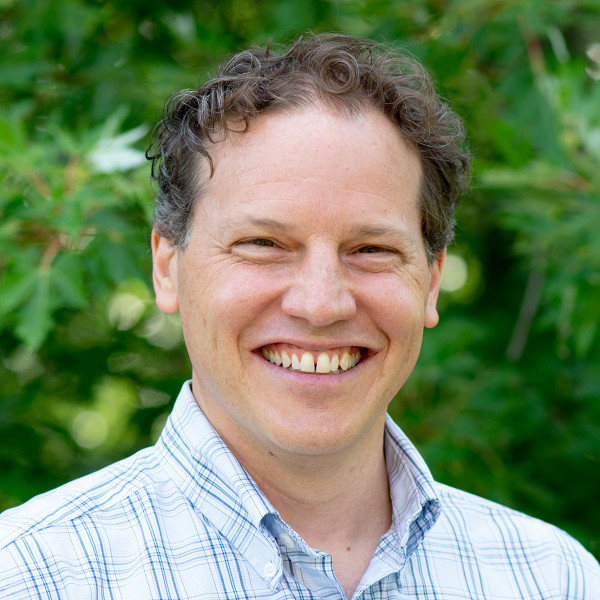
Michael Payne
Michael Payne, MD
Assistant Professor, Schulich School of Medicine and Dentistry
Key Areas of Focus:
Amputation
Phone:
519-685-4292 ext. 45018
Email:
Publications:
Accepting Grad Students:
Yes
About:
Dr. Michael Payne is a physiatrist at Parkwood Institute and an Associate Professor in the Department of Physical Medicine and Rehabilitation at the Schulich School of Medicine & Dentistry at Western University. He completed his undergraduate degree in Mechanical Engineering at Queens University followed by a Master’s degree in Sports Medicine and a medical degree at Western University, residency training in Physiatry at the University of Ottawa, and then a clinical fellowship in Australia.
Dr. Payne’s clinical practice has always focused on addressing mobility limitations across a wide range of physical impairments and has been the medical director of the Regional Amputee Rehabilitation program at St. Joseph’s Health Care London since 2009. Dr. Payne collaborates extensively with Dr. Susan Hunter from the School of Physical Therapy from Western University to address research questions centred around improving meaningful outcomes for people with limb loss or deficiencies. Specific interests include mobility outcome measurements, dysvascular amputation associated cognitive impairment, biomechanics, quality of life, gait abnormalities and falls.
Military and Veteran health research shared at Research Consortium meeting
Canadian researchers working to improve military and Veteran health met at St. Joseph’s Health Care London’s (St. Joseph’s) Parkwood Institute on December 4, 2017 for their fifth Research Consortium meeting.
The Research Consortium group, established in 2015, is led by Lawson researcher Dr. Don Richardson, Physician Clinical Lead at St. Joseph’s Operational Stress Injury Clinic (OSI Clinic). The group meets two to three times a year to provide updates on their projects and foster collaborative research partnerships, rotating between London, Hamilton and Toronto as host sites.
“Members of the military and Veterans have unique symptoms and treatment needs so it’s important that we engage in knowledge transfer with other researchers working with the same group of patients,” says Dr. Richardson. “The Research Consortium meetings are a great way to learn about recent projects from our peers and identify new avenues for collaboration with the goal of providing the best possible treatment outcomes for our patients.”
In addition to researchers from St. Joseph’s OSI Clinic, the Research Consortium group includes representatives from Defence Research and Development Canada, the Canadian Institute for Military & Veteran Health Research, the Canadian Armed Forces, the Centre for Addiction and Mental Health, Homewood Research Institute, Western University, University of Manitoba, McMaster University, University of Toronto, Ryerson University and Queens University.
St. Joseph’s OSI Clinic provides specialized mental health services to Veterans, members of the Canadian Armed Forces, the Royal Canadian Mounted Police (RCMP) and their families who are experiencing mental health challenges as a result of service. The OSI Clinic is one of ten outpatient clinics in a national network across the country funded by Veterans Affairs Canada.
At the meeting, Dr. Richardson provided an update on recent projects at St. Joseph’s OSI Clinic, including research to enhance the understanding of moral injury.
Moral injury refers to lasting emotional distress that can occur when military men and women are exposed to events that disturb or undermine moral beliefs about how people can be expected to behave. OSI clinicians reported that exposure to these events drastically changes their patients’ views of the world; causes them to question their religion, spirituality or human nature; and often leaves them feeling disconnected from their loved ones. The researchers will now collect additional data from clinicians across the OSI national network and from the Research Consortium group. Part of their investigation will explore the relationship between different kinds of traumatic events and moral injuries, and mental well-being.
Mobility and Activity
Researchers at Lawson are propelled by the people who will benefit from the best in complex rehabilitative science.
One in 10 Canadians has a mobility disability – and we’re laser-focused on discovering how to help people whose lives have been upended by spinal cord injuries, stroke, brain injuries, chronic pain, accidents, falls, trauma or degenerative disease.
Situated at the Gray Centre for Mobility and Activity within St. Joseph’s Health Care London’s Parkwood Institute, the region’s largest provider of rehabilitation and recovery health, we bring our research into practice using all the resources a health institute and teaching hospital can offer together.
We share our innovations with the world – and we share the world’s research too, as we’ve created and curated the biggest database of international research on stroke, traumatic brain injury and spinal cord injuries.
Lawson mobility researchers comprise one of the largest and most accomplished teams in the country: including a research chair, established world-class scientists, emerging researchers, dozens of trainees and more than 100 students.
Our work helps people around the world lead active and healthy lives. Read on to discover where it will lead you.
Lawson leads mobility and activity research:
Mobilizing hospital-based research in the battle against COVID-19
The COVID-19 pandemic is proving to be one of the most pressing health challenges of our time. With a rising number of cases and deaths worldwide, there’s a global urgency to finding a solution.
As the research institute of London Health Sciences Centre (LHSC) and St. Joseph’s Health Care London, Lawson Health Research Institute excels in rapid response research and is uniquely positioned to tackle this problem from within hospital walls.
Our researchers belong to a health system at the forefront of the pandemic. With close proximity to patients and access to samples, they are mobilizing to address COVID-19.
“Lawson researchers include clinicians directly involved in the treatment of COVID-19 patients, as well as laboratory-based scientists and those with other expertise related to the pandemic response,” says Dr. David Hill, Scientific Director at Lawson and Integrated Vice President at LHSC and St. Joseph’s. “They are eager to contribute a solution and are combining their knowledge to address this issue from all angles.”
Already, Lawson research teams are initiating projects ranging from pre-clinical studies to clinical trials. They are planning to explore diagnosis, prevention and treatment of the disease, as well as long-term and mental health impacts. An immediate goal is to partner with other research hospitals to improve outcomes for COVID-19 patients around the world.
There are numerous COVID-19 studies underway at Lawson and many more going through the necessary approval processes. Recognizing the importance of a rapid response to this pandemic, Lawson’s Administration team is working to fast-track approval of the studies.
Lawson also offered a special internal COVID-19 funding competition to assist our researchers in their efforts. Lawson’s COVID-19 Pandemic Response Internal Research Fund supports projects that are identified as having the potential to impact the management of this pandemic and those that enhance our understanding of the pathophysiology of COVID-19. See the results of this competition and the 14 funded projects, for a total of more than $202,000 invested.
While there is much to learn about COVID-19 and its impact on human health and our health care system, Lawson researchers are tackling the disease head-on.
How can you support COVID-19 research and clinical care?
Research at Lawson can be supported through three hospital foundations. With an outpouring of support from our community, the foundations are collecting donations to support our hospitals through this challenging time. Learn more about donating:
- St. Joseph’s Health Care Foundation – St. Joseph’s Health Crisis Fund
- London Health Sciences Foundation - COVID-19 Response Fund
- Children’s Health Foundation - COVID-19 Response Fund
Learn more about COVID-19 research at Lawson:
Scientist
… MOUNT HOPE CENTRE r. SI JOSEPHs H EALTH C AR E LONDONFOR LONG TERM CARE i 2 VISION, … complete confidence in the care we provide, and make a lasting difference in the quest to live fully. Our Mission We help all who come to us for … complete confidence in the care we provide, and make a lasting difference in the quest to live fully. Our Mission We …
MOUNT HOPE CENTRE r. SI JOSEPHs H EALTH C AR E LONDONFOR LONG TERM CARE i 2 VISION, MISSION, VALUES Mount Hope Centre for Long Term Care Our Vision We earn complete confidence in the care we provide, and make a lasting difference in the quest to live fully. Our Mission We help all who come to us fo...
… form is to be completed by the Department Chief to request a change to an existing clinical appointment for more than one Credentialed Professional Staff (Professional Staff) in their department. The … form is to be completed by the Department Chief to request a change to an existing clinical appointment for more …
` MULTI-APPOINTMENT CHANGE SUPPORT FORM This form is to be completed by the Department Chief to request a change to an existing clinical appointment for more than one Credentialed Professional Staff (Professional Staff) in their department. The department is expected to meet with each Professional S...
… form is to be completed by the Department Chief to request a change to an existing clinical appointment for more than one Credentialed Professional Staff (Professional Staff) in their department. Department: … form is to be completed by the Department Chief to request a change to an existing clinical appointment for more …
` MULTI-APPOINTMENT CHANGE SUPPORT FORM This form is to be completed by the Department Chief to request a change to an existing clinical appointment for more than one Credentialed Professional Staff (Professional Staff) in their department. Department: ________________________________ Division: ____...
… 2019 — MARCH 31, 2022 THIS AGREEMENT effective as of the 1st day of April, 2019 Between: (the “LHIN”) AND (the “HSP”) … agreement, entered into pursuant to the Local Health System Integration Act, 2006 (“LHSIA”), reflects and supports … HSP to, separately, jointly, and in cooperation with other stakeholders, work diligently and collaboratively toward the …
1/41 MULTI-SECTOR SERVICE ACCOUNTABILITY AGREEMENT APRIL 1, 2019 MARCH 31, 2022 MULTI-SECTOR SERVICE ACCOUNTABILITY AGREEMENT April 1, 2019 to March 31, 2022 SERVICE ACCOUNTABILITY AGREEMENT with Effective date: April 1, 2019 Index to Agreement ARTICLE 1.0 DEFINITIONS & INTERPRETATION 3 ARTICLE 2....
… Welcome to the Musculoskeletal Rehabilitation Unit The next step in your Rehabilitation Journey What to Bring Other Information Parkwood Institute CARING FOR THE BODY, MIND & SPIRIT SINCE 1869 CARING … MIND & SPIRIT SINCE 1869 Renowned for compassionate care, St. Joseph’s is one of the best academic health care …
Welcome to the Musculoskeletal Rehabilitation Unit The next step in your Rehabilitation Journey What to Bring Other Information Parkwood Institute CARING FOR THE BODY, MIND & SPIRIT SINCE 1869 CARING FOR THE BODY, MIND & SPIRIT SINCE 1869 Renowned for compassionate care, St. Josephs is one of the be...
… m ST::JOSEPH'S A publication of St. Joseph’s Health Care London WINTER 2020 | ISSUE 01 BORN … 1 201 ISSUE www.sjhc.london.on.ca ~ ~ OSEPH'S 11 C ~~ S!JOSEPHs HEALTH CARE LONDON 01 A publication of St. Joseph’s … m ST::JOSEPH'S A publication of St. Joseph’s Health Care …
m ST::JOSEPH'S A publication of St. Josephs Health Care London WINTER 2020 | ISSUE 01 BORN TO MOVE St. Josephs leads the way for those facing mobility challenges with the creation of The Gray Centre for Mobility and Activity. 1 201 ISSUE www.sjhc.london.on.ca ~ ~ OSEPH'S 11 C ~~ S!JOSEPHs HEALTH CAR...
… ’A publication of St. Joseph s Health Care London FALL 2020 | ISSUE 02 NEW OPTIONS IN AN OLD BATTLE Pain specialists at St. Joseph's Health Care London are part of a new, … London, ON. N6A 4V2 519 646-6100 www.sjhc.london.on.ca stjosephslondon stjosephslondon MY ST. JOSEPH’S IS St. …
A publication of St. Joseph s Health Care London FALL 2020 | ISSUE 02 NEW OPTIONS IN AN OLD BATTLE Pain specialists at St. Joseph's Health Care London are part of a new, collaborative approach to improve care for a growing number of people living with sickle cell disease. 1 ~ ~ OSEPH'S n Cl A public...
… ’ Our entrances have m S1: A publication of St. Joseph s Health Care London WINTER 2021 | ISSUE 03 Our … SAFE become a gateway of safety to protect our patients and sta . It's a responsibility more than 160 screeners take … in the fght against COVID-19. 08 ~ ~ OSEPH'S n CJ (yj~ S!JOSEPHs HEALTH CARE LONDON 03 A publication of St. Joseph’s …
Our entrances have m S1: A publication of St. Joseph s Health Care London WINTER 2021 | ISSUE 03 Our entrances have KEEPING IT SAFE become a gateway of safety to protect our patients and sta . It's a responsibility more than 160 screeners take very seriously. These "perimeter protectors" are vital ...
… ST::JOSEPH'S A publication of St. Joseph’s Health Care London FALL 2021 | ISSUE 04 A … climbing into her recovery. 1 2 V,l~ OSEPH'S n CJ (yJ~ S!JOSEPHs HEALTH CARE LONDON 04 A publication of St. Joseph’s … ON. N6A 4V2 519 646-6100 ext. 66034 www.sjhc.london.on.ca stjosephslondon stjosephslondon MY ST. JOSEPH’S IS St. …
ST::JOSEPH'S A publication of St. Josephs Health Care London FALL 2021 | ISSUE 04 A LITTLE FALL TO A BIG CLIMB With help from her care team at Parkwood Institute, Miranda Scott was able to reach great heights fguratively and literally by incorporating wall climbing into her recovery. 1 2 V,l~ OSEP...
… My St. Josephs Magazine Spring 2024 …
… ’ m ST.JOSEPH'S ,.., ' , \ .. LAUNr.Y PRQprY L.f'J' O,P.t/300 A publication of St. Joseph s Health Care London SPRING 2022 | ISSUE 05 … ON. N6A 4V2 519 646-6100 ext. 66034 www.sjhc.london.on.ca stjosephslondon stjosephslondon MY ST. JOSEPH’S IS St. …
m ST.JOSEPH'S ,.., ' , \ .. LAUNr.Y PRQprY L.f'J' O,P.t/300 A publication of St. Joseph s Health Care London SPRING 2022 | ISSUE 05 HOVERING HOLOGRAMS HONE SURGEONS' SKILLS Surgical visionary Dr. George Athwal at St. Josephs Hospital has introduced a revolutionary new tool into operating rooms in C...
… YOur guide to Breast assessment Breast Care Program St. Joseph’s Hospital 268 Grosvenor St. London, ON N6A 4V2 … YOur guide to Breast assessment Breast Care Program St. Joseph’s Hospital 268 Grosvenor St. …
YOur guide to Breast assessment Breast Care Program St. Josephs Hospital 268 Grosvenor St. London, ON N6A 4V2 THE BEST IN BREAST CARE The Breast Care Program at St. Josephs Health Care London provides a confidential, coordinated, specialized breast assessment service. The goal of the program is to m...
… Nasal Muscle Exercises Some published evidence suggests that exercising your nasal muscles can help improve … to keep the nasal airway open and provide relief of nasal obstruction. The exercise program is a two-step program. The first exercises are to improve control …
Nasal Muscle Exercises Some published evidence suggests that exercising your nasal muscles can help improve breathing through your nose, and in some cases, can improve breathing to the point that you no longer need surgery. If the nasal muscles arent used during breathing, the sides of the nose can ...
National award honours innovator Frank Prato’s excellence in medical physics
Dr. Frank Prato is a man of many firsts:
First in Canada to conduct magnetic resonance brain imaging. A pioneer in magnetic resonance cardiac imaging. Driving force behind the installation of Canada’s first PET/MR scanner. Founder of the Canadian Organization of Medical Physicists (COMP) while president of the Canadian College of Medical Physicists.
And while Dr. Prato admits to a competitive streak that constantly propels him to break new ground in medical physics, the renowned, prolific researcher is keen to note these innovations have been part of a larger team effort.
“My career has been filled with opportunities to work with and train some spectacular scientists who have made major contributions across Canada and around the world,” he says. “I’m proud of the whole group that has developed over the years and the support St. Joseph’s has provided.”
Chief Medical Physicist at St. Joseph’s Health Care London (St. Joseph’s), Dr. Prato has been awarded the 2024 COMP Gold Medal, the organization’s highest award for outstanding career achievement.
“Dr. Prato’s ground-breaking work in the field of medical physics has not only advanced the scientific community but also significantly impacted patient care in Canada and beyond,” says COMP President Boyd McCurdy, “His pursuit of innovation and excellence exemplifies the highest standards of our profession, and we celebrate his outstanding contributions to medical physics with admiration and gratitude.”
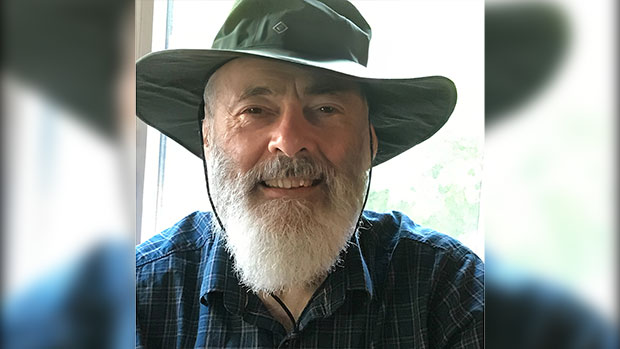
Dr. Prato is also Assistant Scientific Director and Imaging Program Leader at Lawson Health Research Institute (Lawson) and professor of medical imaging and medical biophysics at Western University.
“I have worked with Frank for 36 years now and have come to recognize him as one of the finest people I know,” says Dr. Ting-Yim Lee, Director of PET/CT Research at Lawson, medical physicist at St. Joseph’s Hospital, and one of the nominators of Dr. Prato for the award.
“Frank is unfailingly helpful and authentic, a great listener and a tenacious problem-solver. He demonstrates excellence and professionalism in medical physics locally, nationally and internationally.”
Dr. Lee cites Dr. Prato’s leadership in being “at the forefront of numerous international innovations in nuclear medicine and diagnostic radiology.”
Throughout his 48 years as a medical physicist, Dr. Prato has been inspired by the potential of technology’s reach into human health.
“I’ve always wanted to work in an area where we can do research, with a vision of what’s going to be important in patient health. I get excited about being on the leading edge of discovery that’s embedded in patient care.”
Critical advancements in nuclear medicine and diagnostic radiology, thanks to the work of Dr. Prato and his St. Joseph’s/Lawson team, have included:
- Introducing the first bone mineral density imaging procedure on a patient in Canada, a tool now essential for managing osteoporosis.
- Performing the first magnetic resonance brain imaging in Canada, setting a national standard.
- Pioneering magnetic resonance cardiac imaging techniques, enhancing the understanding of myocardial scarring and blood flow assessment.
- Introducing the first PET/CT and PET/MR scanners in Canada, revolutionizing molecular imaging and proving the economic value of advanced imaging technologies.
- Imaging the brains of premature infants, a world first.
- Developing Canada’s first self-sustaining cyclotron infrastructure.
- Conducting the world’s first MRI-compatible, high-resolution brain PET scan.
- Early diagnosis and treatment of dementia, mental illness and prostate cancer.
Dr. Prato’s leadership extends beyond his technical achievements. As the founder of COMP, an organization that now includes more than 800 professionals, he played a crucial role in establishing the organization, advocating for medical physicists' independent voice and professional growth.
His tenure as President and board member of the Canadian College of Physicists in Medicine (CCPM) was marked by significant advancements, including enhancing certification processes and establishing reciprocity with the American Board of Medical Physics. Dr. Prato also received the Valuable Service Award from CCPM in 2002 and was named a Fellow of COMP in 2013.
Earlier this spring, Dr. Prato received a Dean’s Award of Excellence for Research Faculty from Western University’s Schulich School of Medicine & Dentistry. He is also the sole Canadian to have won the d'Arsonval Award, an international honour from the Bioelectromagnetics Society.
A dedicated mentor, Dr. Prato has guided more than 60 Masters of Science students, PhD students and Post-Doctoral Fellows, many of whom have won awards and secured prominent positions in the field. His mentorship has been instrumental in the success of numerous scientists within the Imaging Program at Lawson, contributing to a legacy of innovation for years to come.
“At 78 years old,” he says, “I am pleased to say I have achieved things at St. Joseph’s that will far outlast me.”
National research collaboration leads to Health Canada approval of life-saving radioisotope production
A Canadian consortium, which includes Lawson Health Research Institute (Lawson), TRIUMF, BC Cancer and Centre for Probe Development and Commercialization, is the first in the world to receive regulatory approval to produce the world’s most commonly used medical isotope, technetium-99m (Tc-99m), using small particle accelerators known as cyclotrons.
Tc-99m is used in tens of millions of nuclear medicine procedures globally each year. These include cancer scans, cardiac tests, as well as several other diagnostic procedures. As the world moves away from uranium-based nuclear reactors, there has been growing concern in the medical community of a global shortage of these life-saving compounds. This development helps secure a domestic supply of Tc-99m for Canadian patients.
For over a decade, Dr. Michael Kovacs, Director, Lawson Cyclotron & PET Radiochemistry Facility, and Steven Foster, Business Manager, Lawson Imaging, have been working on research that has contributed significantly to this major development. They have demonstrated the successful production of Tc-99m on a standard hospital-based cyclotron at Lawson, confirming that this technology can be used by almost half of the world’s already installed cyclotrons. Clinical trials were conducted across Canada and locally at St. Joseph’s Health Care London.
“In 2011, we received federal funding to see if we could develop a technology to produce Tc-99m in hospital cyclotrons,” explains Dr. Kovacs. “Canada’s Chalk River nuclear reactor was one of the world’s largest suppliers, and it was set to close in 2016. Cyclotron facilities offer a greener, safer, more sustainable approach for producing critical medical isotopes. Our goal was to find an alternative to the traditional means of producing this isotope, and we have been successful.”
Nuclear medicine is a functional imaging technique, meaning that it images biological function. Medical isotopes are converted to radiopharmaceuticals which get injected into the patient during a procedure. According to the specific biological properties of the isotope, they move throughout the body, rendering a 3D map of where the isotope has gone. This gives researchers and medical professionals valuable information of how various physiological processes are performing.
“Canada is a global leader in nuclear imaging technology. With the help of our collaborators across the country, we have home-grown technology to produce commercial quantities of Tc-99m on common cyclotrons,” adds Mr. Foster. “This technology has been patented and licensed to ARTMS Inc., a spin-off from the consortium, and is now being commercialized and sold throughout the world.”
The process was approved by Health Canada in November, 2020, and is expected to be deployed in British Columbia by 2022.
Scientist
Nature's healing power
Using virtual technology, St. Joseph’s Health Care London is bringing the outdoors in for forensic mental health care patients.

Imagine sitting on a white sandy beach in a tropical location. The sun warms your face and a gentle breeze ripples across the water when, out of the corner of your eye, you spot a sea turtle slowly and curiously approaching.
You turn your gaze towards this beautiful creature and watch in wonder. You’ve never seen a sea turtle up close like this before.
For some, this type of experience is part of a dream vacation, attainable with enough money or imagination. But for many patients at St. Joseph’s Health Care London’s Southwest Centre for Forensic Mental Health Care (Southwest Centre) – including those not yet well enough to leave the facility – a new virtual-reality connection to nature offers a missing link in their journey towards recovery.
Immersive experiences in nature have been linked to positive mental health outcomes and a healthier sense of self – a benefit that staff researchers at Southwest Centre call eco-spirituality.
Occupational therapists Jared Scott, Clark Heard, and spiritual care practitioner Stephen Yeo, have explored just what this means for patients. Through a novel study published in 2022, Southwest Centre patients were provided with opportunities to become immersed in nature in the community, with tremendous therapeutic results.
The patients experienced a stronger connection with nature, a chance for open reflection and relaxation, and a restorative experience that provided a sense of peace and personal significance.
"There's something very human about connecting with, or in, nature ... It offers a sense of connectedness, whether to creativity, to beauty or the transcendent." spiritual care practitioner Stephen Yeo
The research team wondered if these experiences could be replicated in a virtual reality (VR) environment for patients who aren’t yet able to leave the facility.
“We realized we can translate these types of experiences through VR goggles where the patient has the ability to make their choices on how to engage,” says Heard. “This enables someone to experience something that's a little harder to touch in real life.”
For example, if the patient wishes to sit and reflect on a beach, they can. If they wish to be immersed in the jungle and experience giraffes and elephants walking among them, the choice is theirs.
“There’s something very human about connecting with, or in, nature,” adds Yeo. “True, virtual reality is not the same as the real thing, but we believe it offers a sense of connectedness, whether to creativity, to beauty or the transcendent. We see how it enlivens patients, even in sometimes very simple, subtle ways.”
Heard believes that this type of immersive experience nurtures the innate intellectual curiosity present in everyone.
“The first time people try it and look over their shoulder, they realize it's a full 360-degree experience. They look above and there are birds flying over them the same as anywhere else,” he explains.
Ultimately, Heard and Yeo believe the power and innovative experience of eco-VR is encouraging discovery in patients, energizing them at an intellectual and spiritual level.
With the purchase of VR equipment made possible through community support from donors to St. Joseph’s Health Care Foundation, the team has embarked on an eco-VR study, looking at what patients experience via VR and how that participation impacts their care journey. They are exploring with patients whether VR immersion in nature helps them cope with being in hospital at a difficult time in their lives.
Far beyond forensic mental health care, the answer just may open the door to a world out of reach for many others receiving care in various settings.
Psychiatry at Southwest Centre for Forensic Mental Health Care
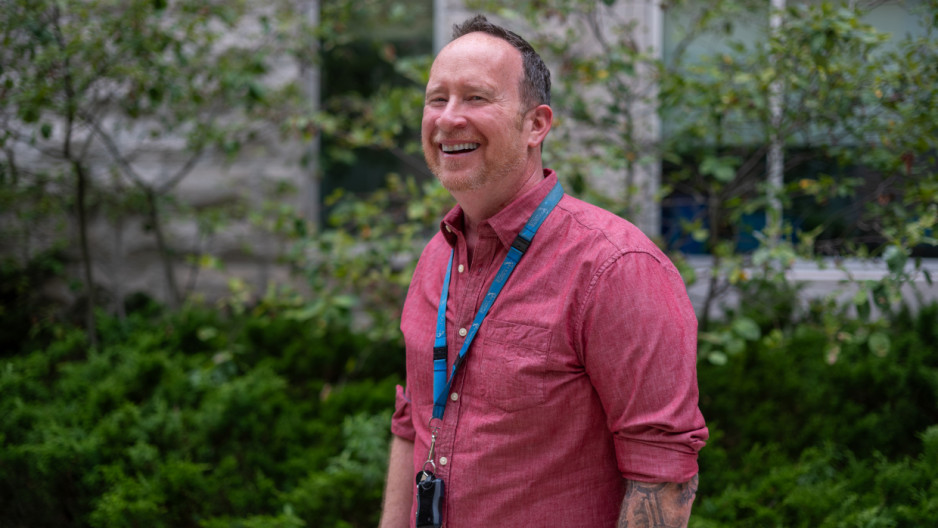
St. Joseph’s Health Care London’s Southwest Centre for Forensic Mental Health Care (Southwest Centre), located in Elgin County, is devoted to caring for people with a mental illness who have also come into contact with the criminal justice system.
Encompassing a recovery philosophy of care, the state-of-the-art building provides a healing environment that promotes each individual’s journey of recovery.
The Forensic Psychiatry Program at Southwest Centre includes assessment, treatment and rehabilitation programs, and an outpatient Forensic Outreach Team that serves Southwestern Ontario. Through intensive work with their care teams, patients develop new skills needed to successfully reintegrate back into their communities.