


Search
Search
675 Search Results:
London scientists clinch $2 million in federal funding to develop better imaging tools for brain disease
Lawson Health Research Institute has been awarded over $2 million in federal funding for a project focusing on two unique medical imaging systems designed to give unparalleled insight into brain function and disease.
The Right Honourable Justin Trudeau, Prime Minister of Canada, announced more than $518 million in research infrastructure support through the Canada Foundation for Innovation (CFI).
“Canada's researchers and scientists are some of the brightest and most skilled in the world. These investments will ensure that they have the cutting-edge laboratories and equipment needed to help us build a Canada that is healthier, greener, and more competitive," says The Rt. Hon. Justin Trudeau, Prime Minister of Canada.
In a live conversation, the Honourable François-Philippe Champagne, Minister of Innovation, Science and Industry, shared more about how the funding will support 102 state-of-the-art projects at 35 post-secondary institutions and research hospitals across the country - helping Canada remain at the forefront of exploration, innovation and discovery.
Image
The first system is a head-only PET (positron emission tomography) insert that can be placed in any clinical MRI machine. Combining the molecular specificity of PET with the structural and functional capabilities of MRI, the possibilities for brain imaging will be greatly enhanced. The head-only PET insert being tested in London has been developed by Cubresa Inc., located in Winnipeg, Manitoba.
Image

For example, better diagnosis of different forms of dementias would be possible and researchers could closely compare protein abnormalities in the brain with cognitive function. The low radiation dose allows for long-term studies investigating changes in the brain and neuroinflammation that can lead to major psychiatric diseases and cognitive degeneration or disability.
The second system uses portable, state-of-the-art optical imaging to increase the reliability of bedside brain monitoring to provide rapid assessment of brain health in restrictive environments.
“We believe this technology will demonstrate how biomedical optics can improve neurological outcome for surgery and patients in intensive care, provide an accessible technology for assessing neurovascular health, and become a clinically relevant tool for monitoring changes in brain function,” says Dr. St. Lawrence.
With current systems, the type of data is limited and extremely vulnerable to signal contamination from the scalp which can overshadow signals from the brain. Using the team’s specialized detection approach, the scalp signal contributions could be greatly reduced to get more accurate information on markers of brain activity, such as cerebral blood flow and energy metabolism.
The team will study use of the system in surgical and intensive-care settings to monitor for cerebral ischemia and metabolic stress, which are the major causes of brain injury. They will also monitor treatment in patients with schizophrenia and study dysfunction in the brain associated with negative symptoms, as cognitive impairment deteriorates with age for some people with the disease. Another goal is to develop a brain-computer interface for patients who are incapable of physical communication.
“With this funding, we can develop a truly unique advancement that has the potential to test the limits of optics for brain applications,” adds Dr. Thiessen.
These two imaging platforms build on previous investments in Lawson Imaging that now exceed over $40 million in research funds since the initial CFI support in hybrid imaging in 2007. London is home to Canada’s first whole body PET/MRI scanner that was installed at St. Joseph’s Hospital, part of St. Joseph’s Health Care London.
Scientist
London scientists key players in national dementia strategy
LONDON, ON – Researchers in London have been awarded $1.345 million over five years through the second phase of the Canadian Consortium on Neurodegeneration in Aging (CCNA), announced today as part of Canada’s national dementia strategy. CCNA is a collaborative research program tackling the challenge of dementia and other neurodegenerative illnesses.
Dr. Manuel Montero-Odasso, Scientist at Lawson Health Research Institute, is world renowned for his findings on the relationship between cognition and mobility in the elderly, and gait as a predictor of frailty and dementia. He leads the Mobility, Exercise and Cognition (MEC) Team in London, comprised of top researchers in the areas of mobility, exercise and brain health.
“Evidence from other countries with national dementia strategies shows that coordinated, targeted efforts at the national level improves results for all aspects of dementia care and also for research,” says Dr. Montero-Odasso, also a geriatrician and Director of the Gait and Brain Lab at Parkwood Institute, a part of St. Joseph’s Health Care London.
CCNA was purpose-built to synergize dementia research within the Canadian context. Phase I saw the creation of infrastructure fostering collaboration amongst Canadian researchers, and there are now 20 teams built around important research topics.
“This kind of effective national collaboration by scientists and clinicians from many disciplines gives the CCNA a cutting edge in research, prevention, treatment and management of all forms of dementia,” explains Dr. Montero-ODasso. “We created a national network of researchers form west to east coast with a high level of expertise to deliver lifestyle interventions to improve cognition and slow down progression to dementia. I feel privileged working with such excellent investigators and leading this important endeavour locally.”
The MEC team has several projects in the works, but the majority of the new funding is to complete the SYNERGIC Trial, SYNchronizing Exercises and Remedies on Gait and Cognition.
This first-in-the-world clinical study is testing a triple intervention aimed at treating Mild Cognitive Impairment (MCI) and delaying the onset of dementia. The SYNERGIC Trial incorporates physical exercises and cognitive training, along with vitamin D supplementation to determine the best treatment for improving mobility and cognition.
“We are looking at how interventions will work together and targeting cognitive decline at its earliest stage – individuals with MIC,” explains Dr. Montero-Odasso. “Both physical and cognitive exercises have shown promising effects for maintaining cognition, while vitamin D deficiency is associated with cognitive decline.”
A professor at Western University’s Schulich Medicine & Dentistry, Dr. Montero-Odasso partners with researchers from across the city including Dr. Rob Bartha, imaging scientist at Schulich Medicine & Dentistry and Robarts Research Institute at Western University, and Dr. Kevin Schoemaker who leads the Laboratory for Brain and Heart Health.
Study participants in the SYNERGIC Trial are asked to complete an individualized and progressive routine of exercises and cognitive training three times a week for six months, with one final assessment at 12 months. The main site for the study is Parkwood Institute with the physical exercises taking place at the Labatt Health Sciences Building on the Western campus.
“Our preliminary analysis is giving us a strong indication that a multimodal approach, combining physical exercise, cognitive training and supplementation, has a synergistic effect. It seems the whole is greater than the sum of its parts,” says Dr. Montero-Odasso.
To date, 138 research patients has been recruited across multiple sites in Canada. Individuals over 60 years old with mild cognitive impairment without dementia are eligible for this clinical trial. Those interested in participating are encouraged to contact a Lawson research coordinator at 519-685-4292 ext. 42910.
Dr. Montero-Odasso adds that “as our population ages, a comprehensive strategy is vital to ensure the growing number of those living with dementia receive the care and support they deserve. Over half a million Canadians are currently living with dementia. By 2031, this number is expected to nearly double.” More than one third of dementia cases might be preventable.
'In CCNA’s Phase II, researchers are working on analyzing the overall health of every patient in a large clinical cohort study, COMPASS-ND. This information will be used to enhance understanding of how changes in the brain affect dementia severity and ways to reduce and prevent this through lifestyle changes. Lawson is the leading recruitment site for COMPASS-ND and the London team will be instrumental in the larger lifestyle interventions moving forward.
CCNA is funded by the Government of Canada, Canadian Institutes of Health Research (CIHR) and other funding partners.
-30-
About Lawson Health Research Institute
Lawson Health Research Institute is one of Canada’s top hospital-based research institutes, tackling the most pressing challenges in health care. As the research institute of London Health Sciences Centre and St. Joseph’s Health Care London, our innovation happens where care is delivered. Lawson research teams are at the leading-edge of science with the goal of improving health and the delivery of care for patients. Working in partnership with Western University, our researchers are encouraged to pursue their curiosity, collaborate often and share their discoveries widely. Research conducted through Lawson makes a difference in the lives of patients, families and communities around the world. To learn more, visit www.lawsonresearch.ca.
Media Contacts
Celine Zadorsky
Senior Media Relations Consultant
Communications & Public Engagement
T: 519-685-8500 ext. 73502
Celine.zadorsky@lhsc.on.ca
Machine learning could predict medication response in patients with complex mood disorders
Mood disorders like major depressive disorder (MDD) and bipolar disorder are often complex and hard to diagnose, especially among youth when the illness is just evolving. This can make decisions about medication difficult. In a collaborative study by Lawson Health Research Institute, The Mind Research Network and Brainnetome Center, researchers have developed an artificial intelligence (AI) algorithm that analyzes brain scans to better classify illness in patients with a complex mood disorder and help predict their response to medication.
Image
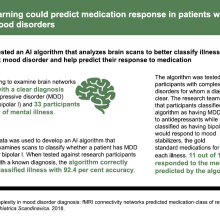
The full study included 78 emerging adult patients from mental health programs at London Health Sciences Centre (LHSC), primarily from the First Episode Mood and Anxiety Program (FEMAP). The first part of the study involved 66 patients who had already completed treatment for a clear diagnosis of either MDD or bipolar type I (bipolar I), which is a form of bipolar disorder that features full manic episodes, as well as an additional 33 research participants with no history of mental illness. Each individual participated in scanning to examine different brain networks using Lawson’s functional magnetic resonance imaging (fMRI) capabilities at St. Joseph’s Health Care London.
The research team analyzed and compared the scans of those with MDD, bipolar I and no history of mental illness, and found the three groups differed in particular brain networks. These included regions in the default mode network, a set of regions thought to be important for self-reflection, as well as in the thalamus, a ‘gateway’ that connects multiple cortical regions and helps control arousal and alertness.
The data was used by researchers at The Mind Research Network to develop an AI algorithm that uses machine learning to examine fMRI scans to classify whether a patient has MDD or bipolar I. When tested against the research participants with a known diagnosis, the algorithm correctly classified their illness with 92.4 per cent accuracy.
The research team then performed imaging with 12 additional participants with complex mood disorders for whom a diagnosis was not clear. They used the algorithm to study a participant’s brain function to predict his or her diagnosis and, more importantly, examined the participant’s response to medication.
“Antidepressants are the gold standard pharmaceutical therapy for MDD while mood stabilizers are the gold standard for bipolar I,” says Dr. Elizabeth Osuch, a clinician-scientist at Lawson, medical director at FEMAP and co-lead investigator on the study. “But it becomes difficult to predict which medication will work in patients with complex mood disorders when a diagnosis is not clear. Will they respond better to an antidepressant or to a mood stabilizer?”
The research team hypothesized that participants classified by the algorithm as having MDD would respond to antidepressants while those classified as having bipolar I would respond to mood stabilizers. When tested with the complex patients, 11 out of 12 responded to the medication predicted by the algorithm.
“Machine learning is an approach that learns in a data-centric way, providing information that can be used to predict future data sets. In this case, that’s the prediction of MDD from bipolar I,” says Dr. Vince Calhoun, President of The Mind Research Network; Distinguished Professor, Departments of Electrical and Computer Engineering, Neurosciences, Computer Science, and Psychiatry at The University of New Mexico; and co-lead investigator on the study. “There are multiple layers of algorithms in this project. The first layer includes an approach that automatically extracts brain networks from the data provided and the second layer includes automatically identifying which combinations of networks are most sensitive or predictive of MDD and bipolar I.”
Image

Above: Dr. Vince Calhoun
“This study takes a major step towards finding a biomarker of medication response in emerging adults with complex mood disorders,” says Dr. Osuch. “It also suggests that we may one day have an objective measure of psychiatric illness through brain imaging that would make diagnosis faster, more effective and more consistent across health care providers.”
Psychiatrists currently make a diagnosis based on the history and behavior of a patient. Medication decisions are based on that diagnosis. “This can be difficult with complex mood disorders and in the early course of an illness when symptoms may be less well-defined,” says Dr. Osuch. “Patients may also have more than one diagnosis, such as a combination of a mood disorder and a substance abuse disorder, further complicating diagnosis. Having a biological test or procedure to identify what class of medication a patient will respond to would significantly advance the field of psychiatry.”
The study, “Complexity in mood disorder diagnosis: fMRI connectivity networks predicted medication-class of response in complex patients,” is published online in Acta Psychiatrica Scandinavica. Local support included donor funding through London Health Sciences Foundation.
Learn more about this research:
Image
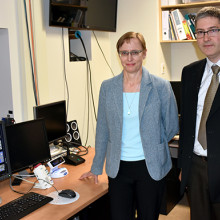
Above: Drs. Elizabeth Osuch and Jean Théberge, Lawson scientists
Scientist
… Entrance 4 Legend On the Go / Tim Horton’s $ $ ATM Lab Test Centre Lab Level 0 Parking Pay Station Lawson $ 1 … Entrance 4 Legend On the Go / Tim Horton’s $ $ ATM Lab Test Centre Lab Level 0 Parking Pay Station Lawson $ 1 …
PARKING GARAGE 4 2 Enter (Parking) Enter (Parking) Exit (Parking) PDAP B4-602 program mapMAR2016 Lab 1 Tunnel $ $ $ Link Level 1 $ $ Link Level 1 2 Grosvenor Entrance 2 4 Cheapside Entrance 4 Legend On the Go / Tim Hortons $ $ ATM Lab Test Centre Lab Level 0 Parking Pay Station Lawson $ 1 Grosvenor ...
Maternal diabetes impacts oxygen flow in umbilical cord, study suggests
A new Lawson Health Research Institute study published in the journal Placenta has found a unexpected difference in the impact of pre-existing diabetes versus gestational diabetes on oxygen flow in the umbilical cord during pregnancy.
Currently, tests done very close to the end of a high-risk pregnancy can’t reliably measure the full health of the placenta and baby. Women with complications like diabetes, high blood pressure and an elevated BMI (body mass index), among others, are therefore generally advised to induce labour before the 40-week mark.
“This study explored some of these high-risk pregnancies to better understand what occurs or changes in the placenta with the goal of eventually developing better tests,” says Dr. Barbra de Vrijer, High-Risk Obstetrician and Head of Maternal Fetal Medicine at London Health Sciences Centre and Scientist at Lawson.
The St. Joseph’s Health Care London Perinatal Database, containing information on nearly 70,000 births between 1990 and 2011, provided the data for the study, including birth weight, placental weight and umbilical cord oxygen levels.
The study found that the number of blood vessels in the placenta (called vascularity) likely impacts oxygen in the umbilical vein, causing a slight increase in mothers with gestational diabetes, but a decrease in those with pre-existing diabetes.
Surprisingly, this new research indicates that hyper-vascularity in diabetic placentas (too many blood vessels) may actually decrease oxygen transfer, potentially leading to more risk to the baby.
“When there is an increase in placental vascularity, crowding of the blood vessels can occur constraining their effective absorbing surface area for oxygen uptake from maternal blood within the placenta,” says Dr. Bryan Richardson, Scientist at Lawson.
Another finding of the study confirmed earlier research showing that in women with both pre-existing and gestational diabetes, who tend to have larger babies, the placentas were also disproportionately larger, which is an indicator of decreasing placental efficiency, or the birth to placental weight ratio.
While additional research is needed, Dr. de Vrijer sees hope in the development of newer tests that look at factors like metabolic markers – the results of which could help indicate if the placenta is insufficient and assist in decisions like whether and when to induce labour.
“There are new technologies that we are looking at studying moving forward,” says Dr. de Vrijer. “Our team is focused on continuing our research to better understand high-risk pregnancies with a goal of continuously improving care for pregnant individuals.”
About Lawson Health Research Institute
Lawson Health Research Institute is one of Canada’s top hospital-based research institutes, tackling the most pressing challenges in health care. As the research institute of London Health Sciences Centre and St. Joseph’s Health Care London, our innovation happens where care is delivered. Lawson research teams are at the leading-edge of science with the goal of improving health and the delivery of care for patients. Working in partnership with Western University, our researchers are encouraged to pursue their curiosity, collaborate often and share their discoveries widely. Research conducted through Lawson makes a difference in the lives of patients, families and communities around the world. To learn more, visit www.lawsonresearch.ca.
Media Contacts
Amanda Taccone
Communications Consultant & External Relations
Lawson Health Research Institute
T: 519-685-8500 ext. ext. 64059
C: 226-919-4748
@email
Maternal diabetes impacts oxygen flow in umbilical cord, study suggests
A new Lawson Health Research Institute study published in the journal Placenta has found a unexpected difference in the impact of pre-existing diabetes versus gestational diabetes on oxygen flow in the umbilical cord during pregnancy.
Currently, tests done very close to the end of a high-risk pregnancy can’t reliably measure the full health of the placenta and baby. Women with complications like diabetes, high blood pressure and an elevated BMI (body mass index), among others, are therefore generally advised to induce labour before the 40-week mark.
“This study explored some of these high-risk pregnancies to better understand what occurs or changes in the placenta with the goal of eventually developing better tests,” says Dr. Barbra de Vrijer, High-Risk Obstetrician and Head of Maternal Fetal Medicine at London Health Sciences Centre and Scientist at Lawson.
The St. Joseph’s Health Care London Perinatal Database, containing information on nearly 70,000 births between 1990 and 2011, provided the data for the study, including birth weight, placental weight and umbilical cord oxygen levels.
The study found that the number of blood vessels in the placenta (called vascularity) likely impacts oxygen in the umbilical vein, causing a slight increase in mothers with gestational diabetes, but a decrease in those with pre-existing diabetes.
Surprisingly, this new research indicates that hyper-vascularity in diabetic placentas (too many blood vessels) may actually decrease oxygen transfer, potentially leading to more risk to the baby.
“When there is an increase in placental vascularity, crowding of the blood vessels can occur constraining their effective absorbing surface area for oxygen uptake from maternal blood within the placenta,” says Dr. Bryan Richardson, Scientist at Lawson.
Another finding of the study confirmed earlier research showing that in women with both pre-existing and gestational diabetes, who tend to have larger babies, the placentas were also disproportionately larger, which is an indicator of decreasing placental efficiency, or the birth to placental weight ratio.
While additional research is needed, Dr. de Vrijer sees hope in the development of newer tests that look at factors like metabolic markers – the results of which could help indicate if the placenta is insufficient and assist in decisions like whether and when to induce labour.
“There are new technologies that we are looking at studying moving forward,” says Dr. de Vrijer. “Our team is focused on continuing our research to better understand high-risk pregnancies with a goal of continuously improving care for pregnant individuals.”
… effect (F value 19.14; df 3.0, p =0.00). Between-subject t-test showed PG 200 mg significantly (p < 0.05) reduced Flat … symptoms of HAM-D: effect size rpb = 0.45. Within-subject t-test showed PG200 mg significantly (p < 0.05) reduced total … Canadian Institutes of Health Research, to adapt and pilot test a 16-week course of individual Interpersonal …
Regional Mental Health Care London and St. Thomas 9th Annual Research Half Day, May 14, 2008 BOOK OF ABSTRACTS & RESEARCH REPORT 2007 by RMHC RESEARCH COMMITTEE 1 Book of Abstracts RMHC 9th Annual Research Half-Day May 14, 2008 and Research Report 2007 RESEARCH INSIGHTS of the Regional Mental Health...
… completed computerized Neuro-Cognitive Screening Test (NCS) and body composition. Fasting blood samples were … completed computerized Neuro-Cognitive Screening Test (NCS) and body composition. Fasting blood samples were …
Regional Mental Health Care London and St. Thomas 10th Annual Research Half Day, May 13, 2009 BOOK OF ABSTRACTS & RESEARCH REPORT 2008 by RMHC RESEARCH COMMITTEE 1 Book of Abstracts RMHC 10th Annual Research Half Day May 13, 2009 and Research Report 2008 RESEARCH INSIGHTS of the Regional Mental Heal...
… (South Oaks Gambling Screen), DAST (Drug Abuse Screening Test), AUDIT (Alcohol Use Disorder Identification Test), SCL-90 (Symptom Check List-90 ) Fagerstrom Test Nicotine Dependence (FTND), and Alcohol Urge, Gambling … (South Oaks Gambling Screen), DAST (Drug Abuse Screening Test), AUDIT (Alcohol Use Disorder Identification Test), …
MAY 2010 | VOL 7 No.1 BOOK OF ABSTRACTS 11TH ANNUAL RESEARCH HALF DAY MAY 12, 2010 & RESEARCH REPORT 2009 RMHC Research Committee http://www.lawsonresearch.com/v1.0/website/research_themes/Mental%20Health/HTML/our_publications.htm Regional Mental Health Care London and St. Thomas 11th Annual Researc...
… cardiovascular and metabolic risks. In this study, we test the hypothesis that adjunct treatment with the phyto- … positive change in negative symptoms. Between- subject t-test showed Panax Ginseng 200 mg significantly (p < 0.05) … at 1, 3, 6 and 12 months after childbirth. Fisher's exact test was used to assess the association between various risk …
MAY 2012 | VOL 9 No. 1 13th ANNUAL RESEARCH HALF DAY MAY 16, 2012 ABSTRACTS & RESEARCH REPORT 2011 RMHC Research Committee http://www.lawsonresearch.com/v1.0/website/research_themes/Mental%20Health/HTML/our_publications.htm Research Insights of the Regional Mental Health Care London and St. Thomas i...
… of Professional Conduct from CPSO Yes No N95 Fit Test Yes No Health Review Yes No Other: Letter of … of Professional Conduct from CPSO Yes No N95 Fit Test Yes No Health Review Yes No Other: Letter of …
Please return to: Medical Affairs South Street Annex, 373 Hill Street, Room 232 London, ON N6A 4G5 Phone: (519)685-8500 x75127 or Fax: (519)667-6844 Medical.Affairs@londonhospitals.ca 2014ConsentforReleaseofCredentialsFile.doc CONSENT FOR RELEASE OF CREDENTIALS FILE I, Doctor consent to the release ...
… of Professional Conduct from CPSO Yes No N95 Fit Test Yes No Health Review Yes No Other: Letter of … of Professional Conduct from CPSO Yes No N95 Fit Test Yes No Health Review Yes No Other: Letter of …
Please return to: Medical Affairs South Street Annex, 373 Hill Street, Room 232 London, ON N6A 4G5 Phone: (519)685-8500 x75127 or Fax: (519)667-6844 Medical.Affairs@londonhospitals.ca 2014ConsentforReleaseofCredentialsFile.doc CONSENT FOR RELEASE OF CREDENTIALS FILE I, Doctor consent to the release ...
… source or their substitute decision maker, in order to test for a blood borne pathogen e.g. Hepatitis B virus, … top vacutainer, with the appropriate label to core lab for testing. DO NOT USE Ministry of Health HIV testing kits. 4. All staff and affiliates advise area …
What should I do if I am exposed to blood or body fluid of a patient? 1. Immediately following an exposure: Wash cuts, puncture wounds or skin abrasions with soap and water Flush splashes to the nose, mouth, or skin with water Irrigate eyes with clean water, saline, or sterile irrigates There is no ...
… � Apply proper techniques when evacuating patients � Test your knowledge of the Fire Response and Evacuation … the room of fire origin. These occupants are at greatest risk for smoke inhalation due to their proximity. 3. … back to a non-evacuated room. Staff are encouraged to test all Evacu-check devices in their area regularly to …
Fire Response and Evacuation Review Welcome to the Fire Response (Code Red) and Evacuation (Code Green) on-line review. This site was developed to assist you in complying with an annual review. It is policy to review these codes on a yearly basis. To save you time from attending an in- service, you ...
… start date. The required/recommended vaccinations and TB testing may be administered at your family physician’s … to send their completed form with proof of immunizations/testing to the South Street Annex Occupational Health … to send their completed form with proof of immunizations/testing to the St. Joseph’s Hospital Occupational Health …
Revised: 20140507 Page 1 of 5 GUIDELINES FOR COMPLETION OF CITY-WIDE HEALTH SCREEN FOR MEDICAL STAFF (MUST Provide Proof) Past LHSC/St. Josephs Record: Yes No Anticipated Start Date of Clinical Placement (YYYY/MM/DD): Anticipated End Date of Clinical Placement (YYYY/MM/DD): Please check off the ap...
… go to obtain documentation of my previous immunization, Tb testing & serology? A - Family doctor, medical school … they are signed by a physician or nurse) • Laboratory testing (titres) • Student Health Records 2. Q – Should I … Q – Where can I get my immunization updated and/or TB skin testing done? ahead of time, or before my start date? A – …
1 Occupational Health & Safety Services Questions and Answers - Health Screening Process 1. Q Where can I go to obtain documentation of my previous immunization, Tb testing & serology? A - Family doctor, medical school records, student health services, public health unit where you attended school, ...
… & pager number. It is recommended that you page yourself to test your greeting. /media/2979 … & pager number. It is recommended that you page yourself to test your greeting. …
CITY-WIDE HOSPITAL PAGER REFERENCE CARD The following documentation is for the pocket pager system at LHSC & SJHC Important Please Read Numeric and text messages sent to pagers on the hospital's paging system are sent in clear text over a radio frequency. Individuals with the right knowledge and e...
… (ii) All requests for laboratory tests must be signed on the patient's chart by a member of the Professional Staff or designate. b) Most laboratory tests which are required for immediate diagnosis or … care sites and operate 24 hours per day, 7 days per week). Tests performed in other specialized laboratories are only …
LONDON HEALTH SCIENCES CENTRE ST. JOSEPHS HEALTH CARE, LONDON PROFESSIONAL STAFF RULES AND REGULATIONS [Approved by the Joint Medical Advisory Committee June 2007 and September 2007] [Revised October 2009; Approved by the Joint Medical Advisory Committee October 2009] -Page 2 - TABLE OF CONTENTS DEF...
… What does it mean to have a reactive TB Skin test? "TB" means Tuberculosis. It is caused by a germ called … tuberculosis. Having a reactive or "positive" TB skin test does not mean you have active tuberculosis, or that you … raised area that developed on your forearm after your TB test is a sign of your immune system's response to the TB …
What does it mean to have a reactive TB Skin test? "TB" means Tuberculosis. It is caused by a germ called mycoplasma tuberculosis. Having a reactive or "positive" TB skin test does not mean you have active tuberculosis, or that you are infectious to others. It does, however, indicate you have been i...
… to potentially hazardous agents during: • diagnostic tests • maintenance activities • housekeeping duties • … are established by the government from a combination of testing and documented experience of exposure to a … are in doubt, ask first. Before a material is controlled, testing is done to see if it is above the threshold for a …
Workplace Hazardous Materials Information System (WHMIS) This information was compiled in consultation with the Joint Occupational Health and Safety Committees for the purpose of providing a reference tool and a self-education booklet for all staff and physicians. By law, all staff must understand ...