


Search
Search
675 Search Results:
Preventing infertility in men who undergo lymph node removal surgery for testicular cancer
When patients with testicular cancer undergo lymph node removal surgery there is a risk that their fertility will be affected if proper nerve sparing techniques are not used. Up to 75 per cent of men will not be able to father children if they receive the surgery without these techniques.
Lawson’s Internal Research Fund (IRF) has awarded a grant to Dr. Nicholas Power, a researcher at Lawson and urologic oncologist at London Health Sciences Centre (LHSC), who is leading a study to identify the nerves involved in fertility that are affected in lymph node removal surgery for testicular cancer.
“Sometimes patients go through a lot to be cured of testicular cancer only to be left dealing with long-term survivorship issues such as fertility. We hope to gain new insights into how fertility can be preserved after these men receive lymph node removal surgery,” says Dr. Power, who is also an assistant professor at Western University’s Schulich School of Medicine & Dentistry.
In collaboration with Schulich assistant professors Dr. Marjorie Johnson and Dr. Brian Allman, and PhD candidate Tyler Beveridge, Dr. Power published initial results in The Journal of Urology announcing their discovery of a brand new anatomic structure, the pre-hypogastric ganglion, which needs to be spared in surgery to maintain fertility. They were also able to describe the first roadmap of retroperitoneal neuroanatomy – the anatomy of nerves in the space where surgeons locate lymph nodes most commonly affected by testicular cancer that has spread.
“There has never been a definitive anatomic study of the nerves of the retroperitoneum so it was our goal to provide the first comprehensive study of the nerves as they relate directly to patients who have testicular cancer,” explains Dr. Power. “After we published the initial results we were approached by textbook authors to use our data in upcoming editions of anatomy and surgical atlases. This will help to provide insight into nerve sparing techniques for surgeons who have not been trained at high-volume centers and ultimately improve the quality of care in testicular cancer patients overall.”
Already Dr. Power has found that using this knowledge when he performs lymph node removal surgery for testicular cancer has led to a 95 per cent success rate of preserving fertility.
The IRF will go towards their research to further investigate the actual function and physiology of the retroperitoneal neuroanatomy using a pig model.
“Lawson’s IRF provides incredible support for a field of study such as ours that is not yet at the stage of applying for a large grant. Receiving the funding gives us the independence to test out novel yet important hypotheses that will then lead us to further grants,” says Dr. Power.
Image
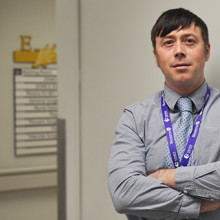
Above: Dr. Nicholas Power
The IRF is designed to provide Lawson scientists and students the opportunity to obtain start-up funds for new projects with the potential to obtain larger funding, be published in a high-impact journal, or provide a clinical benefit to patients. Funding is provided by the clinical departments of London Health Sciences Centre and St. Joseph’s Health Care London, as well as the hospital foundations (London Health Sciences Foundation and St. Joseph's Health Care Foundation).
Probiotics could improve survival rates in honey bees exposed to pesticide
In a new study from Lawson Health Research Institute (Lawson) and Western University, researchers have shown that probiotics can potentially protect honey bees from the toxic effects of pesticides.
Honey bees are critical to agriculture as they pollinate approximately 35 per cent of the global food crop, contributing an estimated $4.39 billion per year to the Canadian economy. Pesticides are currently used to maximize crop yields, but the most common pesticides, neonicotinoid insecticides, are a major factor in colony collapse disorder which is killing honey bee populations.
“The demise of honey bees would be disastrous for humankind. A current dilemma in agriculture is how to prevent bee decline while mitigating crop losses,” says Dr. Gregor Reid, Director for the Canadian Centre for Human Microbiome and Probiotic Research at Lawson, and Professor at Western’s Schulich School of Medicine & Dentistry. “We wanted to see whether probiotics could counter the toxic effects of pesticides and improve honey bee survival.”
The study was performed by trainees Brendan Daisley and Mark Trinder in Dr. Reid’s lab at St. Joseph’s Hospital in London, Ontario. The researchers utilized fruit flies as a well-known model for studying pesticide toxicity in honey bees. Both insects are affected similarly by neonicotinoids, have very similar immune systems, and share many common microbes present in their microbiota – the collection of microorganisms found in each insect.
The researchers found that fruit flies exposed to one of the world’s most commonly used pesticides, imidacloprid (IMI), experienced changes to their microbiota and were more susceptible to infections. The flies were exposed to a comparable amount of pesticide as honey bees in the field.
By administering a specific strain of probiotic lactobacilli, survival among fruit flies exposed to the pesticide improved significantly. The mechanism involved stimulating the immune system through a pathway that insects use to adapt to infection, heat and other stresses.
“Our study showed that probiotic lactobacilli can improve immunity and potentially help honey bees to live longer after exposure to pesticides,” says Daisley, an MSc candidate. He notes that probiotic lactobacilli could be easily administered through pollen patties, which are used by beekeepers to provide nutritional support and anti-pesticide effects to honey bees.
Image
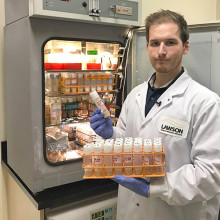
Above: Brendan Daisley, an MSc candidate at Western's Schulich School of Medicine & Dentistry, working in Dr. Gregor Reid's lab at St. Joseph's Hospital
Over the winter months, honey bee mortality has been steadily increasing with ranges of 38 to 58 per cent in recent years, two to three times higher than the sustainable level. In Ontario alone, 340 bee keepers reported an abnormally high number of bee deaths, with over 70 per cent of dead bees testing positive for neonicotinoid residues (Government of Ontario).
“While cessation of pesticide use would be ideal, farmers currently have little alternative to obtain the yields that keep their businesses viable,” says Dr. Reid. “Until we can cease using pesticides, we need to find ways to protect humans and wildlife against their side effects. Probiotics may prove as an effective protective intervention against colony collapse disorder.”
The researchers hope to further study the mechanisms involved in this process and perform field tests on honey bee populations in Ontario.
The study, “Neonicotinoid-induced pathogen susceptibility is mitigated by Lactobacillus plantarum immune stimulation in a Drosophila melanogaster model”, is published in Nature’s Scientific Reports. The research was funded by the Natural Sciences and Engineering Research Council of Canada (NSERC).
Image
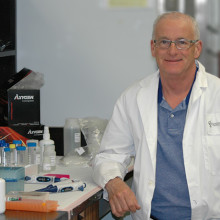
Above: Dr. Gregor Reid, Director for the Canadian Centre for Human Microbiome and Probiotic Research at Lawson, and Professor at Western’s Schulich School of Medicine & Dentistry
Scientist
Probiotics to the rescue
As the world’s most important single species of pollinators, honey bees perform many ecosystem functions. They are critical to the global food supply.
Honey bee populations are declining at alarmingly high rates here in Ontario and around the world.
“If the bees disappear, humanity is in big trouble” states Dr. Gregor Reid, Lawson researcher and professor at Western. He is also the leading scientist for the study. “Imagine walking into the grocery store and a third of the food wasn’t there. That is what would happen.”
Pesticide exposure, infection and habitat loss are the main factors suspected to be causing the decline in honey bee populations. Pesticides in particular make infections more severe and exacerbate the consequences of nutritional deficiencies in habitat loss – making those problems even worse.
Image
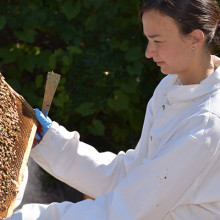
Since current industrialized agricultural practice rely on pesticides to maintain high crop volume, their complete removal from the equation is not currently feasible.
“We need an alternative solution that interferes with this process where high level of pesticides cause issues like infections and habitat loss to have more severe consequences for the honey bees,” says Dr. Reid. “Supplementing honey bees with probiotic bacteria is that solution, we believe.”
“It may sound overly dramatic to state the research will ‘save the world’s honey bees’, but that is the goal, and other groups around the world are trying to follow this lead.”
The group of researchers from Lawson Health Research Institute and Western University are supplementing honey bees with a nutritional food item containing three carefully chosen strains of beneficial or probiotic bacteria to improve the overall health of the hive and specifically address infection and nutritional needs.
Image
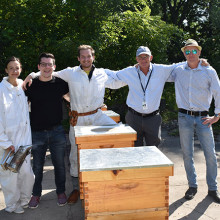
From left: Graduate students Anna Chernyshova, John Antonio Chmiel and Brendan Daisley are working on the honey bee probiotics project with Drs. Gregor Reid and Graham Thompson.
“We are creating what we call a BioPatty. In addition to normal nutrient substances, we infuse it with a select recipe of probiotics,” explains Dr. Graham Thompson, the regional bee expert and professor at Western University who helped set up the field-testing site and manages of the honey bee hives. “Our goal is to make the bees healthier and their immune system more vigorous. This helps them stay efficient and do their important jobs, and not be so vulnerable to the stressors of living in an urban and industrial world.”
The team’s previous scientific findings in a fly model, showed that these bacterial strains could reduce the toxic effects of pesticides and increase resistance towards infection. In May 2018, they moved their research from the lab and into the field thanks to OMAFRA funding, and started to test their BioPatties in a local apiary.
American Foulbrood caused by the pathogen Paenibacillus larvae, attacked the hives. This is one of the most serious honey bee diseases. Infection outbreaks nearly always lead to complete colony collapse and loss of the hive. “But the hives that were given the probiotics were the only ones not to be destroyed, so that was an encouraging early result,” says Brendan Daisley, a PhD student with Dr. Reid who was involved with the development of the research and coordinates sample processing and data collection.
“These results have far-reaching implications as American Foulbrood, despite its geographically-suggestive name, infects honey bees worldwide. It causes a tremendous financial burden to apiary owners and famers alike, who rely on honey bees directly or indirectly as a means of livelihood,” explains Daisley.
The probiotic approach might reduce the need for antibiotics that are so commonly used in many apiaries.
This work is taking place in London, Ontario and the study will continue over the next three years. Going forward, the researchers are planning to work with collaborators in a number of other countries around the world to determine the feasibility of large-scale implementation of probiotics for honey bees.
Related stories
Scientist
Prostate cancer imaging research could bring big benefits
LONDON, ON – With newly announced studies, Lawson Health Research Institute continues to lead the way in advancing prostate cancer imaging.
Scientists at Lawson are at the forefront of research that uses imaging agents that bind to a protein on the surface of prostate cancer cells called prostate specific membrane antigen (PSMA). Advanced imaging technology called PET/CT (positron emission tomography/computed tomography) and PET/MRI (magnetic resonance imaging) is then used to capture clear images of the location and extent of the cancer.
The first scan of its kind in Canada was captured at St. Joseph’s Health Care London in 2016 by Dr. Glenn Bauman, a Radiation Oncologist at the London Regional Cancer Program at London Health Sciences Centre and Scientist with Lawson.
“We started out with mainly MRI imaging but we've developed this very rigorous pipeline that allows us to put the imaging and digitized pathology together,” explains Dr. Bauman.
Early evidence indicates that PSMA PET scans have changed how prostate cancer is being treated, but more work is underway to understand the impact of those treatment changes. Working with imaging specialists there is hope that registries of these scans that are in development could even lead to automated detection of prostate cancer.
The Canadian Cancer Society recently committed $125,000 in funding for the creation of a database of PET/CT prostate cancer scans. Led by Dr. Katherine Zukotynski, an Adjunct Scientist at Lawson, the idea is to make annotated findings accessible to a wider community of medical and research professionals.
“If you have an idea of the amount of disease detected, correlated with what kind of prognosis, then this could be very helpful. It would allow oncologists to compare patients with similar cases, which may help determine the best therapies to try,” Dr. Zukotynski says.
![MRI and [18F]-DCFPyL PET images of six trial participants with prostate cancer.](/sites/default/files/research/inline-images/1920_PET_MRI_18F-DCFPyL_prostate_cancer_imaging.jpg)
Lawson has also become the first in Canada to enter a sublicense agreement to produce a new PET imaging agent called PSMA-1007 - that may produce even clearer images, especially when there’s a recurrence of cancer.
“PSMA-1007 allows us to detect where the cancer is a lot sooner and take action, whether that’s through surgery or delivering radiation to exactly where the cancer is located,” says Dr. Michael Kovacs, Director of the Lawson Cyclotron & PET Radiochemistry Facility.
Clinical trials have already begun to test PSMA-1007’s efficacy with an ultimate goal of obtaining Health Canada approval.
A three-part series on prostate cancer imaging at Lawson is also available:
About Lawson Health Research Institute
Lawson Health Research Institute is one of Canada’s top hospital-based research institutes, tackling the most pressing challenges in health care. As the research institute of London Health Sciences Centre and St. Joseph’s Health Care London, our innovation happens where care is delivered. Lawson research teams are at the leading-edge of science with the goal of improving health and the delivery of care for patients. Working in partnership with Western University, our researchers are encouraged to pursue their curiosity, collaborate often and share their discoveries widely. Research conducted through Lawson makes a difference in the lives of patients, families and communities around the world. To learn more, visit www.lawsonresearch.ca.
Media Contacts
Amanda Taccone
Communications Consultant & External Relations
Lawson Health Research Institute
T: 519-685-8500 ext. ext. 64059
C: 226-919-4748
@email
… 1 month apart are available MOST RECENT PSA VALUES DATE OF TEST (YYYY/MM/DD) FREE/TOTAL RATIO (required for 1 PSA) 1. … Required: undefined_4: Off Language: undefined_5: DATE OF TEST YYYYMMDD1: FREETOTAL RATIO required for 1 PSA1: DATE OF TEST YYYYMMDD2: FREETOTAL RATIO required for 1 PSA2: DATE OF …
REFERRAL CRITERIA TO PROSTATE DIAGNOSTIC ASSESSMENT PROGRAM: Check () all that apply: Abnormal DRE suspicious for cancer PSA >10 PSA age based PSA value confirmed Aged based normal upper limit PSA: 40-49 years | 2.5 ng/mL 50-59 years | 3.5 ng/mL 60-69 years | 4.5 ng/mL PATIENT INFORMATION: Pat...
… The prostate DAP Program will streamline diagnostic testing for patients suspected of having prostate cancer and … You will be assessed by our prostate team. Coordination of tests and appointments Provision of information and … team. We will send a copy of all the information about your tests and treatments to your family doctor. If I am …
What is the Prostate Diagnostic Assessment Program? The prostate DAP Program will streamline diagnostic testing for patients suspected of having prostate cancer and if needed, refer a patient for treatment. Where is the Prostate Diagnostic Assessment Program located? The program is located at St. Jo...
… They also include ear pain, cough, abdominal/gastrointestinal symptoms, musculoskeletal injuries or conditions, … medications? Considerations: Is a formal cognitive test needed at this time? Has this patient been assessed in … the past? Was the assessment thorough? A formal cognitive test may not be needed “if the patient has been recently …
Providing Geriatric Virtual Care across the South West: Guidance Document for Health Care and Community Support Services Providers SOUTH WEST FRAIL SENIOR STRATEGY VERSION 1 NOVEMBER 2020 Guidance Document for Health Care and Community Support Services Providers on Providing Geriatric Virtual Care A...
… They also include ear pain, cough, abdominal/gastrointestinal symptoms, musculoskeletal injuries or conditions, … medications? Considerations: Is a formal cognitive test needed at this time? Has this patient been assessed in … the past? Was the assessment thorough? A formal cognitive test may not be needed “if the patient has been recently …
Providing Geriatric Virtual Care across the South West: Guidance Document for Health Care and Community Support Services Providers SOUTH WEST FRAIL SENIOR STRATEGY VERSION 1 NOVEMBER 2020 Contact South West Frail Senior Strategy at RegionalFrailSeniors@sjhc.london.on.ca for further informaon and fee...
… They also include ear pain, cough, abdominal/gastrointestinal symptoms, musculoskeletal injuries or conditions, … medications? Considerations: Is a formal cognitive test needed at this time? Has this patient been assessed in … the past? Was the assessment thorough? A formal cognitive test may not be needed “if the patient has been recently …
Providing Geriatric Virtual Care across the South West: Guidance Document for Health Care and Community Support Services Providers SOUTH WEST FRAIL SENIOR STRATEGY VERSION 1 NOVEMBER 2020 Guidance Document for Health Care and Community Support Services Providers on Providing Geriatric Virtual Care A...
Provincial funding enables coronavirus research in London, Ontario
LONDON, ON – Three studies investigating a range of important COVID-19 questions led by teams from Lawson Health Research Institute and Western University are among an initial 15 projects funded through the Government of Ontario’s COVID-19 Rapid Research Fund.
Studying a human protein in the treatment of critically ill COVID-19 patients
A team from Lawson will be the first in the world to study a human protein called annexin A5 as a potential therapy for COVID-19 patients with sepsis. The randomized controlled trial will enroll up to 60 critically ill patients from London Health Sciences Centre (LHSC).
“There are no proven therapies to treat COVID-19,” says Dr. Claudio Martin, Associate Scientist at Lawson and Intensive Care Physician at LHSC. “In the most severe cases, it’s complicated by hyperinflammation that can lead to sepsis, acute respiratory distress syndrome (ARDS) and multi-organ failure.”
Sepsis is a life-threatening condition. It occurs when the body’s response to an infection is out of balance, triggering hyperinflammation that can damage multiple organs. Many critically ill COVID-19 patients develop sepsis one to two days before ARDS, suggesting that sepsis is a major contributor to the development of respiratory and multi-organ failure.
Led by Dr. Martin, this clinical trial aims to fight sepsis in COVID-19 patients with a manufactured form of annexin A5 – a human protein that has strong anti-inflammatory properties. Patients will be randomized to receive either the drug at two different doses or a placebo.
“The ultimate goal is to determine whether this drug reduces hyperinflammation associated with sepsis in order to prevent respiratory and multi-organ failure,” explains Dr. Martin, who is also a Professor at Western’s Schulich School of Medicine & Dentistry.
The team also believes the drug will prevent cell death and blood clots associated with COVID-19 through annexin A5’s anti-apoptotic (cell death prevention) and anti-coagulant (blood clot prevention) properties.
This is the first time annexin A5 will be tested as a potential sepsis treatment in humans. The research builds on findings of a preclinical study from Dr. Qingping Feng, Lawson Scientist and Ivey Chair in Molecular Toxicology at Schulich Medicine & Dentistry. His team previously found that annexin A5 can inhibit inflammation and improve organ function and survival when treating sepsis in animal models.
“Annexin A5 is a naturally-occurring protein with great potential as a therapy for sepsis, whether caused by COVID-19 or a different infection,” says Dr. Feng, co-investigator on the project. “If our initial trial is successful, we hope to run a large multi-centre trial to further examine the drug’s potential as a sepsis treatment.”
Developing point-of-care blood test for COVID-19
A team at Western will be using a novel strategy to rapidly develop a blood test for COVID-19 using epitopes – a peptide fragment on the virus that evokes an immune response in humans.
“The antibody test enabled by multiple epitopes is potentially more sensitive and specific than tests that rely on a single viral protein. Serologic testing plays a pivotal role in charting the landscape of the COVID-19 pandemic and guiding return-to-work decisions,” said Shawn Li, PhD, Professor at Schulich Medicine & Dentistry and Scientist at Lawson. “This funding allows us to put together a team of basic researchers and clinician scientists, including Dr. Ian Chin-Yee and his colleagues at the Department of Pathology and Laboratory Medicine, to work on the various aspects of the project with the common goal of developing a serologic test suitable for point-of-care use as quickly as possible.”
To curb the COVID-19 outbreak caused by the SARS-CoV-2 virus, researchers are looking to solve three critical challenges as quickly as possible – detection, treatment and vaccination. Li says the identification of these epitopes are also the necessary first step to devise strategies for the production of virus-neutralizing antibodies to treat those who are severely ill and also to inform epitope-vaccine development for COVID-19.
Studying the impact of modified operating conditions for retail food outlets
With the aim of understanding how the pandemic has affected the well-being of businesses and their employees, Jason Gilliland, PhD, Professor in the Faculties of Social Sciences, Health Sciences, and Schulich Medicine & Dentistry at Western, has begun the Food Retail Environment Study for Health & Economic Resiliency (FRESHER) project.
“The project is a rapid response to the widespread closures of, and modified operating conditions for, many retail food outlets,” said Gilliland, who is also a Scientist at Lawson. “The project outputs are expected to help inform policies and programs that will maintain Ontario’s food security, incentivize economic growth during the recovery period, and improve health and economic resiliency among businesses and employees to future pandemics and emergencies.”
Gilliland and his team will examine the economic and social impacts of COVID-19 in southwestern Ontario by identifying what businesses modified their operations, temporarily closed or permanently closed during the outbreak, and how it has affected businesses and their employees.
“The retail food sector is already facing massive job losses which in turn will have negative economic and health impacts on owners and employees,” he said. “As the project is intended to be a rapid response, we needed to quickly mobilize a large team of research assistants to rapidly collect and continuously update the data. This funding is critical as it allowed us to put together an impressive team of student research assistants, most of whom would otherwise have been out of work due to COVID-19.”
More information on the project and links to the surveys can be found at: fresher.theheal.ca.
-30-
About Lawson Health Research Institute
Lawson Health Research Institute is one of Canada’s top hospital-based research institutes, tackling the most pressing challenges in health care. As the research institute of London Health Sciences Centre and St. Joseph’s Health Care London, our innovation happens where care is delivered. Lawson research teams are at the leading-edge of science with the goal of improving health and the delivery of care for patients. Working in partnership with Western University, our researchers are encouraged to pursue their curiosity, collaborate often and share their discoveries widely. Research conducted through Lawson makes a difference in the lives of patients, families and communities around the world. To learn more, visit www.lawsonresearch.ca.
About Western
Western delivers an academic experience second to none. Since 1878, The Western Experience has combined academic excellence with life-long opportunities for intellectual, social and cultural growth in order to better serve our communities. Our research excellence expands knowledge and drives discovery with real-world application. Western attracts individuals with a broad worldview, seeking to study, influence and lead in the international community.
About The Schulich School of Medicine & Dentistry
The Schulich School of Medicine & Dentistry at Western University is one of Canada’s preeminent medical and dental schools. Established in 1881, it was one of the founding schools of Western University and is known for being the birthplace of family medicine in Canada. For more than 130 years, the School has demonstrated a commitment to academic excellence and a passion for scientific discovery.
Media Contacts
Celine Zadorsky
Senior Media Relations Consultant
Communications & Public Engagement
T: 519-685-8500 ext. 73502
Celine.zadorsky@lhsc.on.ca
Provincial grant supports innovations in mental health care for youth
On Friday, November 23, 2018, the Mental Health INcubator for Disruptive Solutions (MINDS) of London-Middlesex welcomed community members and stakeholders at Innovation Works for an update on the work of the MINDS team and announced the generous contributions of the Ontario Trillium Foundation.
Local MPPs Peggy Sattler (London West) and Terence Kernaghan (London North Centre), with OTF Grant Review Team member Chris Harding were on hand to congratulate the MINDS members, including Pillar Nonprofit Network, and hear more about how the $75,000 OTF Grant will contribute to the mental health of transitional aged youth in the London and Middlesex region.
As a research project through Lawson Health Research Institute, MINDS is taking a unique approach to improving the mental health of the community’s transitional age youth – people ages 17 to 25.
A key aspect is to successfully work in partnership with youth to make sense of and address this complex challenge.
“Today’s youth are unlike any generation before,” explains Dr. Arlene MacDougall, Director and Principal Investigator for MINDS. “Many of our processes, structures, models and concepts that we have used to serve, educate, employ, care for and communicate with youth in the past are no longer appropriate, relevant or effective for the youth of today.”
Dr. MacDougall is also Director of Research and Innovation for mental health care at St. Joseph’s Health Care London and Assistant Director for mental health research at Lawson.
Youth today are more diverse, connected and educated. Although many are reaping benefits from these qualities, others are facing significant challenges such as finding a full time job, being social excluded, negative effects of digital life including cyberbullying and physical health challenges like rising obesity.
“Evidence from acute care and community sectors shows an increase in the number and acuity of mental health and addiction challenges experienced by our local transitional age youth,” states Dr. MacDougall. “We see this as a persistent and ‘wicked’ challenge – it is difficult to define and many factors contribute to it.”
Over the last few years, across Canada and locally, there have been higher rates of emergency visits and inpatient hospitalizations for youth with mental disorders; an increase in the number of youth seeking help for mental illnesses; and, youth experiencing increased rates of anxiety, depression and suicidal thoughts and attempts.
“We have been listening to local youth and their adult allies. We are hearing from youth with lived experience of mental illness and those who do not have a lived experience. And we are working on making sense of the upstream social drivers and components of poor mental health for transitional age youth,” explains Dr. MacDougall.
“On the flip side, we are exploring the potential action areas, levers and opportunities for shifting our community and our system to promote youth mental and emotional wellbeing – reaching them sooner and in the way they need.”
As a social innovation lab, MINDS will use a collective impact framework to develop and test high impact solutions. This provides a structured process and creative environment where the team can prototype radical but possible innovations, while merging with youth-led participatory action research.
“The collective impact framework enables us to can tackle deeply entrenched and complex social problems. It is an innovative yet structured approach to making collaboration work across government, business, philanthropy, non-profit organizations and citizens to achieve significant and lasting social change.”
MINDS has the support of a diverse network of key individuals and partnering organizations including cross-sectoral service providers, community leaders, mental health advocates and youth from the region. This includes Lawson, St. Joseph’s, London Health Sciences Centre, Western University, mindyourmind, Goodwill Industries and CMHA Middlesex. The project has also received funding support from St. Joseph’s Health Care Foundation.
“We are thrilled that many partners in the community are coming together to look for disruptive solutions that will create a lasting impact for youth,” explains Dr. MacDougall. “To the best of our knowledge, this is the first social innovation lab dedicated to improving community mental health to be established in Canada.
The Ontario Trillium Foundation (OTF) is an agency of the Government of Ontario, and one of Canada’s leading granting foundations. OTF awarded more than $120 million to some 700 projects last year to build healthy and vibrant communities in Ontario.
Scientist
… physical assessment, collection of forensic evidence, tests for sexually transmitted diseases and date rape drugs, … Centre • Ear Nose and Throat Clinic • Endoscopy and Gastrointestinal Clinics • Family Birthing Centre • G.A. Huot … nurses – have had the opportunity to keep abreast of the latest developments in diabetes and asthma management through …
S T. J O S E P H S H E A LT H C A R E , LO N D O N 2 0 0 4 / 2 0 0 5 care is at our core STAND TALL AND PROUD SINK YOUR ROOTS DEEPLY INTO THE EARTH REFLECT THE LIGHT OF A GREATER SOURCE THINK LONG TERM GO OUT ON A LIMB REMEMBER YOUR PLACE AMONG ALL LIVING BEINGS EMBRACE WITH JOY THE CHANGING SEASON...
… ext. 61389 Fax: 519-646-6164 PULMONARY FUNCTION TEST REFERRAL FORM Please complete all sections and FAX to 519-646-6164 * Note: Testing is contra-indicated for 4 weeks post eye surgery. … No ☐ Yes (please list) Current Respiratory Medications: 3. Tests Requested (please check one only): ☐ Full PFTS: …
Pulmonary Function Lab St. Josephs Hospital 268 Grosvenor St, Outpatient Registration: Room B3-030 London, ON N6A 4V2 Phone: 519-646-6000 ext. 61389 Fax: 519-646-6164 PULMONARY FUNCTION TEST REFERRAL FORM Please complete all sections and FAX to 519-646-6164 * Note: Testing is contra-indicated for 4 ...
… ext. 61389 Fax: 519-646-6164 PULMONARY FUNCTION TEST REFERRAL FORM Please complete all sections and FAX to 519-646-6164 * Note: Testing is contra-indicated for 4 weeks post eye surgery. … No ☐ Yes (please list) Current Respiratory Medications: 3. Tests Requested (please check one only): ☐ Full PFTS: …
~ S!'JOSEPHs HEALTH CARE LONDON Pulmonary Function Lab St. Josephs Hospital 268 Grosvenor Street, Room B3-030 London, ON N6A 4V2 Phone: 519-646-6000 ext. 61389 Fax: 519-646-6164 PULMONARY FUNCTION TEST REFERRAL FORM Please complete all sections and FAX to 519-646-6164 * Note: Testing is contra-indic...
… ext. 61389 Fax: 519-646-6164 PULMONARY FUNCTION TEST REFERRAL FORM Please complete all sections and FAX to 519-646-6164 * Note: Testing is contra-indicated for 4 weeks post eye surgery. … No ☐ Yes (please list) Current Respiratory Medications: 3. Tests Requested (please check one only): ☐ Full PFTS: …
Pulmonary Function Lab St. Josephs Hospital 268 Grosvenor St, Outpatient Registration: Room B3-030 London, ON N6A 4V2 Phone: 519-646-6000 ext. 61389 Fax: 519-646-6164 PULMONARY FUNCTION TEST REFERRAL FORM Please complete all sections and FAX to 519-646-6164 * Note: Testing is contra-indicated for 4 ...
… Pulmonary Function Pre/Post Test Medication to Hold If you have referred your patient for a Pre/Post Test see the list below to determine if your patient may … Pulmonary Function Pre/Post Test Medication to Hold If you have referred your patient for a Pre/Post Test see the list below to determine if your patient may …
Pulmonary Function Pre/Post Test Medication to Hold If you have referred your patient for a Pre/Post Test see the list below to determine if your patient may stop their medication for the required time before their appointment. Failure to complete this section will result in the inability to schedul...
… Pulmonary Function Test Requisition …
… amount Patient’s Home Pharmacy: Other Details: Relevant Tests included if not on Cerner or Clinical Connect: PFTs … amount Patient’s Home Pharmacy: Other Details: Relevant Tests included if not on Cerner or Clinical Connect: PFTs …
COPD and Pulmonary Rehabilitation Program St. Josephs Hospital 268 Grosvenor Street, Room B3-030 London, ON N6A 4V2 PULMONARY REHABILITATION PROGRAM REFERRAL FORM Send via fax: (519) 646-6292 or email: COPDPulmonaryRehab@sjhc.london.on.ca ALL SECTIONS ON PAGES 1 & 2 MUST BE COMPLETED AND SIGNED TO ...
… Patients diagnosed with COPD based on a pulmonary function test, whose condition is stable • Patients who want to … may include a consultation with a Respirologist. Additional tests may need to be ordered to ensure you are safe to exercise. o Second visit: Six-minute walk test to develop an individualized exercise prescription and …
Pulmonary Rehabilitation Program Why consider pulmonary rehabilitation? Pulmonary rehabilitation is the standard of care for people with moderate to severe chronic obstructive pulmonary disease (COPD) who are experiencing symptoms of breathlessness, cough and activity limitations despite medication/...
… your fitness level (usually by doing a six minute walk test). From this assessment, we will work together to build … your fitness level (usually by doing a six minute walk test). From this assessment, we will work together to build …
Pulmonary Rehabilitation Program Lifestyle Change and Self-Management Workbook Page | 1 Pulmonary Rehabilitation Program Dr. Michael Nicholson, Medical Director Tajana Jokic, Program Coordinator Authors Megan Graat, R. Kin, MPH Karen Unsworth, MSc Lia Kutzscher, RN (EC) MScN CRE Andraena Tilgner, RR...