


Advancing recovery across the board
With donor support, new Senaptec Sensory Stations are helping people retrain their brain after illness or injury.
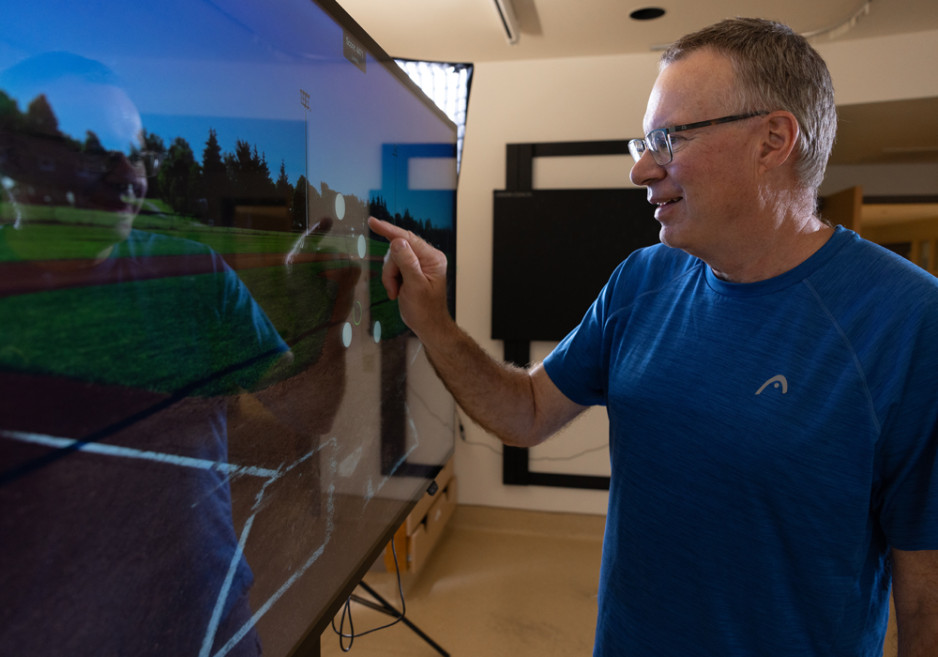
Andrew Fuller was one of the first people to use a new Senaptec Sensory System for brain injury recovery. In 2024, he had a large benign tumour removed from his cerebellum, leaving him with some lingering issues.
“My sensory intake is off and it affects my internal balance, particularly when walking in busy environments like stores or crowds,” he shares. “It can feel like a fun house at the fair. If I’m exposed to too much for too long, headache and fatigue sets in.”
As part of his recovery, he is taking part in the BrainEx 90 program as an acquired brain injury outpatient. That’s where he first encountered the Senaptec.
“It works on developing my peripheral vision, spotting things quickly and even simulates the real world,” he says. “It’s a mental workout to pay attention and maintain focus – like playing an intense video game.”
Thanks to donors, two Senaptecs are making rehabilitation more unique and impactful than ever before: one in the Acquired Brain Injury program, and one in Stroke Rehabilitation.
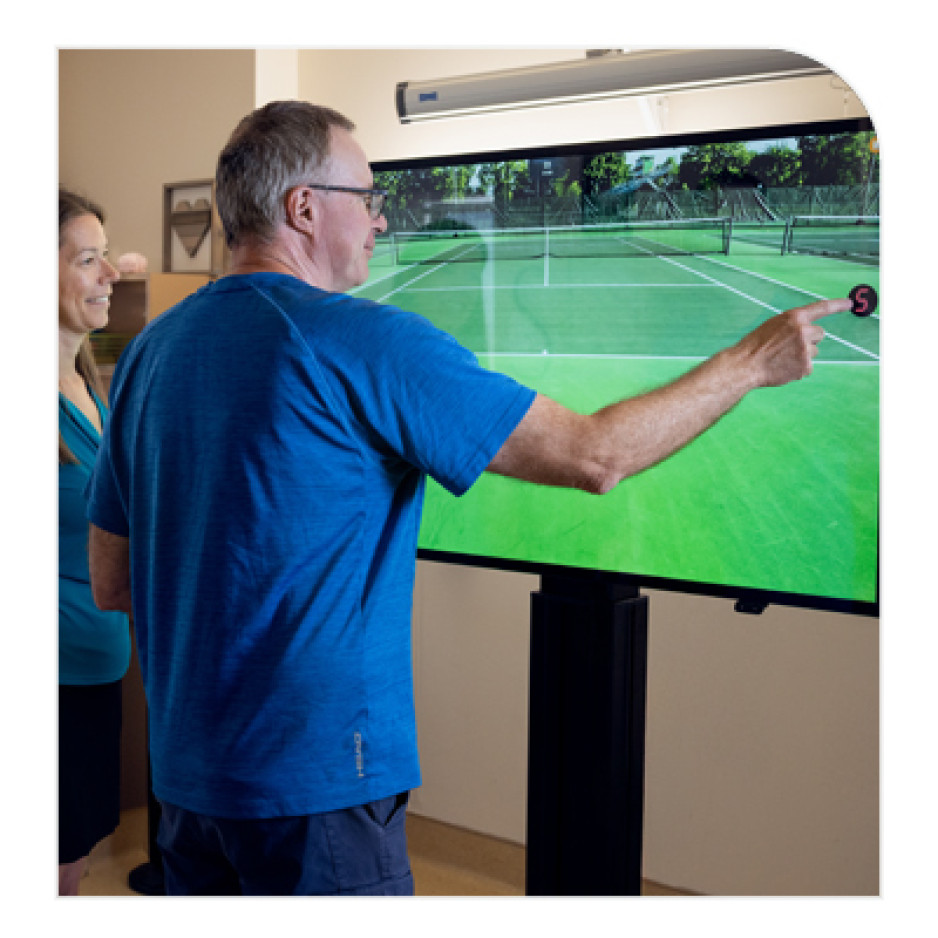
They feature an interactive screen for cognitive, visual and physical training, “gamifying” rehab to keep people motivated. From brain injuries to stroke, it’s important for patients to strengthen their brain’s sensory processing abilities in recovery – like responding to different stimuli and reaction speed.
“A lot of our patients are no longer in their most acute stage of recovery, but they’re in a vital stage,” says Brennan Demelo, occupational therapist in the Stroke Rehabilitation program. “This equipment offers the building blocks to get people closer to those functions they need to return to the real world.”
The stroke rehab team reports that the new equipment has transformed how they provide therapies and challenged them to embrace technological advancements to better connect with all ages. For the younger population of adults who may experience a brain injury or stroke, computer-based tools like the Senaptec help patients get used to using screens again and pave the way to a return to work.
“I’m always mentally tired after I work with the Senaptec, in a good way,” says Fuller about his experience using the equipment.
He has made incredible strides in his recovery and is back to being the main character in his life again. He credits innovative equipment and Shannon McGuire, physiotherapist and Becky Moran, occupational therapist who expertly lead the BrainEx 90 program for helping him. “With time and practice at Parkwood, I really am progressing.”

Why I give
Parkwood Institute is a special place for Vikkie Gibson. It’s where her late husband Rod received care after a stroke, and now it’s where she spends hours every week as a volunteer and care partner. After Rod passed, Gibson started making regular donations to the stroke rehabilitation program to honour his memory. “The care that he received at the stroke rehabilitation unit was unbelievable and the staff was amazing,” Gibson shares. “They gave me my husband back for a few more years.”
Your Donation Matters Here
Your gift will support patients at St. Joseph's when they need it most.