


Project 'poop'
Patients with cancer and C. difficile are finding hope in the unlikeliest of places: St. Joseph’s Fecal Microbiota Transplantation Project
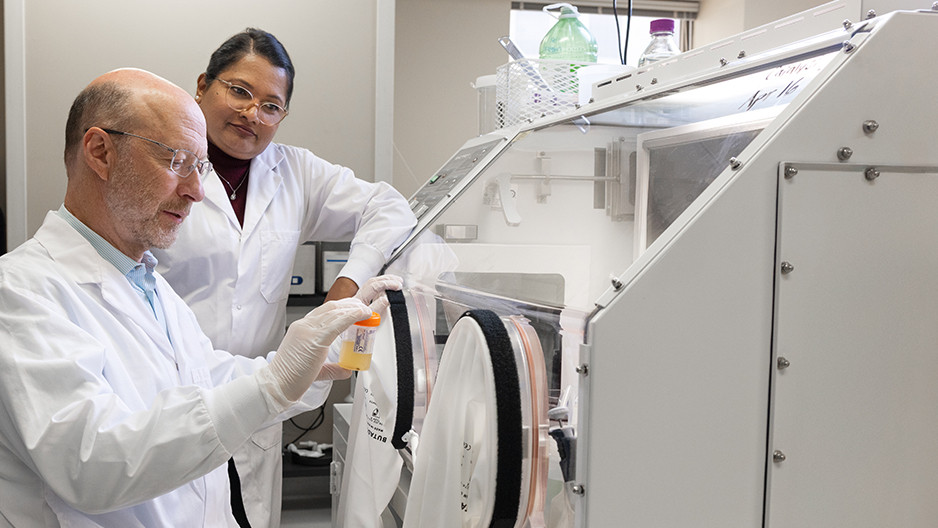
Lawson Research Institute scientist Seema Nair Parvathy, PhD, remembers watching in 2014 while a nurse filled a kitchen blender with a donated stool sample and saline and whirred it until “it looked like chocolate milk.”
The mixture was later introduced by enema into patients who had Clostridioides difficile (C. difficile), a potentially life-threatening infection typically caused by antibiotics that destroy the normal bacteria in the gut and allow C. difficile to overgrow.
“You wouldn’t think such a simple treatment would be effective,” Parvathy says.
But it was highly effective at displacing the dangerous bacteria. So much so, in fact, that fecal microbiota transplantation (FMT) is now the standard of care for C. difficile, and St. Joseph’s has emerged as a national leader in research to improve the treatment and test its effectiveness in other diseases.
“We’re grateful for the tremendous support.” - Seema Parvathy, PhD
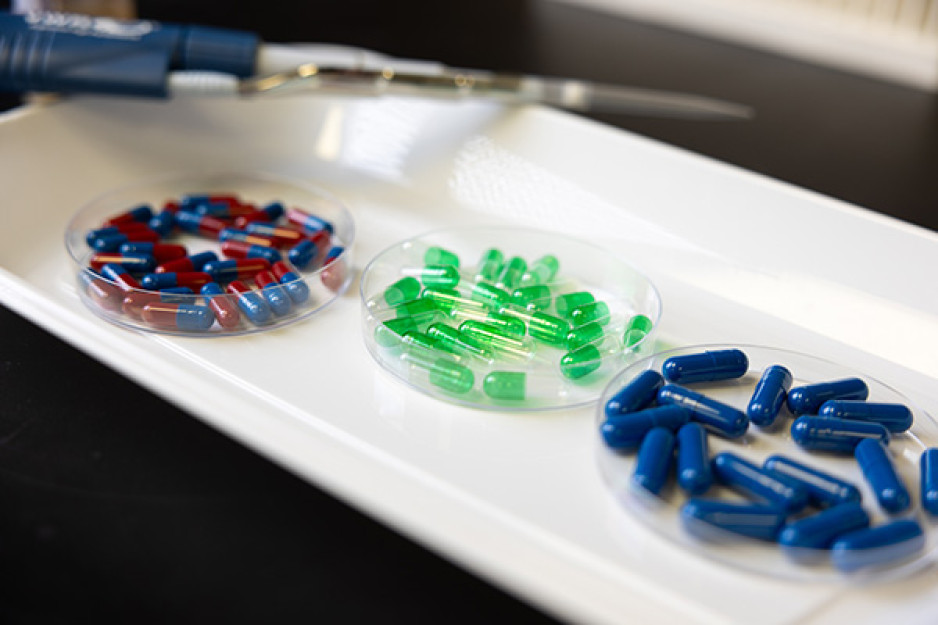
In 2018, Parvathy and Dr. Michael Silverman, a Lawson scientist and Medical Director, St. Joseph’s Infectious Diseases Care Program, became the first researchers in Ontario and only the second in Canada to develop “poop pills” made of healthy gut bacteria from screened human donors.
The remarkable results—FMT capsules have a 100 per cent success rate in treating C. difficile at St. Joseph’s— got Dr. Silverman thinking. “If we can replace the harmful gut bacteria and give patients a normal microbiome (ecosystem of microorganisms in the gut), will it help patients with other diseases where the microbiome may be important?”
With partners at London Health Sciences Centre, he launched a pilot study of 20 patients with a life-threatening skin cancer (melanoma) that showed a single FMT dose can boost immunotherapy response rates from 35 to 75 per cent. Patients with lung and kidney cancer experienced similar benefits.
“More than half of all patients with cancer are getting immunotherapy,” Dr. Silverman says. “If FMT makes immunotherapy twice as effective, this could prove lifesaving for many people.”
St. Joseph’s is now dramatically scaling up FMT research and capsule production. They recently launched world-first trials using FMT to improve treatment for pancreatic cancer and a randomized trial for melanoma and are planning a breast cancer study and a large lung cancer trial.
When combined with the ongoing C. difficile treatments, the team is now performing more than 200 fecal microbiota transplants a year.
“Contributions of all kinds are critical to our ability to move this work forward,” says Dr. Silverman. In addition to stool donors, cash donations help to support every stage of treatment, from donor screening to capsule manufacturing and its storage and shipping.
This past year, a generous grant of $14,550 through St. Joseph’s Health Care Foundation supported the purchase of critical equipment which protects the integrity of the capsules and provides storage for chemicals, reagents and samples to avoid any cross contamination. A further grant of more than $450,000 was approved to provide support to expand the team’s work.
“We’re grateful for the tremendous support,” Parvathy says. “We are creating a world-class facility to match our world-class research.”
And time to put away the blenders.