


Learning by doing
You helped create a unique space for simulation-based training where nurses can practise, grow and hone their skills.
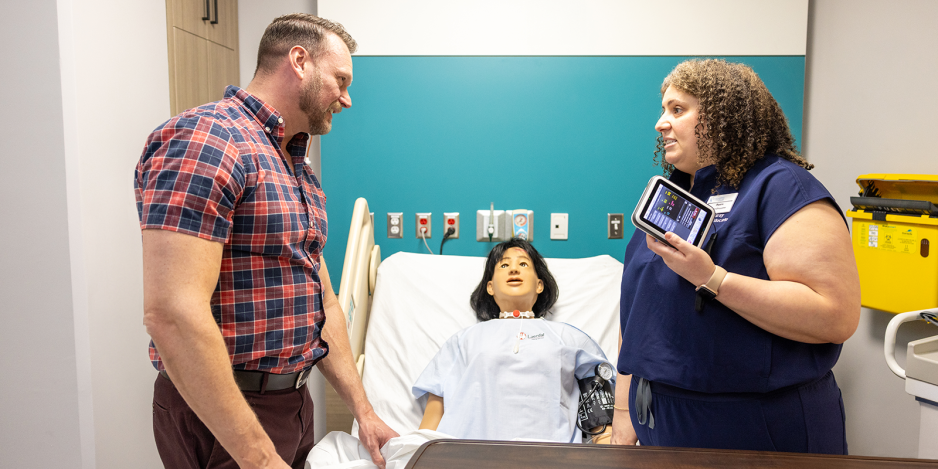
Reem Gray’s ears perk up. There’s a voice shouting for help inside the newly renovated Parkwood Simulation and Education Lab – but it’s not coming from a person.
It’s the voice of Nursing Anne, a highly realistic, fully programmable human model lying in a hospital bed. Gray, a nurse educator, is leading a training session for nurses in the new lab, with Anne simulating scenarios they might encounter on shift.
The lab is a project many years in the making. It’s the first of its kind for the organization, and it was funded in part thanks to your generosity.
“Simulation-based training is crucial in building the capacity and confidence of staff,” says Gray. “We have embedded simulation in so much of the education we’re doing, and the feedback from the frontline is that they’re enjoying it – and it’s sticking. They’re developing skills and feel more confident going to the bedside, which leads to better care.”
In the past, there was one big roadblock to training for nurses at St. Joseph’s: there wasn’t a dedicated space for practising procedures and skills in real time.
Now they have a space to learn, but the new lab is more than just a renovation. “This provides a better learning experience and empowers educators by giving them the tools, equipment and space to deliver the best possible education aligned with best practices,” says Amanda Thibeault, Clinical Director, Complex Care Program.
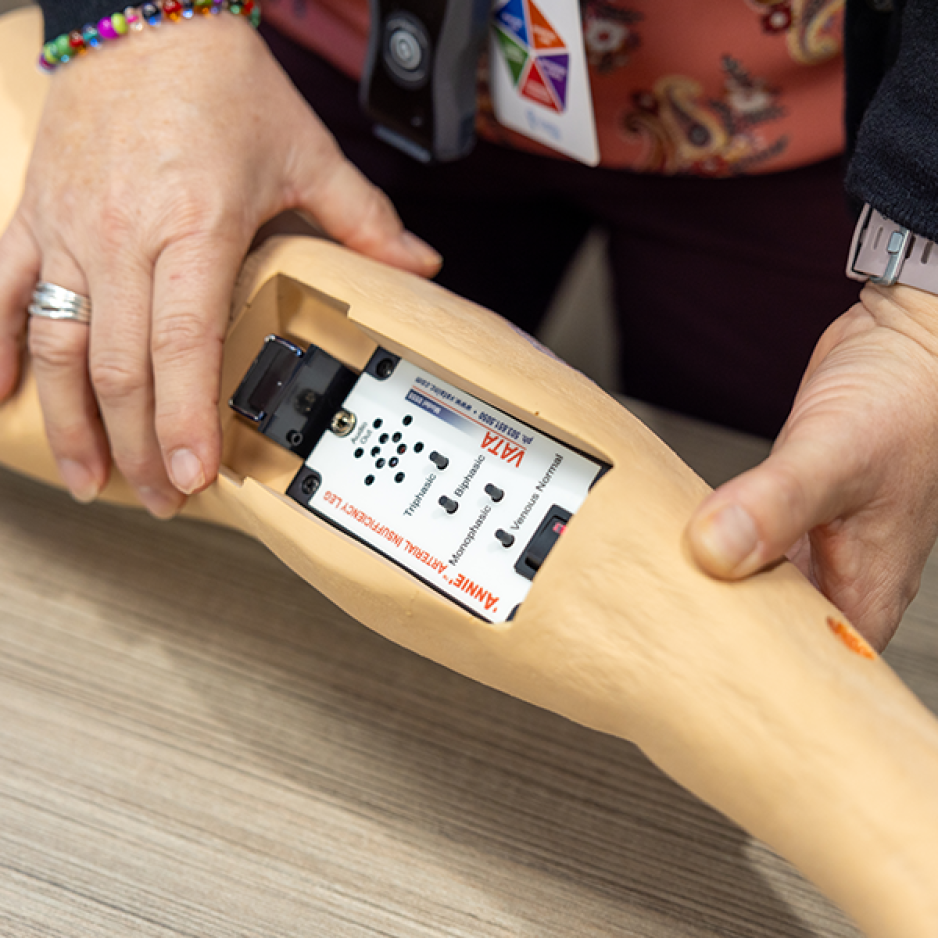
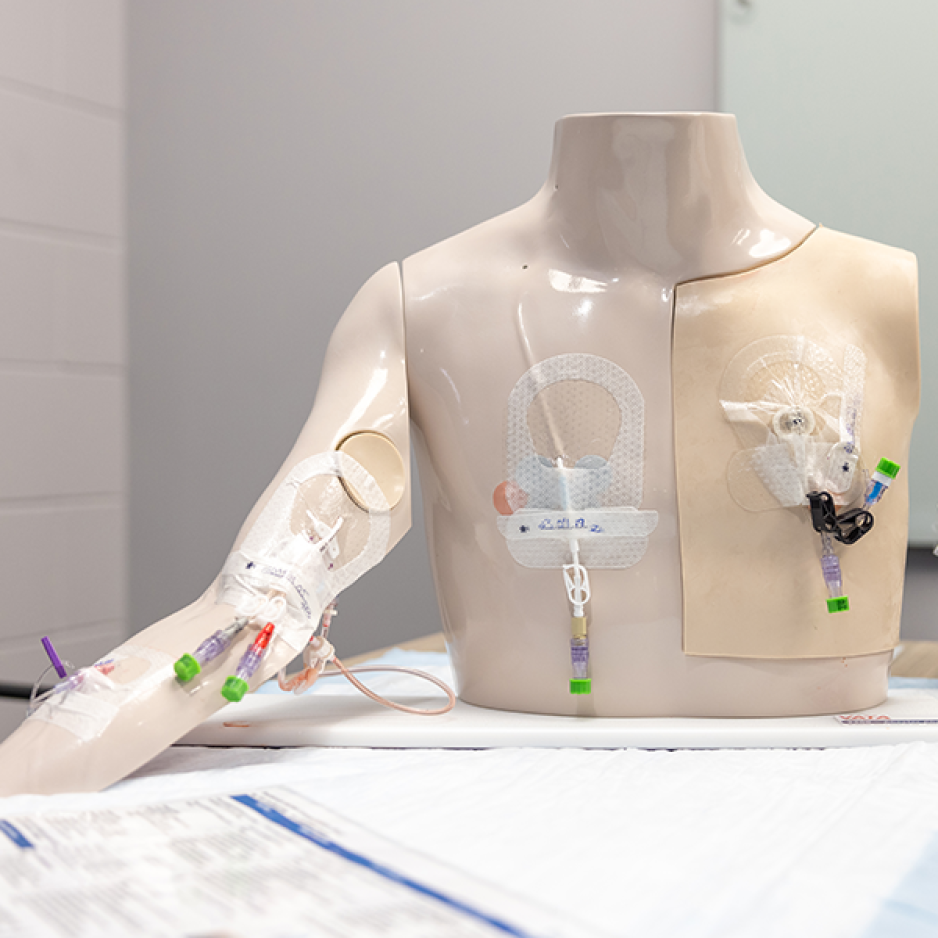
The space features different clinical areas for trying hands-on skills, a medication dispensing space and a classroom with a smart TV for group learning, presentations and debriefs. Nurse educators host monthly orientation sessions for incoming staff and training on new products, equipment and skills practice.
It’s outfitted with all the bells and whistles for simulation-based training, including Anne – a “model patient” that mimics various care needs, from stroke rehabilitation to mental health care. Educators can even speak through the replica to offer feedback in real-time.
To enhance the realism of learners even more, the team installed a central observation room where educators watch and direct from behind a two-way mirror. It creates a safe space where nurses can test and hone their clinical skills before encountering patients.
“I want to say thank you to the donors,” says Thibeault. “The Foundation has been such a strong supporter of this project, and we wouldn’t have been able to finish it without donors. That support means a lot.”