


Meaningful and actionable change
Five research studies are underway at St. Joseph’s MacDonald Franklin Operational Stress Injury (OSI) Research Centre to explore the connections between chronic pain and mental health conditions to better support Canada’s veterans.
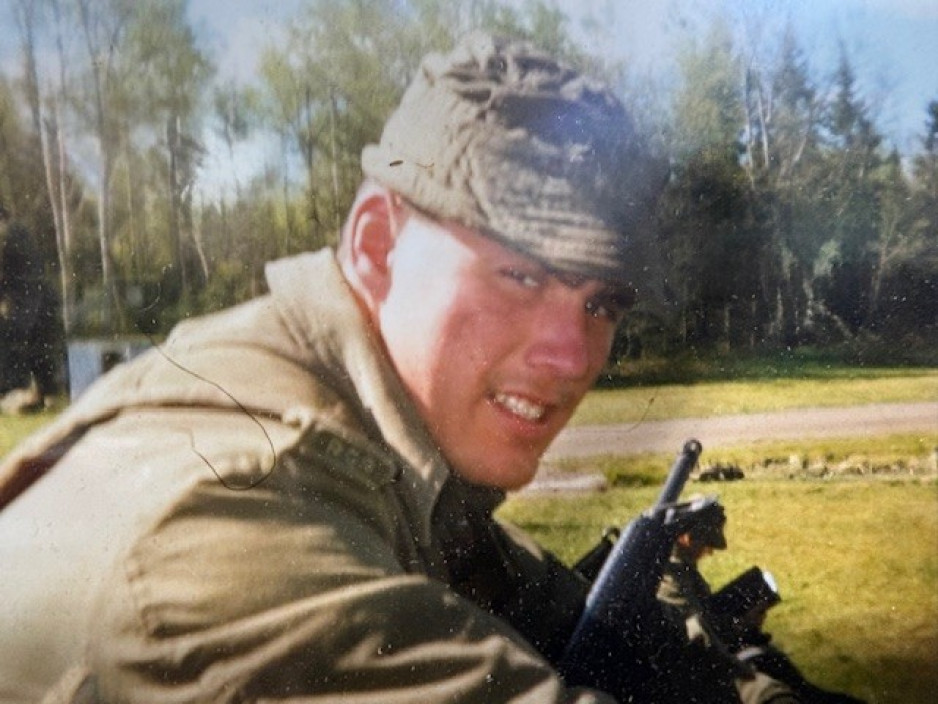
A year after leaving the Canadian Armed Forces (CAF), veteran Darryl Burgess was diagnosed with post-traumatic stress disorder (PTSD). That was 1998. He’s been in the care of St. Joseph’s Dr. Don Richardon since then – making a regular 600 km round trip from his northern Ontario hometown of Burk’s Falls.
Burgess calls Dr. Richardson a lifesaver. “He literally saved my life,” says Burgess. “I will feel indebted to him forever.”
Serving in the infantry and deployed overseas also took a devastating toll on Burgess’ body, leaving him with degenerative disc disease and uncompromising chronic pain that continues today.
For this husband, father of six and lover of the outdoors, the pain has limited his ability to live life to its fullest.
“Every day is painful.” says the 55-year-old veteran. “And the pain makes you feel miserable, irritable, agitated and angry. It makes you want to retreat from society. Sometimes, it’s so bad, I’m completely hunched over.”
Trying to manage both health conditions, inspired Burgess to get involved in research projects with Dr. Richardson.
Nothing about us without us
CAF veterans experience chronic pain at more than twice the rate of the general population, often co-occurring with mental health conditions.
It’s the prevalence of this combination of conditions and the significant impact it has on Canada’s veterans that has inspired Dr. Richardson, Jenny Liu, PhD, and the team at St. Joseph’s MacDonald Franklin OSI Research Centre to undertake five unique research projects. Each is focused on the various components of the comorbidity of chronic pain and mental health.
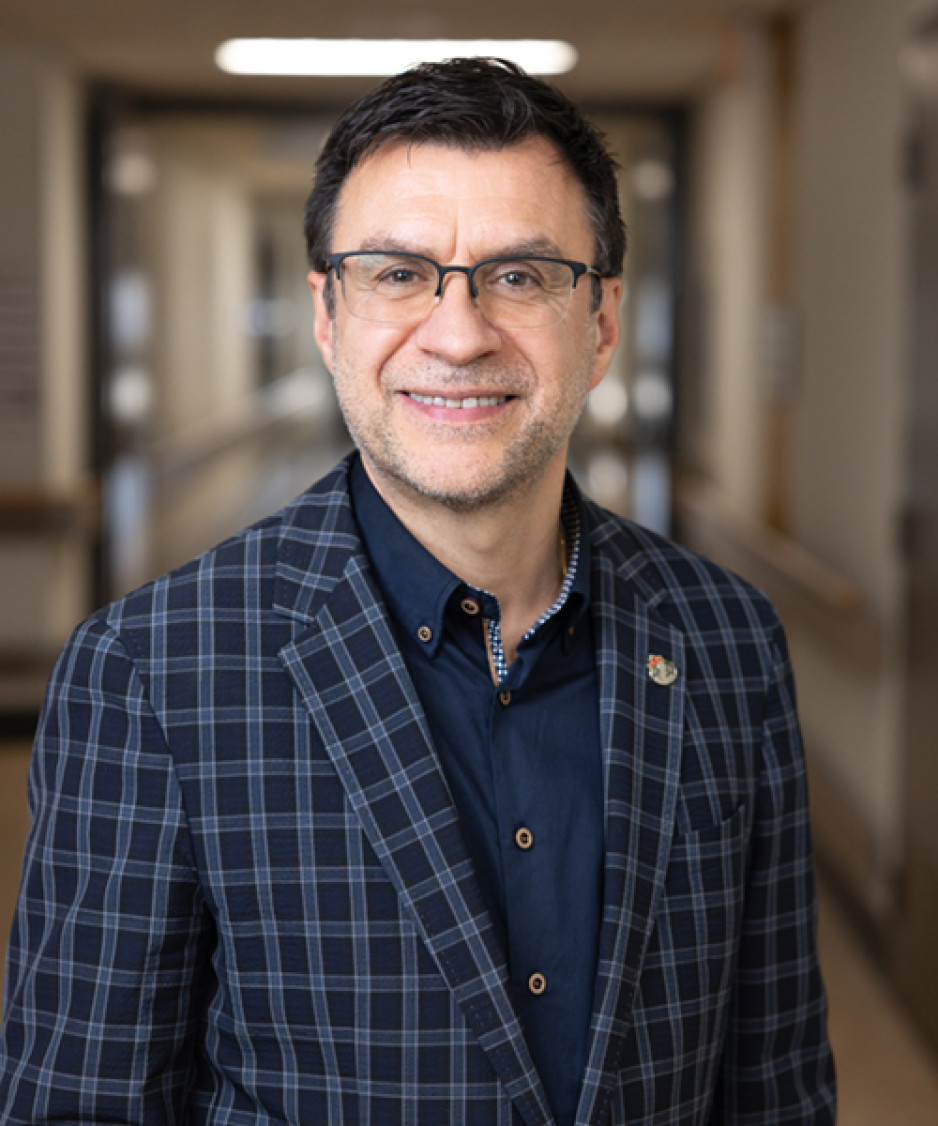
“We create research that is meaningful and actionable to make a difference in the community of those we serve,” says Dr. Richardson, Director, MacDonald Franklin OSI Research Centre.
“Our end goal is to change policy and practice and to empower veterans so that they can take charge of their lives, become strong advocates for themselves and make positive change in their lives.”
The MacDonald Franklin research team has long distinguished themselves with their approach to research – an approach they are utilizing in all of their projects.

Liu, who serves as the Centre’s Head of Scientific Development and Knowledge Mobilization, says that they work on the principle of ‘nothing about us without us.’ That means engaging with veterans, their families and their care providers in every stage of research.
“We recognize the ecosystem that exists, and we try to bring those voices into research by inviting them to co-design the research with us,” says Liu.
“We aren’t veterans,” she adds. “And if we want them to participate in the research, we have to ensure that we honour their experience, the work they have done, and reflect their experience.”
Exploring the comorbidity of PTSD and chronic pain
Several of the five projects are in the early stages of data collection and analysis, including a qualitative study to explore and compare the experiences, barriers, facilities and treatment preferences of Veterans related to length of time experiencing chronic pain. Another project involves a qualitative interview study helping to identify service gaps and inform strategies to improve coordinated, accessible and effective supports.
There are also two mixed methods studies, one examining the relationship between chronic pain and military-to-civilian transition, and another looking at a care model delivered by ChangePain, assessing its accessibility while measuring its clinical, familial, social and economic impacts to guide future implementation and improvement.
One project is complete and is currently being prepared for publication. That project is focused on documenting how things such as sex differences, deployment history and other factors influence the relationship between chronic pain and mental health in military populations.
A quantitative study, it used clinical intake data from CAF members and veterans referred for outpatient mental health care to examine the associations between chronic pain and co-occurring mental health conditions, overall and stratified by sex.
The hope is that the findings will inform more targeted clinical approaches and policy decisions to improve care for those who experience both chronic pain and mental health challenges.
Burgess is proud to have participated in two research studies with the Centre and says that it’s really meaningful to contribute to the change. He’s also grateful to those the donors who have supported the Centre and research projects.
“With all the chaos in the world today, it’s good to see that there are people who are trying to make this world a better place.”
MacDonald Franklin OSI Research Centre
The MacDonald Franklin OSI Research Centre was established in 2017, through the generosity of local London philanthropists, Kyle MacDonald and the late John Franklin, whose legacy of compassion and commitment to veterans mental health care continues to inspire research. In 2023, the couple made another donation of $1.8 million to fund life-changing research at the Centre. Most of the gift, $1.5 million, supports research efforts to identify emerging treatment opportunities in the military and for veterans suffering with PTSD and other operational stress injuries, resulting from military service.
The London couple’s commitment to the care of veterans honours the memory of their fathers who both served in the Canadian military. Kyle’s father served in the Korean War, and John’s father served in World War I and World War II.
St. Joseph’s OSI Clinic, one of ten in the country, offers veterans evidence-based personalized treatment including individual psychotherapy and pharmacotherapy (medication). Working in partnership with the OSI Clinic, the MacDonald Franklin OSI Research Centre is a national and international leader focused on research on military and veteran mental health.