

Raising the standard in long-term care at Mount Hope
Image
Image
A new designation recognizes Mount Hope’s work to strengthen relationships, improve end-of-life and elevate the resident experience.
At Mount Hope Centre for Long Term Care, a three-year journey focused on advancing sustainable improvements in resident care has led to a significant achievement – a Best Practice Spotlight Organization – Long-Term Care (BPSO-LTC) designation.
The designation by the Registered Nurses Association of Ontario recognizes organizations around the world that implement evidence-based Best Practice Guidelines (BPG) to improve patient experience and outcomes.
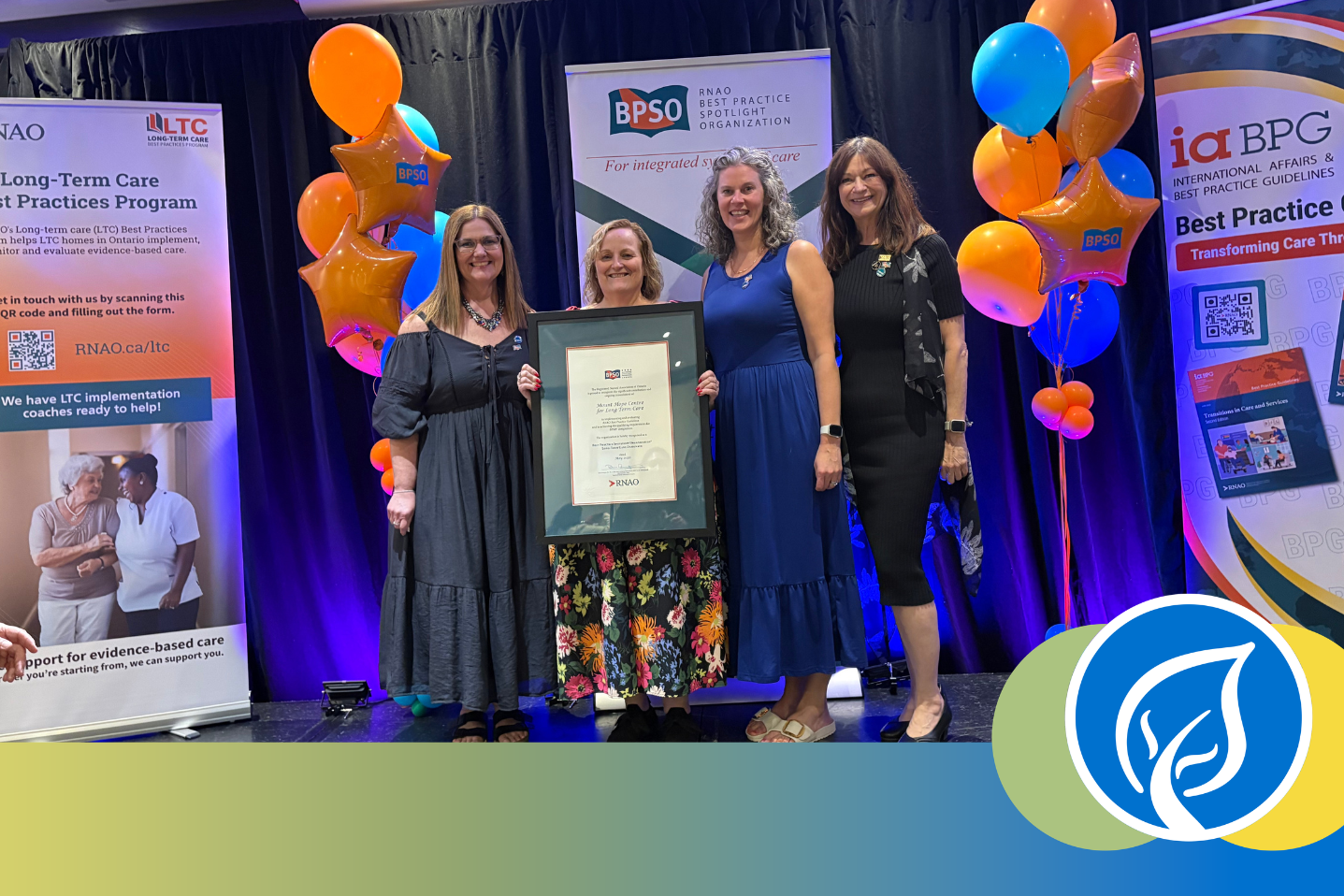
Achieving the designation required a significant commitment across the organization. Over three years, teams have participated in monthly data reports, gap analyses, attended knowledge exchange seminars, policy updates and practice changes while ensuring a number of staff champion the work to move it forward.
Only 10 per cent of the more than 600 long-term care homes across Ontario have received the BPSO-LTC designation, making Mount Hope a leader in quality resident care.
“Health care is very busy and constantly changing,” says Tanya Pol, Executive Director at Mount Hope. “This designation reflects Mount Hope’s commitment to continuous improvement. The status quo isn’t enough. We will always continue to do better.”
The work also continues beyond the designation, as redesignation is required every two years to ensure ongoing improvements and accountability.
Mount Hope focused on three BPGs: person and family-centred care, palliative care in the last 12 months and end-of-life care during the last days and hours.
Person and Family-Centred Care
Person and Family-Centred Care was the first BPG established at Mount Hope in 2023 emphasizing the importance of knowing the individual, beyond the illness that brought them to the long-term care home.
“Who is this individual before they came to Mount Hope?” explains Pol. “They lived a life before, so their illness doesn’t define them. Who they are is really important and that fundamentally roots what we do.”
As part of this work, the recreation team introduced ‘All about me’ posters by sitting down with the residents and/or their family members to learn more about their lives. The initiative strengthens relationships between residents and the care team while reflecting the organization’s values of respect, excellence and compassion.
“If you don’t know a person, it’s really hard to establish that relationship,” says Pol.
Palliative Care and End of Life
For most residents, a long-term care home is their final home. While palliative and end-of-life care can be emotionally challenging, it is also deeply meaningful work.
Palliative care can span months, and as such nurse practitioners have received specialized training to lead those difficult and important conversations.
Residents undergo clinical assessments every 92 days and when indicators suggest they are entering palliative care or end-of-life phase, it triggers having those conversations.
“As difficult as they are, having those conversations is what being person-centered means,” explains Pol. “Having a team that is proactive supports building the capacity and openness to having those conversations.”
The proactive approach also prevents residents from being transferred to the hospital when their outcomes will likely not change. With three NPs on site throughout the week, working alongside a highly skilled care team, Mount Hope has achieved a 10.4 per cent reduction in potentially avoidable ER transfers.
As the complexity of resident care increases in long-term care homes, this model is improving care by having early care conversations, stronger communication with families, and a proactive approach to symptom management.
“I’m incredibly proud of our team at Mount Hope,” concludes Pol as the achievement reflects what matters most – to ensure every resident feels heard, respected and cared for with excellence and compassion.
Other Stories
Speaking their language
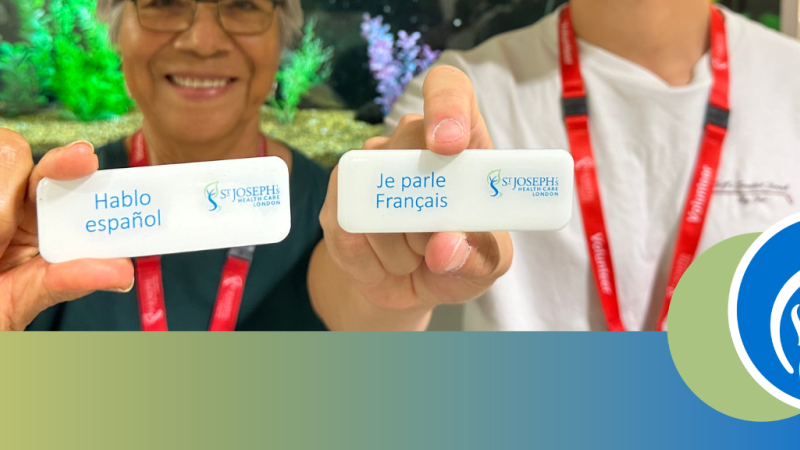
Bridging a communication gap has become a bit easier for patients and visitors at St. Joseph’s Health Care London (St. Joseph's). This summer, two new tools were introduced to help create a more welcoming and comfortable experience for individuals who visit St. Joseph's and whose first language is...
Read more
One decision at a time: Barbara Weryk recognized for empowering people living with diabetes
Barbara Weryk knows what's in her campers' bags because she carries most of it herself: insulin, glucose monitors, backup supplies, an emergency plan. Barbara has lived with diabetes for 12 years and wears an insulin pump and glucose sensor. She's also the camp nurse. Since 2018, Barbara has...
Read more
Finding community in a moment of connection
The impact of feeling heard and seen- even for a moment - can make a meaningful and lasting difference. When individuals feel understood, it can help ease frustration and bring a sense of calm. For a recent patient of St. Joseph’s, that moment came through the support of two volunteers who...
Read more