


Transforming frontline care
Nursing scientist Amanda McIntyre is leading a study – made possible because of donor support – to improve screening in long-term care for a painful muscle condition called spasticity

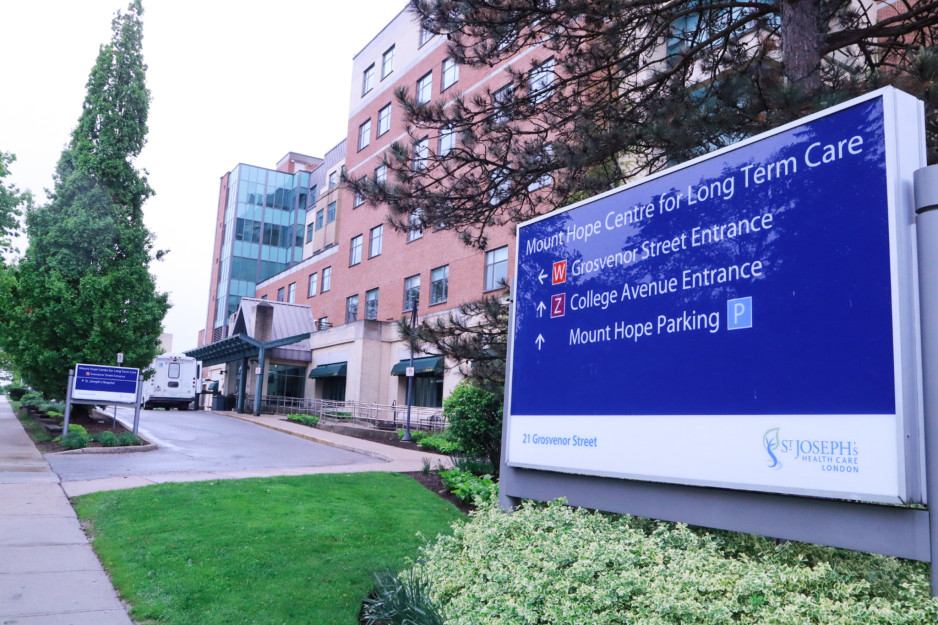
“The thing about spasticity is that if you've ever been in long term care, you've definitely seen it. You may not have known what it is, but you've seen it before,” says Amanda McIntyre, professor and nursing scientist, about the focus of her current study at St. Joseph’s Mount Hope Centre for Long Term Care.
She was awarded funding through the donor-supported Lawson Internal Research Fund (IRF) Competition to pursue this study. The award she received was made possible through two endowed funds at St. Joseph’s Health Care Foundation: the Imperial Oil Fund in support of Geriatric Research in Medicine and the Sam Katz Fund in support of Geriatric Research.
Spasticity is a condition in which muscles become unusually stiff or tight because of miscommunication between the brain and the muscles after nerve or brain damage, such as from a stroke, multiple sclerosis, or a spinal cord injury. This increased muscle tone can cause sudden spasms, pain, and difficulty moving or controlling the affected limbs, making walking or daily activities challenging.

Fortunately, this condition can be managed with physical therapy, medications or even injections like botulinum toxin – if a clinical diagnosis is made early. Accessing the right treatment can transform someone’s quality of life.
But spasticity is also widespread in long-term care settings. Right now, there is no standardized way for frontline staff like nurses to screen for this condition in residents, even though many people exhibit symptoms.
“We need a model of care and referral process and it isn’t done well right now,” McIntyre says. “It exists in rehabilitation settings and it exists in the community, but it’s not as straightforward in long-term care.”
McIntyre is working to launch standardized screening for spasticity on the frontlines in long-term care, with Mount Hope as the site for her research. This study builds on years of research to improve access to care and health service delivery, along with her own clinical experience as an emergency room nurse.
A new model of care
The inspiration for the study came from an unexpected source. Physiatrist Dr. Thomas Miller’s office – and site of the electromyography laboratory – was in Mount Hope before the pandemic and later moved to Parkwood Institute. Electromyography is a diagnostic test used to assess muscle health. Dr. Miller suggested to McIntyre that treating spasticity in long-term care residents could be improved with a rehabilitation model and improved nursing-led teamwork approach.
Many residents were exhibiting spasticity, but there was no process or tools in place for frontline workers to assess and guide them to appropriate treatment. This is common in long-term care settings, McIntyre says.
With the support offered by the IRF award funded by Foundation donors, co-investigators Dr. Miller and McIntyre started exploring a new screening process for this condition that that will one day be used to improve the recognition and impact of spasticity in long-term care facilities across the country.
A game-changing study
McIntyre has conducted a multi-method (qualitative and quantitative) study of nearly 300 residents at Mount Hope. In addition to Dr. Miller, the research team also includes Garrison Lin, a registered nurse in the South Huron Hospital emergency department and master of science in nursing student at Western University, as well as Mount Hope’s Jennifer Walker, Registered Practical Nurse, and Deanna Blackwell, PSW.
Using the screening tool, they were able to identify spasticity among residents with 89 per cent accuracy. The team found that residents with the condition had poorer functional outcomes, more pain and a higher burden of care. Receiving a clinical diagnosis allows for proper management which can greatly reduce their symptoms and improve their quality of life.
Next, they’re aiming to conduct a multi-site pilot study of the spasticity screening protocol. Having a standardized tool will enable frontline staff like nurses and PSWs who interact with residents every day to know what to screen for – and how to guide them to a physician assessment and life-changing treatment plan.
A massive ripple effect
McIntyre shares that this project wouldn’t be possible without donor support. “This funding is everything,” she says. “My nursing practice-based research is on the frontline – it’s boots on the ground, studying with real patient data. Unfortunately, that takes so much time and manpower, and manpower costs.”
And she’s proud to be representing a group of healthcare workers who often go overlooked in research: nurses. “It feels really good to be recognized as a nursing scientist doing clinical health research. It’s so hard for nurses to do research because they don't have a person to look up to, to guide them, to mentor them. This actually has a massive ripple effect throughout the nursing community at St. Joseph's.”