

Unlocking alzheimer's mysteries
Because of you, a new way to detect and predict Alzheimer’s disease is happening at St. Joseph’s.
To researchers, Alzheimer’s disease is mystifying. It has no known cause, and no cure – so far.
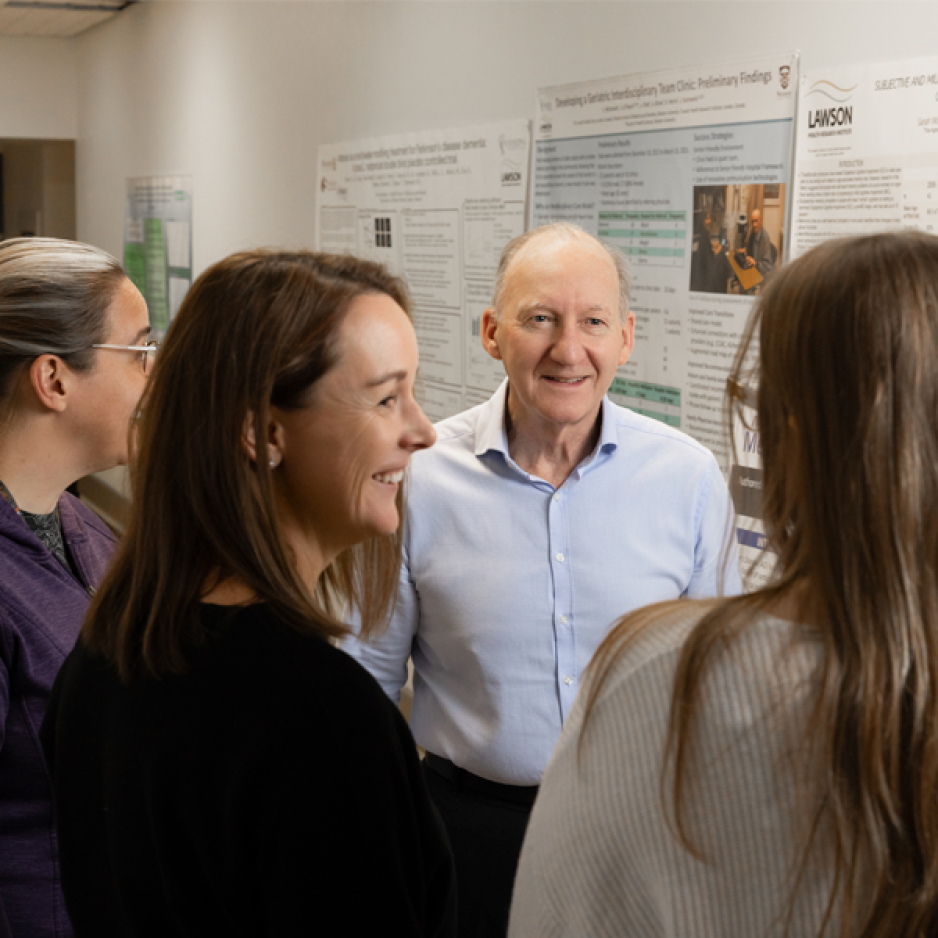
But early detection can open the door to fresh hope. A research team at St. Joseph’s Lawson Research Institute is pioneering a new local initiative, made possible through your support. Its goal is to improve access to early diagnosis by testing biomarkers when someone or their loved ones first notice memory difficulties.
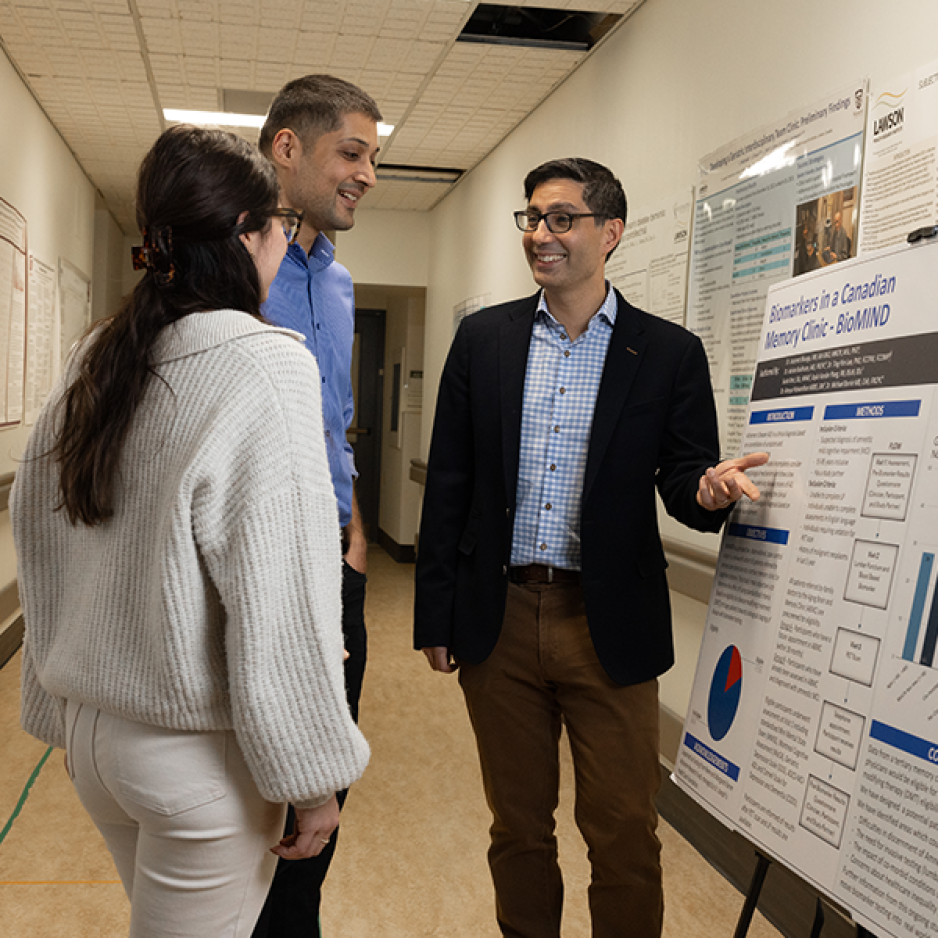
It’s known that a build-up of proteins like amyloid and tau in the brain is linked to Alzheimer’s disease. Launched in 2024, the BioMIND study (Biomarkers for the Molecular Identification of Neurodegenerative Dementia) is exploring comprehensive testing to identify these proteins and detect the disease in patients referred from St. Joseph’s Aging Brain and Memory Clinic.
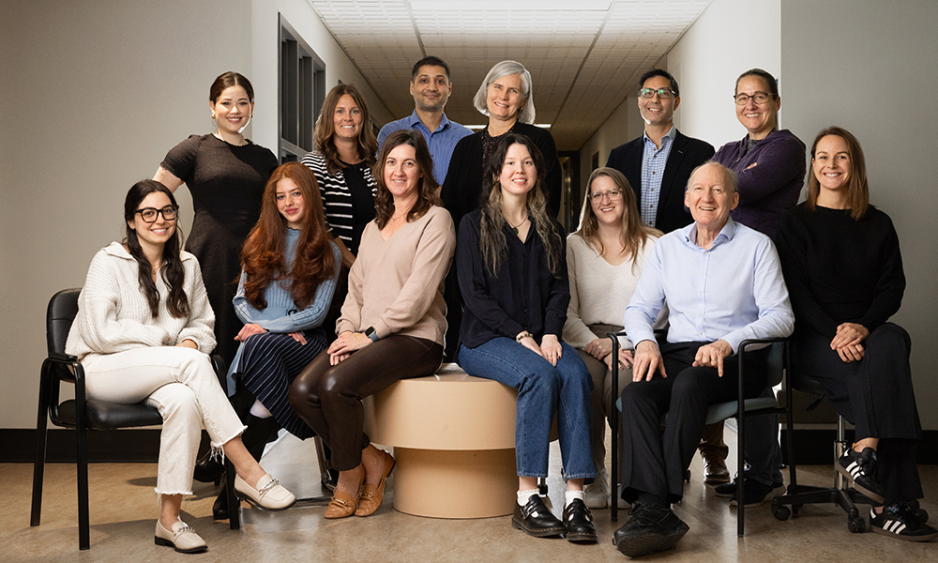
Dr. Jaspreet Bhangu is leading this work with an impressive team that includes Dr. Michael Borrie, Dr. Jennie Wells, Dr. Ameya Patwardhan and Research Coordinator Kayla Vander Ploeg.
“By streamlining the testing, applying standardized criteria and dedicating resources to the problem, we were able to reduce that wait time to just over six months,” says Dr. Bhangu.
“It can’t be overstated how exciting these breakthroughs are for patients suffering from memory concerns,” shares Dr. Bhangu. “Not only can we diagnose the disease more accurately, but we can also now give a more accurate prognosis and – most importantly – develop personalized treatment plans.”
Study participants undergo a lumbar puncture to analyze cerebrospinal fluid, have blood samples taken and are scanned with positron-emission tomography to image proteins in the brain.
Taken together, the data detects the presence of Alzheimer’s and could predict someone’s response to treatment.
These biomarkers identify the disease with more than 90 per cent accuracy, years before traditional clinical methods.
To date, 75 per cent of BioMIND participants have tested positive for Alzheimer’s-related biomarkers. This pathway has significantly reduced their wait time to diagnosis – outside of the BioMIND cohort, the wait for diagnosis could be two years or more – and they could take part in randomized controlled trials of disease-modifying therapies earlier.
“By streamlining the testing, applying standardized criteria and dedicating resources to the problem, we were able to reduce that wait time to just over six months,” says Dr. Bhangu.
The goal is to one day shift biomarker testing into real-world clinical settings – here in London and beyond. Your generosity is pivotal in moving this study forward and making an impact in the lives of patients and families.
“The ability to provide a more personalized treatment plan is powerful,” says Dr. Bhangu.