


Their best shot
Donors funded leading-edge imaging equipment to help the breast care team guide patients through care
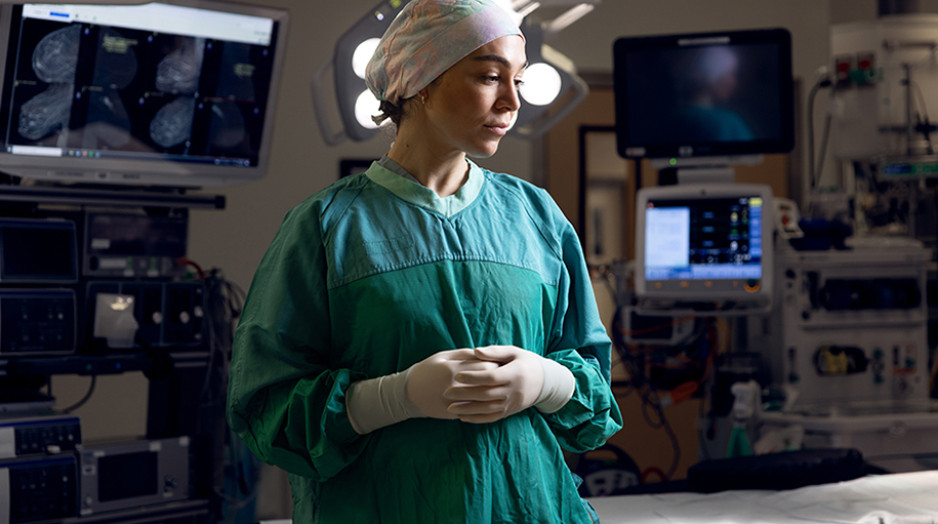
Breast cancer is a journey that affects 1 in 8 people in Canada every year. But new imaging equipment at St. Joseph’s is now able to detect hard-to-find tumours in breast tissue – giving patients their best shot at a good outcome.
And these technologies are only possible through the generosity of donors across this community.
“It has really improved our breast cancer diagnostics, which translates into better clinical care and surgeries,” says Dr. Sarah Knowles, surgical oncologist and Medical Director, St. Joseph’s Breast Care Program, about the new equipment. “Patients really benefit from detailed imaging that allows me to give them clear information and help them process and get through it.”
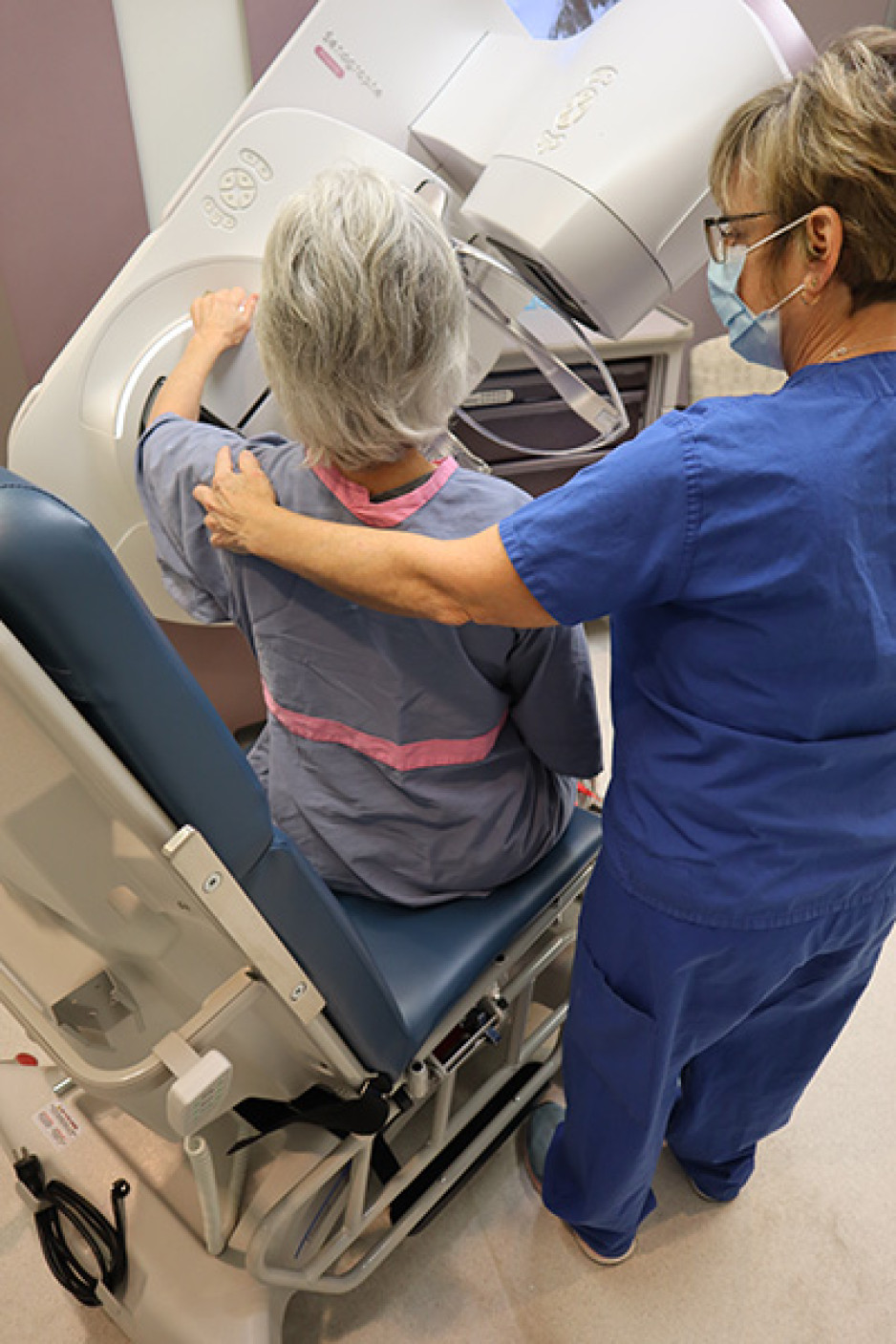
At St. Joseph’s Norton and Lucille Wolf Breast Care Centre, patients receive streamlined services, from screening and assessment to surgery. The waiting room is filled with people anxious to find out their next steps.
Providing the best breast care requires constant re-investment in the latest technology. In 2022, the Foundation reached out to the community to help fund updated imaging equipment to replace older models and introduce leading-edge technology.
Donors came through in a big way – funding over $2.3M to upgrade the imaging equipment. They gave to say thank you for their own care experience, to recognize a friend or loved one who faced breast cancer or simply to make health care better.
Their support has helped to purchase contrast-enhanced mammography (CEM) units, mammography and stereotactic biopsy units, ultrasound machines and soothing sensory suites where patients can relax during visits.
“It has really improved our breast cancer diagnostics, which translates into better clinical care and surgeries.” - Dr. Sarah Knowles
The new CEM technology is particularly effective at uncovering cancer in dense breast tissue. This exam combines contrast dye with a digital mammogram to produce clear images that reveal even the smallest abnormalities. St. Joseph’s is now a leading centre in Canada for CEM.
In October 2024, Ontario lowered the minimum age for mammography in response to rising rates of breast cancer among younger people. Now, anyone aged 40 and up can self-refer for a mammogram and benefit from early detection. This has increased the demand for screening at St. Joseph’s and made the new equipment even more vital.
Dr. Knowles says that the close collaboration and open communication between breast imaging and the clinical team is key to ensuring the best outcomes for patients. “It means that things don’t ever get missed. We’re all on the same page,” she shares. “Because of our ability to be on the forefront of technology, patients get access to things they may not get anywhere else.”