
Serving hope
Speech-Language Pathologists across Parkwood Institute took part in training to enhance care for people with swallowing difficulties – all thanks to donor support
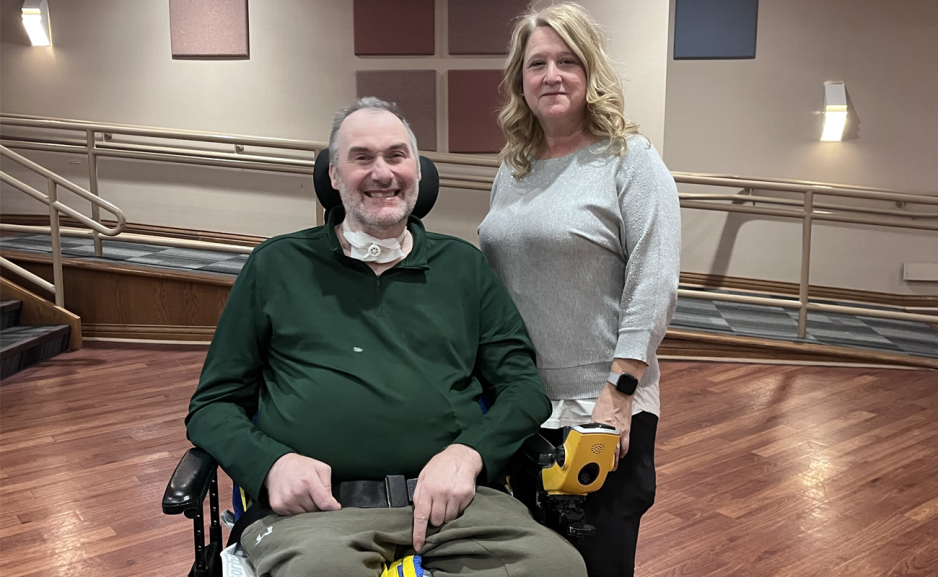
Jason sat down, ate dinner with his wife and watched the sun set. But this wasn’t any ordinary dinner. It was the first time the couple had enjoyed a meal together in more than a year and a half, when Jason was admitted to the hospital for complex medical issues.
He couldn’t wait to tell Penny Welch-West, his speech-language pathologist (SLP), about this huge milestone. They’ve been working together closely for months to treat the swallowing disorder he had developed.
“It was a special reminder to me of why we do what we do,” shares Welch-West about hearing Jason’s news. “That’s the goal: eating more of your favourite foods, with the people you love.”
Helping the helpers
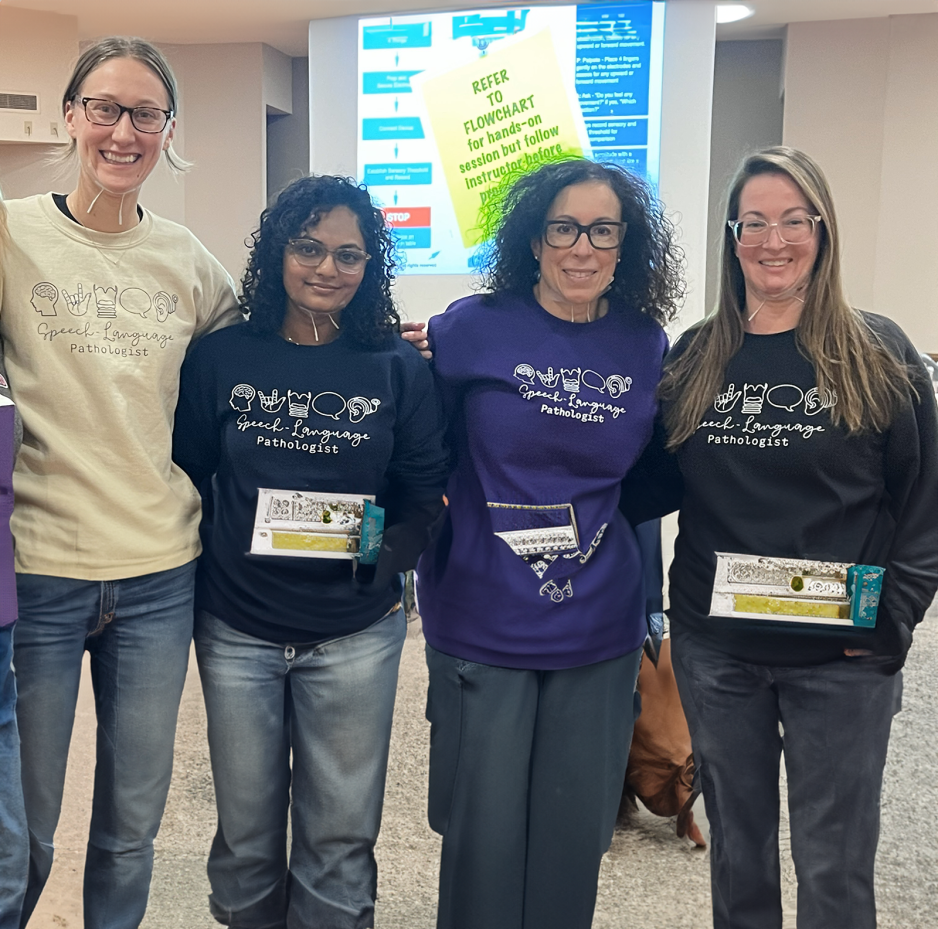
Thanks to donor support through the endowed Jean Bebensee & Roy Cottier Award for Rehabilitation Staff Development, 15 SLPs from across the spectrum of care at Parkwood Institute recently took part in two days of specialized training to enhance care for their patients.
St. Joseph’s is one of the first hospitals in Canada to train SLPs on neuromuscular electrical stimulation (NMES) to treat patients with dysphagia (difficulty swallowing). Dysphagia impacts many patient populations, including people who have had a stroke, brain injury, those navigating neurological diseases like multiple sclerosis (MS) and older adults in the Specialized Geriatric Services and Veterans Care programs. Any condition that damages the muscles and nerves involved in swallowing can lead to dysphagia.
It’s a complex, challenging condition to manage. It can lead to malnutrition and increases someone’s risk of aspiration pneumonia and choking.
“When you live a swallowing disorder, it’s all you think about,” Welch-West says. “It’s extremely detrimental to quality of life. And I think we can do better in how we treat it.”
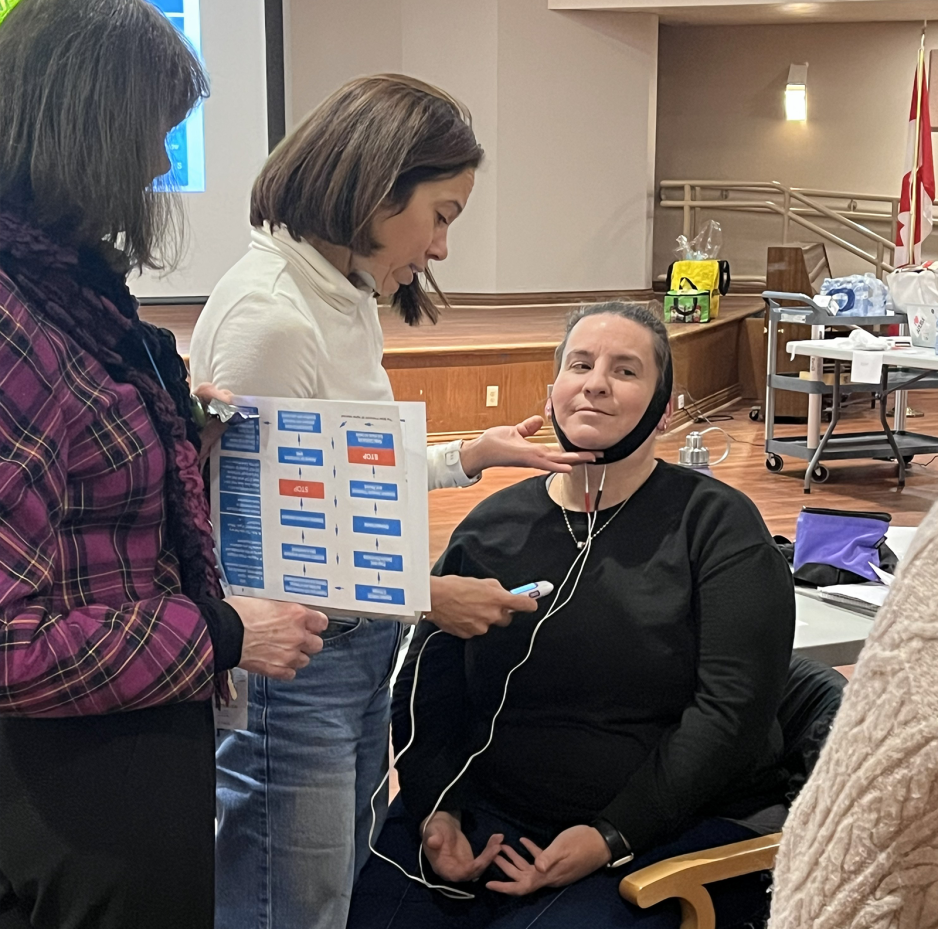
NMES represents a new frontier for treating dysphagia, but electric stimulation actually dates back to the 1800s and has a solid evidence base for muscle strengthening, pain reduction, neuro‑re‑education, and tissue healing. As such, NMES is not a “new” modality but rather use for treatment of swallowing is a new application of this evidence-based therapy.
By stimulating the muscles involved in swallowing, these devices trigger a contraction that can be timed with a swallow to retrain normal functioning. Repetition of this therapy helps to train the coordination and strength of the muscles, increasing someone's control of the movement.
Courage
Jason, a proud husband, former HVAC technician and longtime Tragically Hip fan, lives with MS. His current care journey started a year and a half ago with a bleeding stomach ulcer that brought him to intensive care, then to Parkwood Institute for complex care. He developed dysphagia while in the intensive care unit as a result of his complex medical conditions.
“Living with a swallowing disorder is hard,” Jason shares. “You have to watch what you eat and think about it all the time. I work hard, but it helps to maintain a positive mind.”
Welch-West developed a personalized plan to help Jason regain some function. They started small with a swallowing investigation, participation in the Dysphagia Intervention Group (DIGs) program (on Medically Complex Care), ice chips, targeted exercises, and moved up to more intensive treatments, including the McNeill Dysphagia Therapy (MDTP), a systematic exercise-based approach to swallowing treatment.
Throughout every step, Jason is highly committed and actively engaged. He’s showing real progress and looking forward to even more meals with his wife in the future.
A paradigm shift
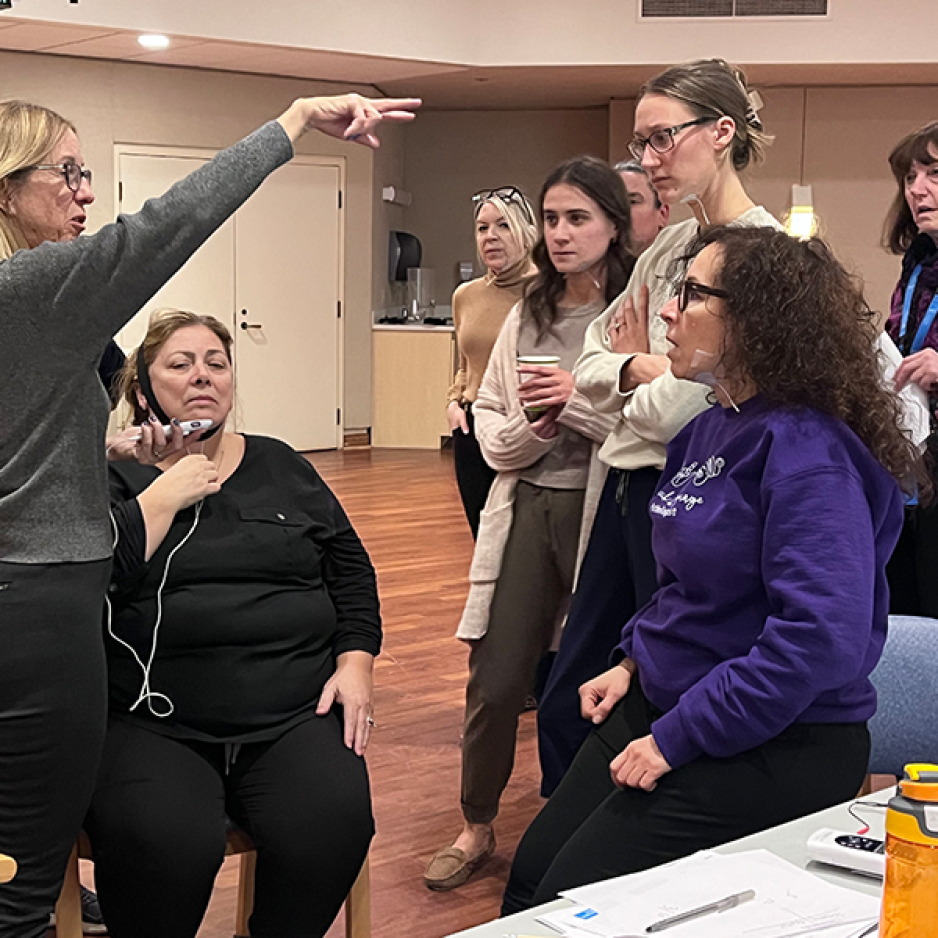
The new NMES treatment that the SLPs trialed during this training offers hope for many different patient populations. For some, this modality will be adjunct therapy and yet another tool in addressing their dysphagia and assist those living with complex dysphagia presentations
“Right now, there’s a gap in interventions for dysphagia,” says Welch-West. “We’re looking for a paradigm shift. This is a real progression, and another important tool in our toolbox.”
The SLPs in attendance received hands-on training and were able to try out the treatment themselves, all thanks to the generosity of donors who value the need for ongoing education. “There would be no training without this support,” Welch-West shares.