


Search
Search
1376 Search Results:
… on the appointee’s current hospital appointment. Name: Dr. ________________________________ … . (Date) (Signature of Department Chair) (Date) Dr: undefined: undefined: undefined: undefined: (Hospital / … on the appointee’s current hospital appointment. Name: Dr. ________________________________ …
2013 Appointment Change Chief Support Form - September 2013.doc Page 1 of 2 ` APPOINTMENT CHANGE SUPPORT FORM This form is to be completed by the Department Chief to request a change to an existing clinical appointment for a Credentialed Professional Staff (Professional Staff) in their department by...
… of the College of Physicians and Surgeons of Ontario: Dr. Member's CPSO number Member's CPSO number has applied … Nov 2012 IMPORTANT: Please complete page 2 > > > I, Dr. Name of hospital or institution Member's mailing address: Information Provided in a Certificate of Professional …
Institutional Request for Certificate of Professional Conduct Please complete this electronic form, print out, sign, and Fax to: 416-967-2654 OR Mail to: College of Physicians and Surgeons of Ontario, 80 College Street, Toronto ON M5G 2E2 Name of Institution Street City Province Postal Code Date of ...
… Dr. will provide 50% of the secretarial computer cost. You … as indicated for your files, and return all other copies to Dr. ’s office in the enclosed envelope. We would ask … Dr. will provide 50% of the secretarial computer cost. You … as indicated for your files, and return all other copies to Dr. ’s office in the enclosed envelope. We would ask …
Dr. s copy ( Western Schulich School of Medicine & Dentistrys copy ( Department of s copy ( Medical Affairs copy ( THIS LETTER OF OFFER IS ONLY TO BE ISSUED AFTER CONFIRMATION OF THREE SATISFACTORY REFERENCES FOR THE CANDIDATE. Dea...
… Dr. … Dr. …
Dr. s copy ( Western Schulich School of Medicine & Dentistrys copy ( Department of s copy ( Medical Affairs copy ( THIS LETTER IS ONLY TO BE ISSUED TO CONFIRM A CHANGE IN PRIVILEGES OR ARC CATEGORY TO AN EXISTING CREDENTIALED CLINICAL ACADEMIC
Meet the Team
The HULC Clinical Research Laboratory includes a multidisciplinary team of surgeons, therapists, engineers, scientists, technicians and graduate students working alongside research participants to improve patient care.
Meet the Research Team
Researchers
Joy C. MacDermid

Location: St. Joseph’s Health Care London
Role: Co-director
Phone: 519-661-2111 EXT: 64636
Degree and Qualifications: BSc, BScPT, MSc, PhD
Email: @email
Academic publication:
Google Scholar Homepage: https://scholar.google.ca/citations?user=O8LegU4AAAAJ&hl=en
PubMed: http://www.ncbi.nlm.nih.gov/pubmed?cmd=PureSearch&term=macdermid+j%5bAu…
My research aims to reduce the burden of musculoskeletal (MSK) pain, injury and chronic disease in studies that:
- Develop and test useful and valid measures of MSK symptoms and work role function.
- Identify modifiable biologic, psychosocial and environmental risk factors; and test how these are mediated by sex/gender.
- Test workplace, surgical and rehabilitation interventions that optimize ability and function.
- Assess musculoskeletal health at a population level
- Conduct knowledge translation research that guides efficient and effective implementation.
I conduct my work in collaboration with HULC researchers and clinicians, trainees and committed research teams that conduct national clinical trials, and research institutes comprised of high-quality researchers including IC/ES, The Bone and Joint Institute, and CIPSRT.
Staff
Katrina Munro
Name: Katrina Munro
Location: St. Joseph’s Health Care London
Role: Clinical Research Coordinator
Phone: 519-646-6100 EXT: 64544
Email: @email

Bansari Patel
Name: Bansari Patel
Location: St. Joseph’s Health Care London
Role: Clinical research assistant
Phone: 519-646-6100 EXT: 64544
Email: @email

Sahar Johari
Name: Sahar Johari
Location: St. Joseph’s Health Care London
Role: Clinical research assistant
Phone: 519-646-6100 EXT: 64544
Email: @email

Students
The HULC Clinical Research Laboratory provides education and training to the next generation of clinical researchers. Under the direction of Dr. Joy MacDermid, the lab produces high-quality research on measuring, predicting and reducing upper extremity disability with a focus on surgery and rehabilitation. Students and trainees play an important role on our team. They include post-doctoral fellows, Ph.D. and Master’s candidates, co-op students, clinical fellows, residents, medical students, and physiotherapy students.
Trainees
The HULC Clinical Research Laboratory provides education and training to the next generation of clinical researchers. Under the direction of Dr. Joy MacDermid, the lab produces high-quality research on measuring, predicting and reducing upper extremity disability with a focus on surgery and rehabilitation. Students and trainees play an important role on our team. They include post-doctoral fellows, Ph.D. and Master’s candidates, co-op students, clinical fellows, residents, medical students, and physiotherapy students.
Current Trainees
Daniel Briatico
Past Trainees
Aksha Mehta
Bansari Patel
Hajra Batool
Mahdiyeh Shafiezadeh Bafghi
Safa Jamaluddin
Opportunities
All of the HULC labs provide excellent training opportunities. See each of our lab websites for details.
There are about 20-25 trainees in the Clinical Research Lab. The lab has opportunities available for post-doctoral fellows, PhD and master’s candidates, co-op students, clinical fellows, residents, medical students and physiotherapy students.
Students can pursue a master’s or Ph.D. with Dr. MacDermid by enrolling in the Faculty of Health Sciences. Dr. MacDermid supervises students in multiple fields including Physical Therapy, Measurement and Methods, and Health Promotion. For more details on these programs and the admission requirements and process consult with the website and program staff. Funding is available for students who meet program requirements.
https://www.uwo.ca/fhs/programs/hrs/programs.html
Post-docs are individually arranged and dependent on funding.
Medical trainees can take research training by enrolling in the Masters in Surgery:
https://www.schulich.uwo.ca/surgery/education/msc_in_surgery/index.html
Training and Permissions
As a hospital-based clinical research lab, HULC adheres to the policies of St. Joseph’s Health Care London and Lawson Health Research Institute. Students and trainees are required to complete the appropriate training and permissions through Medical Affairs at St. Joseph’s.
Learn more about orientation information at St. Joseph’s, including required learning.
If you have any questions related to training or permissions in your role at HULC, please speak to your supervisor.
Partners
… October 2 & 3, 2019 Text2: 8:30AM - 4PM Text3: 10072 Oxbow Dr., Komoka ON N0L 1R0 (Country Terrace) Text5: Ann Jarvie … October 2 & 3, 2019 Text2: 8:30AM - 4PM Text3: 10072 Oxbow Dr., Komoka ON N0L 1R0 (Country Terrace) Text5: Ann Jarvie …
MENTAL HEALTH FIRST AID SENIORS Supporting the mental health of Canadas aging population Mental Health First Aid Seniors trains participants to effectively respond to an emerging mental health problem or crisis, until the situation is resolved or appropriate treatment is found. AIMS OF THE 14 HOUR T...
… care, teaching and research to Parkwood Institute. Falls Dr. Lisa Van Bussel is leading a study using a … capabilities to better predict and prevent falls,” states Dr. Van Bussel. To improve predictors of falls, Dr. Amer Burhan is leading another project in collaboration …
Cognitive Vitality and Brain Health: Mental Health Twenty percent of Canadians will personally experience a mental illness in their lifetime. Approximately eight percent of adults will experience major depression at some time in their lives. -Canadian Mental Health Association Rates of mental illnes...
… Anxiety Treatment Web Resources Vancouveranxiety.com - Dr. Korol, Clinical Psychologist Excellent sessions on … Anxiety Treatment Web Resources Vancouveranxiety.com - Dr. Korol, Clinical Psychologist Excellent sessions on …
PAIN MANAGEMENT PROGRAM MENTAL HEALTH RESOURCE LIST MENTAL HEALTH RESOURCES INFORMATION Anxiety Treatment Web Resources Vancouveranxiety.com - Dr. Korol, Clinical Psychologist Excellent sessions on Coping with Anxiety &Meditation for Busy Minds. Highly recommended. Books About Depression, Anxiety, a...
Metabolic syndrome commonly associated with early rheumatoid arthritis
A Canada-wide multicentre study of patients with early rheumatoid arthritis (ERA) has found an association between metabolic syndrome and rheumatoid arthritis, and that the prevalence is most common among men and postmenopausal women.
September is National Arthritis Awareness Month in Canada. With rheumatoid arthritis, the patient’s joints and organs are “attacked” by their own immune system. This is the most common type of autoimmune arthritis. Persons with the disease typically experience swollen joints, pain and stiffness, and chronic fatigue. In later stages of the disease, incessant inflammation breaks down the joint, causing permanent damage, and can impair nerves and blood vessels. It is important for patients to begin treatment as early as possible.
The Canadian Early Arthritis Cohort (CATCH) study collects data on over 3,000 patients across Canada with ERA. Patients in this cohort are defined as a person who is within one year of symptom onset.
Dr. Lillian Barra, Associate Scientist at Lawson Health Research Institute (Lawson), and Rheumatologist at St. Joseph’s Hospital London, was interested in learning about the association between ERA and other diseases and conditions that are commonly found among patients with ERA. Metabolic syndrome refers to a cluster of conditions that often occur together and increase the risk of heart disease, stroke, and type 2 diabetes. These include heart disease, high blood pressure, abnormal cholesterol, obesity and high blood sugar.
Dr. Barra and her team conducted a cross-sectional examination of CATCH data and found that metabolic syndrome was present in 31 per cent of participants, and more common among men (42%), than women (26%). Metabolic syndrome was more prevalent in postmenopausal women (33%) when compared to premenopausal women (15%). They also found that women with ERA experienced menopause earlier in life.
“It is interesting that we found these conditions of metabolic syndrome so early in the course of this disease. While previous researchers have demonstrated an association, it remains a question whether metabolic syndrome contributes to rheumatoid arthritis, or vice versa.” explains Dr. Barra.
“This information can help inform clinicians managing patients with rheumatoid arthritis. In the future, we hope to develop more precise guidelines around when these comorbidities should be screened for and co-managed over the course of treatment.”
Currently, if a newly diagnosed rheumatoid arthritis patient presents with severe symptoms, they are given therapies that work quickly to reduce the inflammation in addition to long-term disease modifying drugs that are the standard of care. These therapies include corticosteroids, such as prednisone, and non-steroidal anti-inflammatories (NSAIDs), such as Advil or Motrin. For the clinician, it is important to consider if the patient has any conditions of metabolic syndrome, as these fast-acting therapies are known to increase the risk of heart disease and stroke. The treatment approach may be altered if these conditions are present.
Dr. Barra plans to re-examine the CATCH data at a later time, to determine if metabolic syndrome and rheumatoid arthritis worsens or improves over time. In future research, she also hopes to discover some of the causes and mechanisms at play, to better understand why many patients with rheumatoid arthritis also have metabolic syndrome.
Scientist
Methamphetamine Harm Reduction Project Launch Event
2:00pm - 3:00pm
Integrating harm reduction strategies into hospital settings for people who use methamphetamine
You are invited to attend this virtual launch event for the Methamphetamine Harm Reduction Project, being led by researchers at Parkwood Institute Research, a program of Lawson Health Research Institute.
Friday, April 23, 2021
10 - 11 a.m.
Register here
Evidence-based harm reduction strategies, for example needle exchange services, supervised injection sites and safe supplies, have been used in the community to reduce the risk of infection and overdose, and the risk of other harmful behaviour like crime.
Currently, harm reduction strategies for methamphetamine use are not used in Canadian hospitals. The standard of care does not allow the use of illicit substance in hospital, making implementation of harm reduction strategies challenging. A safe consumption of substances requires an exemption under Section 56.1 of the Controlled Drugs and Substances Act from Health Canada.
A recent London, Ontario study found that people who use methamphethamine actually have a greater risk of infection in hospital than in the community. "This may be due to better access to harm reduction in the community compared to in hospital, and so people are using cleaner techniques," explains Dr. Michael Silverman.
With support from Health Canada, a new hospital-based research study led by Dr. Cheryl Forchuk seeks to find what harm reduction strategies are needed and whether these can be implemented in hospital. This study represents a groundbreaking shift for the health care system in Canada.
The views expressed herein do not necessarily represent the views of Health Canada.
Michael Payne
Michael Payne, MD
Assistant Professor, Schulich School of Medicine and Dentistry
Key Areas of Focus:
Amputation
Phone:
519-685-4292 ext. 45018
Email:
Publications:
Accepting Grad Students:
Yes
About:
Dr. Michael Payne is a physiatrist at Parkwood Institute and an Associate Professor in the Department of Physical Medicine and Rehabilitation at the Schulich School of Medicine & Dentistry at Western University. He completed his undergraduate degree in Mechanical Engineering at Queens University followed by a Master’s degree in Sports Medicine and a medical degree at Western University, residency training in Physiatry at the University of Ottawa, and then a clinical fellowship in Australia.
Dr. Payne’s clinical practice has always focused on addressing mobility limitations across a wide range of physical impairments and has been the medical director of the Regional Amputee Rehabilitation program at St. Joseph’s Health Care London since 2009. Dr. Payne collaborates extensively with Dr. Susan Hunter from the School of Physical Therapy from Western University to address research questions centred around improving meaningful outcomes for people with limb loss or deficiencies. Specific interests include mobility outcome measurements, dysvascular amputation associated cognitive impairment, biomechanics, quality of life, gait abnormalities and falls.

Military and Veteran health research shared at Research Consortium meeting
Canadian researchers working to improve military and Veteran health met at St. Joseph’s Health Care London’s (St. Joseph’s) Parkwood Institute on December 4, 2017 for their fifth Research Consortium meeting.
The Research Consortium group, established in 2015, is led by Lawson researcher Dr. Don Richardson, Physician Clinical Lead at St. Joseph’s Operational Stress Injury Clinic (OSI Clinic). The group meets two to three times a year to provide updates on their projects and foster collaborative research partnerships, rotating between London, Hamilton and Toronto as host sites.
“Members of the military and Veterans have unique symptoms and treatment needs so it’s important that we engage in knowledge transfer with other researchers working with the same group of patients,” says Dr. Richardson. “The Research Consortium meetings are a great way to learn about recent projects from our peers and identify new avenues for collaboration with the goal of providing the best possible treatment outcomes for our patients.”
In addition to researchers from St. Joseph’s OSI Clinic, the Research Consortium group includes representatives from Defence Research and Development Canada, the Canadian Institute for Military & Veteran Health Research, the Canadian Armed Forces, the Centre for Addiction and Mental Health, Homewood Research Institute, Western University, University of Manitoba, McMaster University, University of Toronto, Ryerson University and Queens University.
St. Joseph’s OSI Clinic provides specialized mental health services to Veterans, members of the Canadian Armed Forces, the Royal Canadian Mounted Police (RCMP) and their families who are experiencing mental health challenges as a result of service. The OSI Clinic is one of ten outpatient clinics in a national network across the country funded by Veterans Affairs Canada.
At the meeting, Dr. Richardson provided an update on recent projects at St. Joseph’s OSI Clinic, including research to enhance the understanding of moral injury.
Moral injury refers to lasting emotional distress that can occur when military men and women are exposed to events that disturb or undermine moral beliefs about how people can be expected to behave. OSI clinicians reported that exposure to these events drastically changes their patients’ views of the world; causes them to question their religion, spirituality or human nature; and often leaves them feeling disconnected from their loved ones. The researchers will now collect additional data from clinicians across the OSI national network and from the Research Consortium group. Part of their investigation will explore the relationship between different kinds of traumatic events and moral injuries, and mental well-being.
Mobilizing hospital-based research in the battle against COVID-19
The COVID-19 pandemic is proving to be one of the most pressing health challenges of our time. With a rising number of cases and deaths worldwide, there’s a global urgency to finding a solution.
As the research institute of London Health Sciences Centre (LHSC) and St. Joseph’s Health Care London, Lawson Health Research Institute excels in rapid response research and is uniquely positioned to tackle this problem from within hospital walls.
Our researchers belong to a health system at the forefront of the pandemic. With close proximity to patients and access to samples, they are mobilizing to address COVID-19.
“Lawson researchers include clinicians directly involved in the treatment of COVID-19 patients, as well as laboratory-based scientists and those with other expertise related to the pandemic response,” says Dr. David Hill, Scientific Director at Lawson and Integrated Vice President at LHSC and St. Joseph’s. “They are eager to contribute a solution and are combining their knowledge to address this issue from all angles.”
Already, Lawson research teams are initiating projects ranging from pre-clinical studies to clinical trials. They are planning to explore diagnosis, prevention and treatment of the disease, as well as long-term and mental health impacts. An immediate goal is to partner with other research hospitals to improve outcomes for COVID-19 patients around the world.
There are numerous COVID-19 studies underway at Lawson and many more going through the necessary approval processes. Recognizing the importance of a rapid response to this pandemic, Lawson’s Administration team is working to fast-track approval of the studies.
Lawson also offered a special internal COVID-19 funding competition to assist our researchers in their efforts. Lawson’s COVID-19 Pandemic Response Internal Research Fund supports projects that are identified as having the potential to impact the management of this pandemic and those that enhance our understanding of the pathophysiology of COVID-19. See the results of this competition and the 14 funded projects, for a total of more than $202,000 invested.
While there is much to learn about COVID-19 and its impact on human health and our health care system, Lawson researchers are tackling the disease head-on.
How can you support COVID-19 research and clinical care?
Research at Lawson can be supported through three hospital foundations. With an outpouring of support from our community, the foundations are collecting donations to support our hospitals through this challenging time. Learn more about donating:
- St. Joseph’s Health Care Foundation – St. Joseph’s Health Crisis Fund
- London Health Sciences Foundation - COVID-19 Response Fund
- Children’s Health Foundation - COVID-19 Response Fund
Learn more about COVID-19 research at Lawson:
Scientist
Monitoring the effects of COVID-19 quarantine measures on young adults with mood and anxiety disorders
LONDON, ON – Concerned that patients from the First Episode Mood and Anxiety Program (FEMAP) at London Health Sciences Centre (LHSC) would lose connection to important mental health services during the first wave of the pandemic, researchers at Lawson Health Research Institute (Lawson) tested the use of an electronic questionnaire to help monitor and assess the mental health impacts of isolating public health measures on young adults with mood and anxiety disorders.
Since the pandemic’s start, there have been concerns about the effects of quarantine measures on mental health. Young adults between the ages of 16 and 25 with mood and anxiety disorders are particularly vulnerable as they could experience high levels of depression, anxiety, traumatic stress and functional impairment from social isolation.
“It was unclear how these young adults would weather prolonged physical distancing, inactivity and reduced structure to their days. Some may be at an increased risk for depression while others may see symptoms improve due to fewer social expectations,” explains Dr. Elizabeth Osuch, Scientist at Lawson and Medical Director at FEMAP. “It is critical we understand how they respond to inform mental health care in response to the pandemic.”
The study followed 114 participants who completed regular surveys answering questions about their experiences during the pandemic, including information about their mood and anxiety symptoms, functioning and coping strategies. The team was immediately alerted if a patient’s survey responses were concerning, so they could reach out.
The research team analyzed changes in patient symptoms, functioning and coping strategies over the course of several months. Participants who were flagged for concerning scores were found to be younger, more likely to be on a waiting list for treatment, and more likely to have been laid off from work or have a higher degree of functional impairment.
“The questionnaire made it easy to stay connected with patients, and by monitoring their symptoms and functioning we were able to make sure that our resources, limited by the pandemic, could be directed to those who needed it the most,” says Dr. Osuch.
The researchers anticipated early on that those with mood and anxiety disorders would respond uniquely to the pandemic situation. Some would have more difficulty with the quarantine itself while others might ultimately find the return to normal more challenging. By understanding these different trajectories and how to track them, care can be optimized for future pandemic events or other public health emergencies.
The study, “Monitoring the effects of COVID‐19 in emerging adults with pre‐existing mood and anxiety disorders,” is published in Early Intervention in Psychiatry.
-30-
About Lawson Health Research Institute
Lawson Health Research Institute is one of Canada’s top hospital-based research institutes, tackling the most pressing challenges in health care. As the research institute of London Health Sciences Centre and St. Joseph’s Health Care London, our innovation happens where care is delivered. Lawson research teams are at the leading-edge of science with the goal of improving health and the delivery of care for patients. Working in partnership with Western University, our researchers are encouraged to pursue their curiosity, collaborate often and share their discoveries widely. Research conducted through Lawson makes a difference in the lives of patients, families and communities around the world. To learn more, visit www.lawsonresearch.ca.
Media Contacts
Celine Zadorsky
Senior Media Relations Consultant
Communications & Public Engagement
T: 519-685-8500 ext. 73502
Celine.zadorsky@lhsc.on.ca
Most instructions for inserting COVID-19 nasopharyngeal swabs don't go deep enough, research finds
LONDON, ON - There are wide discrepancies in the instructions for how deep the nasopharyngeal swabs used to test for COVID-19 are to be inserted up Canadian noses, new research from Western University and Lawson Health Research Institute has found.
As an otolaryngologist Dr. Leigh Sowerby is an expert in the anatomy of the head, neck and inside of the nose. Using that expertise, he and his colleagues examined the COVID-19 testing instructions provided by provincial and territorial authorities and found wide variations. They reported their findings in the Journal of Otolaryngology – Head & Neck Surgery.
“As a surgeon who works inside the nose all the time, I was surprised to find that most of the instructions in Canada aren’t effective to reach the nasopharynx; they just don’t go deep enough into the nasal cavity,” said Sowerby, an associate professor at Western’s Schulich School of Medicine & Dentistry and Scientist at Lawson Health Research Institute.
To perform a nasopharyngeal test, the swab must be inserted far enough into the nasal cavity to reach the nasopharynx, the upper part of the pharynx at the top of the throat behind the nose. Samples from the nasopharynx have been shown to be the most sensitive for COVID-19 testing, and are considered the gold standard.
However, less than a quarter of provincial and territorial public health instructions tell practitioners to insert the swab deep enough to reach the nasopharynx, Sowerby said.
The research found that six provinces and territories, including the Northwest Territories, Nunavut, Ontario, Saskatchewan, Prince Edward Island and Alberta, recommended that the swab be inserted to a depth of four centimetres, or half the distance from nostril to ear. This depth only reaches the mid-nasal cavity, not the nasopharynx, he said.
British Columbia and Manitoba recommended a seven-centimetre depth of insertion, which is still not enough -- only reaching the posterior nasal cavity but not the nasopharynx.
In Nova Scotia and Newfoundland, the recommended depth of insertion was two-thirds of the distance from nostril to ear, which would effectively reach the nasopharynx, as would following the instructions in New Brunswick and Yukon to insert the swab from nostril to external ear canal.
“If we are doing what we are calling a nasopharyngeal swab, the technique for that should be standardized; there is no reason why there should be so much variability,” Sowerby said. “The take-home message is that if we want the most accurate test results, there is room for improvement in the test instructions. Otolaryngologists have a role to play, as we can provide a great service by actively engaging with our local and regional health authorities to train on proper technique and anatomical knowledge.”
-30-
MEDIA
Video: Nasopharyngeal swab depth of insertion
Image
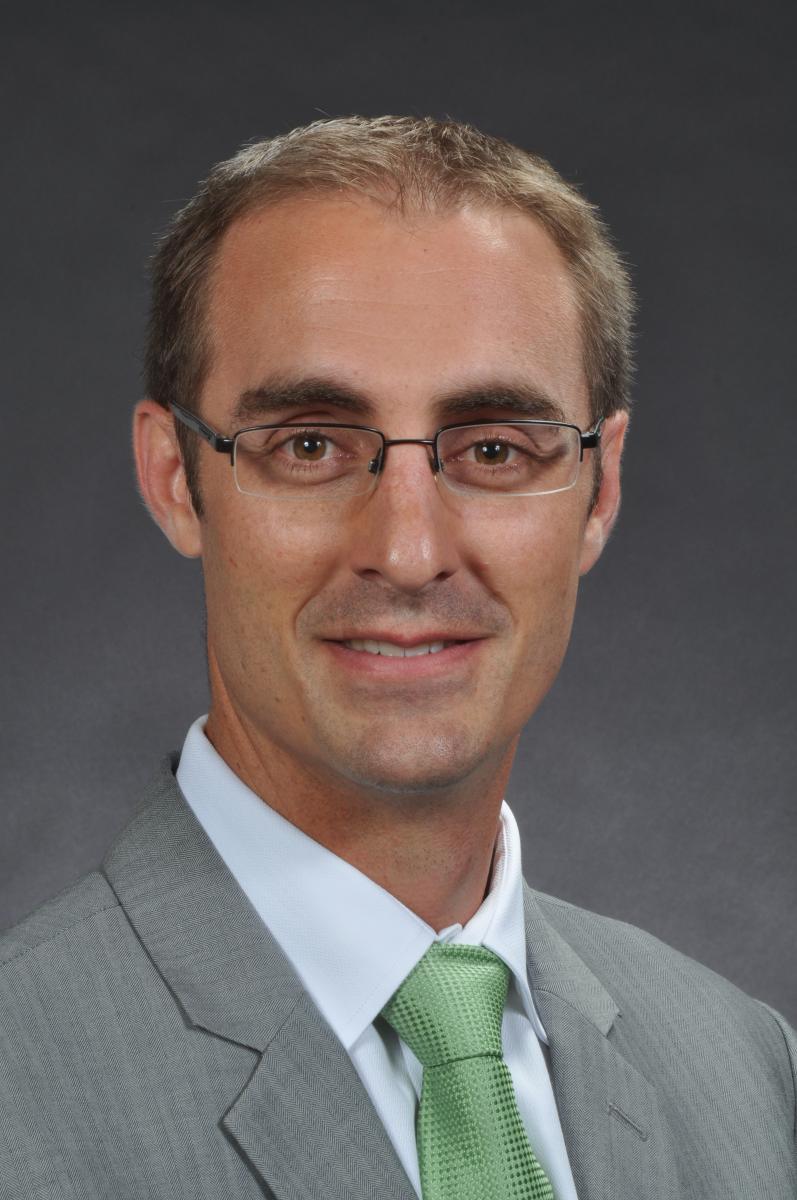
Dr. Leigh Sowerby, Associate Professor at Western’s Schulich School of Medicine & Dentistry and Scientist at Lawson Health Research Institute.
Click for larger image.
About Lawson Health Research Institute
Lawson Health Research Institute is one of Canada’s top hospital-based research institutes, tackling the most pressing challenges in health care. As the research institute of London Health Sciences Centre and St. Joseph’s Health Care London, our innovation happens where care is delivered. Lawson research teams are at the leading-edge of science with the goal of improving health and the delivery of care for patients. Working in partnership with Western University, our researchers are encouraged to pursue their curiosity, collaborate often and share their discoveries widely. Research conducted through Lawson makes a difference in the lives of patients, families and communities around the world. To learn more, visit www.lawsonresearch.ca.
About Western
Western delivers an academic experience second to none. Since 1878, The Western Experience has combined academic excellence with life-long opportunities for intellectual, social and cultural growth in order to better serve our communities. Our research excellence expands knowledge and drives discovery with real-world application. Western attracts individuals with a broad worldview, seeking to study, influence and lead in the international community.
About The Schulich School of Medicine & Dentistry
The Schulich School of Medicine & Dentistry at Western University is one of Canada’s preeminent medical and dental schools. Established in 1881, it was one of the founding schools of Western University and is known for being the birthplace of family medicine in Canada. For more than 130 years, the School has demonstrated a commitment to academic excellence and a passion for scientific discovery.
Media Contacts
Celine Zadorsky
Senior Media Relations Consultant
Communications & Public Engagement
T: 519-685-8500 ext. 73502
Celine.zadorsky@lhsc.on.ca
Most instructions for inserting COVID-19 nasopharyngeal swabs don't go deep enough, research finds
There are wide discrepancies in the instructions for how deep the nasopharyngeal swabs used to test for COVID-19 are to be inserted up Canadian noses, new research from Western University and Lawson Health Research Institute has found.
As an otolaryngologist Dr. Leigh Sowerby is an expert in the anatomy of the head, neck and inside of the nose. Using that expertise, he and his colleagues examined the COVID-19 testing instructions provided by provincial and territorial authorities and found wide variations. They reported their findings in the Journal of Otolaryngology – Head & Neck Surgery.
“As a surgeon who works inside the nose all the time, I was surprised to find that most of the instructions in Canada aren’t effective to reach the nasopharynx; they just don’t go deep enough into the nasal cavity,” said Sowerby, an associate professor at Western’s Schulich School of Medicine & Dentistry and Scientist at Lawson Health Research Institute.
To perform a nasopharyngeal test, the swab must be inserted far enough into the nasal cavity to reach the nasopharynx, the upper part of the pharynx at the top of the throat behind the nose. Samples from the nasopharynx have been shown to be the most sensitive for COVID-19 testing, and are considered the gold standard.
However, less than a quarter of provincial and territorial public health instructions tell practitioners to insert the swab deep enough to reach the nasopharynx, Sowerby said.
The research found that six provinces and territories, including the Northwest Territories, Nunavut, Ontario, Saskatchewan, Prince Edward Island and Alberta, recommended that the swab be inserted to a depth of four centimetres, or half the distance from nostril to ear. This depth only reaches the mid-nasal cavity, not the nasopharynx, he said.
British Columbia and Manitoba recommended a seven-centimetre depth of insertion, which is still not enough -- only reaching the posterior nasal cavity but not the nasopharynx.
In Nova Scotia and Newfoundland, the recommended depth of insertion was two-thirds of the distance from nostril to ear, which would effectively reach the nasopharynx, as would following the instructions in New Brunswick and Yukon to insert the swab from nostril to external ear canal.
Image
Scientist
… began slipping. He couldn’t climb quality of life by addressing the to make every breath, every step, more than two … had given up on him, he said, “so I gave up too.” bedroom, he once got stuck on the third step gasping for air, … health issues were all linked, each problem was being addressed separately. He credits a new family doctor for “It …
m ST::JOSEPH'S A publication of St. Josephs Health Care London WINTER 2020 | ISSUE 01 BORN TO MOVE St. Josephs leads the way for those facing mobility challenges with the creation of The Gray Centre for Mobility and Activity. 1 201 ISSUE www.sjhc.london.on.ca ~ ~ OSEPH'S 11 C ~~ S!JOSEPHs HEALTH CAR...
… healing medicines and ceremonies, such as smudging, drumming and song, with western psychiatric treatment … practices, such as healing circles, ceremony, smudging and drumming circles. • Educational and mentoring opportunities … mental health and addictions council. It was there he met Dr. Arlene MacDougall, Director and Principal Investigator …
A publication of St. Joseph s Health Care London FALL 2020 | ISSUE 02 NEW OPTIONS IN AN OLD BATTLE Pain specialists at St. Joseph's Health Care London are part of a new, collaborative approach to improve care for a growing number of people living with sickle cell disease. 1 ~ ~ OSEPH'S n Cl A public...
… even after a break occurs, explains endocrinologist Dr. Kristin Clemens, Medical Director of the Osteoporosis … Leda experienced – don’t get checked for the disease, adds Dr. Clemens. At St. Joseph’s, a partnership between … a standing height or less that results in a fracture, says Dr. Clemens. For individuals over age 50, these fractures, …
Our entrances have m S1: A publication of St. Joseph s Health Care London WINTER 2021 | ISSUE 03 Our entrances have KEEPING IT SAFE become a gateway of safety to protect our patients and sta . It's a responsibility more than 160 screeners take very seriously. These "perimeter protectors" are vital ...
… his words. He said he wouldn’t lie to me – that my chances drop to single digits. I asked him if I could have two days … is ensuring her various lingering symptoms are being addressed. The program works in partnership with London Health … initial diagnosis,” explains infectious diseases specialist Dr. Megan Devlin. “It has really afected some people's …
ST::JOSEPH'S A publication of St. Josephs Health Care London FALL 2021 | ISSUE 04 A LITTLE FALL TO A BIG CLIMB With help from her care team at Parkwood Institute, Miranda Scott was able to reach great heights fguratively and literally by incorporating wall climbing into her recovery. 1 2 V,l~ OSEP...