


Search
Search
3186 Search Results:
… Break & Networking 10:15a.m-10:45a.m. Transition of Care in Young Adults with Type 1 Diabetes Dr. Tamara Spaic … High-Fast, Ketogenic Diet: Does it Fit for Diabetes Care? Jennifer Sygo, M.Sc., RD, CSSD, ISAK Level 1 … Break & Networking 10:15a.m-10:45a.m. Transition of Care in Young Adults with Type 1 Diabetes Dr. Tamara Spaic …
DIABETES UPDATE 2017 WEDNESDAY, NOVEMBER 15, 2017 Best Western Lamplighter Inn & Conference Centre 591 Wellington Road South, London 7:30 a.m. 4:00P.M. AGENDA 7:30 a.m.-8:15 a.m. Registration & Light Breakfast 8:15 a.m.-8:30 a.m. Welcome & Introduction Dr. Stewart Harris 8:30 a.m.-9:15 a.m. New Way...
Diagnosing COVID-19 using artificial intelligence
LONDON, ON – A team of researchers at Lawson Health Research Institute is investigating whether an artificial neural network could be used to diagnose COVID-19. The AI system is being trained to learn and recognize patterns in ultrasound lung scans of patients with confirmed COVID-19 at London Health Sciences Centre (LHSC) by comparing them to ultrasound scans of patients with other types of lung infections.
“Machines are able to find patterns that humans cannot see or even imagine. Lung ultrasound scans of patients with COVID-19 pneumonia produce a highly abnormal imaging pattern. This pattern isn’t unique to COVID-19, and can be seen in other causes of pneumonia. It is plausible, however, that there are details that distinguish COVID-19 at the pixel level that cannot be perceived by the human eye,” explains Dr. Robert Arntfield, Lawson Researcher and Medical Director of the Critical Care Trauma Centre at LHSC. “If we can train a neural network to learn and identify these unique characteristics among different scans, we can apply this AI to enhance the diagnostic power of portable ultrasound.”
Point-of-care ultrasound has become increasingly important for the care of critically ill patients and LHSC is a global leader in the use of this technology at the bedside. Lung ultrasound has proven to be effective in diagnosing different types of lung infections and illnesses, such as pneumonia, with a high degree of accuracy. The convenience, portability and low cost of using these machines has helped them become a standard bedside tool in emergency departments and intensive care units worldwide.
This research project is part of a grassroots effort by a small group of local clinicians to innovate and create technology to solve sophisticated problems with AI. With many of Dr. Arntfield’s team having a background in computer programming, they were able to code the neural network being tested. Minimal funding was required, with the project being driven largely by the urgency of COVID-19 coinciding with the recent creation of this clinical AI working group.
“Our research team has used AI to help improve diagnostics related to other parts of the body. This project is a great example of the unique ability we have here in London to be agile: that is, to identify a gap and move quickly towards finding a solution,” says Dr. Arntfield. “I am thrilled that we were able to move through the approval process quickly, and get our ideas working in such a short amount of time.”
-30-
Downloadable Media
Image
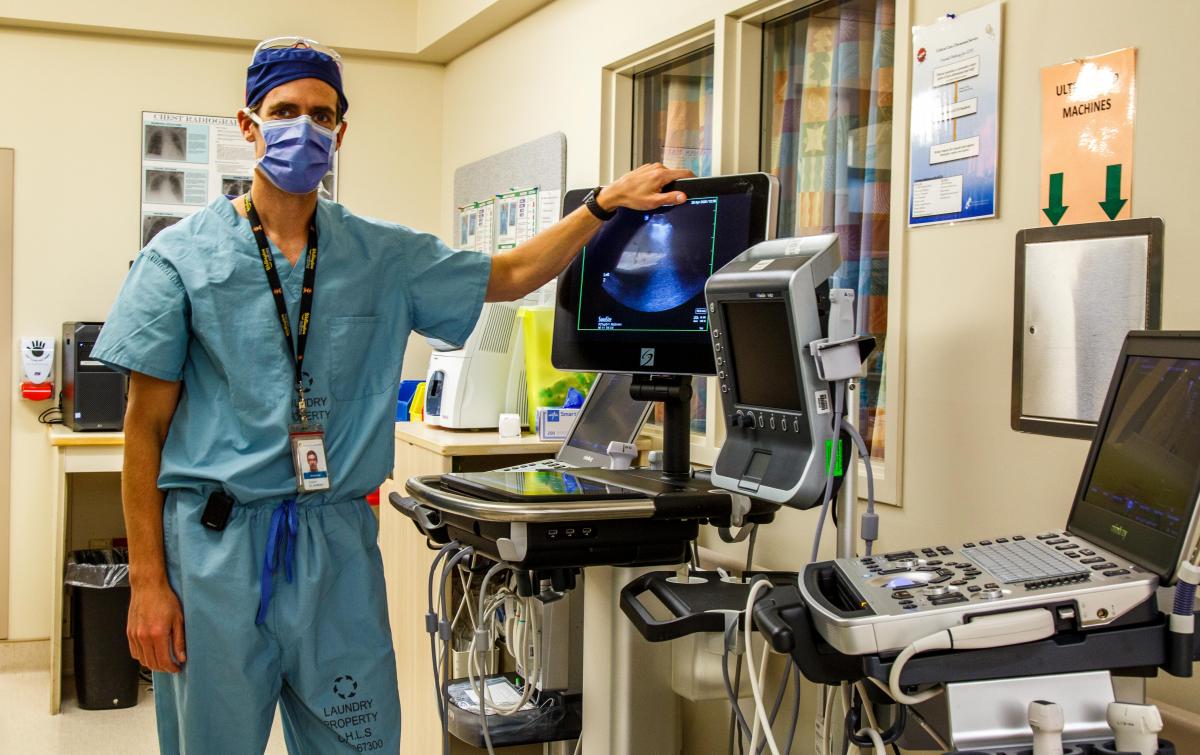
Dr. Robert Arntfield
Image
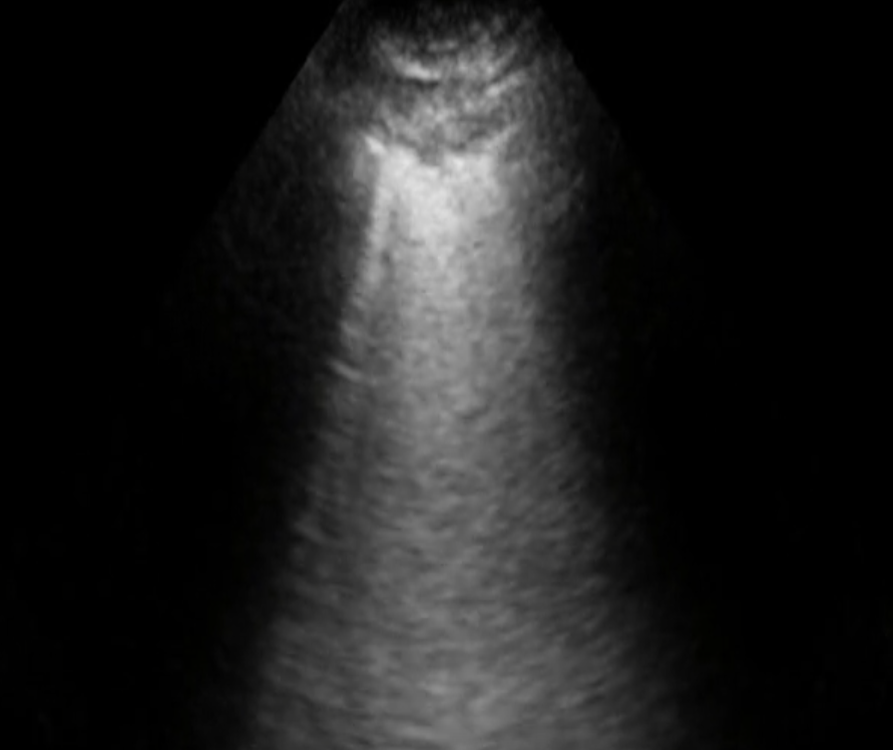
COVID-19 pneumonia ultrasound
Image
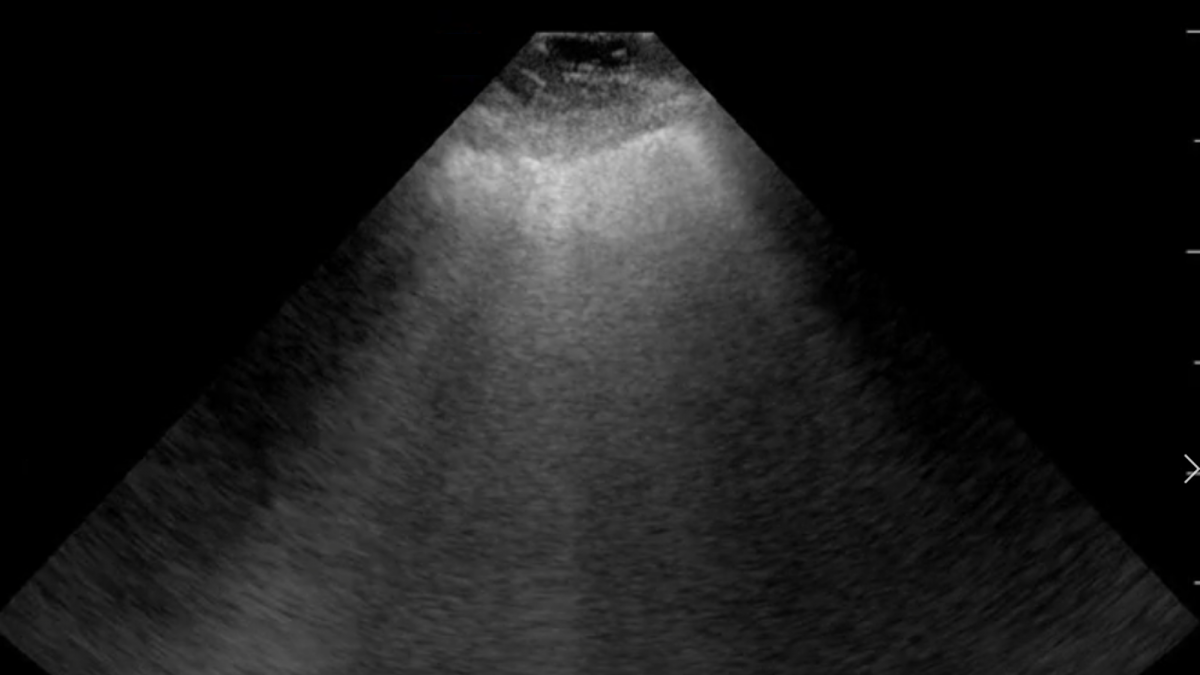
NON COVID-19 pneumonia ultrasound
About Lawson Health Research Institute
Lawson Health Research Institute is one of Canada’s top hospital-based research institutes, tackling the most pressing challenges in health care. As the research institute of London Health Sciences Centre and St. Joseph’s Health Care London, our innovation happens where care is delivered. Lawson research teams are at the leading-edge of science with the goal of improving health and the delivery of care for patients. Working in partnership with Western University, our researchers are encouraged to pursue their curiosity, collaborate often and share their discoveries widely. Research conducted through Lawson makes a difference in the lives of patients, families and communities around the world. To learn more, visit www.lawsonresearch.ca.
Media Contacts
Celine Zadorsky
Senior Media Relations Consultant
Communications & Public Engagement
T: 519-685-8500 ext. 73502
Celine.zadorsky@lhsc.on.ca
… an e-mail from your nurse/doctor with the title ”Your care provider invites you to join diasend®”. Click on the … continue. Share data If you received an invite from your care provider via e-mail, the Clinic ID number will already … an e-mail from your nurse/doctor with the title ”Your care provider invites you to join diasend®”. Click on the …
1 2 3 5 Enter your email address, which will be your username, as well as a password of your choosing for your diasend Personal account. Click continue. You will receive an e-mail from your nurse/doctor with the title Your care provider invites you to join diasend. Click on the link in this e-mail t...
… Centre - 519-685-8500 extension 35131 • St. Joseph's Health Care London - 519-646-6000 extension 65584 These numbers … Centre - 519-685-8500 extension 35131 • St. Joseph's Health Care London - 519-646-6000 extension 65584 These numbers …
Dictation System - LHSC and St. Joseph's You must have your own personal and confidential dictating User ID number. To have your personal dictating user ID number arranged, please contact Transcription Services at: London Health Sciences Centre - 519-685-8500 extension 35131 St. Joseph's Health Ca...
Differences in walking patterns could predict type of cognitive decline in older adults
LONDON, ON - Canadian researchers are the first to study how different patterns in the way older adults walk could more accurately diagnose different types of dementia and identify Alzheimer’s disease.
A new study by a Canadian research team, led by London researchers from Lawson Health Research Institute and Western University, evaluated the walking patterns and brain function of 500 participants currently enrolled in clinical trials. Their findings are published today in Alzheimer's & Dementia: The Journal of the Alzheimer's Association.
“We have longstanding evidence showing that cognitive problems, such as poor memory and executive dysfunction, can be predictors of dementia. Now, we’re seeing that motor performance, specifically the way you walk, can help diagnose different types of neurodegenerative conditions,” says Dr. Manuel Montero-Odasso, Scientist at Lawson and Professor at Western’s Schulich School of Medicine & Dentistry.
Dr. Montero-Odasso is world renowned for his research on the relationship between mobility and cognitive decline in aging. Leading the Mobility, Exercise and Cognition (MEC) team in London, he is pioneering novel diagnostic approaches and treatments to prevent and combat early dementia.
This study compared gait impairments across the cognitive spectrum, including people with Subjective Cognitive Impairment, Parkinson’s Disease, Mild Cognitive Impairment, Alzheimer’s disease, Lewy body dementia and Frontotemporal dementia, as well as cognitively healthy controls.
Four independent gait patterns were identified: rhythm, pace, variability and postural control. Only high gait variability was associated with lower cognitive performance and it identified Alzheimer’s disease with 70 per cent accuracy. Gait variability means the stride-to-stride fluctuations in distance and timing that happen when we walk.
“This is the first strong evidence showing that gait variability is an important marker for processes happening in areas of the brain that are linked to both cognitive impairment and motor control,” notes Dr. Frederico Perruccini-Faria, Research Assistant at Lawson and Postdoctoral Associate at Western’s Schulich School of Medicine & Dentistry, who is first author on the paper. “We’ve shown that high gait variability as a marker of this cognitive-cortical dysfunction can reliably identify Alzheimer’s disease compared to other neurodegenerative disorders.”
When cognitive-cortical dysfunction is happening, the person’s ability to perform multiple tasks at the same time is impacted, such as talking while walking or chopping vegetables while chatting with family.
Having gait variability as a motor marker for cognitive decline and different types of conditions could allow for gait assessment to be used as a clinical test, for example having patients use wearable technology. “We see gait variability being similar to an arrhythmia. Health care providers could measure it with patients in the clinic, similar to how we assess heart rhythm with electrocardiograms,” adds Dr. Montero-Odasso.
This study was primarily funded by the Canadian Consortium on Neurodegeneration in Aging (CCNA), a collaborative research program tackling the challenge of dementia and other neurodegenerative illnesses. The CCNA was supported by a grant from the Canadian Institutes of Health Research
-30-
About Lawson Health Research Institute
Lawson Health Research Institute is one of Canada’s top hospital-based research institutes, tackling the most pressing challenges in health care. As the research institute of London Health Sciences Centre and St. Joseph’s Health Care London, our innovation happens where care is delivered. Lawson research teams are at the leading-edge of science with the goal of improving health and the delivery of care for patients. Working in partnership with Western University, our researchers are encouraged to pursue their curiosity, collaborate often and share their discoveries widely. Research conducted through Lawson makes a difference in the lives of patients, families and communities around the world. To learn more, visit www.lawsonresearch.ca.
About Western
Western delivers an academic experience second to none. Since 1878, The Western Experience has combined academic excellence with life-long opportunities for intellectual, social and cultural growth in order to better serve our communities. Our research excellence expands knowledge and drives discovery with real-world application. Western attracts individuals with a broad worldview, seeking to study, influence and lead in the international community.
About The Schulich School of Medicine & Dentistry
The Schulich School of Medicine & Dentistry at Western University is one of Canada’s preeminent medical and dental schools. Established in 1881, it was one of the founding schools of Western University and is known for being the birthplace of family medicine in Canada. For more than 130 years, the School has demonstrated a commitment to academic excellence and a passion for scientific discovery.
Media Contacts
Celine Zadorsky
Senior Media Relations Consultant
Communications & Public Engagement
T: 519-685-8500 ext. 73502
Celine.zadorsky@lhsc.on.ca
Differences in walking patterns could predict type of cognitive decline in older adults
Canadian researchers are the first to study how patterns in the way older adults walk could more accurately diagnose different types of dementia and identify Alzheimer’s disease.
A new study by a Canadian research team, led by London researchers from Lawson Health Research Institute and Western University, evaluated the walking patterns and brain function of 500 participants currently enrolled in clinical trials. Their findings are published in Alzheimer's & Dementia: The Journal of the Alzheimer's Association.
Image
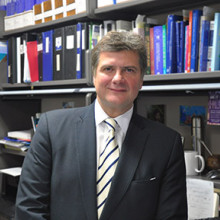
Dr. Montero-Odasso is world renowned for his research on the relationship between mobility and cognitive decline in aging. Leading the Mobility, Exercise and Cognition (MEC) team in London, he is pioneering novel diagnostic approaches and treatments to prevent and combat early dementia. Dr. Montero-Odasso is also co-lead of the Mobility, Exercise and Cognition Team at CCNA, a team composed of 22 researchers and 6 trainees.
This study compared gait impairments across the cognitive spectrum, including people with Subjective Cognitive Impairment, Parkinson’s Disease, Mild Cognitive Impairment, Alzheimer’s disease, Lewy body dementia and Frontotemporal dementia, as well as cognitively healthy controls. The study used data from the COMPASS-ND Cohort and the Gait and Brain Study Cohort.
Image
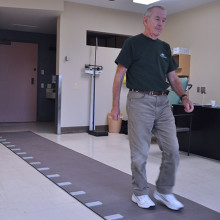
Gait assessment looks at the way in which we move our whole body from one point to another, helping to analyze mobility and the brain processes involved.
Four independent gait patterns were identified: rhythm, pace, variability and postural control. Only high gait variability was associated with lower cognitive performance and it identified Alzheimer’s disease with 70 per cent accuracy. Gait variability means the stride-to-stride fluctuations in distance and timing that happen when we walk.
“This is the first strong evidence showing that gait variability is an important marker for processes happening in areas of the brain that are linked to both cognitive impairment and motor control,” notes Dr. Frederico Perruccini-Faria, Research Assistant at Lawson and Postdoctoral Associate at Western’s Schulich School of Medicine & Dentistry, who is first author on the paper.
“We’ve shown that high gait variability as a marker of this cognitive-cortical dysfunction can reliably identify Alzheimer’s disease compared to other neurodegenerative disorders.”
When cognitive-cortical dysfunction is happening, the person’s ability to perform multiple tasks at the same time is impacted, such as talking while walking or chopping vegetables while chatting with family.
“Having gait variability as a motor marker for cognitive decline and different types of conditions could allow for gait assessment to be used as a clinical test, for example having patients use wearable technology,” says Dr. Richard Camicioli, Professor at the University of Alberta and co-senior author on the paper.
The London team collaborated with researchers at the University of Toronto, University of Calgary and University of Alberta. They are part of the Canadian Consortium on Neurodegeneration of Aging (CCNA), a collaborative research program tackling the challenge of dementia and other neurodegenerative illnesses.
Dr. Montero-Odasso adds that this gait variability could be perceived as similar to an arrhythmia. Health care providers could potentially measure it in clinical settings, like how heart rhythm is assessed with electrocardiograms.
This study was primarily funded by CCNA, supported by a grant from the Canadian Institutes of Health Research.
Scientist
… home. Please leave pillows in your car during your surgery. Care of the Surgical Site • Leave the dressing on your arm … • For after-hours assistance, call St. Joseph’s Health Care London, 519-646-6000 and ask for the Plastic surgery … and Wrist Surgery (+/-bone graft) - Plastics Day of Surgery Care of the Surgical Site Activity Special Instructions …
Discharge Instructions St. Josephs Hospital Hand and Wrist Surgery (+/- bone graft) - Plastics Day of Surgery Bring 2-3 pillows so you can elevate your arm on the way home. Please leave pillows in your car during your surgery. Care of the Surgical Site Leave the dressing on your arm (and hip) in ...
… home. Please leave pillows in your car during your surgery. Care of the Surgical Site • Remove the dressing in 48 hours … make other arrangements. • If you have concerns about your care, please contact your surgeon's office between 8:00 am … please go to your local emergency room or urgent care centre. Pain pill prescriptions cannot be renewed after …
Discharge Instructions St. Josephs Hospital Carpal Tunnel, Trigger Finger Release or Removal of Arthritic Nodules - Orthopaedics Day of Surgery Bring 2-3 pillows so you can elevate your arm on the way home. Please leave pillows in your car during your surgery. Care of the Surgical Site Remove the...
… home. Please leave pillows in your car during your surgery. Care of the Surgical Site • Remove the dressing in 48 hours … • For after-hours help, call St. Joseph’s Health Care London, 519-646-6000 and ask for the plastic surgery … or Removal of Arthritic Nodules - Plastics Day of Surgery Care of the Surgical Site Activity Follow up /media/10324 …
Discharge Instructions St. Josephs Hospital Carpal Tunnel, Trigger Finger Release or Removal of Arthritic Nodules - Plastics Day of Surgery Bring 2-3 pillows so you can elevate your arm on the way home. Please leave pillows in your car during your surgery. Care of the Surgical Site Remove the dre...
… home. Please leave pillows in your car during your surgery. Care of the Surgical Site • Remove the dressing in 48 hours … make other arrangements. • If you have concerns about your care, please contact your surgeon's office between 8:00 am … please go to your local emergency room or urgent care centre. Pain pill prescriptions cannot be renewed after …
Discharge Instructions St. Josephs Hospital Carpal Tunnel, Trigger Finger Release or Removal of Arthritic Nodules - Orthopaedics Day of Surgery Bring 2-3 pillows so you can elevate your arm on the way home. Please leave pillows in your car during your surgery. Care of the Surgical Site Remove the...
… home. Please leave pillows in your car during your surgery. Care of the Surgical Site • Remove the dressing in 48 hours … • For after-hours help, call St. Joseph’s Health Care London, 519-646-6000 and ask for the plastic surgery … or Removal of Arthritic Nodules - Plastics Day of Surgery Care of the Surgical Site Activity Follow up /media/4667 …
Discharge Instructions St. Josephs Hospital Carpal Tunnel, Trigger Finger Release or Removal of Arthritic Nodules - Plastics Day of Surgery Bring 2-3 pillows so you can elevate your arm on the way home. Please leave pillows in your car during your surgery. Care of the Surgical Site Remove the dre...
… home. Please leave pillows in your car during your surgery. Care of the Surgical Site • Keep your dressing dry until … appointment or go to the nearest emergency room or urgent care. • Once the sutures have been removed you may shower … make other arrangements. • If you have concerns about your care, please contact your surgeon's office between 8:00 am …
Discharge Instructions St. Josephs Hospital Distal Biceps Tendon Repair Day of Surgery Bring 2-3 pillows so you can elevate your arm on the way home. Please leave pillows in your car during your surgery. Care of the Surgical Site Keep your dressing dry until your follow up appointment. It is nor...
… home. Please leave pillows in your car during your surgery. Care of the Surgical Site • Keep your dressing dry until … appointment or go to the nearest emergency room or urgent care. • Once the sutures have been removed you may shower … make other arrangements. • If you have concerns about your care, please contact your surgeon's office between 8:00 am …
Discharge Instructions St. Josephs Hospital Distal Biceps Tendon Repair Day of Surgery Bring 2-3 pillows so you can elevate your arm on the way home. Please leave pillows in your car during your surgery. Care of the Surgical Site Keep your dressing dry until your follow up appointment. It is nor...
… home. Please leave pillows in your car during your surgery. Care of the Surgical Site • Some oozing through the dressing … make other arrangements. • If you have concerns about your care, please contact your surgeon's office between 8:00 am … please go to your local emergency room or urgent care centre. Pain pill prescriptions cannot be renewed after …
Discharge Instructions St. Josephs Hospital Elbow Arthroscopy Day of Surgery Bring 2-3 pillows so you can elevate your arm on the way home. Please leave pillows in your car during your surgery. Care of the Surgical Site Some oozing through the dressing is normal due to the fluid used during surge...
… home. Please leave pillows in your car during your surgery. Care of the Surgical Site • You may have some drainage from the incision. If you have a drain, Home and Community Care Support Services will be arranged. • Once the sutures … make other arrangements. • If you have concerns about your care, please contact your surgeon's office between 8:00 am …
Discharge Instructions St. Josephs Hospital Elbow Replacement Surgery Day of Surgery Bring 2-3 pillows so you can elevate your arm on the way home. Please leave pillows in your car during your surgery. Care of the Surgical Site You may have some drainage from the incision. If you have a drain, Ho...
… home. Please leave pillows in your car during your surgery. Care of the Surgical Site • You may have some drainage from the incision. If you have a drain, Home and Community Care Support Services will be arranged. • Once the sutures … make other arrangements. • If you have concerns about your care, please contact your surgeon's office between 8:00 am …
Discharge Instructions St. Josephs Hospital Elbow Surgery Day of Surgery Bring 2-3 pillows so you can elevate your arm on the way home. Please leave pillows in your car during your surgery. Care of the Surgical Site You may have some drainage from the incision. If you have a drain, Home and Commu...