


Search
Search
249 Search Results:
Dr. s copy Western Schulich School of Medicine & Dentistrys copy Department of s copy Medical Affairs copy THIS LETTER IS ONLY TO BE ISSUED TO NON CLINICAL ACADEMIC APPOINTMENTS SUCH AS TERM OR LOCUM CATEGORY. Dear Dr.
Dr. s copy Western Schulich School of Medicine & Dentistrys copy Department of s copy Medical Affairs copy THIS LETTER OF OFFER IS ONLY TO BE ISSUED AFTER CONFIRMATION OF THREE SATISFACTORY REFERENCES FOR THE CANDIDATE. Dear Dr.
Dr. s copy Western Schulich School of Medicine & Dentistrys copy Department of s copy Medical Affairs copy THIS LETTER OF OFFER IS ONLY TO BE ISSUED AFTER CONFIRMATION OF THREE SATISFACTORY REFERENCES FOR THE CANDIDATE. Dear Dr.
Dr. Candidates copy Western Schulich School of Medicine & Dentistrys copy Department of Oncologys copy Medical Affairs copy DATE Dear Dr. Re: Letter of Understanding It gives us great pleasure to offer you a position as a General Practitioner in Oncology (GPO) in the Depart...
Dr. s copy Western Schulich School of Medicine & Dentistrys copy Department of s copy Medical Affairs copy THIS LETTER IS ONLY TO BE ISSUED TO NON CLINICAL ACADEMIC APPOINTMENTS SUCH AS TERM OR LOCUM CATEGORY. Dear Dr.
Keeping an eye on care of the future
Dr. Khaldon Abbas is using his curiosity and passion for ophthalmology to improve patient care and outcomes for people with eye diseases and disorders.
While in university, Dr. Khaldon Abbas had a deeply moving experience as a volunteer with the Canadian Centre for Victims of Torture (CCVT) that changed the trajectory of his life and career.
The community-based organization helps victims of war and torture, and Abbas, whose family immigrated to Canada from Iraq a little more than a decade before, wanted to share his skills as a translator and tutor with newcomers.
“I came to Canada when I was 12. I had limited English, we had no family or friends here, and it was really hard to acclimate,” says Abbas. “I wanted to give back to the community and to be there for immigrant families who were facing similar challenges that my family had to deal with.”
During one shift with CCVT, Abbas was paired with a family from Syria, whose nine-year old daughter was losing her eyesight. She was living with retinal dystrophy, a degenerative disorder that can progress to complete blindness.
Witnessing the impact the eye disorder had on the young girl and her family inspired Abbas to further his own education and set a goal to become an ophthalmologist.
That was eight years ago. Since then, Abbas spent several years working as a clinical research coordinator and completed four years of medical school at the University of British Columbia.
Today, he is a clinical research fellow at the Ivey Eye Institute of St. Joseph’s Health Care London (St. Joseph’s) – a position supported through St. Joseph’s Health Care Foundation thanks to the generosity of donors.
During the next year, Abbas’ research will focus on improving patient care and outcomes for people with eye diseases and disorders.
Drs. Phil Hooper, Verena Juncal and Tom Sheidow, all retinal surgeons at Ivey Eye, are the impetus behind the fellowship and now serve as Abbas’ mentors. Through the fellowship, the trio wanted to expand their clinical research program which is heavily focused on clinical trials. Their goal was to delve into quality improvement projects and explore, among other things, patient data, referral patterns and wait times – information that could guide Ivey Eye in refining care to better understand how to improve the overall flow of patient care.
As surgeons at the largest single-site eye care centre in Canada committed to innovative care, the Ivey Eye physician leaders felt a responsibility to make this work a reality.
“We started talking about this about three years ago,” says Sheidow. “We were familiar with similar roles at other academic eye care centres and we were fortunate to have some funding, so we brought the idea to the foundation and started to craft the terms of reference,” he adds.
Abbas is the second physician in this fellowship, following in the footsteps of Dr. Amy Basilious, who is now in her second year of residency at Ivey Eye.
“Amy did an exceptional job as our inaugural fellow and we were looking for someone with similar characteristics – bright, curious, motivated, a self-starter and a passion for ophthalmology,” says Sheidow. “Khaldon has all of that and more,” he adds, referring to Abbas’ interest and background in clinical trial work.
Even before arriving in London for the fellowship, Abbas began working with his new team to generate research project ideas and shape a research plan. Among the projects he will tackle is one that will assess the effectiveness and complications of lens exchange surgeries, and another in collaboration with Basilious focused on macular hole repairs.
He will also spearhead two quality improvement studies aimed at streamlining the referral process to Ivey Eye for optometrists and enhancing education and information resources for patients with eye diseases and disorders. Through his work, Abbas is excited to build his research skills, forge new professional connections and see some of his research translated into tangible improvements in patient care.
He’s grateful to Hooper, Juncal and Sheidow, along with St. Joseph’s and the Foundation, for their vision and spirit of innovation in establishing the fellowship.
“Everyone has been extremely welcoming and supportive of me, especially my mentors and fellow co-workers” he says. “There’s a real family environment at St. Joseph’s. I feel like this is my new home away from home.”
Lawson Imaging attracts youth to medical research
Dr. Donna Goldhawk, an imaging scientist at Lawson Health Research Institute (Lawson), is providing a unique and valuable learning experience to senior high school students. Since 2009, she has accepted students to train in her hospital-based research laboratory at St. Joseph’s Health Care London in partnership with secondary schools in the Thames Valley region.
Dr. Goldhawk recruits students in partnership with the Partners in Experiential Learning (PEL) program. This unique academic co-op education program in London, Ontario identifies high school students interested in health research and prepares them for placement in a health research environment. The students earn senior high school credits and receive training in basic laboratory research.
Originally conceived by Dr. Jim Koropatnick, a cancer scientist at Lawson, and Mr. Rodger Dusky, a retired secondary school teacher, PEL has been running successfully since 2004. It is a partnership between the Thames Valley District School Board, London District Catholic School Board, the Ontario Ministry of Education, Western University, London Health Sciences Centre and St. Joseph’s Health Care London. In Dr. Goldhawk’s experience, PEL attracts an excellent calibre of student who is eager to learn, aspiring to further education and capable of contributing to the science of molecular imaging.
Through the Ontario Research Fund (ORF), the Ministry of Research and Innovation also recognizes the value of attracting youth to the scientific enterprise and provides funding to support youth outreach. Dr. Goldhawk oversees one such initiative, approved under a grant entitled “Heart Failure: Prevention through Early Detection Using New Imaging Methods”. She works with PEL to attract summer students with an interest in molecular imaging.
This year, a total of three ORF summer studentships are available at the following collaborating research labs: Lawson Health Research Institute (London), University of Ottawa Heart Institute (Ottawa) and Sunnybrook Research Institute (Toronto). To learn more about these summer studentships, please email Dr. Goldhawk at @email by May 25, 2018.
Participating students can expect experiential learning tailored to their current understanding of science and aimed at expanding this knowledge for a fuller appreciation of biomedical research.
“ORF youth outreach recognizes the role of medical imaging in today’s workplace and promotes the study of cardiovascular disease in the next generation of researchers,” says Mr. Dusky. “This fills a clear gap in knowledge and career planning for high school youth.”
In Dr. Goldhawk’s laboratory, for example, cardiac research is focussed on the measurement of iron contrast using magnetic resonance imaging (MRI). “Many cells have naturally distinct iron metabolism. However, we are also using genes from magnetic bacteria to improve the magnetic sensitivity of mammalian cells. MRI can then be used to detect disease processes in living subjects.”
“We are particularly interested in reporter gene expression for MRI, a term coined to describe how changes in the pattern of gene activity, and its related protein activity, may be visualized.” Her research group uses laboratory models to track these biological molecules, particularly those involved in cardiac inflammation and cancer growth and metastasis.
Her current team of four graduate and four undergraduate students span various stages of their chosen programs. In this setting, high school students step into a work atmosphere where they interact with colleagues at multiple levels. In addition, since molecular imaging research is inherently interdisciplinary, students acquire training in both biology and physics.
Dr. Goldhawk finds that students exposed to high-quality science education more easily envision themselves in positions of responsibility within the health care sector. Youth learn that developing a scientific career is a process with many choices for fusing interests with a specific occupation.
“To retain the interest of talented young scientists, it is essential to provide them with interesting challenges that reward their curiosity and ambition to learn,” explains Dr. Goldhawk. “In hospital-based research institutes, youth are also exposed to the clinical side for which our research is targeted. This is a quality scientific experience for youth interested in expanding their outlook, performance, technical, problem-solving and record-keeping skills. I think it is essential to build these opportunities into our scientific programs.”
Image
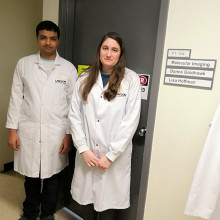
Above: Suhail Shukri, 2018 PEL student at Oakridge Secondary School, and Sarah Donnelly, 2013 PEL student at Wilfred Laurier Secondary School and current MSc candidate at Western University’s Schulich School of Medicine & Dentistry, training with Dr. Jeremy Burton and Dr. Donna Goldhawk at Lawson Health Research Institute.
Lawson Impact Awards celebrates research making a difference
With nearly 300 guests in attendance, health research was celebrated at the fourth annual Lawson Impact Awards on Wednesday, April 19 at the London Convention Centre.
The Lawson Impact Awards celebrates hospital-based research that makes a difference by advancing scientific knowledge and applying it directly to patient care. With awards in seven categories, the annual event honours Lawson scientists, staff, trainees and partners who demonstrate excellence.
“The Lawson Impact Awards recognizes those who have made exceptional contributions to science and innovation. This year's winners include individuals, groups and partners who work tirelessly to improve our understanding of health and disease in Canada and around the world,” says Dr. David Hill, Scientific Director, Lawson Health Research Institute.
This year’s Lawson Impact Awards winners include:
- Dr. Peeyush Lala - Scientist Career Award
- Drs. Glenn Bauman and Aaron Ward - Innovation Award
- Dr. Gediminas Cepinskas - Dr. Joseph Gilbert Research Contribution of the Year Award
- IDB Holland bv - Industry Partner of the Year Award
- Helen and Andy Spriet - Community Partner of the Year Award
- Arthroplasty Clinical Research Team (Dr. Lyndsay Somerville, Codie Primeau and Bryn Zomar) - Staff Award of Excellence
- Charles Ishak - Leadership Award (Student & Trainee)
The recipients of Lawson’s 2017 Strategic Research Fund (SRF) were also revealed at the Lawson Impact Awards. The Lawson SRF is an annual competition that supports projects that will advance science in alignment with Lawson’s strategic research goals, as outlined in the Lawson Strategic Plan 2014-2018. For the second year in a row, the 2017 competition was focused on “inflammation”. The following two projects were awarded $50,000 over a two-year period:
- “Re-setting the breast microbiome to lower inflammation and risk of cancer” – Drs. Muriel Brackstone and Gregor Reid
- “Assessing acute cardiac inflammation after left-sided breast cancer radiotherapy with hybrid PET/MRI” – Drs. Stewart Gaede and Gerald Wisenberg
A highlight of the event was a keynote presentation from record-breaking Canadian astronaut, aquanaut and researcher, Dr. Dave Williams, titled “The Art of the Possible: Innovation Transforming Healthcare”. Dr. Williams provided an inspiring talk that used examples from his space shuttle missions and health research to illustrate how the impossible can be made possible.
In addition, this year’s event honoured Canada’s 150th year as a nation by paying tribute to Canadian scientists and the contributions they’ve made on the world stage. Acknowledging the role of Lawson scientists in continuing this legacy, attendees were also asked to provide their feedback about the future of innovation. These insightful ideas will be shared in the months to come as Lawson continues to celebrate Canada 150.
To view videos of each award winner, visit the Lawson YouTube page. To see more photos from the event, visit Lawson's Facebook page.
Lawson Impact Awards Staff Award of Excellence: Dr. Jeff Weiler
Dr. Jeff Weiler is being recognized for his role in helping launch the Gray Centre for Mobility and Activity.
Dedicated to helping enhance research to improve patient care, Dr. Jeff Weiler has won the 2022 Lawson Staff Award of Excellence.
Dr. Weiler began his career with Lawson in 2020 and has been instrumental in helping launch the Gray Centre for Mobility and Activity as the coordinator of the program.
Established in 2020, The Gray Centre at St. Joseph’s Health Care London is expanding and advancing mobility and rehabilitation treatment and prevention solutions through research and collaborations. The Centre uses the latest technology to improve the lives of those living with disease, disability or injury.
Media Contact
Celine Zadorsky
Senior Media Relations Consultant
Communications & Public Engagement
T: 519-685-8500 ext. 73502
Celine.zadorsky@lhsc.on.ca
Title: Leader 360 Performance Review Location of Records: Human Resources Description: Records relating to the performance management for leaders. Includes information on career development planning, interim and merit increment review, and evaluation processes. Records may include accountabilities, ...
Leading the conversation on equity, diversity and inclusivity
The city of London, Ontario is home to a vibrant health research community. On Wednesday, May 9, researchers from across the city gathered to discuss the importance of equity, diversity and inclusivity (EDI) in the careers of health researchers. Through participation at Exchange: A London Health Research Day Forum on Diversity & Inclusivity, guests discussed the challenges associated with EDI and potential solutions for the future.
Exchange was held the evening before London Health Research Day, the region’s premier research showcase event which features nearly 400 trainee presentations. Trainees are the future of Canadian science and EDI is crucial to that future. This is a topic of national importance that has garnered attention and action from the federal government, funding agencies and scientists across the country.
Recognizing the importance of this topic, Canada’s Minister of Science, The Honorable Kirsty Duncan, and local Member of Parliament for London North Centre, MP Peter Fragiskatos, shared video greetings with Exchange guests.
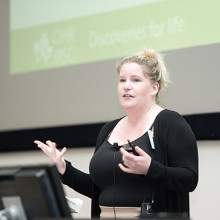
“The Exchange event highlights a vital area of discussion. It is important to not only recognize but embrace the differences between scientists and the diverse perspectives they bring to research,” said Rebecca Sullivan, a third year PhD candidate at Western University’s Schulich School of Medicine & Dentistry, training in Savita Dhanvantari’s lab at Lawson Health Research Institute, and one of the organizers of the event. “Becoming aware of our own unconscious biases and trying to change these culturally ingrained implicit associations is the only way to make active change in science!”
Image
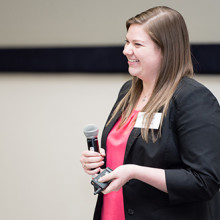
Above: Rebecca Sullivan, a third year PhD candidate, leading a scenario-based group activity at Exchange
The evening’s first presenter was Dr. Janet Smylie, Director of the Well Living House Applied Research Centre for Indigenous Infant, Child and Family Health at St. Michael’s Hospital and CIHR Applied Public Health Research Chair in Indigenous Health Knowledge and Information. Dr. Smylie, who also delivered the keynote presentation at London Health Research Day, spoke about the role of anti-Indigenous racism and discrimination within health care professions, including its impact on research. This included a discussion of Dr. Smylie’s own research in the field of Indigenous health.
Image
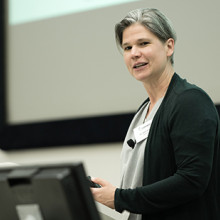
Above: Dr. Janet Smylie presenting on "Addressing anti-Indigenous racism and discrimination within health care professions"
Greta Bauer, PhD, a professor in the Department of Epidemiology and Biostatistics at Schulich Medicine & Dentistry, spoke about the role of epidemiology as a toolkit for building equity in health research. This included a discussion on incorporating intersectionality and multidimensionality into population health research methodology.
“The purpose of this work is to give researchers the measurement and statistical tools they need to shift the focus from studying broad population average effects to more heterogeneity within populations,” said Greta. “The whole point is to better study not only diversity in health outcomes, but in the processes that generate those outcomes.”
Image
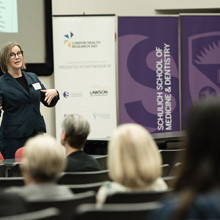
Above: Greta Bauer, PhD, presenting on "Epidemiology as a toolkit for building equity"
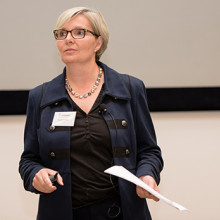
This talk was followed by a presentation on Gender-Based Analysis Plus (GBA+). GBA+ is an analytical tool used to assess how diverse groups of women, men and gender-diverse people may experience policies, programs and initiatives. The “plus” in GBA+ acknowledges that GBA goes beyond biological (sex) and socio-cultural (gender) differences. We all have multiple identity factors that intersect to make us who we are; GBA+ also considers many other identity factors, like race, ethnicity, religion, age, and mental or physical disability. GBA+ is a method for collecting and reviewing data in an unbiased manner, one that leaves aside many of the assumptions that can mask the GBA+ impacts of a given initiative. Alysha Croker, PhD, Manager, Tri-Agency Institutional Program Secretariat, discussed how GBA+ is being used in research and grant funding, including at the federal funding agencies.
“Diverse research teams can lead to more innovation, greater collective intelligence and an increased capacity to tackle complex issues,” said Alysha, when discussing the importance of EDI in the careers of health researchers.
Image
Above: Alysha Croker, PhD, presenting on "Incorporating Gender-Based Analysis Plus (GBA+) in research and beyond"
The evening also included a presentation from Shantal Feltham, founder and CEO of Stiris Research, a North American clinical trials management company based in London. Shantal discussed the importance of ensuring that clinical trials are designed to recruit diverse research participants that represent real patient populations. She also discussed her own experiences and perspectives as a female entrepreneur.
Image
Above: Shantal Feltham delivering a presentation titled "That’s a great idea – It’ll never work"
A group of health research trainees concluded the night with a scenario-based presentation and activity. Audience members were divided into small groups and given a diversity scenario to discuss. Topics ranged from the experiences of LGBTQ+ researchers, racial diversity, physical ability barriers in research labs and more. Notes and ideas from these conversations were recorded and displayed the next day at London Health Research Day.
“Exchange highlighted EDI in health research in action. It featured talks by leading female researchers on issues in Indigenous health and LGBTQ health, implementation of equity in the Canada Research Chairs program, and female entrepreneurship in the field of health research,” said Savita Dhavantari, PhD, assistant director and scientist at Lawson and assistant professor at Schulich Medicine & Dentistry. Savita was also one of the Exchange organizers and the facilitator for the event. “Above all, I hope attendees were encouraged to be fearless in advocating for equity, diversity and inclusivity in health research.”
Image
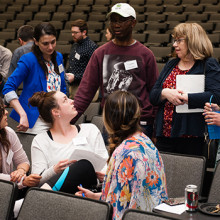
Above: Guests at Exchange discussing a diversity scenario
Image
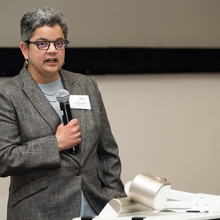
Above: Savita Dhanvantari, PhD, facilitating the Exchange event
To see more photos from Exchange and London Health Research Day, visit the London Health Research Day website.
Exchange and London Health Research Day are presented in partnership by Lawson Health Research Institute and Western University’s Schulich School of Medicine and Dentistry.
Scientist
Dr. Candidates copy Western Schulich School of Medicine & Dentistrys copy Department of Oncologys copy Medical Affairs copy DATE Dear Dr. Re: Letter of Understanding It gives us great pleasure to offer you a position as a General Practitioner in Oncology (GPO) in the Depart...
Dr. s copy Western Schulich School of Medicine & Dentistrys copy Department of s copy Medical Affairs copy THIS LETTER OF OFFER IS ONLY TO BE ISSUED AFTER CONFIRMATION OF THREE SATISFACTORY REFERENCES FOR THE CANDIDATE. Dear Dr.
London Health Research Day 2018
11:30am - 10:15pm
Register today for London Health Research Day (LHRD) and experience the largest research-focused activity in Southwestern Ontario.
With hundreds of presentations from top learners, LHRD is your opportunity to learn about health research being conducted in the city of London. Dr. Janet Smylie, an international leader in the field of Indigenous health and health research, is this year’s keynote speaker as part of The Lucille & Norton Wolf Health Research Lecture Series.
Dr. Smylie will also join a group of local and national researchers as part of a new event - Exchange: A London Health Research Day Forum on Diversity and Inclusivity.
Exchange: A London Health Research Day Forum on Diversity and Inclusivity
Exchange aims to foster conversations around equity, diversity and inclusivity in the careers of health researchers, including gender, and how we can work together to identify and implement solutions.
- Date: Wednesday, May 9, 2018
- Time: 6:00 - 9:00 p.m.
- Location: North Campus Building, Western University. See campus map.
- Registration is required.
The evening’s presenters include:
- Dr. Janet Smylie – An international leader in the field of Indigenous health and health research
- Dr. Greta Bauer – A scientist at Western University’s Schulich School of Medicine & Dentistry with a special interest in LGBTQ health
- Dr. Alysha Croker – Current manager of the Canada Excellence Research Chairs (CERC) and the Canada First Research Excellence Fund (CFREF) programs at the Tri-agency Institutional Program Secretariat, and previous lead on the development of the Canadian Institutes of Health Research’s (CIHR’s) Equity Strategy
- Shantal Feltham – Founder of Stiris Research, a London-based North American clinical trial management company
- Learners from Schulich Medicine & Dentistry, training in labs at Western and Lawson Health Research Institute
London Health Research Day 2018
- Date: Thursday, May 10, 2018
- Time: Registration begins at 7:30 a.m. View the full event schedule.
- Location: London Convention Centre. See location map and transportation/parking details.
- Guest registration is required for the lunchtime keynote speaker and the networking and awards reception.
London Health Research Day is presented in partnership by Lawson Health Research Institute and the Schulich School of Medicine & Dentistry.
Partners
London Health Research Day 2021 - VIRTUAL
2:00pm
Discover London's health research community by joining learners and researchers virtually at the 2021 London Health Research Day scheduled for May 11.
London Health Research Day is an opportunity to learn about research happening in labs and clinics across the city while engaging in scientific discussion.
LHRD 2021 is going virtual, offering a wide range of workshops, a keynote lecture, and several days dedicated to research presentations.
Registration
Register now for an opportunity to review research presentations or to take part in the workshops or keynote lecture. Due to a limited attendance capacity, pre-registration is required. Don’t miss your opportunity to take part in LHRD 2021!
Please note: If you are a poster presenter, you will receive an email from Janelle Pritchard with instruction on your pre-registration. Please follow directions as outlined in her communication for registration and to sign up for the sessions taking place on May 11.
Registration deadline is May 5, 2021.
Event Day Agenda
View the full event schedule here.
Morning Workshops
10:15 – 11:45 a.m. – Workshop options:
Science to Business Network Presents (S2BN): Insights into Industry- Exploring Careers for Graduate Students
Hosted by S2BN London, this workshop features a panel of esteemed industry professionals who will discuss their unique career journeys, the skills and knowledge needed to excel in their positions, and steps graduate students can take to enter these industries and succeed. This 90-min session will consist of a panel discussion moderated by Dr. Bruce Seet, Director of Medical Affairs at Sanofi Pasteur and President of S2BN. The panel discussion will be followed by an opportunity to network and interact with the panelists.
Reforming Equity, Diversity and Inclusion in Academic and Professional Health Settings: Fundamentals, Gaps and Accountability
In this 90-minute interactive workshop, learn directly from advisors, experts, and trainees on how to adopt equity, diversity, and inclusion practices in academic and health research health settings.
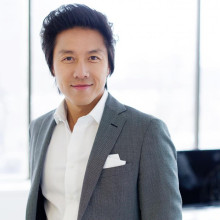
The Lucille & Norton Wolf Health Research Lecture Series – featuring Andrew Au
12:00 – 1:30 p.m.
Image
Afternoon Workshops
1:30 – 3:30 p.m. - Workshop options:
Knowledge Mobilization via The Conversation Canada
The Conversation Canada is a daily independent online publication, delivering analysis and explanatory journalism from the academic and research community directly to the public. Deputy Editor Hannah Hoag and Editor-in-Chief Scott White will explain the mission of The Conversation Canada, offer some background on how it helps academics with knowledge mobilization and give some tips on how to pitch a really great story idea. This is an interactive workshop where participants are encouraged to bring story ideas to discuss.
Interview Skills/Strategies for Academic and Non-academic Positions
This workshop consists of two concurrent sessions focused on interview skills/strategies needed for academic and non-academic job positions. During the workshop, a panel of speakers who have vast proficiency in the recruitment process will share their experiences with attendees.
Academic Program for Learners
Abstract submissions:
LHRD) showcases the incredible work done by learners — graduate students, trainees, clinical fellows and postdoctoral scholars. Abstract submission is now closed.
Go to the LHRD website for more information for participants.
The Lucille & Norton Wolf London Health Research Day Trainee Publication Awards:
Thanks to the personal generosity of Lucille and Norton Wolf, we are pleased to issue a call for The Lucille & Norton Wolf London Health Research Day Trainee Publication Awards.
Learn more about the eligibility criteria and how to apply.
London Health Research Day is presented in partnership by Lawson Health Research Institute and the Schulich School of Medicine & Dentistry.
Major Ronald Miller's story
“I just wasn’t myself,” says Major Ronald Miller when reflecting on his experience with post-traumatic stress disorder (PTSD). “I could see a significant change in my personality that just wasn’t me.”
Major Miller first joined the Canadian Armed Forces in 1971 as a young infantry private in the 1st Battalion, The Royal Canadian Regiment and later became an Officer in the Royal Canadian Artillery, which included a tour in Germany during the Cold War.
After the Cold War, he reoriented his career towards peacekeeping which saw him deployed to seven different conflict zones. “It was during the Civil War in El Salvador in 1991 that I experienced a number of incidents that first triggered my PTSD,” explains Major Miller. “From that time forward the PTSD was always there but I suppressed it.”
It wasn’t until 2016 that Major Miller’s PTSD resurfaced. After retiring from the Canadian Armed Forces in 2008, he started working a number of contracts in support of the military.
“Over the years, I was exposed to the kind of death and destruction that can be rather difficult from a psychological standpoint. The older I got, the less I was able to suppress those experiences. In fall 2016, I was supporting a NATO military exercise in the UK when I began experiencing horrible nightmares every night. I knew I needed to seek help.”
He reached out to Veteran Affairs Canada and was referred to the Operational Stress Injury (OSI) Clinic at Parkwood Institute, a part of St. Joseph’s Health Care London, where he was diagnosed with PTSD. It was there that he learned about PTSD research being conducted by Dr. Ruth Lanius, Scientist at Lawson Health Research Institute and Psychiatrist at London Health Sciences Centre.
Image
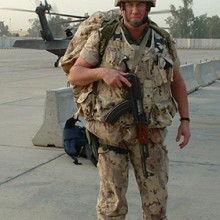
“I saw the need to help by participating in research, not only for myself but for my friends who have succumbed to the illness.”
Major Miller participated in Dr. Lanius’ neuroimaging research which uses advanced imaging technologies like PET/MRI to study differences in brain activity and neural connections between healthy individuals and those with different subtypes of PTSD. Dr. Lanius hopes that patterns of brain activity can one day be used as an objective biomarker to accurately diagnosis different subtypes of PTSD and uncover new targets for therapy.
“The research experience was interesting. I was interviewed while in the MRI and had to talk about incidents that trigger my PTSD to study my brain waves,” explains Major Miller.
In one study, Dr. Lanius is studying patterns of brain activity for those with ‘moral injury,’ an intense feeling of shame or guilt that can sometimes affect veterans with PTSD.
“Sometimes you’re involved in situations that you don’t have control over but that you feel responsible for,” says Major Miller. “You wonder, ‘Could I have done something differently?’”
Major Miller was happy to participate in any study that might help. Today, he is managing his PTSD through a combination of therapies that work for him.
“My biggest fear was giving up the things I love. I’ve been a soldier since day one and I’m sure I will be until the day I die. It’s important we come up with solutions to ensure our veterans receive proper care. Through research, we can tailor treatment to the individual rather than looking for a broad brush solution that might not suit everyone.”
This story is also featured on Research Canada’s Patient Stories website.
MAY 2010 | VOL 7 No.1 BOOK OF ABSTRACTS 11TH ANNUAL RESEARCH HALF DAY MAY 12, 2010 & RESEARCH REPORT 2009 RMHC Research Committee http://www.lawsonresearch.com/v1.0/website/research_themes/Mental%20Health/HTML/our_publications.htm Regional Mental Health Care London and St. Thomas 11th Annual Researc...
Notification of Intent to Retire Planning Form for Credentialed Professional Staff Members Credentialed Professional Staff may be asked to complete the Notification of Intent to Retire Planning Form at the discretion of the Division/Department Chair/Chief. This process is a component of the Career D...
Page 1 / 3 My Safety Plan Image credit: Adobe Stock Summary: A safety plan can help keep you safe, if you are feeling overwhelmed and/or having thoughts of ending your life. Try answering these questions and see if it helps. Its important to share this plan with family and friends close to you, so t...
Page 1 / 3 My Safety Plan Image credit: Adobe Stock Summary: A safety plan can help keep you safe, if you are feeling overwhelmed and/or having thoughts of ending your life. Try answering these questions and see if it helps. Its important to share this plan with family and friends close to you, so t...