


Search
Search
185 Search Results:
Embracing health research this holiday season
Community members, patients and families, and those working in the health field attended a special open house on November 28 by research groups at Lawson Health Research Institute. Together, they celebrated the holiday spirit and the gift of hope that is made possible through hospital-based research.
A part of St. Joseph’s Health Care London, Parkwood Institute represents the next era in care, recovery and rehabilitation. Across the site, clinical and research teams in different disciplines and specialties collaborate not only with each other but also with patients and families.
“Many people in the community know the high-quality and compassionate care that is supported by the various clinical teams at Parkwood Institute, but aren’t aware of the research happening at this site,” says Dr. Cheryl Forchuk, Beryl and Richard Ivey Research Chair in Aging, Mental Health, Rehabilitation and Recovery, and Assistant Scientific Director at Lawson.
“Lawson researchers at Parkwood are tackling important challenges with highly innovative and meaningful solutions that help improve care and quality of life.”
For the past three years, the open house gives guests a more in-depth understanding of hospital-based research and its impact. Dr. Forchuk notes that it is a great chance to talk to the researchers and their teams, and to learn about research in a really fun and interactive way. Guests may also learn about opportunities to participate in studies, as the research teams rely on people in the community getting involved.
Image
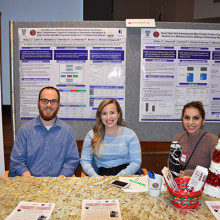
There were 12 interactive program displays from Parkwood Institute Research, a Lawson program, in the areas of cognitive vitality and brain health, mobility and activity and mental health:
- Cognitive Clinical Trials Group (CCTG)
- Collaboration of Rehabilitation Research Evidence (CORRE)
- Gait and Brain Lab
- Geriatric Mood Disorders Lab
- MacDonald Franklin OSI Research Centre (Occupational Stress Injury)
- Mental Health Nursing Research Alliance (MHNRA)
- Mental Health INcubator for Disruptive Solutions (MINDS) of London
- Neuropsychiatry and Therapeutic Brain Stimulation Research Group
- Occupational Therapy and Spiritual Care Research Lab
- R2P (Research to Practice)
- Rehabilitation Mental Health
- Wound Care
The open house had a festive theme and many of the exhibits involved a problem solving or interactive elements to encourage learning and foster teamwork.
Karen Vecchio, federal Member of Parliament for Elgin-Middlesex-London, was among the over 200 people in attendance.
Image
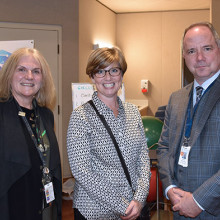
At the open house, from left: Dr. Cheryl Forchuk, MP Karen Vecchio and Roy Butler, St. Joseph's Vice President.
“London is a great community to conduct research,” explains Dr. Forchuk. “We are a mid-size city surrounded by rural areas, in many ways reflecting Canada as a whole. A lot of our projects cover the country with multiple sites and results found here by our leading experts are being implemented in health centres and national strategies in this country and around the world.”
Scientist
… Brady Patient Relations / Risk Management Terry Kaban Ivey Eye Institute Susan Vuylsteke Occupational Health and … 4 – 6 weeks. Project Status: Ongoing l) – Waiting Room 4 (Ivey Eye Institute) Brief Description: Improvements made to … Brady Patient Relations / Risk Management Terry Kaban Ivey Eye Institute Susan Vuylsteke Occupational Health and …
Annual Accessibility Plan for St. Josephs Health Care, London September 2008 - August 2009 Submitted to Cliff Nordal Chief Executive Officer 30 September 2008 Prepared by SJHC Accessibility Working Group Chair, Derek Lall This publication is available on the St. Josephs Heath Care, Londons website a...
… which allow patients and staff easier access to services. • Ivey Eye Institute • Urology • Diabetes • In-patient • … Joseph’s Hospital Identify visual barriers throughout the Ivey Eye Institute Tour the space and formulate … which allow patients and staff easier access to services. • Ivey Eye Institute • Urology • Diabetes • In-patient • …
Annual Accessibility Plan October 2009 March 31, 2011 Submitted to the St. Josephs Board of Directors, September 28, 2009 Prepared and Submitted by St. Josephs Accessibility Working Group St. Josephs Accessibility Plan September 28, 2009 2 Executive Summary St. Josephs Health Care, London, (St. Jos...
… Volunteer Services / Patient Relations Terry Kaban Ivey Eye Institute Susan Vuylsteke Occupational Health and … for various educational groups. Project Status: Ongoing. e) Ivey Eye Institute Website enhancements Brief Description: Revisions to the homepage for the Ivey Eye Institute allow better navigation for the visually …
Annual Accessibility Plan for St. Josephs Health Care, London September 2007 - August 2008 Submitted to Cliff Nordal Chief Executive Officer 30 September 2007 Prepared by SJHC Accessibility Working Group Co-ordinator, Derek Lall This publication is available on the St. Josephs Heath Care, Londons we...
… Joseph’s Hospital Bold colours were implemented in the Ivey Eye Institute to help people with visual impairments … to be available. underway Physical – St. Joseph’s Hospital Ivey Eye Institute Braille on signs has worn off on levels 0 … Joseph’s Hospital Bold colours were implemented in the Ivey Eye Institute to help people with visual impairments …
Accessibility Plan January 2013 December 2015 Submitted to St. Josephs Senior Leadership Team on January 8, 2013 Prepared and Submitted by St. Josephs Accessibility Advisory Committee Table of Contents St. Josephs Mission Statement. ...... 1 Introduction.. .............................................
… Services / Patient Relations - Parkwood Terry Kaban Ivey Eye Institute Wendy Reed Occupational Health and Safety … is provided each year for leaders’ teams to access. h) Ivey Eye Institute Initiatives for a Barrier Free … advances to help with a barrier free environment within the Ivey Eye Institute include: • Use of 16 point font for the …
Annual Accessibility Plan for the St. Joseph Health Care, London September 2005 - August 2006 Submitted to Cliff Nordal Chief Executive Officer 30 September 2005 Prepared by SJHC Accessibility Working Group Co-ordinator, Derek Lall This publication is available on the hospitals website and in altern...
Exploring mobile software to better support youth mental health
Mental health services are rooted in relationships. When it comes to delivery, and specifically community-based and outpatient services, connection and communication between the individual and care provider need to be the focus.
When we think of youth in particular, technology is a regular form of communication for them.
“Our research team at Lawson is looking at how technology can assist in the delivery of mental health services for youth in a way that still supports the important components of treatment,” says Dr. Cheryl Forchuk, Assistant Scientific Director at Lawson. “In our work with youth, they’ve talked about wanting the technology they are already using integrated into their care.”
In the health care sector, the use of technology needs to be carefully tested and implemented, to ensure it is not only meeting the needs of those using it but also that it complies with the standards for privacy and security.
On February 7, 2019, Lawson Health Research Institute and InputHealth welcomed community members and stakeholders for the announcement of a new health care technology solution that is being researched by Dr. Forchuk and her team, with generous contributions from the provincial government.
TELEPROM-Y is a mobile-based TELEMedicine and Patient-Reported Outcome Measurement Youth study aiming to improve access to specialized services and reduce inpatient mental health admissions for youth. The initiative is one of 11 that received funding from Ontario’s second round of the Health Technologies Fund (HTF), a program of the Ontario Ministry of Health and Long-Term Care administered by Ontario Centres of Excellence.
TELEPROM-Y received $395,109 in provincial funding with $494,630 in matching contributions for a total investment of $889,739.
InputHealth’s CEO Damon Ramsay and Chief Medical Officer Puneet Seth, along with Jennifer Moles from the Ontario Centres of Excellence were on hand with Dr. Cheryl Forchuk to hear more about how the technology and funding will help support youth. Project contributors Woodstock General Hospital and Youth Opportunities Unlimited (Y.O.U.) also attended the announcement.
This project is taking a unique approach to creating connections with youth. Researchers will use an electronic Collaborative Health Record (CHR) developed by InputHealth, an innovative Canadian digital health software company, which allows for secure communication. Patients will have access to virtual visits, prompts and reminders, text or email messages, and educational materials delivered by phone.
Image
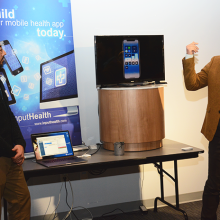
InputHealth's Puneet Seth and Damon Ramsay provided a demonstration of the software being used in the study.
Dr. Forchuk explains that “the study is focusing on an important transitional period. The majority of mental illnesses occur between the ages of 16 to 25 years old.” The research team is recruiting participants between these ages who have symptoms of anxiety and/or depression, and are receiving outpatient services from a hospital-based mental health care program at London Health Sciences Centre, St. Joseph’s Health Care London and Woodstock General Hospital, or community-based services from partner organizations.
A key aspect is to assess whether the technology is effective and efficient, while acceptable to both the staff and youth using the app.
“Careful evaluation is essential to make sure we are doing the right things for the people we serve,” adds Dr. Forchuk, who is also the Beryl and Richard Ivey Research Chair in Aging, Mental Health, Rehabilitation and Recovery.
Image

The mobile software will also be evaluated on its ability to improve the ease of access to care; monitor mood and behaviour changes for earlier intervention; enhance information exchange between patient and health care provider; and, support the overall experience for the youth.
Other project contributors include St. Michael’s Hospital Centre for Excellence in Economic Analysis Research, The Forge (McMaster University), Thunder Bay Regional Health Sciences Centre and Western University.
The study extends previous findings from the Youth Mental Health Engagement Network study (Y-MHEN), which developed, delivered and evaluated an interactive web-based personal health record, the Lawson SMART Record (LSR), to assist mental health patients in managing their care and connecting with care providers.
The Health Technologies Fund is a program of the Ontario Ministry of Health and Long-term Care and is administered by the Ontario Centres of Excellence. Program supports the development of made in Ontario health technologies by accelerating evaluating, procurement, adoption and diffusion within the Ontario health system.
Scientist
… • Heart Failure Clinic • Infectious Diseases Care Program • Ivey Eye Institute (including Cataract Suite) • Lung … • Heart Failure Clinic • Infectious Diseases Care Program • Ivey Eye Institute (including Cataract Suite) • Lung …
Care Matters Here. Learn More. sjhc.london.on.ca BODY | MIND | SPIRIT Leena Justus Registered Nurse Mount Hope Centre for Long Term Care Renowned for compassionate care, St. Josephs is one of the best academic health care organizations in Canada, dedicated to helping people live their fullest by mi...
… • Heart Failure Clinic • Infectious Diseases Care Program • Ivey Eye Institute (including Cataract Suite) • Lung … • Heart Failure Clinic • Infectious Diseases Care Program • Ivey Eye Institute (including Cataract Suite) • Lung …
Leena Justus Registered Nurse Mount Hope Centre for Long Term Care St. Josephs provides exceptional care, earning the complete confidence of those we serve. Your care matters here. Renowned for compassionate care, St. Josephs is one of the best academic health care organizations in Canada, dedicated...
… to LHSC Cardiac Rehab to SJHC Ophthalmology (Phase IV Ivey Institute offices/clinics) to SJHC Allergy to SJHC … to LHSC Cardiac Rehab to SJHC Ophthalmology (Phase IV Ivey Institute offices/clinics) to SJHC Allergy to SJHC …
Page 1 of 38 Financial Statements of St. Josephs Health Care, London Year ended March 31, 2004 Growing a healthy community through care, teaching and research St. Josephs Health Care, London Financial Statements Page 1 of 38 MMeessssaaggee ffrroomm DDaawwnn BBuuttlleerr TTrreeaassuurreerr ooff tthhe...
… to LHSC • Cardiac Rehab to SJHC • Ophthalmology (phase IV Ivey Institute offices/clinics) to SJHC • Allergy to SJHC • … to LHSC • Cardiac Rehab to SJHC • Ophthalmology (phase IV Ivey Institute offices/clinics) to SJHC • Allergy to SJHC • …
FINANCIAL STATEMENTS OF ST. JOSEPHS HEALTH CARE, LONDON | Year ended March 31, 2003 Visit our web site: www.sjhc.london.on.ca Financial Statements of St. Josephs Health Care, London Year ended March 31, 2003 St. Josephs Health Care, London (SJHC) is a very complex organization. Reflective of the sig...
… semaines. État du projet : Continu l) – Salle d’attente 4 (Ivey Eye Institute) Brève description : Des améliorations … semaines. État du projet : Continu l) – Salle d’attente 4 (Ivey Eye Institute) Brève description : Des améliorations …
Plan daccessibilit annuel pour St. Josephs Health Care, London septembre 2008 - aot 2009 Soumis Cliff Nordal Directeur gnral Le 30 septembre 2008 Prpar par Le prsident du Groupe de travail sur laccessibilit de SJHC, Derek Lall La prsente publication est disponible sur le site Web de St. Josephs Hea...
… Mount Hope Centre for Long ondon et au CRSM-St. Thomas. a • Ivey Eye Institute • Urologie • Diabète ation • Unités … Mount Hope Centre for Long ondon et au CRSM-St. Thomas. a • Ivey Eye Institute • Urologie • Diabète ation • Unités …
Plan daccessibilit annuel octobre 2009 31 mars 2011 Soumis au conseil dadministration de St. Josephs le 28 septembre 2009 Prpar et soumis par le Groupe de travail sur laccessibilit de St. Josephs Pour obtenir le rapport au complet, communiquez avec le Service des communications et des affaires publ...
… et Relations avec les patients – Parkwood Terry Kaban Ivey Eye Institute Wendy Reed Santé et sécurité au travail … les dirigeants ont accès à des fonds. h) Initiative du Ivey Eye Institute visant un milieu sans obstacles Brève … récemment vers la création d’un milieu sans obstacles au Ivey Eye Institute : • Utiliser une taille de police de 16 …
Plan daccessibilit annuel pour St. Josephs Health Care, London septembre 2005 - aot 2006 Soumis Cliff Nordal Directeur gnral Le 30 septembre 2005 Prepar par le coordonnateur du Groupe de travail sur laccessibilit de SJHC, Derek Lall La prsente publication est disponible sur le site Web de lhpital e...
… en 2008 et planification achevée pour 2009 b) Visite du Ivey Eye Institute pour cerner les obstacles Un intervenant … ayant une déficience visuelle, le coordonnateur du Ivey Eye Institute et la présidente du Groupe de travail sur … se rendre aux unités du 2 e étage. Mars 2012 Physique/Ivey Eye Institute, Hôpital St. Joseph’s Comme le ton et la …
Plan daccessibilit annuel avril 2011 31 mars 2012 ** Version abrge ** Soumis au Comit directeur sur laccessibilit de St. Josephs le 15 fvrier 2011, lquipe de cadres suprieurs de St. Josephs le 25 fvrier 2011; et au conseil dadministration de St. Josephs le 22 mars 2011 Prpar et soumis par le Group...
Funding for unique strategy to prevent homelessness after hospital discharge
In Canada, about 235,000 people experience homelessness each year. The number of homeless people, and the length of time they spend homeless, continues to rise. Homelessness is not a choice and anyone can become homeless.
Although the root cause is poverty, some underlying issues are poor physical or mental health; violence or abuse in the home; lack of employment or income; and, a shortage of affordable housing.
A group of researchers at Lawson Health Research Institute (Lawson), working at both London Health Sciences (LHSC) and St. Joseph’s Health Care London (St. Joseph’s), are committed to tackling the issue of homelessness from within hospital walls, where some patients face the risk of being discharged into homelessness.
“Many of our patients with lived experience of homelessness were saying that their journey started with a hospital discharge,” says Lawson clinician researcher Dr. Cheryl Forchuk. “Often, they were experiencing major transitions in their lives and then experienced a hospital stay. Normally a relatively short visit, they aren’t able to gather the information and make a plan to be able to leave the hospital with somewhere to stay.”
On September 10, Adam Vaughan, Canadian MP and Parliamentary Secretary (Housing and Urban Affairs), on behalf of the Honourable Jean-Yves Duclos, Minister of Families, Children and Social Development, announced that Lawson will receive $223,572 from the Homelessness Partnering Strategy’s (HPS) Innovative Solutions to Homelessness funding stream to support the project “No Fixed Address Version 2 Expansion” research project.
Image

“This is a brilliant approach. It supports an augmented duty of care where hospitals have the means to transfer people into stable settings where they can continue to heal and move towards self-sufficiency,” says Parliamentary Secretary Vaughan.
Taking place at London Health Sciences Centre, this research will further refine the No Fixed Address strategy for reaching and supporting patients during the crucial transitional period when they are being discharged from the hospital and re-integrated into the community.
“Lawson’s expanded No Fixed Address research project is the first evaluation anywhere of a strategy to reduce the number of patients being discharged into homelessness. There is almost no literature on any aspect of this troublesome issue,” explains Dr. Forchuk who is the study’s Principal Investigator. Dr. Forchuk is also the Beryl and Richard Ivey Research Chair in Aging, Mental Health, Rehabilitation and Recovery and Assistant Director at Lawson.
Image

This project is an extension of three previous studies conducted by Dr. Forchuk’s research team, which developed and tested this novel approach. They demonstrated the efficacy, feasibility and cost-effectiveness of using the No Fixed Address strategy in acute and tertiary psychiatric care in the London region, at both LHSC and St. Joseph’s. In the first phase, they found that the interventions used prevented homelessness in 95 per cent of cases.
The researchers are now taking a solution proven to have worked in the mental health units and applying it in selected medical departments at LHSC. Through the study, the services will be available to all patients in those units who are at risk of homelessness. There have already been 17 patients who have accessed this support since the project got underway this summer.
Three community partners from London are supporting implementation of the strategy - Canadian Mental Health Association Middlesex, Ontario Works in the City of London and the Salvation Army’s Housing Stability Bank. They will provide assistance in areas like securing appropriate private-sector housing, provision of income and employment supports, and financial assistance.
“In many ways London, Ontario is the high water mark of solving and tackling homelessness. This community has a lot of be proud of given the way that the municipality is stepping up to the plate and how many different organizations are working together towards a common goal,” says Parliamentary Secretary Vaughan.
This kind of collaboration showcases the important partnership between the Canadian Government, research-intensive hospitals and community organizations to translate innovative solutions from the research stage to the front line of care.
“The hope is that the findings will be even more robust, leading to the development of a best-practice model of hospital discharge that can be adopted throughout Canada. This will reinforce the need for a systemic change in the way hospital discharges occur and ensuring the person is transitioning to a secure housing arrangement,” says Dr. Forchuk.
Learn more about the Government of Canada’s Homelessness Partnering Strategy.
News Coverage
- CBC London - Helping medical patients in London avoid homelessness when they leave hospital
- CTV London - Expanded research hopes to break the cycle of homelessness that psychiatric patients sometimes face when discharged
- Global News, AM 980 - Program that finds housing for homeless patients in hospital gets $223K in federal funding
- London Free Press - 'Brilliant approach' to homelessness gets federal grant
Scientist
… PATIENT NAME SURNAME GIVEN INITIAL ADDRESS Ivey Eye Institute Ophthalmic Diagnostic Services St. … PATIENT NAME SURNAME GIVEN INITIAL ADDRESS Ivey Eye Institute Ophthalmic Diagnostic Services St. …
PATIENT NAME SURNAME GIVEN INITIAL ADDRESS Ivey Eye Institute Ophthalmic Diagnostic Services St. Josephs Hospital TELEPHONE: ( ) 268 Grosvenor Street, Room B1-409 London, Ontario N6A 4V2 HEALTH CARD# 10 DIGITS VERSION CODE TEL: 519 646-6018 FAX: 519 646-6052 AGE DATE OF BIRTH: GENERAL/CORNEA/GLAUCOM...
… and Brochures for the Jolliffe Resource Centre $254 – Ivey Eye Institute, St. Joseph's Hospital Education/Research … Patient Education in the Jolliffe Resource Centre - $370 – Ivey Eye Institute, St. Joseph's Hospital Digital Piano for … and Brochures for the Jolliffe Resource Centre, $1,059 – Ivey Eye Institute, St. Joseph's Hospital Mount Hope …
Thanks to donors who entrust us with their gifts, we are able to invest in critical health care needs in our community. 2014-2015 Grant Listing Over the year, St. Josephs Health Care Foundation granted $4.9 million to St. Josephs Health Care London and Lawson Health Research Institute, the research ...
… P a g e Pamphlets for the Jolliffe Resource Centre, $2,234 Ivey Eye Institute, St. Joseph's Hospital Patient education … ey Eye Institute. Vascular Doppler Ultrasound, $2,458 Ivey Eye Institute, St. Joseph's Hospital A Vascular Doppler … arteritis. Designated Donation for a Display Case, $7,194 Ivey Eye Institute, St. Joseph's Hospital Coffee Service for …
1 | P a g e 2015/16 LIST OF GRANTS PAID Patient Care Grants Hydrocollator, $2,955 - Mount Hope Centre for Long Term Care Physiotherapists will use a hydrocollator to provide therapeutic heat that will help to treat residents for various conditions, including arthritis, soft tissue injury, musculoske...
… help people walk again. Optical Coherence Tomography for Ivey Eye Institute, $50,000 - St. Joseph's Hospital Medical … funded by the Marjorie Jean Jolliffe Fund for St. Joseph’s Ivey Eye Institute. 2016/17 Mount Hope Resident Family … Education Fund for Diagnostic Technicians at St. Joseph’s Ivey Eye Institute, $2,628 - St. Joseph's Hospital The Dr. …
St. Josephs Health Care Foundation 2016-17 Allocations MEDICAL COLLABORATION London Medical Innovation and Commercialization Network City Innovation Grant, $4,013,287 PATIENT CARE Chapel Refurbishment, $195,000 - St. Joseph's Hospital The 100-year-old chapel at St. Josephs Hospital received upgrades...