


Search
Search
941 Search Results:
… days later with 29 broken bones— including his legs, pelvis and neck—and the news he had quadriplegia. For a man used to navigating the … days later with 29 broken bones— including his legs, pelvis and neck—and the news he had quadriplegia. For a man used to navigating the …
Media Release July 22 2009 For Immediate Release Driver program helps grounded pilot regain independence London, Ontario - The driver assessment rehabilitation program (DARP) at Parkwood Hospital is helping people get back behind the wheel who have lost their drivers license because of changes in th...
… Research Insights of the Regional Mental Health Care London and St. Thomas is a peer-reviewed journal designed to … friends try to reason why, The Ottawa Sun, August 2, 1995, News 2; Maria McClintock, Media drove maniac: Slain … 'random' victim, The Toronto Sun, August 3, 1995, News 2; Sarah Green & Andrew Matte, Suspect rated a risk: …
DECEMBER 2012 | VOL. 9 NO. 3 REFORMS TO ONTARIOS MENTAL HEALTH ACT: Lessons from the story of the man who killed Brian Smith Richard OReilly, Robert Solomon, John E. Gray Research Insights of the Regional Mental Health Care London and St. Thomas is a peer-reviewed journal designed to publish reviews...
… Movies- RH 3 10:15 Mass-CH 4 1:30 Holiday Spirit 3:00 Busy Hands 6:15 Green Thumbs 5 11:00 Music Therapy 1:30 Memories and More 1:30 Science for Seniors CR 6:30 Christmas Lights … Outing to the Country-See Jen 6:30 Happy Gang -TS 19 1:30 News and Views 1:30 Science for Seniors-CR 6:30 Light …
December 2017St. Marys 1- THERAPEUTIC PROGAMS SUNDAY MONDAY TUESDAY WEDNESDAY THURSDAY FRIDAY SATURDAY 1 11:00 Worship Service -CH 11:00 Pictures with Santa 1:30 Shuffle Board -TS 2 10:00-12:00pm Opera Concert RH 2:00 At The Movies- RH 3 10:15 Mass-CH 4 1:30 Holiday Spirit 3:00 Busy Hands 6:15 Gree...
Dementia research hits the ‘mark’
St. Joseph’s Health Care London is at the forefront of national research exploring biomarkers to better predict dementia and slow its onset.
Dr. Michael Borrie is now seeing grandchildren of patients who came to his clinic when he first started Alzheimer’s research 30 years ago.
His message to this new generation is more hopeful than ever, bolstered by ever-more-reliable ways of early detection and being tantalizingly close to a future of predicting dementia and intervening even before symptoms appear.
“The ultimate goal is to slow cognitive decline – and to stop it if we can – so that people can live independently, and happier, for a lot longer,” says Borrie, Medical Director of the Aging Brain and Memory Clinic at St. Joseph’s Health Care London (St. Joseph’s).
“We’re aiming to alter the trajectory of dementia,” he says.

A geriatrician, clinician and researcher, Borrie is also Platform Lead for the Comprehensive Assessment of Neurodegeneration and Dementia (COMPASS-ND), a long-term study within the Canadian Consortium on Neurodegeneration and Aging (CCNA).
Recently, the Canadian Institutes of Health Research announced $20.6 million in funding to continue the work of CCNA, a 30-site, multi-pronged project of which the St. Joseph’s-based team is the lead player. The grant will enable them to advance the frontiers of dementia research to benefit real-world patients here and across the country.
Solving mysteries with biomarkers
Despite the prevalence of Alzheimer’s and other neurodegenerative diseases – and with more than 10,000 new diagnoses in Canada each year – there are still many mysteries to solve: Why do some people have early-onset dementia while others, super-agers, remain alert and active in their 90s? What’s happening genetically, in their environment and personal medical history to advance or protect against the disease?
What is known, however, is the link between damaged nerve cells and specific proteins that misfold and clump together to form amyloid plaques and tau tangles in the brain. Detecting these abnormal proteins early is an important key to diagnosis and prediction.
Locally, the most comprehensive tool has been state-of-the-art brain Positron Emission Tomography (PET) scanning at St. Joseph’s Imaging. Lawson researchers are also involved in reliably detecting amyloid proteins by analyzing participants’ cerebrospinal fluid (CSF) – a surprisingly accurate way of confirming imaging results, says geriatrician Dr. Jaspreet Bhangu, a Lawson scientist and head of the biomarker project.
Through the BioMIND regional research project, Lawson scientists are analyzing PET scans, blood and CSF samples to check for specific protein biomarkers. If shown to be reliable, a series of these tests over time could signal whether the disease is progressing, and could predict whether it will progress or respond to treatment.
All that gets added to an arsenal that includes tests of behaviour, memory and cognitive function.
“It’s a triple assessment, or even a quadruple one, that we can conduct over time. We hope to use these advanced tests to provide vital information, similar to what is done in certain types of cancer,” Bhangu says.
But that’s not all.
Testing potential treatments
St. Joseph’s is also one of the country’s most active sites for clinical trials into whether novel medications might be able to directly pinpoint and destroy the proteins that cause Alzheimer disease.
“This is the intersection of cutting-edge research, top-notch resources and excellent clinical practice to develop personalized treatments,” says Bhangu. “What makes us unique in Canada among dementia researchers is that our science is taking us from bench to bedside – a rapid turnaround from research to direct patient benefit.”
If a person has a strong family history of Alzheimer disease and no symptoms – but does have positive biomarkers confirming presence of disease – they may then choose to take part in a randomized controlled trial to try to alter the trajectory of the disease.

“It’s still in a research context, still in clinical trials – but if Health Canada ultimately approves a treatment, we’ll have the ability and the patient database to be able to translate our findings into clinical practice much more quickly instead of waiting for years,” says Borrie.
All this is good news for a generation eager for answers, Borrie says.
“When we learn more about the mechanisms of the disease, we can find more effective, earlier treatments. And if we can treat people earlier, we hope to move the disease progression curve to the right, to add more years of good cognitive health to someone’s life.”
… LAWSON HEALTH RESEARCH INSTITUTE Public Information and Disclosure Protocol Cyclotron & PET Radiochemistry … releases (on an as-required basis) sent to local media (newspaper, radio, TV). Public events, such as public forums and news conferences. Social media operated by Lawson Health …
~------...... ........._ LAWSON HEALTH RESEARCH INSTITUTE Public Information and Disclosure Protocol Cyclotron & PET Radiochemistry Facility located at St. Josephs Health Care London Updated September 2021 LAWSON HEALTH RESEARCH INSTITUTE Public Information and Disclosure Protocol Cyclotron & PET Ra...
Dr. Dalton L. Wolfe
Research Overview
- Spinal Cord and Acquired Brain Injury Rehabilitation
- Implementation Science
- Activity-based therapies to promote neurorecovery
Biography
Dr. Dalton Wolfe is a Scientist at Parkwood Institute (SJHC London) and the leader of the R2P (Research 2 Practice) team that integrates clinical and research efforts to improve care and clinical outcomes. His primary research interest is in the area of knowledge mobilization and best practice implementation with a focus on physical activity and activity-based therapies in spinal cord injury and brain injury rehabilitation. He co-leads the Ontario SCI Implementation, Evaluation and Quality Care Consortium which focuses on implementation of quality indicators towards the enhancement of care across the 5-academic health centres involved in SCI rehabilitation in the province of Ontario. As part of the Parkwood Rehabilitation Innovations in Mobility Enhancement (PRIME) initiative he is focused on enhancing clinical decision-making to improve locomotor and other movement-related outcomes with activity-based therapies such as robotic, manual and FES-assisted therapies. As with many of the R2P initiatives this involves implementation science and participatory research methods to put in place practice-based research infrastructure that enables iterative knowledge generation as well as implementation. Dr. Wolfe Is currently accepting students at the Masters, Doctoral, and post-doctoral levels.
Latest News: https://www.lawsonresearch.ca/lawsonlink/prime-team
Dr. Qingping Feng named Innovator of the Year for potential sepsis treatment
WORLDiscoveries, the technology transfer and business development office for Western University, Lawson Health Research Institute and Robarts Research Institute, recently announced the recipients of the 2020 Vanguard Awards.
Vanguard Awards recognize local researchers who, through partnership with WORLDiscoveries, have achieved various market-readiness milestones.
Lawson’s Dr. Qingping Feng was named as the Innovator of the Year. He is being recognized for his research and intellectual property related to Annexin and its use to treat inflammatory disorders. He holds patents issued in Canada, United States, Europe, China and Japan.
This award is given to individuals who demonstrate excellence in innovation within their field. It highlights the achievements of those who contribute to the culture of commercialization and entrepreneurship by creating a product or service that is beneficial to society.
Congratulations to Dr. Feng and all of the 2020 Vanguard Award recipients.
As the research institute of LHSC and St. Joseph’s, our researchers work in the lab and directly with clinicians, patients, families and other partners to enhance diagnostics and treatments. They also address care at a system level by improving delivery of services for people in London and beyond.
For any pressing health question, our work does not stop once the research is done. Commercialization and business development are vital components in driving innovation and transforming health care, all while supporting Canada’s knowledge economy.
Learn more about Dr. Feng’s research:
… MEDIA RELEASE For Immediate Release: June 20, 2008 LHSC and St. Joseph’s win national award for energy and environmental stewardship (LONDON, Ontario) – London … Joseph’s media page at www.sjhc.london.on.ca/corp/whatsnew/news.htm /media/101 … Joseph’s media page at www.sjhc.london.on.ca/corp/whatsnew/news.htm …
MEDIA RELEASE For Immediate Release: June 20, 2008 LHSC and St. Josephs win national award for energy and environmental stewardship (LONDON, Ontario) London Health Sciences Centre (LHSC) and St. Josephs Health Care, London (St. Josephs) are the recipients of the 2008 Energy and Environmental Stewar...
… Chinese New Year Supper Club (see Jen) 26 10:30 Music with Randy Grey–RH 2:00 Birthday Party -MVDR 6:30 Ageless Grace … 6:00 Anything Goes 4 3:00 Drumming-RH 4:00 Whats in the news? 6:00 Movie Night 5 10:00 George Sings-TS 1:30 Anything … 6:00 Anything Goes 11 2:00 Fun on Four 4:00 Whats in the news? 6:45 Pub Night with The G’Oldies -RH 12 10:30 Coffee & …
February 2016 Marian Villa 1 THERAPEUTIC PROGRAMS SUNDAY MONDAY TUESDAY WEDNESDAY THURSDAY FRIDAY SATURDAY 1 10:45 Exercise 1:30 BINGO MV1 Lounge 2:00-3:00 Marian Delight MVDR 2 11:00 Mind Aerobics 1:30 Baking -CR 3 10:15 Mass Ch. 11:00 Exercise 1:30 Green Thumb 4:00 Java Music Club 6:15 Floor Hoc...
… 1:30 Music Therapy 2:00-3:00 Marian Delight – MVDR 4:00 Fun and Games 6:00 Closet Clean Up 2 9:45 Coffee & Conversation … 2:00 Exercise Group 2:30 Chimes and Harmony 10 9:30 News and Views 10:15 Mass-Chapel 1:30 Curling 6:15 Floor … 2:00 Residents Council -RH 2:30 Chimes and Harmony 24 9:30 News and Views 10:30 Mass-Chapel 1:30 Travel Log 6:15 Floor …
February 2016 St. Marys 1 THERAPEUTIC PROGRAMS SUNDAY MONDAY TUESDAY WEDNESDAY THURSDAY FRIDAY SATURDAY 10:15 Mass-Chapel 1 9:30 Parlour Visits 1:30 Music Therapy 2:00-3:00 Marian Delight MVDR 4:00 Fun and Games 6:00 Closet Clean Up 2 9:45 Coffee & Conversation 10:30 1:1 Visits 1:30 Happy & Healthy...
… 1 News Release St. Joseph’s Health Care, London reports success on overall budget for last fiscal year and signals continued financial challenges for next two … totaling more than $150 million. Continued on Page 2 2 News Release – St. Joseph’s Health Care London Page 2 Nordal …
1 News Release St. Josephs Health Care, London reports success on overall budget for last fiscal year and signals continued financial challenges for next two years - New board of directors appointed: Dr. Gerald Killan takes the reigns as board chair St. Josephs Health Care Foundation has most succes...
Funding for unique strategy to prevent homelessness after hospital discharge
In Canada, about 235,000 people experience homelessness each year. The number of homeless people, and the length of time they spend homeless, continues to rise. Homelessness is not a choice and anyone can become homeless.
Although the root cause is poverty, some underlying issues are poor physical or mental health; violence or abuse in the home; lack of employment or income; and, a shortage of affordable housing.
A group of researchers at Lawson Health Research Institute (Lawson), working at both London Health Sciences (LHSC) and St. Joseph’s Health Care London (St. Joseph’s), are committed to tackling the issue of homelessness from within hospital walls, where some patients face the risk of being discharged into homelessness.
“Many of our patients with lived experience of homelessness were saying that their journey started with a hospital discharge,” says Lawson clinician researcher Dr. Cheryl Forchuk. “Often, they were experiencing major transitions in their lives and then experienced a hospital stay. Normally a relatively short visit, they aren’t able to gather the information and make a plan to be able to leave the hospital with somewhere to stay.”
On September 10, Adam Vaughan, Canadian MP and Parliamentary Secretary (Housing and Urban Affairs), on behalf of the Honourable Jean-Yves Duclos, Minister of Families, Children and Social Development, announced that Lawson will receive $223,572 from the Homelessness Partnering Strategy’s (HPS) Innovative Solutions to Homelessness funding stream to support the project “No Fixed Address Version 2 Expansion” research project.
Image

“This is a brilliant approach. It supports an augmented duty of care where hospitals have the means to transfer people into stable settings where they can continue to heal and move towards self-sufficiency,” says Parliamentary Secretary Vaughan.
Taking place at London Health Sciences Centre, this research will further refine the No Fixed Address strategy for reaching and supporting patients during the crucial transitional period when they are being discharged from the hospital and re-integrated into the community.
“Lawson’s expanded No Fixed Address research project is the first evaluation anywhere of a strategy to reduce the number of patients being discharged into homelessness. There is almost no literature on any aspect of this troublesome issue,” explains Dr. Forchuk who is the study’s Principal Investigator. Dr. Forchuk is also the Beryl and Richard Ivey Research Chair in Aging, Mental Health, Rehabilitation and Recovery and Assistant Director at Lawson.
Image

This project is an extension of three previous studies conducted by Dr. Forchuk’s research team, which developed and tested this novel approach. They demonstrated the efficacy, feasibility and cost-effectiveness of using the No Fixed Address strategy in acute and tertiary psychiatric care in the London region, at both LHSC and St. Joseph’s. In the first phase, they found that the interventions used prevented homelessness in 95 per cent of cases.
The researchers are now taking a solution proven to have worked in the mental health units and applying it in selected medical departments at LHSC. Through the study, the services will be available to all patients in those units who are at risk of homelessness. There have already been 17 patients who have accessed this support since the project got underway this summer.
Three community partners from London are supporting implementation of the strategy - Canadian Mental Health Association Middlesex, Ontario Works in the City of London and the Salvation Army’s Housing Stability Bank. They will provide assistance in areas like securing appropriate private-sector housing, provision of income and employment supports, and financial assistance.
“In many ways London, Ontario is the high water mark of solving and tackling homelessness. This community has a lot of be proud of given the way that the municipality is stepping up to the plate and how many different organizations are working together towards a common goal,” says Parliamentary Secretary Vaughan.
This kind of collaboration showcases the important partnership between the Canadian Government, research-intensive hospitals and community organizations to translate innovative solutions from the research stage to the front line of care.
“The hope is that the findings will be even more robust, leading to the development of a best-practice model of hospital discharge that can be adopted throughout Canada. This will reinforce the need for a systemic change in the way hospital discharges occur and ensuring the person is transitioning to a secure housing arrangement,” says Dr. Forchuk.
Learn more about the Government of Canada’s Homelessness Partnering Strategy.
News Coverage
- CBC London - Helping medical patients in London avoid homelessness when they leave hospital
- CTV London - Expanded research hopes to break the cycle of homelessness that psychiatric patients sometimes face when discharged
- Global News, AM 980 - Program that finds housing for homeless patients in hospital gets $223K in federal funding
- London Free Press - 'Brilliant approach' to homelessness gets federal grant
Scientist
… their fullest by minimizing the effects of injury, disease and disability through excellence in care, teaching and research. \~ SIJOSEPHs H EALT H CA RE LONDON … for too long, however, can cause increasing pain. The good news is you do not have to give up the many benefits of …
CARING FOR THE BODY, MIND & SPIRIT SINCE 1869 Renowned for compassionate care, St. Joseph's is one of the best academic health care organizations in Canada dedicated to helping people live to their fullest by minimizing the effects of injury, disease and disability through excellence in care, teachi...
… Guide US English Living with worry and anxiety amidst global uncertainty Living with worry and … world is changing rapidly at the moment. Given some of the news coverage, it would be hard not to worry about what it … list Read Read a favourite book Read a new book Read the newspaper Read your favourite website Schedule Get up extra …
Guide US English Living with worry and anxiety amidst global uncertainty Living with worry and anxiety amidst global uncertainty 1 2020 Psychology Tools LimitedThis resource is free to share About this guide Our world is changing rapidly at the moment. Given some of the news coverage, it would be h...
Hospital-based research delivers high quality and efficient patient care
On January 10, 2020, the Honourable Jeff Yurek, Minister of Environment, Conservation and Parks and MPP for Elgin-Middlesex-London, joined London Health Sciences Centre (LHSC), Lawson Health Research Institute and the Ontario Hospital Association for a research tour at LHSC’s University Hospital.
This tour was organized to afford the Minister the ability to see first-hand how research-intensive hospitals like those in London are helping to deliver high quality and efficient patient care to people across the province and beyond.
At University Hospital, Drs. Matthew Teeter and Brent Lanting are leading clinical research in hip and knee replacement that is reducing the time patients are in hospital following surgery. They are utilizing wearable technology to better assess how patients are doing, flag issues and predict outcomes, while partnering with industry to develop the next generation of implants.
Image
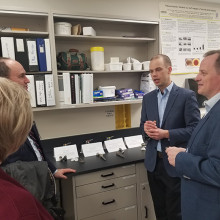
Dr. Teeter leads one of Canada’s only Implant Retrieval Labs, which stores thousands of failed hip, knee and shoulder implants retrieved from patients. Surgeons and scientists from all over the world send implant specimens to London to be imaged and studied.
As the research institute of LHSC and St. Joseph’s Health Care London, Lawson’s researchers and their teams are helping people live their life to the fullest by minimizing the effects of injury, disease and disability. Research is done within hospital walls and can be directly implemented into patient care.
This includes ground breaking work in minimally invasive and robotic cardiac surgeries let by Dr. Michael Chu and the cardiac surgery team. They have helped patients like Maria Bruno who shared her experience as a patient, and the impact on her own life and that of her family.
Image
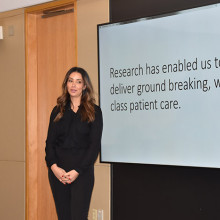
“Today, my heart is in perfect condition,” shares Maria. “The ability to perform this procedure is unique in Canada. I’m forever grateful to this hospital and Dr. Chu for being able to repair it. I’m a huge advocate for continued research because there are many, many patients who could benefit.”
As an active clinician researcher, Dr. Chu also investigates augmented reality image guidance in minimally invasive valve surgery, experimental transcatheter technology and complex aortic reconstruction. In 2019, Dr. Chu along with colleagues from University Health Network published a high-impact finding that women are more likely to experience poorer outcomes following aortic surgery.
Dr. Mandar Jog is a world leader in his field, revolutionizing treatment for people with movement disorders including Parkinson’s disease and essential tremor. Last year, his work on spinal cord stimulation was covered by BBC World News.
Patients Real Beaulieu and Guy Alden who have been involved with the team’s clinical trials told the Minister about the dramatic improvements in their quality of life
Image
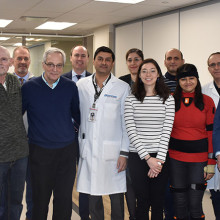
“With the tremor, I was at the point where I couldn’t write, I couldn’t get a key in the key hole. I couldn’t function normally in life and it was embarrassing for me,” remembers Real. “After the treatment with Dr. Jog, it was a huge turnaround for me and how I could live my life.”
Hospital-based research is critical to supporting health care in Ontario. “Health research is a necessity in order to provide the best care for patients and ensure the health system is sustainable. Researchers, clinicians, staff and trainees working at hospital sites across the city are driving important discoveries that continually improve patient care,” says Dr. David Hill, Lawson Scientific Director and Integrated VP, Research for LHSC and St. Joseph’s Health Care London.
Scientist
HRI Talks: Trauma and Moral Injury: Making the Invisible Wound Visible
7 p.m. to 8 p.m.
Event page: https://hriresearch.com/news/hri-talks/trauma-and-moral-injury-making-the-invisible-wound-visible/
Registration link: https://us02web.zoom.us/webinar/register/8016712243425/WN_8XVEiG6dQGKycm9wfoLLqQ
Event description:
This is a free, public Zoom event. A moderated discussion will be followed by a live Q&A with audience members. A recording will be available following the event.
The people our society sends to the front lines of catastrophe – the disasters, the conflicts, the pandemics – do invaluable, selfless work. Too often, they pay a price for their efforts. Increasingly, one of the tolls they pay is living with a form of trauma called moral injury.
In this HRI Talk, Dr. Ruth Lanius will lead a discussion on moral injury/distress and explore the emerging science that enables us to understand what’s happening in the brain and how to better treat individuals suffering from moral injury.

… Reviewed and Updated by: Jeff Forbes Emergency Management and Risk Specialist August 16, 2023 Incident Management … Manager o Communicate with media and the public. o Monitor news coverage/social media and relay any pertinent … Manager o Communicate with media and the public. o Monitor news coverage/social media and relay any pertinent …
Reviewed and Updated by: Jeff Forbes Emergency Management and Risk Specialist August 16, 2023 Incident Management System (IMS) Roles and Responsibilities Roles and Responsibilities Incident Manager o Administrator on Call or Delegate Role: o Overall authority and responsibility for the Emergency Ope...
… the new recommenda- tion that flexible sigmoidoscopy—and not colonoscopy—be offered to all average-risk … to pediatrician VOLUME 47 NO. 3 | $82 year THE ROGERS NEWSPAPER FOR CANADA’S DOCTORS | … special- ized perinatal care, he recalled in a St. Joseph’s newsletter. “This is why Maria’s presence here is not only …
by David Hodges TORONTO | Critics of the Canadian Association of Gastroenterologys (CAG) recently updated position state- ment on colorectal cancer screening are slamming the new recommenda- tion that flexible sigmoidoscopyand not colonoscopybe offered to all average-risk individuals. To call this c...
Local COVID-19 research supported by St. Joseph's Health Crisis Fund
St. Joseph’s Health Care London and Lawson Health Research Institute have announced plans to move forward with clinical trials testing a drug that could potentially be used to prevent and treat COVID-19. St. Joseph’s Health Care Foundation will accelerate the creation of the studies by providing seed funding to get the research started through donor support. Based on the immediate need, The St. Joseph’s Health Crisis Fund has been created by St. Joseph’s Health Care Foundation to enable these and other research studies currently in development through Lawson, the research arm of St. Joseph’s.
While supporting urgent COVID-19 clinical trials will be an immediate focus, The St. Joseph’s Health Crisis Fund will also support critical patient care equipment and care and comfort items for healthcare staff and volunteers working on the frontlines of the pandemic across St. Joseph’s.
Led locally by Dr. Michael Silverman, Medical Director of St. Joseph’s Infectious Diseases Care Program, one trial will assess the safety and efficacy of using hydroxychloroquine (HCQ) to prevent COVID-19 in health care workers recently exposed to the virus. This trial will also assess the drug as a treatment for non-hospitalized patients with mild cases of the illness. St. Joseph’s will be one of many participating sites in the trial, which is being led by the Research Institute of the McGill University Health Centre.
“There is much debate surrounding the drug hydroxychloroquine. We do not yet know whether it’s safe or effective, and it should not be routinely recommended until we do,” says Dr. Silverman, also a Lawson Associate Scientist and city-wide Chair/Chief of Infectious Diseases. “We plan to carefully study the drug through a randomized controlled trial and assess whether it can help combat COVID-19.”
Dr. Silverman is also partnering with Dr. Michael Borrie, Geriatrician at St. Joseph’s and Lawson Scientist, on a prevention trial to test the safety and efficacy of the drug for patients and residents at Parkwood Institute who have been exposed to COVID-19. They are at a higher risk of infection, as well as serious complications and potential admission to acute care.
“There are two critical goals with this prophylactic trial,” explains Dr. Borrie. “First, we want to see if the drug, taken for five days, is safe for the participants in the study. We will then look to see whether it is effective to prevent illness or lessen symptoms and complications.”
They are testing whether HCQ may inhibit the coronavirus similar to how the antiviral drug Tamiflu is used to prevent influenza after exposure. The research team will recruit patients and residents who have been accidentally exposed to the virus by a confirmed or presumed case of COVID-19, but who aren’t yet experiencing symptoms. In addition to cardiograms and blood tests for safety, they are collaborating with Dr. Saman Maleki, Lawson Scientist and Immunologist, to analyze the blood for a variety of indicators including the presence of antibodies and immune response. They will collect clinical data and information on common health conditions to gain insights into why some vulnerable individuals get the disease and others don’t.
“We are aware of two small studies that were published rapidly last week, one in France and the other in China, testing the use of chloroquine for potentially treating COVID-19. Further studies are greatly needed,” adds Dr. Borrie. “This study at Parkwood Institute is a good start and we hope to have other Canadian sites join us in recruiting participants so that we can offer statistically significant results as soon as possible.”
Those interested in donating to St. Joseph’s Health Crisis Fund are asked to visit St. Joseph’s Health Care Foundation’s website to learn more at sjhcfoundation.org. Donations can be made online, through direct mail submissions or by calling the Foundation directly at 519-646-6085.
“The Sisters of St. Joseph, who founded our organization, faced contagious diseases and other pandemics at different times in our 150+ year history,” says Michelle Campbell. “Today, it’s a different time, and a new disease. Now, more than ever, we ask our community to help us address the crisis facing us all.”
In the news:
Scientist
London expands approach to prevent discharge from hospital to homelessness
During a virtual event for Londoners hosted by Lawson Health Research Institute and the City of London, a multi-sectoral research team announced two projects representing a collaborative approach to preventing homelessness from within hospital walls.
Built on the unique and successful No Fixed Address (NFA) strategy, these projects are being tested as a potential best practice for preventing hospital discharge to homelessness.
Led by Dr. Cheryl Forchuk, Beryl and Richard Ivey Research Chair in Aging, Mental Health, Rehabilitation and Recovery, and Assistant Scientific Director at Lawson, NFA seeks to stop the cycle between hospital admissions and homelessness by providing timely and accessible supports to patients who would otherwise be discharged into homelessness. It brings housing and financial supports into the health-care system, starting as soon as upon admission, to assist in finding appropriate housing and supports or avoiding a potential eviction.
Several departments at London Health Sciences Centre (LHSC) and St. Joseph’s Health Care London collaborate with staff from the City of London, Canadian Mental Health Association (CMHA) Elgin-Middlesex, Youth Opportunities Unlimited (YOU), Salvation Army’s Housing Stability Bank and Ontario Works in the City of London to provide direct, on-site (or virtual) support for patients at risk of homelessness.
Patients discharged from hospital to homelessness in Canada face many challenges that make recovery more difficult. They often experience higher readmission rates and emergency department visits. This is particularly concerning for youth, who have been found to be the fastest growing segment of the homeless population.
NFA was initially tested with strong success for mental health patients across the city and the second version of the project was extended to medical units at LHSC’s University and Victoria Hospitals.
PROJECT 1: Collaboration to Address Homelessness - Health, Housing and Income (H2I)
This research study will evaluate the City of London’s Coordinated Access Outreach program at hospital sites. A Coordinated Access Outreach worker will support individuals at risk of homelessness to maintain or obtain housing. Ontario Works will assist with the provision of income and employment supports and the Salvation Army Housing Stability Bank may be accessed for needed financial resources to secure or maintain housing.
Over two years, 106 participants will be interviewed in hospital and again six months post-discharge. Focus groups with participants, health care providers and community partners will provide further insight into the effectiveness of NFA. This project is funded by the Canada Mortgage and Housing Corporation (CMHC)’s National Housing Strategy.
PROJECT 2: Preventing discharge to No Fixed Address – Youth (NFA-Y)
This research study will customize, implement and evaluate the NFA strategy for vulnerable youth agSwitch to plain text editores 16-24. The unique health and housing needs of youth at-risk will be explored by streamlining housing and financial support into a coordinated system of care, with additional support provided by Youth Opportunities Unlimited and Children’s Aid Society London and Middlesex.
Over 3-4 years, data to be collected from 93 youth at three time points. Focus groups with youth participants, health care providers, and community agency partners will help enhance the NFA strategy to meet the unique needs of youth. This project is funded by the National Centres of Excellence (NCE) Making the Shift (MtS) Youth Social Innovation Lab.
Media Coverage
- Could this project keep discharged hospital patients from homelessness? - London Free Press
- London, Ont., expands work to prevent homelessness after hospital stays - Global News
- London expands strategy to curb homelessness after hospital stays - Blackburn News
- What happens to people who are discharged from hospital if they have nowhere to go? - CBC London
Learn more about No Fixed Address
Scientist