


Search
Search
1883 Search Results:
… � Apply proper techniques when evacuating patients � Test your knowledge of the Fire Response and Evacuation … to confine the smoke so that it does not spread and harm your coworkers and patients. Close all other doors in the … of oxygen to the fire � Slows the fire's spread � Protects your evacuation route � Stops drafts from spreading the smoke …
Fire Response and Evacuation Review Welcome to the Fire Response (Code Red) and Evacuation (Code Green) on-line review. This site was developed to assist you in complying with an annual review. It is policy to review these codes on a yearly basis. To save you time from attending an in- service, you ...
… the remaining portion. Once you have received your hospital Corporate ID, please see “A Guide to … St. Joseph’s with instructions and timelines to complete your credentialing requirements for hospital privileges. In addition, you will receive your login and instructions to complete the Privacy and …
Dr. s copy ( Western Schulich School of Medicine & Dentistrys copy ( Department of s copy ( Medical Affairs copy ( THIS LETTER OF OFFER IS ONLY TO BE ISSUED AFTER CONFIRMATION OF THREE SATISFACTORY REFERENCES FOR THE CANDIDATE. Dea...
… Medical Directors to determine the impact upon the resources of the Corporation of the proposed or continued … Health Care London; xxi) “Professional Staff Human Resources Plan” means the plan developed by the Chief Executive … londonhospitals.ca/departments/medical_affairs/prof_staff/resources/bylaws.php II. Interpretation a) The rules of LHSC & …
LONDON HEALTH SCIENCES CENTRE ST. JOSEPHS HEALTH CARE, LONDON PROFESSIONAL STAFF RULES AND REGULATIONS [Approved by the Joint Medical Advisory Committee June 2007 and September 2007] [Revised October 2009; Approved by the Joint Medical Advisory Committee October 2009] -Page 2 - TABLE OF CONTENTS DEF...
… products - chemical, biological, physical. • Summarize your responsibilities - what you 'need to know'. • Complete … work with hazardous materials. In order to protect your health, you have the ‘right to know’ about the hazardous materials and controlled products in your work environment. Page 1 But with this right, you also …
Workplace Hazardous Materials Information System (WHMIS) This information was compiled in consultation with the Joint Occupational Health and Safety Committees for the purpose of providing a reference tool and a self-education booklet for all staff and physicians. By law, all staff must understand ...
… are required to obtain three confidential references with your application for your academic appointment with Schulich School of Medicine & Dentistry and hospital privileges. · Your referees should be someone who has worked, supervised or … are required to obtain three confidential references with your application for your academic appointment with Schulich …
JOINT REFERENCE FORM For The Schulich School of Medicine & Dentistry, London Health Sciences Centre, and St. Josephs Health Care London Instructions to the Applicant: You are required to obtain three confidential references with your application for your academic appointment with Schulich School of...
Meet the Team
The HULC Clinical Research Laboratory includes a multidisciplinary team of surgeons, therapists, engineers, scientists, technicians and graduate students working alongside research participants to improve patient care.
Meet the Research Team
Researchers
Joy C. MacDermid

Location: St. Joseph’s Health Care London
Role: Co-director
Phone: 519-661-2111 EXT: 64636
Degree and Qualifications: BSc, BScPT, MSc, PhD
Email: @email
Academic publication:
Google Scholar Homepage: https://scholar.google.ca/citations?user=O8LegU4AAAAJ&hl=en
PubMed: http://www.ncbi.nlm.nih.gov/pubmed?cmd=PureSearch&term=macdermid+j%5bAu…
My research aims to reduce the burden of musculoskeletal (MSK) pain, injury and chronic disease in studies that:
- Develop and test useful and valid measures of MSK symptoms and work role function.
- Identify modifiable biologic, psychosocial and environmental risk factors; and test how these are mediated by sex/gender.
- Test workplace, surgical and rehabilitation interventions that optimize ability and function.
- Assess musculoskeletal health at a population level
- Conduct knowledge translation research that guides efficient and effective implementation.
I conduct my work in collaboration with HULC researchers and clinicians, trainees and committed research teams that conduct national clinical trials, and research institutes comprised of high-quality researchers including IC/ES, The Bone and Joint Institute, and CIPSRT.
Staff
Katrina Munro
Name: Katrina Munro
Location: St. Joseph’s Health Care London
Role: Clinical Research Coordinator
Phone: 519-646-6100 EXT: 64544
Email: @email

Bansari Patel
Name: Bansari Patel
Location: St. Joseph’s Health Care London
Role: Clinical research assistant
Phone: 519-646-6100 EXT: 64544
Email: @email

Sahar Johari
Name: Sahar Johari
Location: St. Joseph’s Health Care London
Role: Clinical research assistant
Phone: 519-646-6100 EXT: 64544
Email: @email

Students
The HULC Clinical Research Laboratory provides education and training to the next generation of clinical researchers. Under the direction of Dr. Joy MacDermid, the lab produces high-quality research on measuring, predicting and reducing upper extremity disability with a focus on surgery and rehabilitation. Students and trainees play an important role on our team. They include post-doctoral fellows, Ph.D. and Master’s candidates, co-op students, clinical fellows, residents, medical students, and physiotherapy students.
Trainees
The HULC Clinical Research Laboratory provides education and training to the next generation of clinical researchers. Under the direction of Dr. Joy MacDermid, the lab produces high-quality research on measuring, predicting and reducing upper extremity disability with a focus on surgery and rehabilitation. Students and trainees play an important role on our team. They include post-doctoral fellows, Ph.D. and Master’s candidates, co-op students, clinical fellows, residents, medical students, and physiotherapy students.
Current Trainees
Daniel Briatico
Past Trainees
Aksha Mehta
Bansari Patel
Hajra Batool
Mahdiyeh Shafiezadeh Bafghi
Safa Jamaluddin
Opportunities
All of the HULC labs provide excellent training opportunities. See each of our lab websites for details.
There are about 20-25 trainees in the Clinical Research Lab. The lab has opportunities available for post-doctoral fellows, PhD and master’s candidates, co-op students, clinical fellows, residents, medical students and physiotherapy students.
Students can pursue a master’s or Ph.D. with Dr. MacDermid by enrolling in the Faculty of Health Sciences. Dr. MacDermid supervises students in multiple fields including Physical Therapy, Measurement and Methods, and Health Promotion. For more details on these programs and the admission requirements and process consult with the website and program staff. Funding is available for students who meet program requirements.
https://www.uwo.ca/fhs/programs/hrs/programs.html
Post-docs are individually arranged and dependent on funding.
Medical trainees can take research training by enrolling in the Masters in Surgery:
https://www.schulich.uwo.ca/surgery/education/msc_in_surgery/index.html
Training and Permissions
As a hospital-based clinical research lab, HULC adheres to the policies of St. Joseph’s Health Care London and Lawson Health Research Institute. Students and trainees are required to complete the appropriate training and permissions through Medical Affairs at St. Joseph’s.
Learn more about orientation information at St. Joseph’s, including required learning.
If you have any questions related to training or permissions in your role at HULC, please speak to your supervisor.
Partners
Mental Health
The human cost of mental illness is incalculable. So, too, the rewards of mental health research and innovation.
Lawson experts take a science-based, people-driven and systems-focused approach to building, restoring and maintaining the mental health of individuals and communities.
Lawson leads mental health research. Learn more:
Always curious and always innovating, we search for answers to persistent mental disorders experienced by youth across the life span to older adults through neuroscience, interdisciplinary clinical practice, pharmacology, psychotherapy, neurostimulation and novel therapeutics, digital; technology, partnerships and policy change.
For some of our researchers, it’s about discovering how best to create a more effective mental health system for youth youth mental health. For others, it’s about tackling mental illness when it intersects with addiction, developmental disorders, trauma or homelessness. For others, it means developing better ways to heal people in forensic mental health settings.
And always, we’re driven to ensure our research findings can be translated to better health for all.
Our partnerships have unique depth and breadth; our expertise is renowned and sought out throughout Canada.
Lawson leads mental health research. Read on to discover where it will lead you.
… PAIN MANAGEMENT PROGRAM MENTAL HEALTH RESOURCE LIST MENTAL HEALTH RESOURCES INFORMATION Anxiety Treatment Web Resources Vancouveranxiety.com - Dr. Korol, Clinical … PAIN MANAGEMENT PROGRAM MENTAL HEALTH RESOURCE LIST MENTAL HEALTH RESOURCES INFORMATION Anxiety …
PAIN MANAGEMENT PROGRAM MENTAL HEALTH RESOURCE LIST MENTAL HEALTH RESOURCES INFORMATION Anxiety Treatment Web Resources Vancouveranxiety.com - Dr. Korol, Clinical Psychologist Excellent sessions on Coping with Anxiety &Meditation for Busy Minds. Highly recommended. Books About Depression, Anxiety, a...
… Page 1 of 7 Updated April, 2023 Mental Health Resources CRISIS SUPPORTS If you are experiencing a mental … area, please see the following options. Call 911 or go to your nearest Emergency Department in case of emergency. Reach … (24/7) 📱📱 Text 45645 (4 p.m. to midnight ET) • Resources and support to anyone who is facing suicide • Trained …
Page 1 of 7 Updated April, 2023 Mental Health Resources CRISIS SUPPORTS If you are experiencing a mental health care crisis in London-Middlesex area, please see the following options. Call 911 or go to your nearest Emergency Department in case of emergency. Reach Out Crisis Response Line www.reachou...
… information for individuals who may be interested in our Mental Health Transformation project Legal Authority for … information for individuals who may be interested in our Mental Health Transformation project Legal Authority for …
Personal Information Bank (PIB) Details Title: Mental Health Transformation Location of Files: Communication and Public Affairs Description: Database for gathering information for individuals who may be interested in our Mental Health Transformation project Legal Authority for PIB: Public Hospitals ...
Message to the community September 10, 2025

A message to our community from Roy Butler, President and CEO, St. Joseph’s Health Care London
I know many people at St. Joseph’s as well as members of the public have been anxious to hear an update on the dogs previously involved in research at Lawson Research Institute.
After the research involving dogs ended on August 11, 2025, ownership of the dogs transferred to Western University’s Animal Care Committee (ACC) as part of the established processes. The ACC then assumed responsibility for the oversight and decisions regarding future placement opportunities for these dogs.
After careful review and consideration, the ACC has arranged to transfer all eight of the dogs to a trusted and fully accredited organization so they can start the path towards adoption. Six of the dogs went to this organization earlier today.
They will stay together for the time being – receiving ongoing care, socialization, enrichment and training to ensure they’re ready for family homes. The partner organization has experience with this breed of dog and with animals coming from a research program and they have an adoption rate that is higher than 90 per cent. To protect the wellbeing of the dogs and to increase the willingness of people to adopt them, this partner will remain anonymous.
The two remaining dogs will be transferred to the same partner organization shortly. These dogs are thriving in each other’s company and will continue to receive excellent care. We will share further updates as they become available.
Military and Veteran health research shared at Research Consortium meeting
Canadian researchers working to improve military and Veteran health met at St. Joseph’s Health Care London’s (St. Joseph’s) Parkwood Institute on December 4, 2017 for their fifth Research Consortium meeting.
The Research Consortium group, established in 2015, is led by Lawson researcher Dr. Don Richardson, Physician Clinical Lead at St. Joseph’s Operational Stress Injury Clinic (OSI Clinic). The group meets two to three times a year to provide updates on their projects and foster collaborative research partnerships, rotating between London, Hamilton and Toronto as host sites.
“Members of the military and Veterans have unique symptoms and treatment needs so it’s important that we engage in knowledge transfer with other researchers working with the same group of patients,” says Dr. Richardson. “The Research Consortium meetings are a great way to learn about recent projects from our peers and identify new avenues for collaboration with the goal of providing the best possible treatment outcomes for our patients.”
In addition to researchers from St. Joseph’s OSI Clinic, the Research Consortium group includes representatives from Defence Research and Development Canada, the Canadian Institute for Military & Veteran Health Research, the Canadian Armed Forces, the Centre for Addiction and Mental Health, Homewood Research Institute, Western University, University of Manitoba, McMaster University, University of Toronto, Ryerson University and Queens University.
St. Joseph’s OSI Clinic provides specialized mental health services to Veterans, members of the Canadian Armed Forces, the Royal Canadian Mounted Police (RCMP) and their families who are experiencing mental health challenges as a result of service. The OSI Clinic is one of ten outpatient clinics in a national network across the country funded by Veterans Affairs Canada.
At the meeting, Dr. Richardson provided an update on recent projects at St. Joseph’s OSI Clinic, including research to enhance the understanding of moral injury.
Moral injury refers to lasting emotional distress that can occur when military men and women are exposed to events that disturb or undermine moral beliefs about how people can be expected to behave. OSI clinicians reported that exposure to these events drastically changes their patients’ views of the world; causes them to question their religion, spirituality or human nature; and often leaves them feeling disconnected from their loved ones. The researchers will now collect additional data from clinicians across the OSI national network and from the Research Consortium group. Part of their investigation will explore the relationship between different kinds of traumatic events and moral injuries, and mental well-being.
MINDS Convening
12:30pm - 8:30pm
WHAT IS THE CONVENING?
Our 2019 Convening is a time to come together, talk about the work of MINDS and learn about Collective Impact in our Community of London Middlesex. Throughout the day we’ll move from big ideas to practical solutions to address the wicked problem of Transitional Aged Youth (TAY, 16-25) mental health. By the end of the day, we’ll have a list of actionable ideas, and the potential for funding and MINDS support.
Friday, November 29, 2019
BMO Centre, 295 Rectory St, London, ON
Schedule
Breakfast and Registration (8:30am - 9 am)
Morning Session (9am - 12pm)
Lunch (12 - 1pm)
Afternoon Session (1pm - 4:30pm)
Mobility and Activity
Researchers at Lawson are propelled by the people who will benefit from the best in complex rehabilitative science.
One in 10 Canadians has a mobility disability – and we’re laser-focused on discovering how to help people whose lives have been upended by spinal cord injuries, stroke, brain injuries, chronic pain, accidents, falls, trauma or degenerative disease.
Situated at the Gray Centre for Mobility and Activity within St. Joseph’s Health Care London’s Parkwood Institute, the region’s largest provider of rehabilitation and recovery health, we bring our research into practice using all the resources a health institute and teaching hospital can offer together.
We share our innovations with the world – and we share the world’s research too, as we’ve created and curated the biggest database of international research on stroke, traumatic brain injury and spinal cord injuries.
Lawson mobility researchers comprise one of the largest and most accomplished teams in the country: including a research chair, established world-class scientists, emerging researchers, dozens of trainees and more than 100 students.
Our work helps people around the world lead active and healthy lives. Read on to discover where it will lead you.
Lawson leads mobility and activity research:
Mobilizing hospital-based research in the battle against COVID-19
The COVID-19 pandemic is proving to be one of the most pressing health challenges of our time. With a rising number of cases and deaths worldwide, there’s a global urgency to finding a solution.
As the research institute of London Health Sciences Centre (LHSC) and St. Joseph’s Health Care London, Lawson Health Research Institute excels in rapid response research and is uniquely positioned to tackle this problem from within hospital walls.
Our researchers belong to a health system at the forefront of the pandemic. With close proximity to patients and access to samples, they are mobilizing to address COVID-19.
“Lawson researchers include clinicians directly involved in the treatment of COVID-19 patients, as well as laboratory-based scientists and those with other expertise related to the pandemic response,” says Dr. David Hill, Scientific Director at Lawson and Integrated Vice President at LHSC and St. Joseph’s. “They are eager to contribute a solution and are combining their knowledge to address this issue from all angles.”
Already, Lawson research teams are initiating projects ranging from pre-clinical studies to clinical trials. They are planning to explore diagnosis, prevention and treatment of the disease, as well as long-term and mental health impacts. An immediate goal is to partner with other research hospitals to improve outcomes for COVID-19 patients around the world.
There are numerous COVID-19 studies underway at Lawson and many more going through the necessary approval processes. Recognizing the importance of a rapid response to this pandemic, Lawson’s Administration team is working to fast-track approval of the studies.
Lawson also offered a special internal COVID-19 funding competition to assist our researchers in their efforts. Lawson’s COVID-19 Pandemic Response Internal Research Fund supports projects that are identified as having the potential to impact the management of this pandemic and those that enhance our understanding of the pathophysiology of COVID-19. See the results of this competition and the 14 funded projects, for a total of more than $202,000 invested.
While there is much to learn about COVID-19 and its impact on human health and our health care system, Lawson researchers are tackling the disease head-on.
How can you support COVID-19 research and clinical care?
Research at Lawson can be supported through three hospital foundations. With an outpouring of support from our community, the foundations are collecting donations to support our hospitals through this challenging time. Learn more about donating:
- St. Joseph’s Health Care Foundation – St. Joseph’s Health Crisis Fund
- London Health Sciences Foundation - COVID-19 Response Fund
- Children’s Health Foundation - COVID-19 Response Fund
Learn more about COVID-19 research at Lawson:
Scientist
Monitoring the effects of COVID-19 quarantine measures on young adults with mood and anxiety disorders
LONDON, ON – Concerned that patients from the First Episode Mood and Anxiety Program (FEMAP) at London Health Sciences Centre (LHSC) would lose connection to important mental health services during the first wave of the pandemic, researchers at Lawson Health Research Institute (Lawson) tested the use of an electronic questionnaire to help monitor and assess the mental health impacts of isolating public health measures on young adults with mood and anxiety disorders.
Since the pandemic’s start, there have been concerns about the effects of quarantine measures on mental health. Young adults between the ages of 16 and 25 with mood and anxiety disorders are particularly vulnerable as they could experience high levels of depression, anxiety, traumatic stress and functional impairment from social isolation.
“It was unclear how these young adults would weather prolonged physical distancing, inactivity and reduced structure to their days. Some may be at an increased risk for depression while others may see symptoms improve due to fewer social expectations,” explains Dr. Elizabeth Osuch, Scientist at Lawson and Medical Director at FEMAP. “It is critical we understand how they respond to inform mental health care in response to the pandemic.”
The study followed 114 participants who completed regular surveys answering questions about their experiences during the pandemic, including information about their mood and anxiety symptoms, functioning and coping strategies. The team was immediately alerted if a patient’s survey responses were concerning, so they could reach out.
The research team analyzed changes in patient symptoms, functioning and coping strategies over the course of several months. Participants who were flagged for concerning scores were found to be younger, more likely to be on a waiting list for treatment, and more likely to have been laid off from work or have a higher degree of functional impairment.
“The questionnaire made it easy to stay connected with patients, and by monitoring their symptoms and functioning we were able to make sure that our resources, limited by the pandemic, could be directed to those who needed it the most,” says Dr. Osuch.
The researchers anticipated early on that those with mood and anxiety disorders would respond uniquely to the pandemic situation. Some would have more difficulty with the quarantine itself while others might ultimately find the return to normal more challenging. By understanding these different trajectories and how to track them, care can be optimized for future pandemic events or other public health emergencies.
The study, “Monitoring the effects of COVID‐19 in emerging adults with pre‐existing mood and anxiety disorders,” is published in Early Intervention in Psychiatry.
-30-
About Lawson Health Research Institute
Lawson Health Research Institute is one of Canada’s top hospital-based research institutes, tackling the most pressing challenges in health care. As the research institute of London Health Sciences Centre and St. Joseph’s Health Care London, our innovation happens where care is delivered. Lawson research teams are at the leading-edge of science with the goal of improving health and the delivery of care for patients. Working in partnership with Western University, our researchers are encouraged to pursue their curiosity, collaborate often and share their discoveries widely. Research conducted through Lawson makes a difference in the lives of patients, families and communities around the world. To learn more, visit www.lawsonresearch.ca.
Media Contacts
Celine Zadorsky
Senior Media Relations Consultant
Communications & Public Engagement
T: 519-685-8500 ext. 73502
Celine.zadorsky@lhsc.on.ca
Most instructions for inserting COVID-19 nasopharyngeal swabs don't go deep enough, research finds
LONDON, ON - There are wide discrepancies in the instructions for how deep the nasopharyngeal swabs used to test for COVID-19 are to be inserted up Canadian noses, new research from Western University and Lawson Health Research Institute has found.
As an otolaryngologist Dr. Leigh Sowerby is an expert in the anatomy of the head, neck and inside of the nose. Using that expertise, he and his colleagues examined the COVID-19 testing instructions provided by provincial and territorial authorities and found wide variations. They reported their findings in the Journal of Otolaryngology – Head & Neck Surgery.
“As a surgeon who works inside the nose all the time, I was surprised to find that most of the instructions in Canada aren’t effective to reach the nasopharynx; they just don’t go deep enough into the nasal cavity,” said Sowerby, an associate professor at Western’s Schulich School of Medicine & Dentistry and Scientist at Lawson Health Research Institute.
To perform a nasopharyngeal test, the swab must be inserted far enough into the nasal cavity to reach the nasopharynx, the upper part of the pharynx at the top of the throat behind the nose. Samples from the nasopharynx have been shown to be the most sensitive for COVID-19 testing, and are considered the gold standard.
However, less than a quarter of provincial and territorial public health instructions tell practitioners to insert the swab deep enough to reach the nasopharynx, Sowerby said.
The research found that six provinces and territories, including the Northwest Territories, Nunavut, Ontario, Saskatchewan, Prince Edward Island and Alberta, recommended that the swab be inserted to a depth of four centimetres, or half the distance from nostril to ear. This depth only reaches the mid-nasal cavity, not the nasopharynx, he said.
British Columbia and Manitoba recommended a seven-centimetre depth of insertion, which is still not enough -- only reaching the posterior nasal cavity but not the nasopharynx.
In Nova Scotia and Newfoundland, the recommended depth of insertion was two-thirds of the distance from nostril to ear, which would effectively reach the nasopharynx, as would following the instructions in New Brunswick and Yukon to insert the swab from nostril to external ear canal.
“If we are doing what we are calling a nasopharyngeal swab, the technique for that should be standardized; there is no reason why there should be so much variability,” Sowerby said. “The take-home message is that if we want the most accurate test results, there is room for improvement in the test instructions. Otolaryngologists have a role to play, as we can provide a great service by actively engaging with our local and regional health authorities to train on proper technique and anatomical knowledge.”
-30-
MEDIA
Video: Nasopharyngeal swab depth of insertion
Image
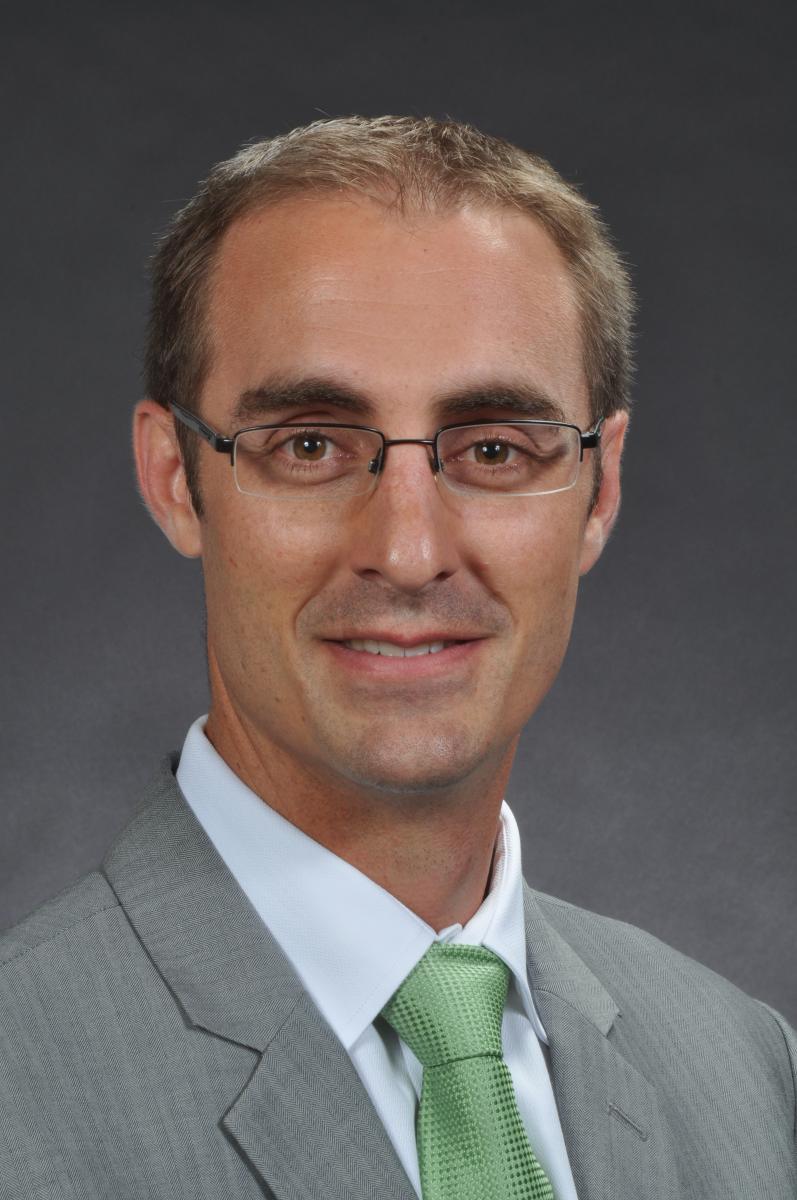
Dr. Leigh Sowerby, Associate Professor at Western’s Schulich School of Medicine & Dentistry and Scientist at Lawson Health Research Institute.
Click for larger image.
About Lawson Health Research Institute
Lawson Health Research Institute is one of Canada’s top hospital-based research institutes, tackling the most pressing challenges in health care. As the research institute of London Health Sciences Centre and St. Joseph’s Health Care London, our innovation happens where care is delivered. Lawson research teams are at the leading-edge of science with the goal of improving health and the delivery of care for patients. Working in partnership with Western University, our researchers are encouraged to pursue their curiosity, collaborate often and share their discoveries widely. Research conducted through Lawson makes a difference in the lives of patients, families and communities around the world. To learn more, visit www.lawsonresearch.ca.
About Western
Western delivers an academic experience second to none. Since 1878, The Western Experience has combined academic excellence with life-long opportunities for intellectual, social and cultural growth in order to better serve our communities. Our research excellence expands knowledge and drives discovery with real-world application. Western attracts individuals with a broad worldview, seeking to study, influence and lead in the international community.
About The Schulich School of Medicine & Dentistry
The Schulich School of Medicine & Dentistry at Western University is one of Canada’s preeminent medical and dental schools. Established in 1881, it was one of the founding schools of Western University and is known for being the birthplace of family medicine in Canada. For more than 130 years, the School has demonstrated a commitment to academic excellence and a passion for scientific discovery.
Media Contacts
Celine Zadorsky
Senior Media Relations Consultant
Communications & Public Engagement
T: 519-685-8500 ext. 73502
Celine.zadorsky@lhsc.on.ca
Most instructions for inserting COVID-19 nasopharyngeal swabs don't go deep enough, research finds
There are wide discrepancies in the instructions for how deep the nasopharyngeal swabs used to test for COVID-19 are to be inserted up Canadian noses, new research from Western University and Lawson Health Research Institute has found.
As an otolaryngologist Dr. Leigh Sowerby is an expert in the anatomy of the head, neck and inside of the nose. Using that expertise, he and his colleagues examined the COVID-19 testing instructions provided by provincial and territorial authorities and found wide variations. They reported their findings in the Journal of Otolaryngology – Head & Neck Surgery.
“As a surgeon who works inside the nose all the time, I was surprised to find that most of the instructions in Canada aren’t effective to reach the nasopharynx; they just don’t go deep enough into the nasal cavity,” said Sowerby, an associate professor at Western’s Schulich School of Medicine & Dentistry and Scientist at Lawson Health Research Institute.
To perform a nasopharyngeal test, the swab must be inserted far enough into the nasal cavity to reach the nasopharynx, the upper part of the pharynx at the top of the throat behind the nose. Samples from the nasopharynx have been shown to be the most sensitive for COVID-19 testing, and are considered the gold standard.
However, less than a quarter of provincial and territorial public health instructions tell practitioners to insert the swab deep enough to reach the nasopharynx, Sowerby said.
The research found that six provinces and territories, including the Northwest Territories, Nunavut, Ontario, Saskatchewan, Prince Edward Island and Alberta, recommended that the swab be inserted to a depth of four centimetres, or half the distance from nostril to ear. This depth only reaches the mid-nasal cavity, not the nasopharynx, he said.
British Columbia and Manitoba recommended a seven-centimetre depth of insertion, which is still not enough -- only reaching the posterior nasal cavity but not the nasopharynx.
In Nova Scotia and Newfoundland, the recommended depth of insertion was two-thirds of the distance from nostril to ear, which would effectively reach the nasopharynx, as would following the instructions in New Brunswick and Yukon to insert the swab from nostril to external ear canal.
Image
Scientist
… 4 Friday - Day 5 Saturday - Day 6 Sunday - Day 7 This is our current core menu. It is subject to change based on … Strawberry or Raspberry Activia Fat Free Assorted Flavour Blueberry Greek Strawberry or Raspberry Activia Vanilla Greek Fat Free Assorted Flavour Bread Cinnamon Raisin Bread Brown Toast Whole Wheat Mini …
Mount Hope Centre for Long Term Care REGULAR MENU Updated December 19th, 2022 WEEK 1 Monday - Day 1 Tuesday - Day 2 Wednesday - Day 3 Thursday - Day 4 Friday - Day 5 Saturday - Day 6 Sunday - Day 7 This is our current core menu. It is subject to change based on availability of products as well as wi...
… MISSION, VALUES Mount Hope Centre for Long Term Care • Our Vision We earn complete confidence in the care we … and make a lasting difference in the quest to live fully. Our Mission We help all who come to us for care to maintain … long term and community-based settings. In the spirit of our founders, we care in the example of Jesus Christ and in …
MOUNT HOPE CENTRE r. SI JOSEPHs H EALTH C AR E LONDONFOR LONG TERM CARE i 2 VISION, MISSION, VALUES Mount Hope Centre for Long Term Care Our Vision We earn complete confidence in the care we provide, and make a lasting difference in the quest to live fully. Our Mission We help all who come to us fo...