


Search
Search
1078 Search Results:
… 17. Implementation of Senior Friendly Care Training at Parkwood Institute, London, Ontario (A,N,P) Alison Evans, … 17. Implementation of Senior Friendly Care Training at Parkwood Institute, London, Ontario (A,N,P) Alison Evans, …
LEGEND - WORKSHOP SUITED FOR: (A) - Allied Health, (N) - Nurses, PSWs, (P) - Physicians, Pharmacists 32nd Annual Geriatric Medicine Refresher Day Current and Practical Knowledge to Inspire and Advance Care Wednesday, May 2, 2018 7:30 a.m. - 4:00 p.m. London Convention Centre, London, Ontario 7:30 - ...
Major Ronald Miller's story
“I just wasn’t myself,” says Major Ronald Miller when reflecting on his experience with post-traumatic stress disorder (PTSD). “I could see a significant change in my personality that just wasn’t me.”
Major Miller first joined the Canadian Armed Forces in 1971 as a young infantry private in the 1st Battalion, The Royal Canadian Regiment and later became an Officer in the Royal Canadian Artillery, which included a tour in Germany during the Cold War.
After the Cold War, he reoriented his career towards peacekeeping which saw him deployed to seven different conflict zones. “It was during the Civil War in El Salvador in 1991 that I experienced a number of incidents that first triggered my PTSD,” explains Major Miller. “From that time forward the PTSD was always there but I suppressed it.”
It wasn’t until 2016 that Major Miller’s PTSD resurfaced. After retiring from the Canadian Armed Forces in 2008, he started working a number of contracts in support of the military.
“Over the years, I was exposed to the kind of death and destruction that can be rather difficult from a psychological standpoint. The older I got, the less I was able to suppress those experiences. In fall 2016, I was supporting a NATO military exercise in the UK when I began experiencing horrible nightmares every night. I knew I needed to seek help.”
He reached out to Veteran Affairs Canada and was referred to the Operational Stress Injury (OSI) Clinic at Parkwood Institute, a part of St. Joseph’s Health Care London, where he was diagnosed with PTSD. It was there that he learned about PTSD research being conducted by Dr. Ruth Lanius, Scientist at Lawson Health Research Institute and Psychiatrist at London Health Sciences Centre.
Image
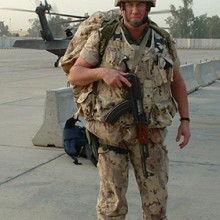
“I saw the need to help by participating in research, not only for myself but for my friends who have succumbed to the illness.”
Major Miller participated in Dr. Lanius’ neuroimaging research which uses advanced imaging technologies like PET/MRI to study differences in brain activity and neural connections between healthy individuals and those with different subtypes of PTSD. Dr. Lanius hopes that patterns of brain activity can one day be used as an objective biomarker to accurately diagnosis different subtypes of PTSD and uncover new targets for therapy.
“The research experience was interesting. I was interviewed while in the MRI and had to talk about incidents that trigger my PTSD to study my brain waves,” explains Major Miller.
In one study, Dr. Lanius is studying patterns of brain activity for those with ‘moral injury,’ an intense feeling of shame or guilt that can sometimes affect veterans with PTSD.
“Sometimes you’re involved in situations that you don’t have control over but that you feel responsible for,” says Major Miller. “You wonder, ‘Could I have done something differently?’”
Major Miller was happy to participate in any study that might help. Today, he is managing his PTSD through a combination of therapies that work for him.
“My biggest fear was giving up the things I love. I’ve been a soldier since day one and I’m sure I will be until the day I die. It’s important we come up with solutions to ensure our veterans receive proper care. Through research, we can tailor treatment to the individual rather than looking for a broad brush solution that might not suit everyone.”
This story is also featured on Research Canada’s Patient Stories website.
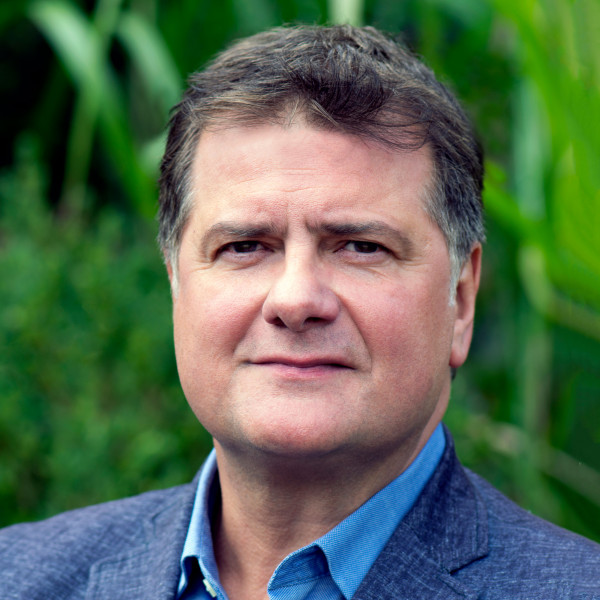
Manuel Montero-Odasso
Manuel Montero-Odasso, MD; PhD
Professor, Schulich School of Medicine and Dentistry
Key Areas of Focus:
Mobility, Cognitive and Brain Health
Phone:
519-685-4021
Email:
Website:
Social:
Accepting Grad Students:
Yes
About:
Dr. Manuel Montero-Odasso is a geriatrician at Parkwood Institute and Professor and Faculty Scholar in the Schulich School of Medicine and Dentistry at Western University. He is also the Director of the Gait & Brain Lab at Parkwood Institute, a clinician-scientist at the Lawson Health Research Institute and serves as team leader at the Canadian Consortium on Neurodegeneration in Aging and the Ontario Neurodegenerative Research Initiative.
Dr. Montero-Odasso leads the Gait and Brain Health Program goal of understanding mechanisms and treatments of mobility and cognitive decline in aging by focusing on the interaction between gait performance and cognition and how this increases the risk of falls. Through this work Dr. Montero-Odasso has established the use of “motor biomarkers”, like slowing of gait speed and dual-task effects on gait to predict frailty, falls, and dementia. He is also a co-PI of the Canadian Therapeutic Platform for Multidomain Interventions to Prevent Dementia, which focuses on multi-domain lifestyle interventions that include physical exercises, cognitive training, diet, self-management of cardiovascular factors and sleep, in order to reduce the risk or delay the onset of dementia in older adults.
Dr. Montero-Odasso has received more than $6 million of competitive peer-reviewed research funding, has published over 150 scientific articles, 14 books and book chapters, and has received several accolades, including the American Geriatrics Society New Investigator Award, the Schulich Clinician Scientist Award, the Premier of Ontario Excellence Research Award, and the CIHR New Investigator Award. In 2019, he was inducted as one of the Top 10 Hispanic Canadian for his contribution in Medicine and Science. He has been invited to give more than 100 international presentations as a guest speaker. He serves as associate editor for the Journal of Gerontology Medical Sciences, Geriatrics, and Journal of Alzheimer’s Disease, among others. He also serves as executive member and Vice-President of the Canadian Geriatrics Society.
… map of Parkwood Institute Main Building …
… Map Parkwood Institute Main Building …
… 2 To Commisioners Road East D B A C E LOT 1 Visitors 3 Parkwood Institute Main Building SPECIALIZED GERIATRIC … 2 To Commisioners Road East D B A C E LOT 1 Visitors 3 Parkwood Institute Main Building SPECIALIZED GERIATRIC … Map to Specialized Geriatrics Ambulatory Clinic at Parkwood Main Building …
LOT 3 Visitors To W el lin gt on R oa d 5 4 MENTAL HEALTH CARE BUILDING 2 To Commisioners Road East D B A C E LOT 1 Visitors 3 Parkwood Institute Main Building SPECIALIZED GERIATRIC AMBULATORY CLINIC Zone Level Room 2 B2-161G B Main Directions - Level 2 Legend Main Building Entrance Specialized Geri...
… another study in which interprofessional teams from RMHC, Parkwood Hospital, LHSC and several hospitals in Nova Scotia … (SCIPP) assists in the identification of high risk seniors. Parkwood Research Day, London, Ontario, Canada February 2010 … another study in which interprofessional teams from RMHC, Parkwood Hospital, LHSC and several hospitals in Nova Scotia …
Regional Mental Health Care London and St. Thomas 12th Annual Research Half Day, May 11, 2011 BOOK OF ABSTRACTS & RESEARCH REPORT 2010 by RMHC RESEARCH COMMITTEE 1 Book of Abstracts 2011 RESEARCH INSIGHTS of the Regional Mental Health Care London and St. Thomas Vol.8, No.1 2011 Message from the Dire...
… MacDougall Dr. Henry Lapointe - Site Chief, St. Joseph's Parkwood and SWC Joe Armstrong (Oral & Maxillofacial … MacDougall Dr. Henry Lapointe - Site Chief, St. Joseph's Parkwood and SWC Joe Armstrong (Oral & Maxillofacial …
GUIDELINES FOR PHYSICIAN PERFORMANCE MANAGEMENT - Listing of Physician Leaders in the Department/Organization DEPARTMENT DEPARTMENT CHIEFS SITE CHIEFS DIVISION DIVISION CHIEFS/SECTION HEADS/ DIVISION CHAIRS/MEDICAL DIRECTORS OTHER LEADERSHIP ROLE RESIDENCY PROGRAM DIRECTORS COMMENTS Ashraf Fayad (LH...
… X LHSC SJHC VH UH SSH SJH MHCLTC RMHCL VFMC BFMC RMHCST Parkwood Other Other Requestor’s Details Department: … X LHSC SJHC VH UH SSH SJH MHCLTC RMHCL VFMC BFMC RMHCST Parkwood Other Other Requestor’s Details Department: …
Revised: January 7/09 Space/Project Request Form General: The Space/Project Request Form is used for submitting facilities project requests. The form must be completed and signed by the relevant director before submission to Facilities Management. The Space/Project Request Form must be submitted for...
… LHSC SJHC VH UH SSH SJH MHCLTC RMHCL VFMC BFMC RMHCST Parkwood Other Other Requestor’s Details Department: … LHSC SJHC VH UH SSH SJH MHCLTC RMHCL VFMC BFMC RMHCST Parkwood Other Other Requestor’s Details Department: …
Revised Jan 7/08 Space/Project Request Form General: The Space/Project Request Form is used for making a facilities project requests. The form must be completed and signed by the relevant director before submission to facilities management. The Space/Project Request Form must be submitted for all re...
Dictation System - LHSC and St. Joseph's You must have your own personal and confidential dictating User ID number. To have your personal dictating user ID number arranged, please contact Transcription Services at: London Health Sciences Centre - 519-685-8500 extension 35131 St. Joseph's Health Ca...
… in the smoking lounge on the Western Counties Wing at Parkwood, involving a patient travelling with oxygen... • A … Device Site's equipped with this device include: � Parkwood Hospital � Marian Villa � St. Mary's Hospital � … in the smoking lounge on the Western Counties Wing at Parkwood, involving a patient travelling with oxygen... • A …
Fire Response and Evacuation Review Welcome to the Fire Response (Code Red) and Evacuation (Code Green) on-line review. This site was developed to assist you in complying with an annual review. It is policy to review these codes on a yearly basis. To save you time from attending an in- service, you ...
… University Hospital - ext. 32446 St. Joseph’s - ext. 65113 Parkwood Hospital - 42320 Parking fees are deducted on a … University Hospital - ext. 32446 St. Joseph’s - ext. 65113 Parkwood Hospital - 42320 Parking fees are deducted on a …
London Health Sciences Centre and St. Josephs Health Care London A Guide to Secretarial Support Services For Credentialed Professional Staff Produced by Medical Affairs London, ON Revised: May 2014 London Health Sciences Centre and St. Josephs Health Care London Revised May 2014 Page 2 of 19 Table o...
… Reviewed Date: This policy applies to: x St. Joseph’s x Parkwood x RMHC-L/St There is a similar/same policy at LHSC … Reviewed Date: This policy applies to: x St. Joseph’s x Parkwood x RMHC-L/St There is a similar/same policy at LHSC …
Page 1 of 3 Policy: City-Wide Professional Staff Retirement Planning Policy Owner of Policy: City-Wide Medical Affairs VP Sponsor: IVP Medical Education & Medical Affairs Approval By: Medical Advisory Committee Original Effective Date: June 21, 2005 Revised Date: November 1, 2011 Reviewed Date: This...
… Health Care London, and/or St. Joseph‟s Hospital and/or Parkwood Hospital (including the Western Counties Wing) … must be notified directly and immediately. g) Any death at Parkwood hospital should refer to the Parkwood Death Package … Health Care London, and/or St. Joseph‟s Hospital and/or Parkwood Hospital (including the Western Counties Wing) …
LONDON HEALTH SCIENCES CENTRE ST. JOSEPHS HEALTH CARE, LONDON PROFESSIONAL STAFF RULES AND REGULATIONS [Approved by the Joint Medical Advisory Committee June 2007 and September 2007] [Revised October 2009; Approved by the Joint Medical Advisory Committee October 2009] -Page 2 - TABLE OF CONTENTS DEF...
… or Jeff Tucker, Safety Consultant, St. Joseph's & Parkwood Hospitals. Page 12 NOTE: IF POSSIBLE, MSDS'S MUST … or Jeff Tucker, Safety Consultant, St. Joseph's & Parkwood Hospitals. Page 12 NOTE: IF POSSIBLE, MSDS'S MUST …
Workplace Hazardous Materials Information System (WHMIS) This information was compiled in consultation with the Joint Occupational Health and Safety Committees for the purpose of providing a reference tool and a self-education booklet for all staff and physicians. By law, all staff must understand ...
… specialized mental health care, teaching and research to Parkwood Institute. Falls Dr. Lisa Van Bussel is leading a … specialized mental health care, teaching and research to Parkwood Institute. Falls Dr. Lisa Van Bussel is leading a …
Cognitive Vitality and Brain Health: Mental Health Twenty percent of Canadians will personally experience a mental illness in their lifetime. Approximately eight percent of adults will experience major depression at some time in their lives. -Canadian Mental Health Association Rates of mental illnes...
Mental Health Research & Innovation Day
12:00pm
This full-day event will be divided into two distinct components:
- 8:00 am-10:00 am: Lawson Mental Health Group Strategic Planning Workshop (open to current and prospective Lawson scientists and associate scientists)
- 10:30 am - 4:00 pm: Mental Health Research & Innovation Day (open to all students, staff, clinicians & community members interested in mental health care research & innovation)
Keynote: Aimee van Wynsberghe, speaking about the ethics related to artificial intelligence in mental health care settings.
In addition to the keynote speaker, the day will include research updates from Parkwood Mental Health Care and Lawson Health Research Institute; poster and oral presentations on topics related to mental health care research and innovation, as well as art and musical compositions by individuals with lived experience of mental illness.
View the Call for Abstracts. The Planning Committee is currently working to finalize details and will be in touch with further information.
Please click here to register and to find out more information.
Methamphetamine Harm Reduction Project Launch Event
2:00pm - 3:00pm
Integrating harm reduction strategies into hospital settings for people who use methamphetamine
You are invited to attend this virtual launch event for the Methamphetamine Harm Reduction Project, being led by researchers at Parkwood Institute Research, a program of Lawson Health Research Institute.
Friday, April 23, 2021
10 - 11 a.m.
Register here
Evidence-based harm reduction strategies, for example needle exchange services, supervised injection sites and safe supplies, have been used in the community to reduce the risk of infection and overdose, and the risk of other harmful behaviour like crime.
Currently, harm reduction strategies for methamphetamine use are not used in Canadian hospitals. The standard of care does not allow the use of illicit substance in hospital, making implementation of harm reduction strategies challenging. A safe consumption of substances requires an exemption under Section 56.1 of the Controlled Drugs and Substances Act from Health Canada.
A recent London, Ontario study found that people who use methamphethamine actually have a greater risk of infection in hospital than in the community. "This may be due to better access to harm reduction in the community compared to in hospital, and so people are using cleaner techniques," explains Dr. Michael Silverman.
With support from Health Canada, a new hospital-based research study led by Dr. Cheryl Forchuk seeks to find what harm reduction strategies are needed and whether these can be implemented in hospital. This study represents a groundbreaking shift for the health care system in Canada.
The views expressed herein do not necessarily represent the views of Health Canada.
… *00* St. Joseph's Health Care London Site: Parkwood Institute Mental Health Site: Southwest Centre for … take about 20 minutes. Respondent #: MRN #: Site:1. E E Parkwood Institute Mental Health Southwest Centre for … *00* St. Joseph's Health Care London Site: Parkwood Institute Mental Health Site: Southwest Centre for …
B B B 0060421*001AMD14**001AMD14* *00* St. Joseph's Health Care London Site: Parkwood Institute Mental Health Site: Southwest Centre for Forensic Mental Health Care Unit: Satisfaction with Inpatient Mental Health Care (Long-Stay) Consent: We are doing a survey to learn about the care patients are re...