


Search
Search
2194 Search Results:
… Peripheral neuropathic pain--a multidimensional burden for patients. Eur J Pain. 2001;5:379-389. Zelman D, Gore M, Brandenburg N. Sleep impairment in patients with painful diabetic peripheral neuropathy. J … et al. Prevalence of abuse and dependency in chronic pain patients. Int J Addict. 1995;30:919-927. CARING FOR THE …
CARING FOR THE BODY, MIND & SPIRIT SINCE 1869 Pain Management Program Patient Orientation CARING FOR THE BODY, MIND & SPIRIT SINCE 1869 Orientation Goals Educate about what chronic pain is Inform about different components of chronic pain management Inform about the chronic pain multidisciplinary...
Presentations
The research team from the HULC Clinical Research Laboratory presents their findings at international conferences around the world. The following are just a few examples of research posters that have been presented.
- Usage and content comparison of outcome measures used to evaluate outcome of total shoulder arthroplasty(TSA): A structured review with ICF-linking
- Immediate Effects of Counterforce Bracing vs. Kinesiotaping During Activity: A Randomized Crossover Trial in Patients with Lateral Elbow Tendinopathy
- Physical Therapy Student Reflections on Sex and Gender Issues in Clinical Practice Placements
- Social Support Predicts Pain and Disability Following Distal Radius Fracture
- Assessment of Gender Bias in Musculoskeletal Outcome Measures. Methods and Examples
- Development and Validation of the ND10 for Measuring Neck-Related Disability
Preventing and Treating Depression What is depression? Depression is very different from normal, healthy feelings of sadness. When you become depressed, your emotional distress changes, becoming more frequent, intense and intrusive. These emotions start to have a detrimental effect on your day to da...
Preventing infertility in men who undergo lymph node removal surgery for testicular cancer
When patients with testicular cancer undergo lymph node removal surgery there is a risk that their fertility will be affected if proper nerve sparing techniques are not used. Up to 75 per cent of men will not be able to father children if they receive the surgery without these techniques.
Lawson’s Internal Research Fund (IRF) has awarded a grant to Dr. Nicholas Power, a researcher at Lawson and urologic oncologist at London Health Sciences Centre (LHSC), who is leading a study to identify the nerves involved in fertility that are affected in lymph node removal surgery for testicular cancer.
“Sometimes patients go through a lot to be cured of testicular cancer only to be left dealing with long-term survivorship issues such as fertility. We hope to gain new insights into how fertility can be preserved after these men receive lymph node removal surgery,” says Dr. Power, who is also an assistant professor at Western University’s Schulich School of Medicine & Dentistry.
In collaboration with Schulich assistant professors Dr. Marjorie Johnson and Dr. Brian Allman, and PhD candidate Tyler Beveridge, Dr. Power published initial results in The Journal of Urology announcing their discovery of a brand new anatomic structure, the pre-hypogastric ganglion, which needs to be spared in surgery to maintain fertility. They were also able to describe the first roadmap of retroperitoneal neuroanatomy – the anatomy of nerves in the space where surgeons locate lymph nodes most commonly affected by testicular cancer that has spread.
“There has never been a definitive anatomic study of the nerves of the retroperitoneum so it was our goal to provide the first comprehensive study of the nerves as they relate directly to patients who have testicular cancer,” explains Dr. Power. “After we published the initial results we were approached by textbook authors to use our data in upcoming editions of anatomy and surgical atlases. This will help to provide insight into nerve sparing techniques for surgeons who have not been trained at high-volume centers and ultimately improve the quality of care in testicular cancer patients overall.”
Already Dr. Power has found that using this knowledge when he performs lymph node removal surgery for testicular cancer has led to a 95 per cent success rate of preserving fertility.
The IRF will go towards their research to further investigate the actual function and physiology of the retroperitoneal neuroanatomy using a pig model.
“Lawson’s IRF provides incredible support for a field of study such as ours that is not yet at the stage of applying for a large grant. Receiving the funding gives us the independence to test out novel yet important hypotheses that will then lead us to further grants,” says Dr. Power.
Image
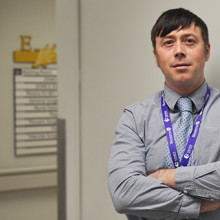
Above: Dr. Nicholas Power
The IRF is designed to provide Lawson scientists and students the opportunity to obtain start-up funds for new projects with the potential to obtain larger funding, be published in a high-impact journal, or provide a clinical benefit to patients. Funding is provided by the clinical departments of London Health Sciences Centre and St. Joseph’s Health Care London, as well as the hospital foundations (London Health Sciences Foundation and St. Joseph's Health Care Foundation).
… can expect Effective diabetes management requires that patients have access to an ongoing course of self- care … for health professionals providing support for diabetes patients with complex self- care challenges, such as mental … issues. Through the Primary Care Diabetes Support Program, patients make great gains. Within months, our goal is to …
Primary Care Diabetes Support Program: What health care professionals can expect Effective diabetes management requires that patients have access to an ongoing course of self- care support, which is critical to enable them to effectively manage their disease and prevent its devastating complications...
… arrangements, and joint systems to better serve their patients and the community. 11. We will include other … arrangements, and joint systems to better serve their patients and the community. 11. We will include other …
ICL Doc #020825 Principles for the Relationship of Londons Hospitals 1. We will drive decisions based on evolving patient-care needs of the communities we serve, understanding that community includes not only London but the Southwestern Ontario region and a more extensive specialty referral populati...
… record Description: Completed so we have a records of patients who apply lockbox, denial of access or a correction … hospital visit information, Uses: Individuals in Bank: Patients who apply a correction, lockbox or denial of access … record Description: Completed so we have a records of patients who apply lockbox, denial of access or a correction …
Personal Information Bank (PIB) Details Title: Correction to Health Record, Denial of Access and Lockbox Location of Files: Privacy and Freedom of Information electronic database and patients health record Description: Completed so we have a records of patients who apply lockbox, denial of access or...
… AGREEMENT St. Joseph’s Health Care London All residents, patients and clients under the care of St Joseph's Health … 2. I commit to hold in confidence all information about patients, residents, clients, and their families, staff and … to continue to respect and maintain the confidentiality of patients, residents, clients and their families, and staff …
Version Date: 2015-09-21 PRIVACY AND CONFIDENTIALITY AGREEMENT St. Josephs Health Care London All residents, patients and clients under the care of St Joseph's Health Care London and all staff and affiliates have a fundamental right to have their personal health information/personal information trea...
… AGREEMENT St. Joseph’s Health Care London All residents/patients/clients under the care of St Joseph's Health Care … I commit to hold in confidence all information about patients, residents, clients, and their families, staff and … to continue to respect and maintain the confidentiality of patients, residents, clients and their families, and staff …
PRIVACY AND CONFIDENTIALITY AGREEMENT St. Josephs Health Care London All residents/patients/clients under the care of St Joseph's Health Care London and all staff and affiliates have a fundamental right to have their health/medical/personal information treated in confidence. This statement confirms ...
Probiotics for respiratory tract infections could save Canada nearly $100 million a year
A recent study suggests the use of probiotics to prevent respiratory tract infections in Canada could result in nearly $100 million per year in savings.
There is growing evidence that probiotics can reduce the risk of respiratory tract infections and lower their frequency, as well as reduce the duration of an infection, antibiotic use and absences from work. Replicating a research model used in France, researchers examined the potential clinical and economic impacts in Canada.
Sponsored by The Alliance for Education on Probiotics, the study included researchers from Lawson Health Research Institute (Lawson), Western University, Laval University and Utrecht University. It incorporated two separate scenarios from two meta-analyses. A meta-analysis combines data from multiple studies using a statistical approach.
Results from the study showed that regular probiotic use could eliminate between 573,000 to 2.3 million days per year of respiratory tract infections, resulting in 330,000 to 500,000 fewer sick days for Canadians and 52,000 to 84,000 fewer antibiotic prescriptions. This would translate to $1.3 to $8.9 million in health system savings. When accounting for productivity losses due to illness, it could save $61.2 to $99.7 million.
Respiratory tract infections are highly contagious infections of the sinus, throat or airways, including influenza or ‘the flu.’ Currently, 5 to 20 per cent of the Canadian population experience at least one respiratory tract infection per year. It’s estimated that respiratory tract infections represent 2.9 per cent of all health care costs in Canada.
“If we could reduce the burden of respiratory tract infections, it would benefit both patients and Canadian taxpayers,” says Dr. Gregor Reid, Director for the Canadian Centre for Human Microbiome and Probiotic Research at Lawson, and Professor at Western’s Schulich School of Medicine & Dentistry.
The research showed that children under the age of 10, individuals living in a community setting (including office work in open spaces) and those not vaccinated against influenza would benefit the most.
Respiratory tract infections are typically viral in nature. Existing treatments rely on symptom control while an estimated 26 per cent of patients are also prescribed antibiotics. These antibiotics are largely unnecessary since antibiotics are not effective against viruses. “Antibiotics are often prescribed even when an infection is likely to be viral. Antibiotics can have serious side effects like destroying many beneficial bacteria in the human body,” says Dr. Reid.
Probiotics are defined as “live microorganisms that, when administered in adequate amounts, confer a health benefit on the host.”
“People are increasingly making probiotics a part of their daily diet or dietary supplements for their proven health benefits,” explains Dr. Reid “The fact that probiotics can also be used to prevent respiratory tract infections makes them even more important.”
Dr. Reid notes that several probiotic products can be effective in preventing respiratory tract infections, as outlined in the Clinical Guide to Probiotic Supplements. These include probiotic yogurts and oral capsules.
The study, “The Clinical and Economic Impact of Probiotics Consumption on Respiratory Tract Infections: Projections for Canada,” is published on PLoS One.
Image
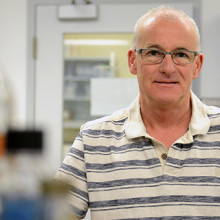
Above: Dr. Gregor Reid (Photo credit: Schulich School of Medicine & Dentistry)
Scientist
Structure Mandatory for all new Professional Staff (PS) entering from Residency/Clinical Fellowships and for PS new to the Ontario healthcare system Voluntary participation/selective options for experienced PS transferring from another Ontario hospital Sessions will be held at alternating sites ...
… the expressed and unexpressed needs of customers, patients, family and stakeholders, and meeting these needs. … into any change strategy the impact of actions/change on patients, family members, employees, colleagues and others. … the expressed and unexpressed needs of customers, patients, family and stakeholders, and meeting these needs. …
Professional Staff Leadership Competencies 1 1. Self-Awareness and Emotional Intelligence The ability to develop and maintain a sense of presence and emotional Foundational Leadership Enhanced Leadership Strategic Leadership maturity that is anchored in: an accurate awareness of ones strengths and...
Credentialed Professional Staff Categories June 2022 Page 1 of 6 Credentialed Professional Staff Categories N.B. - The standard privileging cycle is July 1st to June 30th. All professional staff categories are required to complete the annual reappointment process to request privilege renewal for the...
Credentialed Professional Staff Categories June 2022 Page 1 of 5 Credentialed Professional Staff Categories N.B. - The standard privileging cycle is July 1st to June 30th. All professional staff categories are required to complete the annual reappointment process to request privilege renewal for the...
Prostate cancer imaging research could bring big benefits
LONDON, ON – With newly announced studies, Lawson Health Research Institute continues to lead the way in advancing prostate cancer imaging.
Scientists at Lawson are at the forefront of research that uses imaging agents that bind to a protein on the surface of prostate cancer cells called prostate specific membrane antigen (PSMA). Advanced imaging technology called PET/CT (positron emission tomography/computed tomography) and PET/MRI (magnetic resonance imaging) is then used to capture clear images of the location and extent of the cancer.
The first scan of its kind in Canada was captured at St. Joseph’s Health Care London in 2016 by Dr. Glenn Bauman, a Radiation Oncologist at the London Regional Cancer Program at London Health Sciences Centre and Scientist with Lawson.
“We started out with mainly MRI imaging but we've developed this very rigorous pipeline that allows us to put the imaging and digitized pathology together,” explains Dr. Bauman.
Early evidence indicates that PSMA PET scans have changed how prostate cancer is being treated, but more work is underway to understand the impact of those treatment changes. Working with imaging specialists there is hope that registries of these scans that are in development could even lead to automated detection of prostate cancer.
The Canadian Cancer Society recently committed $125,000 in funding for the creation of a database of PET/CT prostate cancer scans. Led by Dr. Katherine Zukotynski, an Adjunct Scientist at Lawson, the idea is to make annotated findings accessible to a wider community of medical and research professionals.
“If you have an idea of the amount of disease detected, correlated with what kind of prognosis, then this could be very helpful. It would allow oncologists to compare patients with similar cases, which may help determine the best therapies to try,” Dr. Zukotynski says.
![MRI and [18F]-DCFPyL PET images of six trial participants with prostate cancer.](/sites/default/files/research/inline-images/1920_PET_MRI_18F-DCFPyL_prostate_cancer_imaging.jpg)
Lawson has also become the first in Canada to enter a sublicense agreement to produce a new PET imaging agent called PSMA-1007 - that may produce even clearer images, especially when there’s a recurrence of cancer.
“PSMA-1007 allows us to detect where the cancer is a lot sooner and take action, whether that’s through surgery or delivering radiation to exactly where the cancer is located,” says Dr. Michael Kovacs, Director of the Lawson Cyclotron & PET Radiochemistry Facility.
Clinical trials have already begun to test PSMA-1007’s efficacy with an ultimate goal of obtaining Health Canada approval.
A three-part series on prostate cancer imaging at Lawson is also available:
About Lawson Health Research Institute
Lawson Health Research Institute is one of Canada’s top hospital-based research institutes, tackling the most pressing challenges in health care. As the research institute of London Health Sciences Centre and St. Joseph’s Health Care London, our innovation happens where care is delivered. Lawson research teams are at the leading-edge of science with the goal of improving health and the delivery of care for patients. Working in partnership with Western University, our researchers are encouraged to pursue their curiosity, collaborate often and share their discoveries widely. Research conducted through Lawson makes a difference in the lives of patients, families and communities around the world. To learn more, visit www.lawsonresearch.ca.
Media Contacts
Amanda Taccone
Communications Consultant & External Relations
Lawson Health Research Institute
T: 519-685-8500 ext. ext. 64059
C: 226-919-4748
@email
… prostate DAP Program will streamline diagnostic testing for patients suspected of having prostate cancer and if needed, … prostate DAP Program will streamline diagnostic testing for patients suspected of having prostate cancer and if needed, …
What is the Prostate Diagnostic Assessment Program? The prostate DAP Program will streamline diagnostic testing for patients suspected of having prostate cancer and if needed, refer a patient for treatment. Where is the Prostate Diagnostic Assessment Program located? The program is located at St. Jo...
… visits for the safety of health care providers and their patients. •Initial consultation by telephone/video to … • Hands-on-physical assessments which can be deferred • Patients who have mobility challenges • Patients who have financial limitations • Patients who live …
Providing Geriatric Virtual Care across the South West: Guidance Document for Health Care and Community Support Services Providers SOUTH WEST FRAIL SENIOR STRATEGY VERSION 1 NOVEMBER 2020 Guidance Document for Health Care and Community Support Services Providers on Providing Geriatric Virtual Care A...
… visits for the safety of health care providers and their patients. •Initial consultation by telephone/video to … • Hands-on-physical assessments which can be deferred • Patients who have mobility challenges • Patients who have financial limitations • Patients who live …
Providing Geriatric Virtual Care across the South West: Guidance Document for Health Care and Community Support Services Providers SOUTH WEST FRAIL SENIOR STRATEGY VERSION 1 NOVEMBER 2020 Contact South West Frail Senior Strategy at RegionalFrailSeniors@sjhc.london.on.ca for further informaon and fee...
… visits for the safety of health care providers and their patients. •Initial consultation by telephone/video to … • Hands-on-physical assessments which can be deferred • Patients who have mobility challenges • Patients who have financial limitations • Patients who live …
Providing Geriatric Virtual Care across the South West: Guidance Document for Health Care and Community Support Services Providers SOUTH WEST FRAIL SENIOR STRATEGY VERSION 1 NOVEMBER 2020 Guidance Document for Health Care and Community Support Services Providers on Providing Geriatric Virtual Care A...
Provincial funding enables coronavirus research in London, Ontario
LONDON, ON – Three studies investigating a range of important COVID-19 questions led by teams from Lawson Health Research Institute and Western University are among an initial 15 projects funded through the Government of Ontario’s COVID-19 Rapid Research Fund.
Studying a human protein in the treatment of critically ill COVID-19 patients
A team from Lawson will be the first in the world to study a human protein called annexin A5 as a potential therapy for COVID-19 patients with sepsis. The randomized controlled trial will enroll up to 60 critically ill patients from London Health Sciences Centre (LHSC).
“There are no proven therapies to treat COVID-19,” says Dr. Claudio Martin, Associate Scientist at Lawson and Intensive Care Physician at LHSC. “In the most severe cases, it’s complicated by hyperinflammation that can lead to sepsis, acute respiratory distress syndrome (ARDS) and multi-organ failure.”
Sepsis is a life-threatening condition. It occurs when the body’s response to an infection is out of balance, triggering hyperinflammation that can damage multiple organs. Many critically ill COVID-19 patients develop sepsis one to two days before ARDS, suggesting that sepsis is a major contributor to the development of respiratory and multi-organ failure.
Led by Dr. Martin, this clinical trial aims to fight sepsis in COVID-19 patients with a manufactured form of annexin A5 – a human protein that has strong anti-inflammatory properties. Patients will be randomized to receive either the drug at two different doses or a placebo.
“The ultimate goal is to determine whether this drug reduces hyperinflammation associated with sepsis in order to prevent respiratory and multi-organ failure,” explains Dr. Martin, who is also a Professor at Western’s Schulich School of Medicine & Dentistry.
The team also believes the drug will prevent cell death and blood clots associated with COVID-19 through annexin A5’s anti-apoptotic (cell death prevention) and anti-coagulant (blood clot prevention) properties.
This is the first time annexin A5 will be tested as a potential sepsis treatment in humans. The research builds on findings of a preclinical study from Dr. Qingping Feng, Lawson Scientist and Ivey Chair in Molecular Toxicology at Schulich Medicine & Dentistry. His team previously found that annexin A5 can inhibit inflammation and improve organ function and survival when treating sepsis in animal models.
“Annexin A5 is a naturally-occurring protein with great potential as a therapy for sepsis, whether caused by COVID-19 or a different infection,” says Dr. Feng, co-investigator on the project. “If our initial trial is successful, we hope to run a large multi-centre trial to further examine the drug’s potential as a sepsis treatment.”
Developing point-of-care blood test for COVID-19
A team at Western will be using a novel strategy to rapidly develop a blood test for COVID-19 using epitopes – a peptide fragment on the virus that evokes an immune response in humans.
“The antibody test enabled by multiple epitopes is potentially more sensitive and specific than tests that rely on a single viral protein. Serologic testing plays a pivotal role in charting the landscape of the COVID-19 pandemic and guiding return-to-work decisions,” said Shawn Li, PhD, Professor at Schulich Medicine & Dentistry and Scientist at Lawson. “This funding allows us to put together a team of basic researchers and clinician scientists, including Dr. Ian Chin-Yee and his colleagues at the Department of Pathology and Laboratory Medicine, to work on the various aspects of the project with the common goal of developing a serologic test suitable for point-of-care use as quickly as possible.”
To curb the COVID-19 outbreak caused by the SARS-CoV-2 virus, researchers are looking to solve three critical challenges as quickly as possible – detection, treatment and vaccination. Li says the identification of these epitopes are also the necessary first step to devise strategies for the production of virus-neutralizing antibodies to treat those who are severely ill and also to inform epitope-vaccine development for COVID-19.
Studying the impact of modified operating conditions for retail food outlets
With the aim of understanding how the pandemic has affected the well-being of businesses and their employees, Jason Gilliland, PhD, Professor in the Faculties of Social Sciences, Health Sciences, and Schulich Medicine & Dentistry at Western, has begun the Food Retail Environment Study for Health & Economic Resiliency (FRESHER) project.
“The project is a rapid response to the widespread closures of, and modified operating conditions for, many retail food outlets,” said Gilliland, who is also a Scientist at Lawson. “The project outputs are expected to help inform policies and programs that will maintain Ontario’s food security, incentivize economic growth during the recovery period, and improve health and economic resiliency among businesses and employees to future pandemics and emergencies.”
Gilliland and his team will examine the economic and social impacts of COVID-19 in southwestern Ontario by identifying what businesses modified their operations, temporarily closed or permanently closed during the outbreak, and how it has affected businesses and their employees.
“The retail food sector is already facing massive job losses which in turn will have negative economic and health impacts on owners and employees,” he said. “As the project is intended to be a rapid response, we needed to quickly mobilize a large team of research assistants to rapidly collect and continuously update the data. This funding is critical as it allowed us to put together an impressive team of student research assistants, most of whom would otherwise have been out of work due to COVID-19.”
More information on the project and links to the surveys can be found at: fresher.theheal.ca.
-30-
About Lawson Health Research Institute
Lawson Health Research Institute is one of Canada’s top hospital-based research institutes, tackling the most pressing challenges in health care. As the research institute of London Health Sciences Centre and St. Joseph’s Health Care London, our innovation happens where care is delivered. Lawson research teams are at the leading-edge of science with the goal of improving health and the delivery of care for patients. Working in partnership with Western University, our researchers are encouraged to pursue their curiosity, collaborate often and share their discoveries widely. Research conducted through Lawson makes a difference in the lives of patients, families and communities around the world. To learn more, visit www.lawsonresearch.ca.
About Western
Western delivers an academic experience second to none. Since 1878, The Western Experience has combined academic excellence with life-long opportunities for intellectual, social and cultural growth in order to better serve our communities. Our research excellence expands knowledge and drives discovery with real-world application. Western attracts individuals with a broad worldview, seeking to study, influence and lead in the international community.
About The Schulich School of Medicine & Dentistry
The Schulich School of Medicine & Dentistry at Western University is one of Canada’s preeminent medical and dental schools. Established in 1881, it was one of the founding schools of Western University and is known for being the birthplace of family medicine in Canada. For more than 130 years, the School has demonstrated a commitment to academic excellence and a passion for scientific discovery.
Media Contacts
Celine Zadorsky
Senior Media Relations Consultant
Communications & Public Engagement
T: 519-685-8500 ext. 73502
Celine.zadorsky@lhsc.on.ca