


Search
Search
696 Search Results:
… 33367 or (519) 663-3367 to facilitate calls from our regional partners (we facilitate approximately 650- 700 … 33367 or (519) 663-3367 to facilitate calls from our regional partners (we facilitate approximately 650- 700 …
PATIENT ACCESS Resident Orientation June 29, 2018 Sherri Lawson, Director Patient Access Pat Jewell, Coordinator Patient Access Patient Access and Flow Guiding Principles Improving flow requires an integrated, hospital-wide approach..Inpatient services have an important stake in this work (Jensen ...
… identifying a domestic violence crisis lines. St. Joseph’s Regional Sexual Assault and 519 646-6100 Domestic Violence … identifying a domestic violence crisis lines. St. Joseph’s Regional Sexual Assault and 519 646-6100 Domestic Violence …
A guide to managing your pain during COVID-19 Our services Hospitals across Ontario are doing everything they can to limit the spread of COVID-19, including rescheduling non- urgent outpatient clinic appointments for the time being. What does this mean for the Pain Management Program? For now, our g...
AAHCI Fall International Meeting - Innovation, Technology and Health: Making it Work
11:30am - 8:00pm
Themed Innovation, Technology and Health: Making it Work, the AAHCI Fall Regional Meeting in Canada will bring together leaders from Canadian and international Academic Health Centers. The meeting will be hosted by Western University in London, Ontario, Canada, home to the Schulich School of Medicine & Dentistry. Participants will explore innovative ways to integrate technology and healthcare within an academic health center.
For more information, please visit the AAHC website.
Partners
St. Josephs Accessibility Plan 2016-2019 Page 1 Accessibility Plan January 2016 December 2019 Submitted to St. Josephs Accessibility Advisory Committee December 24, 2015 Submitted to St. Josephs Senior Leadership Team January 26, 2016 St. Josephs Accessibility Plan 2016-2019 Page 2 Introduction In ...
St. Josephs Accessibility Plan 2019-2022 Page 1 Multi-year Accessibility Plan January 2019 December 2022 Submitted to St. Josephs Accessibility Advisory Committee December 12, 2019 Submitted to St. Josephs Senior Leadership Team December 17, 2019 St. Josephs Accessibility Plan 2019-2022 Page 2 In...
Multi-year Accessibility Plan January 2019 December 2022 Submitted to St. Josephs Accessibility Advisory Committee December 12, 2019 Submitted t o St. Josephs Senior Leadership Team December 17, 2019 St. Josephs Accessibility Plan 2019-2022 Page 1 Introduction In fulfilling our mission and in ali...
Addressing the impacts of the COVID-19 pandemic
As the COVID-19 pandemic has continued for a year and a half, many people from all walks of life are feeling the impacts especially when it comes to their mental health and wellbeing.
Hospital researchers through Lawson Health Research Institute, along with its hospital partners, have been studying the impacts for some key groups.
Health care workers have been at the forefront of the pandemic. These heroes have worked tirelessly through every wave and continue to provide excellent care to their patients and community. Dr. Kamia Honarmand, Critical Care Physician at London Health Sciences Centre (LHSC), remembers the stress that she and her colleagues were feeling, and know that something needed to be done.
“Our team wanted to better understand the impact of the pandemic on the lives of health care workers, both personally and professionally, and understand how they were coping when it came to their mental health,” says Dr. Honarmand who is also an Associate Scientist at Lawson. “There was a lot of reasons to be stressed even before the height of the first wave in our region. There was a lot of anxiety. The hospital wanted to find ways to support health care workers and identify resources that would assist them.”
Image

Dr. Kamia Honarmand, Critical Care Physcian at LHSC and Lawson Associate Scientist
Frontline health care workers across the region were invited to take part in an online survey about their experiences during the pandemic. “We looked at both the impacts and the preferred coping strategies, and what supportive strategies they would like to have in the hospital in the future.”
The Veterans Care Program located at Parkwood Institute, a part of St. Joseph’s Health Care London, provides complex continuing and long-term care for Canadian war Veterans. Dr. Don Richardson, Director of the MacDonald Franklin OSI Research Centre at Parkwood Institute, has been treating and studying mental health among Veterans for many years. He believed this was a group was likely to be affected by the pandemic in unique ways.
“We know that Veterans in general are at a higher risk for depression, anxiety and PTSD,” explains Dr. Richardson, who is also a Scientist at Lawson. “We also knew the pandemic and forced restrictions would have significant impact on Veterans and their families who would be more isolated than they already are.”
More than 1,100 Veterans and around 250 spouses were recruited for the study, completing an online survey every three months for 18 months.
The study is still ongoing, but Dr. Richardson says the initial data has been telling. “We have been able to analyze some of the preliminary data and what we have found is that almost 50 per cent did not indicate their mental health had worsened during the pandemic but 40 to 50 per cent have had difficulty accessing care.”
Image
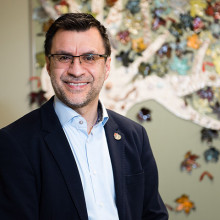
Dr. Don Richardson, Director, Macdonald Franklin OSI Research Centre
The hope is that this study will lead to better preparedness in the future to safeguard the mental health of Veterans and ensure their access to care during a pandemic.
Many people have felt isolation during the pandemic, but that feeling may have even more of an impact for youth suffering from mood and anxiety disorders.
Dr. Elizabeth Osuch, Director of the First Episode Mood and Anxiety Program (FEMAP) at LHSC says the pandemic-led lockdown forced more than a hundred mental health clients out of in-person services.
Image
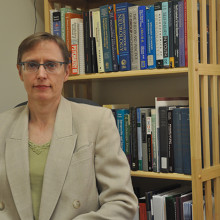
Dr. Elizabeth Osuch, Director of FEMAP and Lawson Scientist
“They lost their resources for mental health services and support as soon as the quarantine was announced,” shares Dr. Osuch, who is also a Scientist at Lawson. “We were concerned that it would be devastating to people – and to some people it was. We wanted to make sure they had an avenue to connect with the program.”
Dr. Osuch and the FEMAP team created an online research platform to find out how patients were doing by having them fill out a symptoms and function questionnaire.
“We have analyzed the first wave so far and it shows that male patients were doing better and female patients were doing worse, which was a surprise. One of the risk factors for not doing well was the loss of their job.”
The pandemic added an extra layer of stress and worry for women who were having a baby.
“This has been an enormous and pivotal time for everyone in the world,” says Dr. Genevieve Eastabrook, Obstetrician-Gynecologist at LHSC. “The experiences during pregnancy and post-partum for both the birthing person and their baby can have effects later in life for children. For example, their overall cardiovascular and metabolic health, bonding experiences and the risk of mood disorders.”
Dr. Eastabrook, who is also an Associate Scientist at Lawson and Assistant Professor at Western University’s Schulich School of Medicine & Dentistry, is working with a team to examine the effects the pandemic may be having for mothers and their babies. As part of the study, the London research team is using an approach called ‘One Health’ which offers a holistic perspective to explore how various risk factors and social determinants of health interact.
Image
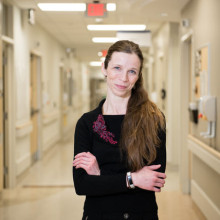
Dr. Genevieve Eastabrook, OBGYN at LHSC and Lawson Associate Scientist
“The unique aspect is that we have a comparative group to see if there are differences in markers such as risk of depression, perceived stress and social supports,” adds Dr. Eastabrook.
Study participants are asked to complete a 30-minute questionnaire at around 6-12 weeks after their delivery. The research team is still recruiting patients for this study.
Scientist
… Referral for Adult Medical and Forensic Examination Regional Sexual Assault and Domestic Violence Treatment … Time: ________________________ Service: The Regional Sexual Assault and Domestic Violence Treatment … Referral for Adult Medical and Forensic Examination Regional Sexual Assault and Domestic Violence Treatment …
Referral for Adult Medical and Forensic Examination Regional Sexual Assault and Domestic Violence Treatment Centre St. Josephs Health Care, London Patients name: ________________________ Patients contact #: ________________ Referring Physician (Print): ___________________Signature: _________________...
… Head of the Subsection of Endocrinology at Windsor Regional Hospital, and Director of the Regional Bariatric Assessment and Treatment Centre in … Head of the Subsection of Endocrinology at Windsor Regional Hospital, and Director of the Regional Bariatric Assessment and Treatment Centre in …
Diabetes UpDate 2018 WeDnesDay, november 14, 2018 Best Western Lamplighter Inn & Conference Centre - Crystal Ballroom 591 Wellington Road South, London 7:30 a.m. - 4:00 p.m. AGENDA 7:30 a.m. 8:15a.m. registration & Light breakfast 8:15 a.m. 8:30a.m. Welcome & introduction Dr. Irene Hramiak 8:30 a.m...
… Hospitals to St. Joseph’s Health Care, London. Now known as Regional Mental Health Care, London and St. Thomas, … Row: Vince Votta, maintenance carpenter, physical plant, Regional Mental Health Care, London; Cathy Barran, training … services; Cam Zinc, maintenance carpenter, physical plant, Regional Mental Health Care, London Caring and commitment to …
Annual Report to the Community 2000-2001 June 2001 Dr. Lauren McCurdy Director of Breast Imaging, St. Josephs Health Care, London Associate Professor, UWO Visit our web site: www.sjhc.london.on.ca For additional copies of the report, complete financial statements, salary disclosure information or ot...
… of our facilities at St. Joseph’s Hospital and Regional Mental Health Care continue on time and on budget. … that have recently moved into these brand new spaces are: Regional Sexual Assault and Domestic Violence Treatment … group home in St. Thomas, part of St. Joseph’s Regional Mental Health Care, assists resident Suzanne as she …
Annual Report 2012-2013 Welcome to the 2012-2013 Annual Report Contents Annual Report 2012-2013 ......................................................................................................................... 1 Welcome to the 2012-2013 Annual Report ............................................
… A NEW BEGINNING In June 2013, St. Joseph’s closed Regional Mental Health Care St. Thomas and celebrated the … in the neuropsychiatry clinic at St. Joseph’s Regional Mental Health Care London. “Without treating … transcranial magnetic stimulation equipment at St. Joseph’s Regional Mental Health Care London. With the support of …
Annual Report 2013-2014 Welcome to our 2013-2014 Annual Report Contents Annual Report 2013-2014 ............................................................................................................................. 1 Welcome to our 2013-2014 Annual Report ........................................
… something new." SHINING A LIGHT ON EXCELLENCE St. Joseph’s Regional Sexual Assault and Domestic Violence Treatment … and Ali Rankin- Nash are part of the team at St. Joseph’s Regional Sexual Assault and Domestic Violence Treatment … nursing program, spends some time with a patient at Regional Mental Health Care London, listening as he …
Annual Report 2014-2015 Welcome to the 2014-2015 Annual Report Contents Annual Report 2014-2015 ............................................................................................................................. 1 Welcome to the 2014-2015 Annual Report ........................................
… keeping with the vision of Parkwood Institute, St. Joseph’s regional and provincial role as a leader in recovery and … keeping with the vision of Parkwood Institute, St. Joseph’s regional and provincial role as a leader in recovery and …
Annual Report 2015-2016 Welcome to the 2015-2016 Annual Report Contents Welcome to the 2015-2016 Annual Report .............................................................................................. 1 OPENING MESSAGE ...............................................................................
… Hospital. From left are: Jane Van Bilsen, South West Regional Cancer Program; Dr. Hassan Razvi, St. Joseph’s … Hospital. From left are: Jane Van Bilsen, South West Regional Cancer Program; Dr. Hassan Razvi, St. Joseph’s …
Annual Report 2016-2017 Welcome to the 2016-2017 Annual Report Contents Annual Report 2016-2017 .......................................................................................................... 1 Welcome to the 2016-2017 Annual Report ...........................................................
… human trafficking A novel partnership between St. Joseph’s Regional Sexual Assault and Domestic Violence Treatment … Police Service, were on hand for an open house at the Regional Sexual Assault and Domestic Violence Treatment … fantastic,” says Detective Hay. “Having a resource like the Regional Sexual Assault and Domestic Violence Treatment …
Annual Report 2017-2018 Welcome to the 2017-2018 Annual Report Contents Annual Report 2017-2018 .......................................................................................................... 1 Welcome to the 2017-2018 Annual Report ...........................................................
STJOSE._, PHs HEA LTH CAR E l ONDON THE YEAR THE WORLD CHANGED TABLE OF CONTENTS THE YEAR THE WORLD CHANGED ..................................................................................................................................................................................... 1 St. Jose...
Antioxidants in the brain linked to improved treatment results in patients with psychosis
Once patients with psychosis start treatment, some get better in weeks while it can take months for others.
“We wanted to see if we could understand and influence this disparity,” said Dr. Lena Palaniyappan, Associate Professor at Western’s Schulich School of Medicine & Dentistry and Scientist at Lawson Health Research Institute who is looking at chemicals in the brain with the aim of speeding up the time it takes a patient to respond to medication for psychosis.
Image

The research team from Lawson and Schulich Medicine & Dentistry studied antioxidant levels in the brain, and found that these chemicals which rid the body of normal metabolic biproducts called free radicals, may improve outcomes of early intervention in psychosis. They looked specifically at an area of the brain called Cingulate Cortex which is well connected to a network of regions that play a major role in generating symptoms of psychosis.
The study, published in Nature Molecular Psychiatry, showed that patients with higher levels of an antioxidant called glutathione responded more quickly to medication for psychosis and had improved outcomes. They estimated that a 10 per cent increase in antioxidants could lead to a reduction in length of hospital stay by at least seven days.
“This study demonstrates that if we can find a way to boost the amount of antioxidants in the brain, we might be able to help patients transition out of hospital more quickly, reduce their suffering more quickly and help them return earlier to their work and studies,” said Dr. Palaniyappan who is also the Tanna Schulich Endowed Chair in Neuroscience and Mental Health at Western.
Antioxidant levels in the brain vary naturally from person to person and those variations can be attributed to lifestyle choices like exercise and diet. There are also ways to pharmaceutically boost these levels. A supplement called N-Acetyl Cysteine (NAC) as well as broccoli extracts can increase the brain’s antioxidants if given over a long period of time.
Dr. Palaniyappan and his team in collaboration with Dr. Jean Theberge at Lawson Imaging used high-field MRI imaging to examine antioxidant levels in the brains of 37 new patients to the Prevention and Early Intervention for Psychoses Program (PEPP) at London Health Sciences Centre. Antioxidant levels were studied prior to beginning treatment for psychosis and followed up for six months post-treatment.
The MRI scans were acquired at Western’s Centre for Functional and Metabolic Mapping at the Robarts Research Institute with the support of Western's BrainsCAN and the Canadian Institutes of Health Research.
Scientist
… Description 05/30/2022 40.55$ TRAVEL ACCOMMODATIONS REGIONAL DIGITAL SERVICES ENTITY RETREAT Total 40.55$ … Description 05/30/2022 40.55$ TRAVEL ACCOMMODATIONS REGIONAL DIGITAL SERVICES ENTITY RETREAT Total 40.55$ …
Name: Title Invoice Date Amount Expense Category Description 05/30/2022 40.55$ TRAVEL ACCOMMODATIONS REGIONAL DIGITAL SERVICES ENTITY RETREAT Total 40.55$ Integrated Vice President Diagnostic Services and Chief Information Officer Executive Expense Reporting For the Period April 1, 2022 to September...
… Description 05/30/2022 40.55$ TRAVEL ACCOMMODATIONS REGIONAL DIGITAL SERVICES ENTITY RETREAT Total 40.55$ … Description 05/30/2022 40.55$ TRAVEL ACCOMMODATIONS REGIONAL DIGITAL SERVICES ENTITY RETREAT Total 40.55$ Summary …
Executive Expense Reporting For the Period April 1, 2022 to September 30, 2022 Name: Glen Kearns Title Integrated Vice President Diagnostic Services and Chief Information Officer Invoice Date Amount Expense Category Description 05/30/2022 40.55$ TRAVEL ACCOMMODATIONS REGIONAL DIGITAL SERVICES ENTITY...