


Search
Search
1081 Search Results:
EPIPHORA (EXCESSIVE TEARING) INTRODUCTION Epiphora, or excessive tearing, is the overflow of tears from one or both eyes. Epiphora can occur all the time or only sometimes. It can be split into two categories. Either too many tears are produced or not enough of the tears are cleared. The following i...
The invisible world inside us
11:00pm - 1:00am
The human microbiome is a wonder of nature.
Trillions of microbes call our body home. They live in our gut and many other places throughout our body. They are involved in virtually every aspect of how we function and we are learning that they are essential to staying healthy. An unhealthy microbiome has been linked to many diseases from allergies to cancer and even mental health.
Most people out there have heard about probiotics and fermented foods, and chances are you’re trying to get more of them in your diet.
Drinking kombucha or eating yogurt, anyone?
Join Lawson Health Research Institute for our next Café Scientifique event, "The invisible world inside us: Exploring the human microbiome."
Hear from a panel of researchers who are unraveling the mysteries about the microbiome and using that knowledge to improve health and health care. They will also bust some myths and share the important facts when it comes to probiotics, prebiotics and the microbiome.
Image

Image

SPEAKERS
- Dr. Gregor Reid, Lawson Scientist and Professor of Microbiology & Immunology and Surgery at Western University.
Presenting: Probiotics and Prebiotics - Look beyond the fake news - Dr. Michael Silverman, Lawson Associate Scientist, Chair of Infectious Diseases, Schulich School of Medicine & Dentistry at Western University and Chief of Infectious Diseases for St. Joseph’s Health Care London and London Health Sciences Centre.
Presenting: Fecal Transplants: What does this crap have to do with me? - Dr. Jeremy Burton, Lawson Scientist and Assistant Professor of Surgery (Urology) and Microbiology & Immunology at Western University.
EVENT DETAILS
Date: Wednesday, November 27, 2019
Time: 7-9 pm (doors open at 6:30 pm)
Location: Best Western Plus Lamplighter Inn & Conference Centre (Regency Room), 591 Wellington Rd, London, ON N6C 4R3
Map and directions.
Parking: Free on-site parking
This is a free event and online registration is REQUIRED.
Registration for this evengt is now FULL.
Please fill out the form here to be added to the waitlist.
You will be notified should a spot open up.
Image
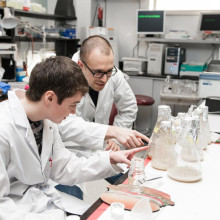
Café Scientifique is a free community event series providing an informal opportunity to get involved with science. Through an open-forum discussion in a casual setting, these events address health-related issues of popular interest to the general public. A panel of three Lawson scientists talk about what they do and why, and share their unique research perspectives. Guests can then ask questions, participate in discussion, and gain insights from the speakers and from one another.
Partners
Therapeutic seizure for depression: The positive and not so positive effects
8:00pm - 9:00pm
You are invited to the second in a series of Research Bites. These informative and interactive talks focus on specific illnesses, their prevention and related research being conducted by researchers in London, Ontario.
Topic: Therapeutic seizure for depression: The positive and not so positive effects
Image

The talk will include an overview of convulsive therapy, the benefits and risks, and new research to overcome some of the cognitive side effect of the treatment. It will also include a dialogue between Dr. Burhan and a family that went through the experience of electroconvulsive therapy to elicit the experience from the consumer perspective.
Date: Thursday, June 6, 2019
Time: 4 - 5 pm
Location: Parkwood Institute, Mental Health Building, Auditorium (F2-235)
550 Wellington Road South
London, Ontario N6C 0A7
Maps and Directions for Parkwood Institute.
Parking: The lot rate is $4.00 when you enter. $1 and $2 coins and credit card accepted (press the start button then insert payment)
Registration is required and spots will fill up quickly.
Click here to register.
These talks are hosted by Parkwood Institute Research, a program of Lawson Health Research Institute.
Endocrinology Thyroid Cancer Clinic Referral Centre for Diabetes, Endocrinology and Metabolism St. Josephs Hospital, 5th floor 268 Grosvenor Street, London, ON N6A 4V2 Phone 519-646-6000 ext. 61294 Fax: 519-646-6043 Name: DOB: Address: HC#: PIN#: Phone: Email: Interpreter required? Yes what languag...
Time for Canada to reclaim its place as a leader in scientific discovery
The following editorial was provided to Post Media by Dr. David Hill, scientific director, Lawson Health Research Institute.
Last week the Nobel Prizes for 2017 were announced, recognizing incredible advances in science that will impact all our lives for the better. If you were looking for Canadian scientists amongst the teams, you would be disappointed.
According to a federal government report commissioned by the minister of science titled Investing in Canada’s Future — Strengthening the Foundations of Canadian Research and released in April, Canada’s momentum in the sciences has never been worse.
Our country’s investment in key emerging areas such as artificial intelligence, clean technology, nanotechnology, immunotherapy, bioinformatics or bio-engineering is flat-lined or declining, and falling seriously behind competitor nations.
We are not talking about matching the United States or Germany. Canada invests less in science research and development relative to gross domestic product than does Taiwan or Singapore.
Why should we care?
Because smart science delivers technologies we take for granted every day, such as Siri on our iPhones, minimally invasive surgery and secure online banking.
Science also creates companies, delivers high-paying and rewarding jobs, and is the backbone of the economy.
In London, Ont., jobs that depend on advancing science include those at Lawson Health Research Institute, the research institute of London Health Sciences Centre and St. Joseph’s Health Care London and where I work; academic institutions such as Western University and Fanshawe College; and local businesses generating health devices, computer software and engineered products. A lack of investment in science could be devastating to our city.
This report places the failure to invest in science at the door of successive federal governments during the past decade.
Of course, it is not only government that should invest in science. It is industry that takes proven scientific findings and translates them into products we all consume.
But these innovative products need to start somewhere, most often in the laboratory. Fostering high risk, fundamental discovery science should be a core responsibility of government in a knowledge-driven economy.
In Canada, the contribution of federal funds to discovery science is now below 25 per cent of the total research investment, and lower than most of our competitor nations. Consequently, research funds are scarce, laboratories are closing, fewer students are receiving advanced training, and fewer new businesses are emerging.
It is not too late.
The report provides evidence to show that Canadian scientists are still respected leaders in their fields. The engine simply needs fuel.
To return Canada’s discovery science enterprise back to 2006 productivity levels, we require an additional investment of $1.3 billion during four years, representing 0.1 per cent of the entire federal budget for each of those years.
The investment quickly pays for itself. Every $1 invested in fundamental research has been calculated to return $2.20 to $2.50 in direct and indirect economic activity.
Next year’s federal budget is being put together right now in Ottawa, and we have an opportunity to reclaim our past reputation as a discovery nation; a nation that brought the world insulin, the Canadarm, Pablum, canola and the electron microscope.
The journey toward that next Canadian Nobel Prize needs to start now.
Dr. David Hill
Scientific Director
Lawson Health Research Institute
Tools or Products of Research
Tools
Credit and Source: Dr. Joy MacDermid (@email).
- PREPS - Over-night stay
- Shoulder Joint Protection Program (digital version)
- Shoulder Joint Protection Program (print version)
- HULC Shoulder Movement Analysis Mediapipe (test version)
- Miller J, Gross A, MacDermid J, COG, ICON. Should I receive manual therapy and exercise for my neck pain?: A patient decision aid (2012).
- Miller J, Gross A, Rogers T, Willemse J. Manual Therapy and Exercise for Neck Pain: Clinical Treatment Tool-kit (2012).
- Credit and Source: Dr. Joy MacDermid (@email).
Critical Appraisal
Protocols
- FIT- HaNSA (The Functional Impairment Test-Head, and Neck/Shoulder/Arm) Protocol
- This test is a functional endurance test that assesses tasks of the upper limb performed in a standardized way over 15 minutes.
Credit and Source: Dr. Joy MacDermid (@email).
- This test is a functional endurance test that assesses tasks of the upper limb performed in a standardized way over 15 minutes.
- Cold Stress Test and The Ten Test Manual
- Two simple quantitative sensory tests (youtube.com)
- The Cold Stress Test is a standardized cold test that measures pain and vascular response to cold immersion.
Credit and Source: Dr. Zakir Uddin (@email) ) & Dr. Joy MacDermid (@email).
Knowledge Translation
- Pain+
- Free resource on pain evidence to support your clinical decisions
- Free resource on rehab evidence to support your clinical decisions
Please note: if you require an accessible version of files on this page, reach out to us at @email as work is currently underway to code the files attached here.
Joining in: St. Josephs Virtual Care Helpline 1-519-685-8390 (Mon-Fri 8AM 4PM) Total Shoulder Arthroplasty Program Virtual Group Instructions A few days before your appointment: Read (and re-read!) the instructions weve sent by email. Download and do a test run of the required app (WebEx) and / o...
… Guest Name Email* Dietary Requirements 1 2 3 4 5 6 7 8 9 10 *Yes, St. Joseph’s Health … TICKET PURCHASER: Guest Name1: Email1: Dietary Requirements1: Guest Name2: Email2: Dietary Requirements2: Guest Name3: Email3: Dietary Requirements3: … Guest Name Email* Dietary Requirements 1 2 3 4 5 6 7 8 9 10 *Yes, St. Joseph’s Health …
ST. JOSEPHS HEALTH CARE FOUNDATIONS TRIBUTE DINNER GUEST REGISTRATION FORM Wednesday, October 9 | 6:00 10:00 p.m. | RBC Place London To ensure you and your guests receive event details and we have all required information, please complete this form and return before September 18 to mackenzie.pace@s...
… Guest Name Email* Dietary Requirements 1 2 3 4 5 6 7 8 9 10 *Yes, St. Joseph’s Health … TICKET PURCHASER: Guest Name1: Email1: Dietary Requirements1: Guest Name2: Email2: Dietary Requirements2: Guest Name3: Email3: Dietary Requirements3: … Guest Name Email* Dietary Requirements 1 2 3 4 5 6 7 8 9 10 *Yes, St. Joseph’s Health …
ST. JOSEPHS HEALTH CARE FOUNDATIONS TRIBUTE DINNER GUEST REGISTRATION FORM Friday, October 20 | 6:00 10:00 p.m. | RBC Place London To ensure you and your guests receive event details and we have all required information, please complete this form and return before September 29 to events@sjhc.london...
… do I establish if the Veteran meets the service eligibility requirements? Contact Veterans Affairs Canada (VAC) at … continuing care. Veterans that meet the service eligibility requirements and require a nursing home/long term level of … do I establish if the Veteran meets the service eligibility requirements? Contact Veterans Affairs Canada (VAC) at …
Veterans Care: Frequently Asked Questions Who is eligible for admission to Veterans Care at Parkwood Institute? Veterans and members of certain civilian groups who have overseas service in one of the following: World War II, the Korean War, or received a Veterans Affairs Pension for an illness or in...
Water Deprivation Test What is a water deprivation test? This test is ordered for people who are suspected of having a condition called diabetes insipidus, which causes a very high urine output, day and night, that does not stop, even if the individual stops drinking. With this test, your endocrinol...
What happens to our bodies when we feel social emotions?
Feeling emotions based on the interactions we have with other people is a common part of daily life, yet we know very little about how these emotions are experienced in the body.
Chloe Stewart, a PhD candidate at Lawson Health Research Institute (Lawson) and Western University’s Schulich School of Medicine & Dentistry, has been awarded a Lawson Internal Research Fund (IRF) Studentship to conduct the first study to comprehensively explore the physical experience of social emotions. The study will be supervised by Dr. Elizabeth Finger, a Lawson scientist, neurologist at St. Joseph’s Health Care London’s Parkwood Institute, and associate professor at Schulich Medicine & Dentistry.
“We feel social emotions based on our awareness, interpretation or anticipation of the thoughts and feelings of others. For example, we feel embarrassment not only because we have done something potentially embarrassing, but also because we know that another person is aware of it, or could become aware of it. Other social emotions include pride, empathy and guilt,” explains Stewart.
“These are distinct from basic emotions, such as anger and happiness, which only require us to be aware of how we ourselves are feeling and can occur completely independently of other people. Whether it’s your heart beating faster when you’re angry or the lump in your throat when you’re sad, the ways that our bodies experience basic emotions are very well understood. However, we do not have a good understanding of what happens to our bodies when we feel social emotions,” she adds.
Unhealthy levels of certain social emotions are associated with many conditions, including certain kinds of dementia, obsessive compulsive disorder and psychopathy. The results of the study, which will be conducted at Parkwood Institute, could help in developing potential interventions or treatment approaches to restore these emotions to healthy levels.
The first phase of the study will look at the physical experience of social emotion in healthy adults. Noninvasive electrodes will be attached to participants’ torso, hands and throat. The electrodes are connected by wires to receivers, which in turn send signals to a computer. The researchers can assess how the signals change based on the stimulus the participant is looking at. Stewart expects the emotions will influence several different physical responses, including heart rate, swallowing rate and movement of the stomach muscles.
The research team will then extend the study to patients with frontotemporal dementia, which can impair social functioning. They will compare the physical experience of social emotions in these participants to participants with Alzheimer’s disease and dementia with Lewy bodies. Patients with Alzheimer’s disease or dementia with Lewy bodies usually have healthy levels of social emotions, but those who have dementia with Lewy bodies often have impaired physiological functioning while those with Alzheimer’s do not.
Their goal is to compare how social emotions look in healthy adults to what happens in the body when social functioning is impaired.
The IRF is designed to provide Lawson scientists and students the opportunity to obtain start-up funds for new projects with the potential to obtain larger funding, be published in a high-impact journal, or provide a clinical benefit to patients. Funding is provided by the clinical departments of London Health Sciences Centre and St. Joseph’s Health Care London, as well as the hospital foundations (London Health Sciences Foundation and St. Joseph’s Health Care Foundation).
Scientist
What is ICES Western? Q&A with Dr. Amit Garg
As ICES Western recruits a new Site Director, Dr. Amit Garg, who currently holds the position, sat down to talk about the importance of the work being done. Dr. Garg is also a Scientist at Lawson Health Research Institute, Nephrologist at London Health Sciences Centre (LHSC) and Professor at Western University’s Schulich School of Medicine & Dentistry.

What is your role with ICES Western?
Starting in 2009, I supervised the team responsible for the ICES Western build over an approximately three-year period. Since then, I have spent the last decade serving as the inaugural Site Director for ICES Western.
Can you briefly describe the work that ICES Western does?
For those people who don't know, ICES is a province-wide non-profit research institute, founded in 1992, that is focused on translating data into trusted evidence. Our community is comprised of world-class research, data and clinical experts who evaluate health care delivery and population outcomes.
ICES scientists and staff (currently about 570 in Ontario) and trainees (currently about 700) access a vast and secure array of Ontario’s demographic and administrative health-related data. ICES currently has 108 linked data holdings (with over one trillion data points), and the amount of data that ICES has available for use in research grows each year. The linked data include vital statistics, hospital services, physician claims, drug benefits, laboratory results, biosamples and immigration records. Our research, including 1,200 active investigator-initiated projects, is focused on making health policy and health care better, and people healthier.
ICES Western is physically located at LHSC’s Victoria Hospital and is one of seven ICES satellite sites across Ontario. The site’s development is an ongoing partnership between LHSC, St. Joseph’s Health Care London, Lawson, the Academic Medical Organization of Southwestern Ontario (AMOSO) and Western.
How does ICES’ work impact research being done in Ontario and across Canada?
ICES Western is a core facility that researchers use for research, training and decision support. Organizations such as our local hospitals and public health agencies make requests for decision support through a procedural mechanism called Applied Health Research Questions.
Over the last two years, our researchers have conducted a great deal of COVID-19 research. Several projects at ICES Western have examined vaccine effectiveness and spread of the virus. Investigators have used a data-driven approach to help protect people experiencing homelessness in Ontario. Another study quantified the impact of COVID infections on physicians, including how many of them became ill, were hospitalized and received care in the intensive care unit.
Research done through ICES Western has led to important changes in health care. For example, Health Canada instituted labeling requirement changes based on drug safety studies done through ICES.
Why is this work so important?
We all want better health outcomes for citizens, both in Ontario and throughout the world. Ideally, we want people to live longer, healthier lives without needing many health care resources, and we want that to be done in an equitable fashion. There is a substantial amount of research needed in multiple areas to achieve this goal. ICES provides a cutting edge infrastructure to enable this work.
What kind of researchers are involved with ICES?
At ICES Western we support a whole host of individuals and entities as they conduct research. Health care delivery organizations and health agencies including LHSC, the Ontario Renal Network and Trillium Gift of Life Network use knowledge received through reports completed at ICES. Our typical individual investigators include both basic science and clinical investigators. We also support trainees in the areas of epidemiology and statistics, as well as many other fields of study, such as computer science and geography. These are all students who have an interest in working with ‘big’ data. Finally, we have personnel that work with privacy, data, analysis, epidemiology and more.
What do you see in the future for the organization?
We've made a lot of progress in the last 10 years and I can't wait to see what's going to happen in the future. We're still just scratching the surface in terms of what's possible. While what we have done in building this site and supporting important research is impressive, in terms of the possibilities – the sky's the limit. There is so much opportunity around new research and trial methodologies, new insights and new evaluation techniques. I expect ICES Western will continue to develop, enabling a growing number of people to make a large impact. I see ICES continuing to contribute to a world where people live longer, healthier lives.
What is the most important thing people should know about ICES?
How enabling it is. It's time well spent to really understand what is and is not possible with ICES data and research expertise. Once you invest in it – really spend your time and energy to understand the potential– you start realizing all of these opportunities that would not be possible otherwise. With more than a thousand research studies underway across all ICES sites, we have great discoveries ahead to shape the future of health care in Ontario.
Media Contact
Amanda Taccone
Communications Consultant & External Relations
Lawson Health Research Institute
T: 519-685-8500 ext. ext. 64059
C: 226-919-4748
@email
1 Office Use Only St. Josephs Health Care London Appointment Date Hospital Chart No. Parkwood Seating Program PO Box 5777, STN B, London ON N6A 4V2 Page 1 of 2 (519) 685-4292, ext. 42199 FAX (519) 685-4560 Referral Source Service Avenue Parkwood Seating Program Pre-Assessment Form Date Reviewed: ___...
Referral Process Obtaining a wheelchair or seating equipment to meet your own specific needs can sometimes be a confusing process. This information was developed to assist you in understanding how the process works when you seek the assistance of Parkwood lnstitute's Adult Wheelchair and Seating Pro...
Women with complications after pelvic mesh implants at increased risk of depression and suicide
Dr. Blayne Welk, a urologist at St. Joseph’s Health Care London, noticed that some of his patients were experiencing depression and other issues following complications related to pelvic mesh-based slings.
“A lot of patients were very emotional telling their story,” notes Dr. Welk.
“They told me about a lot of frustrations related to treatment options for complications. A lot of patients manage for years with problems and didn’t know the source of the issue, or that there is something that can be done to address it. Unfortunately, there are some cases where we can’t fix all the complications, but there are things that we can do to improve the situation. I think a lot of women get frustrated along the journey of finding that solution.”
Image
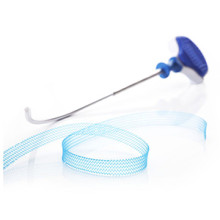
Dr. Welk is also an adjunct scientist with ICES, associate scientist at Lawson Health Research Institute and assistant professor at Western University’s Schulich School of Medicine & Dentistry. Following his observations in the clinic, he led a research project to study the impact of the complications some women were facing.
“There have been regulatory warnings and lawsuits related to significant transvaginal mesh complications. We wanted to quantify the serious psychological complications that can occur in women as a result of complications from transvaginal midurethral slings,” said Dr. Welk.
Complications are rare but when they happen they can be difficult and challenging to fix, as well as quite impactful for patient lives. They can experience chronic pain, new or changing urinary symptoms and erosions where some of the mesh becomes exposed in surrounding tissue.
To determine whether women who experience midurethral sling mesh complications requiring surgical intervention have an increased risk of depression or self-harm behaviour, Welk's team tracked the number of Ontario women who needed a follow-up surgery to remove or fix a mesh implant and if they received treatment for depression or self-harm. The study, published in the journal JAMA Surgery, included almost 60,000 women who had the procedure January 2004 through December 2015.
The researchers found that 2. 8 per cent (1586 women) underwent a surgical procedure for a mesh complication. Of those women, 11 per cent (175 women) were treated for depression compared to eight per cent of women (4,470) who didn’t have corrective surgery. Of the women who needed corrective surgery, 2.77 per cent of women suffered from self-harm behaviour compared to only 1.15 per cent of women who did not need corrective surgery. These risks were highest in younger women, in particular those 46 years old and younger.
“Younger women are the ones who are most at risk of these mental health complications. We suspect that’s because of a stronger negative association between the complications and intimacy among this age group. They are also more likely to still be working full-time and raising children.”
The study reinforces some of the consequences that can occur from slings, and that those can be quite serious.
“It is important to note that a lot of women are going into these operations to improve their quality of life. It’s not necessarily a dangerous condition when you have stress incontinence. There is a decision made to treat it. I think that in those rare cases when someone does experience severe complications, it can lead to decisional regret.”
There is often not an easy solution, with patients often requiring multiple different therapies to address the complications. This can include pain management, surgery, consultations with pain specialists and psychological support along the way. In some cases, removing the mesh does not resolve the pain and it can be very difficult to identify which individuals will benefit from what therapy, including surgery, notes Dr. Welk.
The researchers add that when women experience midurethral sling complications, both they and their surgeons should be aware of the potential serious psychological impact of these complications.
Author block: Blayne Welk, Jennifer Reid, Erin Kelly, You (Maria) Wu.
Scientist
Guide to Reviewing On Call Shifts Paid The most recent PARO contract has a requirement for the paymaster to provide to each resident an accounting of the number and type of call stipends paid with the corresponding dates, along with any declined stipends. HOW TO VIEW ON CALL SHIFTS PAID From within ...
July 12, 2022; Page 1 of 2 Incobotulinumtoxin A (Xeomin) for Cervical Dystonia/Spasmodic Torticollis What is cervical dystonia and how is it typically treated? Cervical dystonia is a rare neurological disorder involving involuntary muscle contractions in the neck that cause the head to twist or turn...
… Employment Standards Poster describes important rights and requirements under the Employment Standards Act, 2000. The … Employment Standards Poster describes important rights and requirements under the Employment Standards Act, 2000. The …
Ministry of Labour Stay safe at work The Occupational Health and Safety Act (OHSA) sets out the rights and duties of all workplace parties. It establishes procedures for dealing with workplace hazards and it provides for enforcement of the law where compliance has not been achieved voluntarily. Ever...
YOur guide to Breast assessment Breast Care Program St. Josephs Hospital 268 Grosvenor St. London, ON N6A 4V2 THE BEST IN BREAST CARE The Breast Care Program at St. Josephs Health Care London provides a confidential, coordinated, specialized breast assessment service. The goal of the program is to m...