


Search
Search
2802 Search Results:
… Self-Referral Care of the Human Spirit (A free service from St. Joseph’s Health Care, London) Centre for Diabetes, … Metabolism Support for BODY, MIND & SPIRIT when facing investigation, disease and treatment and you are …. … feeling: alone disappointed depressed/frustrated/helpless/ anxious/afraid/distressed vulnerable and …
Self-Referral Care of the Human Spirit (A free service from St. Josephs Health Care, London) Centre for Diabetes, Endocrinology and Metabolism Support for BODY, MIND & SPIRIT when facing investigation, disease and treatment and you are . feeling: alone disappointed depressed/frustrated/helpless/...
… Self-Referral Care of the Human Spirit (A free service from St. Joseph’s Health Care, London) Urology Clinic and Prostate Centre Support for BODY, MIND & SPIRIT when health … you are …. … feeling: alone disappointed depressed/frustrated/helpless/ anxious/afraid/distressed vulnerable and …
Self-Referral Care of the Human Spirit (A free service from St. Josephs Health Care, London) Urology Clinic and Prostate Centre Support for BODY, MIND & SPIRIT when health issues are affecting your quality of life and you are . feeling: alone disappointed depressed/frustrated/helpless/ anxious/a...
… Self-Referral Care of the Human Spirit (A free service from St. Joseph’s Health Care, London) Ivey Eye Institute Support for BODY, MIND & SPIRIT when you are facing … you are …. … feeling: alone disappointed depressed/frustrated/helpless/ anxious/afraid/distressed vulnerable and …
Self-Referral Care of the Human Spirit (A free service from St. Josephs Health Care, London) Ivey Eye Institute Support for BODY, MIND & SPIRIT when you are facing eye disease, injury, or treatment and you are . feeling: alone disappointed depressed/frustrated/helpless/ anxious/afraid/distressed...
… Self-Referral Care of the Human Spirit (A free service from St. Joseph’s Health Care, London) Preadmission Support for … you are …. … feeling: alone disappointed depressed/frustrated/helpless/ anxious/afraid/distressed vulnerable and uncertain, or loss and grief …
Self-Referral Care of the Human Spirit (A free service from St. Josephs Health Care, London) Preadmission Support for BODY, MIND & SPIRIT when you are facing surgery and you are . feeling: alone disappointed depressed/frustrated/helpless/ anxious/afraid/distressed vulnerable and uncertain, or ...
… Download St. Joseph's London Report for Bill S-211 - May 31, 2025. …
… Because we all need St. Joseph’s. … Health Care Who We Are The Forensic Psychiatry Program at St. Joseph’s Regional Mental Health Care (RMHC) St. Thomas provides specialized assessment, treatment, … Because we all need St. Joseph’s. … Health Care Who We Are The Forensic Psychiatry Program at St. Joseph’s Regional Mental Health Care (RMHC) St. Thomas …
Because we all need St. Josephs. www.sjhc.london.on.cawww.sjhc.london.on.cawww.sjhc.london.on.ca Safe and successful transition back into the community. RMHC Regional Mental Health Care Who We Are The Forensic Psychiatry Program at St. Josephs Regional Mental Health Care (RMHC) St. Thomas provides s...
… ~------...... ........._ LAWSON HEALTH RESEARCH INSTITUTE Public Information and Disclosure Protocol Cyclotron & PET Radiochemistry Facility located at St. Joseph’s Health Care London Updated September 2021 … ~------...... ........._ LAWSON HEALTH RESEARCH INSTITUTE Public Information and Disclosure Protocol Cyclotron …
~------...... ........._ LAWSON HEALTH RESEARCH INSTITUTE Public Information and Disclosure Protocol Cyclotron & PET Radiochemistry Facility located at St. Josephs Health Care London Updated September 2021 LAWSON HEALTH RESEARCH INSTITUTE Public Information and Disclosure Protocol Cyclotron & PET Ra...
… Download the Fall 2024 Issue of My St. Joseph's (PDF) …
… Upper Limb Centre Hand Therapy Fellowship Application Interested candidates are required to complete this application … Review Notification of Acceptance Confirmed Acceptanc e Start Date September 30 October 15 - 30 November 1 November … 15 - 31 May 1 May 15 September 1 Application Submission Instructions: ▪ Please submit your resume and/or curriculum …
(;j~ S'!JOSEPHs HEALTH CARE LONDON Roth McFarlane Hand and Upper Limb Centre Hand Therapy Fellowship Application Interested candidates are required to complete this application and email to Joey Pipicelli. Applications are reviewed bi-annually. Once applications are reviewed interviews will be arran...
… � A Future Nurtured in Histories of Faith & Compassion ∏ ∏ � � A Future Nurtured in Histories of Faith & Compassion Like the tree that takes root & then bears fruit, st. Joseph’s health Care, London continues to grow from the … � A Future Nurtured in Histories of Faith & Compassion ∏ ∏ � � A Future Nurtured in …
A Future Nurtured in Histories of Faith & Compassion A Future Nurtured in Histories of Faith & Compassion Like the tree that takes root & then bears fruit, st. Josephs health Care, London continues to grow from the humble and compassionate beginnings of our founders, the sisters of st. Joseph, ...
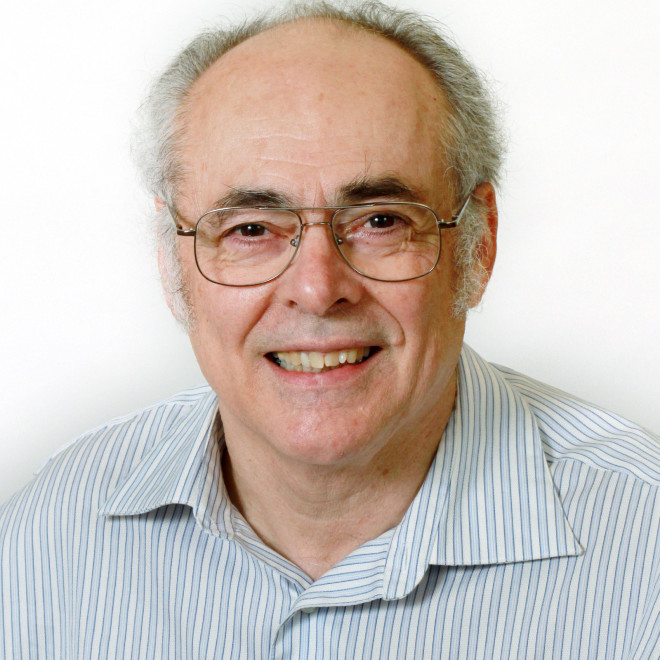
Dr. Frank S. Prato
Full Name
Dr. Frank S. Prato
Role
Location
Degrees and Qualifications
PhD, FCCPM, ABMP, FCOMP, FURSI, FCAHS
Research Overview
Over the last 30 years I have founded a research imaging program at Lawson that currently includes 23 Ph.Ds. and 7 MDs. The focus is to provide leading edge medical imaging technology to the patients of Southwestern Ontario, to citywide researchers and to foster what is needed for clinical trials. We have had a rich history including: first MRI in Canada (1982), first perfusion CT in the world (2000), first PET/CT in Canada (2002), first PET/MRI in Canada (2012).
In the last decade we have introduced PET technology to London including a medical cyclotron and radiochemistry facility that supplies Health Canada approved products to London, Toronto and Windsor. We are a hospital based research program and as such we have a stewardship responsibility to our patients to provide the best medical imaging facilities to guide their treatment and when they reach the limits of proven treatment methods they have the option to enroll in clinical trials that explore new treatment approaches.
Publications:


Biography
Since founding the Lawson Imaging Research Program in the 1980s Frank Prato has led the introduction of a number of new imaging technologies here in London. For example in 1982 his laboratory produced the first human MRI in Canada. Since 2002 Frank has focused on the introduction of new molecular imaging methods including the establishment of advanced positron emission tomography (PET) facilities in combination with magnetic resonance imaging (MRI). In 2012 the Lawson Imaging Research team installed Canada’s first human hybrid PET/MRI at Lawson’s St. Joseph’s Hospital site. Currently Frank is involved in the PET/MRI imaging of neuro-degenerative diseases caused by dementia and mental illness as well as in the study of cardiac diseases that lead to heart failure. Frank’s focus is to improve early diagnosis of disease to limit disability caused by chronic disease/conditions. Frank’s program is located within the hospital/patient environment as Imaging research is an essential part of the patient care continuum.
Scientific Record
- 6113 life time citations, h-index = 45 (Scopus)
- 10,624 life time citations, h-index = 58 (Google Scholar)
- 300+ peer-reviewed publications (222 papers)
- 700+ conference abstracts
- 184 invited presentations
- 67 graduate students and PDFs
- 14 patents and 4 spin-off companies
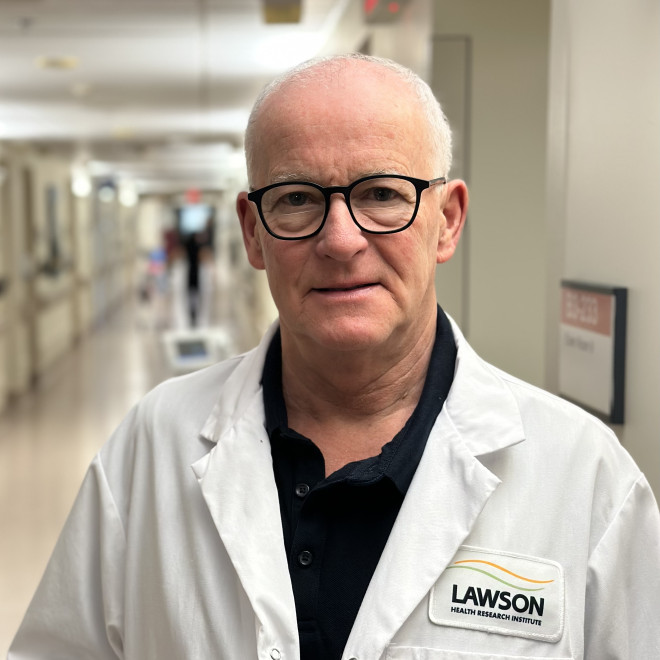
Dr. Gregor Reid
Full Name
Dr. Gregor Reid
Role
Location
Degrees and Qualifications
BSc Hons, PhD, MBA, ARM CCM, Dr HS, FCAHS, FRSC
Contact Information
Phone
519-646-6100
Extension
65256
Email
Administrative Support
Lesley Carmichael (x65755)
Research Area
Research Overview
My career has mostly been spent studying how beneficial microbes, especially bacteria, contribute to the health of women and children.
The use of probiotics, as dried or food forms, is designed to help restore and maintain a healthy or homeostatic state. My focus has always been on translating science to human or other life forms (animals, honeybees, fish), though work on mechanisms was also rewarding. I was determined that breakthrough technologies and treatments should benefit everyone, particularly those most in need in developing countries whose access to healthcare and remedies is often limited.
I have been a strong advocate for empowering everyone who has come through out research group. Progress comes from the ideas and talents of these students, fellows, technicians and collaborators and it is our responsibility to mentor and encourage them.
Research areas: Microbiome and probiotics; Women's health; Environmental influences on health; probiotic effects on the urogenital tract, the gut, breast, heart and use of probiotics to detoxify environmental pollutants.
Publications:
Biography
Dr. Gregor Reid is a Distinguished Professor Emeritus of Western University, and Scientist in Human Microbiome and Probiotics at the Lawson Health Research Institute. He retired from laboratory research in 2020 and is no longer taking students.
Dr. Reid’s legacy comes from his focus on beneficial microbes, starting in 1982 when only 12 papers had been published on ‘probiotics’. As of February 2024, this number exceeds 47,000 papers by authors around the world. Dr. Reid's contribution cannot be understated. In 2001 and 2002, he chaired the United Nations - World Health Organization Expert Panel and Working Group on Probiotics that defined the modern term probiotics and set the standard for a field of science and commerce, the latter now exceeding $60 billion per annum.
Evidence for him being one of the world’s foremost experts on probiotics comes in many forms. Along with Canadian Urologist Dr. Andrew Bruce he developed novel probiotic therapies now used by several million people in over 35 countries. He helped acquire Canada’s largest ever donation for microbiology, $7 million for the endowed chair at Lawson. He has held 32 patents and published over 609 peer-reviewed publications in highly prestigious academic journals including Science, Lancet, JAMA, PNAS and various Nature journals. He has been highly sought for his lecturing skills, with over 650 talks in 54 countries. His Google Scholar H factor is 125 with over 61,000 citations as of February 2024. He was ranked the #3 microbiologist in Canada by research.com in 2022.
He has been President of the International Scientific Association for Probiotics and Prebiotics, the leading organization on the science of these areas. His recognitions include: recipient of the Hellmuth Prize, the highest research honour conferred by The University of Western Ontario; the Distinguished Alumni Award presented by New Zealand’s leading institution, Massey University; an Honorary Doctorate in Biology from Orebro University in Sweden; the highest honour of the Canadian Society for Microbiologists for Career Achievement; Western University’s highest honour as Distinguished Professor. He is a member of the Canadian Academy of Health Sciences and the Royal Society of Canada, the latter being an honour bestowed upon Canada’s distinguished scholars, artists and scientists, since the establishment of the society as Canada’s National Academy in 1883. His impact on Complementary and Alternative Medicine has been substantial, in Canada and beyond, illustrated by receipt of the prestigious Dr Rogers Prize.
The expansion of beneficial microbes to One Health illustrates the importance of pioneers like him, who so early on and long before the Human Microbiome Project, recognized the importance of these organisms. His commitment to stewardship and excellence in appropriately documenting probiotics and in helping to define fermented foods and prebiotics, and differentiate them from probiotics, is recognized the world over.
Dr. Reid was instrumental in the establishment of Western Heads East (WHE), an experiential learning program based out of Western University. The program, led by Bob Gough, launched probiotic yogurt in rural Tanzanian communities in 2004 to help address the malnutrition and HIV/AIDS crises in the continent. It was recognized by the awarding of the AUCC Scotiabank Prize for Internationalization in 2010. The program expanded beyond HIV recipients to reach over 260,000 beneficiaries in Uganda, Tanzania and Kenya. This was made possible by funding from the Canadian International Food Security Research Fund and the creation of a novel sachet by Yoba-for-Life, a Dutch not-for-profit foundation. The sachet, costing under $1, contains two bacterial strains that ferment up to 100L of probiotic-rich yogurt or cereal or fruit. Yoba-for-Life continues to bring sachets to Africa, and in 2024, The Gregor Reid Award for Outstanding Scholars in Developing Nations was established by ISAPP to encourage young researchers to translate probiotics into tangible benefits for their countries.
Dr. Reid's sphere of influence has widened through efforts to reduce the problem of honeybee colony collapse that endangers the world's food supply. The creation of a probiotic intervention to boost the insect's defenses and fight pathogens as well as offset the damage done by pesticides, has implications for beekeeping in North America and around the world. His final PhD student, Brendan Daisley is now pioneering this work at the University of Guelph.
Though officially retired, Professor Reid has published a book, “Probiotics: A story about hope,” which reached #1 on Amazon for women’s health, and he continues to support his successor, Dr. Jeremy Burton, and students doing outstanding work through the lab at St. Joseph’s Hospital.
Partners
Numerous collaborators around the world.
International Scientific Association for Probiotics and Prebiotics - current board member
Fermented Food for Life (FFFL) book on success stories!
Read it here!
Read it here!
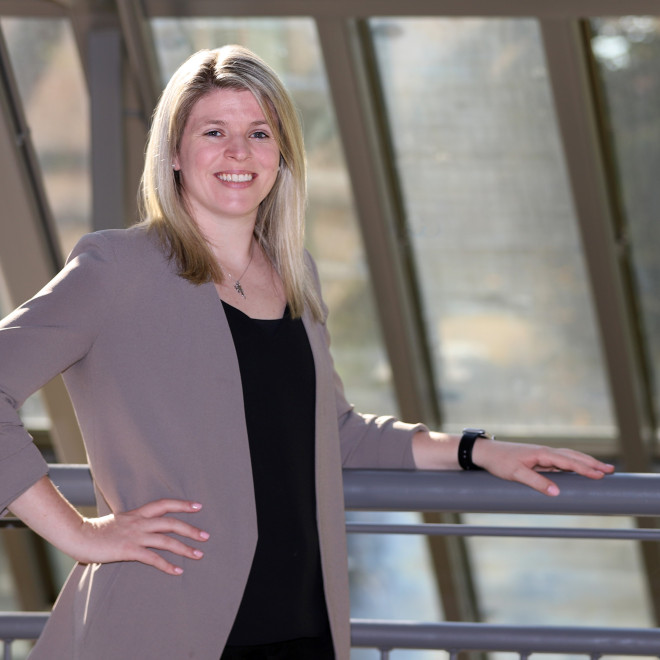
Dr. Jacobi Elliott
Full Name
Dr. Jacobi Elliott
Role
Location
Degrees and Qualifications
PhD
Research Area
Research Overview
Dr. Elliott has focused on establishing a comprehensive program of research focused around geriatrics and the health care system.
Biography
As an Early Career Researcher (ECR), Dr. Elliott has been involved as Nominated Principal Applicant, co-Principal Applicant or co-Applicant on research funding from tri-council and community grants.
She has more than 35 published papers related to health systems research and patient/family engagement and has been recognized with multiple awards for her conference presentations.
Dr. Elliott is a Scientist with Lawson Research Institute and holds Adjunct Assistant Professor appointments at Western University (Faculty of Health Sciences) and the University of Waterloo (School of Public Health Sciences).
Currently, Dr. Elliott is the Director, Research & Strategy for the Regional Geriatric Program of Southwestern Ontario, hosted by St. Joseph's Health Care London.
Dr. Anurag Bhalla
Full Name
Dr. Anurag Bhalla
Role
Location
Degrees and Qualifications
BHSc (Honours), McMaster University
MD, Western University
FRCPC Internal Medicine and Respirology
MSc, Physiology and Phamacology, McMaster University
Contact Information
Phone
519-646-6100
Extension
66145
Email
Administrative Support
Lindsay Boresma
Research Overview
Asthma, sputum cell counts, eosinophils.
Biography
Anurag Bhalla is an Assisstant Professor of Medicine in Department of Medicine, Division of Respirology at Western University and Staff Respirologist at St. Joseph's Healthcare and London Health Sciences Centre.
He completed his medical school and internal medicine residency at Western University followed by respirology residency at McMaster University. Subsequently, he completed airway disease clinical fellowship and MSc in physiology and pharmacology with Dr. Parameswaran Nair at McMaster University.
His clinical interest includes complex airway diseases, including asthma, COPD and bronchiectasis. His research interest includes severe asthma, eosinophil biology, asthma biologics and airway inflammometery.
Dr. Arlene MacDougall appointed Director of Research and Innovation for St. Joseph’s Mental Health Care
Dr. Arlene MacDougall has been appointed as Director of Research and Innovation for mental health care at St. Joseph’s Health Care London and Lawson Health Research Institute.
She will oversee and facilitate all mental health care research at both Parkwood Institute and Southwest Centre for Forensic Mental Health Care, working to develop strong local and global partnerships, engage patients and their caregivers in research activities, and foster trans-disciplinary approaches to research.
Her goal is to build on existing research strengths in mood disorders, suicide and smart technology. She also will look to develop research links between Mental Health and Parkwood Institute’s other major research programs, Cognitive Vitality and Brain Health, and Mobility and Activity.
Dr. MacDougall joined Lawson and the Department of Psychiatry at the Schulich School of Medicine & Dentistry, Western University in 2013 working with the Prevention and Early Intervention Program for Psychoses at London Health Sciences Centre. Last year she was cross appointed to the Department of Epidemiology and Biostatistics at Schulich.
“I come to this new role with a great deal of optimism, energy and enthusiasm. Parkwood Institute Research has a number of established strengths in the mental health care field as well as potential for new streams of research and innovation,” says Dr. MacDougall. “I look forward to working with researchers, staff, and patients and their supporters, as well as academic and community partners, to make Parkwood Institute a leading centre in Canada for mental health research.”
Parkwood Institute Research is a Lawson program that represents inter-disciplinary clinical research and focuses on the advancement of innovations and discoveries that directly improve patient care.
Dr. MacDougall will continue her own program of research, which includes recovery-oriented interventions for people with serious mental illness locally and in Africa. She is leading local studies on the use of mindfulness meditation and participatory video interventions to promote recovery among youth with early psychosis. She is also leading a project based in Kenya using social businesses and a low cost psychosocial rehabilitation toolkit to create meaningful employment, promote social inclusion and support the overall functioning and recovery of people with serious mental illness in low income settings.
Most recently she has been involved in developing and leading initiatives that use social innovation approaches to tackle complex mental health system challenges both locally and globally.
At Western, she is the Director of Global MINDS (Mental Health Incubator for Disruptive Solutions) @ Western, an educational and research initiative that supports students, faculty and community stakeholders to create solutions that will reduce the global burden of mental disorders. Global MINDS is focused on innovating for low and middle income countries and for marginalized communities in Canada. Another initiative, MINDS of London-Middlesex, is working with multiple local stakeholders to collaboratively establish a social innovation lab and use collective impact approaches that will lead to solutions that address complex challenges in the local mental health system.
Dr. MacDougall began her new role on February 1, 2017 and joins Drs. Michael Borrie and Tim Doherty as Joint/Acting Beryl and Richard Ivey Research Chair in Aging, Mental Health, Rehabilitation and Recovery. She also joins Lawson’s Research Executive Committee as Assistant Director (interim) for Parkwood Institute Research, Mental Health.
Scientist
Dr. Gregor Reid elected to Royal Society of Canada
From crafting a global definition of probiotics to developing novel therapies used by millions, Dr. Gregor Reid has significantly advanced our knowledge of how beneficial microbes, especially bacteria, contribute to health. Recognizing his role as a world leader in probiotics research, Dr. Reid has now been elected to the Fellowship of the Royal Society of Canada.
The Royal Society of Canada was established in 1883 as Canada’s National Academy of distinguished scholars, artists and scientists. With over 2,000 fellows, the primary objective of the Society is to promote learning and research through its three Academies – the Academy of Arts and Humanities, the Academy of Social Sciences and the Academy of Science. Dr. Reid has been elected by his peers to the Life Sciences division of the Academy of Science.
“Being elected to the Royal Society of Canada is a huge honour and a recognition that the concepts of probiotics and beneficial microbes, and the work we are doing, are appreciated by distinguished Canadians,” said Dr. Reid, Endowed Chair in Human Microbiome and Probiotics at Lawson Health Research Institute (Lawson) and Professor of Microbiology and Immunology and Surgery at Schulich School of Medicine & Dentistry at Western University.
Probiotics are live microorganisms that, when administered in adequate amounts, provide health benefits to their host. Dr. Reid’s research in probiotics has made a global impact. He has held 28 patents, published 473 peer-reviewed papers and given over 560 talks in 54 countries.
In addition to his current role as Director of the Canadian Centre for Human Microbiome and Probiotics Research, located at Lawson in St. Joseph’s Hospital, Dr. Reid has previously acted as President for the International Scientific Association for Probiotics and Prebiotics. In 2001 and 2002, he chaired a United Nations/World Health Organization (WHO) Expert Panel and Working Group on Probiotics.
Dr. Reid is especially interested in how his research can benefit those in need. He helped to establish Western Heads East, a Western University program that has established community kitchens in Tanzania, Kenya, and Rwanda, and through partnerships has expanded this in Uganda to reach over 40,000 people each day. The community kitchens are owned and operated mostly by local women and youth where they produce a probiotic yogurt that helps counter malnutrition, side effects of infectious diseases including HIV/AIDS and enhances immunity. The yogurt was developed by Dr. Reid and Dr. Sharareh Hekmat of Western's Brescia University College.
“My research was not mainstream until very recently, so being inducted to the Society signifies that they recognize what I have achieved first and foremost,” said Dr. Reid, “but I hope my appointment helps to further bring the concepts of beneficial microbes to the forefront of research.”
An induction ceremony will take place in Kingston, Ontario on November 17 and 18, 2016. To learn more about Dr. Reid’s research, please visit his Scientist Profile and Google Scholar.
Scientist
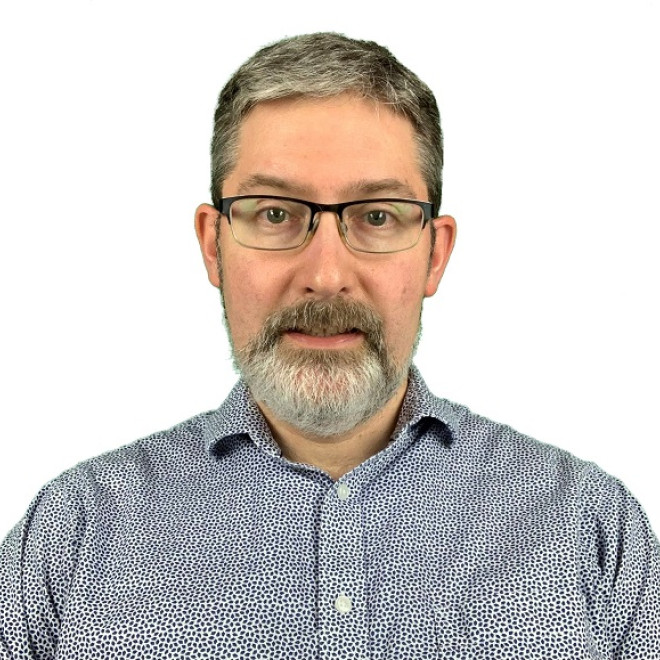
Dr. Jean Théberge
Full Name
Dr. Jean Théberge
Role
Location
Degrees and Qualifications
Ph.D., FCCPM
Website
Research Overview
The NeuroPsychiatry Imaging Lab (NeuroPIL), lead by Dr. Jean Théberge, is a research group dedicated to the development, implementation and application of brain imaging methodologies in psychiatry research.
Publications:
Biography
Dr. Théberge is a certified Medical Physicist specialized in magnetic resonance. His current work involves providing support to the clinical MRI programs of St. Joseph’s Health Care and LHSC, teaching MRI at the graduate level in the Medical Biophysics program of the University of Western Ontario and conducting MR imaging research within the Lawson Health Research Institute’s Imaging Division.
With a solid background in physics, significant computer programming skills and knowledge and experience of neuropsychiatry, Dr. Théberge has been able to forge several alliances with clinical collaborators that allow him to conduct a wide range of brain imaging research, methodological developments and applications centered around the theme of neuropsychiatric disorders.
His current research in this area includes investigations of progressive changes in brain chemistry in schizophrenia using magnetic resonance spectroscopy, investigations of brain functional connectivity in major depression in youth as well as in individuals with schizophrenia or post-traumatic stress disorder. Most recently, his group is applying functional MRS methods to the study of glutamate dynamics during the performance of a cognitive task in these disorders.
… f\s··,:;~ STJOSEPHs HEALTH CARE . LONDON May 30, 2017 Dr. Gillian Kernaghan President and Chief Executive Officer St. Joseph's Health Care London Dear Dr. Kernaghan: Office of the Chair, Board of Directors PO Box sm, Stn B London, ON N6A4V2 T: 519 646-6100 ext 64202 In …
f\s,:;~ STJOSEPHs HEALTH CARE . LONDON May 30, 2017 Dr. Gillian Kernaghan President and Chief Executive Officer St. Joseph's Health Care London Dear Dr. Kernaghan: Office of the Chair, Board of Directors PO Box sm, Stn B London, ON N6A4V2 T: 519 646-6100 ext 64202 In accordance with the terms and co...
Dr. Manuel Montero-Odasso named as one of most influential Hispanic Canadians
Dr. Manuel Montero-Odasso, Clinician Scientist at Lawson Health Research Institute and Director of the Gait and Brain Lab, has been named as one of the 10 most influential Hispanic Canadians for 2019. Presented by TD Bank, those on the list were honoured at an awards ceremony in Toronto, Ontario in November.
A geriatrician at St. Joseph’s Health Care London, Dr. Montero-Odasso is recognized as a world expert in dementia and gait disorders. The main focus of his research is on the interaction of mobility and cognitive decline in aging. He is the team leader for the Canadian Consortium on Neurodegeneration in Aging (CCNA), a collaborative research program advancing dementia research, and leads the Mobility, Exercise and Cognition (MEC) Team in London, comprised of top researchers in the area of mobility, exercise and brain health.
Dr. Montero-Odasso says that one aspect of his career that he is most proud of is being able to collaborate with other researchers in his field and “contribute to new approaches to combat mobility and cognitive decline in aging.” This is evident through the clinical trials he pioneered by implementing an approach of “improving cognition to improve mobility.”
TD Bank’s “10 Most Influential Hispanic Canadians” is awarded to individuals from the Hispanic community across Canada to recognize their outstanding achievements. Dr. Montero-Odasso’s influence is displayed on a global scale as he has received over 100 invitations to give international lectures and has published over 200 manuscripts and book chapters. He has a close relationship with the Spanish-speaking community and has hosted visiting scientists from Argentina and Spain.
“I feel honoured and privileged, particularly this kind of award where you are nominated by your peers. I am also glad my work is reflecting the role that my Hispanic background plays,” says Dr. Montero-Odasso, who is also a professor of Medicine, Epidemiology, and Biostatistics at Western University. “Additionally when you look at the other nominees, and those who have received the award in the past, it really gives you a sense of the amazing things Hispanics who live and work in this country are contributing to Canadian society.”
Dr. Montero-Odasso emphasizes the value of diversity and learning from different backgrounds when seeking solutions. As he continues working in this important field as a physician and researcher, Dr. Montero-Odasso’s goal is to, “find effective ways to treat and delay aging disability in order to add, as they say, life to the years, and not only years to the life.”
Scientist