


Search
Search
675 Search Results:
Centre for Diabetes, Endocrinology and Metabolism
… Unit is an outpatient program that provides endocrine testing for patients with conditions such as pituitary … by a registered nurse and an endocrinologist. Most of the tests start early in the morning and can last from three to … Specific instructions are provided for each patient. Once testing is complete, the patient returns home and test …
Medical Imaging: Radiology (X-Ray)
… may be, or have had blood drawn recently for a pregnancy test, tell your doctor. Please also inform the radiologist, … may be, or have had blood drawn recently for a pregnancy test, tell your doctor. Please also inform the radiologist, …
2024-25 Grants Listing
… Manufacturing Practice, $14,550 Intrinsic Hand Function Testing Post Nerve Surgery, $2,209 Gray Centre Catalyst … the gastroenterology subspecialty residents in the Gastrointestinal Training Program. The Lloyd B. Hession Memorial … Manufacturing Practice, $14,550 Intrinsic Hand Function Testing Post Nerve Surgery, $2,209 Gray Centre Catalyst …
Diabetes Education Centre
… about diabetes by using this web site. We follow the latest clinical practice guidelines available in Canada. How … If a moderate or large amount of ketones register on the test strip, ketoacidosis is present and treatment is … works differently for different people. Blood glucose testing will help determine how well your insulin is …
Spiritual Care
… have received unfavourable news are anxiously awaiting test results have been in hospital for long periods of time … have received unfavourable news are anxiously awaiting test results have been in hospital for long periods of time …
Breast Care Program
… you receive the information you need and have the right test done as quickly as possible when a change in your … Mammogram Ultrasound Breast assessment includes all the tests and procedures you need so that you and your doctor … mammogram and/or an ultrasound are often the only tests(s) needed to confirm that the breast change is benign. …
Specialized Geriatric Services: Inpatient
… if this occurs) Use correct eyeglasses/hearing aids—test vision/hearing every two years Walk and climb stairs … ensure a safe and timely discharge. At times investigative tests/ procedures or consults are needed to improve your health. These tests may be carried out at other facilities. Your team will …
Veterans Care
… VCP. They help identify health issues that need treatment, testing or referral to other health specialists. The NP … cases there are fees for service) Dental care Hearing test and assessment (Audiology) Foot care (Chiropody) … VCP. They help identify health issues that need treatment, testing or referral to other health specialists. The NP …
… episodes), especially pneumococcal meningitis, should be tested for a CSF leak, regardless of the presence of active … not be frozen. • Beta-2 transferrin is the single best lab test for identifying the presence of CSF in nasal fluid. … episodes), especially pneumococcal meningitis, should be tested for a CSF leak, regardless of the presence of active …
CEREBROSPINAL FLUID LEAK (CSF LEAK) INTRODUCTION A hole or tear in the brain lining will result in a leak of fluid that normally surrounds the brain. This fluid is known as cerebrospinal fluid or CSF. Drainage of CSF into the sinuses (See Sinus Anatomy) can result in many problems. Most notably the ...
Endocrinology, Metabolism and chronic diseases
The inner workings of our bodies often go unnoticed.
We don’t think of chronic illness, until it finds us. Diabetes and arthritis are a distant idea, until they become personal. Our immune system is an enigma, until we get sick.
Lawson leads in understanding, preventing and solving complex chronic illness.
For specialized teams of Lawson researchers, though, solving these problems is always front of mind.
In a city known as the birthplace of insulin, Lawson builds on a proud tradition of leadership in diabetes research and other endocrine disorders, through the Centre for Diabetes, Endocrinology and Metabolism.
Our dedicated clinician scientists are digging at the origins of different forms of arthritis, and testing new and better ways of treating this often-debilitating illness.
In a region that has cultivated breakthrough science in probiotics and gut health, we are recognized trailblazers in understanding the human microbiome - an invisible community of micro-organisms that balances our immune system, breaks down and absorbs nutrients, and provides a barrier to disease-producing organisms.
We are pioneer researchers of fecal microbial transplants to help the body fight infection and disease.
We want to discover the deepest roots of what makes us well, or what makes us ill.
That’s more than an abstract idea for us – improving human health is the goal we strive for every day.
Lawson leads in understanding, preventing and solving complex chronic illness. Read more to see where it will lead you.
New study shows technology could play an important role in mental health support
In a study published in MDPI Journal, a team of researchers at Lawson Health Research Institute have shown that the use of technology may assist in better outcomes for those living with both mental health and physical disorders.
Dr. Cheryl Forchuk, Assistant Scientific Director at Lawson, and her team embarked on a pilot study that used smart home monitoring solutions to assist those living with both a mental health disorder and other health challenges. The purpose of this pilot study was to see if technology could improve overall lifestyle and wellbeing.
“We began our research by using hospital prototype apartments – apartment style care spaces within hospital settings – that were equipped with smart home technology solutions such as a screen device, activity trackers, weigh scales and medication dispensers,” says Dr. Forchuk who is also the Beryl and Richard Ivey Research Chair in Aging, Mental Health, Rehabilitation and Recovery at St. Joseph’s Health care London. “Once we tested it in a hospital setting, we wanted to find a way to take this idea out into the community in different kinds of housing and living situations to see if it would be beneficial.”
The research team partnered with the Canadian Mental Health Association (CMHA) and the London and Middlesex Community Housing (LMCH) to work together to retrofit the homes of the 13 study participants.
“We worked together with the participants and their care providers to choose what combination of technology they felt would be best for them,” says Dr. Forchuk. “No matter their health condition each participant wanted to be more active and independent, with the goal of staying out of hospital.”
All smart devices were connected to the Lawson Integrated Database, which is a database that can securely collect data from multiple sources such as health devices. This allowed care providers to send reminders to participants, while also tracking usage and results.
“The key benefits we noted was that study participants started to live healthier lives,” says Jonathan Serrato, Lawson Research Associate. “Participants logged going for walks and exercising more often, as well as making healthier food choices. Those who used the medication dispensers did not miss a single dose. The touch screen devices also allowed participants to easily communicate with care providers and support networks, and access more resources.”
Following the pilot study, the research team also published a subsequent paper, as a ‘how-to guide’ for utilizing smart home technology interventions as a health care tool.
“This paper is a helpful resource that outlines implications and considerations when it comes to smart home technologies,” adds Serrato. “There are many areas we touch upon such as security, privacy and feasibility as well as hardware and software information for those who would like to take on their own similar type of smart home technology project.”
‘Brain training’ may be an effective treatment for post-traumatic stress disorder, clinical trial finds
LONDON, ON - Neurofeedback, also called ‘brain training,’ consists of exercises where individuals regulate their own brain activity. In a new study from Lawson Health Research Institute and Western University, researchers have found that neurofeedback may be an effective treatment for individuals with post-traumatic stress disorder (PTSD). Published in NeuroImage: Clinical, the clinical trial found that neurofeedback was effective in reducing symptoms of PTSD.
“Brain connectivity involves different parts of the brain communicating with each other and helps to regulate states of consciousness, thought, mood and emotion,” explains Dr. Ruth Lanius, scientist at Lawson, professor at Western’s Schulich School of Medicine & Dentistry and psychiatrist at London Health Sciences Centre. “Individuals with PTSD tend to have disrupted patterns of brain connectivity, but our research suggests they can exercise their brains to restore patterns to a healthy balance.”
Neurofeedback uses a system called a neurofeedback loop in which a person’s brain activity is measured through sensors placed on the scalp and displayed back to them using a computer interface. This allows the individual to complete exercises and visually see the results.
The trial tested neurofeedback with a total of 72 participants, including 36 participants with PTSD and 36 healthy control participants. Of those with PTSD, 18 were randomized to participate in neurofeedback treatment while the other 18 acted as a comparison group.
The study found that the severity of PTSD symptoms decreased in participants randomized to receive neurofeedback treatment. After treatment, 61.1 per cent of participants no longer met the definition for PTSD. This remission rate is comparable to gold standard therapies like trauma-focused psychotherapy.
The research team also used functional magnetic resonance imaging (fMRI) at St. Joseph’s Health Care London to capture brain scans of participants both before and after participation in the trial. They found that individuals with PTSD experienced positive changes in brain connectivity in the salience network and the default mode network following neurofeedback treatment.
“The salience network is involved in detecting threat as part of the ‘fight or flight’ response. It is normally hyperactive in individuals with PTSD. Meanwhile, the default mode network is activated during rest and is involved in autobiographical memory. We often see that this network is less active during rest and functionally disrupted among individuals with PTSD,” says Dr. Andrew Nicholson, affiliated scientist at Lawson. “Neurofeedback helped restore the functional connectivity of both networks to healthier levels.” Dr. Nicholson is an assistant professor at McMaster University and was formerly a post-doctoral fellow at Schulich Medicine & Dentistry.
The study involved weekly sessions of neurofeedback over 20 weeks. Participants were asked to reduce the intensity of the brain’s dominant brain wave – the alpha rhythm. Brain activity was visualized as either a still cartoon or a distorted picture. If the alpha rhythm was successfully reduced, the cartoon started playing or the picture started becoming clearer.
“Participants were not instructed on how to reduce the alpha rhythm. Rather, each individual figured out their own way to do so,” notes Dr. Lanius. “For example, individuals reported letting their mind wander, thinking about positive things or concentrating their attention.”
The team notes the treatment could have a number of clinical implications following further validation.
“Neurofeedback could offer an accessible and effective treatment option for individuals with PTSD,” says Dr. Lanius. “The treatment is easily scalable for implementation in rural areas and even at home.”
-30-
Downloadable Media
Image

Dr. Ruth Lanius, scientist at Lawson, professor at Western’s Schulich School of Medicine & Dentistry and psychiatrist at London Health Sciences Centre
Click for larger image.
Image

Dr. Andrew Nicholson, affiliated scientist at Lawson and assistant professor at McMaster University.
Click for larger image.

Image

The study tested use of a neurofeedback loop in which a person's brain activity is measured through sensors placed on the scalp and displayed back to them using a computer interface. Brain activity was visualized as either a still cartoon or a distorted picture that would move or become clearer when the alpha rhythm was successfully reduced.
About Lawson Health Research Institute
Lawson Health Research Institute is one of Canada’s top hospital-based research institutes, tackling the most pressing challenges in health care. As the research institute of London Health Sciences Centre and St. Joseph’s Health Care London, our innovation happens where care is delivered. Lawson research teams are at the leading-edge of science with the goal of improving health and the delivery of care for patients. Working in partnership with Western University, our researchers are encouraged to pursue their curiosity, collaborate often and share their discoveries widely. Research conducted through Lawson makes a difference in the lives of patients, families and communities around the world. To learn more, visit www.lawsonresearch.ca.
About Western
Western delivers an academic experience second to none. Since 1878, The Western Experience has combined academic excellence with life-long opportunities for intellectual, social and cultural growth in order to better serve our communities. Our research excellence expands knowledge and drives discovery with real-world application. Western attracts individuals with a broad worldview, seeking to study, influence and lead in the international community.
About The Schulich School of Medicine & Dentistry
The Schulich School of Medicine & Dentistry at Western University is one of Canada’s preeminent medical and dental schools. Established in 1881, it was one of the founding schools of Western University and is known for being the birthplace of family medicine in Canada. For more than 130 years, the School has demonstrated a commitment to academic excellence and a passion for scientific discovery.
Media Contacts
Celine Zadorsky
Senior Media Relations Consultant
Communications & Public Engagement
T: 519-685-8500 ext. 73502
Celine.zadorsky@lhsc.on.ca
‘Brain training’ may be an effective treatment for post-traumatic stress disorder, clinical trial finds
Neurofeedback, also called ‘brain training,’ consists of exercises where individuals regulate their own brain activity. In a new study from Lawson Health Research Institute and Western University, researchers have found that neurofeedback may be an effective treatment for individuals with post-traumatic stress disorder (PTSD). Published in NeuroImage: Clinical, the clinical trial found that neurofeedback was effective in reducing symptoms of PTSD.
Image

Neurofeedback uses a system called a neurofeedback loop in which a person’s brain activity is measured through sensors placed on the scalp and displayed back to them using a computer interface. This allows the individual to complete exercises and visually see the results.
The trial tested neurofeedback with a total of 72 participants, including 36 participants with PTSD and 36 healthy control participants. Of those with PTSD, 18 were randomized to participate in neurofeedback treatment while the other 18 acted as a comparison group.
The study found that the severity of PTSD symptoms decreased in participants randomized to receive neurofeedback treatment. After treatment, 61.1 per cent of participants no longer met the definition for PTSD. This remission rate is comparable to gold standard therapies like trauma-focused psychotherapy.
The research team also used functional magnetic resonance imaging (fMRI) at St. Joseph’s Health Care London to capture brain scans of participants both before and after participation in the trial. They found that individuals with PTSD experienced positive changes in brain connectivity in the salience network and the default mode network following neurofeedback treatment.
Image

The study involved weekly sessions of neurofeedback over 20 weeks. Participants were asked to reduce the intensity of the brain’s dominant brain wave – the alpha rhythm. Brain activity was visualized as either a still cartoon or a distorted picture. If the alpha rhythm was successfully reduced, the cartoon started moving or the picture started becoming clearer.
Image

“Participants were not instructed on how to reduce the alpha rhythm. Rather, each individual figured out their own way to do so,” notes Dr. Lanius. “For example, individuals reported letting their mind wander, thinking about positive things or concentrating their attention.”
The team notes the treatment could have a number of clinical implications following further validation.
“Neurofeedback could offer an accessible and effective treatment option for individuals with PTSD,” says Dr. Lanius. “The treatment is easily scalable for implementation in rural areas and even at home.”
Read more about neurofeedback and the team's research:
$65.75M grant positions Lawson as Canadian leader in workplace-injury research
Massive investment by the Workplace Safety and Insurance Board (WSIB) to St. Joseph’s Health Care London is largest-ever grant to transform occupational illness and injury
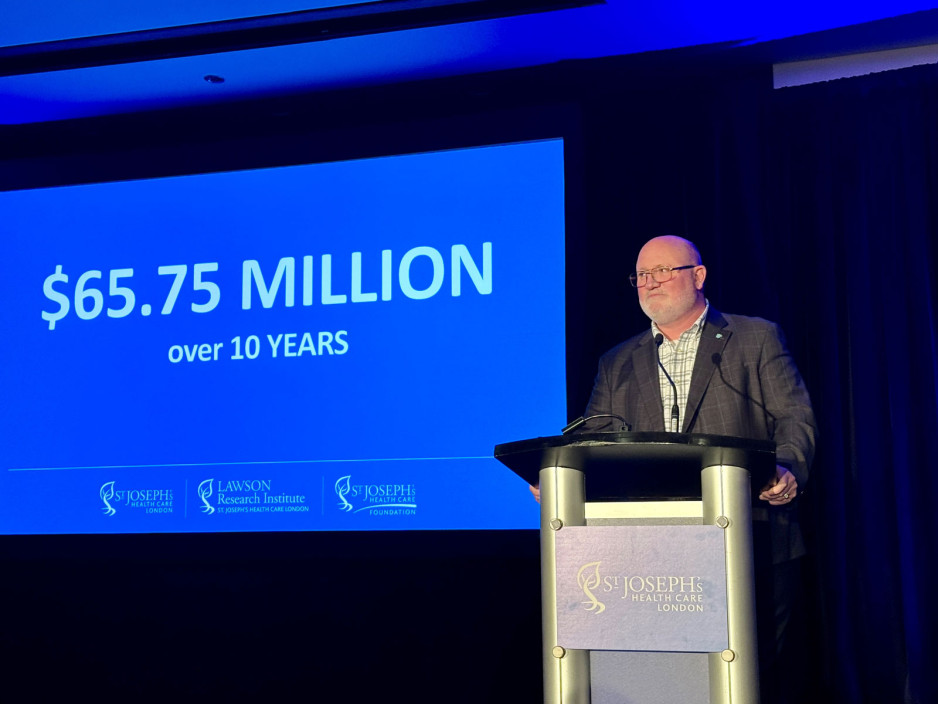
A “game-changer” investment of $65.75 million to Lawson Research Institute of St. Joseph’s Health Care London will transform the prevention, diagnosis and treatment of workplace injuries and illness for Ontarians.
The Workplace Safety and Insurance Board’s visionary 10-year commitment is the WSIB's largest-ever research injection; the largest non-government health research funding in London history; and the biggest single grant received and stewarded by St. Joseph’s Health Care Foundation.
The investment will launch the Occupational Injury Prevention and Treatment Research Network – a first-in-Canada hub where people, technology and science-backed innovation will help solve the human and health costs of occupational injury and illness across Ontario and around the world.
Landmark work, global leadership
“This is a game-changer, something that will transform how we work together to get ahead of work-related injury, pain and mental illness,” says Lisa Porter, PhD, Vice-President Research at St. Joseph’s and Scientific director of Lawson, the research arm of St. Joseph's.
“This investment will propel us to global leadership in finding solutions to some of the most pervasive issues affecting people in workplaces today,” Porter says.
Occupational injuries and illnesses – including chronic pain, physical disability and mental health conditions – accounted for more than 93,000 claims registered through the WSIB last year, with an average lost work time of 63.2 days.
Occupational injuries and illnesses – including chronic pain, physical disability and mental health conditions – have a significant impact on many people, families and businesses in Ontario. Every year they account for almost 250,000 claims registered through the WSIB, with benefit payments of approx. $2.5 billion.
“Too many Ontario families experience the human cost of workplace injury,” says Jeffery Lang, President and CEO of the WSIB. “We want fewer injuries to happen, and if they do, to be able to help people with a safe and faster recovery. This research is going to help get us there and with their established expertise, the St. Joseph’s Health Care and Lawson Research Institute team are a natural partner for this important work.”
Investment and innovation
The network will innovate long-term solutions to prevent mental and physical injuries, accelerate recovery and ensure sustainable health for Ontario workers.
It will feature state-of-the-art infrastructure and expertise including:
- A first-in-Canada positron emission tomography/magnetic resonance imagery (PET/MRI) scanner dedicated to research into rapid and accurate diagnosis of mental health conditions including post-traumatic stress and depression
- A cutting-edge Computer-Assisted Rehabilitation Environment (CAREN), a unique, virtual-reality environment that will test and solve workplace injury, rehabilitation and chronic pain in new ways
- Three new endowed research Chairs and teams of scientists solving the most critical research questions plaguing people injured at work, an investment that will ensure long-term consistency and sustainability of the work
- Deploying technology in data science, artificial intelligence (AI) and virtual reality, making the network accessible by centres and workplaces across Canada
Rapid-access research area to design and test assistive devices such as splints and mobility technology
St. Joseph’s President and CEO Roy Butler says, “We know that discovery-driven, patient-focused research improves lives – that is the focus of our hospital-based research at Lawson, and we’re humbled that the WSIB has entrusted us to expand this vital work to minimize the effects of workplace injury, disease and disability. This significant investment will drive innovation opportunities that will translate into novel new treatments and tools that can be used to battle workplace injury and illness”
“This investment will enable us to leverage the deep expertise St. Joseph’s already has in mental health, chronic pain and rehabilitation, and creates the opportunity to expand our knowledge to support workplace wellness, including for frontline health-care workers,” Butler says.
Butler adds that the network will strengthen existing partnerships and create new collaborations – within St. Joseph’s as well as among a wide range of health professionals, researchers, post-secondary institutions and industry locally, across the province and nationally.
Butler notes St. Joseph’s already excels in research and treatment for related injuries and illnesses.
That includes: preventing and treating chronic pain through the hospital’s Pain Management Program and the Gray Centre for Mobility and Activity hand and upper limb care and injury prevention through the Roth | McFarlane Hand and Upper Limb Centre; advanced imaging expertise; and mental health solutions for veterans and first responders at the MacDonald-Franklin OSI Research Centre. All are specialty research areas of St. Joseph’s with deep roots in addressing occupational injury and illness.
A partnership of promise

Many groundbreaking research initiatives at St. Joseph’s have been made possible by generous supporters of St. Joseph’s, says Michelle Campbell, President and CEO of St. Joseph’s Health Care Foundation.
Medical research in Canada, including the research done in our hospitals, relies heavily on private funding. Donors to our foundation, invest in research because they know that innovation leads to better frontline care, and healthier communities,” Campbell says.
“It’s a partnership of promise, a confident stride toward better outcomes for patients. The WSIB’s gift through St. Joseph’s Health Care Foundation is a whole new level of leadership, and we’re proud to be integral to this transformation in workplace health,” says Campbell.
Earlier this year, the WSIB announced a $20-million gift to Fanshawe College to create a Centre of Excellence in Immersive Technology for Workplace Safety, primarily to help first responders and responders-in-training learn to prevent and treat occupation-related mental health issues such as PTSD, anxiety and depression.
The Network at St. Joseph’s broadens that work to bring research-specific innovation aimed at benefiting the physical and mental wellbeing and safety of workers in all occupations.
The new hub at St. Joseph's will make use of the institution’s vast community and research partnerships throughout London and across Canada, in multiple collaborations across a wide range of health disciplines.
$65.75M grant positions Lawson as Canadian leader in workplace-injury research

Massive research investment by the Workplace Safety and Insurance Board (WSIB) to St. Joseph’s Health Care London will transform occupational illness and injury
LONDON, Ont. – A “game-changer” investment of $65.75 million to Lawson Research Institute (Lawson) of St. Joseph’s Health Care London, (St. Joseph’s) will transform the prevention, diagnosis and treatment of workplace injuries and illness for Ontarians.
The visionary 10-year commitment is the WSIB's largest-ever research injection; the largest non-government research investment in London history; and the biggest single grant stewarded through St. Joseph’s Health Care Foundation.
The landmark investment will bring people, technology and science-backed innovation together to launch the first-in-Canada Occupational Injury Prevention and Treatment Network. Its focus on novel solutions in workplace health will serve Ontario’s workforce, and its innovations will have worldwide impact.
Landmark work, global leadership
“This is a game-changer, something that will transform how we work together to get ahead of work-related injury, pain and mental illness,” says Lisa Porter, PhD, Vice-President Research at St. Joseph’s and Scientific Director at Lawson, the research arm of St. Joseph's. “This investment will propel us to global leadership in finding solutions to some of the most pervasive issues affecting workplaces today.”
Occupational injuries and illnesses – including chronic pain, physical disability and mental health conditions – have a significant impact on many people, families and businesses in Ontario. Every year, they account for almost 250,000 claims registered through the WSIB, with benefit payments of approximately $2.5 billion.
“Too many Ontario families experience the human cost of workplace injury,” says Jeffery Lang, President and CEO of the WSIB. “We want fewer injuries to happen, and if they do, to be able to help people with a safe and faster recovery. This research is going to help us get there – and with their established expertise, St. Joseph’s Health Care London’s Lawson team is a natural partner for this important work.”
Investment and innovation
The network will innovate long-term solutions to prevent mental and physical injuries, accelerate recovery and ensure sustainable health for the workforce.
It will feature state-of-the-art infrastructure and expertise including:
- A first-in-Canada positron emission tomography/magnetic resonance imagery (PET/MRI) scanner enabling research into rapid and accurate diagnosis of mental health conditions including post-traumatic stress and depression
- A cutting-edge Computer-Assisted Rehabilitation Environment (CAREN), a unique, virtual-reality environment that will test and solve workplace injury, rehabilitation and chronic pain in new ways
- Three new endowed research Chairs and teams of scientists solving the most critical research questions plaguing people injured at work, an investment that will ensure long-term consistency and sustainability of the work
- Deploying technology in data science, artificial intelligence (AI) and virtual reality, making the network accessible by centres and workplaces across Canada
- Rapid-access research area to design and test assistive devices such as splints and mobility technology
- Leading research initiatives specific to health-care practitioners in employee wellness, resilience and mental health solutions for occupational trauma
St. Joseph’s President and CEO Roy Butler says, “We know that discovery-driven, patient-focused research improves lives – that is the focus of our hospital-based research at Lawson, and we’re humbled that the WSIB has entrusted us to expand this vital work to minimize the effects of workplace injury, disease and disability. This significant investment will drive innovation opportunities that will translate into novel new treatments and tools that can be used to battle workplace injury and illness.”
He adds, “This investment will enable us to leverage the deep expertise St. Joseph’s already has in mental health, chronic pain and rehabilitation, and creates the opportunity to expand our knowledge to support workplace wellness, including for frontline health-care workers.”
Foundation President and CEO Michelle Campbell says, “Donors to the foundation invest in research because they know that innovation leads to healthier people and healthier communities. It’s a partnership of promise, a confident stride towards better outcomes for patients. The WSIB’s research grant is a whole new level of leadership, and we’re proud to be integral to this transformation in workplace health.”
As the network hub, St. Joseph's will use its vast community and research partnerships throughout London and across Canada, in multiple collaborations across a wide range of health disciplines.
- 30 –
Media package is available, with downloadable B-roll, headshots, photos and fact sheet
For interviews or more information, contact:
Debora (Flaherty) Van Brenk
Communication Consultant, St. Joseph’s Health Care London
C: 226-577-1429 or 519-318-0657
@email
OR
Christine Arnott,
Public Affairs Manager, WSIB
@email
About Lawson Research Institute: Lawson Research Institute, the health innovation arm of St. Joseph's Health Care London, is committed to making and sharing discoveries that improve lives locally and internationally. Every day, Lawson researchers work to transform imagination to innovation to patient impact. Lawson leads health-care research. Find us online at sjhc.london.on.ca/research and on social media @stjosephslondon.
$65.75M grant positions Lawson as Canadian leader in workplace-injury research
Massive investment by the Workplace Safety and Insurance Board (WSIB) to St. Joseph’s Health Care London is largest-ever grant to transform occupational illness and injury
A “game-changer” investment of $65.75 million to Lawson Research Institute of St. Joseph’s Health Care London will transform the prevention, diagnosis and treatment of workplace injuries and illness for Ontarians.
The Workplace Safety and Insurance Board’s visionary 10-year commitment is the WSIB's largest-ever research injection; the largest non-government health research funding in London history; and the biggest single grant received and stewarded by St. Joseph’s Health Care Foundation.
The investment will launch the Occupational Injury Prevention and Treatment Research Network – a first-in-Canada hub where people, technology and science-backed innovation will help solve the human and health costs of occupational injury and illness across Ontario and around the world.
Landmark work, global leadership
“This is a game-changer, something that will transform how we work together to get ahead of work-related injury, pain and mental illness,” says Lisa Porter, PhD, Vice-President Research at St. Joseph’s and Scientific director of Lawson, the research arm of St. Joseph's.
“This investment will propel us to global leadership in finding solutions to some of the most pervasive issues affecting people in workplaces today,” Porter says.
Occupational injuries and illnesses – including chronic pain, physical disability and mental health conditions – accounted for more than 93,000 claims registered through the WSIB last year, with an average lost work time of 63.2 days.
Occupational injuries and illnesses – including chronic pain, physical disability and mental health conditions – have a significant impact on many people, families and businesses in Ontario. Every year they account for almost 250,000 claims registered through the WSIB, with benefit payments of approx. $2.5 billion.
“Too many Ontario families experience the human cost of workplace injury,” says Jeffery Lang, President and CEO of the WSIB. “We want fewer injuries to happen, and if they do, to be able to help people with a safe and faster recovery. This research is going to help get us there and with their established expertise, the St. Joseph’s Health Care and Lawson Research Institute team are a natural partner for this important work.”
Investment and innovation
The network will innovate long-term solutions to prevent mental and physical injuries, accelerate recovery and ensure sustainable health for Ontario workers.
It will feature state-of-the-art infrastructure and expertise including:
- A first-in-Canada positron emission tomography/magnetic resonance imagery (PET/MRI) scanner dedicated to research into rapid and accurate diagnosis of mental health conditions including post-traumatic stress and depression
- A cutting-edge Computer-Assisted Rehabilitation Environment (CAREN), a unique, virtual-reality environment that will test and solve workplace injury, rehabilitation and chronic pain in new ways
- Three new endowed research Chairs and teams of scientists solving the most critical research questions plaguing people injured at work, an investment that will ensure long-term consistency and sustainability of the work
- Deploying technology in data science, artificial intelligence (AI) and virtual reality, making the network accessible by centres and workplaces across Canada
Rapid-access research area to design and test assistive devices such as splints and mobility technology
St. Joseph’s President and CEO Roy Butler says, “We know that discovery-driven, patient-focused research improves lives – that is the focus of our hospital-based research at Lawson, and we’re humbled that the WSIB has entrusted us to expand this vital work to minimize the effects of workplace injury, disease and disability. This significant investment will drive innovation opportunities that will translate into novel new treatments and tools that can be used to battle workplace injury and illness”
“This investment will enable us to leverage the deep expertise St. Joseph’s already has in mental health, chronic pain and rehabilitation, and creates the opportunity to expand our knowledge to support workplace wellness, including for frontline health-care workers,” Butler says.
Butler adds that the network will strengthen existing partnerships and create new collaborations – within St. Joseph’s as well as among a wide range of health professionals, researchers, post-secondary institutions and industry locally, across the province and nationally.
Butler notes St. Joseph’s already excels in research and treatment for related injuries and illnesses.
That includes: preventing and treating chronic pain through the hospital’s Pain Management Program and the Gray Centre for Mobility and Activity hand and upper limb care and injury prevention through the Roth | McFarlane Hand and Upper Limb Centre; advanced imaging expertise; and mental health solutions for veterans and first responders at the MacDonald-Franklin OSI Research Centre. All are specialty research areas of St. Joseph’s with deep roots in addressing occupational injury and illness.
A partnership of promise
Many groundbreaking research initiatives at St. Joseph’s have been made possible by generous supporters of St. Joseph’s, says Michelle Campbell, President and CEO of St. Joseph’s Health Care Foundation.
Medical research in Canada, including the research done in our hospitals, relies heavily on private funding. Donors to our foundation, invest in research because they know that innovation leads to better frontline care, and healthier communities,” Campbell says.
“It’s a partnership of promise, a confident stride toward better outcomes for patients. The WSIB’s gift through St. Joseph’s Health Care Foundation is a whole new level of leadership, and we’re proud to be integral to this transformation in workplace health,” says Campbell.
Earlier this year, the WSIB announced a $20-million gift to Fanshawe College to create a Centre of Excellence in Immersive Technology for Workplace Safety, primarily to help first responders and responders-in-training learn to prevent and treat occupation-related mental health issues such as PTSD, anxiety and depression.
The Network at St. Joseph’s broadens that work to bring research-specific innovation aimed at benefiting the physical and mental wellbeing and safety of workers in all occupations.
The new hub at St. Joseph's will make use of the institution’s vast community and research partnerships throughout London and across Canada, in multiple collaborations across a wide range of health disciplines.
$7.55 million grant to take LHSC-developed technology global
On average it takes five to seven years to diagnose a rare disease. But, for growing numbers of rare diseases, that is all about to change with new artificial intelligence-led technology developed by researchers at London Health Sciences Centre (LHSC) and Lawson Health Research Institute that will be going global.
With funding of $7,551,693 that includes a Genome Canada Genomic Applications Partnership Program (GAPP) grant and support from Illumina Inc., a leading developer of tools for analysis of genetic variation, research led by Dr. Bekim Sadikovic will change what has been years of trial and error in the search for a diagnosis into a simple blood test that could ultimately be available in any lab around the world.
“Despite advances in genome sequencing, it is estimated that nearly 70 per cent of people with a rare genetic disease are not diagnosed,” says Dr. Sadikovic, Research Chair in Clinical Genomics and Epigenomics with the Archie and Irene Verspeeten Clinical Genome Centre at LHSC, and Scientist at Lawson.
“To receive specialized care, you need a specific genetic diagnosis. Without one, you can’t access therapy and, unlike other types of diseases, genetic diseases don't only affect the patient, they affect whole family because they can be inherited,” he says.
Using machine learning, Dr. Sadikovic has developed EpiSign™, the first technology that uses a patient’s epigenome to diagnose genetic disorders. At its most basic level this means that artificial intelligence is used to detect the pattern of chemical signals, called epigenetics, that turn genes within a person’s DNA on or off. The position of this on-off switch for any specific gene could mean someone has blue eyes versus brown eyes, or it could mean they have a rare genetic disease.
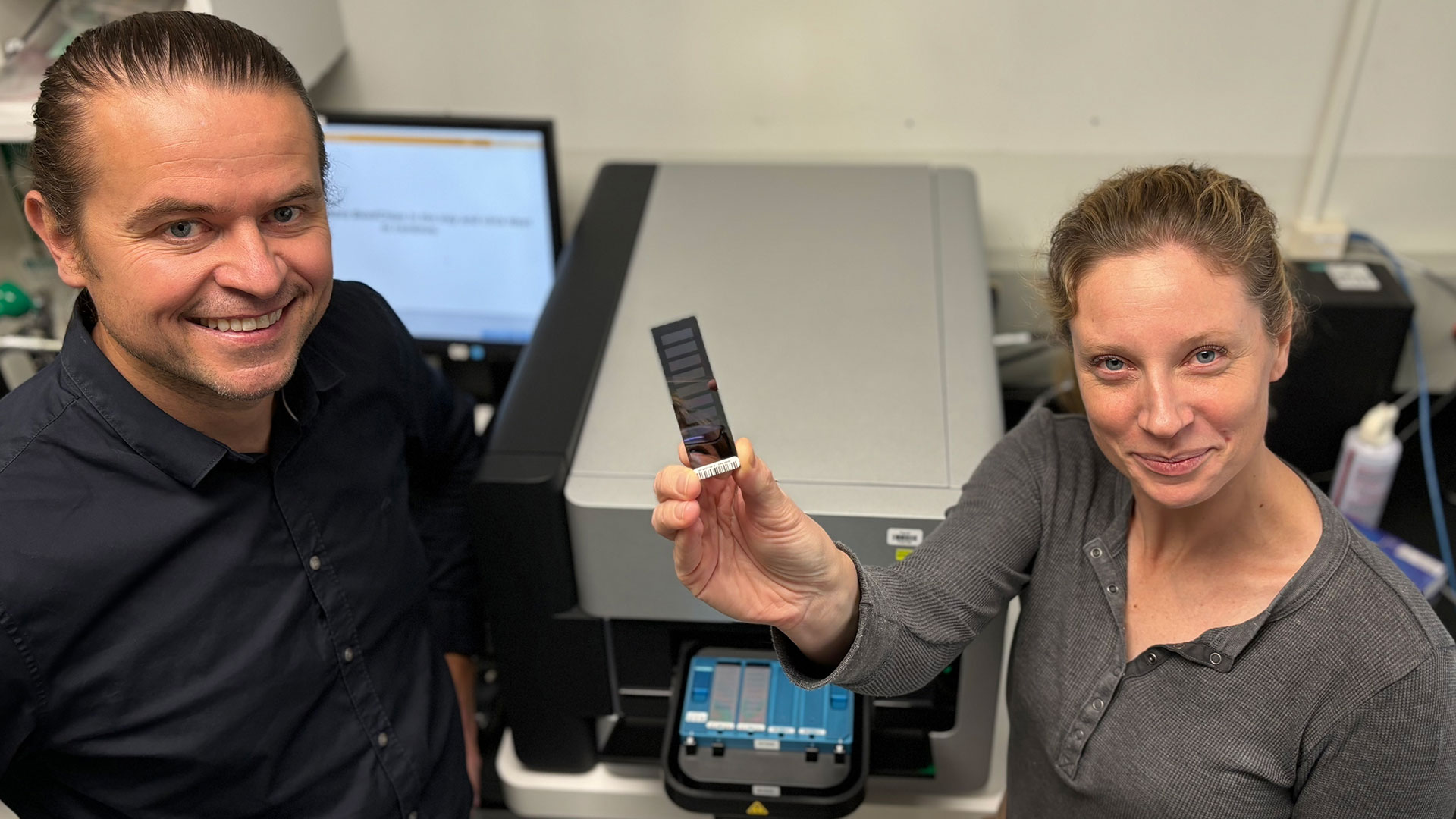
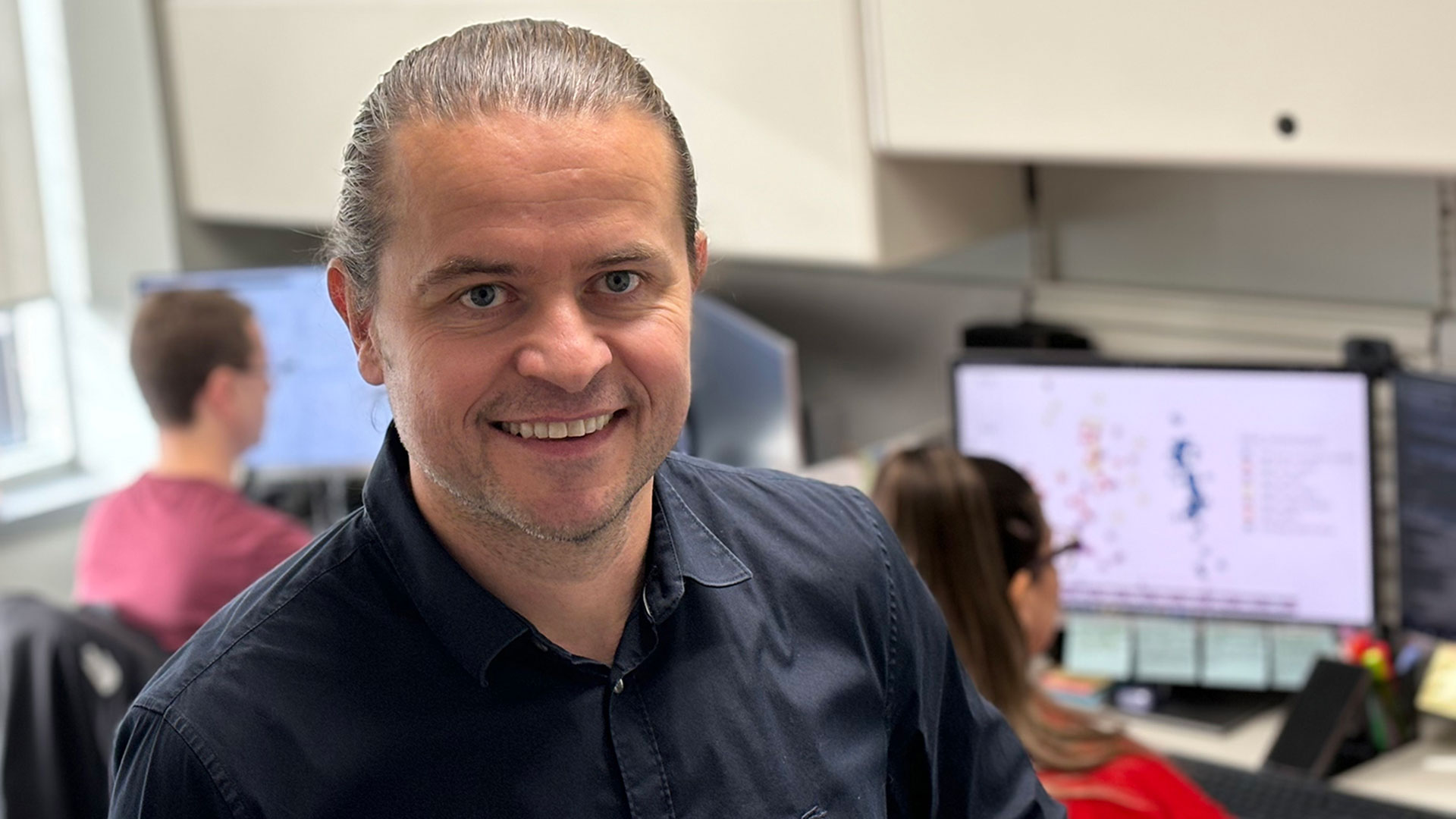
Over the last ten years, Dr. Sadikovic has been researching epigenetics and has created a database that contains the epigenetics of hundreds of genetic diseases, and diseases caused by toxic environmental exposures, the largest database of its kind in the world.
This decade of research has culminated in an ongoing national trial of this diagnostic technology called EpiSign-CAN. Funded by Genome Canada, the trial involves testing of thousands of patients across 14 Canadian academic hospitals.
“It is these episignatures that allow us to diagnose patients that otherwise cannot be diagnosed with standard genetic techniques,” Dr. Sadikovic explains. “So, we can now interpret this genetic data that we couldn’t understand before, and provide critical answers for patients and families affected by hundreds of rare diseases.”
This $7.44 million grant funding from the Government of Canada through Genome Canada will enable the next phase of the project in which EpiSign™ technology will be implemented in labs at academic institutions in 15 countries around the world.
“This research is a great example of LHSC’s commitment to supporting the world-leading advances in diagnosis of patients with rare diseases,” says Brad Campbell, Corporate Hospital Administrative Executive at LHSC.
Along with Dr. Sadikovic’s laboratory at LHSC, two industry partners will be involved in this project. Illumina Inc. will be developing custom microchip hardware to facilitate streamlined sample collection, and EpiSign Inc., a Canadian startup biotechnology company which is a partnered venture between LHSC and Dr. Sadikovic, will develop end-user software for automated data analysis in labs around the world.
“The support provided by Genome Canada and Illumina will enable adoption of EpiSign technology and place it at the forefront of patient care globally,” Campbell says.
Dr. Sadikovic’s work has also been supported with funding through LHSC’s Academic Realignment Initiative Awards and generous donor support through London Health Sciences Foundation, including through the Archie and Irene Verspeeten Clinical Genome Centre.
Media contact:
Roxanne Beaubien
Senior Media Relations Consultant
London Health Sciences Centre
Cell: 226-577-1511
@email
About Lawson Health Research Institute
Lawson Health Research Institute is one of Canada’s top hospital-based research institutes, tackling the most pressing challenges in health care. As the research institute of London Health Sciences Centre and St. Joseph’s Health Care London, our innovation happens where care is delivered. Lawson research teams are at the leading-edge of science with the goal of improving health and the delivery of care for patients. Working in partnership with Western University, our researchers are encouraged to pursue their curiosity, collaborate often and share their discoveries widely. Research conducted through Lawson makes a difference in the lives of patients, families and communities around the world. To learn more, visit www.lawsonresearch.ca.
About London Health Sciences Centre
London Health Sciences Centre has been at the forefront of medicine in Canada for 145 years and offers the broadest range of specialized clinical services in Ontario. Building on the traditions of its founding hospitals to provide compassionate care in an academic teaching setting, London Health Sciences Centre is home to Children’s Hospital, University Hospital, Victoria Hospital, the Kidney Care Centre, two family medical centres, and two research institutes – Children’s Health Research Institute and Lawson Health Research Institute. As a leader in medical discovery and health research, London Health Sciences Centre has a history of over 70 international and national firsts and attracts top clinicians and researchers from around the world. As a regional referral centre, London Health Sciences Centre cares for the most medically complex patients including critically injured adults and children in southwestern Ontario and beyond. The hospital’s nearly 15,000 staff, physicians, students and volunteers provide care for more than one million patient visits a year. For more information, visit www.lhsc.on.ca.
… during the 3 days before your oral glucose tolerance test (OGTT). It is important that you consume at least this minimum amount of carbohydrate to ensure that the test is accurate. To ensure that you consume enough … during the 3 days before your oral glucose tolerance test (OGTT). It is important that you consume at least this …
150 Gram Carbohydrate Diet This diet has been designed to provide you with a minimum of 150 grams of carbohydrates during the 3 days before your oral glucose tolerance test (OGTT). It is important that you consume at least this minimum amount of carbohydrate to ensure that the test is accurate. To e...
… YOUR STAY. IF YOU DO NOT HAVE SOMEONE TO ACCOMPANY YOU YOUR TEST WILL HAVE TO BE CANCELLED. You may be ready for … the dosages and arrangements to come in early for a blood test the day of the procedure if necessary. If you are … a tear through the wall of the bowel may allow leakage of intestinal fluids. This complication usually requires surgery …
CARING FOR THE BODY, MIND & SPIRIT SINCE 1869 Renowned for compassionate care, St. Josephs is one of the best academic health care organizations in Canada dedicated to helping people live to their fullest by minimizing the effects of injury, disease and disability through excellence in care, teachin...
… lifestyles. Lawson scientists have completed a study to test the ability of smartphone technology to change physical … use in nuclear medicine and a wide variety of diagnostic tests. Shorter waits for patients Thanks to an investment of … FOR THE BODY, MIND & SPIRIT SINCE 1869 VISION From the shortest visit to the longest stay, we earn complete confidence …
| S T. J O SE PH S | R EP O RT T O T H E CO M M U N IT Y 02 Across St. Josephs diverse programs and services, we devote ourselves to people experiencing crossroads in their lives some as the result of a sudden injury or illness; others experiencing the anguish of a severe mental illness; and the ma...