


Search
Search
71 Search Results:
… if"'. STJOSEPHs HEALTH CARE LONDON Program Contacts Cardiac Rehabilitation and Secondary Prevention … of your appointments 519-667-6704 Physicians Dr. Neville Suskin Dr. Ashlay Huitema 519-667-6704 Rehabilitation … my grandchildren • I will be able to play sports • I will volunteer • I will travel • I will have enough independence …
Cardiac Rehabilitation and Secondary Prevention Program Lifestyle Change and Self-Management Workbook CARING FOR THE BODY, MIND & SPIRIT SINCE 1869 Renowned for compassionate care, St. Josephs is one of the best academic health care organizations in Canada dedicated to he lping people live to their ...
… Well-being initiatives embraced by staff; Fostering enthusiasm for research 2.0 Operational Updates • Ongoing … a holistic approach focused on minimizing points of contact to meet the unique health needs of the Indigenous … on St. Joseph’s enhanced commitment to staff, physician and volunteer well-being: • Healthy Living Series: As previously …
Page 1 of 10 CEO Report to the Board January 24, 2024 1.0 Strategy in Action Reaching Out to Our Community: Lower limb preservation program; A changemaker in reducing stigma; Warm jackets for cold winter months Advancing Excellence in Care Together: Improving access to geriatric care; Nourish Proj...
… Care Foundation would like to thank you for your generous support and interest in hosting a community event. We are … any materials that have our logo on it) • Help source volunteers • Provide tax receipts as outlined by Canada … you have brainstormed and your event plans are in place, contact St. Joseph’s Health Care Foundation to let us know, …
Your donation matters here. Community Event Toolkit St. Josephs Health Care Foundation would like to thank you for your generous support and interest in hosting a community event. We are here to help make your fundraising efforts fun and easy and are very fortunate to have enthusiastic, caring peopl...
Current Participants
Thank you for volunteering as a clinical research participant at HULC. You are helping to contribute to our growing knowledge and the advancement of clinical care. Please use these resources to assist in your role as a research participant.
Getting Here
The Roth | McFarlane Hand & Upper Limb Centre (HULC) is located at St. Joseph’s Hospital.
St. Joseph’s Hospital
Room D0-101
268 Grosvenor Street
London, Ontario N6A 4V2 519 646-6100 ext. 64640
Find turn-by-turn directions to HULC.
Contact Us
If you have any questions related to the research study you’re participating in, please contact the HULC clinical research team at 519-646-6100 ext. 64640.
… the roman Catholic Diocese of London; and • governed by a volunteer board of directors who represent the community. … identity or culture may generate questions about what makes us unique in today’s emerging health care system; what we … fetal anomalies and treatment of ectopic pregnancies. (Contact Communication & Public affairs if you would like …
A Future Nurtured in Histories of Faith & Compassion A Future Nurtured in Histories of Faith & Compassion Like the tree that takes root & then bears fruit, st. Josephs health Care, London continues to grow from the humble and compassionate beginnings of our founders, the sisters of st. Joseph, ...
… for St. Joseph’s Health Care, London September 2007 - August 2008 Submitted to Cliff Nordal Chief Executive Officer … and their family members, staff, health care practitioners, volunteers, members of the community and the continuous … care professionals and hospital employees who come in contact with patients should receive training and awareness …
Annual Accessibility Plan for St. Josephs Health Care, London September 2007 - August 2008 Submitted to Cliff Nordal Chief Executive Officer 30 September 2007 Prepared by SJHC Accessibility Working Group Co-ordinator, Derek Lall This publication is available on the St. Josephs Heath Care, Londons we...
… for St. Joseph’s Health Care, London September 2008 - August 2009 Submitted to Cliff Nordal Chief Executive Officer … and their family members, staff, health care practitioners, volunteers, members of the community and the continuous … care professionals and hospital employees who come in contact with patients should receive training and awareness …
Annual Accessibility Plan for St. Josephs Health Care, London September 2008 - August 2009 Submitted to Cliff Nordal Chief Executive Officer 30 September 2008 Prepared by SJHC Accessibility Working Group Chair, Derek Lall This publication is available on the St. Josephs Heath Care, Londons website a...
… be made in writing to the home. • Essential Caregivers must be designated and must be at least 16 years of age. • If … Recognizing there are essential caregivers who want to volunteer to support more than one resident, in the event of … their vaccination out of the province of Ontario should contact their local public health to obtain proper …
HEALTH CARE LONDON ESSENTIAL CAREGIVER COVID-19 GUIDELINES AND EDUCATION REQUIREMENTS ~~ STJOSEPHs HEALTH CARE LONDON Essential Caregiver COVID-19 Guidelines and Education Requirements Caregiver A caregiver is defined in the Fixing Long-Term Care Act, 2021, O. Reg 246/22 section (4) as follows: a. i...
… and sisters, our neighbours, and our friends. They continuously help shape our society by sharing their experience, … continue to be wide-ranging and significant. They are volunteers, mentors, leaders, caregivers, and skilled … primary care provider of their name, their role, their contact details, and the services being co-ordinated for the …
Living Longer, Living Well Highlights and Key Recommendations From the Report Submitted to the Minister of Health and Long-Term Care and the Minister Responsible for Seniors on recommendations to inform a Seniors Strategy for Ontario Dr. Samir K. Sinha, MD, DPhil, FRCPC Provincial Lead, Ontarios Sen...
… Learn More. sjhc.london.on.ca BODY | MIND | SPIRIT Leena Justus Registered Nurse Mount Hope Centre for Long Term Care … for people with a mental illness who have also come into contact with the criminal justice system. A recovery … as of March 16 due to COVID-19 and placement cancellations) Volunteers (5 sites): ...............................896 …
Care Matters Here. Learn More. sjhc.london.on.ca BODY | MIND | SPIRIT Leena Justus Registered Nurse Mount Hope Centre for Long Term Care Renowned for compassionate care, St. Josephs is one of the best academic health care organizations in Canada, dedicated to helping people live their fullest by mi...
… CONCURRENT WORKSHOPS I 1. DEMYSTIFYING RESISTANCE AND REFUSALS – UNDERSTANDING BEHAVIOURS AND THEN HELPING (A, N, P) … London, ON $160 per person $60 per full-time student/volunteer (maximum of 30) WHO SHOULD ATTEND Given the … Questions or Issues Registering please contact: Jennifer.whytock@sjhc.london.on.ca 33nd Annual …
LEGEND - WORKSHOP SUITED FOR: (A) - Allied Health, (N) - Nurses, PSWs, (P) - Physicians, Pharmacists A minimum of 25% of this program is dedicated to participant interaction. 33nd Annual Geriatric Medicine Refresher Day Current and Practical Knowledge to Inspire and Advance Care Wednesday, May 1, 20...
Interdisciplinary team explores London’s unique approach to addressing homelessness
In London, Ont. more than 1,700 people are experiencing homelessness.
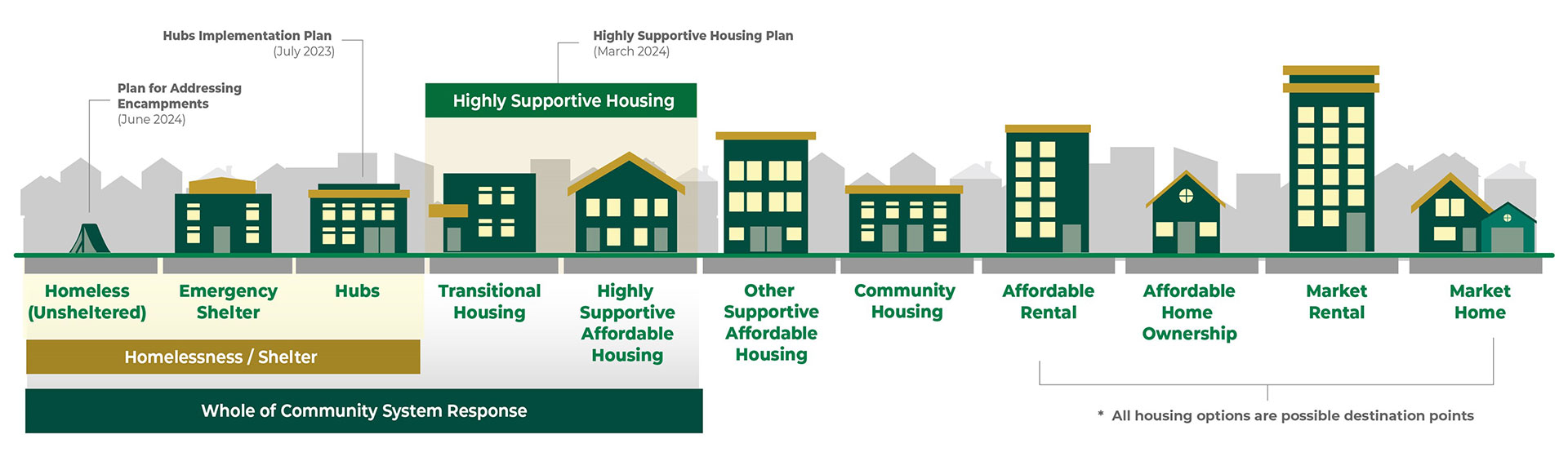
Recognizing the growing crisis, more than 200 individuals from 70 organizations across the city came together and developed the Health & Homelessness Whole of Community System Response – a strategic roadmap for supporting unhoused people who have the most complex health and social support challenges, and helping them access permanent housing that meets their needs. Now a team of researchers has been tasked with assessing how well the roadmap is working.
To understand if the program is meeting its ambitious goals and explore areas for improvement, the Centre for Research on Health Equity and Social Inclusion (CRHESI), a community-university partnership based at Western’s Faculty of Health Sciences, was asked by the Whole of Community Response leaders to support and coordinate research and evaluation of the program.
CRHESI works with and reports to the System Foundation Table, a team of volunteer community partners from diverse sectors with a mandate to evaluate new activities and embed continuous improvement to ensure sustainability of the program.
“London’s Whole of Community Response is a novel approach to addressing the needs of the most vulnerable individuals experiencing complex housing and health challenges within our community,” said Mick Kunze, chair of the System Foundation Table. “While our approaches and interventions are rooted in evidence-based practices, we also understand that local context matters.”
This research and evaluation work is funded jointly by Western, London Health Sciences Centre and through a generous donation from local businessman Ryan Finch to St. Joseph’s Health Care Foundation. The three groups came together recognizing there is a need to create meaningful and measurable change in our community.
Their support has allowed CRHESI to recruit two research managers, Eleanor Gebrou and Kelly Barnes, who oversee the work of more than 100 researchers and community partners from organizations across the city participating in the evaluation project.
"Community-led initiatives not only reflect the real needs of individuals facing homelessness, but they also empower frontline workers by fostering an environment of collaboration and understanding. Together, we can create solutions that prioritize well-being for all—those we serve and those who serve," said Gebrou.
This work is split into four main research areas:
- Exploring the outcomes and experiences of people who are precariously housed, unhoused or at risk of homelessness, as well as the perspectives of the broader residents of London, Ont. and especially the business community.
- Evaluating the experiences and well-being of those working in jobs that provide care and housing support.
- Answering questions related to systems, structures, processes and costs of care.
- Evaluating the processes that enabled this large and complex “whole of community” response, and how it unfolds from here.
“I really believe in evidence-based decision making and having as much information as we can to go into program and policy design,” said Barnes. “It's so important to understand what parts of our homelessness response are working well and what can be improved. Research and evaluation are some of the best ways to do that.”
The importance of voices and stories
Research teams will collect quantitative data, including statistics on how many people get housed, how this housing affects the number of hospital and police contacts and the cost-benefit of these new activities. They’ll also collect qualitative data, which involves hearing the experiences of those without homes, those accessing care and support and those providing and leading services.
This evaluation framework will be presented to city council, sitting as the Strategic Priorities and Policies Committee, on October 8, 2024.
“It is really important to us that this not just be numbers,” said Barnes. “We know how important people’s voices and stories are. When we take the numbers and combine them with people’s descriptions of their experiences, and the discussion of their journey, that gives us really solid information to bring back to the policy-makers and program developers to show what’s working and what isn’t.”
This research and evaluation work will span the next two years, with results shared annually with city council starting in July 2025. In addition to annual reporting, research project teams will share data as it emerges.
“The research and evaluation efforts led by the backbone team of this movement, including the System Foundations Table and our CHRESI research and evaluation managers, will be instrumental in guiding our present and future work, by illustrating the real impact our interventions are having on the health and well-being of those we’re aiming to support, as well as by responding to the questions and concerns voiced by all members of our community,” said Kunze.
Health & Homelessness Whole of Community System Response
The Whole of Community Response is about developing wrap-around health care and housing supports for those who need them most, ensuring basic human needs are met and building trusting relationships with people so they’re set up to succeed. It includes three main pillars: establishing hubs to meet immediate needs for safe shelter, nutrition and hygiene, and allowing care providers to start the process of stabilizing people’s mental and physical health. Alongside establishing hubs, the broader plan includes bringing more highly supportive housing units to London and implementing a human rights-based approach to support people wherever they are on the housing spectrum.
City council endorsed the Whole of Community Response approach in March 2023. Since then, two hubs have been established, as well as 93 highly supportive housing units, with 50 more units in development, toward a goal of 600 highly supportive housing units within three years.
The Whole of Community Response is being facilitated through the City of London and implemented by lead agencies, with ongoing collaboration among several sectors, including police and emergency services, hospitals, front-line community service organizations, educational institutions and government.
The Health and Homelessness Fund for Change, fuelled by a transformative $25-million donation from a London, Ont. family who wishes to remain anonymous, primarily provides capital funding to help fast-track the creation of hubs and highly supportive housing units. The Fund for Change is administered by London Community Foundation in partnership with the donor family.
… children and families, including children’s mental health • Contact by phone or be referred by a shelter, school, doctor … Page 4 of 7 Updated April, 2023 INDIGENOUS PERSONS Southwest Ontario Aboriginal Health Access Centre … students in Ontario. • Professional counselling, volunteer crisis supports and information and referrals …
Page 1 of 7 Updated April, 2023 Mental Health Resources CRISIS SUPPORTS If you are experiencing a mental health care crisis in London-Middlesex area, please see the following options. Call 911 or go to your nearest Emergency Department in case of emergency. Reach Out Crisis Response Line www.reachou...
… Sweeney PHOTOGRAPHY Pauline Devilee Brian Hillier Brick House Productions Colleen MacDonald My St. Joseph’s magazine … welcomes your comments. For online or print publication contact: ComDept@sjhc.london.on.ca Copyright ©2020 by St. … 17. 03. HEALTH CARE IN HARMONY 08. UNSPOKEN COMPASSION: A VOLUNTEER’S STORY 09. FEELING THE FRESH AIR ON MY FACE 11. …
m ST::JOSEPH'S A publication of St. Josephs Health Care London WINTER 2020 | ISSUE 01 BORN TO MOVE St. Josephs leads the way for those facing mobility challenges with the creation of The Gray Centre for Mobility and Activity. 1 201 ISSUE www.sjhc.london.on.ca ~ ~ OSEPH'S 11 C ~~ S!JOSEPHs HEALTH CAR...
… welcomes your comments. For online or print publication contact: ComDept@sjhc.london.on.ca Copyright ©2020 by St. … is forbidden without the permission of the publishers. CONTACT US PO BOX 5777 268 Grosvenor Street London, ON. N6A 4V2 519 … welcomes your comments. For online or print publication contact: ComDept@sjhc.london.on.ca Copyright ©2020 by St. …
A publication of St. Joseph s Health Care London FALL 2020 | ISSUE 02 NEW OPTIONS IN AN OLD BATTLE Pain specialists at St. Joseph's Health Care London are part of a new, collaborative approach to improve care for a growing number of people living with sickle cell disease. 1 ~ ~ OSEPH'S n Cl A public...
… a responsibility more than 160 screeners take very seriously. These "perimeter protectors" are vital in the fght … welcomes your comments. For online or print publication contact: ComDept@sjhc.london.on.ca Copyright ©2021 by St. … team to keep us all as safe as possible.” — TRACY DRENTH, VOLUNTEER SERVICES COORDINATOR Every day, St. Joseph's …
Our entrances have m S1: A publication of St. Joseph s Health Care London WINTER 2021 | ISSUE 03 Our entrances have KEEPING IT SAFE become a gateway of safety to protect our patients and sta . It's a responsibility more than 160 screeners take very seriously. These "perimeter protectors" are vital ...
… welcomes your comments. For online or print publication contact: ComDept@sjhc.london.on.ca Copyright ©2021 by St. … or following appropriate physical distancing guidelines CONTACT US PO BOX 5777 268 Grosvenor Street London, ON. N6A 4V2 519 … welcomes your comments. For online or print publication contact: ComDept@sjhc.london.on.ca Copyright ©2021 by St. …
ST::JOSEPH'S A publication of St. Josephs Health Care London FALL 2021 | ISSUE 04 A LITTLE FALL TO A BIG CLIMB With help from her care team at Parkwood Institute, Miranda Scott was able to reach great heights fguratively and literally by incorporating wall climbing into her recovery. 1 2 V,l~ OSEP...
… welcomes your comments. For online or print publication contact: ComDept@sjhc.london.on.ca Copyright ©2022 by St. … appropriate physical distancing guidelines CONTACT US PO BOX 5777 268 Grosvenor Street London, ON. N6A 4V2 519 … Research Centre located at St. Joseph’s Parkwood Institute. Volunteers, family members and the community all took part …
m ST.JOSEPH'S ,.., ' , \ .. LAUNr.Y PRQprY L.f'J' O,P.t/300 A publication of St. Joseph s Health Care London SPRING 2022 | ISSUE 05 HOVERING HOLOGRAMS HONE SURGEONS' SKILLS Surgical visionary Dr. George Athwal at St. Josephs Hospital has introduced a revolutionary new tool into operating rooms in C...
New study will assess fecal transplants in treatment of pancreatic cancer
Scientists examining microbiome to improve cancer therapies
MEDIA RELEASE
For Immediate Release
LONDON, ON- Pancreatic cancer is an aggressive disease that affects up to six-thousand Canadians a year and is the third leading cause of cancer deaths. In a new study a multidisciplinary team of scientists at Lawson Health Research Institute are examining the microbiome in the gut, as a possible gateway to improving treatment outcomes.
“Pancreatic cancer is very hard to treat, partially because when it’s detected, the cancer is usually in a later stage and spreads very quickly,” explains Dr. John Lenehan, Medical Oncologist at London Health Sciences Centre’s London Regional Cancer Program (LRCP) and Associate Scientist at Lawson. “Our best chemotherapy treatments for the average patient, will give them a little less than a year to live.”
With the goal of improving treatments for these patients the research team led by Dr. Saman Maleki, Scientist at Lawson, is studying whether changing the gut microbiome can result in better response to cancer treatments.
“We know that the microbiome plays an important role in patients’ response to various forms of systemic treatments such as immunotherapy and chemotherapy for different cancers,” says Dr. Maleki.
This unique study will happen in three stages. The first stage is an observational study to examine fecal samples of 52 patients at LRCP with advanced pancreatic cancer. The second stage will focus on using the samples from these patients in preclinical models to test new combinations of treatments. The final stage of the study will focus on intervention through human clinical trials by modifying a patient’s microbiome with something called a fecal transplant prior to treatment.
“The microbiome is involved in many aspects of cancer development and these organisms aren’t just living in the gut but also within the tumor,” says Dr. Michael Silverman, Lawson Scientist and Chair/Chief of Infectious Diseases at LHSC and St. Joseph’s Health Care London. “We believe that by giving people a fecal transplant, we can change the bacteria that live within the tumor and gut and then optimize the immune response to both the tumour and to treatment, with the goal of improving patient outcomes.”
Fecal transplants involve collecting stool from a healthy donor, preparing it in a lab and safely transplanting it to the patient, in this case with a capsule. The goal is to transplant the donor’s microbiome so that healthy bacteria will colonize in the patient’s gut.
“If you think of microbiome, each bacterium is like a little factory and all together they are a giant factory within us producing things we need,” explains Dr. Jeremy Burton, Lawson Scientist who specializes in human microbiome research. “Over time, a person’s diet, medications, and lifestyle can change the microbiome and it can have a big impact to the rest of our body.”
The research team was recently awarded a $450,000 Catalyst 2021 grant from the Weston Family Foundation to conduct this study, which is the first in the world focusing on prospectively modifying the microbiome in pancreatic cancer patients for treatments and outcomes.
“We normally don’t see this in one study where we go through the full spectrum of learning from patients, to looking at treatments, and then moving to a final intervention stage,” explains Dr. Maleki. “This has not been tried in pancreatic cancer before, but we think leveraging the microbiome and improving the immune response can potentially move the needle in this patient population.”
The team is recruiting both pancreatic cancer patients, as well as healthy volunteers for fecal transplant samples. Those interested in helping with fecal transplant donations can contact Dr. Seema Parvathy at 519-646-6100 ext. 61726 or email seemanair@@email
-30-
About Lawson Health Research Institute
Lawson Health Research Institute is one of Canada’s top hospital-based research institutes, tackling the most pressing challenges in health care. As the research institute of London Health Sciences Centre and St. Joseph’s Health Care London, our innovation happens where care is delivered. Lawson research teams are at the leading-edge of science with the goal of improving health and the delivery of care for patients. Working in partnership with Western University, our researchers are encouraged to pursue their curiosity, collaborate often and share their discoveries widely. Research conducted through Lawson makes a difference in the lives of patients, families and communities around the world. To learn more, visit www.lawsonresearch.ca.
Media Contacts
Celine Zadorsky
Senior Media Relations Consultant
Communications & Public Engagement
T: 519-685-8500 ext. 73502
Celine.zadorsky@lhsc.on.ca