
One year after a major stroke, Pam is sharing a message that could save a life
Image
Image
When Pam Salmoni experienced what she now knows was a transient ischemic attack (TIA), sometimes called a "mini stroke," she didn't think it was an emergency.
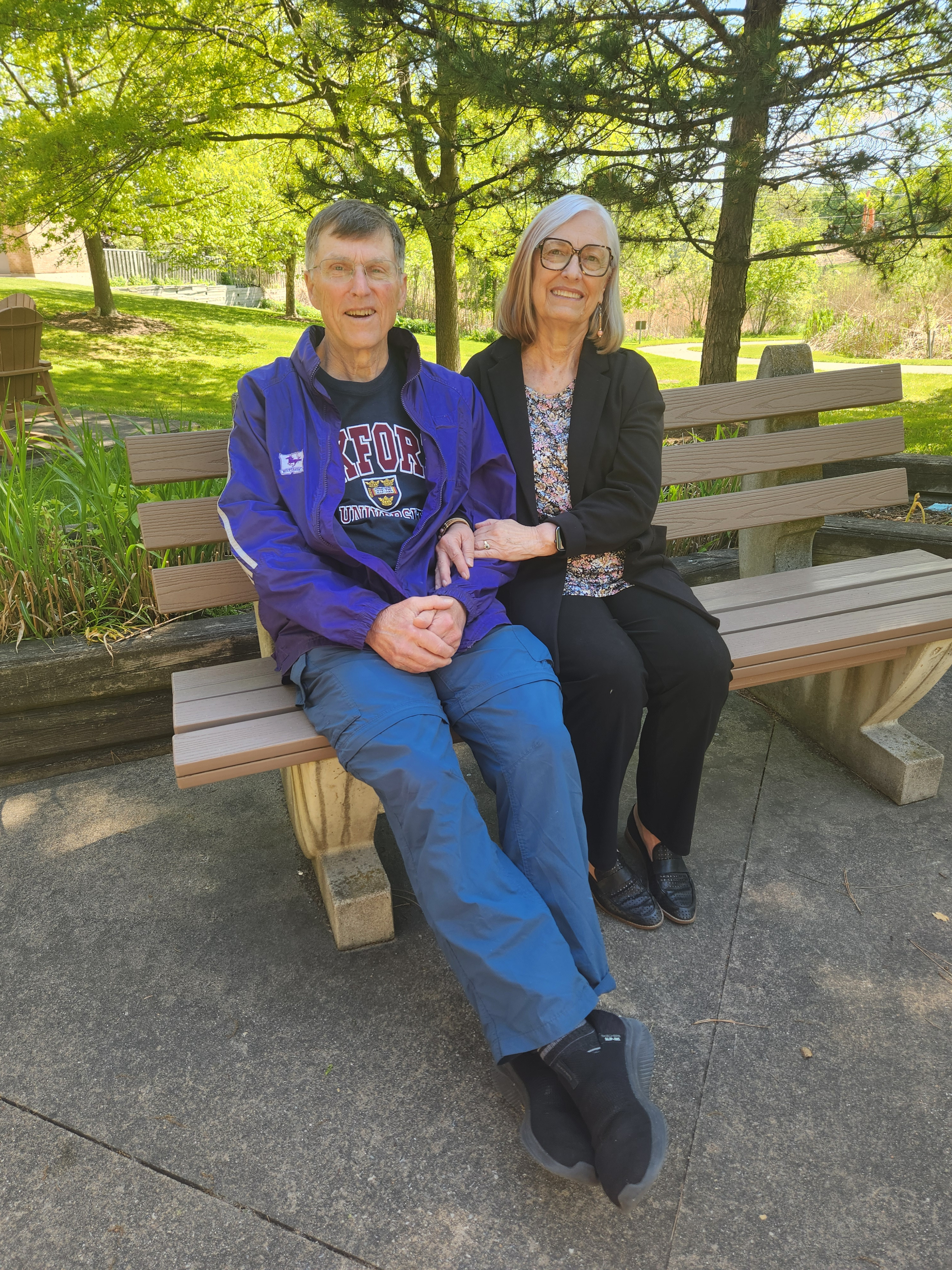
She noticed something was wrong when she couldn't pick up an earring she had dropped and her speech became garbled. Her husband, Alan, immediately recognized the warning signs.
"He looked at me and said, 'We've got to go to the hospital,'" recalls Pam. But the couple was travelling in the United States at the time and Pam insisted on returning home to Canada instead. Looking back, she has one message for others.
"If you think you've had a stroke — even a small one — get immediate care."
Just weeks later, in May of 2025, Pam suffered a major stroke.
The last thing she remembers is making breakfast for her granddaughter before losing consciousness. When Alan returned home from walking the dog, he knew immediately something was wrong and called 911. Within minutes, emergency responders arrived and Pam was rushed to the hospital.
"The neurologist later told us he administered the clot-busting drug right away," says Alan. "We were very fortunate." That quick response would prove critical.
A long road begins
After spending a week in acute care at LHSC’s University Hospital, Pam was transferred to the Stroke and Neurological Inpatient Rehabilitation Program at St. Joseph's Parkwood Institute.
The effects of the stroke were significant. She arrived with a feeding tube, had lost her mobility and balance, was experiencing vision changes, overwhelming fatigue and required assistance with most daily activities- yet rehabilitation began almost immediately.
"I took every service they offered," Pam says. "Physiotherapy, occupational therapy, time with social workers, nutrition consulting, spiritual care — everything."
She credits the specialized rehabilitation team for helping her focus on what was possible, rather than on her struggles.
"Every accomplishment, no matter how small, they celebrated with me," she says. "Their encouragement was wonderful."
For Alan, watching his wife progress day by day was remarkable.
"When she arrived, she could barely walk," he says. "But, when she was discharged four weeks later, she walked out of Parkwood herself."
Know the Signs of Stroke: Act F.A.S.T.
A stroke is a medical emergency—every minute matters. Recognizing the signs of stroke and calling 911 immediately can save a life and improve recovery outcomes.
- F – Face
Is the face drooping on one side? Ask the person to smile. - A – Arms
Can the person raise both arms? Does one arm drift downward? - S – Speech
Is speech slurred, confused or difficult to understand? Ask the person to repeat a simple sentence. - T – Time
If you notice any of these signs, call 911 immediately.
Learn more about stroke prevention, symptoms and treatment at the Heart & Stroke Foundation.
Specialized stroke rehabilitation close to home
Each year, thousands of Canadians experience a stroke, making stroke awareness more important than ever.
At St. Joseph's Health Care London, stroke rehabilitation services support patients through every stage of recovery- from intensive inpatient rehab to outpatient and community-based services that help individuals regain independence and return to the activities that matter most.
After returning home, Pam participated in St. Joseph’s Comprehensive Outpatient Rehabilitation Program, attending regular physiotherapy and occupational therapy appointments while learning strategies to manage one of the most common yet often invisible effects of stroke: severe fatigue.
Through education and coaching from her rehabilitation team, Pam learned how to pace activities, recognize her limits and build stamina gradually.
"Those strategies were life-changing," she says. "They taught me how to understand what my body and brain needed to recover."
The outpatient team also helped her regain confidence, rebuild independence and work toward returning to activities that mattered most.
Recovery is about more than physical healing
Throughout her rehabilitation journey, Pam says the care she received extended beyond therapy sessions. A social worker helped her navigate the emotional impact of stroke and develop practical strategies for managing fatigue and returning safely to meaningful activities.
One piece of advice stood out. Rather than telling Pam what she couldn't do, the team helped her figure out how she could continue doing the things she loved.
When she wanted to attend a special family event shortly after her inpatient discharge, the conversation wasn't about staying home.
"It was, 'How can we help you do this safely?'" recalls Alan. That approach gave Pam confidence to keep moving forward.
The support also extended beyond the clinical team. One morning during her inpatient stay, a member of the Environmental Services team was cleaning Pam’s room and noticed she was having an especially difficult day. Although she had work to do, she stopped and spent time talking with Pam, encouraging her.
"She brought me out of my funk," says Pam. "I'll never forget it."
For Pam, those moments of human connection became just as meaningful as rehabilitation itself.
The power of family
Recovery was not something Pam faced alone. Throughout her journey, Alan attended appointments, helped implement rehabilitation strategies at home and served as both advocate and caregiver.
"I could not have gotten through this without Alan and my family," says Pam. "Absolutely not."
She also credits friends, faith, her church community and countless acts of kindness for helping her navigate one of the most difficult experiences of her life. One piece of advice Pam received from a minister long before her stroke kept echoing her mind during those early days: "People want to love you. Let them."
A message of hope
St. Joseph’s Stroke Rehabilitation Program
St. Joseph’s provides specialized stroke rehabilitation services designed to support recovery at every stage:
- The Stroke and Neurological Rehabilitation Program
Provides intensive inpatient rehabilitation at Parkwood Institute. - The Comprehensive Outpatient Rehabilitation Program (CORP)
Offers ongoing physiotherapy, occupational therapy, education and support after discharge. - The Community Stroke Rehabilitation Team
Helps individuals continue recovery in their homes and communities.
Today, one year after her major stroke, Pam has regained about 90 per cent of her former abilities. She continues to work on strength, balance and fatigue management, but she has returned to many of the activities she enjoys most.
For Pam, losing her driver's license following her stroke was one of the hardest adjustments.
"It felt like a huge loss of independence," Pam says. “But I am pleased to say I am driving again. I am so grateful for that.”
When asked what she would tell someone beginning their own stroke recovery journey, her answer is immediate.
"Listen to the people who are helping you heal," she says. " If you work with them and trust the process, you'll make progress."
For Alan, there is an equally important message for the community- know the signs of stroke. Act quickly. Seek immediate medical attention. Because when it comes to a stroke, every minute matters.