


Search
Search
1376 Search Results:
… Sex: Male Female Address: … Referrals, please select requested physician Dr. Kristin Clemens 519.646.6316 FAX: 519.646.6212 Dr. Charlotte McDonald 519.646.6170 FAX: 519.646.6058 Dr. Rob Hegele (at LHSC) 519.931.5774 FAX: 519.931.5218 … Sex: Male Female Address: …
Copies of this form available at: http://www.sjhc.london.on.ca/diabetes-endocrinology-centre/referral-forms Revised: March 13, 2019 OUTPATIENT DIABETES & ENDOCRINOLOGY REFERRAL FORM Please complete all sections of this form for all elective referrals (complete URGENT section only if indicated). You ...
… …………………………………………………………………………………… NAME: AGE: (if under 18) ADDRESS: POSTAL CODE: PHONE: E-MAIL: Do you require a golf cart? Yes / No If yes, can you drive the cart yourself? Yes / No Do you require clubs? Yes … make cheques payable to: Madame Lise Thibault Cup Mailing Address: Bev Farrell, Third Age Outreach, 78 Riverside …
Join us in celebrating our 20th Golf Tournament for People with Disabilities! DATE: Tuesday, August 27, 2019 TIME: 1 pm Shotgun start LOCATION: Fanshawe Golf Course Parkside Nine ENTRY FEE: $30.00 includes golf, prize and dinner DEADLINE FOR ENTRY: August 16, 2019 Sponsored by the City of Londons Fa...
Relieving the pain: Current research on pain and its management
11:00pm - 1:00am
There has been an explosion of scientific knowledge that is helping us to uncover the changes that happen when an individual develops pain, giving millions of people the hope that they will be better able to manage their own pain.
Pain is one of the most common reasons people seek medical attention. In Canada, 25 per cent of adults are affected by chronic pain and that statistic moves up to 50 per cent in the elderly.
Acute and ongoing pain have traditionally been hard to understand and there has isn’t always a clear answer for tackling these issues. We do know that ongoing pain can have significant impacts on one’s wellbeing.
Join Lawson Health Research Institute for our next Café Scientifique to hear a panel of experts share more about local research in the areas of:
- The role of opioid and cannabis analgesics in the management of pain.
- The impact of pain for individuals and families, including children experiencing pain, and some of the barriers to its management.
- The growing understanding of the mechanisms of pain to create the best long-term results for patients.
- Educational tools for patients and caregivers.
Speakers
Image
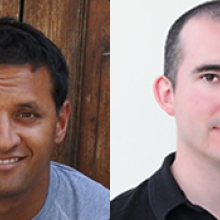
- Dr. Dwight Moulin, Clinical Neurological Sciences and Oncology
- Dr. Naveen Poonai, Paediatric Emergency Medicine
- Dr. Dave Walton, School of Physical Therapy
- MODERATOR – Dr. Kathy Speechley, Epidemiology & Biostatistics
Event Details
Date: Tuesday, November 20, 2018
Time: 7-9 pm (doors open at 6:30 pm)
Location: Best Western Plus Lamplighter Inn & Conference Centre, 591 Wellington Rd, London, ON N6C 4R3
Map and directions
Parking: Ample free parking on-site
This is a free community event and online registration is REQUIRED.
Click here to register.
Lawson is the research institute of London Health Sciences Centre and St. Joseph’s Health Care London.
… achieved through the efforts and support of so many. Dr. Gillian Kernaghan President and CEO Philip Griffi n … watched as governmental committees were formed to assist in drafting legislation. That entailed our local committee … Governance and Leadership Strategic Plan Focus In February, Dr. Gillian Kernaghan, CEO, provided details to the Mission …
Leadership in Mission Report on Mission, Spiritual Care and Health Care Ethics 2015/2016 Report on Governance and Leadership As we approached 2015/16 we knew the year would provide opportunities and challenges. We would fi nally be through all our restructuring and construction and would have the op...
… of Attributes: Pt.Name, PIN, Reg Dates, Pt.Service, Dr.Service, etc.) (Note: If limited space is available, … Requested by: Approved by (HIM Manager) Email Address Site RUGS Approval Date Created by … of Attributes: Pt.Name, PIN, Reg Dates, Pt.Service, Dr.Service, etc.) (Note: If limited space is available, …
Proposal for Report Date submitted to Helpdesk (yy/mm/dd) FORMCHECKBOX New FORMCHECKBOX Revise FORMCHECKBOX Gateway FORMCHECKBOX Explorer Report Name: Description: Font Size (10) standard default FORMCHECKBOX Landscape FORMCHECKBOX Portrait Attributes: (Examples of Attributes: Pt.Name, PIN, Reg D...
… achieved through the efforts and support of so many. Dr. Gillian Kernaghan President and CEO Philip Griffi n … watched as governmental committees were formed to assist in drafting legislation. That entailed our local committee … Governance and Leadership Strategic Plan Focus In February, Dr. Gillian Kernaghan, CEO, provided details to the Mission …
Leadership in Mission Report on Mission, Spiritual Care and Health Care Ethics 2015/2016 Report on Governance and Leadership As we approached 2015/16 we knew the year would provide opportunities and challenges. We would fi nally be through all our restructuring and construction and would have the op...
… mailto:kathy.burrill@sjhc.london.on.ca 4 Keynote presenter, Dr. Nick Kates shared the Hamilton experience, considering … health care provider. The 2013 recipient was Dr. Mohan Merchea, Medical Director and surgeon in the … Institute, and member of St. Joseph’s Board of Directors. Dr. Merchea is known for his compassion, honesty and …
Leadership in Mission Report on Mission, Spiritual Care and Health Care Ethics St. Josephs Health Care London 2013/2014 Report to St. Josephs Health Care Society 2 Contents Page 3 Report on Governance and Leadership Page 8 Report on Heath Care Ethics Page 13 Report on Spiritual Care Page 18 Living o...
… Chair Tom Allan Sister Joan Atkinson Bev Bell Tom Boone Dr. Robbie Campbell Paul Caplan Sheila Davenport Dr. John Denstedt Trish Fulton Dr. Carol Herbert Susan Horvath Leroy Innanen Tom Jesty … Chair Tom Allan Sister Joan Atkinson Bev Bell Tom Boone Dr. Robbie Campbell Paul Caplan Sheila Davenport Dr. John …
ST. JOSEPHS HEALTH CARE LONDON | ANNUAL REPORT TO THE COMMUNITY | 2002/2003 2 Dedication This years Annual Report to the Community is dedicated to the St. Josephs Health Care, London staff members and volunteers who continue to give so much of themselves to help manage SARS restrictions. Thank you t...
… challenges. In addition to severe acute respiratory syndrome (SARS), this team dealt with influenza, Norwalk virus, … to help manage the SARS situation last year. Diane Fredriksen – Emergency Room Nurse, Mary Lou Card – Infection … Officer, Elsie Steeles – Volunteer, Cheryl Parsons – Nurse, Dr. Gillian Kernaghan – Vice President Medical and …
St. Josephs Health Care London Annual Report 1 care 2 3 At St. Josephs Health Care, London, there are so many ways to care, all stemming from one vision to be a respected source of excellent health care. Uniting an organization of such diversity, embodying programs in rehabilitation, acute/ambulato...
Research Bites: Why it is important to keep moving as we age
8:00pm - 9:00pm
Dr. Tim Doherty is a clinician scientist at Lawson’s Parkwood Institute Research with a primary focus on the impact of aging on nerve and muscle function. He will discuss the impact of aging on mobility, why this is important, and how we can improve or prevent loss of mobility in older adults.
Virtual Event Details
Speaker: Dr. Tim Doherty
Date: Monday, November 9, 2020
Time: 4 - 5 p.m.
Location: This will be a virtual event hosted as a WebEx video meeting.
Meeting number (access code): 172 547 4015
Meeting password: M7JJdJA3
If joining by phone: call 519-685-8100
*No registration is required for this free public event.
About Research Bites
Presented by Parkwood Institute Research, a program of Lawson Health Research Institute, these informative and interactive talks focus on specific illnesses, their prevention and related research being conducted by researchers in London and area.
… Inn Regency Room 11:30 a.m. Lunch 12:30p.m. Welcome - Dr. P.L. Hooper Chair/Chief, Ophthalmology Moderator - Dr. C.M.L. Hutnik 12:45 p.m. Guest Speaker The Cornea: … J. Gonder MD 3:00 p.m. Compliance In Glaucoma Therapy Z. Tadrous MD, L. Teye-Botchway MD, C. Hutnik MD 3:15 p.m. Gel …
PROGRAMME 11:15 a.m. Registration - Lamplighter Inn Regency Room 11:30 a.m. Lunch 12:30p.m. Welcome - Dr. P.L. Hooper Chair/Chief, Ophthalmology Moderator - Dr. C.M.L. Hutnik 12:45 p.m. Guest Speaker The Cornea: 'Window To The Soul' Or A Collagen And Water Sandwich? T. Newson, PhD 1:15 p.m. A Role O...
Research encourages re-evaluation of special nerve treatment for chronic pain
LONDON, ON – Hospital researchers from Lawson Health Research Institute have published a recent study that assessed the use of a specialized treatment for chronic pain and its impact on health care use and opioid prescribing.
Paravertebral blocks (PVBs) belong to a broader group of procedures called “nerve blocks.” A recent Toronto Star report noted that OHIP has been billed $420 million for nerve block procedures since 2011. PVBs involve injecting medication around the nerves where they exit the bones of the spine, at different locations depending on the patient and the chronic pain they are experiencing.
The regular use of these procedures has been questioned by health care providers due to the high cost and limited evidence of their benefit in reducing chronic pain. While the effectiveness of PVBs has been examined in trauma, cancer pain and regional anesthesia during surgery, they have not been evaluated for use in chronic pain despite widespread use in Ontario.
It is estimated that one in five Canadians live with chronic pain. Pain that persists can affect all aspects of someone’s life and health, particularly when it is not being managed.
This new study from London researchers found that 66,310 patients had a PVB between July 2013 and March 2018, and 47,723 patients were included in the study. In the year after a patient’s first PVB, there was a significant increase in the number of physician visits. Additional PVBs were frequently performed after the first treatment, with over 26 per cent of patients receiving a PVB ten or more times in one year, with almost eight per cent of patients receiving 30 or more. No overall change was found in opioid dosage in the year after PVB was initiated compared to the year before.
“Frequent use of PVB is common. Initiating treatment with PVCs is associated with marked increases in health care utilization, which includes physician visits and other injection procedures,” explains Dr. Eldon Loh, Lawson Associate Scientist and Physiatrist at St. Joseph’s Health Care London.
This research provides a broad perspective on the use of PVBs in Ontario, and on the use of nerve blocking treatments in general. There has been a concern for several years about the over use of these procedures; however, this is the first study to systematically document the impact on health care utilization and opioid use.
"We hope that from this study, the appropriate use of PVBs and other pain interventions will be re-evaluated at a provincial level to ensure the use of health resources is being properly managed and we achieve the best outcome for patients,” Dr. Loh adds.
The study, “A Retrospective Cohort Study of Healthcare Utilization Associated with Paravertebral Blocks for Chronic Pain Management in Ontario,” is published in the Canadian Journal of Pain.
-30-
About Lawson Health Research Institute
Lawson Health Research Institute is one of Canada’s top hospital-based research institutes, tackling the most pressing challenges in health care. As the research institute of London Health Sciences Centre and St. Joseph’s Health Care London, our innovation happens where care is delivered. Lawson research teams are at the leading-edge of science with the goal of improving health and the delivery of care for patients. Working in partnership with Western University, our researchers are encouraged to pursue their curiosity, collaborate often and share their discoveries widely. Research conducted through Lawson makes a difference in the lives of patients, families and communities around the world. To learn more, visit www.lawsonresearch.ca.
Media Contacts
Celine Zadorsky
Senior Media Relations Consultant
Communications & Public Engagement
T: 519-685-8500 ext. 73502
Celine.zadorsky@lhsc.on.ca
Research encourages re-evaluation of special nerve treatment for chronic pain
Hospital researchers from Lawson Health Research Institute have published a recent study that assessed the use of a specialized treatment for chronic pain and its impact on health care use and opioid prescribing.
Paravertebral blocks (PVBs) belong to a broader group of procedures called “nerve blocks.” A recent Toronto Star report noted that OHIP has been billed $420 million for nerve block procedures since 2011. PVBs involve injecting medication around the nerves where they exit the bones of the spine, at different locations depending on the patient and the chronic pain they are experiencing.
The regular use of these procedures has been questioned by health care providers due to the high cost and limited evidence of their benefit in reducing chronic pain. While the effectiveness of PVBs has been examined in trauma, cancer pain and regional anesthesia during surgery, they have not been evaluated for use in chronic pain despite widespread use in Ontario.
It is estimated that one in five Canadians live with chronic pain. Pain that persists can affect all aspects of someone’s life and health, particularly when it is not being managed.
The study, “A Retrospective Cohort Study of Healthcare Utilization Associated with Paravertebral Blocks for Chronic Pain Management in Ontario,” published in the Canadian Journal of Pain, found that 66,310 patients had a PVB between July 2013 and March 2018, and 47,723 patients were included in the study. In the year after a patient’s first PVB, there was a significant increase in the number of physician visits. Additional PVBs were frequently performed after the first treatment, with over 26 per cent of patients receiving a PVB ten or more times in one year, with almost eight per cent of patients receiving 30 or more. No overall change was found in opioid dosage in the year after PVB was initiated compared to the year before.
“Frequent use of PVB is common. Initiating treatment with PVCs is associated with marked increases in health care utilization, which includes physician visits and other injection procedures,” explains Dr. Eldon Loh, Lawson Associate Scientist and Physiatrist at St. Joseph’s Health Care London.
This research provides a broad perspective on the use of PVBs in Ontario, and on the use of nerve blocking treatments in general. There has been a concern for several years about the over use of these procedures; however, this is the first study to systematically document the impact on health care utilization and opioid use.
"We hope that from this study, the appropriate use of PVBs and other pain interventions will be re-evaluated at a provincial level to ensure the use of health resources is being properly managed and we achieve the best outcome for patients,” Dr. Loh adds.
… Continuing Medical Education; Quality Improvement Address correspondence to: Dr. Jatinder Takhar Parkwood Institute Mental Health Care … (CME) for improving prescribing practices and reducing drug costs. This project was designed to investigate the … Continuing Medical Education; Quality Improvement Address correspondence to: Dr. Jatinder Takhar Parkwood …
ISSN 2368-6294 (Print) ISSN 2368-6308 (Online) DECEMBER 2014 | VOL 11 No. 2 Editor J. D. Mendonca PhD CPsych ACADEMIC DETAILING AS A FOCUSED, ENGAGING AND FEASIBLE METHOD OF QUALITY IMPROVEMENT AMONG PSYCHIATRISTS: A pilot Ontario study Kamini Vasudev, Joel Lamoure, Michael Beyaert, Varinder Dua, Da...
… FOCUSSED AFTER-CARE Contents Vol. 12, No. 1 May 2015 Dr. Amresh Shrivastava Page 2 Suicidality in hospitalized … Coralee Berlemont, Megan E. Johnston, Robbie Campbell Address correspondence to: Dr. Amresh Shrivastava Parkwood Institute Mental Health Care … FOCUSSED AFTER-CARE Contents Vol. 12, No. 1 May 2015 Dr. Amresh Shrivastava Page 2 Suicidality in hospitalized …
ISSN 2368-6294 (Print) ISSN 2368-6308 (Online) MAY 2015 | VOL 12 No. 1 Editor J. D. Mendonca, PhD CPsych BRIEF REPORTS The Flip-Side To Readmission: Focussed After-Care Research Insights is a peer-reviewed journal designed to publish reviews, case studies and research articles authored by the mental...
Research shared and celebrated at 17th Annual Mental Health Research Half Day
From falls prevention to depression therapies, scientists at Lawson Health Research Institute are conducting important mental health studies. Held on Thursday, September 15, the 17th Annual Mental Health Research Half Day at the Parkwood Institute Mental Health Program was a chance to share and celebrate this research.
The Mental Health Research Half Day featured poster and oral presentations, as well as the 12th Annual Tony Cerenzia Research Lecture. Clinical, administrative and research staff attended to learn more about research happening at Parkwood Institute and the Southwest Centre for Forensic Mental Health Care, part of the St. Joseph’s Health Care London family.
“The Mental Health Research Half Day provides an opportunity for researchers at Parkwood Institute and the Southwest Centre for Forensic Mental Health Care to present their research findings to clinical and administrative staff,” said Dr. Richard O’Reilly, Director of Psychiatric Research at Parkwood Institute & Southwest Centre and a Scientist at Lawson. “It is important that all clinical staff, who may not be directly involved in research, know what studies are being conducted and their impact on patient care.”
The 12th Annual Tony Cerenzia Research Lecture was delivered by Dr. Nathan Herrmann, Associate Scientist, Evaluative Clinical Sciences, Hurvitz Brain Sciences Research Program, Sunnybrook Research Institute and Head of the Division of Geriatric Psychiatry at Sunnybrook Health Sciences Centre. Dr. Herrmann delivered an engaging lecture titled “Managing Neuropsychiatric Symptoms in Dementia: An Evidence-Based Approach”.
Attendees were engaged not only by this highly informative lecture but also by the poster and oral presentations which covered a broad range of research topics. Presenters were also enthusiastic about the day and the opportunities it provided.
“The Mental Health Research Half Day is a great event which provides networking opportunities here at Parkwood Institute. It allows staff from across St. Joseph’s to learn about different research happening across program areas,” said Erin Finley, an Occupational Therapist (OT) in Geriatric Psychology at Parkwood Institute.
Finley and her colleagues were one of seven poster presentations. Their research project, titled “Fall prevention initiative in geriatric psychiatry”, aimed to reduce the rate of falls with injury among patients with dementia in a behavioural health unit. Within an 18-bed unit, they were able to significantly reduce falls with injury with zero incidences in the last two months of their data collection period.
Scientist
Researchers are combining new technologies to examine blood proteins in COVID-19 patients
LONDON, ON – Published in the Journal of Cellular and Molecular Medicine, a team at Lawson Health Research Institute have discovered unique patterns of blood plasma proteins in critically ill patients that may help develop a more personalized approach to treating severe COVID-19.
Called the plasma proteome, the proteins being studied are released by cells that often play an important role in the body’s immune response to viruses. The research team studied how they adapt and change to a COVID-19 infection.
As part of the study, blood samples were taken from 30 subjects in three patient groups at London Health Sciences Centre (LHSC). One group had patients with COVID-19, another group had patients with severe infection but were negative for COVID-19, and the third was a healthy control group. Blood samples were drawn on the day of critical care admission and again on days three, seven and ten in hospital.
“We collected plasma from these patients and measured well over a thousand proteins with great accuracy using new technology that combines immunology and genomics,” says Dr. Douglas Fraser, Lawson Scientist, Critical Care Physician at Children’s Hospital at LHSC and Professor at Western University’s Schulich School of Medicine & Dentistry. “With the use of this advanced technology, we were able to better analyze the protein patterns and better understand what is happening with COVID-19, especially in critically ill patients.”
The research team found that COVID-19 patients demonstrated changes in immunosuppression pathways, which typically keeps the immune system balanced. In critically ill patients, the changes were heightened. Analyses of the plasma proteome helped researchers determine which cells in the body are active during the disease state and which signaling pathways were activated.
"In-depth analysis of the human plasma proteome helps us capture tissue proteins that can provide us with information regarding organ integrity during infection," says Dr. Cristiana Iosef, Lawson Research Associate PhD. “This is important because it will allow us to search for new blood biomarkers that are specific for COVID-19 patients.”
This research, which used state-of the-art analysis technology, was enabled by existing expertise and technologies through Children’s Health Research Institute (CHRI), a program of Lawson.
“This study has allowed us to understand the progression of the disease processes in very sick patients, providing us clues on the body’s immune system and other systems that were reacting to the severe disease,” says Dr. Victor Han, Lawson Scientist, Director of CHRI and Professor at Schulich Medicine & Dentistry. “We hope that this knowledge will allow us to identify the patients who will become severely ill and develop new therapies to counteract the changes occurring within their bodies.”
Dr. Fraser, who is also a scientist at CHRI, adds that the team can now examine potential new drug therapies with the hopes of improving outcomes for these patients.
The next steps for the research team will be to use this technology to examine plasma biomarkers in long COVID patients to determine why some develop prolonged disease after a COVID-19 infection.
About Lawson Health Research Institute
Lawson Health Research Institute is one of Canada’s top hospital-based research institutes, tackling the most pressing challenges in health care. As the research institute of London Health Sciences Centre and St. Joseph’s Health Care London, our innovation happens where care is delivered. Lawson research teams are at the leading-edge of science with the goal of improving health and the delivery of care for patients. Working in partnership with Western University, our researchers are encouraged to pursue their curiosity, collaborate often and share their discoveries widely. Research conducted through Lawson makes a difference in the lives of patients, families and communities around the world. To learn more, visit www.lawsonresearch.ca.
Media Contacts
Celine Zadorsky
Senior Media Relations Consultant
Communications & Public Engagement
T: 519-685-8500 ext. 73502
Celine.zadorsky@lhsc.on.ca
Researchers developing photoacoustic hand-held probe for tumour detection during breast conserving surgery
Researchers at Lawson Health Research Institute (Lawson) are developing a hand-held photoacoustic imaging probe to be used during breast conserving surgery to quickly and accurately verify if all cancerous tissue has been removed.
Surgeons currently do not have real-time technology to guide tumour removal during surgery.
Using current tools, there is a 20 per cent chance that cancerous cells will be left behind, risking recurrence and repeat surgery.
Breast cancer represents 25 per cent of all new cancer diagnoses in women and 13 per cent of all cancer related deaths in women. Treatment for breast cancer often requires either complete breast removal in severe cases, or surgical removal of the cancerous tumour in combination with other therapies. Removing only the tumour is called breast conserving surgery.
Image

Image
Photoacoustic Screening
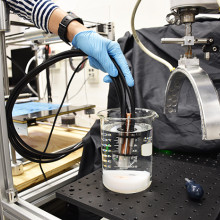
The new device is an extension of the photoacoustic screening (iPAS) technology developed in the laboratory of Dr. Jeffrey Carson, Principal Investigator and Lawson Scientist. The technique uses light and sound to capture 3D images of surgically removed breast tissue. Their studies show that iPAS can catch up to 75 per cent of missed tumour cells, decreasing the odds of failed surgery to five per cent.
Dr. Muriel Brackstone, Associate Scientist at Lawson, Head of the Breast Care Clinic at St. Joseph’s Hospital London, and Surgical Oncologist at London Health Sciences Centre, brings her clinical expertise to the project.
“With the first generation iPAS technology, we would remove the tumour, take it to the lab for imaging and wait to see if there was a rim of normal tissue around the removed tumour so we knew it was removed completely. The wait was anywhere from 20 minutes to an hour. During that time, the patient is under anesthesia, the surgical team is idle and precious OR time is being used,” explains Dr. Brackstone.
A hand-held tool that surgeons can use
Creation of a hand-held probe to be used in the operating room is the next step in the advancement of this new technology. Elina Rascevska, biomedical engineering student at Western University, recently joined the Lawson team to convert lab-based iPAS technology into a hand-held device.
“We have developed a prototype of the iPAS probe, and once we can verify the quality of the images it produces, we will give it to Dr. Brackstone to test in the OR,” says Rascevska.
The iPAS probe does not need a trained operator and would be used by the surgical team. Instead of imaging the removed tissue, it scans the surgical cavity in real time to give the team a faster and more accurate indication as to whether the cancerous tissue has been removed.
“If we can progress this technology to a point where physicians can use it as part of standard protocols, we will have reduced the amount of time each patient needs to spend in the OR, the amount of call-backs and repeat surgeries, and ultimately improve quality of life for patients with breast cancer,” adds Dr. Carson.
Image
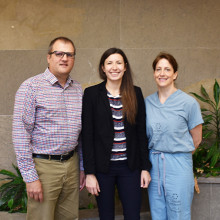
(From left): Dr. Jeffrey Carson, Elina Rascevska, Dr. Muriel Brackstone
Scientist
Researchers investigate a new method of sedation for paediatric patients
Scientists at Children’s Health Research Institute (a program of Lawson Health Research Institute), Sunnybrook Research Institute and The Hospital for Sick Children (SickKids) are working together to study the potential benefits of inhaled sedation as an alternative to keep critically ill children sedated and comfortable.
“Many sick children need support from a ventilator and other life-saving treatments, and may require intravenous (IV) sedatives to tolerate these uncomfortable therapies,” says Dr. Rishi Ganesan, Lawson Associate Scientist and Paediatric Neurocritical Care Physician at Children’s Hospital at London Health Sciences Centre (LHSC). “However, our current sedation options may contribute to a complication called delirium. We are interested in evaluating if delirium and long-term neurological complications are lower in children receiving inhaled sedation compared to those receiving IV sedation, which is the current standard of care.”
Delirium is an acute change in mental state that children in critical care can sometimes develop as a result of their critical illness and the medications and therapies they receive during their hospital stay. Delirium presents as confusion, disorientation, agitation, excessive drowsiness or poor attention. Dr. Marat Slessarev, Lawson Scientist and Critical Care Physician at LHSC, has been researching and comparing inhaled sedation to IV sedation in adults since the pandemic hit in 2020 in a collaborative trial called SAVE-ICU with Dr. Angela Jerath, Anesthesiologist and Scientist at Sunnybrook.
“One of the challenges with IV sedation is that we do not have a way to measure the level of sedatives in the blood,” explains Dr. Slessarev. “Critically ill patients that are sedated can sometimes develop issues with the kidney and liver, which are both important in eliminating the sedatives from the blood stream.”
Through this novel collaborative research, the team is now looking at the potential benefits of inhaled sedation in paediatric patients.
“Inhaled sedatives are an alternative to currently used IV sedatives, and they may reduce delirium and accelerate brain recovery. Inhaled sedatives are used safely every day in operating rooms, widely available and inexpensive,” explains Dr. Jerath. “In contrast to IV sedatives, they do not accumulate in the body, are rapidly eliminated via the lungs, promote faster awakening and discharge from a ventilator, and reduce inflammation – which may be a contributing factor to delirium.”
Enrollment for the ABOVE trial is beginning at Children’s Hospital at LHSC and SickKids. The pilot study will enroll 60 critically ill paediatric patients who will be randomized into two groups; one group will receive inhaled sedation while the other will get standard IV sedation. Once the pilot phase of the trial is complete, the team hopes to expand this trial across the country with more paediatric intensive care units (ICUs) joining the larger trial.
“The field of critical care has made significant strides in life-saving technologies and therapies in recent years, but now we are focused on finding ways to ensure our patients continue to do well after leaving the hospital,” says Dr. Nicole McKinnon, Critical Care Physician and lead investigator at SickKids and a Scientist Track Investigator at SickKids Research Insitute. “This trial is a first step in better understanding the effects of sedative and pain medications on children’s longer-term neurocognitive development. Our research will be key to providing critically ill children with the greatest chance to flourish at home.”
“This has the potential to change how critically ill children are cared for in paediatric ICUs across Canada and the world,” adds Dr. Ganesan. “We hope that inhaled sedation makes a difference in children’s long-term functional outcomes, so they can thrive and achieve their full potential.”
The ABOVE Trial recently received funding through a Canadian Institute for Health Research (CIHR) grant.
About Sunnybrook Research Institute: Sunnybrook Research Institute (SRI) is the research arm of Sunnybrook Health Sciences Centre, an internationally recognized academic health sciences centre fully affiliated with the University of Toronto. With well-established programs in basic and applied sciences which span across three scientific platforms and ten clinical programs, SRI is developing innovations in care for the more than 1.3 million patients the hospital cares for annually. To learn more, visit www.sunnybrook.ca/research
About The Hospital for Sick Children: The Hospital for Sick Children (SickKids) is recognized as one of the world’s foremost paediatric health-care institutions and is Canada’s leading centre dedicated to advancing children’s health through the integration of patient care, research and education. Founded in 1875 and affiliated with the University of Toronto, SickKids is one of Canada’s most research-intensive hospitals and has generated discoveries that have helped children globally. Its mission is to provide the best in complex and specialized family-centred care; pioneer scientific and clinical advancements; share expertise; foster an academic environment that nurtures health-care professionals; and champion an accessible, comprehensive and sustainable child health system. SickKids is a founding member of Kids Health Alliance, a network of partners working to create a high quality, consistent and coordinated approach to paediatric health care that is centred around children, youth and their families. SickKids is proud of its vision for Healthier Children. A Better World.
About Lawson Health Research Institute
Lawson Health Research Institute is one of Canada’s top hospital-based research institutes, tackling the most pressing challenges in health care. As the research institute of London Health Sciences Centre and St. Joseph’s Health Care London, our innovation happens where care is delivered. Lawson research teams are at the leading-edge of science with the goal of improving health and the delivery of care for patients. Working in partnership with Western University, our researchers are encouraged to pursue their curiosity, collaborate often and share their discoveries widely. Research conducted through Lawson makes a difference in the lives of patients, families and communities around the world. To learn more, visit www.lawsonresearch.ca.
Media Contacts
Amanda Taccone
Communications Consultant & External Relations
Lawson Health Research Institute
T: 519-685-8500 ext. ext. 64059
C: 226-919-4748
@email
Researchers looking to better personalize treatment for PTSD
Post-traumatic stress disorder (PTSD) is a condition that often develops in those who have experienced a traumatic event. PTSD affects close to 10 per cent of Canadians, and in some cases, can be difficult to treat.
In a new study through Lawson Health Research Institute and Western University’s Schulich School of Medicine & Dentistry, scientists are looking at a form of treatment called deep brain reorienting (DBR) for those suffering from PTSD.
“In our study we are looking at ways of trauma processing at the foundation of the stress response,” explains Dr. Ruth Lanius, Associate Scientist at Lawson and Professor at Western’s Schulich School of Medicine & Dentistry. “When you are faced with a stressor the first thing you do is turn your attention to it, and when you do that you engage your head and neck muscles.”
Image

DBR was developed by Scottish psychiatrist Dr. Frank Corrigan and focuses on the muscles of the shoulders, neck, head and face of patients when recalling a traumatic event. This form of trauma processing starts right at the moment the stressor is noticed by the individual, which is often quickly followed by a moment of shock. By addressing the stressor at this level, doctors can target the foundation of where the stress response begins.
“When patients bring up a trigger in their mind, we look at what happens in terms of the tension in their head and neck. We process that gently by asking the patient to notice and stay with that tension without trying to release it, and over time the tension usually decreases,” explains Dr. Lanius, who is also a Psychiatrist at London Health Sciences Centre. “The second part involves addressing the shock response. You turn your attention to the stressor and then notice any moments of shock that follows, which is often associated with tension behind the eyes and in the shoulders. Finally, you address the visceral sensations associated with feelings and emotions associated with the stressor.”
Dr. Lanius believes that by using DBR and focusing on muscle and visceral responses, it will help patients suffering from PTSD to process the visceral feelings associated with the trauma and its triggers.
Image
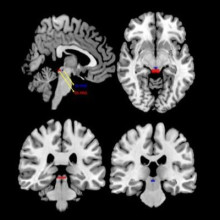
“After this form of treatment, patients often say they feel safer and don’t see themselves negatively, like they did in the past,” says Dr. Lanius. “This is because we change those intense visceral feelings and it allows the person to reevaluate who they are and how they interact with the world.”
The research team is hoping to recruit approximately 60 people to take part in the DBR study. Participants will undergo a psychological interview and an MRI, then eight sessions of treatments. Following those sessions, participants will have another interview and MRI to assess if any positive changes were made within the neurological networks and/or in psychological systems.
“Our hopes are to really personalize treatment for those living with PTSD,” says Dr. Lanius. “Some people have difficulty tolerating some forms of trauma processing and in my experience this treatment is a gentler approach for those individuals.”
Interested participants who have been diagnosed with PTSD can contact Suzy Southwell, Research Coordinator, at 519-685-8500 ext. 35186 or @email.