


Search
Search
3186 Search Results:
… BODY, MIND & SPIRIT SINCE 1869 Renowned for compassionate care, St. Joseph's is one of the best academic health care organizations in Canada dedicated to helping people … of injury, disease and disability through excellence in care, teaching and research. \~ SIJOSEPHs HEALTH CARE LONDON …
CARING FOR THE BODY, MIND & SPIRIT SINCE 1869 Renowned for compassionate care, St. Joseph's is one of the best academic health care organizations in Canada dedicated to helping people live to their fullest by minimizing the effects of injury, disease and disability through excellence in care, teachi...
… BULLETIN Acute Care Hospital Redevelopment News for Physicians in the … service reductions during LHSC’s adult mental health care program move All adult acute mental health care services at LHSC are moving to new spaces at Victoria … BULLETIN Acute Care Hospital Redevelopment News for Physicians in the …
BULLETIN Acute Care Hospital Redevelopment News for Physicians in the Community Issue 4 - April 2011 Planned service reductions during LHSCs adult mental health care program move All adult acute mental health care services at LHSC are moving to new spaces at Victoria Hospital, April 11-29, 2011. As ...
… BULLETIN Acute Care Hospital Redevelopment News for Physicians in the … program services currently located at St. Joseph’s Health Care, London, including the tertiary care obstetrical and neonatal intensive care units, begin … BULLETIN Acute Care Hospital Redevelopment News for Physicians in the …
BULLETIN Acute Care Hospital Redevelopment News for Physicians in the Community Issue 5 - June 2011 St. Josephs Hospital Perinatal program begins move to LHSC June 4, 2011 All perinatal program services currently located at St. Josephs Health Care, London, including the tertiary care obstetrical and...
… BULLETIN Acute Care Hospital Redevelopment News for Physicians in the … Community Issue 3 - March 2011 LHSC’s adult mental health care program is moving to Victoria Hospital next month All adult acute mental health care services at LHSC will move from South Street Hospital …
BULLETIN Acute Care Hospital Redevelopment News for Physicians in the Community Issue 3 - March 2011 LHSCs adult mental health care program is moving to Victoria Hospital next month All adult acute mental health care services at LHSC will move from South Street Hospital to two locations at Victoria ...
… redevelopment next phase underway at St. Joseph’s Health Care, London and London Health Sciences Centre (LONDON, ON) … Health Sciences Centre (LHSC) and St. Joseph’s Health Care, London (SJHC) are now well into the next phase of … Joseph’s Hospital and move the Perinatal/Neonatal Intensive Care program from St. Joseph’s Hospital to the new North …
MEDIA RELEASE For Immediate Release: March 23, 2009 Hospital redevelopment next phase underway at St. Josephs Health Care, London and London Health Sciences Centre (LONDON, ON) London Health Sciences Centre (LHSC) and St. Josephs Health Care, London (SJHC) are now well into the next phase of redeve...
… association members, Sisters of St. Joseph’s, Spiritual Care Partners and others who have asked be kept informed on … association members, Sisters of St. Joseph’s, Spiritual Care Partners and others who have asked be kept informed on …
Personal Information Bank (PIB) Details Title: Milestone Two Phase Three (M2P3) Hospital Redevelopment Location of Files: Communication and Public Affairs Description: Database for gathering information for individuals who may be interested in our M2P3 project Legal Authority for PIB: Public Hospita...
… Institutions, was impressed by the Sisters’ compassionate care and efficiency at running the orphanage and encouraged … instilled by the Sisters to provide excellence in care. Many of these treasures will be carried into the new … Unit (CVIU) Pain Management Program and Infectious Diseases Care. • Formerly the kitchen on B0 is transforming into the …
Sister Genevieve wrote: No sooner had the public been informed that the Sisters were prepared for the reception of patients, then many persons sought admission. Mrs. Wells had been working around her little shanty when she slipped on an onion, fell and fractured her hip. Since there were no ambulanc...
Machine learning could predict medication response in patients with complex mood disorders
Mood disorders like major depressive disorder (MDD) and bipolar disorder are often complex and hard to diagnose, especially among youth when the illness is just evolving. This can make decisions about medication difficult. In a collaborative study by Lawson Health Research Institute, The Mind Research Network and Brainnetome Center, researchers have developed an artificial intelligence (AI) algorithm that analyzes brain scans to better classify illness in patients with a complex mood disorder and help predict their response to medication.
Image
The full study included 78 emerging adult patients from mental health programs at London Health Sciences Centre (LHSC), primarily from the First Episode Mood and Anxiety Program (FEMAP). The first part of the study involved 66 patients who had already completed treatment for a clear diagnosis of either MDD or bipolar type I (bipolar I), which is a form of bipolar disorder that features full manic episodes, as well as an additional 33 research participants with no history of mental illness. Each individual participated in scanning to examine different brain networks using Lawson’s functional magnetic resonance imaging (fMRI) capabilities at St. Joseph’s Health Care London.
The research team analyzed and compared the scans of those with MDD, bipolar I and no history of mental illness, and found the three groups differed in particular brain networks. These included regions in the default mode network, a set of regions thought to be important for self-reflection, as well as in the thalamus, a ‘gateway’ that connects multiple cortical regions and helps control arousal and alertness.
The data was used by researchers at The Mind Research Network to develop an AI algorithm that uses machine learning to examine fMRI scans to classify whether a patient has MDD or bipolar I. When tested against the research participants with a known diagnosis, the algorithm correctly classified their illness with 92.4 per cent accuracy.
The research team then performed imaging with 12 additional participants with complex mood disorders for whom a diagnosis was not clear. They used the algorithm to study a participant’s brain function to predict his or her diagnosis and, more importantly, examined the participant’s response to medication.
“Antidepressants are the gold standard pharmaceutical therapy for MDD while mood stabilizers are the gold standard for bipolar I,” says Dr. Elizabeth Osuch, a clinician-scientist at Lawson, medical director at FEMAP and co-lead investigator on the study. “But it becomes difficult to predict which medication will work in patients with complex mood disorders when a diagnosis is not clear. Will they respond better to an antidepressant or to a mood stabilizer?”
The research team hypothesized that participants classified by the algorithm as having MDD would respond to antidepressants while those classified as having bipolar I would respond to mood stabilizers. When tested with the complex patients, 11 out of 12 responded to the medication predicted by the algorithm.
“Machine learning is an approach that learns in a data-centric way, providing information that can be used to predict future data sets. In this case, that’s the prediction of MDD from bipolar I,” says Dr. Vince Calhoun, President of The Mind Research Network; Distinguished Professor, Departments of Electrical and Computer Engineering, Neurosciences, Computer Science, and Psychiatry at The University of New Mexico; and co-lead investigator on the study. “There are multiple layers of algorithms in this project. The first layer includes an approach that automatically extracts brain networks from the data provided and the second layer includes automatically identifying which combinations of networks are most sensitive or predictive of MDD and bipolar I.”
Image
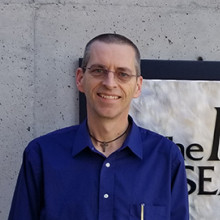
Above: Dr. Vince Calhoun
“This study takes a major step towards finding a biomarker of medication response in emerging adults with complex mood disorders,” says Dr. Osuch. “It also suggests that we may one day have an objective measure of psychiatric illness through brain imaging that would make diagnosis faster, more effective and more consistent across health care providers.”
Psychiatrists currently make a diagnosis based on the history and behavior of a patient. Medication decisions are based on that diagnosis. “This can be difficult with complex mood disorders and in the early course of an illness when symptoms may be less well-defined,” says Dr. Osuch. “Patients may also have more than one diagnosis, such as a combination of a mood disorder and a substance abuse disorder, further complicating diagnosis. Having a biological test or procedure to identify what class of medication a patient will respond to would significantly advance the field of psychiatry.”
The study, “Complexity in mood disorder diagnosis: fMRI connectivity networks predicted medication-class of response in complex patients,” is published online in Acta Psychiatrica Scandinavica. Local support included donor funding through London Health Sciences Foundation.
Learn more about this research:
Image
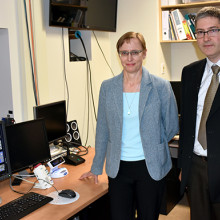
Above: Drs. Elizabeth Osuch and Jean Théberge, Lawson scientists
Scientist
Major Ronald Miller's story
“I just wasn’t myself,” says Major Ronald Miller when reflecting on his experience with post-traumatic stress disorder (PTSD). “I could see a significant change in my personality that just wasn’t me.”
Major Miller first joined the Canadian Armed Forces in 1971 as a young infantry private in the 1st Battalion, The Royal Canadian Regiment and later became an Officer in the Royal Canadian Artillery, which included a tour in Germany during the Cold War.
After the Cold War, he reoriented his career towards peacekeeping which saw him deployed to seven different conflict zones. “It was during the Civil War in El Salvador in 1991 that I experienced a number of incidents that first triggered my PTSD,” explains Major Miller. “From that time forward the PTSD was always there but I suppressed it.”
It wasn’t until 2016 that Major Miller’s PTSD resurfaced. After retiring from the Canadian Armed Forces in 2008, he started working a number of contracts in support of the military.
“Over the years, I was exposed to the kind of death and destruction that can be rather difficult from a psychological standpoint. The older I got, the less I was able to suppress those experiences. In fall 2016, I was supporting a NATO military exercise in the UK when I began experiencing horrible nightmares every night. I knew I needed to seek help.”
He reached out to Veteran Affairs Canada and was referred to the Operational Stress Injury (OSI) Clinic at Parkwood Institute, a part of St. Joseph’s Health Care London, where he was diagnosed with PTSD. It was there that he learned about PTSD research being conducted by Dr. Ruth Lanius, Scientist at Lawson Health Research Institute and Psychiatrist at London Health Sciences Centre.
Image

“I saw the need to help by participating in research, not only for myself but for my friends who have succumbed to the illness.”
Major Miller participated in Dr. Lanius’ neuroimaging research which uses advanced imaging technologies like PET/MRI to study differences in brain activity and neural connections between healthy individuals and those with different subtypes of PTSD. Dr. Lanius hopes that patterns of brain activity can one day be used as an objective biomarker to accurately diagnosis different subtypes of PTSD and uncover new targets for therapy.
“The research experience was interesting. I was interviewed while in the MRI and had to talk about incidents that trigger my PTSD to study my brain waves,” explains Major Miller.
In one study, Dr. Lanius is studying patterns of brain activity for those with ‘moral injury,’ an intense feeling of shame or guilt that can sometimes affect veterans with PTSD.
“Sometimes you’re involved in situations that you don’t have control over but that you feel responsible for,” says Major Miller. “You wonder, ‘Could I have done something differently?’”
Major Miller was happy to participate in any study that might help. Today, he is managing his PTSD through a combination of therapies that work for him.
“My biggest fear was giving up the things I love. I’ve been a soldier since day one and I’m sure I will be until the day I die. It’s important we come up with solutions to ensure our veterans receive proper care. Through research, we can tailor treatment to the individual rather than looking for a broad brush solution that might not suit everyone.”
This story is also featured on Research Canada’s Patient Stories website.
… BODY, MIND & SPIRIT SINCE 1869 Renowned for compassionate care, St. Joseph’s is one of the best academic health care organizations in Canada dedicated to helping people … of injury, disease and disability through excellence in care, teaching and research. sjhc.london.on.ca Making Health …
CARING FOR THE BODY, MIND & SPIRIT SINCE 1869 Renowned for compassionate care, St. Josephs is one of the best academic health care organizations in Canada dedicated to helping people live to their fullest by minimizing the effects of injury, disease and disability through excellence in care, teachin...
… account funds. Individuals in Bank: Regional Mental Health Care clients who place money in a trust account with the … account funds. Individuals in Bank: Regional Mental Health Care clients who place money in a trust account with the …
Personal Information Bank (PIB) Details Title: Management of Capable Client Finances Location of Files: Finance, Business Offices Description: Form that indicates details re trust accounts at business offices. Legal Authority for PIB: Public Hospitals Act R.S.0 1990, c. P.40. Types of Personal Infor...
… LOT 3 Visitors To W el lin gt on R oa d 5 4 MENTAL HEALTH CARE BUILDING 2 To Commisioners Road East D B A C E LOT 1 … LOT 3 Visitors To W el lin gt on R oa d 5 4 MENTAL HEALTH CARE BUILDING 2 To Commisioners Road East D B A C E LOT 1 …
LOT 3 Visitors To W el lin gt on R oa d 5 4 MENTAL HEALTH CARE BUILDING 2 To Commisioners Road East D B A C E LOT 1 Visitors 3 Parkwood Institute Main Building SPECIALIZED GERIATRIC AMBULATORY CLINIC Zone Level Room 2 B2-161G B Main Directions - Level 2 Legend Main Building Entrance Specialized Geri...
… Drive C A B Southwest Centre for Forensic Mental Health Care Parking Entrance Legend Zone Colour CA B Zone Elevators … Drive C A B Southwest Centre for Forensic Mental Health Care Parking Entrance Legend Zone Colour CA B Zone Elevators … smoking of the Southwest Centre for Forensic Mental Health Care …
Sunset Drive C A B Southwest Centre for Forensic Mental Health Care Parking Entrance Legend Zone Colour CA B Zone Elevators Cafeteria July 2019
… Paul Kiteley, Member of the St. Joseph’s Health Care Foundation Board of Directors Michelle Campbell, VP Fund Development and President, St. Joseph’s Health Care Foundation Cyclotron Video Dr. David Hill, IVP Research … Ontario (APPROVAL) • Other Tab 6 2.3 St. Joseph’s Health Care Foundation [P. Kiteley] 3. (15min) COMMITTEE MINUTES …
St. Josephs Board of Directors Meeting Agenda March 29, 2010_____________________________________1 MEETING OF THE BOARD OF DIRECTORS A G E N D A Monday, March 29, 2010 (1530hrs St. Josephs Hospital Lawson Board Room) Call to Order Moment of Reflection (Peter Whatmore) At any regular or in-camera ...
… Joe Skufca Research Insights of the Regional Mental Health Care London and St. Thomas is a peer-reviewed journal … publication. Research conducted at Regional Mental Health Care London and St. Thomas, St. Joseph’s Health Care, London is part of Lawson Health Research Institute. …
MARCH 2013 | VOL. 10 NO. 1 OUTCOMES, INHERENT CONTRADICTIONS AND PUZZLING ISSUES: Consent and Capacity Board (CCB) members experiences with Community Treatment Orders (CTOs) Deborah Corring, Cathy Plyley, Joe Skufca Research Insights of the Regional Mental Health Care London and St. Thomas is a peer...
… ~ SIJOSEPHs HEALTH CARE LONDON Therapeutic Programs - Marian Villa 1 August … ~ SIJOSEPHs HEALTH CARE LONDON Therapeutic Programs - Marian Villa 1 August …
~ SIJOSEPHs HEALTH CARE LONDON Therapeutic Programs - Marian Villa 1 August 2022 Sunday Monday Tuesday Wednesday Thursday Friday Saturday 1 2 3 4 5 6 Civic Holiday 9:45am Water Colour Art - L 9:45am Mind Aerobics - L 10:30am CANnonball - L 1:30pm Mindful Colouring - L 9:30am Cycling without Age - CO...
… ~ SIJOSEPHs HEALTH CARE LONDON Therapeutic Programs - Marian Villa 2 August … ~ SIJOSEPHs HEALTH CARE LONDON Therapeutic Programs - Marian Villa 2 August …
~ SIJOSEPHs HEALTH CARE LONDON Therapeutic Programs - Marian Villa 2 August 2022 Sunday Monday Tuesday Wednesday Thursday Friday Saturday 1 2 3 4 5 6 Civic Holiday 10:30am Water Colour Art - L 2:30pm Seasonal Sensations - L 3:00pm Pedal Pushers - L 6:00pm Cranium Crunches - L 10:30am Cycling without...
… ~ SIJOSEPHs HEALTH CARE LONDON Therapeutic Programs - Marian Villa 3 August … ~ SIJOSEPHs HEALTH CARE LONDON Therapeutic Programs - Marian Villa 3 August …
~ SIJOSEPHs HEALTH CARE LONDON Therapeutic Programs - Marian Villa 3 August 2022 Sunday Monday Tuesday Wednesday Thursday Friday Saturday 1 2 3 4 5 6 Civic Holiday 9:30am Fun & Fit - L 9:30am Yard Games - L 10:15am Puzzling Minds- Lauren - 11:00am Outdoor Walks Lauren - 11:00am Frisbee Golf - L 1:30...
… ~ SIJOSEPHs HEALTH CARE LONDON Therapeutic Programs - Marian Villa 4 August … ~ SIJOSEPHs HEALTH CARE LONDON Therapeutic Programs - Marian Villa 4 August …
~ SIJOSEPHs HEALTH CARE LONDON Therapeutic Programs - Marian Villa 4 August 2022 Sunday Monday Tuesday Wednesday Thursday Friday Saturday 1 2 3 4 5 6 Civic Holiday 2:30pm Water Colour Art - L 9:30am Fun & Fit (MV3 Lounge) - L 11:00am Personal Touch - L 10:15am Outdoor Walks 4/5 - CY 10:30am Catholic...
… ~ SIJOSEPHs HEALTH CARE LONDON Therapeutic Programs - Marian Villa 5 August … ~ SIJOSEPHs HEALTH CARE LONDON Therapeutic Programs - Marian Villa 5 August …
~ SIJOSEPHs HEALTH CARE LONDON Therapeutic Programs - Marian Villa 5 August 2022 Sunday Monday Tuesday Wednesday Thursday Friday Saturday 1 2 3 4 5 6 Civic Holiday 3:30pm Water Colour Art - L 1:30pm Bingo in MVDR - L 3:30pm Seated Zumba - L 9:30am Cranium Crunches - L 10:15am Outdoor Walks 4/5 - CY ...