


Search
Search
3186 Search Results:
… Centre. 1993: Ownership transferred to St. Joseph’s Health Care Society 1997: The “New” St. Mary’s Hospital is … Mary’s Hospital, it forms Mount Hope Centre for Long Term Care. Opening of St. Mary’s Hospital, London “The benign and … the manner in which the Sisters of St. Joseph have taken care of the sick in Western Ontario, and have met the …
Sisters of St. Joseph of London Archives PO Box 487 London ON N6A 4X3 519-432-3781 ext 404 lperrie@csj.london.on.ca Sisters of St. Joseph of London St. Marys Hospital Basic facts 1869: Mount Hope established as an Orphanage, Motherhouse, and Home for the Aged. 1900: Motherhouse, Novitiate and Orp...
… Family Advisory Council (FAC) of St- Joseph’s Mental Health Care Program is pleased to share our fourth report. It … of our loved one and families in the mental health care system. The FAC has been able to achieve several … due to partnerships we have formed. St. Joseph’s Health Care London has been listening to families to determine what …
The Family Advisory Council (FAC) of St- Josephs Mental Health Care Program is pleased to share our fourth report. It highlights some of our successes, accomplishments and the continued advocacy objectives that are important for the well-being of our loved one and families in the mental health care ...
Recent Advances in Clinical Dementia Research
8:00pm - 9:00pm
Hear Dr. Michael Borrie, one of the world’s foremost leaders in Dementia research, talk about non-drug approaches to maintain brain health and ongoing research for cognitive impairment.
Research Bites is a series presented by Parkwood Institute Research (PIR). These informative and interactive talks focus on specific illnesses, their prevention and related health research being conducted by researchers in London and area. PIR is a program of Lawson, the research institute of London Health Sciences Centre and St. Joseph’s Health Care London.
This is a free learning series open to the community.
Register today before spots fill up!
About this event:
Image
Date: Tuesday, January 21, 2020
Time: 4 - 5 p.m.
Location:
Parkwood Institute, Main Building
WCW Auditorium (Room E1-130)
550 Wellington Road, London, ON N6A 4V2
Maps and Directions for Parkwood Institute.
Parking: The lot rate is $5.00 when you enter. $1 and $2 coins and credit card accepted (press the start button then insert payment)
Register Today
… Contact your Doctor or Nurse for more information. SELF CARE Originally written by: Sharon Ryan. ©2015 University … Contact your Doctor or Nurse for more information. SELF CARE Originally written by: Sharon Ryan. ©2015 University … Contact your Doctor or Nurse for more information. SELF CARE Originally written by: Sharon Ryan. ©2015 University …
Digital Stimulation (Rectal Touches) Contact your Doctor or Nurse for more information. SELF CARE Originally written by: Sharon Ryan. 2015 University Health Network - Toronto Rehab. All rights reserved. Disclaimer: Information is provided for educational purposes only. Consult a qualified health pro...
… Contact your Doctor or Nurse for more information. SELF CARE Originally written by: Sharon Ryan. ©2015 University … Contact your Doctor or Nurse for more information. SELF CARE Originally written by: Sharon Ryan. ©2015 University … Contact your Doctor or Nurse for more information. SELF CARE Originally written by: Sharon Ryan. ©2015 University …
Digital Stimulation (Rectal Touches) Contact your Doctor or Nurse for more information. SELF CARE Originally written by: Sharon Ryan. 2015 University Health Network - Toronto Rehab. All rights reserved. Disclaimer: Information is provided for educational purposes only. Consult a qualified health pro...
Reduce the swelling: Why does chronic inflammation matter?
11:00pm - 1:00am
Inflammation is becoming increasingly popular as a “buzzword” for health claims and advice. It has been implicated in a number of chronic and age-related conditions, including diabetes, rheumatoid arthritis, cardiovascular disease, neurodegenerative diseases, and even depression and cancer. On the other hand, inflammation is part of the body’s natural response to infection and tissue damage, and it is crucial to the healing process.
You are invited to the Lawson’s Café Scientifique, a free community event providing an informal opportunity to get involved with science. Hear a panel of expert researchers explore how inflammation affects our health and how this knowledge can be applied to improve health care. Guests are then encouraged to ask questions as part of an open-forum discussion to gain insights from the speakers, and from one another.
Presented Talks
- “Molecular signatures: How do we listen to the music of inflammation?”
Dr. Chris McIntyre - “The effects of chronic inflammation on cancer”
Dr. Samuel Asfaha - “Coming to grips with curling fingers: A cause and potential treatment for fibrosis of the hand”
Dr. David O’Gorman - MODERATOR – Dr. David Hill
Registration
Free community event hosted by Lawson Health Research Institute.
PLEASE NOTE: Registration for this event is now full.
Email @email to be added to the event wait list. Please include the names of all individuals who wish to be added to the wait list. We apperciate your interest in Café Scientifique.
Event Information
Date: Wednesday, October 12, 2016
Time: 7 to 9 p.m.
Location: Windermere Manor (The Grand Hall), 200 Collip Circle, London, ON N6G 4X8
Speaker Biographies
Image
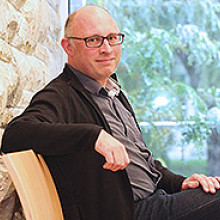
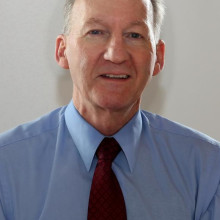
In 1999 he was appointed as Consultant Nephrologist at the Royal Derby Hospital and subsequently as Reader in Vascular Medicine and then Professor of Nephrology at Nottingham University, becoming Head of the Division of Graduate Entry Medicine and Medical Sciences. Dr McIntyre led a team of multidisciplinary researchers focused largely on the pathophysiology of the widespread abnormalities of cardiovascular function and body composition in CKD patients. These studies included basic clinical science, natural history studies and the development and application of novel therapeutic strategies. These studies have increasingly focussed on the adverse consequences resulting from dialysis therapy itself and the improvement in outcomes by the reduction of preventable harm.
He has recently moved to his new role in Canada as Professor of Medicine and was awarded the inaugural Robert Lindsay Chair of Dialysis Research and Innovation at Western University, London Ontario. He also serves as Director of the Lilibeth Caberto Kidney Clinical Research Unit at London Health Sciences Centre, as Assistant Director of the Lawson Health Research Institute and is cross appointed as full Professor in the Department of Medical Biophysics at Western.
Image
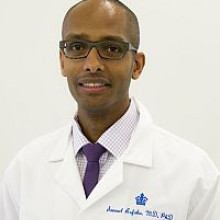
His research focuses on the intestinal stem cells of the gut and aims to identify the cellular origin of colorectal cancer.
See Dr. Asfaha’s full scientist profile.
Image
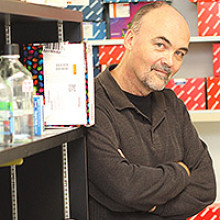
See Dr. O’Gorman’s full scientist profile.
Moderator Biography
Image

Reducing social isolation with new community resource
LONDON, ON – Researchers in London are sharing a new resource that can help municipalities and other organizations better understand social isolation and implement solutions proven to be effective. With input from over 35 community partners and people with lived experience, the research team hopes this tool can be used to support community-based initiatives that counteract poverty and homelessness while promoting mental health and social inclusion.
“The pandemic has highlighted the issues of isolation and homelessness, and we know there is a connection between mental health and poverty. Unfortunately, right now, many people don’t see solutions in sight,” explains Dr. Cheryl Forchuk, Assistant Scientific Director at Lawson Health Research Institute. “Our new resource offers an expanded understanding of isolation and homelessness based on a very broad view and many different perspectives. We have taken it a step further and given examples of solutions that are working.” She is the lead researcher for CURA (Community-University Research Alliance): Poverty, Mental Health and Social Inclusion.
Today during a virtual book launch, the team from the CURA discussed details of a new publication from Canadian Scholars: Poverty, Mental Health, and Social Inclusion, edited by Drs. Forchuk and Rick Csiernik. Community partners from Connect for Mental Health (peer support), Impact Junk Solutions from CMHA Elgin-Middlesex, and Goodwill Industries shared more about their successful programs.
The book brings together research, real stories and information about programs from the London and area community that are working to address these issues. Most of the chapters includes a wide range of co-authors, including psychiatric consumer-survivors, academics, students, front-line service providers and leadership from community partners.
“In order to find real solutions, the voices of people using the services must be at the centre. Their stories and experiences have been a very important part of producing this book,” says Betty Edwards, Executive Director at Can-Voice, a consumer-survivor group, and Community Director for CURA. “For us to move the needle, we need collaboration across different sectors, for example health, income support, housing and social services. No one sector can solve these issues on their own.”
The book summarizes the foundational work by the CURA to better understand the inter-relationships between poverty and social inclusion for psychiatric survivors. Social inclusion involves the full participation of marginalized groups in the social and economic benefits of society which can be difficult to achieve for people with the “double jeopardy” of poverty and mental illness.
“After five years of funding and several published research papers, we wanted to pull the findings together as a whole so that it would be more easily accessed and implemented by a wide range of people and organizations,” adds Dr. Forchuk. “Our hope is that other cities and service providers can pick up this book to see what we’re doing in London, and consider ways that they may reach out to their citizens to address social exclusion. It is also an academic tool to prepare the next generation as they continue to tackle the wicked problem of homelessness.”
Incorporating an arts-based approach, the book also features photographs taken by photographer Justin Langille who would spend about a month with each of the programs offering solutions and partnered with consumer survivors to capture accurate depictions of what they considered important messages.
“I reflect back on the past 15 months of the pandemic and know how isolated I have felt at times. Imagine the feelings of isolation or being forgotten that would come with experiencing homelessness? And for some, it’s been most of their adult lives,” shares Dr. Csiernik, Professor at King’s University College at Western University. “We know that many people during the pandemic have lost homes, jobs and food security. Some may have new or worsening mental health disorders. The learnings and solutions like the ones presented in the book are needed now more than ever.”
A central focus of the CURA team has been understanding homelessness – what lead someone to experience homelessness and how do we as a society respond? By bringing together different perspectives, the CURA team uncovered the issue of hospital discharge to homelessness, leading to research projects at London Health Sciences Centre and St. Joseph’s Health Care London that integrates the City of London’s housing and homeless approach. They have been better able to tailor youth specific homeless interventions after more awareness of the unique challenges of homeless youth. Driven by an information gap identified by the CURA, Dr. Forchuk’s team recently announced a research project testing data algorithms to track and identify who is homeless and where they are located.
-30-
DOWNLOADABLE MEDIA
Photo credit for all images: Justin Langille Photography
Image

A supported housing unit rendered uninhabitable by an individual suffering from mental illness, which was a challenge for Impact Junk Solutions to de-clutter. (Photo credit: Justin Langille Photography)
Image
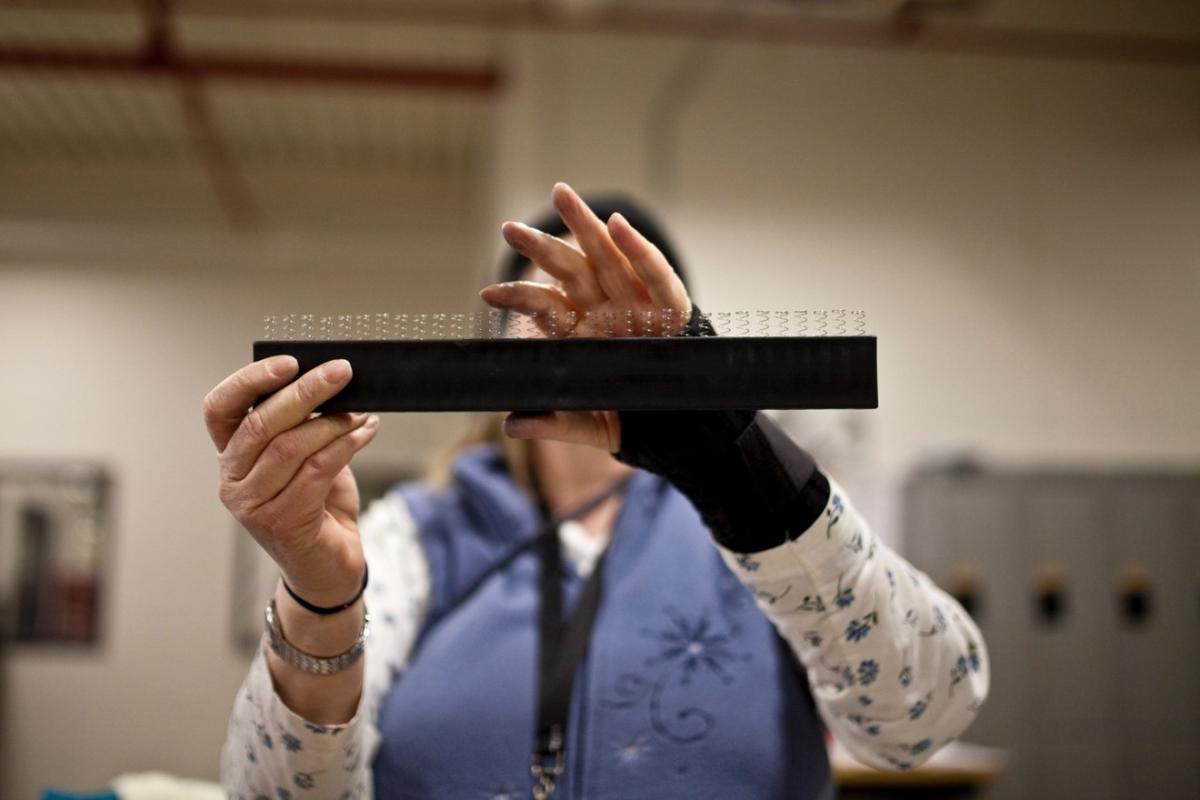
Diane assembles parts on the floor of the Goodwill’s RMHC Social Enterprise program in St.Thomas in April 2014. (Photo credit: Justin Langille Photography)
Image

Steve helps a co-worker navigate a couch out from a basement in the Blackfriars neighbourhood in London, Ontario in April 2014. Returning to work has been essential for Steve’s successful recovery from mental illness and substance abuse. (Photo credit: Justin Langille Photography)
Image

Goodwill RMHC Social Enterprise program employee Donald applies reflective tape to a stack of pylons in March 2014. (Photo credit: Justin Langille Photography)
About Lawson Health Research Institute
Lawson Health Research Institute is one of Canada’s top hospital-based research institutes, tackling the most pressing challenges in health care. As the research institute of London Health Sciences Centre and St. Joseph’s Health Care London, our innovation happens where care is delivered. Lawson research teams are at the leading-edge of science with the goal of improving health and the delivery of care for patients. Working in partnership with Western University, our researchers are encouraged to pursue their curiosity, collaborate often and share their discoveries widely. Research conducted through Lawson makes a difference in the lives of patients, families and communities around the world. To learn more, visit www.lawsonresearch.ca.
Media Contacts
Celine Zadorsky
Senior Media Relations Consultant
Communications & Public Engagement
T: 519-685-8500 ext. 73502
Celine.zadorsky@lhsc.on.ca
… RIGHT TURN ONLY Parkwood Institute F G H J MENTAL HEALTH CARE BUILDING LOT 4 Meter Parking Motorcycle Parking E V A … RIGHT TURN ONLY Parkwood Institute F G H J MENTAL HEALTH CARE BUILDING LOT 4 Meter Parking Motorcycle Parking E V A …
W EL LI NG TO N RO AD C O M M I S S I O N E R S R O A D E A S T WESTERN COUNTIES WING ARTHUR J. HOBBINS BUILDING BU LOT 1 Parking Garage LOT 3 LOT 5 E D B C A W ES TE R N C O U N TI ES R O AD WATERMAN AVE Parking Zone Legend Barrier Free Parking LOT 2 Entrance *EXIT RIGHT TURN ONLY *ENTRY RIGHT TURN...
… Physician Signature (Required): Referral Source: Acute Care Hospital □ Rehab Unit □ Family Physician □ Specialist (phys) □ Long-Term Care □ SW LHIN □ Other □ Name of person filling out this … stroke difficulty returning to daily activities taking care of self eating well and preparing meals fatigue …
Comprehensive Outpatient Rehabilitation Program Parkwood Institute, Arthur J. Hobbins Building PO Box 5777 STN B, London, ON, N6A4V2 Tel: 519-685-4578 Fax: 519-685-4802 Referral Form FOR OFFICE USE ONLY Referral Date: MR#: Contact Date: Intake Date: CLIENT INFORMATION Name: DOB (YY/MM/DD): Address: ...
… Parkwood Institute, Main Building St. Joseph Health Care London 550 Wellington Rd, London, ON N6C 0A7 P: 519 … Parkwood Institute, Main Building St. Joseph Health Care London 550 Wellington Rd, London, ON N6C 0A7 P: 519 …
Peripheral Nerve Clinic Referral Form EMG Laboratory Parkwood Institute, Main Building St. Joseph Health Care London 550 Wellington Rd, London, ON N6C 0A7 P: 519 646-6100 ext. 65364 F: 519 646-6174 Please complete and fax this form to 519 646-6174 Patient information: Name: Date of Birth: Address (i...
… Centre – Vic/Children’s F: 519-667-6826 St. Joseph’s Health Care London F: 519-646-6204 London Health Sciences Centre – … or 3rd Party No.: Outpatient Inpatient ED Long Term Care WSIB: Y N WSIB No.: Date of Injury (YYYY-MM-DD): … Centre – Vic/Children’s F: 519-667-6826 St. Joseph’s Health Care London F: 519-646-6204 London Health Sciences Centre – …
ULTRASOUND REQUISITION Site: London Health Sciences Centre Vic/Childrens F: 519-667-6826 St. Josephs Health Care London F: 519-646-6204 London Health Sciences Centre UH F: 519-633-3034 PATIENT INFORMATION: Surname: First Name: Middle Initial: Gender: Date of Birth (YYYY-MM-DD): Street Address: Apa...
… case coordination for people with an ABI, their families, caregivers, and other service providers. Focused on enabling … diagnosis. Case management for those with multiple/complex care needs, difficulties coping with a mental health … case coordination for people with an ABI, their families, caregivers, and other service providers. Focused on enabling …
Office Use Only Date Referral Received:____________ Parkwood Institute MR#:__________ Parkwood Institute Acquired Brain Injury Program 550 Wellington Rd. London, Ontario N6C 0A7 Telephone: 519 685 4064 Fax: (519) 685-4551 Toll free: 1-866-484-0445 Client Information Name: Health Card #: Address: Tow...
… Regional Best Practice Guidelines Initiative in Long Term Care This initiative has been developed by the Ministry of Health and Long Term Care to support long term care homes (LTCH) in adopting evidence-based practices that … Regional Best Practice Guidelines Initiative in Long Term Care This initiative has been developed by the Ministry of …
Regional Best Practice Guidelines Initiative in Long Term Care This initiative has been developed by the Ministry of Health and Long Term Care to support long term care homes (LTCH) in adopting evidence-based practices that support systematic and consistent approaches to quality care for residents. ...
… Mental Health Care Patient Bill of Rights Respect = Excellence = Compassion St. Joseph’s Mental Health Care Patient Bill of Rights Acknowledgements: St. Joseph’s Health Care London (St. Joseph’s) and the mental health care … Mental Health Care Patient Bill of Rights Respect = Excellence = …
Mental Health Care Patient Bill of Rights Respect = Excellence = Compassion St. Josephs Mental Health Care Patient Bill of Rights Acknowledgements: St. Josephs Health Care London (St. Josephs) and the mental health care Patient Council acknowledges, with appreciation, the work of the Centre for Addi...
… Recreation, Third Age Outreach of St. Joseph's Health Care London …………………………………………………………………………………… NAME: AGE: (if … Recreation, Third Age Outreach of St. Joseph's Health Care London …………………………………………………………………………………… NAME: AGE: (if …
Join us in celebrating our 20th Golf Tournament for People with Disabilities! DATE: Tuesday, August 27, 2019 TIME: 1 pm Shotgun start LOCATION: Fanshawe Golf Course Parkside Nine ENTRY FEE: $30.00 includes golf, prize and dinner DEADLINE FOR ENTRY: August 16, 2019 Sponsored by the City of Londons Fa...
Mobility and Activity
Researchers at Lawson are propelled by the people who will benefit from the best in complex rehabilitative science.
One in 10 Canadians has a mobility disability – and we’re laser-focused on discovering how to help people whose lives have been upended by spinal cord injuries, stroke, brain injuries, chronic pain, accidents, falls, trauma or degenerative disease.
Situated at the Gray Centre for Mobility and Activity within St. Joseph’s Health Care London’s Parkwood Institute, the region’s largest provider of rehabilitation and recovery health, we bring our research into practice using all the resources a health institute and teaching hospital can offer together.
We share our innovations with the world – and we share the world’s research too, as we’ve created and curated the biggest database of international research on stroke, traumatic brain injury and spinal cord injuries.
Lawson mobility researchers comprise one of the largest and most accomplished teams in the country: including a research chair, established world-class scientists, emerging researchers, dozens of trainees and more than 100 students.
Our work helps people around the world lead active and healthy lives. Read on to discover where it will lead you.
Lawson leads mobility and activity research:
Relieving the pain: Current research on pain and its management
11:00pm - 1:00am
There has been an explosion of scientific knowledge that is helping us to uncover the changes that happen when an individual develops pain, giving millions of people the hope that they will be better able to manage their own pain.
Pain is one of the most common reasons people seek medical attention. In Canada, 25 per cent of adults are affected by chronic pain and that statistic moves up to 50 per cent in the elderly.
Acute and ongoing pain have traditionally been hard to understand and there has isn’t always a clear answer for tackling these issues. We do know that ongoing pain can have significant impacts on one’s wellbeing.
Join Lawson Health Research Institute for our next Café Scientifique to hear a panel of experts share more about local research in the areas of:
- The role of opioid and cannabis analgesics in the management of pain.
- The impact of pain for individuals and families, including children experiencing pain, and some of the barriers to its management.
- The growing understanding of the mechanisms of pain to create the best long-term results for patients.
- Educational tools for patients and caregivers.
Speakers
Image
- Dr. Dwight Moulin, Clinical Neurological Sciences and Oncology
- Dr. Naveen Poonai, Paediatric Emergency Medicine
- Dr. Dave Walton, School of Physical Therapy
- MODERATOR – Dr. Kathy Speechley, Epidemiology & Biostatistics
Event Details
Date: Tuesday, November 20, 2018
Time: 7-9 pm (doors open at 6:30 pm)
Location: Best Western Plus Lamplighter Inn & Conference Centre, 591 Wellington Rd, London, ON N6C 4R3
Map and directions
Parking: Ample free parking on-site
This is a free community event and online registration is REQUIRED.
Click here to register.
Lawson is the research institute of London Health Sciences Centre and St. Joseph’s Health Care London.
… Leadership in Mission Report on Mission, Spiritual Care and Health Care Ethics 2015/2016 Report on Governance and Leadership As … is part of what we do. We continue to provide exceptional care to our patients while living out our mission every day. … Leadership in Mission Report on Mission, Spiritual Care and Health Care Ethics 2015/2016 Report on Governance …
Leadership in Mission Report on Mission, Spiritual Care and Health Care Ethics 2015/2016 Report on Governance and Leadership As we approached 2015/16 we knew the year would provide opportunities and challenges. We would fi nally be through all our restructuring and construction and would have the op...
… Leadership in Mission Report on Mission, Spiritual Care and Health Care Ethics 2015/2016 Report on Governance and Leadership As … is part of what we do. We continue to provide exceptional care to our patients while living out our mission every day. … Leadership in Mission Report on Mission, Spiritual Care and Health Care Ethics 2015/2016 Report on Governance …
Leadership in Mission Report on Mission, Spiritual Care and Health Care Ethics 2015/2016 Report on Governance and Leadership As we approached 2015/16 we knew the year would provide opportunities and challenges. We would fi nally be through all our restructuring and construction and would have the op...
… Leadership in Mission Report on Mission, Spiritual Care and Health Care Ethics St. Joseph’s Health Care London 2013/2014 Report to St. Joseph’s Health Care … Leadership in Mission Report on Mission, Spiritual Care and Health Care Ethics St. Joseph’s Health Care London …
Leadership in Mission Report on Mission, Spiritual Care and Health Care Ethics St. Josephs Health Care London 2013/2014 Report to St. Josephs Health Care Society 2 Contents Page 3 Report on Governance and Leadership Page 8 Report on Heath Care Ethics Page 13 Report on Spiritual Care Page 18 Living o...