


Search
Search
1080 Search Results:
London holds 8th place ranking in Canada's Top 40 for hospital-based research
Lawson Health Research Institute is again ranked eighth in the country according to the 2020 edition of “Canada’s Top 40 Research Hospitals List” by Re$earch Infosource. This strong national position has been maintained by Lawson for the past seven consecutive years and keeps the Institute within the top five in Ontario.
Lawson, the research institute of London Health Sciences Centre and St. Joseph’s Health Care London, has also maintained the top ranking for research intensity among the large tier institutions with $600,000 of research spending per researcher.
“Now, more than ever, people are understanding the critical importance of hospital-based research and its impact on health care,” says Dr. David Hill, Lawson Scientific Director and VP, Research for London Health Sciences Centre and St. Joseph’s Health Care London.
“We have remarkable people right here in London working on solutions for health challenges that have a worldwide impact. Their knowledge, creativity and dedication never fail to astound.”
The top 40 list analyzes hospital-based research institutes from across the country on several metrics, including total research income from the previous fiscal year. The ranking looks at funds received from all sources, including both internal and external, to support research at the organization. According to the report, Lawson received $118,796 million in research income in 2019. Despite representing a 4.0 per cent drop from the previous fiscal year, Lawson has maintained its rankings on the national list.
Hospital-based researchers belong to a health system at the forefront of the COVID-19 pandemic. With close proximity to patients and access to samples, they have mobilized to address COVID-19. Many Lawson research teams are implementing pre-clinical, clinical observational and clinical trial studies to prevent or soften the worst effects for patients with COVID-19. They are also studying the long-term and mental health impacts related to the pandemic.
“The COVID-19 pandemic is proving to be one of the most pressing health challenges of our time,” notes Dr. Hill. “Lawson excels in rapid response research and is uniquely positioned to tackle health problems from within hospital walls.”
Quick summary of Lawson's ranking
-
Rank in Top 40 Research Hospitals 2020: 8 (same as 2019)
-
FY2019 research spending: $118,776 million
-
FY2018 research spending: $123,790 million
-
Percentage change 2018-2019: -4.0%
-
Research intensity: $600,000 per researcher
-
Research intensity - percentage of total hospital spending: 7.0%
London researchers collaborating on national dementia prevention program
LONDON, ON - Researchers at Lawson Health Research Institute are collaborating with Canada’s largest dementia research initiative, the Canadian Consortium on Neurodegeneration in Aging (CCNA), to study an innovative online program that offers older adults the opportunity to increase their knowledge of dementia and improve lifestyle risk factors. The program, Brain Health PRO (BHPro), offers interactive digital educational modules to empower older adults to improve their physical and mental health, and modify their risk factors for dementia.
“Using the BHPro modules participants will learn how to improve their physical and mental health and reduce their risk of cognitive impairment. It is particularly novel with the education modules being delivered remotely,” explains Dr. Michael Borrie, Scientist at Lawson and Medical Director for the Aging Brain and Memory Clinic at Parkwood Institute.
The bilingual program focuses on seven different modifiable dementia risk domains: exercise, nutrition, sleep, psychological and social health, cognitive engagement, heart health, and vision and hearing. For each, the program includes 10-minute educational videos, as well as interactive activities for users to complete. Participants will also be sent portable EEG headsets to measure their brain activity during sleep, and accelerometers to track their physical activity. With the rise of dementia anticipated to reach nearly one million Canadians over the next 12 years, dementia prevention is becoming an increasingly urgent national health priority.
“The launch of BHPro is part of a significant research effort to find concrete means of preventing dementia, with the ultimate goal of having tremendous benefits for the aging experience,” says Dr. Howard Chertkow, Scientific Director of the CCNA and Director of the Kimel Family Centre for Brain Health and Wellness at Baycrest.
“Alzheimer Society of Canada (ASC) is proud to support the launch of the BHPro through the CAN-THUMBS UP program,” adds Dr. Saskia Sivananthan, ASC’s Chief Research & KTE Officer.
BHPro is funded by the Canadian Institutes of Health Research and the ASC, and was created through the Canadian Therapeutic Platform Trial for Multidomain Interventions to Prevent Dementia (CAN-THUMBS UP) program, which is part of the CCNA. The study will support 350 older adults across Canada who have at least one risk factor for dementia, including up to 60 participants through Lawson, with the goal of seeing participants’ dementia risk reduced throughout the year-long study. Please note, there is limited space for research participants. To learn more, please visit canthumbsup.ca
About CCNA
CCNA is the national component of the CIHR dementia research strategy, bringing together over 340 researchers across Canada to collaboratively investigate the diagnosis, treatment and prevention of dementia and other age-related neurodegenerative diseases. For more information, visit ccna-ccnv.ca
About Lawson Health Research Institute
Lawson Health Research Institute is one of Canada’s top hospital-based research institutes, tackling the most pressing challenges in health care. As the research institute of London Health Sciences Centre and St. Joseph’s Health Care London, our innovation happens where care is delivered. Lawson research teams are at the leading-edge of science with the goal of improving health and the delivery of care for patients. Working in partnership with Western University, our researchers are encouraged to pursue their curiosity, collaborate often and share their discoveries widely. Research conducted through Lawson makes a difference in the lives of patients, families and communities around the world. To learn more, visit www.lawsonresearch.ca.
Media Contacts
Amanda Taccone
Communications Consultant & External Relations
Lawson Health Research Institute
T: 519-685-8500 ext. ext. 64059
C: 226-919-4748
@email
London researchers collaborating on national dementia prevention program
Researchers at Lawson Health Research Institute are collaborating with Canada’s largest dementia research initiative, the Canadian Consortium on Neurodegeneration in Aging (CCNA), to study an innovative online program that offers older adults the opportunity to increase their knowledge of dementia and improve lifestyle risk factors. The program, Brain Health PRO (BHPro), offers interactive digital educational modules to empower older adults to improve their physical and mental health, and modify their risk factors for dementia.
“Using the BHPro modules participants will learn how to improve their physical and mental health and reduce their risk of cognitive impairment. It is particularly novel with the education modules being delivered remotely,” explains Dr. Michael Borrie, Scientist at Lawson and Medical Director for the Aging Brain and Memory Clinic at Parkwood Institute.
The bilingual program focuses on seven different modifiable dementia risk domains: exercise, nutrition, sleep, psychological and social health, cognitive engagement, heart health, and vision and hearing. For each, the program includes 10-minute educational videos, as well as interactive activities for users to complete. Participants will also be sent portable EEG headsets to measure their brain activity during sleep, and accelerometers to track their physical activity. With the rise of dementia anticipated to reach nearly one million Canadians over the next 12 years, dementia prevention is becoming an increasingly urgent national health priority.
“The launch of BHPro is part of a significant research effort to find concrete means of preventing dementia, with the ultimate goal of having tremendous benefits for the aging experience,” says Dr. Howard Chertkow, Scientific Director of the CCNA and Director of the Kimel Family Centre for Brain Health and Wellness at Baycrest.
“Alzheimer Society of Canada (ASC) is proud to support the launch of the BHPro through the CAN-THUMBS UP program,” adds Dr. Saskia Sivananthan, ASC’s Chief Research & KTE Officer.
BHPro is funded by the Canadian Institutes of Health Research and the ASC, and was created through the Canadian Therapeutic Platform Trial for Multidomain Interventions to Prevent Dementia (CAN-THUMBS UP) program, which is part of the CCNA. The study will support 350 older adults across Canada who have at least one risk factor for dementia, including up to 60 participants through Lawson, with the goal of seeing participants’ dementia risk reduced throughout the year-long study. Please note, there is limited space for research participants. To learn more, please visit canthumbsup.ca
About CCNA
CCNA is the national component of the CIHR dementia research strategy, bringing together over 340 researchers across Canada to collaboratively investigate the diagnosis, treatment and prevention of dementia and other age-related neurodegenerative diseases. For more information, visit ccna-ccnv.ca
Scientist
Partners
Media Contact
Amanda Taccone
Communications Consultant & External Relations
Lawson Health Research Institute
T: 519-685-8500 ext. ext. 64059
C: 226-919-4748
@email
London researchers get $2.8 million in funding to support mental health and wellbeing of Canadian health care workers
The COVID-19 pandemic has had a tangible impact on the mental health and wellbeing of Canadian health care workers, who have faced challenges that include increased workloads, resource constraints and fears of exposure to COVID-19.

Announced today, researchers out of Lawson Health Research Institute's MacDonald Franklin OSI Research Centre, have received $2.8 million in funding from the Public Health Agency of Canada (PHAC) to launch a project that will support the mental health and wellbeing of Canadian health care workers. The project is titled “Promoting Resilience and Mental Health: Adapting Canada’s Department of National Defence Road to Mental Readiness (R2MR) Program to Support Canadian Health Care Workers.”
The project will adapt the current Road to Mental Readiness Program, created for the Canadian Military. The aim is to identify mental health and wellness barriers in health care institutions, and create a streamlined framework that will build and promote supportive environments within institutions across the nation.
“This program has been a personalized approach with the military, and we are now adapting it to focus on Canadian health care workers,” explains Dr. Anthony Nazarov, Associate Scientist at Lawson and the MacDonald Franklin OSI Research Centre at St. Joseph’s Health Care London. “We want to educate institutions to create an environment that supports wellness not just at the individual level, but at the institutional level as well.”
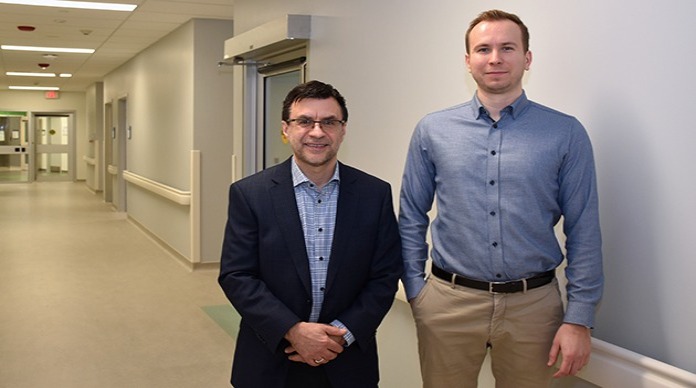
The project, which will span 14 months, will assist in the planning, adaptation and testing of the health care focused Road to Mental Readiness Program.
“One of the main reasons we felt this was necessary stems from a recent study our team conducted that focused on moral distress and the mental health of Canadian health care workers,” says Dr. Don Richardson, Lawson Scientist and Director of the MacDonald Franklin OSI Research Centre at St. Joseph’s. “Our preliminary study results found that many Canadian health care workers have been negatively impacted by the pandemic with conditions such as; posttraumatic stress disorder, stress and depression.”
Once the research team has adapted the current Road to Mental Readiness Program, they will test it with health care workers to confirm its efficacy.
“We hope to have this type of resiliency program adopted by health care organizations across the country,” explains Dr. Richardson. “If proven effective, this would provide additional tools to health care workers to help them cope, improve their resiliency and hopefully mitigate future staff shortages.”
The funding is part of the federal 2021 budget which has committed an investment of $50 million over two years to support projects that address posttraumatic stress disorder and trauma in frontline and essential workers, and others affected by the pandemic. The nine projects announced, totaling an investment of $28.2 million, is the first round of projects being supported through this Budget 2021 commitment.
Scientist
Partners
Media Contact
Celine Zadorsky
Senior Media Relations Consultant
Communications & Public Engagement
T: 519-685-8500 ext. 73502
Celine.zadorsky@lhsc.on.ca
London researchers get $2.8 million in funding to support mental health and wellbeing of Canadian health care workers
LONDON, ON - The COVID-19 pandemic has had a tangible impact on the mental health and wellbeing of Canadian health care workers, who have faced challenges that include increased workloads, resource constraints and fears of exposure to COVID-19.
Announced today, researchers out of Lawson Health Research Institute's MacDonald Franklin OSI Research Centre, have received $2.8 million in funding from the Public Health Agency of Canada (PHAC) to launch a project that will support the mental health and wellbeing of Canadian health care workers. The project is titled “Promoting Resilience and Mental Health: Adapting Canada’s Department of National Defence Road to Mental Readiness (R2MR) Program to Support Canadian Health Care Workers.”
The project will adapt the current Road to Mental Readiness Program, created for the Canadian Military. The aim is to identify mental health and wellness barriers in health care institutions, and create a streamlined framework that will build and promote supportive environments within institutions across the nation.
“This program has been a personalized approach with the military, and we are now adapting it to focus on Canadian health care workers,” explains Dr. Anthony Nazarov, Associate Scientist at Lawson and the MacDonald Franklin OSI Research Centre at St. Joseph’s Health Care London. “We want to educate institutions to create an environment that supports wellness not just at the individual level, but at the institutional level as well.”
The project, which will span 14 months, will assist in the planning, adaptation and testing of the health care focused Road to Mental Readiness Program.
“One of the main reasons we felt this was necessary stems from a recent study our team conducted that focused on moral distress and the mental health of Canadian health care workers,” says Dr. Don Richardson, Lawson Scientist and Director of the MacDonald Franklin OSI Research Centre at St. Joseph’s. “Our preliminary study results found that many Canadian health care workers have been negatively impacted by the pandemic with conditions such as; posttraumatic stress disorder, stress and depression.”
Once the research team has adapted the current Road to Mental Readiness Program, they will test it with health care workers to confirm its efficacy.
“We hope to have this type of resiliency program adopted by health care organizations across the country,” explains Dr. Richardson. “If proven effective, this would provide additional tools to health care workers to help them cope, improve their resiliency and hopefully mitigate future staff shortages.”
The funding is part of the federal 2021 budget which has committed an investment of $50 million over two years to support projects that address posttraumatic stress disorder and trauma in frontline and essential workers, and others affected by the pandemic. The nine projects announced, totaling an investment of $28.2 million, is the first round of projects being supported through this Budget 2021 commitment.
About Lawson Health Research Institute
Lawson Health Research Institute is one of Canada’s top hospital-based research institutes, tackling the most pressing challenges in health care. As the research institute of London Health Sciences Centre and St. Joseph’s Health Care London, our innovation happens where care is delivered. Lawson research teams are at the leading-edge of science with the goal of improving health and the delivery of care for patients. Working in partnership with Western University, our researchers are encouraged to pursue their curiosity, collaborate often and share their discoveries widely. Research conducted through Lawson makes a difference in the lives of patients, families and communities around the world. To learn more, visit www.lawsonresearch.ca.
Media Contacts
Celine Zadorsky
Senior Media Relations Consultant
Communications & Public Engagement
T: 519-685-8500 ext. 73502
Celine.zadorsky@lhsc.on.ca
London researchers working on a proactive approach to inclusiveness in the classroom
LONDON, ON – Researchers at Lawson Health Research Institute have launched a pilot study and pilot project called Queer in the Classroom, to examine the benefits of a proactive, inclusive approach within the education system for those who are part of the 2SLBTGQIA+ student community.
“The Queer in the Classroom initiative is so important because when we look at the data, youth in the 2SLGBTQIA+ community are 14 times more likely to die by suicide,” says Dr. Arlene MacDougall, Lawson Scientist, Director of MINDS and Psychiatrist at St. Joseph’s Health Care London. “We need to be focusing on this population who are also experiencing a higher degree of isolation, stigma and substance use.”
The pilot project focuses on professional development for teachers and staff to help create an environment that is tailored to best support 2SLGBTQIA+ students through the additional stress they face as a minority group.
“This project is about connecting with school boards and teachers to help develop the knowledge and skills to create spaces that go beyond tolerating differences,” explains MacDougall. “The focus is to create an environment that is more affirming, that is more responsive and more proactive rather than reactive.”
The foundation for the pilot project came from a scoping review of existing research on this topic conducted by the research team through the Mental Health INcubator for Disruptive Solutions (MINDS), that looked extensively at how teachers themselves can create a classroom that embraces all students.
“We further conducted our own research based on a series of interviews of 2SLGBTQIA+ students at both elementary and secondary schools in Ontario, and their parents and teachers. We focused on not only their safety in school, but also being celebrated for who they are,” says Iylah Neves, Lawson Research Assistant through MINDS. “We drew on all of this research to best inform the practices we are using with the Queer in the Classroom initiative.”
Currently the Queer in the Classroom project is being rolled out on a ‘by-request’ basis. However, the research team is working with a couple of school boards within Ontario to discuss the possibility of wider implementation.
“Queer in the Classroom has been driven by the voices of students with personal experiences who feel there is a deep need for this type of innovation,” says Neves. “It is our responsibility to make those changes so that students can access a safe, inclusive and nurturing environment.”
About Lawson Health Research Institute
Lawson Health Research Institute is one of Canada’s top hospital-based research institutes, tackling the most pressing challenges in health care. As the research institute of London Health Sciences Centre and St. Joseph’s Health Care London, our innovation happens where care is delivered. Lawson research teams are at the leading-edge of science with the goal of improving health and the delivery of care for patients. Working in partnership with Western University, our researchers are encouraged to pursue their curiosity, collaborate often and share their discoveries widely. Research conducted through Lawson makes a difference in the lives of patients, families and communities around the world. To learn more, visit www.lawsonresearch.ca.
Media Contacts
Celine Zadorsky
Senior Media Relations Consultant
Communications & Public Engagement
T: 519-685-8500 ext. 73502
Celine.zadorsky@lhsc.on.ca
London researchers working on a proactive approach to inclusiveness in the classroom
Researchers at Lawson Health Research Institute have launched a pilot study and pilot project called Queer in the Classroom, to examine the benefits of a proactive, inclusive approach within the education system for those who are part of the 2SLBTGQIA+ student community.
“The Queer in the Classroom initiative is so important because when we look at the data, youth in the 2SLGBTQIA+ community are 14 times more likely to die by suicide,” says Dr. Arlene MacDougall, Lawson Scientist, Director of MINDS and Psychiatrist at St. Joseph’s Health Care London. “We need to be focusing on this population who are also experiencing a higher degree of isolation, stigma and substance use.”
The pilot project focuses on professional development for teachers and staff to help create an environment that is tailored to best support 2SLGBTQIA+ students through the additional stress they face as a minority group.
“This project is about connecting with school boards and teachers to help develop the knowledge and skills to create spaces that go beyond tolerating differences,” explains MacDougall. “The focus is to create an environment that is more affirming, that is more responsive and more proactive rather than reactive.”
The foundation for the pilot project came from a scoping review of existing research on this topic conducted by the research team through the Mental Health INcubator for Disruptive Solutions (MINDS), that looked extensively at how teachers themselves can create a classroom that embraces all students.
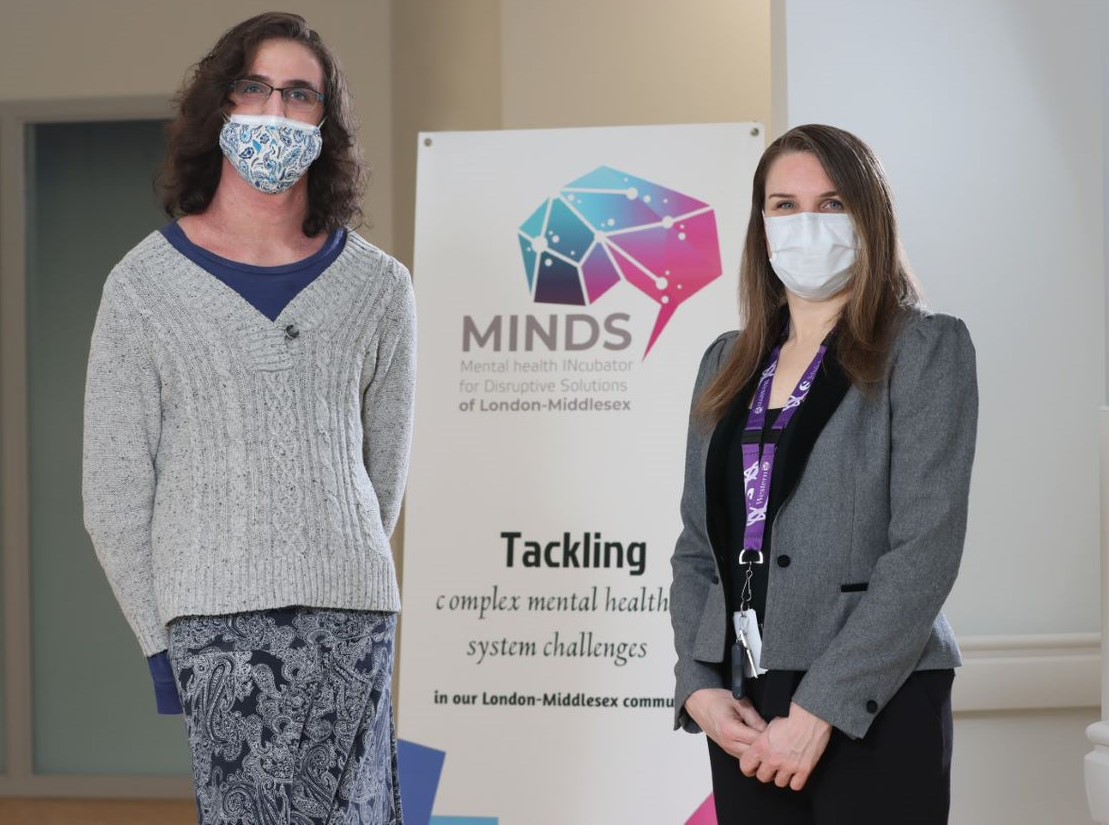
“We further conducted our own research based on a series of interviews of 2SLGBTQIA+ students at both elementary and secondary schools in Ontario, and their parents and teachers. We focused on not only their safety in school, but also being celebrated for who they are,” says Iylah Neves, Lawson Research Assistant through MINDS. “We drew on all of this research to best inform the practices we are using with the Queer in the Classroom initiative.”
Currently the Queer in the Classroom project is being rolled out on a ‘by-request’ basis. However, the research team is working with a couple of school boards within Ontario to discuss the possibility of wider implementation.
“Queer in the Classroom has been driven by the voices of students with personal experiences who feel there is a deep need for this type of innovation,” says Neves. “It is our responsibility to make those changes so that students can access a safe, inclusive and nurturing environment.”
London scientists clinch $2 million in federal funding to develop better imaging tools for brain disease
LONDON, ON – Lawson Health Research Institute has been awarded over $2 million in federal funding for a project focusing on two unique medical imaging systems designed to give unparalleled insight into brain function and disease.
Today, the Right Honourable Justin Trudeau, Prime Minister of Canada, announced more than $518 million in research infrastructure support through the Canada Foundation for Innovation (CFI). In a live conversation today at 1 p.m., the Honourable François-Philippe Champagne, Minister of Innovation, Science and Industry, will share more about how the funding will support 102 state-of-the-art projects at 35 post-secondary institutions and research hospitals across the country - helping Canada remain at the forefront of exploration, innovation and discovery.
“Imaging technologies, such as MRI and PET scanners, have revolutionized our understanding and treatment of major neurological diseases, including dementia and mental illness, by allowing us to study disease mechanisms and their impact on brain health,” says Dr. Keith St. Lawrence, Lawson Scientist and project co-lead. “We are developing and testing two leading-edge systems that will enable imaging of key vascular, metabolic and molecular factors linked to disease.”
The first system is a head-only PET (positron emission tomography) insert that can be placed in any clinical MRI machine. Combining the molecular specificity of PET with the structural and functional capabilities of MRI, the possibilities for brain imaging will be greatly enhanced. The head-only PET insert being tested in London has been developed by Cubresa Inc., located in Winnipeg, Manitoba.
“Combined with deep-learning approaches, we could achieve a highly improved sensitivity of the PET insert and reduce the radiation dose by up to 50 times compared to whole-body imaging,” explains Dr. Jonathan Thiessen, Lawson Scientist and project co-lead. “This will be the first commercially available high-resolution brain PET/MRI installed in the world.”
For example, better diagnosis of different forms of dementias would be possible and researchers could closely compare protein abnormalities in the brain with cognitive function. The low radiation dose allows for long-term studies investigating changes in the brain and neuroinflammation that can lead to major psychiatric diseases and cognitive degeneration or disability.
The second system uses portable, state-of-the-art optical imaging to increase the reliability of bedside brain monitoring to provide rapid assessment of brain health in restrictive environments.
“We believe this technology will demonstrate how biomedical optics can improve neurological outcome for surgery and patients in intensive care, provide an accessible technology for assessing neurovascular health, and become a clinically relevant tool for monitoring changes in brain function,” says Dr. St. Lawrence.
With current systems, the type of data is limited and extremely vulnerable to signal contamination from the scalp which can overshadow signals from the brain. Using the team’s specialized detection approach, the scalp signal contributions could be greatly reduced to get more accurate information on markers of brain activity, such as cerebral blood flow and energy metabolism.
The team will study use of the system in surgical and intensive-care settings to monitor for cerebral ischemia and metabolic stress, which are the major causes of brain injury. They will also monitor treatment in patients with schizophrenia and study dysfunction in the brain associated with negative symptoms, as cognitive impairment deteriorates with age for some people with the disease. Another goal is to develop a brain-computer interface for patients who are incapable of physical communication.
“With this funding, we can develop a truly unique advancement that has the potential to test the limits of optics for brain applications,” adds Dr. Thiessen. These two imaging platforms build on previous investments in Lawson Imaging that now exceed over $40 million in research funds since the initial CFI support in hybrid imaging in 2007.
-30-
About Lawson Health Research Institute
Lawson Health Research Institute is one of Canada’s top hospital-based research institutes, tackling the most pressing challenges in health care. As the research institute of London Health Sciences Centre and St. Joseph’s Health Care London, our innovation happens where care is delivered. Lawson research teams are at the leading-edge of science with the goal of improving health and the delivery of care for patients. Working in partnership with Western University, our researchers are encouraged to pursue their curiosity, collaborate often and share their discoveries widely. Research conducted through Lawson makes a difference in the lives of patients, families and communities around the world. To learn more, visit www.lawsonresearch.ca.
Media Contacts
Celine Zadorsky
Senior Media Relations Consultant
Communications & Public Engagement
T: 519-685-8500 ext. 73502
Celine.zadorsky@lhsc.on.ca
London scientists clinch $2 million in federal funding to develop better imaging tools for brain disease
Lawson Health Research Institute has been awarded over $2 million in federal funding for a project focusing on two unique medical imaging systems designed to give unparalleled insight into brain function and disease.
The Right Honourable Justin Trudeau, Prime Minister of Canada, announced more than $518 million in research infrastructure support through the Canada Foundation for Innovation (CFI).
“Canada's researchers and scientists are some of the brightest and most skilled in the world. These investments will ensure that they have the cutting-edge laboratories and equipment needed to help us build a Canada that is healthier, greener, and more competitive," says The Rt. Hon. Justin Trudeau, Prime Minister of Canada.
In a live conversation, the Honourable François-Philippe Champagne, Minister of Innovation, Science and Industry, shared more about how the funding will support 102 state-of-the-art projects at 35 post-secondary institutions and research hospitals across the country - helping Canada remain at the forefront of exploration, innovation and discovery.
Image
The first system is a head-only PET (positron emission tomography) insert that can be placed in any clinical MRI machine. Combining the molecular specificity of PET with the structural and functional capabilities of MRI, the possibilities for brain imaging will be greatly enhanced. The head-only PET insert being tested in London has been developed by Cubresa Inc., located in Winnipeg, Manitoba.
Image

For example, better diagnosis of different forms of dementias would be possible and researchers could closely compare protein abnormalities in the brain with cognitive function. The low radiation dose allows for long-term studies investigating changes in the brain and neuroinflammation that can lead to major psychiatric diseases and cognitive degeneration or disability.
The second system uses portable, state-of-the-art optical imaging to increase the reliability of bedside brain monitoring to provide rapid assessment of brain health in restrictive environments.
“We believe this technology will demonstrate how biomedical optics can improve neurological outcome for surgery and patients in intensive care, provide an accessible technology for assessing neurovascular health, and become a clinically relevant tool for monitoring changes in brain function,” says Dr. St. Lawrence.
With current systems, the type of data is limited and extremely vulnerable to signal contamination from the scalp which can overshadow signals from the brain. Using the team’s specialized detection approach, the scalp signal contributions could be greatly reduced to get more accurate information on markers of brain activity, such as cerebral blood flow and energy metabolism.
The team will study use of the system in surgical and intensive-care settings to monitor for cerebral ischemia and metabolic stress, which are the major causes of brain injury. They will also monitor treatment in patients with schizophrenia and study dysfunction in the brain associated with negative symptoms, as cognitive impairment deteriorates with age for some people with the disease. Another goal is to develop a brain-computer interface for patients who are incapable of physical communication.
“With this funding, we can develop a truly unique advancement that has the potential to test the limits of optics for brain applications,” adds Dr. Thiessen.
These two imaging platforms build on previous investments in Lawson Imaging that now exceed over $40 million in research funds since the initial CFI support in hybrid imaging in 2007. London is home to Canada’s first whole body PET/MRI scanner that was installed at St. Joseph’s Hospital, part of St. Joseph’s Health Care London.
Scientist
… health inequities, and by improving access to primary care, mental health and addiction services and wait times for … health inequities, and by improving access to primary care, mental health and addiction services and wait times for …
1/39 LONG-TERM CARE HOME SERVICE ACCOUNTABILITY AGREEMENT APRIL 1, 2019 MARCH 31, 2022 LONG-TERM CARE HOME SERVICE ACCOUNTABILITY AGREEMENT April 1, 2019 to March 31, 2022 SERVICE ACCOUNTABILITY AGREEMENT with Effective Date: April 1, 2019 Index to Agreement ARTICLE 1.0 DEFINITIONS & INTERPRETATIO...
… RN, St. Joseph’s Health Care London • Describe proven mental strategies that enhance hope, resilience, confidence … RN, St. Joseph’s Health Care London • Describe proven mental strategies that enhance hope, resilience, confidence …
LEGEND - WORKSHOP SUITED FOR: (A) - Allied Health, (N) - Nurses, PSWs, (P) - Physicians, Pharmacists 32nd Annual Geriatric Medicine Refresher Day Current and Practical Knowledge to Inspire and Advance Care Wednesday, May 2, 2018 7:30 a.m. - 4:00 p.m. London Convention Centre, London, Ontario 7:30 - ...
… - April 2011 Planned service reductions during LHSC’s adult mental health care program move All adult acute mental health care services at LHSC are moving to new spaces … on the reverse. For more information about LHSC’s adult mental health care move, please visit …
BULLETIN Acute Care Hospital Redevelopment News for Physicians in the Community Issue 4 - April 2011 Planned service reductions during LHSCs adult mental health care program move All adult acute mental health care services at LHSC are moving to new spaces at Victoria Hospital, April 11-29, 2011. As ...
… in the Community Issue 3 - March 2011 LHSC’s adult mental health care program is moving to Victoria Hospital next month All adult acute mental health care services at LHSC will move from South … are moving to zone A, level 2 at Victoria Hospital. Adult mental health care inpatients will be moving to zone B, …
BULLETIN Acute Care Hospital Redevelopment News for Physicians in the Community Issue 3 - March 2011 LHSCs adult mental health care program is moving to Victoria Hospital next month All adult acute mental health care services at LHSC will move from South Street Hospital to two locations at Victoria ...
… – Children’s hospital inpatient unit 7th floor – Adult mental health unit 8th floor – Child/adolescent mental health unit and mental health offices 9th floor – Adult medical/surgical … – Children’s hospital inpatient unit 7th floor – Adult mental health unit 8th floor – Child/adolescent mental …
MEDIA RELEASE For Immediate Release: March 23, 2009 Hospital redevelopment next phase underway at St. Josephs Health Care, London and London Health Sciences Centre (LONDON, ON) London Health Sciences Centre (LHSC) and St. Josephs Health Care, London (SJHC) are now well into the next phase of redeve...
Machine learning could predict medication response in patients with complex mood disorders
Mood disorders like major depressive disorder (MDD) and bipolar disorder are often complex and hard to diagnose, especially among youth when the illness is just evolving. This can make decisions about medication difficult. In a collaborative study by Lawson Health Research Institute, The Mind Research Network and Brainnetome Center, researchers have developed an artificial intelligence (AI) algorithm that analyzes brain scans to better classify illness in patients with a complex mood disorder and help predict their response to medication.
Image
The full study included 78 emerging adult patients from mental health programs at London Health Sciences Centre (LHSC), primarily from the First Episode Mood and Anxiety Program (FEMAP). The first part of the study involved 66 patients who had already completed treatment for a clear diagnosis of either MDD or bipolar type I (bipolar I), which is a form of bipolar disorder that features full manic episodes, as well as an additional 33 research participants with no history of mental illness. Each individual participated in scanning to examine different brain networks using Lawson’s functional magnetic resonance imaging (fMRI) capabilities at St. Joseph’s Health Care London.
The research team analyzed and compared the scans of those with MDD, bipolar I and no history of mental illness, and found the three groups differed in particular brain networks. These included regions in the default mode network, a set of regions thought to be important for self-reflection, as well as in the thalamus, a ‘gateway’ that connects multiple cortical regions and helps control arousal and alertness.
The data was used by researchers at The Mind Research Network to develop an AI algorithm that uses machine learning to examine fMRI scans to classify whether a patient has MDD or bipolar I. When tested against the research participants with a known diagnosis, the algorithm correctly classified their illness with 92.4 per cent accuracy.
The research team then performed imaging with 12 additional participants with complex mood disorders for whom a diagnosis was not clear. They used the algorithm to study a participant’s brain function to predict his or her diagnosis and, more importantly, examined the participant’s response to medication.
“Antidepressants are the gold standard pharmaceutical therapy for MDD while mood stabilizers are the gold standard for bipolar I,” says Dr. Elizabeth Osuch, a clinician-scientist at Lawson, medical director at FEMAP and co-lead investigator on the study. “But it becomes difficult to predict which medication will work in patients with complex mood disorders when a diagnosis is not clear. Will they respond better to an antidepressant or to a mood stabilizer?”
The research team hypothesized that participants classified by the algorithm as having MDD would respond to antidepressants while those classified as having bipolar I would respond to mood stabilizers. When tested with the complex patients, 11 out of 12 responded to the medication predicted by the algorithm.
“Machine learning is an approach that learns in a data-centric way, providing information that can be used to predict future data sets. In this case, that’s the prediction of MDD from bipolar I,” says Dr. Vince Calhoun, President of The Mind Research Network; Distinguished Professor, Departments of Electrical and Computer Engineering, Neurosciences, Computer Science, and Psychiatry at The University of New Mexico; and co-lead investigator on the study. “There are multiple layers of algorithms in this project. The first layer includes an approach that automatically extracts brain networks from the data provided and the second layer includes automatically identifying which combinations of networks are most sensitive or predictive of MDD and bipolar I.”
Image

Above: Dr. Vince Calhoun
“This study takes a major step towards finding a biomarker of medication response in emerging adults with complex mood disorders,” says Dr. Osuch. “It also suggests that we may one day have an objective measure of psychiatric illness through brain imaging that would make diagnosis faster, more effective and more consistent across health care providers.”
Psychiatrists currently make a diagnosis based on the history and behavior of a patient. Medication decisions are based on that diagnosis. “This can be difficult with complex mood disorders and in the early course of an illness when symptoms may be less well-defined,” says Dr. Osuch. “Patients may also have more than one diagnosis, such as a combination of a mood disorder and a substance abuse disorder, further complicating diagnosis. Having a biological test or procedure to identify what class of medication a patient will respond to would significantly advance the field of psychiatry.”
The study, “Complexity in mood disorder diagnosis: fMRI connectivity networks predicted medication-class of response in complex patients,” is published online in Acta Psychiatrica Scandinavica. Local support included donor funding through London Health Sciences Foundation.
Learn more about this research:
Image
Above: Drs. Elizabeth Osuch and Jean Théberge, Lawson scientists
Scientist
… their trust account funds. Individuals in Bank: Regional Mental Health Care clients who place money in a trust … their trust account funds. Individuals in Bank: Regional Mental Health Care clients who place money in a trust …
Personal Information Bank (PIB) Details Title: Management of Capable Client Finances Location of Files: Finance, Business Offices Description: Form that indicates details re trust accounts at business offices. Legal Authority for PIB: Public Hospitals Act R.S.0 1990, c. P.40. Types of Personal Infor...
… LOT 3 Visitors To W el lin gt on R oa d 5 4 MENTAL HEALTH CARE BUILDING 2 To Commisioners Road East D B … LOT 3 Visitors To W el lin gt on R oa d 5 4 MENTAL HEALTH CARE BUILDING 2 To Commisioners Road East D B …
LOT 3 Visitors To W el lin gt on R oa d 5 4 MENTAL HEALTH CARE BUILDING 2 To Commisioners Road East D B A C E LOT 1 Visitors 3 Parkwood Institute Main Building SPECIALIZED GERIATRIC AMBULATORY CLINIC Zone Level Room 2 B2-161G B Main Directions - Level 2 Legend Main Building Entrance Specialized Geri...
… Sunset Drive C A B Southwest Centre for Forensic Mental Health Care Parking Entrance Legend Zone Colour CA B … Sunset Drive C A B Southwest Centre for Forensic Mental Health Care Parking Entrance Legend Zone Colour CA B … to indicate smoking of the Southwest Centre for Forensic Mental Health Care …
Sunset Drive C A B Southwest Centre for Forensic Mental Health Care Parking Entrance Legend Zone Colour CA B Zone Elevators Cafeteria July 2019
… Research Institute Dr. Frank Prato and Dr. Michael Kovacs Mental Health Update Sandy Whittall, IVP Mental Health Services Dave Crockett, IVP Facilities … President and Chief Executive Officer [C. Nordal] • Environmental Scan (.ppt) Tab 4 • CEO’s Objectives 2009/10 (.ppt) …
St. Josephs Board of Directors Meeting Agenda March 29, 2010_____________________________________1 MEETING OF THE BOARD OF DIRECTORS A G E N D A Monday, March 29, 2010 (1530hrs St. Josephs Hospital Lawson Board Room) Call to Order Moment of Reflection (Peter Whatmore) At any regular or in-camera ...
… Cathy Plyley, Joe Skufca Research Insights of the Regional Mental Health Care London and St. Thomas is a peer-reviewed … journals for publication. Research conducted at Regional Mental Health Care London and St. Thomas, St. Joseph’s … the subject matter. Research and Education Unit, Regional Mental Health Care London, 850 Highbury Avenue, LONDON, ON …
MARCH 2013 | VOL. 10 NO. 1 OUTCOMES, INHERENT CONTRADICTIONS AND PUZZLING ISSUES: Consent and Capacity Board (CCB) members experiences with Community Treatment Orders (CTOs) Deborah Corring, Cathy Plyley, Joe Skufca Research Insights of the Regional Mental Health Care London and St. Thomas is a peer...