


Search
Search
1663 Search Results:
… February 2019 Instructions for completing the health review form In order to fulfill the terms and conditions of your employment offer, the following information must be … and Safety Services no later than 7 business days prior to your start date. INCOMPLETE FORMS AND LATE SUBMISSIONS WILL …
February 2019 Instructions for completing the health review form In order to fulfill the terms and conditions of your employment offer, the following information must be provided to Occupational Health and Safety Services no later than 7 business days prior to your start date. INCOMPLETE FORMS AND L...
… July 2019 Instructions for completing the Health Review Form for … Students In order to fulfill the terms and conditions of your offer, the following information must be provided to … Co-op Students), no later than 7 business days prior to your start date. INCOMPLETE FORMS WILL BE RETURNED AND WILL …
July 2019 Instructions for completing the Health Review Form for Volunteers/Students/Co-op Students In order to fulfill the terms and conditions of your offer, the following information must be provided to Occupational Health and Safety Services, (Volunteers and Co-op Students), no later than 7 busi...
Interdisciplinary team explores London’s unique approach to addressing homelessness
In London, Ont. more than 1,700 people are experiencing homelessness.
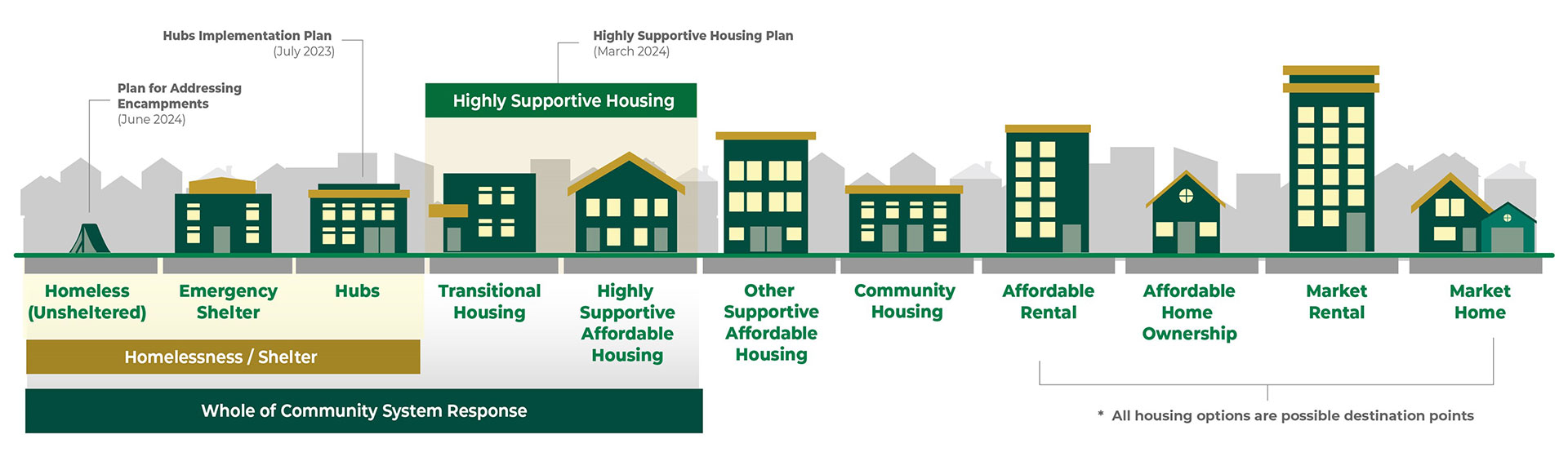
Recognizing the growing crisis, more than 200 individuals from 70 organizations across the city came together and developed the Health & Homelessness Whole of Community System Response – a strategic roadmap for supporting unhoused people who have the most complex health and social support challenges, and helping them access permanent housing that meets their needs. Now a team of researchers has been tasked with assessing how well the roadmap is working.
To understand if the program is meeting its ambitious goals and explore areas for improvement, the Centre for Research on Health Equity and Social Inclusion (CRHESI), a community-university partnership based at Western’s Faculty of Health Sciences, was asked by the Whole of Community Response leaders to support and coordinate research and evaluation of the program.
CRHESI works with and reports to the System Foundation Table, a team of volunteer community partners from diverse sectors with a mandate to evaluate new activities and embed continuous improvement to ensure sustainability of the program.
“London’s Whole of Community Response is a novel approach to addressing the needs of the most vulnerable individuals experiencing complex housing and health challenges within our community,” said Mick Kunze, chair of the System Foundation Table. “While our approaches and interventions are rooted in evidence-based practices, we also understand that local context matters.”
This research and evaluation work is funded jointly by Western, London Health Sciences Centre and through a generous donation from local businessman Ryan Finch to St. Joseph’s Health Care Foundation. The three groups came together recognizing there is a need to create meaningful and measurable change in our community.
Their support has allowed CRHESI to recruit two research managers, Eleanor Gebrou and Kelly Barnes, who oversee the work of more than 100 researchers and community partners from organizations across the city participating in the evaluation project.
"Community-led initiatives not only reflect the real needs of individuals facing homelessness, but they also empower frontline workers by fostering an environment of collaboration and understanding. Together, we can create solutions that prioritize well-being for all—those we serve and those who serve," said Gebrou.
This work is split into four main research areas:
- Exploring the outcomes and experiences of people who are precariously housed, unhoused or at risk of homelessness, as well as the perspectives of the broader residents of London, Ont. and especially the business community.
- Evaluating the experiences and well-being of those working in jobs that provide care and housing support.
- Answering questions related to systems, structures, processes and costs of care.
- Evaluating the processes that enabled this large and complex “whole of community” response, and how it unfolds from here.
“I really believe in evidence-based decision making and having as much information as we can to go into program and policy design,” said Barnes. “It's so important to understand what parts of our homelessness response are working well and what can be improved. Research and evaluation are some of the best ways to do that.”
The importance of voices and stories
Research teams will collect quantitative data, including statistics on how many people get housed, how this housing affects the number of hospital and police contacts and the cost-benefit of these new activities. They’ll also collect qualitative data, which involves hearing the experiences of those without homes, those accessing care and support and those providing and leading services.
This evaluation framework will be presented to city council, sitting as the Strategic Priorities and Policies Committee, on October 8, 2024.
“It is really important to us that this not just be numbers,” said Barnes. “We know how important people’s voices and stories are. When we take the numbers and combine them with people’s descriptions of their experiences, and the discussion of their journey, that gives us really solid information to bring back to the policy-makers and program developers to show what’s working and what isn’t.”
This research and evaluation work will span the next two years, with results shared annually with city council starting in July 2025. In addition to annual reporting, research project teams will share data as it emerges.
“The research and evaluation efforts led by the backbone team of this movement, including the System Foundations Table and our CHRESI research and evaluation managers, will be instrumental in guiding our present and future work, by illustrating the real impact our interventions are having on the health and well-being of those we’re aiming to support, as well as by responding to the questions and concerns voiced by all members of our community,” said Kunze.
Health & Homelessness Whole of Community System Response
The Whole of Community Response is about developing wrap-around health care and housing supports for those who need them most, ensuring basic human needs are met and building trusting relationships with people so they’re set up to succeed. It includes three main pillars: establishing hubs to meet immediate needs for safe shelter, nutrition and hygiene, and allowing care providers to start the process of stabilizing people’s mental and physical health. Alongside establishing hubs, the broader plan includes bringing more highly supportive housing units to London and implementing a human rights-based approach to support people wherever they are on the housing spectrum.
City council endorsed the Whole of Community Response approach in March 2023. Since then, two hubs have been established, as well as 93 highly supportive housing units, with 50 more units in development, toward a goal of 600 highly supportive housing units within three years.
The Whole of Community Response is being facilitated through the City of London and implemented by lead agencies, with ongoing collaboration among several sectors, including police and emergency services, hospitals, front-line community service organizations, educational institutions and government.
The Health and Homelessness Fund for Change, fuelled by a transformative $25-million donation from a London, Ont. family who wishes to remain anonymous, primarily provides capital funding to help fast-track the creation of hubs and highly supportive housing units. The Fund for Change is administered by London Community Foundation in partnership with the donor family.
… Hodges TORONTO | Critics of the Canadian Association of Gastroenterology’s (CAG) recently updated position state- ment … Toronto, ON M5T 1X5 Studio Hotline 416 348 0048 x411 Colour Information Printing Inks: 4 colours AD# AZCRE14524_SS_4C_E_6x1_1/2_R1 Cyan Magenta Yellow …
by David Hodges TORONTO | Critics of the Canadian Association of Gastroenterologys (CAG) recently updated position state- ment on colorectal cancer screening are slamming the new recommenda- tion that flexible sigmoidoscopyand not colonoscopybe offered to all average-risk individuals. To call this c...
Investing in life-changing research
Through donor support, endowed research chairs are exploring and answering some of the most profound and complex research questions of our time.
Among cherished family photos and special mementos in the office of Jeremy Burton, PhD, is a slightly faded photo of a young woman. Burton points out the framed photo as he enthusiastically talks about his work. It’s a young Miriam Burnett, after whom the Miriam Burnett Chair in Urological Sciences is named. It’s also the first endowed research chair position Burton held at St. Joseph’s Health Care London (St. Joseph’s).
As the research chair for seven years, Burton speaks fondly about the relationship he has with the Burnett family and the crucial role their support has played in advancing his research.
“Thanks to their funding, we became one of the world leaders in urological microbiome research,” he says.
Endowed research chairs at St. Joseph’s receive consistent and sustainable funding so that research leaders and their teams can answer the most profound and complex health questions of our time.
For decades, donors have been inspired by the clinical research taking place at St. Joseph’s and have heavily invested in endowed research chairs. Today, St. Joseph’s Health Care Foundation manages seven endowed chairs focused on several areas, including molecular imaging, fetal and newborn growth and diabetes. Working in partnership with Western University, and with donor support, the foundation recently established four new endowed chairs in mobility, medical biophysics, medical imaging and ophthalmology.
“Medical research in Canada is chronically underfunded, and there is almost no sustainable funding for hospital-based research positions,” says Michelle Campbell, President & CEO, St. Joseph’s Health Care Foundation. “Private philanthropy has filled that gap for years. When a donor gives to an endowed research chair, they are building capacity in the present day and creating future value and opportunity. An endowed gift has a multiplier effect.”
Burton, now the endowed Research Chair in Human Microbiome and Probiotics, has many reasons to be grateful for this support. Not only does the endowed fund pay for Burton’s research salary, it also partially supports the salaries of a lab manager and technical team – all vital for a sophisticated lab to be successful.
The funding also provides the gift of time – a diminishing commodity for any busy research team.
“Scientists need more time to think,” says Burton, a Lawson Research Institute (Lawson) scientist. “We are incrementally being stretched in multiple directions, and the funding gives us the time to do what we are meant to do – find answers to important clinical questions and find solutions to medical problems.”
Distinguished Lawson scientist and university professor Cheryl Forchuk, PhD, wholeheartedly agrees. She recently completed her final term as The Beryl and Richard Ivey Research Chair in Aging, Mental Health, Rehabilitation & Recovery, another endowed position. As Chair, Forchuk provided scientific and administrative leadership to a large group of researchers based at St. Joseph’s Parkwood Institute focused on mental health, activity and mobility, and cognitive vitality and brain health.
Many research leaders, she explains, can afford to spend only two days a week on their own research projects. Endowed chair positions change that.
“Imagine travelling across the country to create a national study focused on homelessness, two days a week at a time,” she suggests candidly. “You couldn’t.”
Forchuk is referring to her landmark project to better understand how many people in Canada are homeless and who they are. The goal was to develop more accurate sources of data and recommend appropriate support and services. Her work is already resulting in important changes.
Today, Forchuk is embarking on another cross-country research project to find solutions related to homelessness for Canadian veterans who are women.
Like Forchuk, Burton’s Chair position requires him to provide operational and research leadership, including developing research networks and partnerships nationally and internationally to advance studies that will revolutionize care.
“As the Chair, I think it is important that I have wide-ranging projects that benefit people in our own community and beyond,” says Burton, who is optimistic about the outcomes of several of his team’s studies.
He recently partnered with London’s First Episode Mood and Anxiety Program to study the impact of fermented foods on the microbiome of young people taking medications for mental health conditions.
One of the side effects of these medications is weight gain, which deters some patients from taking it. By providing patients with slow-release apple cider capsules, which have similar properties to fermented foods and positively affect the microbiome, they have seen an overall improvement in participants’ mental health and cholesterol after just a few months.
Reflecting on his team’s research achievements to date and the potential of what’s to come, Burton emphasizes how vital endowed chairs are to the sustainability of research and the hope to translate newly discovered knowledge into medical practice.
“Research funding from other sources comes and goes,” he says, “but endowed chair positions that are focused on improving human health provide continuity, build research and create change benefiting all of us.”
… Friday, April 23, 2010 First Floor ‐ 300 York Street London, Ontario N6B 1P8 … • The GV Simpson Lectureship in Ophthalmology COURSE OBJECTIVES • … Award. Each physician should claim only those hours of credit that … • The GV Simpson Lectureship in Ophthalmology COURSE OBJECTIVES • …
CLINICALDAYINOPHTHALMOLOGY2010 OPHTHALMICPROBLEMSFRONTANDBACK LondonConventionCentreSalonC,D,E Friday,April23,2010 FirstFloor300YorkStreet London,OntarioN6B1P8 GenerouslySupportedBy: TheCharlesDysonLectureshipinOphthalmology TheRoyalCollegeofPhysicians&SurgeonsofCanada The...
… DISEASES FRIDAY, APRIL 20, 2007 Salons C, D, E – First Floor London Convention Centre 300 York Street London, Ontario N6B 1P8 COURSE OBJECTIVES • To augment current knowledge regarding … Recognition Award. Each physician should claim only those hours of credit that he/she actually spent in the educational …
OPHTHALMOLOGY CLINICAL DAY 2007 OCULAR INFECTIOUS DISEASES FRIDAY, APRIL 20, 2007 Salons C, D, E First Floor London Convention Centre 300 York Street London, Ontario N6B 1P8 COURSE OBJECTIVES To augment current knowledge regarding the management of ocular infectious diseases To update knowledge o...
… CME Sessions A Follow-up Evaluation at the University of Western Ontario Laeeq Tahir, MD, FRCP(C)1 , Nicole Tsang, MD2, … 14 of 21 sessions with paired evaluations. Implications: Our analyses indicate that a transfer of knowledge occurs, … alter care practices when sessions focus on specific behavioural objectives [5]. This applies when learning is …
Participant Learning at Psychiatry CME Sessions A Follow-up Evaluation at the University of Western Ontario Laeeq Tahir, MD, FRCP(C)1 , Nicole Tsang, MD2, Marnin Jori Heisel, PhD, CPsych3 *, Jatinder Takhar, MD, FRCP(C)4 Key Words: continuing medical education, CME, knowledge transfer, professional ...
… Sciences Centre (hereafter referred to as “LHSC”) and St. Joseph’s Health Care, London (hereafter referred to as … Position ...... 11 Schedule 3: Guiding Principles for Resource Allocations for Shared and Integrated Arrangements … property, facilities, equipment, inventories, financial resources and liabilities, and intangible assets including …
Joint Collaboration Agreement between London Health Sciences Centre (hereafter referred to as LHSC) and St. Josephs Health Care, London (hereafter referred to as St. Josephs) IN CONSIDERATION of the mutual covenants and other good and valuable consideration contained herein, the parties covenant and...
… Boards of Directors of London Health Sciences Centre and St. Joseph’s Health Care, London approved the following … at the right time, in the right setting, with the right resources. 4. We will enhance the national and international … will enhance the economic future of London and region by encouraging new health related industries and by mining the …
ICL Doc #20825 Principles for the Relationship of Londons Hospitals In 1997, the Boards of Directors of London Health Sciences Centre and St. Josephs Health Care, London approved the following principles. Their purpose was to facilitate the implementation of the Health Services Restructuring commiss...
… Dr. will provide 50% of the secretarial computer cost. You will be expected to lease/purchase the remaining portion. Once you have received your hospital Corporate ID, please see “A Guide to … tps://intra.lhsc.on.ca/medical-affairs/professional-staff/resources/secretarial-support for more information. Hospital …
Dr. s copy Western Schulich School of Medicine & Dentistrys copy Department of s copy Medical Affairs copy THIS LETTER OF OFFER IS ONLY TO BE ISSUED AFTER CONFIRMATION OF THREE SATISFACTORY REFERENCES FOR THE CANDIDATE. Dear Dr.
… Dr. will provide 50% of the secretarial computer cost. You will be expected to lease/purchase the remaining portion. Once you have received your hospital Corporate ID, please see “A Guide to … tps://intra.lhsc.on.ca/medical-affairs/professional-staff/resources/secretarial-support for more information. Hospital …
Dr. s copy Western Schulich School of Medicine & Dentistrys copy Department of s copy Medical Affairs copy THIS LETTER OF OFFER IS ONLY TO BE ISSUED AFTER CONFIRMATION OF THREE SATISFACTORY REFERENCES FOR THE CANDIDATE. Dear Dr.
… Dr. will provide 50% of the secretarial computer cost. You will be expected to lease/purchase the remaining portion. Once you have received your hospital Corporate ID, please see “A Guide to … tps://intra.lhsc.on.ca/medical-affairs/professional-staff/resources/secretarial-support for more information. Hospital …
Dr. s copy Western Schulich School of Medicine & Dentistrys copy Department of s copy Medical Affairs copy THIS LETTER OF OFFER IS ONLY TO BE ISSUED AFTER CONFIRMATION OF THREE SATISFACTORY REFERENCES FOR THE CANDIDATE. Dear Dr.
… Dr. will provide 50% of the secretarial computer cost. You will be expected to lease/purchase the remaining portion. Once you have received your hospital Corporate ID, please see “A Guide to … tps://intra.lhsc.on.ca/medical-affairs/professional-staff/resources/secretarial-support for more information. Hospital …
Dr. s copy Western Schulich School of Medicine & Dentistrys copy Department of s copy Medical Affairs copy THIS LETTER OF OFFER IS ONLY TO BE ISSUED AFTER CONFIRMATION OF THREE SATISFACTORY REFERENCES FOR THE CANDIDATE. Dear Dr.
… Dr. will provide 50% of the secretarial computer cost. You will be expected to lease/purchase the remaining portion. Once you have received your hospital Corporate ID, please see “A Guide to … tps://intra.lhsc.on.ca/medical-affairs/professional-staff/resources/secretarial-support for more information. Hospital …
Dr. s copy Western Schulich School of Medicine & Dentistrys copy Department of s copy Medical Affairs copy THIS LETTER OF OFFER IS ONLY TO BE ISSUED AFTER CONFIRMATION OF THREE SATISFACTORY REFERENCES FOR THE CANDIDATE. Dear Dr.
… Dr. will provide 50% of the secretarial computer cost. You will be expected to lease/purchase the remaining portion. Once you have received your hospital Corporate ID, please see “A Guide to … tps://intra.lhsc.on.ca/medical-affairs/professional-staff/resources/secretarial-support for more information. Hospital …
Dr. s copy Western Schulich School of Medicine & Dentistrys copy Department of s copy Medical Affairs copy THIS LETTER OF OFFER IS ONLY TO BE ISSUED AFTER CONFIRMATION OF THREE SATISFACTORY REFERENCES FOR THE CANDIDATE. Dear Dr.
… Dr. will provide 50% of the secretarial computer cost. You will be expected to lease/purchase the remaining portion. Once you have received your hospital Corporate ID, please see “A Guide to … tps://intra.lhsc.on.ca/medical-affairs/professional-staff/resources/secretarial-support for more information. Hospital …
Dr. s copy Western Schulich School of Medicine & Dentistrys copy Department of s copy Medical Affairs copy THIS LETTER OF OFFER IS ONLY TO BE ISSUED AFTER CONFIRMATION OF THREE SATISFACTORY REFERENCES FOR THE CANDIDATE. Dear Dr.
… Dr. will provide 50% of the secretarial computer cost. You will be expected to lease/purchase the remaining portion. Once you have received your hospital Corporate ID, please see “A Guide to … tps://intra.lhsc.on.ca/medical-affairs/professional-staff/resources/secretarial-support for more information. Hospital …
Dr. s copy Western Schulich School of Medicine & Dentistrys copy Department of s copy Medical Affairs copy THIS LETTER OF OFFER IS ONLY TO BE ISSUED AFTER CONFIRMATION OF THREE SATISFACTORY REFERENCES FOR THE CANDIDATE. Dear Dr.
… Dr. will provide 50% of the secretarial computer cost. You will be expected to lease/purchase the remaining portion. Once you have received your hospital Corporate ID, please see “A Guide to … tps://intra.lhsc.on.ca/medical-affairs/professional-staff/resources/secretarial-support for more information. Hospital …
Dr. s copy Western Schulich School of Medicine & Dentistrys copy Department of s copy Medical Affairs copy THIS LETTER OF OFFER IS ONLY TO BE ISSUED AFTER CONFIRMATION OF THREE SATISFACTORY REFERENCES FOR THE CANDIDATE. Dear Dr.
… Dr. will provide 50% of the secretarial computer cost. You will be expected to lease/purchase the remaining portion. Once you have received your hospital Corporate ID, please see “A Guide to … tps://intra.lhsc.on.ca/medical-affairs/professional-staff/resources/secretarial-support for more information. Hospital …
Dr. s copy ( Western Schulich School of Medicine & Dentistrys copy ( Department of s copy ( Medical Affairs copy ( THIS LETTER OF OFFER IS ONLY TO BE ISSUED AFTER CONFIRMATION OF THREE SATISFACTORY REFERENCES FOR THE CANDIDATE. Dea...