


Search
Search
1663 Search Results:
Lawson ranks in top ten of Canada’s research hospitals
LONDON, ON – Lawson Health Research Institute (Lawson) is ranked eighth in the country according to the 2017 edition of “Canada’s Top 40 Research Hospitals List” by Research Infosource. This strong position has been maintained by Lawson for the past four years.
The research institute of London Health Sciences Centre and St. Joseph’s Health Care London, Lawson also posted the highest research intensity (spending per researcher) among large institutions ($562,500 per researcher). “In a challenging funding environment, Lawson and our two hospital partners continue to enable our researchers in their pursuit of scientific knowledge that can be applied directly to patient care,” says Dr. David Hill, Scientific Director, Lawson.
The top 40 list analyzes hospital-based research institutes from across the country on several metrics, including total research income from the previous fiscal year. The ranking looks at funds received from all sources, including both internal and external, to support research at the organization. According to the report, Lawson received $124,304 million in research income in 2016, a 7.3 per cent increase from the previous fiscal year.
Dr. David Hill advocates for increased scientific funding nationally. “Despite our own modest increase in funding in 2016, Canada as a whole requires significant investment in scientific discovery to increase the well-being of Canadians and build a robust economy. Support for health research makes Canada healthier, wealthier and smarter.”
Lawson is a key part of London’s life sciences sector which has a rich history of medical firsts and generates significant economic benefits. At the institute there are over 1,700 people including researchers, support staff, and trainees who work at hospital sites across London. Lawson partners on over 600 research projects annually with approximately 8,000 clinical subjects enrolled in over 2,500 active clinical trials.
In the past year alone, research teams at Lawson have identified a protein that could be used to treat glaucoma; launched a second clinical trial to put type 2 diabetes into remission; demonstrated that walking and talking can be an effective predictor of dementia; and used smart technology to help patients with mental health issues. “One of Lawson’s strengths is the diversity of our research. Our research expands the continuum of life – from birth to death – and people in this region are among the first to benefit from the advances we are making across the health spectrum,” asserts Dr. Hill.
Research Infosource Inc., a division of The Impact Group, is Canada’s source of R&D Intelligence.
-30-
See all Lawson Media Releases
About Lawson Health Research Institute
Lawson Health Research Institute is one of Canada’s top hospital-based research institutes, tackling the most pressing challenges in health care. As the research institute of London Health Sciences Centre and St. Joseph’s Health Care London, our innovation happens where care is delivered. Lawson research teams are at the leading-edge of science with the goal of improving health and the delivery of care for patients. Working in partnership with Western University, our researchers are encouraged to pursue their curiosity, collaborate often and share their discoveries widely. Research conducted through Lawson makes a difference in the lives of patients, families and communities around the world. To learn more, visit www.lawsonresearch.ca.
Media Contacts
Celine Zadorsky
Senior Media Relations Consultant
Communications & Public Engagement
T: 519-685-8500 ext. 73502
Celine.zadorsky@lhsc.on.ca
Lawson Research Institute Commitment to EDI-B
Lawson Research Institute (Lawson) is a research community that strives to embed equity, diversity, inclusion, and belonging (EDI-B) within our research environment. This commitment is underscored in St. Joseph’s Health Care London’s (St. Joseph's) institutional 2022-2025 strategic plan entitled “Earning Complete Confidence,” in which, among other goals, we prioritize leading in health research and innovation.
To achieve our goal, we must first acknowledge that research spaces, participation and practices have included, and still include, numerous barriers that limit the full participation of equity-deserving groups and partners in the research environment. The Canadian Tri-Agency Statement on Equity, Diversity and Inclusion (EDI) (1) has acknowledged such barriers and formulated The Canadian Tri-Agency EDI Action Plan (2018-2025)(2) outlining steps to address these in our research ecosystem.
As a health research institute, we are also guided by the Ontario Hospital Association (OHA) Strategic Plan (2022-2027) (3), which prioritizes safe and progressive practices that will benefit its members, system, and organization. Innovative, impactful and transformational research thrives when guided by equity, incorporating diverse worldviews, methods and perspectives.
In accordance with the OHA Strategic Plan (3), we believe that the key to a thriving research enterprise is to embed the values of humility, discovery and passion in our work. We embrace the philosophy of Ubuntu, which can be defined as the essential human virtues of compassion and humanity, and recognize that members of our research community are part of a larger, and more significant relational, communal, societal, environmental and spiritual world. Our mission is to attend to the wholeness of each person – body, mind and spirit – welcoming every member of our research community as a person with a unique set of strengths, lived experiences, support networks, spirituality, and personal goals.
We want to foster the resiliency, well-being, equity, diversity, inclusion and belonging of all members of our research community and thus enhance a thriving research culture where wellness, diversity and a sense of belonging are fostered and the potential and capacity of everyone is supported. We understand that leading research through an EDI-B lens is necessary to achieve research relevance, success and excellence, and this will benefit everyone in the Canadian and the global research environment. (4,5,6,7)
Lawson Research Institute commits to:
• Reviewing and improving our EDI-B specific strategies, policies and procedures (1) to support equitable research practice, and (2) to promote inclusive hiring and retention of diverse talent at the Lawson Research Institute.
• Providing the training and resources for our researchers to embed EDI-B principles and best practices in their research design and implementation.
• Incorporating EDI-B accountabilities into research design and practice competencies to ensure that our research responds to the health gaps experienced by our diverse communities.
• Convening a community of expert practitioners to learn best EDI-B practices to advance equity in research design and practice.
• Developing and launching awards focused on elevating and making visible researchers who champion and incorporate EDI-B best practices in their research as guided by the federal research funding programs (8).
It is equally vital to acknowledge, honour and include Indigenous Knowledges, which long precede Euro-western centred approaches brought to these lands. In accordance with the Truth and Reconciliation Commission’s Calls to Action 18-24 on Health (9), it is crucial to make space for and emphasize the importance of conducting health research in culturally sensitive ways as part of our collective responsibility in working towards reconciliation. We will work in collaboration with key units at Western University, such as the Office of Indigenous Initiatives, the Associate Vice-President Research (Equity, Diversity, Inclusion and Decolonization), and Western Research to ensure The Four R's – Respect, Relevance, Reciprocity, Responsibility (10) – are at the core of our research ecosystems. In partnership with Western, we will: 1) ensure ethical research engagement with Indigenous communities; 2) recognize colonial practices in, and adopt anti-colonial approaches to, research; and 3) work with partners to advance equity, diversity, inclusion, and decolonization in all joint programs, services, and funding initiatives we support.
Lawson Research Institute, the research institute of St. Joseph’s Health Care London, works in partnership with London Health Sciences Centre Research Institute, the research institute of London Health Sciences Centre (LHSC), and Western University to advance health research. Western and LHSC share our deep commitment to equity, diversity and inclusion in health research. Learn more about Western’s and LHSC’s commitment to EDI on their websites (11).
------
References:
1. Tri-Agency Statement on Equity, Diversity and Inclusion (EDI):
https://www.nserc-crsng.gc.ca/InterAgency-Interorganismes/EDI-EDI/index_eng.asp
2. Tri-Agency EDI Action Plan for 2018–2025: https://www.nserc-crsng.gc.ca/_doc/EDI/EDI-ActionPlan-EN.pdf
3. Ontario Hospitals Association Strategic Plan 2022-2027 https://www.oha.com/strategicplan
4. Hong, L. and Page, S. E. Groups of diverse problem solvers can outperform groups of high-ability problem solvers. Proc. Natl Acad. Sci. 2004;101:16385-89.
5. Hofstra B. et al. The diversity-innovation paradox in science. Proc. Natl. Acad. Sci. 2020;117:9284-91.
6. Nielsen, M. W. et al. Opinion: gender diversity leads to better science. Proc. Natl Acad. Sci. 2017;114: 1740-2.
7. Herring, C. Does diversity pay?: race, gender, and the business case for diversity. Am. Sociol. Rev. 2009;74: 208–224.
8. New Frontiers in Research Fund: Best practices in equity, diversity and inclusion in re-search design. https://www.sshrc-crsh.gc.ca/funding-financement/nfrf-fnfr/edi-eng.aspx
9. Truth and Reconciliation Commission of Canada 2012: Calls to Action
10. Kirkness, V. J. and R. Barnhardt (2001). First Nations and Higher Education: The Four R's - Respect, Relevance, Reciprocity, Responsibility. Knowledge Across Cultures: A Contribution to Dialogue Among Civilizations. R. Hayoe and J. Pan. Hong Kong, Comparative Education Research Centre, The University of Hong Kong.
11. Western EDI: https://www.edi.uwo.ca, LHSC Office of Inclusion: https://www.lhsc.on.ca/doc/lhsc_annual_report_2023/launch-of-office-of-inclusion.html
Leading the conversation on equity, diversity and inclusivity
The city of London, Ontario is home to a vibrant health research community. On Wednesday, May 9, researchers from across the city gathered to discuss the importance of equity, diversity and inclusivity (EDI) in the careers of health researchers. Through participation at Exchange: A London Health Research Day Forum on Diversity & Inclusivity, guests discussed the challenges associated with EDI and potential solutions for the future.
Exchange was held the evening before London Health Research Day, the region’s premier research showcase event which features nearly 400 trainee presentations. Trainees are the future of Canadian science and EDI is crucial to that future. This is a topic of national importance that has garnered attention and action from the federal government, funding agencies and scientists across the country.
Recognizing the importance of this topic, Canada’s Minister of Science, The Honorable Kirsty Duncan, and local Member of Parliament for London North Centre, MP Peter Fragiskatos, shared video greetings with Exchange guests.
“The Exchange event highlights a vital area of discussion. It is important to not only recognize but embrace the differences between scientists and the diverse perspectives they bring to research,” said Rebecca Sullivan, a third year PhD candidate at Western University’s Schulich School of Medicine & Dentistry, training in Savita Dhanvantari’s lab at Lawson Health Research Institute, and one of the organizers of the event. “Becoming aware of our own unconscious biases and trying to change these culturally ingrained implicit associations is the only way to make active change in science!”
Image

Above: Rebecca Sullivan, a third year PhD candidate, leading a scenario-based group activity at Exchange
The evening’s first presenter was Dr. Janet Smylie, Director of the Well Living House Applied Research Centre for Indigenous Infant, Child and Family Health at St. Michael’s Hospital and CIHR Applied Public Health Research Chair in Indigenous Health Knowledge and Information. Dr. Smylie, who also delivered the keynote presentation at London Health Research Day, spoke about the role of anti-Indigenous racism and discrimination within health care professions, including its impact on research. This included a discussion of Dr. Smylie’s own research in the field of Indigenous health.
Image
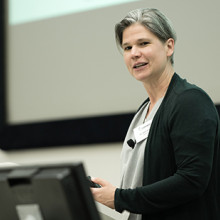
Above: Dr. Janet Smylie presenting on "Addressing anti-Indigenous racism and discrimination within health care professions"
Greta Bauer, PhD, a professor in the Department of Epidemiology and Biostatistics at Schulich Medicine & Dentistry, spoke about the role of epidemiology as a toolkit for building equity in health research. This included a discussion on incorporating intersectionality and multidimensionality into population health research methodology.
“The purpose of this work is to give researchers the measurement and statistical tools they need to shift the focus from studying broad population average effects to more heterogeneity within populations,” said Greta. “The whole point is to better study not only diversity in health outcomes, but in the processes that generate those outcomes.”
Image
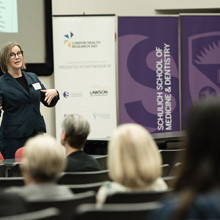
Above: Greta Bauer, PhD, presenting on "Epidemiology as a toolkit for building equity"
This talk was followed by a presentation on Gender-Based Analysis Plus (GBA+). GBA+ is an analytical tool used to assess how diverse groups of women, men and gender-diverse people may experience policies, programs and initiatives. The “plus” in GBA+ acknowledges that GBA goes beyond biological (sex) and socio-cultural (gender) differences. We all have multiple identity factors that intersect to make us who we are; GBA+ also considers many other identity factors, like race, ethnicity, religion, age, and mental or physical disability. GBA+ is a method for collecting and reviewing data in an unbiased manner, one that leaves aside many of the assumptions that can mask the GBA+ impacts of a given initiative. Alysha Croker, PhD, Manager, Tri-Agency Institutional Program Secretariat, discussed how GBA+ is being used in research and grant funding, including at the federal funding agencies.
“Diverse research teams can lead to more innovation, greater collective intelligence and an increased capacity to tackle complex issues,” said Alysha, when discussing the importance of EDI in the careers of health researchers.
Image
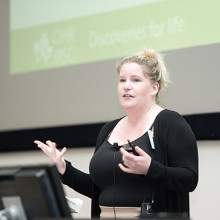
Above: Alysha Croker, PhD, presenting on "Incorporating Gender-Based Analysis Plus (GBA+) in research and beyond"
The evening also included a presentation from Shantal Feltham, founder and CEO of Stiris Research, a North American clinical trials management company based in London. Shantal discussed the importance of ensuring that clinical trials are designed to recruit diverse research participants that represent real patient populations. She also discussed her own experiences and perspectives as a female entrepreneur.
Image
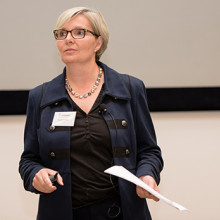
Above: Shantal Feltham delivering a presentation titled "That’s a great idea – It’ll never work"
A group of health research trainees concluded the night with a scenario-based presentation and activity. Audience members were divided into small groups and given a diversity scenario to discuss. Topics ranged from the experiences of LGBTQ+ researchers, racial diversity, physical ability barriers in research labs and more. Notes and ideas from these conversations were recorded and displayed the next day at London Health Research Day.
“Exchange highlighted EDI in health research in action. It featured talks by leading female researchers on issues in Indigenous health and LGBTQ health, implementation of equity in the Canada Research Chairs program, and female entrepreneurship in the field of health research,” said Savita Dhavantari, PhD, assistant director and scientist at Lawson and assistant professor at Schulich Medicine & Dentistry. Savita was also one of the Exchange organizers and the facilitator for the event. “Above all, I hope attendees were encouraged to be fearless in advocating for equity, diversity and inclusivity in health research.”
Image

Above: Guests at Exchange discussing a diversity scenario
Image

Above: Savita Dhanvantari, PhD, facilitating the Exchange event
To see more photos from Exchange and London Health Research Day, visit the London Health Research Day website.
Exchange and London Health Research Day are presented in partnership by Lawson Health Research Institute and Western University’s Schulich School of Medicine and Dentistry.
Scientist
… Dr. will provide 50% of the secretarial computer cost. You will be expected to lease/purchase the remaining portion. Once you have received your hospital Corporate ID, please see “A Guide to … tps://intra.lhsc.on.ca/medical-affairs/professional-staff/resources/secretarial-support for more information. Hospital …
Dr. s copy Western Schulich School of Medicine & Dentistrys copy Department of s copy Medical Affairs copy THIS LETTER OF OFFER IS ONLY TO BE ISSUED AFTER CONFIRMATION OF THREE SATISFACTORY REFERENCES FOR THE CANDIDATE. Dear Dr.
Leveraging technology to diagnose psychiatric disorders
Psychiatric disorders are often difficult to diagnose. As research advances, we are learning there are multiple subtypes of illness that differ in symptoms and treatment needs, making classification even harder. Post-traumatic stress disorder (PTSD) is one example. Individuals with the more common type of PTSD experience active defensive responses like hyperarousal or outbursts of emotion while those with the dissociative subtype experience additional passive defensive responses like ‘shutting down’ or out-of-body experiences.
In a new study from Lawson Health Research Institute and Western University, researchers combined brain imaging and machine learning to classify with 92 per cent accuracy whether individuals had PTSD and whether or not it was the dissociative subtype. The results highlight the promise of brain imaging as a tool for early diagnosis of psychiatric illness, helping to predict symptom development and treatment needs.
Image
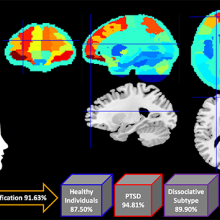
Brains scans and machine learning were combined to classify PTSD with 92 per cent accuracy.
The study involved 181 research participants, including those diagnosed with the more common form of PTSD, the dissociative subtype of PTSD, and healthy individuals with no history of PTSD. They participated in functional magnetic resonance imaging (fMRI) at St. Joseph’s Health Care London and Robarts Research Institute.
Researchers used the high-powered imaging to analyze patterns of resting-state brain activity where participants simply remained in a state of restful wakefulness in an fMRI scanner. The team found that unique patterns of brain activity differed significantly between the three groups.
“Our research group has been leading a number of studies that have shown differences in brain activity and neural connections between healthy individuals and those with different subtypes of PTSD,” says Dr. Ruth Lanius, a researcher at Lawson, professor at Schulich School of Medicine & Dentistry at Western University and psychiatrist at London Health Sciences Centre. “This study further validates that unique patterns of brain activity are associated with different forms of PTSD.”
In the second part of the study, the research team inputted the patterns of brain activity into a machine learning computer algorithm. They found the machine learning system could analyze brain scans to predict whether an individual had PTSD, the dissociative subtype of PTSD or no PTSD with 92 per cent accuracy.
“Our study suggests brain activity can be used to assist diagnosis of psychiatric disorders and help predict symptoms,” says Andrew Nicholson, PhD, lead author on the study and a post-doctoral fellow at Schulich Medicine & Dentistry who is conducting research at Lawson. “Patterns of brain activity are objective biomarkers that could be used to diagnose PTSD and, with more research, even predict response to treatment.”
Objective biomarkers hold promise for transforming psychiatric medicine.
“The field of psychiatry does not currently have objective biomarkers like those used to diagnose and understand other illnesses or diseases like cancer,” says Nicholson. “By discovering and validating patterns of brain activity as biomarkers, we can bring objective measures to psychiatry and transform patient care.”
The study, “Machine learning multivariate pattern analysis predicts classification of posttraumatic stress disorder and its dissociative subtype: A multimodal neuroimaging approach,” is published in Psychological Medicine.
LHSC and St. Joseph’s introduce new research institutes
Lawson Research Institute at St. Joseph’s and London Health Sciences Centre Research Institute will strengthen hospital-based innovation in London, Ontario
LONDON, Ont. – Today, London Health Sciences Centre (LHSC) and St. Joseph’s Health Care London (St. Joseph’s) unveiled new research institutes designed to strengthen hospital-based innovation. Lawson Research Institute (Lawson) at St. Joseph’s and London Health Sciences Centre Research Institute (LHSCRI) will leverage each hospital’s unique areas of clinical focus while further integrating research with care, helping to advance discoveries that lead to improved patient outcomes.
The new institutes were announced at a launch event with guided open house tours taking place across LHSC’s Victoria Hospital, Children’s Hospital and University Hospital, as well as at St. Joseph’s Hospital and Parkwood Institute. Attendees were able to experience signature research areas, including aging, mental health and microbiome research at Lawson, as well as cancer, children’s and mental health research at LHSCRI. The day included demonstrations of discoveries that are reshaping care in Ontario and around the world, including a new robotic, body-weight support for people with mobility difficulties and studies using artificial intelligence (AI) to diagnose rare diseases.
“When research takes place in a hospital context, scientists have more direct connection to the needs of the patients they serve,” said Roy Butler, President and CEO of St. Joseph’s. “There’s data to show that patients treated in research-intensive hospitals live longer because they have access to cutting-edge science. All patients benefit, not just those involved in clinical trials – and that’s the power of health research. That’s why this milestone day and the discoveries to come are real cause for celebration.”
LHSC and St. Joseph’s have been innovating for more than 150 years. The research institutes will build on the legacy of scientific excellence at both organizations. Their launch marks the completion of the transition from Lawson Health Research Institute, a research brand shared between the two organizations since 2000.
“We’re building on our history while introducing the next era in health research excellence, ensuring we will continue to attract the brightest minds in science and that patients will receive world-class, innovative care,” said David Musyj, Supervisor, LHSC. “We will continue to collaborate with each other, Western University, and health research partners across the country and around the world, bolstering London’s position as a national hub for health research.”
Research teams across Lawson and LHSCRI will continue to collaborate closely on projects and large scientific initiatives. LHSC and St. Joseph’s will also continue to share administrative support for research activities.
Learn more about the new research institutes and their transformative work at:
Lawson Research Institute
London Health Sciences Centre Research Institute
-30-
For more information, please contact:
Celine Zadorsky
Senior Media Relations Consultant
London Health Sciences Centre
(226) 927-2309
OR
Debora (Flaherty) Van Brenk
Communications Consultant
St. Joseph’s Health Care London
226-577-1429 or 519-318-0657
About Lawson Research Institute: Lawson Research Institute, the health innovation arm of St. Joseph’s Health Care London, is committed to making and sharing discoveries that improve lives locally and internationally. Every day, Lawson’s 250-plus scientists work to transform imagination to innovation to patient impact. Lawson leads health-care research. Find us online at sjhc.london.on.ca/research and on social media @stjosephslondon
About London Health Sciences Centre Research Institute: At London Health Sciences Centre Research Institute (LHSCRI), our teams pioneer discoveries that transform the health of adult and paediatric patients around the world. As the research institute of London Health Sciences Centre (LHSC), we conduct research where patient care is delivered, working alongside patients, families, health-care providers and academic partners like Western University. We are leaders in advancing the understanding, diagnosis, treatment and management of diseases and health conditions through a diverse research program that ranges from laboratory-based science to clinical trials. Our research has a global impact as we build on LHSC’s 150-year legacy of health innovation and drive forward medical breakthroughs that make a difference in the lives of patients and their families. Find us online at www.lhscri.ca and on social media @LHSCRI.
LHSC and St. Joseph’s Research Institutes Launch Day

Join us and the London community as we celebrate the launch of our new research institutes at London Health Sciences Centre (LHSC) and St. Joseph’s Health Care London (St. Joseph’s).
This full-day event that is open to the public will showcase the legacy and future of hospital-based research in London. It’s a chance to engage in cutting-edge research, interact with research teams and take part in the unveiling of our new research brands.
LHSC and St. Joseph’s Research Institutes Launch Day
Date: Wednesday, October 16, 2024
Formal presentation:
- 9:30 am to 10:00 am | Parkwood Institute Main Building Auditorium, 550 Wellington Road South, Zone B, Room B2-109 (Entrance C)
Open houses:
- 11:00 am to 1:00 pm | St. Joseph’s Parkwood Institute, 550 Wellington Rd. S. Main Building (entrance C) and Mental Health Care Building (entrance F)
- 12:30 pm to 2:30 p.m. | LHSC’s Victoria Hospital, 800 Commissioners Rd. E. (Zone B entrance)
- 1:30 pm to 3:30 pm | St. Joseph’s Hospital (Cheapside entrance 4)
- 2:30 pm to 4:30 pm | LHSC’s University Hospital, 339 Windermere Rd. (Main entrance)
… | Newyu Record 813 v 14.0 1 Table of Contents Getting Started 1 - Set Up Your LibreView Account page 2 Creating a LibreView account Minimum system requirements Setting up your account 2 - Creating and Viewing Reports page 6 … 813 v 14.0 1 Table of Contents Getting Started 1 - Set Up Your LibreView Account page 2 Creating a LibreView account …
2018 Newyu, Inc. | www.libreview.com | Newyu Record 813 v 14.0 1 Table of Contents Getting Started 1 - Set Up Your LibreView Account page 2 Creating a LibreView account Minimum system requirements Setting up your account 2 - Creating and Viewing Reports page 6 Connecting your blood glucose device U...
… Media Release August 27, 2008 For immediate release St. Joseph’s responds to … cases of Listeriosis among patients, residents, or staff. Our infection control team is working closely with all … to this most unfortunate issue and will continue to advise our patients, families, staff and care providers of any new …
Media Release August 27, 2008 For immediate release St. Josephs responds to meat products recall London, Ontario St. Josephs Health Care, London is one of many organizations throughout Canada that used Maple Leaf Foods products from the facility known as establishment 97B before these items were re...
… Lithotripsy Manual Booking Form - St. Joseph’s Hospital 1-800-461-6674 or 519-646-6168 Fax: … If a new sample is being collected, please include our fax # 519-646-6231 and cc St. Joseph’s lithotripsy on … a copy of the most recent clinic note • Please indicate your patient’s preference for communication by checking one …
Lithotripsy Manual Booking Form - St. Josephs Hospital 1-800-461-6674 or 519-646-6168 Fax: 519-646-6231 Urgent or Elective Doctors name and contact information to be added here Patient Surname: First Name: Gender: Date of Birth (YYYY/MM/DD) Address: City: Postal Code: Telephone #: Alternate #: Ont...
Local COVID-19 research supported by St. Joseph's Health Crisis Fund
St. Joseph’s Health Care London and Lawson Health Research Institute have announced plans to move forward with clinical trials testing a drug that could potentially be used to prevent and treat COVID-19. St. Joseph’s Health Care Foundation will accelerate the creation of the studies by providing seed funding to get the research started through donor support. Based on the immediate need, The St. Joseph’s Health Crisis Fund has been created by St. Joseph’s Health Care Foundation to enable these and other research studies currently in development through Lawson, the research arm of St. Joseph’s.
While supporting urgent COVID-19 clinical trials will be an immediate focus, The St. Joseph’s Health Crisis Fund will also support critical patient care equipment and care and comfort items for healthcare staff and volunteers working on the frontlines of the pandemic across St. Joseph’s.
Led locally by Dr. Michael Silverman, Medical Director of St. Joseph’s Infectious Diseases Care Program, one trial will assess the safety and efficacy of using hydroxychloroquine (HCQ) to prevent COVID-19 in health care workers recently exposed to the virus. This trial will also assess the drug as a treatment for non-hospitalized patients with mild cases of the illness. St. Joseph’s will be one of many participating sites in the trial, which is being led by the Research Institute of the McGill University Health Centre.
“There is much debate surrounding the drug hydroxychloroquine. We do not yet know whether it’s safe or effective, and it should not be routinely recommended until we do,” says Dr. Silverman, also a Lawson Associate Scientist and city-wide Chair/Chief of Infectious Diseases. “We plan to carefully study the drug through a randomized controlled trial and assess whether it can help combat COVID-19.”
Dr. Silverman is also partnering with Dr. Michael Borrie, Geriatrician at St. Joseph’s and Lawson Scientist, on a prevention trial to test the safety and efficacy of the drug for patients and residents at Parkwood Institute who have been exposed to COVID-19. They are at a higher risk of infection, as well as serious complications and potential admission to acute care.
“There are two critical goals with this prophylactic trial,” explains Dr. Borrie. “First, we want to see if the drug, taken for five days, is safe for the participants in the study. We will then look to see whether it is effective to prevent illness or lessen symptoms and complications.”
They are testing whether HCQ may inhibit the coronavirus similar to how the antiviral drug Tamiflu is used to prevent influenza after exposure. The research team will recruit patients and residents who have been accidentally exposed to the virus by a confirmed or presumed case of COVID-19, but who aren’t yet experiencing symptoms. In addition to cardiograms and blood tests for safety, they are collaborating with Dr. Saman Maleki, Lawson Scientist and Immunologist, to analyze the blood for a variety of indicators including the presence of antibodies and immune response. They will collect clinical data and information on common health conditions to gain insights into why some vulnerable individuals get the disease and others don’t.
“We are aware of two small studies that were published rapidly last week, one in France and the other in China, testing the use of chloroquine for potentially treating COVID-19. Further studies are greatly needed,” adds Dr. Borrie. “This study at Parkwood Institute is a good start and we hope to have other Canadian sites join us in recruiting participants so that we can offer statistically significant results as soon as possible.”
Those interested in donating to St. Joseph’s Health Crisis Fund are asked to visit St. Joseph’s Health Care Foundation’s website to learn more at sjhcfoundation.org. Donations can be made online, through direct mail submissions or by calling the Foundation directly at 519-646-6085.
“The Sisters of St. Joseph, who founded our organization, faced contagious diseases and other pandemics at different times in our 150+ year history,” says Michelle Campbell. “Today, it’s a different time, and a new disease. Now, more than ever, we ask our community to help us address the crisis facing us all.”
In the news:
Scientist
… in the Use of the Electronic Health Record Principal Investigators: Dr. Tom Janzen, CMIO London Health Sciences … With these advances comes a greater need for education for our residents and providers on how to effectively use the … forward with advancing their EHR they will benefit from our experience. We are looking to formalize our evaluation …
Page 1 of 3 Letter of Information Residents Project Title: Evaluating an Orientation Program for Residents in the Use of the Electronic Health Record Principal Investigators: Dr. Tom Janzen, CMIO London Health Sciences Centre, tom.janzen@sjhc.london.on.ca Dr. Isha DeCoito, PhD, Faculty of Education...
London comes in eighth place in Canada’s Top 40 for hospital-based research
Lawson Health Research Institute has ranked eighth in the country for the 2021 edition of Canada’s Top 40 Research Hospitals List by Re$earch Infosource. This is the eighth consecutive year that Lawson has maintained this strong national position, which puts the institute within the top five in Ontario.
Lawson, the research institute of London Health Sciences Centre (LHSC) and St. Joseph’s Health Care London, has also maintained the top ranking for research intensity among the large tier institutions with a little more than $600,000 of research spending per researcher.
“This is a validation of the extensive support from LHSC and St. Joseph’s, our hospital foundations, Western University and our staff and physicians,” says Lawson’s Scientific Director Dr. David Hill. “These strong partnerships make the hospital environment in London a nationally recognized centre of discovery and knowledge translation.”
Hospital-based researchers belong to a health system at the forefront of the ongoing COVID-19 pandemic. With close proximity to patients and access to samples, they have mobilized to address COVID-19 in many different ways, and are making a difference around the world when it comes to advances and discoveries.
“The Province of Ontario designated health research as an essential service early in the pandemic,” explains Dr. Hill. “They understood that only science can get us through this, be it through vaccine development, surveillance and testing, evaluating new drugs to help patients in ICU survive, or studying the long-term health impacts. We have made substantial contributions of new knowledge through Lawson.”
The top 40 list analyzes hospital-based research institutes from across the country on several metrics, including total research income from the previous fiscal year. According to the report, Lawson received $121,888 million in research income in 2021.The ranking looks at funds received from all sources, including both internal and external, to support research at LHSC and St. Joseph’s.
Quick summary of Lawson’s ranking
- Rank in Top 40 Research Hospitals 2021: 8 (same as 2020)
- FY2020 research spending: $121.888 million
- Percentage change 2019-2020: 2.6%
- Research intensity: $618,700 per researcher
- Research intensity - percentage of total hospital spending: 7.0%
London expands approach to prevent discharge from hospital to homelessness
LONDON, ON - During a virtual event for Londoners hosted by Lawson Health Research Institute and the City of London, a multi-sectoral research team announced two projects representing a collaborative approach to preventing homelessness from within hospital walls.
Built on the unique and successful No Fixed Address (NFA) strategy, these projects are being tested as a potential best practice for preventing hospital discharge to homelessness. NFA seeks to stop the cycle between hospital admissions and homelessness by providing timely and accessible supports to patients who would otherwise be discharged into homelessness. It brings housing and financial supports into the health-care system, starting as soon as upon admission, to assist in finding appropriate housing and supports or avoiding a potential eviction.
“Canada lacks a validated and coordinated service model to address the issue of hospital stay to no fixed address, which can often be the beginning of an individual’s experience with homelessness,” explains Dr. Cheryl Forchuk, Beryl and Richard Ivey Research Chair in Aging, Mental Health, Rehabilitation and Recovery, and Assistant Scientific Director at Lawson. “There are multiple factors that cause people to be discharged into homelessness - systemic, organizational and personal. We need a collaborative and coordinated approach that honours housing as a basic human right.”
Several departments at London Health Sciences Centre (LHSC) and St. Joseph’s Health Care London collaborate with staff from the City of London, Canadian Mental Health Association (CMHA) Elgin-Middlesex, Youth Opportunities Unlimited (YOU), Salvation Army’s Housing Stability Bank and Ontario Works in the City of London to provide direct, on-site (or virtual) support for patients at risk of homelessness.
“Implementing a coordinated approach to addressing homelessness allows our staff to actively work alongside our partners in health care to prevent and divert individuals and families from an experience of homelessness by assessing their needs and connecting them to the housing supports.,” says John D’Oria, Coordinated Access Manager, City of London. “Whether it’s financial, social service or mental health support, this partnership and approach allows for a holistic approach to client care at the right time.”
Patients discharged from hospital to homelessness in Canada face many challenges that make recovery more difficult. They often experience higher readmission rates and emergency department visits. This is particularly concerning for youth, who have been found to be the fastest growing segment of the homeless population.
NFA was initially tested with strong success for mental health patients across the city and the second version of the project was extended to medical units at LHSC’s University and Victoria Hospitals.
PROJECT 1: Collaboration to Address Homelessness - Health, Housing and Income (H2I)
This research study will evaluate the City of London’s Coordinated Access Outreach program at hospital sites. A Coordinated Access Outreach worker will support individuals at risk of homelessness to maintain or obtain housing. Ontario Works will assist with the provision of income and employment supports and the Salvation Army Housing Stability Bank may be accessed for needed financial resources to secure or maintain housing.
Over two years, 106 participants will be interviewed in hospital and again six months post-discharge. Focus groups with participants, health care providers and community partners will provide further insight into the effectiveness of NFA. This project is funded by the Canada Mortgage and Housing Corporation (CMHC)’s National Housing Strategy.
PROJECT 2: Preventing discharge to No Fixed Address – Youth (NFA-Y)
This research study will customize, implement and evaluate the NFA strategy for vulnerable youth ages 16-24. The unique health and housing needs of youth at-risk will be explored by streamlining housing and financial support into a coordinated system of care, with additional support provided by Youth Opportunities Unlimited and Children’s Aid Society London and Middlesex.
Over 3-4 years, data to be collected from 93 youth at three time points. Focus groups with youth participants, health care providers, and community agency partners will help enhance the NFA strategy to meet the unique needs of youth. This project is funded by the National Centres of Excellence (NCE) Making the Shift (MtS) Youth Social Innovation Lab.
-30-
About Lawson Health Research Institute
Lawson Health Research Institute is one of Canada’s top hospital-based research institutes, tackling the most pressing challenges in health care. As the research institute of London Health Sciences Centre and St. Joseph’s Health Care London, our innovation happens where care is delivered. Lawson research teams are at the leading-edge of science with the goal of improving health and the delivery of care for patients. Working in partnership with Western University, our researchers are encouraged to pursue their curiosity, collaborate often and share their discoveries widely. Research conducted through Lawson makes a difference in the lives of patients, families and communities around the world. To learn more, visit www.lawsonresearch.ca.
Media Contacts
Celine Zadorsky
Senior Media Relations Consultant
Communications & Public Engagement
T: 519-685-8500 ext. 73502
Celine.zadorsky@lhsc.on.ca
London Health Research Day 2024 highlights innovation and spotlights the future of AI in health care
Over 400 learners, faculty and researchers from across London Health Sciences Centre (LHSC), St. Joseph’s Health Care London (St. Joseph’s) and Western University gathered for London Health Research Day (LHRD) on May 7, 2024.
LHRD is one of southwestern Ontario’s largest cross-disciplinary health research conferences, and is presented in partnership by Lawson Health Research Institute (the research institute of LHSC and St. Joseph’s) and Western’s Schulich School of Medicine & Dentistry and Faculty of Health Sciences. It is an opportunity for students to share innovative research on a wide variety of health topics, practice science communication, network, and learn from an insightful keynote presentation and informative workshops.
“There is an amazing diversity of health research being conducted in London, Ontario right now, all represented at this event,” says Dr. David Hill, Interim Research Executive and Scientific Director for London Health Sciences Centre (LHSC). “Looking at all these presentations, the future of health research is bright.”
More than 420 guests, 340 poster presenters, 50 volunteer judges and 24 symposia speakers registered to attend the event held at Western University.
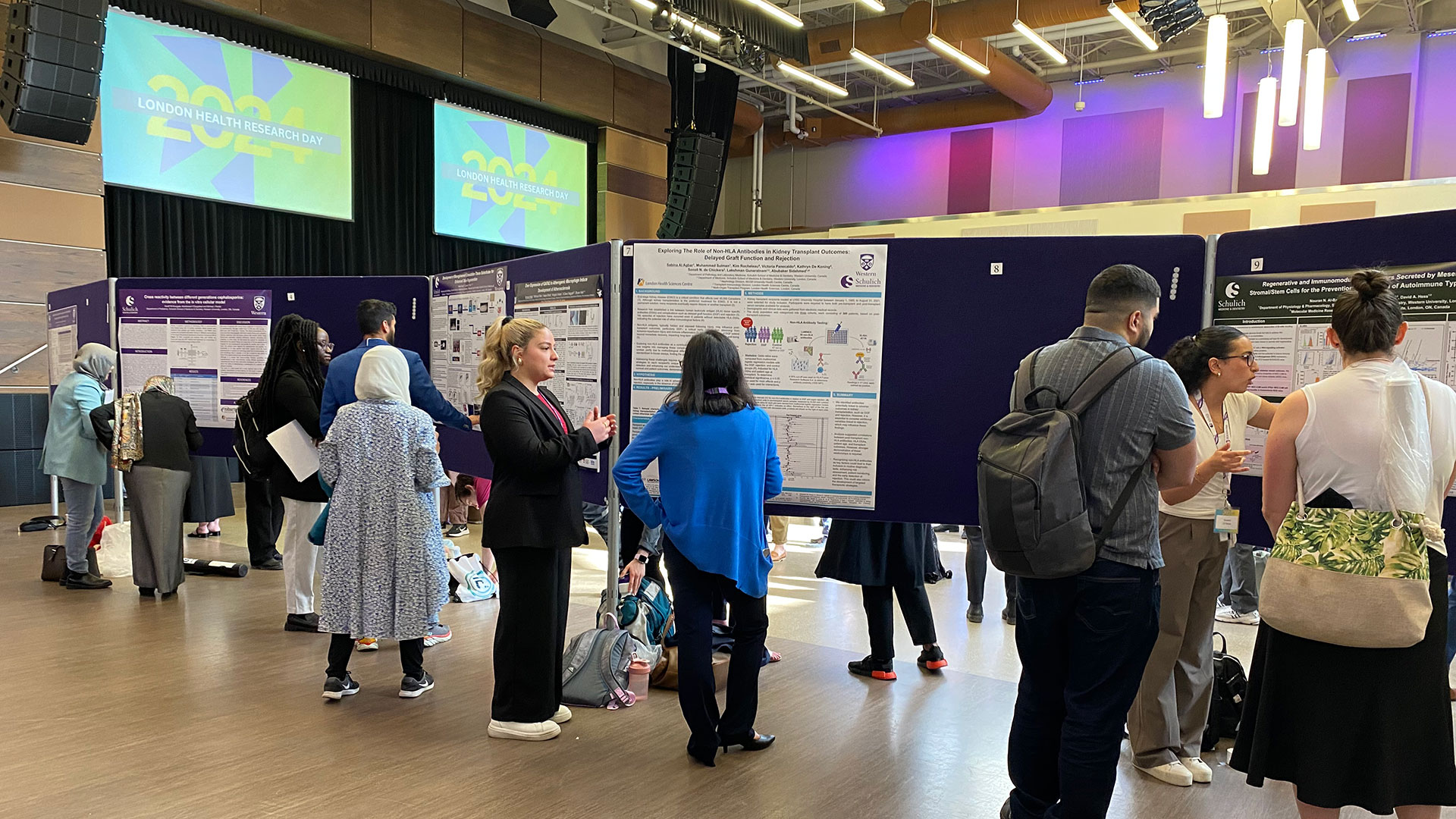
“An event like this, focused on health research by learners, provides an outstanding opportunity for our trainees to showcase their research and network with peers and leaders in the field,” says Susanne Schmid, Vice Dean of Basic Medical Sciences at Schulich Medicine & Dentistry. “As one of the largest health research gatherings in our city, London Health Research Day not only highlights the amazing work being done at Western, LHSC and St. Joseph’s, but also underscores the powerful collaborations that drive our success.”
Dr. Lisa Porter, Vice President, Research and Scientific Director at St. Joseph’s, was also on-hand to speak with presenters and learn more about ongoing research.
“I am so proud of the great research happening in London,” says Dr. Porter. “This event is a wonderful opportunity to explore the fabulous research and see what the future holds for health care.”
The event was preceded on May 6 with a public lecture by Dr. Mark Daley, Chief AI Officer at Western University, who addressed how artificial intelligence (AI) has the potential to change the future of health research and the lives of Canadians. The potential of AI to address ongoing challenges in health care, was echoed by keynote speaker Dr. Laura Rosella, Canada Research Chair in Population Health Analytics at the University of Toronto.
The impact of technology on health research was already visible in many of the projects presented by learners, highlighting the rapid advancement of health research in London, Ontario.
Media Contact
Amanda Taccone
Communications Consultant & External Relations
Lawson Health Research Institute
T: 519-685-8500 ext. ext. 64059
C: 226-919-4748
@email
London holds 8th place ranking in Canada's Top 40 for hospital-based research
Lawson Health Research Institute is again ranked eighth in the country according to the 2020 edition of “Canada’s Top 40 Research Hospitals List” by Re$earch Infosource. This strong national position has been maintained by Lawson for the past seven consecutive years and keeps the Institute within the top five in Ontario.
Lawson, the research institute of London Health Sciences Centre and St. Joseph’s Health Care London, has also maintained the top ranking for research intensity among the large tier institutions with $600,000 of research spending per researcher.
“Now, more than ever, people are understanding the critical importance of hospital-based research and its impact on health care,” says Dr. David Hill, Lawson Scientific Director and VP, Research for London Health Sciences Centre and St. Joseph’s Health Care London.
“We have remarkable people right here in London working on solutions for health challenges that have a worldwide impact. Their knowledge, creativity and dedication never fail to astound.”
The top 40 list analyzes hospital-based research institutes from across the country on several metrics, including total research income from the previous fiscal year. The ranking looks at funds received from all sources, including both internal and external, to support research at the organization. According to the report, Lawson received $118,796 million in research income in 2019. Despite representing a 4.0 per cent drop from the previous fiscal year, Lawson has maintained its rankings on the national list.
Hospital-based researchers belong to a health system at the forefront of the COVID-19 pandemic. With close proximity to patients and access to samples, they have mobilized to address COVID-19. Many Lawson research teams are implementing pre-clinical, clinical observational and clinical trial studies to prevent or soften the worst effects for patients with COVID-19. They are also studying the long-term and mental health impacts related to the pandemic.
“The COVID-19 pandemic is proving to be one of the most pressing health challenges of our time,” notes Dr. Hill. “Lawson excels in rapid response research and is uniquely positioned to tackle health problems from within hospital walls.”
Quick summary of Lawson's ranking
-
Rank in Top 40 Research Hospitals 2020: 8 (same as 2019)
-
FY2019 research spending: $118,776 million
-
FY2018 research spending: $123,790 million
-
Percentage change 2018-2019: -4.0%
-
Research intensity: $600,000 per researcher
-
Research intensity - percentage of total hospital spending: 7.0%
London ranks in the top 10 for hospital-based research
Lawson Health Research Institute is ranked eighth in the country according to the 2019 edition of “Canada’s Top 40 Research Hospitals List” by Re$earch Infosource. This strong national position has been maintained by Lawson for the past six years and also keeps the institute within the top five in Ontario.
The results
The research institute of London Health Sciences Centre and St. Joseph’s Health Care London (St. Joseph’s), Lawson has also maintained the top ranking for research intensity among the large tier institutions with $612,800 of research spending per researcher.
“As a hospital-based research institute, our innovation happens where care is delivered,” says Dr. David Hill, Lawson Scientific Director. “Every day, teams of researchers are working directly with clinicians and patients to improve treatments or create entirely new ones. They also find innovative methods of delivering services that drive efficiency and reduce costs.”
Image
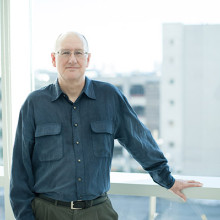
Dr. David Hill, Lawson Scientific Director.
The top 40 list analyzes hospital-based research institutes from across the country on several metrics, including total research income from the previous fiscal year. The ranking looks at funds received from all sources, including both internal and external, to support research at the organization. According to the report, Lawson received $123,790 million in research income in 2018, which represents 0.4 per cent in growth from the previous fiscal year.
“We are known across the country and around the world for our high level of research activity and success, despite our size. London punches well above our weight when it comes to health research,” adds Dr. Hill.
“Our position as a leading research institute is the foundation for brilliant research and worldwide partnerships tackling the most pressing challenges in health care.”
What does this mean for London, Ontario?
There are millions of dollars every year coming in London from elsewhere in Canada and in the world. Approximately 60 per cent of that is spent on jobs. Lawson employs over 2,000 people in hospital-based research. This is a major source of quality employment for Londoners and people in the surrounding region. Dr. Hill notes that this is one of the real benefits of having a strong biomedical industry associated with the city.
“Another real benefit of having research directly in the hospitals is that our researchers focus on gaining knowledge that advances our ability to treat patients and find solutions to wicked problems that have been around for a long time.”
For example, Lawson researchers have been tackling the issue of homelessness from within hospital walls. The No Fixed Address (NFA) strategy reaches and supports patients during the crucial transitional period when they are being discharged from the hospital and re-integrated into the community. Learn more about this successful research initiative.
Image
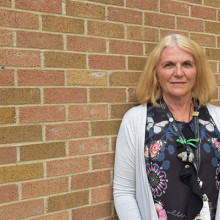
Dr. Cheryl Forchuk, Lawson Scientist leading the NFA strategy in London hospitals.
How are we adapting to the current funding environment?
While federal funding for research in Canada is slowly starting to increase, this sector experienced over a decade of decreasing funding that placed the country far behind other nations in terms of investing in health research.
“We have become better at what we do in competing for grants and other funding sources, in particular from the government,” explains Dr. Hill.
Also, “Lawson has been diversifying our sources of funding. We’ve have engaged in more partnerships with industry and joint research and development projects with companies. Not only does that have the advantage of providing additional resources, but also is often a more practical way of directly delivering our knowledge into salable products”
Strong partnerships
This year, Re$earch Infosource is showcasing “Building Bridges: Pathways to Building Research Capacity and Discovery through Collaboration.” Health researchers in London have collaborations across many sectors that result in big impacts for the people in this region and beyond.
As just one example, a group of scientists from Lawson, Brescia University College and Schulich School of Medicine & Dentistry at Western University provide academic support to London’s Fermented Foods Project that brings together industry partners, the agricultural sector, academic and health institutions, the City of London and the London Economic Development Corporation.
The goals of this group, funded by the Weston Family Microbiome Initiative, are to support new product development and batch production, enhance customer confidence, quantify health benefits and establish a competitive advantage.
Image
Dr. Gregor Reid, left, is one of the researchers for London's Fermented Foods Project.
Scientist
London ranks in top ten of Canada’s research hospitals
MEDIA RELEASE
For immediate release
January 18th, 2022
LONDON, ON – Lawson Health Research Institute has ranked eighth in the country for the 2021 edition of Canada’s Top 40 Research Hospitals List by Re$earch Infosource. This is the eighth consecutive year that Lawson has maintained this strong national position, which puts the institute within the top five in Ontario.
Lawson, the research institute of London Health Sciences Centre (LHSC) and St. Joseph’s Health Care London, has also maintained the top ranking for research intensity among the large tier institutions with a little more than $600,000 of research spending per researcher.
“This is a validation of the extensive support from LHSC and St. Joseph’s, our hospital foundations, Western University and our staff and physicians,” says Lawson’s Scientific Director Dr. David Hill. “These strong partnerships make the hospital environment in London a nationally recognized centre of discovery and knowledge translation.”
Hospital-based researchers belong to a health system at the forefront of the ongoing COVID-19 pandemic. With close proximity to patients and access to samples, they have mobilized to address COVID-19 in many different ways, and are making a difference around the world when it comes to advances and discoveries.
“The Province of Ontario designated health research as an essential service early in the pandemic,” explains Dr. Hill. “They understood that only science can get us through this, be it through vaccine development, surveillance and testing, evaluating new drugs to help patients in ICU survive, or studying the long-term health impacts. We have made substantial contributions of new knowledge through Lawson.”
The top 40 list analyzes hospital-based research institutes from across the country on several metrics, including total research income from the previous fiscal year. According to the report, Lawson received $121,888 million in research income in 2021.The ranking looks at funds received from all sources, including both internal and external, to support research at LHSC and St. Joseph’s.
Quick summary of Lawson’s ranking
- Rank in Top 40 Research Hospitals 2021: 8 (same as 2020)
- FY2020 research spending: $121,888 million
- Percentage change 2019-2020: 2.6%
- Research intensity: $618,700 thousand per researcher
- Research intensity - percentage of total hospital spending: 7.0%
-30-
About Lawson Health Research Institute: Lawson Health Research Institute is one of Canada’s top hospital-based research institutes, tackling the most pressing challenges in health care. As the research institute of London Health Sciences Centre and St. Joseph’s Health Care London, our innovation happens where care is delivered. Lawson research teams are at the leading-edge of science with the goal of improving health and the delivery of care for patients. Working in partnership with Western University, our researchers are encouraged to pursue their curiosity, collaborate often and share their discoveries widely. Research conducted through Lawson makes a difference in the lives of patients, families and communities around the world. To learn more, visit www.lawsonresearch.ca.
For more information, please contact:
Celine Zadorsky
Communications & External Relations
Lawson Health Research Institute
T: 519-685-8500 ext. 75664
C: 519-619-3872
@email
www.lawsonresearch.ca/news-events
Media Contacts
Celine Zadorsky
Senior Media Relations Consultant
Communications & Public Engagement
T: 519-685-8500 ext. 73502
Celine.zadorsky@lhsc.on.ca
London researchers discover novel method to diagnose long COVID
Study found unique blood biomarkers in patients with post-COVID-19 condition
LONDON, ON – Published this week in Molecular Medicine, researchers at Lawson Health Research Institute have found that patients with post-COVID-19 condition (long COVID) have unique biomarkers in their blood. The team is now working on developing a first of its kind blood test that could be used to diagnose long COVID. The discovery could also lead to new therapeutics for this condition.
Long COVID occurs when someone experiences symptoms like fatigue, cognitive issues, shortness of breath and gastrointestinal issues after an initial COVID-19 diagnosis. It can sometimes take up to 12 months for the condition to occur.
“It’s estimated that 30 to 40 per cent of patients with COVID-19 will develop long COVID,” says Dr. Douglas Fraser, Lawson Scientist and Critical Care Physician at London Health Sciences Centre (LHSC). “Physicians currently rely on symptoms alone to diagnose the condition, but our research offers a unique profile of blood biomarkers that could be used in a clinical test.”
The researchers studied 140 blood samples from participants at LHSC and St. Joseph’s Health Care London, including St. Joseph’s Post-Acute COVID-19 Program. Participants were those with presumed long COVID, hospital inpatients with acute COVID-19 infection and healthy control subjects.
“We chose to study blood vessels that link all the body systems together to look for changes after an acute infection,” explains Dr. Fraser, who is also a Professor at Western University’s Schulich School of Medicine & Dentistry.
The team found that blood vessels of those with presumed long COVID were changing rapidly after a confirmed COVID-19 infection. They also found that patients with long COVID had 14 elevated blood biomarkers associate with blood vessels. With the help of machine learning, they discovered that two biomarkers called ANG-1 and P-SEL could be used to classify long COVID with 96 per cent accuracy.
“Long COVID is a relatively new condition and we have much to learn about it,” says Dr. Michael Nicholson, Associate Scientist at Lawson, Respirologist at St. Joseph’s and Associate Professor at Schulich Medicine & Dentistry. “This research advances our understanding of long COVID with the potential to improve diagnosis and patient care.”
The advantage of biomarkers is that they not only help diagnose a disease but also provide insight into potential treatments. The team is now focused on using their findings to create a clinical diagnostic test with a goal of also exploring therapeutics.
“With a point-of-care diagnostic test, we could confidently diagnose long COVID and eventually develop targeted therapeutics against these blood vessel changes that we have discovered,” says Dr. Fraser. “The ultimate goal is to improve patient outcomes following a long COVID diagnosis.”
This research was supported by funding from London Health Sciences Foundation, London Community Foundation and the AMOSO Innovation Fund. It builds on a growing body of COVID-19 research from scientists at Lawson Health Research Institute.
About Lawson Health Research Institute
Lawson Health Research Institute is one of Canada’s top hospital-based research institutes, tackling the most pressing challenges in health care. As the research institute of London Health Sciences Centre and St. Joseph’s Health Care London, our innovation happens where care is delivered. Lawson research teams are at the leading-edge of science with the goal of improving health and the delivery of care for patients. Working in partnership with Western University, our researchers are encouraged to pursue their curiosity, collaborate often and share their discoveries widely. Research conducted through Lawson makes a difference in the lives of patients, families and communities around the world. To learn more, visit www.lawsonresearch.ca.
Media Contacts
Celine Zadorsky
Senior Media Relations Consultant
Communications & Public Engagement
T: 519-685-8500 ext. 73502
Celine.zadorsky@lhsc.on.ca