


Search
Search
185 Search Results:
… donors is expanding specialized retina care at St. Joseph’s Ivey Eye Institute to meet a growing demand for services. … the number of patients needing retina care at St. Joseph’s Ivey Eye Institute has increased 50 per cent – a trend … population ages. Faced with rising demand for retina care, Ivey Eye reached out to St. Joseph’s Health Care Foundation …
m ST.JOSEPH'S ,.., ' , \ .. LAUNr.Y PRQprY L.f'J' O,P.t/300 A publication of St. Joseph s Health Care London SPRING 2022 | ISSUE 05 HOVERING HOLOGRAMS HONE SURGEONS' SKILLS Surgical visionary Dr. George Athwal at St. Josephs Hospital has introduced a revolutionary new tool into operating rooms in C...
New research showcased at third annual Parkwood Institute Research Spring Update Half Day
More than 100 researchers, staff and trainees attended the third annual Parkwood Institute Research (PIR) Spring Update Half Day on April 27, 2018 to share their innovative research and learn about work from across PIR through interactive workshops and poster presentations.
A program of Lawson Health Research Institute and located at St. Joseph’s Health Care London’s Parkwood Institute, PIR represents three major research programs: cognitive vitality and brain health, mobility and activity, and mental health. The event allowed guests to hear about new studies and recent research developments from across these three themes.
“Parkwood Institute Research covers different research areas but what we want to emphasize with this event is the overlap and collaboration between our programs. Having an inter-disciplinary approach that encourages partnerships ultimately helps us to incorporate new knowledge into patient care at Parkwood Institute,” says Dr. Cheryl Forchuk, Beryl and Richard Ivey Research Chair in Aging, Mental Health, Rehabilitation and Recovery, and Assistant Director, Lawson.
Five interactive workshops were held on a variety of different topics, such as clinical trials, systematic reviews, innovation in health care, practice-based research methods and evaluating SMART technology. The workshops were led by some of Parkwood Institute’s research leaders, including Drs. Cheryl Forchuk, Robert Teasell, Michael Borrie, Dalton Wolfe, and Arlene MacDougall.
Attendees also had the opportunity to visit poster presentations on recent PIR projects.
Image

Ashrafunissa Janmohammad (above), Lawson research coordinator at Parkwood Institute’s Chronic Wound Management Clinic, was one of the poster presenters at the event. She presented on a study led by Lawson associate scientist Dr. David Keast, which assessed whether chitosan gelling fibre dressing could be effective in controlling bleeding after minor wound surgery. Chitosan is derived from chitin, the structural component of the cell walls of fungi and the shells of arthropods such as crabs, lobsters, shrimps and insects.
Image

Juweiriya Ahmed (above), a MSc candidate at Lawson and Western University’s Schulich School of Medicine & Dentistry, was another presenter. Her poster outlined a study investigating the interaction between neuroanatomical and genetic risk factors that may contribute to the development of psychotic symptoms (delusions and hallucinations) in patients with Alzheimer’s disease. Supervised by Lawson scientist Dr. Elizabeth Finger, the study could help inform the development of therapeutic targets and treatment plans.
New study shows technology could play an important role in mental health support
LONDON - In a study published in MDPI Journal, a team of researchers at Lawson Health Research Institute have shown that the use of technology may assist in better outcomes for those living with both mental health and physical disorders.
Dr. Cheryl Forchuk, Assistant Scientific Director at Lawson, and her team embarked on a pilot study that used smart home monitoring solutions to assist those living with both a mental health disorder and other health challenges. The purpose of this pilot study was to see if technology could improve overall lifestyle and wellbeing.
“We began our research by using hospital prototype apartments – apartment style care spaces within hospital settings – that were equipped with smart home technology solutions such as a screen device, activity trackers, weigh scales and medication dispensers,” says Dr. Forchuk who is also the Beryl and Richard Ivey Research Chair in Aging, Mental Health, Rehabilitation and Recovery at St. Joseph’s Health care London. “Once we tested it in a hospital setting, we wanted to find a way to take this idea out into the community in different kinds of housing and living situations to see if it would be beneficial.”
The research team partnered with the Canadian Mental Health Association (CMHA) and the London and Middlesex Community Housing (LMCH) to work together to retrofit the homes of the 13 study participants.
“We worked together with the participants and their care providers to choose what combination of technology they felt would be best for them,” says Dr. Forchuk. “No matter their health condition each participant wanted to be more active and independent, with the goal of staying out of hospital.”
All smart devices were connected to the Lawson Integrated Database, which is a database that can securely collect data from multiple sources such as health devices. This allowed care providers to send reminders to participants, while also tracking usage and results.
“The key benefits we noted was that study participants started to live healthier lives,” says Jonathan Serrato, Lawson Research Associate. “Participants logged going for walks and exercising more often, as well as making healthier food choices. Those who used the medication dispensers did not miss a single dose. The touch screen devices also allowed participants to easily communicate with care providers and support networks, and access more resources.”
Following the pilot study, the research team also published a subsequent paper, as a ‘how-to guide’ for utilizing smart home technology interventions as a health care tool.
“This paper is a helpful resource that outlines implications and considerations when it comes to smart home technologies,” adds Serrato. “There are many areas we touch upon such as security, privacy and feasibility as well as hardware and software information for those who would like to take on their own similar type of smart home technology project.”
About Lawson Health Research Institute
Lawson Health Research Institute is one of Canada’s top hospital-based research institutes, tackling the most pressing challenges in health care. As the research institute of London Health Sciences Centre and St. Joseph’s Health Care London, our innovation happens where care is delivered. Lawson research teams are at the leading-edge of science with the goal of improving health and the delivery of care for patients. Working in partnership with Western University, our researchers are encouraged to pursue their curiosity, collaborate often and share their discoveries widely. Research conducted through Lawson makes a difference in the lives of patients, families and communities around the world. To learn more, visit www.lawsonresearch.ca.
Media Contacts
Celine Zadorsky
Senior Media Relations Consultant
Communications & Public Engagement
T: 519-685-8500 ext. 73502
Celine.zadorsky@lhsc.on.ca
New treatment for critically ill COVID-19 patients with sepsis is one step closer to potentially saving lives
LONDON, ONTARIO – It’s a human protein called annexin A5, and it’s being studied as a potential therapy for COVID-19 patients with sepsis. Annexin A5 is a protein produced inside the human body with unique anti-coagulation (preventing blood clots) and anti-inflammatory properties that could help in the fight against sepsis.
Sepsis is a life-threatening condition that occurs when the body’s response to an infection turns into an overwhelming inflammatory response. The inflammatory response can cause damage to organs such as the heart, liver, lungs, and even the brain. Unfortunately, most critically ill COVID-19 patients develop sepsis. “With COVID initially, it is in the airway and then in the lungs, then from there the inflammatory response in fact spreads to the whole body,” says Dr. Qingping Feng, Lawson Scientist and Ivey Chair in Molecular Toxicology at Western University's Schulich School of Medicine & Dentistry. “Sepsis causes major organ dysfunction and carries a high mortality unfortunately.”
“For patients with severe COVID-19 disease, what we see is major respiratory failure in the lungs as the primary site in the body,” says Dr. Claudio Martin, Intensive Care Physician at London Health Sciences Centre (LHSC) and Associate Scientist at Lawson. “When the pandemic started, there was no proven treatment for sepsis, including sepsis as a result of COVID-19. Based on clinical trials during the pandemic, we now use steroids and other treatments to try to help, but the results and effects aren’t dramatic and we see patients who have these treatments and still progress and end up in critical care.”
However, Dr. Feng and his team have found in a pre-clinical study that annexin A5 can inhibit inflammation and improve organ function and survival when treating sepsis. This discovery was made right here in London and now the research team has launched a clinical trial with critically ill COVID-19 patients at LHSC, using a manufactured form of annexin A5.
Enrollment has begun with the goal to have 60 patients participate in the clinical trial. “Patients are receiving standard treatment and then those enrolled will also receive the annexin,” says Dr. Martin. “It’s a placebo blinded clinical trial, so patients will either get a lower dose of annexin, a higher dose of annexin or a placebo.”
If the clinical trial shows promising results the team plans on expanding into a larger phase three trial with not just COVID-19 patients with sepsis, but other sepsis patients as well. “If in fact Annexin A5 is shown to be effective in sepsis, this will be a huge benefit for society because sepsis is the leading cause of death worldwide,” adds Dr. Feng.
The drug is currently being produced through a partnership with Suzhou Yabao Pharmaceutical R&D Co. Ltd., based in China, Lawson Health Research Institute, and WORLDiscoveries. “Our long-standing partnership with Suzhou Yabao has enabled annexin A5 drug development to proceed to this point,” says Kirk Brown, Manager of Business Development, Lawson Health Research Institute. “We are now in a unique position through this trial to offer a potential life-saving treatment for this emergent global disease, with the objective of soon expanding to all cause septic patients.”
-30-
About Lawson Health Research Institute
Lawson Health Research Institute is one of Canada’s top hospital-based research institutes, tackling the most pressing challenges in health care. As the research institute of London Health Sciences Centre and St. Joseph’s Health Care London, our innovation happens where care is delivered. Lawson research teams are at the leading-edge of science with the goal of improving health and the delivery of care for patients. Working in partnership with Western University, our researchers are encouraged to pursue their curiosity, collaborate often and share their discoveries widely. Research conducted through Lawson makes a difference in the lives of patients, families and communities around the world. To learn more, visit www.lawsonresearch.ca.
About WORLDiscoveries®
WORLDiscoveries is the business development arm of London’s extensive research network and the bridge between local invention and global industry. Born out of a partnership between Western University, Robarts Research Institute and Lawson Health Research Institute (collectively known as the Partners), WORLDiscoveries draws upon a mix of industry connections, sector-specific market knowledge and business development expertise, to help researchers and local inventors commercialize their discoveries through licensing and new company spin-offs.
Media Contacts
Celine Zadorsky
Senior Media Relations Consultant
Communications & Public Engagement
T: 519-685-8500 ext. 73502
Celine.zadorsky@lhsc.on.ca
… Completed in 2008 and planning complete for 2009 b) Tour of Ivey Institute to Identify Barriers A stakeholder with … and the chair of the accessibility working group toured the Ivey Eye Institute to identify barriers for those with … to access the 2nd floor ward Complete by 03/12 Physical/ Ivey Eye Institute, St. Joseph’s Hospital Colours used in …
Annual Accessibility Plan April 2011 March 31, 2012 Submitted to the St. Josephs Accessibility Steering Committee, February 15, 2011, St. Josephs Senior Leadership Team, February 25, 2011; and St. Josephs Board of Directors, March 22, 2011 Prepared and Submitted by St. Josephs Accessibility Working...
… St. Joseph’s Health Care London ORTHOPTIST - IVEY EYE INSTITUTE 268 Grosvenor Street, Room B1-409 London, … 2010/01/25) St. Joseph’s Health Care London ORTHOPTIST - IVEY EYE INSTITUTE 268 Grosvenor Street, Room B1-409 London, … St. Joseph’s Health Care London ORTHOPTIST - IVEY EYE INSTITUTE 268 Grosvenor Street, Room B1-409 London, …
St. Josephs Health Care London ORTHOPTIST - IVEY EYE INSTITUTE 268 Grosvenor Street, Room B1-409 London, Ontario, Canada N6A 4V2 Telephone: 519 646-6018 Fax: 519 646-6056 REQUEST FOR ORTHOPTIC ASSESSMENT PATIENT: _________________________________________________________________________ DATE OF APPO...
Provincial funding enables coronavirus research in London, Ontario
LONDON, ON – Three studies investigating a range of important COVID-19 questions led by teams from Lawson Health Research Institute and Western University are among an initial 15 projects funded through the Government of Ontario’s COVID-19 Rapid Research Fund.
Studying a human protein in the treatment of critically ill COVID-19 patients
A team from Lawson will be the first in the world to study a human protein called annexin A5 as a potential therapy for COVID-19 patients with sepsis. The randomized controlled trial will enroll up to 60 critically ill patients from London Health Sciences Centre (LHSC).
“There are no proven therapies to treat COVID-19,” says Dr. Claudio Martin, Associate Scientist at Lawson and Intensive Care Physician at LHSC. “In the most severe cases, it’s complicated by hyperinflammation that can lead to sepsis, acute respiratory distress syndrome (ARDS) and multi-organ failure.”
Sepsis is a life-threatening condition. It occurs when the body’s response to an infection is out of balance, triggering hyperinflammation that can damage multiple organs. Many critically ill COVID-19 patients develop sepsis one to two days before ARDS, suggesting that sepsis is a major contributor to the development of respiratory and multi-organ failure.
Led by Dr. Martin, this clinical trial aims to fight sepsis in COVID-19 patients with a manufactured form of annexin A5 – a human protein that has strong anti-inflammatory properties. Patients will be randomized to receive either the drug at two different doses or a placebo.
“The ultimate goal is to determine whether this drug reduces hyperinflammation associated with sepsis in order to prevent respiratory and multi-organ failure,” explains Dr. Martin, who is also a Professor at Western’s Schulich School of Medicine & Dentistry.
The team also believes the drug will prevent cell death and blood clots associated with COVID-19 through annexin A5’s anti-apoptotic (cell death prevention) and anti-coagulant (blood clot prevention) properties.
This is the first time annexin A5 will be tested as a potential sepsis treatment in humans. The research builds on findings of a preclinical study from Dr. Qingping Feng, Lawson Scientist and Ivey Chair in Molecular Toxicology at Schulich Medicine & Dentistry. His team previously found that annexin A5 can inhibit inflammation and improve organ function and survival when treating sepsis in animal models.
“Annexin A5 is a naturally-occurring protein with great potential as a therapy for sepsis, whether caused by COVID-19 or a different infection,” says Dr. Feng, co-investigator on the project. “If our initial trial is successful, we hope to run a large multi-centre trial to further examine the drug’s potential as a sepsis treatment.”
Developing point-of-care blood test for COVID-19
A team at Western will be using a novel strategy to rapidly develop a blood test for COVID-19 using epitopes – a peptide fragment on the virus that evokes an immune response in humans.
“The antibody test enabled by multiple epitopes is potentially more sensitive and specific than tests that rely on a single viral protein. Serologic testing plays a pivotal role in charting the landscape of the COVID-19 pandemic and guiding return-to-work decisions,” said Shawn Li, PhD, Professor at Schulich Medicine & Dentistry and Scientist at Lawson. “This funding allows us to put together a team of basic researchers and clinician scientists, including Dr. Ian Chin-Yee and his colleagues at the Department of Pathology and Laboratory Medicine, to work on the various aspects of the project with the common goal of developing a serologic test suitable for point-of-care use as quickly as possible.”
To curb the COVID-19 outbreak caused by the SARS-CoV-2 virus, researchers are looking to solve three critical challenges as quickly as possible – detection, treatment and vaccination. Li says the identification of these epitopes are also the necessary first step to devise strategies for the production of virus-neutralizing antibodies to treat those who are severely ill and also to inform epitope-vaccine development for COVID-19.
Studying the impact of modified operating conditions for retail food outlets
With the aim of understanding how the pandemic has affected the well-being of businesses and their employees, Jason Gilliland, PhD, Professor in the Faculties of Social Sciences, Health Sciences, and Schulich Medicine & Dentistry at Western, has begun the Food Retail Environment Study for Health & Economic Resiliency (FRESHER) project.
“The project is a rapid response to the widespread closures of, and modified operating conditions for, many retail food outlets,” said Gilliland, who is also a Scientist at Lawson. “The project outputs are expected to help inform policies and programs that will maintain Ontario’s food security, incentivize economic growth during the recovery period, and improve health and economic resiliency among businesses and employees to future pandemics and emergencies.”
Gilliland and his team will examine the economic and social impacts of COVID-19 in southwestern Ontario by identifying what businesses modified their operations, temporarily closed or permanently closed during the outbreak, and how it has affected businesses and their employees.
“The retail food sector is already facing massive job losses which in turn will have negative economic and health impacts on owners and employees,” he said. “As the project is intended to be a rapid response, we needed to quickly mobilize a large team of research assistants to rapidly collect and continuously update the data. This funding is critical as it allowed us to put together an impressive team of student research assistants, most of whom would otherwise have been out of work due to COVID-19.”
More information on the project and links to the surveys can be found at: fresher.theheal.ca.
-30-
About Lawson Health Research Institute
Lawson Health Research Institute is one of Canada’s top hospital-based research institutes, tackling the most pressing challenges in health care. As the research institute of London Health Sciences Centre and St. Joseph’s Health Care London, our innovation happens where care is delivered. Lawson research teams are at the leading-edge of science with the goal of improving health and the delivery of care for patients. Working in partnership with Western University, our researchers are encouraged to pursue their curiosity, collaborate often and share their discoveries widely. Research conducted through Lawson makes a difference in the lives of patients, families and communities around the world. To learn more, visit www.lawsonresearch.ca.
About Western
Western delivers an academic experience second to none. Since 1878, The Western Experience has combined academic excellence with life-long opportunities for intellectual, social and cultural growth in order to better serve our communities. Our research excellence expands knowledge and drives discovery with real-world application. Western attracts individuals with a broad worldview, seeking to study, influence and lead in the international community.
About The Schulich School of Medicine & Dentistry
The Schulich School of Medicine & Dentistry at Western University is one of Canada’s preeminent medical and dental schools. Established in 1881, it was one of the founding schools of Western University and is known for being the birthplace of family medicine in Canada. For more than 130 years, the School has demonstrated a commitment to academic excellence and a passion for scientific discovery.
Media Contacts
Celine Zadorsky
Senior Media Relations Consultant
Communications & Public Engagement
T: 519-685-8500 ext. 73502
Celine.zadorsky@lhsc.on.ca
… Joseph’s mandate as an academic health sciences centre 22 Ivey Eye Institute grows at St. Joseph’s Hospital 23 Our … Centre • Hand and Upper Limb Centre • HIV Care Programme • Ivey Eye Institute • Minimally Invasive Gynecological … was taken. ONE OF THE MOST SIGNIFICANT PROJECTS FOR THE IVEY EYE INSTITUTE IS TO FUND NEW EXAM LANES. IN TOTAL THERE …
S T. J O S E P H S H E A LT H C A R E , LO N D O N 2 0 0 4 / 2 0 0 5 care is at our core STAND TALL AND PROUD SINK YOUR ROOTS DEEPLY INTO THE EARTH REFLECT THE LIGHT OF A GREATER SOURCE THINK LONG TERM GO OUT ON A LIMB REMEMBER YOUR PLACE AMONG ALL LIVING BEINGS EMBRACE WITH JOY THE CHANGING SEASON...
… Medical Director and surgeon in the Cataract Suite at the Ivey Eye Institute, and member of St. Joseph’s Board of … Medical Director and surgeon in the Cataract Suite at the Ivey Eye Institute, and member of St. Joseph’s Board of …
Leadership in Mission Report on Mission, Spiritual Care and Health Care Ethics St. Josephs Health Care London 2013/2014 Report to St. Josephs Health Care Society 2 Contents Page 3 Report on Governance and Leadership Page 8 Report on Heath Care Ethics Page 13 Report on Spiritual Care Page 18 Living o...
… raises more than $25,000 in support of research at the Ivey Eye Institute • Parkwood Hospital Foundation and St. … purchase of a second digital retina fundus camera for the Ivey Eye Institute • Patients and residents at Parkwood … raises more than $25,000 in support of research at the Ivey Eye Institute • Parkwood Hospital Foundation and St. …
ST. JOSEPHS HEALTH CARE LONDON | ANNUAL REPORT TO THE COMMUNITY | 2002/2003 2 Dedication This years Annual Report to the Community is dedicated to the St. Josephs Health Care, London staff members and volunteers who continue to give so much of themselves to help manage SARS restrictions. Thank you t...
… St. Joseph’s Health Care London ORTHOPTIST - IVEY EYE INSTITUTE 268 Grosvenor Street, Room B1-409 London, … 2010/01/25) St. Joseph’s Health Care London ORTHOPTIST - IVEY EYE INSTITUTE 268 Grosvenor Street, Room B1-409 London, … St. Joseph’s Health Care London ORTHOPTIST - IVEY EYE INSTITUTE 268 Grosvenor Street, Room B1-409 London, …
St. Josephs Health Care London ORTHOPTIST - IVEY EYE INSTITUTE 268 Grosvenor Street, Room B1-409 London, Ontario, Canada N6A 4V2 Telephone: 519 646-6018 Fax: 519 646-6052 REQUEST FOR ORTHOPTIC ASSESSMENT PATIENT: _________________________________________________________________________ DATE OF APPO...
… MD, PhD, FRCSC Professor and Chair Ophthalmologist-in-Chief Ivey Eye Institute Schulich School of Medicine and Dentistry … MD, PhD, FRCSC Professor and Chair Ophthalmologist-in-Chief Ivey Eye Institute Schulich School of Medicine and Dentistry …
GUEST SPEAKER William Hodge, MD, PhD, FRCSC Professor and Chair Ophthalmologist-in-Chief Ivey Eye Institute Schulich School of Medicine and Dentistry University of Western Ontario RESIDENT RESEARCH PROJECT FACILITATOR Dr. P. Hooper JUDGES W. Hodge, M.D. G. Kidder, Ph.D. P. Hooper, M.D. FUTURE MEETIN...
… PATIENT NAME SURNAME GIVEN INITIAL ADDRESS Ivey Eye Institute Ophthalmic Diagnostic Services TELEPHONE: … PATIENT NAME SURNAME GIVEN INITIAL ADDRESS Ivey Eye Institute Ophthalmic Diagnostic Services TELEPHONE: …
PATIENT NAME SURNAME GIVEN INITIAL ADDRESS Ivey Eye Institute Ophthalmic Diagnostic Services TELEPHONE: ( ) St. Josephs Hospital 268 Grosvenor Street, Room B1-409 HEALTH CARD# London, Ontario N6A 4V2 10 DIGITS VERSION CODE TEL: 519 646-6018 FAX: 519 646-6052 DATE OF BIRTH: AGE RETINA REQUISITION APP...
Run for Retina Research
1:00pm
This event is supporting retina research.
Half marathon, 10K, 5K and 2.5K course routes that use London’s scenic park system and fitness trails in support of the Ivey Eye Institute.
When: Sunday, April 7, 2019
Where: Springbank Gardens
For more information, please visit St. Joseph's Health Care Foundation.
… is provided each year for leaders’ teams to access. h) Ivey Eye Institute Initiatives for a Barrier Free … advances to help with a barrier free environment within the Ivey Eye Institute include: • Use of 16 point font for the … Plan September 2003 – August 2004 9 • Linking the Ivey Eye Institute Web site with the CNIB web site. Project …
Annual Accessibility Plan regarding ONTARIANS WITH DISABILITIES ACT for the St. Josephs Health Care, London September 2003 - August 2004 Submitted to Cliff Nordal Chief Executive Officer 30 September 2003 Prepared by Nick Kokkoros Facilitator Accessibility Working Group This publication is available...
… Volunteer Services (St. Joseph’s Mount Hope) Terry Kaban Ivey Eye Institute Wendy Reed Occupational Health and Safety … is provided each year for leaders’ teams to access. h) Ivey Eye Institute Initiatives for a Barrier Free … advances to help with a barrier free environment within the Ivey Eye Institute include: • Use of 16 point font for the …
Annual Accessibility Plan for the St. Joseph Health Care, London September 2004 - August 2005 Submitted to Cliff Nordal Chief Executive Officer 30 September 2004 Prepared by SJHC Accessibility Working Group Co-ordinator, Derek Lall This publication is available on the hospitals website and in altern...
Sharing the gift of hope through research
Community members and those in the field of health research attended a special open house and interactive tour by research groups at Lawson Health Research Institute – celebrating the holiday spirit and the gift of hope that is made possible through hospital-based research.
A part of St. Joseph’s Health Care London, Parkwood Institute represents the next era in care, recovery and rehabilitation. Across the site, clinical and research teams in different disciplines and specialties are collaborating in new ways.
The teams that make up Parkwood Institute Research, a Lawson program, are conducting clinical studies with the goal of understanding disease and improving care for a wide range of patients.
“Many people in the community know the high-quality and compassionate care that is supported by the various clinical teams at Parkwood Institute,” says Dr. Cheryl Forchuk, Beryl and Richard Ivey Research Chair in Aging, Mental Health, Rehabilitation and Recovery, and Assistant Scientific Director at Lawson. “What most don’t know is that we have research teams working across these sites, with each other and research patients.
Researchers tackle the most important challenges and provide access to highly innovative and meaningful solutions that improve the lives of patients and their families, added Dr. Forchuk.
Image

At the open house on November 30, there were 11 interactive displays in the areas of cognitive vitality and brain health, mobility and activity and mental health. This included the Gait and Brain Laboratory, the Operational Stress Injury Clinic, wound care, the Mental Health Nursing Research Alliance and more:
- The Mental Health INcubator for Disruptive Solutions (MINDS) of London Middlesex is a social innovation lab focused on developing, testing, implementing and evaluating disruptive solutions that promote the mental and emotional wellbeing of Transition-Aged Youth in our London-Middlesex community.
- The Canadian Consortium on Neurodegeneration in Aging (CCNA), supported by CIHR and many partners, is the premier research hub for all aspects of research involving neurodegenerative diseases that affect cognition in aging – including Alzheimer's disease.
- A dynamic lab with the top neurorehabilitation evidence-based reviews in stroke, brain injury, spinal cord injury and multiple sclerosis, or insight into clinical trials of stroke rehabilitation using exoskeletons, exercise paradigms, pharmaceuticals, and clinical studies of psychosocial factors that influence chronic pain in brain injury and spinal cord injury populations.
The open house had a festive theme and each of the exhibits involved a problem solving element to encourage learning and foster teamwork.
Image
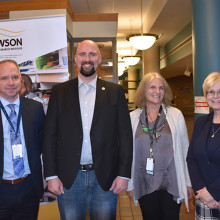
Peggy Sattler, Member of Provincial Parliament for London West, and Terence Kernaghan, Member of Provincial Parliament for London North Centre, were among the over 300 people in attendance.
“This special open house opportunity is meant to be a fun experience where you were also learning about research,” explains Dr. Forchuk. “During this holiday season, we wanted to share our own gift of hope in the form of collaborative research that is making a real difference.”
See photos from the open house on Facebook.
Scientist
… care and advances breast care teaching and research; The Ivey Eye Institute is home to more than 18 ophthalmologists … medical and surgical eye care, teaching and research. The Ivey Eye institute includes an extensive ophthalmic … care and advances breast care teaching and research; The Ivey Eye Institute is home to more than 18 ophthalmologists …
STRATEGIC PLAN 2015 | 2018ST. JOSEPHS HEALTH CARE LONDON Realizing our Vision St. Josephs Vision, Mission and Values OUR VISION OUR MISSION OUR VALUES RESPECT, EXCELLENCE, COMPASSION STRATEGIC PLAN 2015 TO 2018 Our Patients, Residents and Families GOAL GUIDED BY THEIR VOICES; EXCELLENCE ALWAYS STRA...
… For both Dr. Hutnik, a renowned ophthalmologist at the Ivey Eye Institute of St. Joseph’s Health Care London (St. … Ukraine Dr. Cindy Hutnik, left, an ophthalmologist at the Ivey Eye Institute of St. Joseph’s Health Care London, and … cataract surgery and receive periodic injections at the Ivey Eye Institute of St. Joseph’s Health Care London (St. …
SPRING 2023 A publication of St. Josephs Health Care London A Space to Call Home All faiths and spiritual practices are welcome in a new multi-faith room at Mount Hope Centre for Long Term Care. 2 A publication of St. Josephs Health Care London Spring 2023 | Issue 07 CONTRIBUTORS Dahlia Reich Alliso...
… care and advances breast care teaching and research; The Ivey Eye Institute is home to more than 18 ophthalmologists … medical and surgical eye care, teaching and research. The Ivey Eye institute includes an extensive ophthalmic … care and advances breast care teaching and research; The Ivey Eye Institute is home to more than 18 ophthalmologists …
STRATEGIC PLAN 2015 | 2018ST. JOSEPHS HEALTH CARE LONDON Realizing our Vision St. Josephs Vision, Mission and Values OUR VISION OUR MISSION OUR VALUES RESPECT, EXCELLENCE, COMPASSION STRATEGIC PLAN 2015 TO 2018 Our Patients, Residents and Families GOAL GUIDED BY THEIR VOICES; EXCELLENCE ALWAYS STRA...