


Search
Search
675 Search Results:
Innovative ‘poop pills’ show promising results in clinical trials for multiple types of cancer
Two Canadian clinical trials show poop pills could help patients respond to immunotherapy while also reducing toxic side effects of cancer drugs
LONDON, ON and MONTREAL, QC – Fecal microbiota transplants (FMT), can dramatically improve cancer treatment, suggest two groundbreaking studies published in the prestigious Nature Medicine journal. The first study shows that the toxic side effects of drugs to treat kidney cancer could be eliminated with FMT. The second study suggests FMT is effective in improving the response to immunotherapy in patients with lung cancer and melanoma.
The findings represent a giant step forward in using FMT capsules – developed at Lawson Research Institute (Lawson) of St. Joseph’s Health Care London and used in clinical trials at London Health Sciences Centre Research Institute (LHSCRI) and Centre de recherche du Centre hospitalier de l’Université de Montréal (CRCHUM) – for safe and effective cancer treatment.
A Phase I clinical trial was conducted by scientists at LHSCRI and Lawson to determine if FMT is safe when combined with an immunotherapy drug to treat kidney cancer. The team found that customized FMT may help reduce toxic side effects from immunotherapy. The clinical trial involved 20 patients at the Verspeeten Family Cancer Centre at London Health Sciences Centre (LHSC).
“Standard treatment for advanced kidney cancer often includes an immunotherapy drug that helps the patient’s immune system tackle cancer cells,” says Saman Maleki, PhD, Scientist at LHSCRI. “But, unfortunately, the treatment frequently leads to colitis and diarrhea, sometimes so severe that a patient must stop life-sustaining treatment early. If we can reduce toxic side effects and help patients complete their treatment, that will be a gamechanger.”
Separate Phase II lung and skin cancer studies were led by researchers at CRCHUM in collaboration with Lawson and LHSCRI. The studies found that 80 per cent of patients with lung cancer responded to immunotherapy after FMT, compared to only 39-45 per cent typically benefiting from immunotherapy alone. Similarly, 75 per cent of patients with melanoma who received FMT experienced a positive response to treatment, compared to only 50-58 per cent response in patients who receive immunotherapy alone. Twenty patients participated in the lung cancer clinical trial and 20 patients participated in the skin cancer clinical trial.
“Our clinical trial demonstrated that fecal microbiota transplantation could improve the efficacy of immunotherapy in patients with lung cancer and melanoma,” says Dr. Arielle Elkrief, co-principal investigator and Physician Scientist, Université de Montréal-affiliated hospital research centre (CRCHUM). “The results also uncovered one possible mechanism of action of fecal transplantation—through the elimination of harmful bacteria following the transplant. Our results open up a novel avenue for personalized microbiome therapies, and fecal transplant is now being tested as part of the large pan-Canadian Canbiome2 randomized controlled trial.”
“Fecal microbiota transplantation in melanoma and lung cancer opens an entirely new therapeutic avenue, made possible by the exceptional commitment of our patients and the teamwork,” adds Dr. Rahima Jamal, Director of the Unit for Innovative Therapies (UIT) at CRCHUM. “At the Unit for Innovative Therapies (UIT) of the CRCHUM, we have had the privilege of translating laboratory discoveries into early phase clinical trials and witnessing their concrete impact on people living with cancer.”
Both studies use advanced, world-leading FMT capsules, also known as LND101, produced by Lawson in London, Ont. The research reinforces London’s place as a global leader in FMT innovation and treatment. The capsules are processed from healthy donor stools and ingested to help restore a patient’s healthy gut microbiome and treat different types of cancer.
“To use FMT to reduce drug toxicity and improve patients’ quality of life while possibly enhancing their clinical response to cancer treatment is tremendous, and it had never been done in treating kidney cancer before this,” says Dr. Michael Silverman, Scientist at Lawson and Head of St. Joseph’s Infectious Diseases Program. “And none of this would be possible if not for this close collaboration: innovating the FMT capsules in Lawson labs and introducing them at LHSCRI and CHUM to advance vital research initiatives. Also, because LND101 comes from healthy donors, production can be scaled up to eventually help large numbers of cancer patients.”
The studies build on earlier London and CHUM-generated Phase I research showing FMT can safely augment treatment for people with melanoma. FMT is also being studied in people with pancreatic cancer and triple-negative breast cancer, and is already a well-established treatment for serious gut infections such as C. difficile, which can cause severe diarrhea.
“Our hope is that our research will one day help people with cancer live longer while reducing the harmful side effects of treatment,” adds Dr. Ricardo Fernandes, Scientist at LHSCRI and Medical Oncologist at LHSC. “We are world leaders in FMT research and we’re excited about its potential.”
The lung and melanoma study was funded by the Canadian Cancer Society. The kidney cancer clinical trial was funded with support from Ontario Institute of Cancer Research, Canadian Institutes of Health Research, AMOSO, Western University’s Division of Medical Oncology, donors to London Health Sciences Foundation and St. Joseph’s Health Care Foundation, the Hesch Foundation and Weston Family Foundation.
-30-
A video with interviews with Maleki, Silverman and Fernandes is available here. Broll is also available.
To arrange interviews, contact:
Celine Zadorsky, Senior Media Relations Consultant, London Health Sciences Centre, (226) 927-2309, @email
Ellen Caracas, Media Relations, CHUM, (438)-346-0755, @email
About Université de Montréal-affiliated hospital Research Centre (CRCHUM). The CRCHUM is the Université de Montréal’s largest biomedical and health care science research centre and one of the most impressive and modern in all of Canada. Here, basic, clinical and population health research are carried out side-by-side under one roof. Find us online : www.chumontreal.qc.ca/en/crchum and on social media @CRCHUM
About Lawson Research Institute: Lawson Research Institute, the health innovation arm of St. Joseph's Health Care London, is committed to making and sharing discoveries that improve lives locally and internationally. Every day, Lawson researchers work to transform imagination to innovation to patient impact. Lawson leads health-care research. Find us online at sjhc.london.on.ca/research and on social media @stjosephslondon
About London Health Sciences Centre Research Institute: At London Health Sciences Centre Research Institute (LHSCRI), our teams pioneer discoveries that transform the health of adult and paediatric patients around the world. As the research institute of London Health Sciences Centre (LHSC), we conduct research where patient care is delivered, working alongside patients, families, health-care providers and academic partners like Western University. We are leaders in advancing the understanding, diagnosis, treatment and management of diseases and health conditions through a diverse research program that ranges from laboratory-based science to clinical trials. Our research has a global impact as we build on LHSC’s 150-year legacy of health innovation and drive forward medical breakthroughs that make a difference in the lives of patients and their families. Find us online at www.lhscri.ca and on social media @LHSCRI.
insideLHSC: Diagnosing concussion
With a drop of blood, Dr. Douglas Fraser and a team of Lawson and Western University researchers are changing the way we diagnose concussion.
In the past decade, rates of reported head injury have increased by more than 40 per cent in children and youth playing football, soccer and hockey. In that same time our understanding of the impacts of concussions has significantly increased. Concussions can often result in severe symptoms and, in some individuals, long-term neurological dysfunction. When ignored, these injuries can have lasting consequences. As a result, concussions are a growing public health concern.
The diagnosis of a concussion can be difficult. Current tests rely on a patient’s description of their symptoms and the judgment of his or her physician. Concussions are sometimes misdiagnosed and some athletes with concussion return to sports too soon, putting them at risk of further injury.
By eliminating the guesswork in diagnosis, London researchers hope to improve patient outcomes.
… BGC unless you have: documented results of a prior two-step test which can include: 2 individual skin tests done at least one week a part *. A single step is … of having TB or symptoms of TB. (*The two-step TB skin test is normally given as a series of two single TB skin …
August 2021 Instructions for completing the health review form Please provide the following information to Occupational Health and Safety Services no later than 7 business days prior to your start date. INCOMPLETE FORMS AND LATE SUBMISSIONS WILL DELAY YOUR START DATE. 1. Red Measles You require 2 do...
… BGC unless you have: documented results of a prior two-step test which can include: 2 individual skin tests done at least one week a part *. A single step is … of having TB or symptoms of TB. (*The two-step TB skin test is normally given as a series of two single TB skin …
,.., SIJOSEPHs H EA LTH CARE LOND O N Instructions for Completing the Health Review Form Please provide the following information to Occupational Health and Safety Services no later than 7 business days prior to your start date. INCOMPLETE FORMS AND LATE SUBMISSIONS WILL DELAY YOUR START DATE. 1. Re...
… BGC unless you have: documented results of a prior two-step test which can include: 2 individual skin tests done at least one week a part *. A single step is … of having TB or symptoms of TB. (*The two-step TB skin test is normally given as a series of two single TB skin …
Instructions for completing the health review form Paid/Private Hire Staff: Please provide the following information to Occupational Health and Safety Services before your appointment, if it is available to you, by emailing: ohsshealthreviews@sjhc.london.on.ca or fax to 519-646-6235. Volunteers/Co-o...
Password Forgot Your Password? lnstallation instructionscan befound here. 1ges/brein-mnd-ma1ter1 0 Did you experience ... n Amnesia I l Loss of consciousness 0 Seizure(s) r l Dazing (confused. saw stars) 0 Previous concussion(s) (0~ STJOSEPHs HEALTH CARE LONDON G)Cowan SISKIN OS [ The law firm Resea...
… BGC unless you have: documented results of a prior two-step test which can include: 2 individual skin tests done 4 weeks apart *. A single step is required if the … 2nd step was more than 6 months ago.(*The two-step TB skin test is normally given as a series of two single TB skin …
February 2019 Instructions for completing the health review form In order to fulfill the terms and conditions of your employment offer, the following information must be provided to Occupational Health and Safety Services no later than 7 business days prior to your start date. INCOMPLETE FORMS AND L...
… BGC unless you have: documented results of a prior two-step test which can include: 2 individual skin tests done at least one week a part *. A single step is … of having TB or symptoms of TB. (*The two-step TB skin test is normally given as a series of two single TB skin …
October 2021 Instructions for completing the health review form Please provide the following information to Occupational Health and Safety Services no later than 7 business days prior to your start date. INCOMPLETE FORMS AND LATE SUBMISSIONS WILL DELAY YOUR START DATE. 1. Red Measles You require 2 d...
… BGC unless you have: documented results of a prior two-step test which can include: 2 individual skin tests done at least one week a part *. A single step is … of having TB or symptoms of TB. .(*The two-step TB skin test is normally given as a series of two single TB skin …
July 2019 Instructions for completing the Health Review Form for Volunteers/Students/Co-op Students In order to fulfill the terms and conditions of your offer, the following information must be provided to Occupational Health and Safety Services, (Volunteers and Co-op Students), no later than 7 busi...
… works differently for different people. Blood glucose testing will help determine how well your insulin is … discard used sharps (needles, lancets, cartridges and test strips) in a “sharps” container with a lid o NOT a … works differently for different people. Blood glucose testing will help determine how well your insulin is …
Diabetes Education Centre QUICK RULE OF THUMB FOR INSULIN ACTION INSULIN STARTS TO WORK IN: WORKS HARDEST AFTER: LASTS FOR: Fast-acting (bolus) Insulin Fiasp (insulin aspart) 5 minutes 45 60 minutes 3 5 hours Apidra (insulin glulisine) Humalog (insulin lispro) Humalog U200 (insulin lispro 200 uni...
… Insulin Tolerance Test What is an insulin tolerance test? This test has nothing to do with diabetes. It will determine if … Insulin Tolerance Test What is an insulin tolerance test? This test has nothing to do with diabetes. It will … Insulin Tolerance Test Patient Information …
Insulin Tolerance Test What is an insulin tolerance test? This test has nothing to do with diabetes. It will determine if your body is able to make enough growth hormone and cortisol in response to stress. A hormone is a chemical made by certain cells in the body and released into the bloodstream to...
… You have been requested to have the Ophthalmic Diagnostic test INTRAVENOUS FLUORESCEIN ANGIOGRAPHY performed in the … symptoms pass on their own. Before we proceed with the test, here is some information about Fluorescein Angiography … If you have unanswered questions before undergoing this test, you may ask to have the test deferred until the …
PATIENT CONSENT FOR INTRAVENOUS FLUORESCEIN ANGIOGRAPHY You have been requested to have the Ophthalmic Diagnostic test INTRAVENOUS FLUORESCEIN ANGIOGRAPHY performed in the St. Josephs Hospital What is uorescein angiography ? Fluorescein angiography is a diagnostic procedure which uses a special came...
… participants immediately prior to the CME presentation (pre-test) and at the end of the CME half-day (post-test). We scored percentage of participants passing the pre- and post-test evaluations (arbitrarily set a priori at ≥ 60% of items … participants immediately prior to the CME presentation (pre-test) and at the end of the CME half-day (post-test). We …
Participant Learning at Psychiatry CME Sessions A Follow-up Evaluation at the University of Western Ontario Laeeq Tahir, MD, FRCP(C)1 , Nicole Tsang, MD2, Marnin Jori Heisel, PhD, CPsych3 *, Jatinder Takhar, MD, FRCP(C)4 Key Words: continuing medical education, CME, knowledge transfer, professional ...
… of follow-up patients, and initiation of appropriate tests and investigations when indicated · performing or … of follow-up patients, and initiation of appropriate tests and investigations when indicated · performing or …
Dr. Candidates copy Western Schulich School of Medicine & Dentistrys copy Department of Oncologys copy Medical Affairs copy DATE Dear Dr. Re: Letter of Understanding It gives us great pleasure to offer you a position as a General Practitioner in Oncology (GPO) in the Depart...
… of follow-up patients, and initiation of appropriate tests and investigations when indicated · performing or … of follow-up patients, and initiation of appropriate tests and investigations when indicated · performing or …
Dr. Candidates copy Western Schulich School of Medicine & Dentistrys copy Department of Oncologys copy Medical Affairs copy DATE Dear Dr. Re: Letter of Understanding It gives us great pleasure to offer you a position as a General Practitioner in Oncology (GPO) in the Depart...
… Laryngospasm – “can’t get your breath” spells Is there any test to prove I have it? • Most commonly a telescope will … Laryngospasm – “can’t get your breath” spells Is there any test to prove I have it? • Most commonly a telescope will …
Isnt there just a surgery that can fix it? Surgery for this condition is only VERY rarely performed. A general surgeon or thoracic surgeon can perform a procedure called a Nissen Fundoplication. It is a laparoscopic surgery, where the stomach is wrapped around opening to esophagus opening. It is onl...
Lawson and Western researchers suggest walking and talking can be an early predictor of dementia
In a new study, researchers at Lawson Health Research Institute and Western University are demonstrating that gait, or motion testing, while simultaneously performing a cognitively demanding task can be an effective predictor of progression to dementia and eventually help with earlier diagnosis. To date, there is no definitive way for health care professionals to forecast the onset of dementia in a patient with memory complaints.
Dr. Manuel Montero-Odasso, a Lawson scientist, geriatrician at St. Joseph’s Health Care London, and associate professor in the Division of Geriatric Medicine at Western University’s Schulich School of Medicine & Dentistry, is leading the “Gait and Brain Study.” His team is assessing up to 150 seniors with mild cognitive impairment (MCI), a slight decline of memory and other mental functions which is considered a pre-dementia syndrome, in order to detect an early predictor of cognitive and mobility decline and progression to dementia.
Image
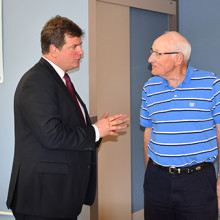
Dr. Montero-Odasso with study participant, Roy Bratty
“Finding methods to detect dementia early is vital to our ability to slow or halt the progression of the disease,” says Dr. Montero-Odasso. The study, funded by the Canadian Institutes of Health Research, followed participants for six years and included bi-annual visits. Researchers asked participants to walk while simultaneously performing a cognitively demanding task, such as counting backwards or naming animals. Those individuals with MCI that slow down more than 20 per cent while performing a cognitively demanding task are at a higher risk of progressing to dementia.
“While walking has long been considered an automatic motor task, emerging evidence suggests cognitive function plays a key role in the control of walking, avoidance of obstacles and maintenance of navigation,” says Dr. Montero-Odasso. “We believe that gait, as a complex brain-motor task, provides a golden window of opportunity to see brain function.”
The “gait cost,” or speed at which participants completed a single task (walking) versus a dual-task, was higher in those MCI individuals with worse episodic memory and who struggle with executive functions such as attention keeping and time management.
“Our results reveal a ‘motor signature’ of cognitive impairment that can be used to predict dementia,” adds Dr. Montero-Odasso. “It is conceivable that we will be able to diagnose Alzheimer’s disease and other dementias before people even have significant memory loss. Our hope is to combine these methods with promising new medications to slow or halt the progression of MCI to dementia.”
The study, “Association of Dual-Task Gait with Incident Dementia in Mild Cognitive Impairment”, was published in the journal, JAMA NEUROLOGY.
Image
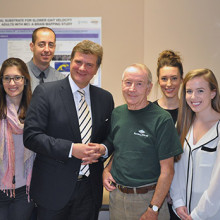
Members of the study’s research team, from left to right: Korbin Blue, Research Assistant (Co-op Student); Yanina Sarquis-Adamson, Lab Research Assistant; Frederico Faria, Post-Doctoral Fellow; Dr. Montero Odasso, Director, Gait and Brain Lab; research participant; Alanna Black, Lab Research Coordinator; Stephanie Cullen, Research Assistant (Undergraduate Student); and, Navena Lingum, Research Assistant (Master Student).
Scientist
Lawson researchers win American Shoulder and Elbow Surgeons’ Neer Award
The American Shoulder and Elbow Surgeons association has awarded a team of London researchers the 2017 Charles S. Neer Award for Clinical Science, one of the most prestigious awards in the areas of shoulder and elbow surgical research in North America.
The award recognizes the scientists’ development of the PCR-RFLP (polymerase chain reaction restriction fragment length polymorphism) assay, a test that can accurately identify Propionibacterium acnes (P acnes) infection of the shoulder within 24 hours. Current methods take an average of six or more days, and are prone to sample contamination and false-positive results.
“We are incredibly honoured to receive this award,” says Dr. David O’Gorman, Lawson scientist, Co-Director of Molecular and Cellular Research at the Roth McFarlane Hand and Upper Limb Centre (HULC) at St. Joseph’s Health Care London, and senior author of the publication. “We believe it illustrates the high quality of research being done at Lawson and marks the beginning of another clinically relevant research program at HULC.”
P acnes is a type of bacteria typically found deep in the hair follicles and sebaceous pores of the skin. A P acnes infection of the shoulder is a common and serious complication that occurs after arthroplasty (surgery to replace a damaged joint, most commonly with artificial material). It can cause pain in the shoulder joint and often loosens the implant. In most cases, the patient requires additional surgery to remove the infection and replace the implant.
It can be difficult to diagnose a P acnes infection as it often presents without symptoms that would be characteristic of an infection, such as pain, skin reddening or wound drainage. The prevalence of P acnes in the deeper layers of the skin also increases the chance of sample contamination and false-positive results making it hard to isolate and identify in a pathology lab.
Currently P acnes infection is identified by administering a tissue swab for anaerobic culture, which takes an average of six or more days but could take up to three weeks. This technique also carries substantial risk of contamination from the adjacent skin and other sites where P acnes is present.
The PCR-RFLP assay can identify P acnes in tissue from a shoulder biopsy within a 24-hour period. The extremely sensitive technology also has the ability to detect fewer than ten P acnes cells in the sample, which may decrease the false-positive rate in cultures caused by swab contamination.
“The accuracy of this test and the shorter period of time needed for identification can help with treatment decision making, targeted antibiotic therapy, and monitoring to minimize implant failure and revision surgery,” explains Dr. O’Gorman, who is also an Assistant Professor in the Departments of Surgery and Biochemistry at Western University’s Schulich School of Medicine & Dentistry. “We hope that the test can be further developed into a ‘point of case’ assay that can detect P acnes in tissue samples in real time while the patient is undergoing shoulder surgery.”
Since the PCR and RFLP mapping used for the assay are techniques routinely performed in many clinical microbiology and pathology labs, the test would be a cost-efficient approach not restricted to highly specialized research labs.
Other scientists who were part of the study include Dr. George Athwal and Dr. Kenneth Faber, HULC orthopaedic surgeons, Lawson scientists and Schulich professors; Ana Pena Diaz, research technician for the HULC Molecular and Cellular Biology Research Lab; and Scott Holmes, a medical student and Schulich Research Opportunities Program participant who was primarily responsible for designing and optimizing the assay.
Both Dr. O’Gorman and Dr. Faber are also members of Western’s Bone and Joint Institute.
“A rapid method for detecting Propionibacterium acnes in surgical biopsy specimens from the shoulder” was published in the Journal of Shoulder and Elbow Surgery (JSES).
Scientist
Lawson's Top 12 Research Stories from 2020
Image

Image
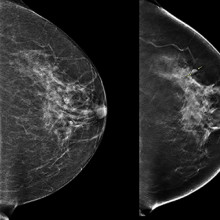
3D imaging technology could improve outcomes for patients with breast cancer
During a conventional digital 2D mammogram, two x-ray images are taken of the breast, one from top-to-bottom and another from side-to-side at an angle. This technology is limited by the overlapping breast tissue that occurs from the required compression of the breast, and breast abnormalities may be hidden. A study at Lawson is looking to determine if digital breast tomosynthesis, a type of 3D imaging, is better at detecting breast tissue abnormalities than the 2D mammography regularly used today. Read more.
Image
Image
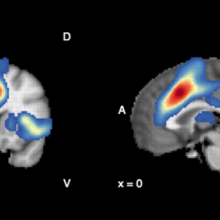
Antioxidants in the brain linked to improved treatment results in patients with psychosis
Once patients with psychosis start treatment, some get better in weeks while it can take months for others. A research team from Lawson and Western University studied antioxidant levels in the brain, and found that these chemicals, which rid the body of normal metabolic biproducts called free radicals, may improve outcomes of early intervention in psychosis. Read more.
Image
Image
Researchers awarded $4.8 million to validate locally developed test, EpiSign, for first-line diagnostic testing of rare hereditary disorders
A clinical trial named “EpiSign-CAN,” led by researchers at Lawson was awarded $4.8 million to measure the clinical impact of a new molecular genomics test for diagnosing genetic neurodevelopmental conditions. The diagnostic test, called EpiSign, uses machine learning to analyze the EpiSign Knowledge Database. This database compiles information on rare genetic diseases using laboratory analyses of the entire genome, referred to as the epigenome, from patients with suspected genetic abnormalities. Read more.
Image
Image

Perceptions of confidentiality for Canadian Veterans discussing moral injuries
Lawson researchers are exploring Canadian Veterans’ beliefs about confidentiality in mental health care and whether those beliefs act as a barrier to seeking treatment for a type of trauma known as moral injury. Moral injury describes psychological distress following events where a person performs, witnesses or fails to prevent acts that conflict with deeply held moral standards. Evidence suggests that moral injuries are on the rise among deployed members of the Canadian Armed Forces, and that those exposed to such events are at a higher risk of developing post-traumatic stress disorder and depression. Read more.
Image
Image
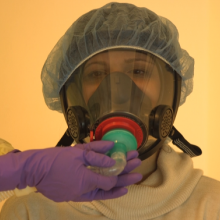
New device could reduce COVID-19 infection risk and demand for invasive ventilators
Researchers designed a non-invasive ventilation mask that could significantly reduce aerosolization – the production of airborne respiratory droplets that may contain viruses or bacteria – when treating patients with COVID-19. The new device aims to reduce infection risks associated with non-invasive ventilation and lessen the demand for invasive ventilators. It is currently being tested through a clinical trial with patients at London Health Sciences Centre (LHSC). Read more.
Image
Image
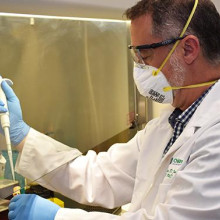
Researchers first in world to profile the body’s immune response to COVID-19
By studying blood samples from critically ill patients at LHSC, researchers identified a unique pattern of six molecules that could be used as therapeutic targets to treat COVID-19. Studies show that part of what makes the virus so deadly is that the body mounts an overreactive immune response as the virus grows and replicates. This response releases inflammatory molecules in order to fight the virus, but also destroys healthy cells and organs in the process. Read more.
Image
Image
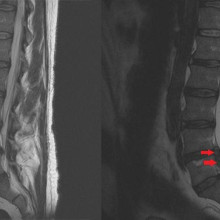
Study suggests that surgery may be superior treatment for chronic sciatica
In a randomized controlled trial, surgery was found to be superior to non-operative therapy in the treatment of chronic sciatica. Chronic sciatica can be caused by a disc herniation which compresses a nerve in the lumbar spine causing pain from the lower back to the leg. The primary treatment options for sciatica are surgery or non-operative care. Researchers conducted this study to test if a surgical treatment called microdiscectomy results in better patient outcomes for those with chronic sciatica compared to non-operative care. Read more.
Image
Image
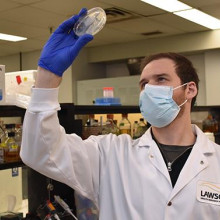
Researchers unravel two mysteries of COVID-19
A team from Lawson and Western University made significant steps forward in understanding COVID-19 through two back-to-back studies. In one study, the team identified six molecules that can be used as biomarkers to predict how severely ill a patient will become. In the other study, they were the first to reveal a mechanism causing blood clots in COVID-19 patients and potential ways to treat them. The studies were conducted by analyzing blood samples from critically ill patients at LHSC. Read more.
Image
Image
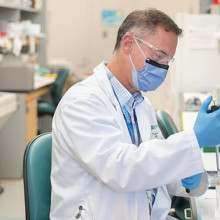
Gut microbiome may influence how cancer patients respond to oral therapies, study suggests
A study from Lawson and Western illustrated how the gut microbiome interacts with an oral medication in prostate cancer patients, suggesting bacteria in the gut play a role in treatment outcomes. The findings highlight how the drug abiraterone acetate is metabolized by bacteria in the gut to reduce harmful organisms while promoting those that fight cancer. The research team suspects this is one of many examples of how the microbiome influences our response to medications. Read more.
Image
Image

First Contrast Enhanced Spectral Mammography guided biopsy in North America
Researchers at Lawson performed the first breast biopsy guided by Contrast Enhanced Spectral Mammography (CESM) in North America on June 12, 2020. CESM is a novel diagnostic imaging tool that is able to detect cancerous lesions at a greater rate than standard mammography, and at close rate to MRI. The procedure is faster and more accurate, comfortable and cost effective than an MRI biopsy. Read more.
Image
Image

Assessing the pandemic's impact on Canadian Veterans and their spouses
A project from Lawson and the Centre of Excellence on Post-Traumatic Stress Disorder (PTSD) hopes to discover the impact the COVID-19 pandemic is having on the mental health of Canadian Veterans and their spouses. They are partnering with up to 1,000 Canadian Veterans and 250 spouses of Canadian Veterans. Through online surveys, the project will hear directly from Veterans and their spouses to assess the pandemic’s effects on their well-being over time. Read more.
Image
Image
Fecal transplants show promise as treatment for non-alcoholic fatty liver disease
A randomized controlled trial found that fecal transplants in patients with non-alcoholic fatty liver disease (NAFLD) results in a reduction in how easily pathogens and other unwanted molecules pass through the human gut and into circulation, known as intestinal permeability. The results could have implications for the treatment of numerous conditions including metabolic syndrome and autoimmune diseases. Read more.
Lawson's top 12 research stories of 2021
Lawson researchers impact the lives of people not just locally, but around the world with groundbreaking studies and translational research that enhances care, health and wellbeing.
Here are some of the research highlights of 2021.
Differences in walking patterns could predict type of cognative decline in older adults
Image

Canadian researchers are the first to study how patterns in the way older adults walk could more accurately diagnose different types of dementia and identify Alzheimer’s disease. A new study by a Canadian research team, led by London researchers from Lawson Health Research Institute and Western University, evaluated the walking patterns and brain function of 500 participants currently enrolled in clinical trials. Read more.
COVID-19 shown to leave a unique lung fingerprint
Image
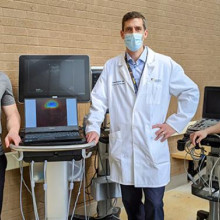
Researchers at Lawson Health Research Institute have developed and tested an artificial neural network for diagnosing COVID-19. The AI system was trained to learn and recognize patterns in ultrasound lung scans of patients with confirmed COVID-19 infection at London Health Sciences Centre (LHSC) and compared them to ultrasound scans of patients with other types of lung diseases and infections. Read more.
Kidney transplant patient experiences positive recovery with the help of a simple device
Image
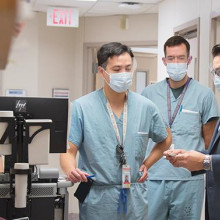
Getting the gift of life was an amazing moment for 68-year-old Ruben Garcia who was in late-stage kidney disease and starting dialysis when his daughter Ruby donated one of her kidneys to him. The father of four underwent transplant surgery this past March and remained in hospital for nine days recovering. Following his surgery, Garcia found it difficult to get out of bed due to pain and swelling, leaving the function of his new kidney at a very low level. Read more.
Air pollution exposures contributes to childhood asthma, population-based study shows
Image

New findings from Ontario have shown that children born in Sarnia have a higher risk of developing asthma compared to neighboring cities. A research team from Lawson Health Research Institute and Western University, using provincial data from ICES, found that higher air pollution exposure in the first year of life very likely contributed to this higher risk. Read more.
Getting the data on homelessness
Image

At a virtual event, a research team led by Lawson Health Research Institute announced details of a new project aimed at better understanding how many people in Canada are homeless and who they are. Developing more accurate sources of data related to homelessness helps ensure the proper supports and services are available. Read more.
Clinical trials begin to treat COVID-19 patients with sepsis
Image
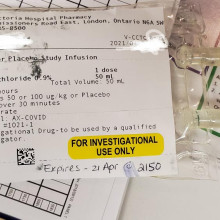
It’s a discovery that has been more than ten years in the making: the use of a human protein to potentially treat patients with sepsis. Lawson Scientist Dr. Qingping Feng noticed that a human protein called annexin A5 showed positive results with sepsis back in 2007. Fast forward 14 years later to now, and this discovery could very well be the first ever viable treatment for sepsis patients, including severe COVID-19 patients who develop sepsis. Read more.
Examining the health impact the COVID-19 pandemic is having on mothers and their new babies
Image

It has been a challenging year for many with the ongoing COVID-19 pandemic creating changes to people’s lifestyles, education, employment and health care. The impacts of these changes may be posing a health risk to women who have given birth during this trying time, and for their babies. Read more.
New therapeutic tool proven effective for MS patients with mental health challenges
Image

It was a diagnosis that came as a shock for 28-year-old Mitch Kuska who found out he had Multiple Sclerosis (MS) at the age of 26. “I went from being a young 26-year-old doing regular things, to having to learn about this disease and everything that goes along with it and how it will affect my life.” Kuska, an avid cyclist, says knowing that one day he may not be able to physically do the things he loves has been the hardest part of his MS journey so far. Read more.
Researchers using MRI scans to pinpoint moral injury effects in health care workers
Image

Image

Moral injury refers to an injury to an individual’s moral conscious, which can produce profound emotional guilt and shame. Recognizing this is a growing concern, a London research team from Lawson Health Research Institute and Western University’s Schulich School of Medicine & Dentistry is examining moral injury amongst health care workers by imaging the effects on the brain. Read More.
Scientists studying carbon monoxide as a possible treatment for sepsis
Image
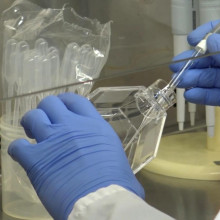
Sepsis is a life-threatening condition that occurs when the body’s response to an infection triggers excessive inflammation. The inflammatory response can cause damage to organs such as the heart, liver, lungs and brain. While there are currently limited treatments for sepsis, researchers at Lawson Health Research Institute are working to change that by examining the use of carbon monoxide-releasing molecules to treat patients. Read more.
Global study on heart valve repair surgery will improve patient outcomes around the world
Image
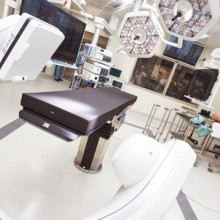
Researchers at Lawson Health Research Institute and Western University had a leading role in a new global study that will change the way surgeons repair leaky valves in the heart. It’s one of the most common heart valve conditions, affecting around two per cent of the population, where many patients don’t even realize they have a leaky valve and are asymptomatic, often presenting to doctors once they are late stage into the disease. Read more.
New study will assess fecal transplants in treatment of pancreatic cancer
Image
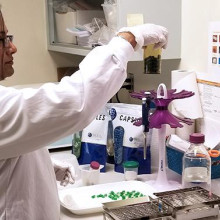
Pancreatic cancer is an aggressive disease that affects up to six-thousand Canadians a year and is the third leading cause of cancer deaths. In a new study a multidisciplinary team of scientists at Lawson Health Research Institute are examining the microbiome in the gut, as a possible gateway to improving treatment outcomes. Read more.